This post explores the West’s denigrating approach toward astrology and investigates scientific studies of the topic. It looks at how humanity historically used astrology to tie humanity as one microcosm of a greater reality, a reality which has since been severed by the modern view of mankind as superior to nature. This post also explores promising leads to hopefully one day tie us back to the cosmos.
“There is no bar to knowledge greater than contempt prior to examination.” – Herbert Spencer
Vague, popular month-long horoscopes that one would find in a trashy magazine are universally understood as lacking validity, including by astrologers, and are not the subject of this post.
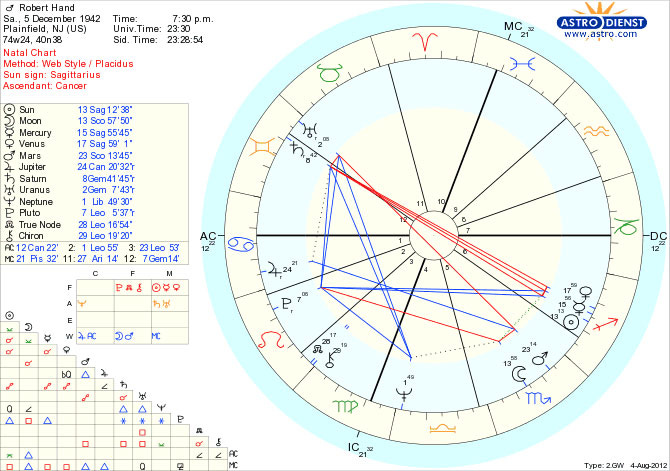
“Astrology” in this context means natal horoscopes (your chart at the time of birth) and progressed horoscopes (how your natal chart changes over time) utilizing the planets, houses, and aspects. This type of astrology can be descriptive (trying to help someone to understand himself), predictive (trying to forecast what will happen to him) or postdictive (trying to interpret and make sense of his past life). Predictive astrology can also concern itself with relationships (marriage, friendships) or significant events and history. There is also astrology in the sense of “cosmobiology” which will be described below.
A typical natal chart reading has an astrological sign for each planet in a specific “house” and each sign has a degree associated with it. Planets form good or bad “aspects” with each other.
There’s a lot of things that come to mind about the topic of astrology depending on your background, upbringing, and education. Opinions vary widely, but there is a general stigma of pseudoscience associated with it in the West. Before delving into this, though, there are some background points that I want to clarify.
The culture ratchet effect
All of us in the West are steeped in Whig history. Whig history presents history as a journey from an oppressive and benighted past to a “glorious present”. Society has handed us a distinct view of the past as backwards, ignorant, a dark ages full of dumb people with dumb beliefs. But this is wrong. While the scientific method has been great in supercharging the advancement of technology, our ancestors experimented with things holistically and passed on the knowledge gained via a cultural ratchet effect. Humans are unique in how they learn: they learn by imitation, tweaking and experimenting what they have learned to conform to the needs of current society, to the point where they often forget the origination of the knowledge that was passed down or the rationale for it. This partially explains why cultures are resistant to change because what they have done has worked for their ancestors. As Brett Andersen explains:
Some hunter-gatherers eat a plant called manioc that is toxic in its natural form and therefore requires processing. Sometimes the toxin takes weeks or even years to have an effect, meaning that it’s almost impossible to identify the source of the toxicity. Nevertheless, groups that eat these plants engage in complex processes that detoxify them.
As Henrich points out, the individuals who engage in this process often have no idea what they are doing from a mechanistic, causal perspective. They don’t really understand that they are detoxifying the plant and they definitely don’t understand why (from a mechanistic perspective) the process they engage in makes the plant safer to eat.
This is because the detoxification process did not result from rational contemplation or causal analysis. Rather, it evolved through a ratcheting process that is causally opaque to those who engage in it. This causal opacity is common with culturally evolved technologies and institutions. We often engage in adaptive practices that are the products of cultural evolution without having a causal understanding of why the practice is functional.
An example of an ancient practice that we discarded as barbaric is bloodletting. There is ongoing debate about its health benefits and drawbacks (see phlebotomy and its use in alternative medicine) but I was intrigued by the theory put forth by the wonderful biologist P.D. Mangan, who theorizes that the reason women live on average five years longer than men is because they dump excess iron from their bloodstream via menstruation, while men have no way to dump that iron which accumulates and then causes negative health effects. He wrote a whole book analyzing the science of it. At age forty five, men have about four times the amount of iron in their bodies as women do, and they also have four times the rate of heart attacks. Blood donors who lower their iron levels when they give blood are significantly healthier than non-donors. The is true even after accounting for the “healthy donor” effect. “[B]lood donors had an 88% reduced risk of heart attack.” Mangan’s answer for men? Donate blood regularly…i.e. bloodletting. I donate blood every couple months now to the Red Cross as a result of his research.
Another topic I investigated recently, mothballed by modern science, is the science surrounding physiognomy, which I did a prior post on. Physiognomy is real and important, even though de-emphasized by modern society.
Anyway, this is a roundabout way of saying Whig history is wrong, our ancestors were smarter than we acknowledge through our modern prism, and that part of the job of reorienting the public away from globohomo’s toxic vision of humanity, life, and history is to re-engage with a better respect for why people did things historically.
And one of these things is the topic of astrology. Astrology has been practiced for thousands of years by civilizations which had no contact with each other, across long distances and even across continents, but in the modern scientific community it is viewed with disdain as a false pseudoscience for idiots, part of the general Whig history approach. Were our ancestors all just idiots, looking up to the sky and seeing patterns applying to their own lives that had no validity? Or was there something legitimate there? This is what we will explore in this post. And this has greater implications: when advances in astronomy destroyed man’s understanding of the Heavens (both religious understandings as well as ancient Hellenic understandings1), where the stars served as hints at God’s divine plan and of angels in the Heavens, this greatly contributed to the advance of nihilism and man’s severing from the world around him. As George Santayana argued, “Before the days of Kepler, the heavens declared the glory of the Lord.” After Kepler, man was left adrift in a confusing world where his place in it was unstable and insecure.2
Zodiac constellations
If astrology is true (and there are different ways it could be true, as we will explore) this could re-establish man’s place within the universe as being interconnected instead of disconnected. According to Richard Tarnas in “Cosmos and Psyche”, p. 63-64, “Astrology is that perspective which most directly contradicts the long-established disenchanted and decentered cosmology that encompasses virtually all modern and postmodern experience. It posits an intrinsically meaning-permeated cosmos that in some sense is focused on the Earth, even on the individual human being, as a nexus of that meaning. Such a conception of the universe uniquely controverts the most fundamental assumptions of the modern mind.” Let’s first review science’s track record on how it treats theories outside of its existing paradigm, then review the science of astrology (or lack thereof), after which I will offer a bit of my own exploration of the topic.
Science’s track record
Science has a track record of proclaiming things outside of its existing framework as impossible. According to Kuhn’s thesis in “The Science of Structure Revolutions”, the way science works is that it progresses within whatever the existing framework is, with all of its assumptions and blind spots, until enough “anomalies” build up — i.e. results that cannot be explained by the existing framework — that eventually results in a radical paradigm shift to account for the anomalies, after which normal science restarts based upon the new paradigm. The Copernican Revolution is one example of a paradigm shift. Because an existing paradigm cannot account for anomalies, and because our understanding of science has evolved over time, sometimes radically, a proper approach to unproven science is to retain an element of humility that we might later radically see things in quite a different way.
But scientists generally and naturally react with scorn and disdain to perspectives outside the existing paradigm. Per esteemed scientist H.J. Eysenck, who we will discuss shortly, Johannes Muller, one of the most widely respected physiologists of the 19th century, declared it would be impossible to measure the speed of the nervous impulse; three years later Helmholtz measured it quite accurately. The philosopher G.W. Hegel declared there would never be an eighth planet found, just before Herschel discovered Uranus. Galileo’s incorrect opinion of the theory that tides are caused by the moon was conclusive: “Astrological nonsense.” Einstein and Rutherford, the greatest physicists of the 20th century, declared that the splitting of the atom would never have any practical application, a mere decade before the nuclear bomb was invented. What would a physicist of the 19th or 18th century have made of black holes, quarks, quasars and the like, or even electricity and magnetism?
A lack of mechanism isn’t necessary for a theory to be revolutionary. No mechanism was known, for example, for continental drift when it was proposed by Wegener, even though he turned out to be correct. Newton postulated a gravitational force, even though nothing was known about the nature of the force.
It’s better to keep an open mind about things and follow the science (which, to emphasize, is repeatable experiments by third parties, not “science” by committee consensus which is corrupted, bastardized Scientism) wherever it ultimately leads.
H.J. Eysenck was an interesting scientist, now fairly obscure, and I may do a future post about him. He was a German-born British psychologist who spent his professional career in Great Britain and at the time of his death, Eysenck was the most frequently cited living psychologist in the peer-reviewed scientific journal literature. He had a reputation for following the science dispassionately and methodologically despite any political sensitivities, and he had an interest in obscure topics that the scientific community avoided, like astrology — but also the link between race and intelligence, a link his enemies never forgot and who unleashed a vicious, politicized attack on his work twenty years after he died. Anyway, he wrote a wonderful book on astrology called “Astrology: Science or Superstition?” where he conducted a comprehensive review of the scientific studies available on astrology in 1982, placing emphasis on whether a study had been replicated, and which seemed to me to be written without an agenda or pre-derived bias. Much of the following discussion of astrological studies comes from his analysis.
Eysenck concluded that much of the published research in support of astrology was of poor quality, badly designed, and with many statistical errors in its evaluation. Something like 80-90% of the book is picking apart the poor methodology of such studies. But not all of it. According to Eysenck:
What we ourselves find exciting, however, is that when everything that will not stand the test has been put aside, there does remain a body of extraordinary evidence that cannot readily be explained away. It lies mostly in the area of what we refer to as cosmobiology.
Cosmobiology studies the ways in which vegetable, animal and human life is influenced by bodies in the solar system other than our own earth. We are none of of us surprised to know that the moon governs the tides or that the seasonal rhythms of many forms of life follow the yearly orbiting of the earth around the sun. Because we are so used to these facts we find them unremarkable. But what about the ability of certain marine animals to follow the phases of the moon even when they are cut off from its light and are many miles away from the wash of the tides? What about the effect of the weather on our own moods, the apparent connection (in turn) between the weather and the incidence of sunspots, and the strange and little-reported work of researchers linking sunspots with the motion of the planets….
Above all, there is the work of the Gauquelins… We deal at length with their findings and with the impressive evidence which seems to show that, however weird it may appear, a baby predisposed to develop a particular type of personality will tend to be born at the moment when one of the planets is at a certain critical position in the sky.
Let’s discuss some of the problems facing the scientific study of astrology, and then some of the studies themselves.
Problems facing the scientific study of astrology
One of the problems facing the science of astrology is that there are very few agreed upon rules in its practice. “When [an astrologer interprets] each factor individually, the astrologer then brings them all together and carefully synthesizes the overall interpretation of the chart. This is where the problems start, because the factors are both numerous and often contradictory, and it is all too easy for astrologers to see in a chart what they want to see…clearly everything depends on the process of chart synthesis, and one would therefore expect unambiguous rules to say just how one factor should be weighed against another. But astrologers have been unable to agree on such rules (in fact many claim that rules are irrelevant to what they feel should be a purely intuitive process), and the only generally accepted rule is that no factor shall be judged in isolation. Thus from this point on anything goes – including any hope of quick results by investigators of astrology!” A lack of common astrological rules makes the study of astrology itself much more difficult.
Other points of concern include the following:
The stars in the constellations do not really fall into groups at all; it is only by chance that, seen from our earth, they appear to cluster together.
The patterns they form bear no relation to the objects they are meant to represent.
The moon and the planets appear to be inside the constellations only because of the misleading effects of perspective. The founders of astrology thought they all lay close together, a few miles at most away from the earth. Mars was believed to be near the sun and to be hot and arid, having a drying influence. The moon was believed to soak up moisture and to have a dampening influence; both wrong.
Because of axial precession there are in effect two zodiacs, one favored by the West and one favored by the East, meaning that almost opposite meanings can be given to the same piece of sky.
Precessional movement of Earth. Earth rotates (white arrows) once a day around its rotational axis (red); this axis itself rotates slowly (white circle), completing a rotation in approximately 26,000 years
Why can the birth chart not easily predict basic things such as sex or race?
What can explain an individual’s chart where a whole community is wiped out by a disaster and such disaster is not reflected in the charts of the dead?
A look at the science: the negative
According to Eysenck the vast majority of scientific studies showing positive results for astrology suffer from three types of errors: (1) inability to replicate the studies, (2) inability to take normal astronomical laws into account when conducting such studies, and (3) distortions caused by demography. Additionally, there are plenty of errors in the research, with many being poorly designed, carelessly analyzed, and inaccurately reported. Then there is the problem of biased selection of data and the question of bias generally. And another factor is that people’s knowledge of astrology impacts their self-conception of their personalities which distorts results. When one takes these factors into account, there is very little supporting scientific evidence for traditional astrology.
Michel Gauquelin looked at many astrological experiments and claims that alternative explanations can be found for the results obtained, where he stated: “No law of classical astrology has been demonstrated statistically by astrologers or scientists.” Culver and Ianna (1979) reached a similar conclusion. They tracked over a number of years of specific astrological predictions made in the predicted media; altogether 3,011 predictions were tracked and only 338 (11%) came true.
Shawn Carlson conducted an experiment where 28 astrologers matched over 100 natal charts to psychological profiles generated by the California Psychological Inventory (CPI) test using double blind methods. The astrologers helped to draw up the central proposition of natal astrology to be tested.Published in Nature in 1985, the study found that predictions based on natal astrology were no better than chance and that the testing “clearly refutes the astrological hypothesis.”
Scientist and former astrologer Geoffrey Dean and psychologist Ivan Kelly conducted a large-scale scientific test involving more than one hundred cognitive, behavioural, physical and other variables, but found no support for astrology. A further test involved 45 confident astrologers, with an average of 10 years’ experience and 160 test subjects (out of an original sample size of 1198 test subjects). The astrologers performed much worse than merely basing decisions from the individuals’ ages, and much worse than 45 control subjects who did not use birth charts at all. A meta-analysis by Dean was conducted pooling 40 studies consisting of 700 astrologers and over 1,000 birth charts; no significant results were found to suggest there was any preferred chart.
Various studies relating to effects of astrology on marriage, on psychiatric disorders, on medicine and surgeries, on suicides have been contradictory and non-replicable. Studies on twins demonstrate it is rare for twins to develop the same illness at the same time and even rarer for them to die naturally or commit suicide on the same day. Gauquelin (1973) looked for examples of cosmic twins (unrelated people born on the same day and year) in his collection of over 50,000 horoscopes; he concluded that no one had demonstrated similarity in the lives of people born on the same day of different parents.
A look at the science: the positive
Eysenck mostly dismissed the scientific literature around traditional astrology as poor, as discussed above. But he thought the science surrounding what he called “cosmobiology” showed more promise. Cosmobiology is defined as follows:
“Cosmobiology is a scientific discipline concerned with the possible correlation between the cosmos and organic life and the effects of cosmic rhythms and stellar motion on man, with all his potentials and dispositions, his character and the possible turns of fate; it also researches these correlation and effects as mirrored by earth’s plant and animal life as a whole. In this endeavor, Cosmobiology utilises modern-day methods of scientific research, such as statistics, analysis, and computer programming. It is of prime importance, however, in view of the scientific effort expended, not to overlook the macrocosmic and microcosmic interrelations incapable of measurement.”
Eysenck looked at studies relating to sunspot activity, which occurs in regular cycles. There is some evidence that the weather may be affected by sunspots, with such things as temperature, rainfall and barometric pressure fluctuating with the sunspot cycle through the years. A study at Eskdalemuir showed a relationship between higher temperatures and sunspots, which was confirmed by Hughes in 1977 for the period of the Maunder minimum. Looking at rainfall historically via tree rings in ancient trees such as the bristlecone pine, which is the oldest living thing on earth, the sunspot cycle tracks the width of the rings which are affected by drought. And weather has an impact on human mood: there is a seasonal effect on suicide, for example, and temperature variances have an impact on aggression, cognition, creativity, and working. There were even studies conducted in Germany which analyzed 362,000 industrial accidents and concluded that accidents were 20-25% more likely to occur during days of strong electromagnetic disturbances of the kind known as ELF (extra low frequency).
But such sunspot activity may impact biology directly and not just indirectly affecting mood via weather changes. A Berlin bacteriologist, H. Bortels, noted that the freezing point of water strangely varied. To investigate this variance he studied pure water in sealed containers, and the variance only stopped when he surrounded the containers with a metal screen that would block off outside radiation. Giorgio Piccardi was studying an inorganic colloid and he noticed changes in the speed at which particles precipitated out of the fluid; he studied this effect for ten years. When the solution was shielded by a copper screen the effect was inhibited, as it had been in Bortels’ experiment. Piccardi believed that ELF waves might be responsible for this effect, as the reactions varied with sunspot activity and the time of year. If the sun can have this effect, it is possible it could have a similar effect on living creatures, including ourselves, given we are 65% water. Guaquelin (1970) describes an experiment in which microbes reproduced more rapidly with changes in the weather, which, when controlling for temperature and barometric pressure, stopped when the microbes were put inside a lead or iron screen.
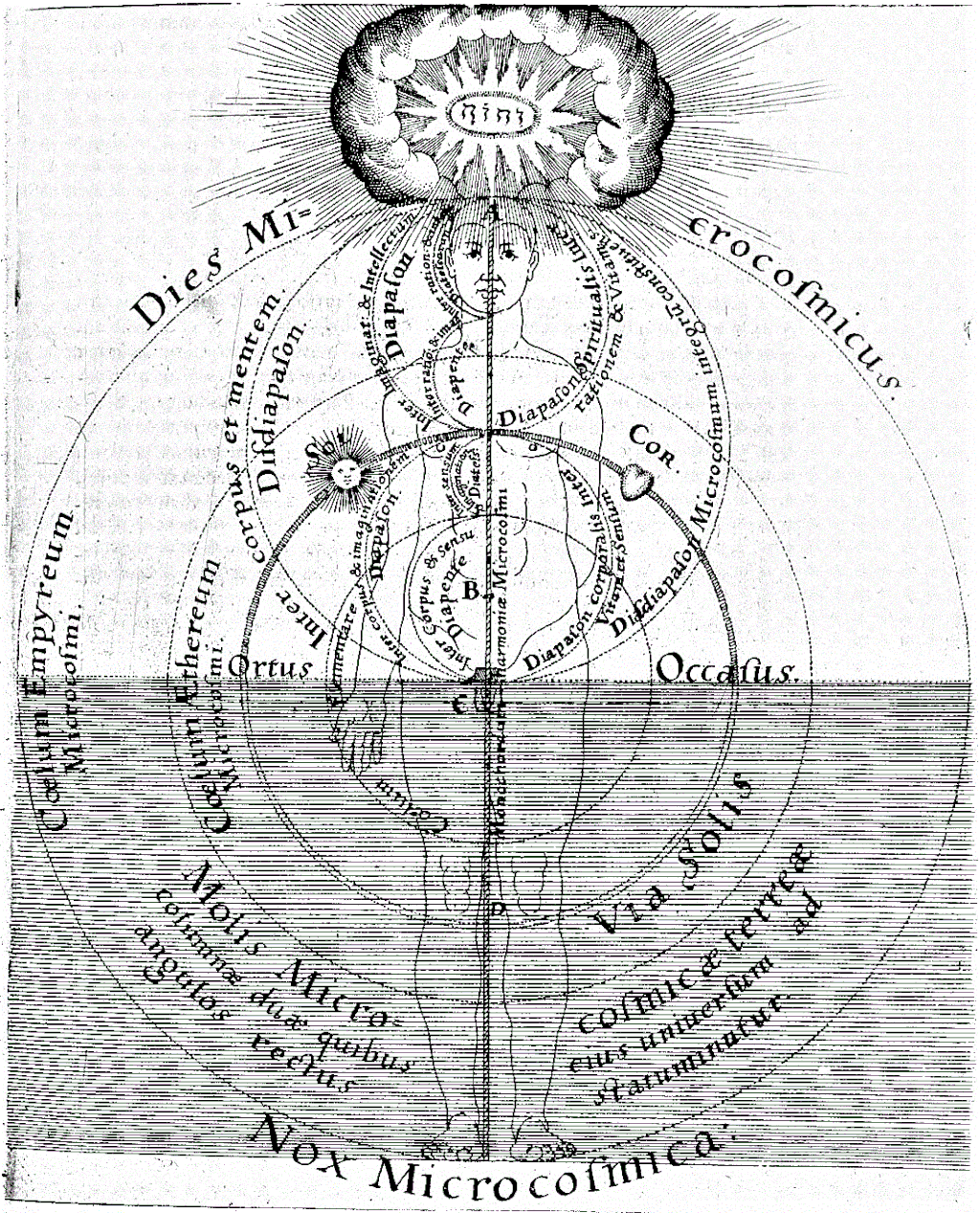
Man as a microcosm; illustrated in Robert Fludd’s Utrisque Cosmi, 1619. “As Above, So Below.”
Okay, but what do sunspots have to do with astrology and planets other than the sun? There are two main theories for the cause of sunspots: the first is that sunspots are caused by an internal process in the sun, probably to do with some slow magnetic oscillation. But the other is that sunspots are caused by forces exerted on the sun by the planets. Morth and Schlamminger (1979) make the point that gravitational forces between the planets cause mutual perturbations of their orbits and this could cause a periodic transfer of angular momentum within the solar system that could affect the pattern of vortices on the sun’s surface. Dean (1977) suggests that the major planetary resonance stems from the movement of the midpoint of a line joining Jupiter and Neptune, a movement which has remained in synchronization with the solar cycle over the 320 years for which records of sunspots exist. Another interesting combination is that of Neptune and Pluto which, as Dean points out, since at least 2000 BC every time Neptune and Pluto have been both opposite each other and in the solar equatorial plane there has been a prolonged period of solar inactivity.
According to Eysenck, though, Michel Gauquelin has had the greatest success with demonstrating a scientifically defensible link to astrology, given the sample sizes used, correct statistical analysis, and most importantly its replicability by third parties. Gauquelin conducted a series of studies which suggested that there was a statistical link between eminent doctors who were born when Mars or Saturn had just risen, or had just passed the midheaven. He found this link only for those who were in eminent positions, not for normal people. Through additional studies he concluded the relationship was not with destiny but rather with the qualities of a person’s character or personality that makes for success. He then ran similar tests on sports champions, finding the planet Mars to be in one of the critical astrological zones in a large study, which was then independently confirmed. In the original study, 21.4% of the champions were born in one of the critical sectors, while in the replication the proportion was 22.2% (chance expectation in both cases is 16.7%). This is what has been termed the Mars effect, although the validity of the effect remains up for debate.
Lastly, there has been found to be a link with respect to planetary heredity, where children have the same astrological signs as the parents. According to Kepler, “There is one perfectly clear argument beyond all exception in favor of the authenticity of astrology. This is the common horoscopic connection between parents and children.” Gauquelin tested whether this was true, and he found that the planetary effect did exist – but only for natural births, not for cesarian births, and that its intensity increases if both parents have the same planetary heredity.
My exploration of astrology
In terms of my research into astrology, my interests have led me into one specific niche: degree astrology. Each planet in a natal chart has a sign and a degree associated with it, anywhere from 0 degrees to 30 degrees, and each degree carries with it its own interpretation. These interpretations can be very specific; some are good, some are bad, and many are just OK, all within the same overall sign. And then the planets and their associated degrees still need to be interpreted against the other planets and their own associated degrees. This may be part of why so many astrological studies have been so inconsistent with replication problems; the astrological degrees may have misunderstood importance.
There have been a number of astrologers who have released their interpretations of astrological degrees. Most share similar interpretations although some vary significantly. Here is a PDF with about a dozen astrologers and their interpretations of degrees; I’ve found the most accurate to be Carelli’s, although I also like Weber’s.
I’d like to give a couple of simple examples of degree interpretation; just the degrees and Carelli interpretations of the natal sun sign degree of a couple of famous people: Donald Trump, Joe Biden, Barack Obama, and let’s do Hitler and Nietzsche as well. This is not meant to be comprehensive as it is only looking at the natal sun and not the other planets or the progressed chart, but it should give a little sense of things. The natal sun sign is supposed to form the core of a person’s personality. Each sun sign degree changes on a daily basis (i.e. someone born on January 1 will have a different degree than someone born on January 2), while other planets change much faster; the moon degree changes every half hour, the ascendant every couple minutes, while the slower moving planets like Uranus and Neptune can take weeks to change a degree, for example.
“Symbol: A withered, ragged old man, bent by age and by suffering, standing alone, leaning on a stick in an attitude of utter dejection.
If the horoscope at large does not offer any particular hints of good luck, the battles of life will prematurely sap the native’s energies. He will feel powerless to put his otherwise original ideas into practice, will not only refrain from reaction, but from action as well, and will give up the struggle and waste away. His breakdown ought to be followed by the estrangement of his children and everyone else; his old age will be miserable and lonely.”
Allusions to Trump’s ineffective presidency and upcoming imprisonment and abandonment by friends, allies, and family, especially Jared and Ivanka. It would have been hard to make sense of this prior to the last number of years for this frame.
Biden: Sun 27°34′ Scorpio. Carelli interpretation of the 27th degree of Scorpio:
“A faith ready to stand any test is the keynote of this degree, where the word faith may be taken to mean anything within the limits of the meaning conveyed by such an extensive word. In a good sense, this will be faithfulness to a religious ideal, apt to create perfect human relations. Were it bad faith, this would turn into lasting grudges and ill-will, or Mito treacherousness in trade; viz., cheating; and it may bring about an accomplice’s solidarity and a tendency to stick together in crime.
Certain virtues, however, are sure to be there: scrupulousness, reserve, earnestness and firmness in purpose, consequence in one’s views.
Whether honest or dishonest, the native, is of an austerity bordering on prudery; he will appear sometimes priggish but always will make a thoroughly spiritual impression. Therefore his trespasses are so much more dangerous, and his crimes so much more intentional.”
Allusions to Biden’s corruption.
Obama: Sun 12°33′ Leo. Carelli’s interpretation of the 12th degree of Leo:
“Symbol: A black ball.
All good and bad features of an extreme steadfastness and positivism; on one hand, firmness, constancy, sturdiness, endurance in exertion and a sense of phenomenal reality; on the other hand, stubbornness, restiveness, pigheadedness, hypercritical skepticism and unappeasable lustfulness. As a result, the sources of income and means of subsistence are lastingly assured—nay, too lastingly— which might hinder and thwart progress, even mobility in general.
There is no enthusiasm, no spiritual urge, no faith in men or in the future, not to speak of faith in God. The character is, therefore, skittish, sullen, sometimes cynical, often unpleasant on account, or in spite of, the fact that the native professes very firm principles and sticks to them.
Whatever his luck, the subject never feels happy and is therefore in a state of constant dissatisfaction.”
Obama as never satisfied, ultra rich from corruption, his pragmatism and hypocrisy.
Hitler: Sun 0°48′ Taurus. Carelli’s interpretation of the 0th degree of Taurus:
“The native will have to stand forever on the lookout ready to parry unforeseen attacks, as his destiny has fierce struggles in store. But in struggles he surely will thrive and revel as if it were his own element, and he will engage himself in them to his utmost. He has a great will power, is versed in tricks and makeshifts, and can be very reserved in spite of his liking for arguments and polemics. Churlish and insensitive to pain, he seems born to have things his own way in spite of the war furiously waged against him on all sides. He may even be endowed with magic powers.
This hard character’s failing is ungenerous; it may even become cruelty.”
I could highlight that whole description, but it speaks for itself.
Nietzsche, 22°07′ Libra. Carelli’s interpretation of the 22nd degree of Libra:
Symbol: An old physician intent to a urine test
The native is a tireless researcher who will inquisitively pry into nature, snatch her secrets, analyze them and methodically pigeonhole the results. A restless urge to change subject and shift his grounds of observation will make him loath to stay put, so that even when penned within four walls he will try to change his room from time to time. He may be fond of journeying to unexplored countries and will certainly worship knowledge. The branches most congenial to him seem to be chemistry and medicine (this one perhaps in a spiritual sense). Occultism is not to be ruled out in branches akin to the ones quoted: viz., alchemy, the mother of chemistry, and pastoral medicine.
Success ought to crown his efforts; public recognition, though belated, may ratify his discoveries. Either for this or other reasons there will be a certain self-assurance, a somewhat consequential mannerism in his speech, as if he were delivering abstruse truths to a large audience.
Attention is to be paid to the urinary system. On the other hand the whole organism is subject to precocious decay, either owing to the stuffy laboratory air or to the unhealthy atmosphere of close rooms.
This one also speaks for itself.
I wouldn’t say the natal sun nails their personalities exactly or even to a very large extent — the other planets all have a role to play4, as well as how the personality progresses via the progressed chart — but I would say these degree interpretations are specific and not vague, and that one can likely see many attributes of their personality reflected in the interpretation of the natal sun sign.
If you’d like to investigate your own or other’s signs and degrees, Astrotheme is a great website. There is a search on the left that allows you to search the chart of any well known figure; then just look at their sun sign, find the degree, and use the above link for Carelli’s interpretation of it. You can look at your own or others you know horoscope’s here.
I have probably looked at hundreds of charts (although I am no astrologer) to get a sense for whether its basics and the degrees have validity to them, and while there is plenty of subjectivity involved, I am confident that, from my own research5 and exploration, that there is something here beyond chance. Whatever the exact effect is I don’t know exactly, but it has to do with the development of the personality and how it changes over time, even if the mechanism of astrology is unknown.6
….
I hope this post opens up some new possible ways of looking at our relation to the universe, as well as the possibility of reconnecting to it in order to rekindle our sense of meaning from this ubiquitous, horrible nihilism pervading society.
Thanks for reading.
Subscribe: Email delivery remains on Substack for now.
1 Pythagoras, Plato and Aristotle believed in the influence of the stars on human behavior. Hipparchus and Ptolemy, Plotinus and Proclus, Galen, Albertus Magnus and Thomas Aquinas, Dante, Ficino, Kepler, Goethe, Yeats, Yung believed as well.
2 Richard Tarnas, “Cosmos and Psyche”, 62: ““Astrology has not been held in high esteem during most of the modern era, for a variety of compelling reasons. Certainly its popular expressions have seldom been such as to inspire confidence in the enterprise. More fundamentally, astrology could not be reconciled with the world picture that emerged from the natural sciences of the 17th-19th centuries, wherein all natural phenomena, from the motion of planets to the evolution of species, were understood in terms of material substances and mechanical principles that functioned without purpose or design. Nor could it prevail against that tendency of the modern mind, established during the Enlightenment, to uphold its own rational autonomy and to depreciate earlier thought systems that seemed to support any form of primitive participation mystique between the human psyche and a world endowed with pregiven structures of meaning….
I noticed that the history of astrology contained certain remarkable features. It seemed curious to me that the historical periods during which astrology flourished in the West – classical Greek and Roman antiquity, the Hellenistic era in Alexandria, the High Middle Ages, the Italian Renaissance, the Elizabethan age in England, the 16th and early 17th centuries in Europe generally – all happened to be eras in which intellectual and cultural creativity was unusually luminous. The same could be said of astrology’s prominence during the centuries in which science and culture were at their height in the Islamic world, and so too in India.”
3 There are 60 “minutes” per degree. If the minute is after 45 minutes, then the next degree starts bearing influence. In other words, 22°56′ Gemini means that the 23rd degree bears considerable influence.
4 For example, the moon astrology sign and degree describes one’s emotional makeup. As mentioned above, the moon degree changes about every half hour so having the correct time of birth is important. Here’s mine, per Carelli’s interpretation:
“28-29 deg Gemini
A rather pessimistic degree inducing skepticism and mistrust, apart from which its influence is a typically divalent one.
Helped by other astral aspects, it will confer kindheartedness coupled with ability to command; an imaginative, manifold mind; the makings for occupying a high position and for nobly exerting the attending authority; skill in hunting and sportsmanship.
On the contrary, where other aspects are mainly negative, these features will shift into opposite polarities or will stray into corresponding vices. Kindness will become affected courtesy, prestige will be disfigured into autocracy, love of hunting into cruelty or even sadism; there will be misuse of power closely followed by ruin and misery. Likewise, imaginative power will sidle into fruitless daydreaming, too many plans will cram the mind, all shifting and inconclusive, as no steady power behind them will help carry them out.”
One could interpret this as an astrological explanation for the high pessimism expressed in this Substack, and that I am merely acting out my physiognomy.
5 The other thing I like to do is run a progressed chart of an individual and compare it to their natal chart, but only with respect to the slow moving planets which take many years or decades to move a degree on the progressed charts — the sun, moon, ascendant, etc. change constantly on it. Specifically, I look at the changes to Pluto, Jupiter, Neptune, Uranus, Saturn, Chrion and the true north node (each of which have specific aspects of personality associated with them).
In the perspective I am suggesting here, reflecting the dominant trend in contemporary astrological theory, the planets do not “cause” specific events any more than the hands on a clock “cause” a specific time. Rather, the planetary positions are indicative of the cosmic state or archetypal dynamics at that time.
This post discusses the corruption of the masculine and feminine forms necessary for pair bonding. Intense and sustained societal pressures have attempted to subvert and invert these forms. A sober assessment of the situation can hopefully offer (1) assistance in pushback against these forces and (2) to set and frame expectations for relationships with those who are in the throes of such negatives pressures (i.e. most women) if one decides to pursue it.
As discussed previously, fertility rates in Western countries are on a massive decline. There are a lot of reasons for this, but the rising cost of raising a family is not really one of them; poor people have more children than rich people, wonderfully reflected in the opening scene of Idiocracy, and many who live in abject poverty survive on welfare and have plenty of children.1 Rather, the core reason is the empty nihilism brought about by the death of God – why have children, why not focus on hedonism, if there isn’t a bigger purpose to life and if there aren’t distinctions between superior and inferior? Having children is a metaphysical decision even if societal and familial pressure plays a role; it speaks to an optimism about the future, a willingness to sacrifice for that future, the desire to propagate one’s beliefs, the desire for community and love, that has been completely drained out of modern life like a dying animal drained of blood.
This post will focus on a particular aspect of declining fertility rates: the push by globohomo to corrupt the masculine and feminine forms: to invert what it means to be a man or woman, to turn men into women and to turn women into men, manifested currently as transsexualism, but this push has been ongoing for well over a hundred years to prevent pair bonding necessary for marriage, procreation, and familial development. I have touched on this previously by covering the different conceptions of marriage in patriarchal vs. matriarchal societies and how those conceptions affect fertility rates, but this will tie the argument together further.
Um, no.
We will look at this in a number of ways: (1) examining traditional gender roles; (2) exploring the propaganda and financial motives to invert these roles; and looking at (3) dating, (4) marriage, and (5) divorce in the modern era.
As a preface, the following discussion does not apply to all men or women. It offers generalizations based on how men and women are generally based on bell curves; there are always people at the extremes that don’t conform to such norms, such as the existence of highly masculine women (I’m looking at you, Big Mike) and highly effeminate men. So thanks, Billy, the fact that you know someone who doesn’t conform to the following generalizations does not mean that the exception disproves the rule. I appreciate the pre-offering of that take, Reddit is this way.
All Schopenhauer references below are pulled from his essay “On Women”.
Schopenhauer was a great and wise man, even if he never married or had children
Okay, let’s begin.
Gender roles are natural
Victor Joseph Étienne de Jouy wrote, “Without women, the beginning of our life would be helpless; the middle, devoid of pleasure; and the end, of consolation.” Women are much better than men at nurturing, at offering empathy, at living in the moment and at play than men are, per Schopenhauer: “The woman lives more in the present than the man, and that, if the present is at all tolerable, she enjoys it more eagerly. This is the source of that cheerfulness which is peculiar to women, fitting her to amuse man in his hours of recreation, and, in case of need, to console him when he is borne down by the weight of his cares.”
Even though women are generally much more emotional than men, they generally feel less deeply than men. They are lyrical creatures with bodies not meant for difficult physical exertion, as seen how any freakish transsexual easily beats women at sports. I remember when a male tennis player ranked 200 beat the #1 and #2 women in the world at tennis with no warmup and no real exertion. The German player reflected on the match he played against Serena and stated, “My first game of the afternoon, just a one-set match, was against Serena. We were out on one of the backcourts at Melbourne Park, No 17 I think it was. I felt so relaxed that I didn’t even warm up properly. We started playing and I raced into a 5-0 lead.” Amazing women, fantastic girl power you have going there.
Karsten Braasch with the Williams sisters
Women are stuck in an intermediate stage between child and adult, per Schopenhauer:
Women are directly fitted for acting as the nurses and teachers of our early childhood by the fact that they are themselves childish, frivolous and short−sighted; in a word, they are big children all their life long—a kind of intermediate stage between the child and the full−grown man, who is man in the strict sense of the word. See how a girl will fondle a child for days together, dance with it and sing to it; and then think what a man, with the best will in the world, could do if he were put in her place.
A man matures much slower than women do, but that is the natural course of things. Creatures that mature more take longer to do so than creatures that mature less:
The nobler and more perfect a thing is, the later and slower it is in arriving at maturity. A man reaches the maturity of his reasoning powers and mental faculties hardly before the age of twenty−eight; a woman at eighteen. And then, too, in the case of woman, it is only reason of a sort—very niggard in its dimensions. That is why women remain children their whole life long; never seeing anything but what is quite close to them, cleaving to the present moment, taking appearance for reality, and preferring trifles to matters of the first importance. For it is by virtue of his reasoning faculty that man does not live in the present only, like the brute, but looks about him and considers the past and the future; and this is the origin of prudence, as well as of that care and anxiety which so many people exhibit.
Both the advantages and the disadvantages which this involves, are shared in by the woman to a smaller extent because of her weaker power of reasoning. She may, in fact, be described as intellectually short−sighted, because, while she has an intuitive understanding of what lies quite close to her, her field of vision is narrow and does not reach to what is remote; so that things which are absent, or past, or to come, have much less effect upon women than upon men. This is the reason why women are more often inclined to be extravagant, and sometimes carry their inclination to a length that borders upon madness. In their hearts, women think that it is men’s business to earn money and theirs to spend it—−if possible during their husband’s life, but, at any rate, after his death. The very fact that their husband hands them over his earnings for purposes of housekeeping, strengthens them in this belief.
Thomas Buckle said, “Men and women range themselves into three classes or orders of intelligence; you can tell the lowest class by their habit of always talking about persons; the next by the fact that their habit is always to converse about things; the highest by their preference for the discussion of ideas.” Women by and large love to talk about persons/gossip, doing so in a droning, endless running commentary. They also love to shame each other; they do not generally feel guilt (internal sense of right and wrong) but they do feel a strong sense of shame (external imposition of right and wrong). This is why “slut shaming” works. Women generally hate each other and tear each other down, viciously and without remorse, but they do so indirectly and passive aggressively, trying to avoid bearing responsibility for their actions.
You’re so mean, girls
Schopenhauer argued that women have no sense of justice because their weaker form forces them to be experts in the art of dissimulation rather than justice:
Hence, it will be found that the fundamental fault of the female character is that it has no sense of justice. This is mainly due to the fact, already mentioned, that women are defective in the powers of reasoning and deliberation; but it is also traceable to the position which Nature has assigned to them as the weaker sex. They are dependent, not upon strength, but upon craft; and hence their instinctive capacity for cunning, and their ineradicable tendency to say what is not true. For as lions are provided with claws and teeth, and elephants and boars with tusks, bulls with horns, and cuttle fish with its clouds of inky fluid, so Nature has equipped woman, for her defence and protection, with the arts of dissimulation; and all the power which Nature has conferred upon man in the shape of physical strength and reason, has been bestowed upon women in this form. Hence, dissimulation is innate in woman, and almost as much a quality of the stupid as of the clever. It is as natural for them to make use of it on every occasion as it is for those animals to employ their means of defence when they are attacked; they have a feeling that in doing so they are only within their rights. Therefore a woman who is perfectly truthful and not given to dissimulation is perhaps an impossibility, and for this very reason they are so quick at seeing through dissimulation in others that it is not a wise thing to attempt it with them. But this fundamental defect which I have stated, with all that it entails, gives rise to falsity, faithlessness, treachery, ingratitude, and so on. Perjury in a court of justice is more often committed by women than by men. It may, indeed, be generally questioned whether women ought to be sworn in at all. From time to time one finds repeated cases everywhere of ladies, who want for nothing, taking things from shop−counters when no one is looking, and making off with them.
Unlike women, men naturally congregate into hierarchical communities organized around goals. They are much less likely to infight, much less likely to gossip or backstab, and they are both much more direct and much wore willing to escalate to violence given they are so much more physically stronger than women. Men are much less likely to treat lower status people poorly than women are, per Schopenhauer:
Whilst a man will, as a general rule, always preserve a certain amount of consideration and humanity in speaking to others, even to those who are in a very inferior position, it is intolerable to see how proudly and disdainfully a fine lady will generally behave towards one who is in a lower social rank (I do not mean a woman who is in her service), whenever she speaks to her. The reason of this may be that, with women, differences of rank are much more precarious than with us; because, while a hundred considerations carry weight in our case, in theirs there is only one, namely, with which man they have found favor; as also that they stand in much nearer relations with one another than men do, in consequence of the one−sided nature of their calling. This makes them endeavor to lay stress upon differences of rank.
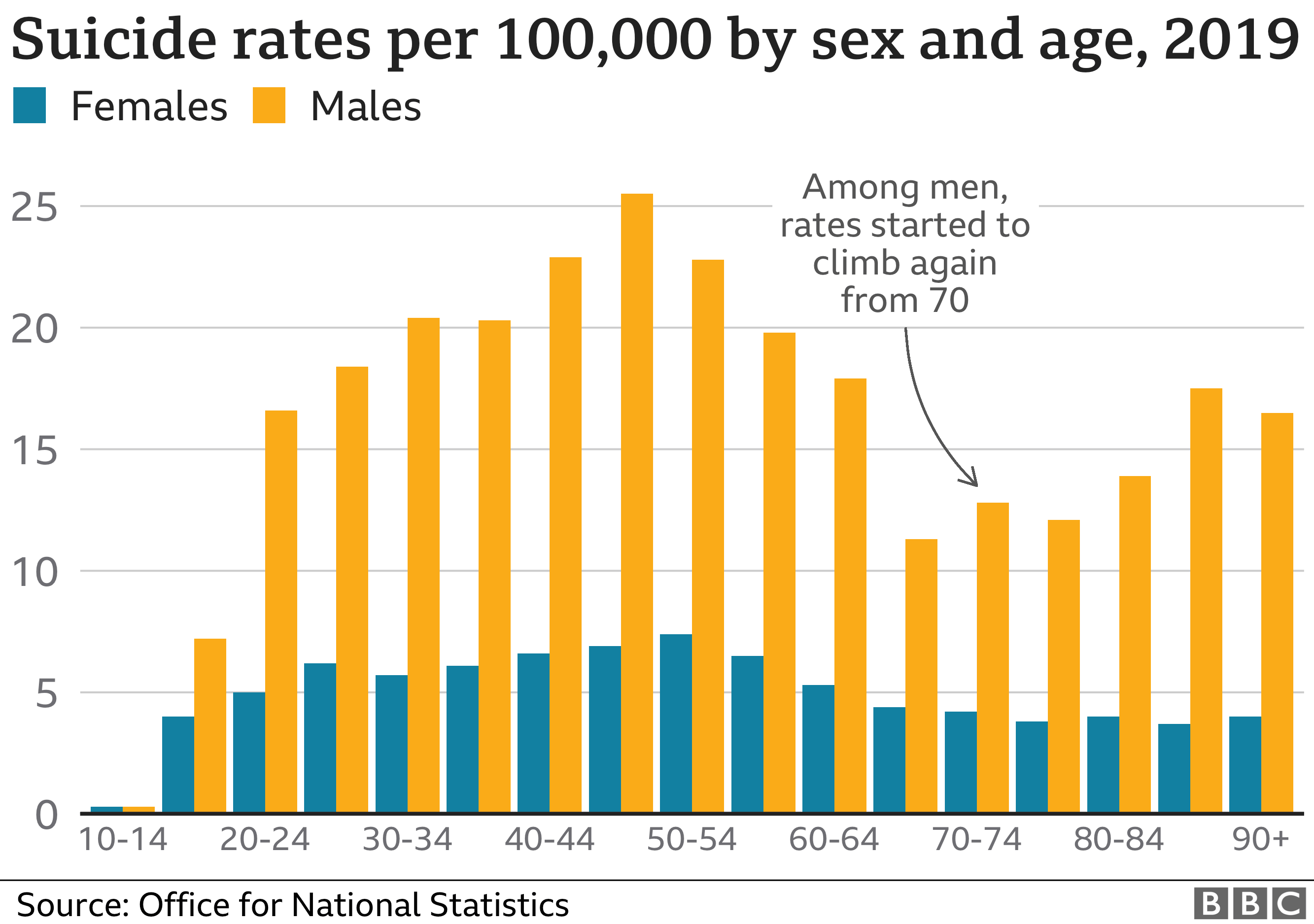
Despite men’s much greater efficiency and sense of justice, society correctly cares about men much less than it cares about women (see the great expression, “men are expendable, women are perishable”). Women who transition to men are shocked and complain about how they completely disappear in society’s eyes once they transition, even if they were ugly women before. Men are nothing if they don’t have status, and this makes sense; one man could impregnate a thousand women, so the vast majority of them are expendable. There is a statistic that women are far more likely than men to attempt suicide but men are much more likely to carry it out (cry for attention versus task fulfillment).
As an evolutionary strategy men have a much longer tail on their bell curve for many traits — including intelligence, aggression, creativity, etc. — which allows men to experiment much more in strategies that, if successful, increase their reproductive potential. Men are at the cutting edge of all technological innovation, they hugely disproportionally make up inventors, scientists and entrepreneurs, and women join these organizations at a later date once consolidation sets in. For example, either all or almost all of early Bitcoin and cryptocurrency adapters were men. All the great inventions and artistic masterpieces were made by men. But men are also much more likely to be homeless and have mental health issues. Men are also far more likely to die in industrial accidents, as they are wildly overrepresented in dangerous professions. Per Schopenhauer:
And you cannot expect anything else of women if you consider that the most distinguished intellects among the whole sex have never managed to produce a single achievement in the fine arts that is really great, genuine, and original; or given to the world any work of permanent value in any sphere. This is most strikingly shown in regard to painting, where mastery of technique is at least as much within their power as within ours—and hence they are diligent in cultivating it; but still, they have not a single great painting to boast of, just because they are deficient in that objectivity of mind which is so directly indispensable in painting. They never get beyond a subjective point of view. It is quite in keeping with this that ordinary women have no real susceptibility for art at all; for Nature proceeds in strict sequence—non facit saltum. And Huarte in his Examen de ingenios para las scienzias—a book which has been famous for three hundred years—denies women the possession of all the higher faculties. The case is not altered by particular and partial exceptions; taken as a whole, women are, and remain, thorough−going Philistines, and quite incurable.
The propaganda and financial pushes to invert these historically
Women are natural conformists to society’s norms, and they work hard to defend these norms. Because the west’s norms are based in egalitarianism, women are very defensive of this status quo, and they regularly imbibe Current Thing propaganda which has gotten exponentially worse since women mass-adopted smartphones in 2012, coinciding (coincidentally?) with the epoch of a new era per the Mayan calendar, because it dramatically shortened and sped up the feedback loop of shitliberalism.
The route to Hell is paved with women using smartphones
Women are generally shallow creatures whose emotionalism is easy to hijack with visual propaganda; show them photos of dead babies or dead animals and offer them a false solution to the problem and they will seize on it and demand it unequivocally. Men are much less likely to be fooled by propaganda than women are. Schopenhauer:
The weakness of their reasoning faculty also explains why it is that women show more sympathy for the unfortunate than men do, and so treat them with more kindness and interest; and why it is that, on the contrary, they are inferior to men in point of justice, and less honorable and conscientious. For it is just because their reasoning power is weak that present circumstances have such a hold over them, and those concrete things, which lie directly before their eyes, exercise a power which is seldom counteracted to any extent by abstract principles of thought, by fixed rules of conduct, firm resolutions, or, in general, by consideration for the past and the future, or regard for what is absent and remote. Accordingly, they possess the first and main elements that go to make a virtuous character, but they are deficient in those secondary qualities which are often a necessary instrument in the formation of it.
Remember: extending sympathy regularly past the family/friend level inevitably lends to “sympathetic blowout” where one doesn’t have the sympathy reserves to offer it to the people in your life who deserve it the most.
Now, when the societal norms are manipulated against women’s best interests, they have little to no defenses against such tactics. Globohomo has manipulated women since at least the end of the 19th century with so-called “women’s liberation”, both with work and with voting. They have attempted with great success to invert traditional gender roles rooted in evolution and biology, which has led to a tremendous amount of misery.
According to Trading Places producer Aaron Russo (who was dying of cancer at the time) the upper levels of globohomo including the Rockefellers created and pushed “women’s liberation” as a way to break up the nuclear family and to double the size of the workforce and hence the tax base. It was not a ground up effort, it was imposed from the top down. This is a three minute clip of a much longer interview:
This wasn’t done for women’s benefit; it was done to enhance the power and control of the central bank owners. And women generally vote for liberals, for “security” at the expense of liberty (to which they end up with neither2) and always for expanded government.
Inverting the male and female form sets female instincts against their natural roles. On a biological level most women deeply want to be mothers. They turn into crazed cat ladies, doubling down on insane liberalism when they aren’t able to do so. Plenty of women go to college or graduate school simply as a status signaling activity and then promptly get married and have kids, drop out of the workforce to become “Mrs. Degree” as soon as they are able to do so – and they are smart to do so, because that is what their biology demands! This would be a good result!
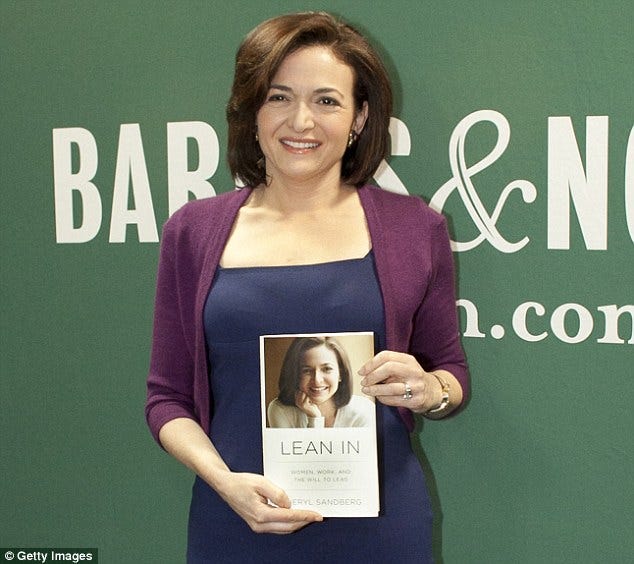
But society tells women that they aren’t complete without working, that merely being a mother is low status and beneath them. So women are torn; their biological desires are in conflict with their intense desire to conform to societal expectations (i.e. the expectations that globohomo sets). This will be discussed below further, but society tells women to put off having children as long as possible, to climb the corporate ladder, to engage in and care about politics, maybe have kids in their 30s, to “lean-in” (per Sheryl Sandberg) and to have their cake and eat it too.
She does not have your best interests at heart, ladies
But plenty of women lose the opportunity to ever have children as a result of this horrible messaging, and they are utterly unfulfilled by their work even if they tell themselves otherwise. They get fooled into thinking that because men are in the workforce, that is somehow better than being a stay at home mom, that work has intrinsic value — the men are hiding the best things in life from them, therefore be like a man and beat the system! They don’t understand that work sucks, men generally don’t like doing it but do it in order to support a family. See here for detailed rant on this, as the process of unhappy women working pushes men out of the workforce and prevents them from being able to pair bond to form a family, which results in a snowball effect of more unhappy women and more unemployed men and fewer families. It is a sad situation. And women generally aren’t very good at work either – by operating in a masculine work environment they almost always either become either pushovers or too-brittle and too-aggressive. Finding the golden mean between these extremes is exceedingly difficult for them. I know only a few women who have managed to find that center spot.
Meanwhile television and film push women as superhero kung-fu fighters, offering impossible one dimensional characters, 100 lb 5’2” women who toss around 6’5” muscled men casually. Mainstream media also pushes men to become much more effeminate with no masculine role models, only weak/dumb men like Homer Simpson who get bossed around by the superior women in their lives. This has contributed to men being unwilling to fight for their values, with much lower testosterone levels and higher rates of depression. Young men in particular need role models to model their behavior after, and the best that society provides today is Muslim sex trafficker scam artist Andrew Tate and crybaby weakling Jordan Peterson. Sad.
The American male role model
According to Schopenhauer, giving women too much influence and power inevitably leads to the downfall of society:
“In the PoliticsAristotle explains the great disadvantage which accrued to the Spartans from the fact that they conceded too much to their women, by giving them the right of inheritance and dower, and a great amount of independence; and he shows how much this contributed to Sparta’s fall. May it not be the case in France that the influence of women, which went on increasing steadily from the time of Louis XIII., was to blame for that gradual corruption of the Court and the Government, which brought about the Revolution of 1789, of which all subsequent disturbances have been the fruit? However that may be, the false position which women occupy, demonstrated as it is, in the most glaring way, by the institution of the lady, is a fundamental defect in our social scheme, and this defect, proceeding from the very heart of it, must spread its baneful influence in all directions.”
Dating in the modern era
Women love the interpersonal dance of mating rituals, per Schopenhauer: “And so we find that young girls, in their hearts, look upon domestic affairs or work of any kind as of secondary importance, if not actually as a mere jest. The only business that really claims their earnest attention is love, making conquests, and everything connected with this—dress, dancing, and so on.”
Just as men try to acquire status by mastering aspects of reality, women try to acquire status by mastering the conquest of men. I have seen many men, masters of their work domain and very wealthy and powerful, controlled by their angry, perpetually unsatisfied woman. Schopenhauer:
A man tries to acquire direct mastery over things, either by understanding them, or by forcing them to do his will. But a woman is always and everywhere reduced to obtaining this mastery indirectly, namely, through a man; and whatever direct mastery she may have is entirely confined to him.And so it lies in woman’s nature to look upon everything only as a means for conquering man; and if she takes an interest in anything else, it is simulated—a mere roundabout way of gaining her ends by coquetry, and feigning what she does not feel. Hence, even Rousseau declared: Women have, in general, no love for any art; they have no proper knowledge of any; and they have no genius.
Schopenhauer warns not to “put the pussy on the pedestal” or to “white knight” women, commenting on this perennial issue 150 years ago. Women are not deserving of men’s veneration, for while they appear to beta and omega Reddit-tier males as untouchable Goddesses needing protection, those who actually know and understand the nature of women know that they do not deserve anything like this veneration:
But in the West, the woman, and especially the lady, finds herself in a false position; for woman, rightly called by the ancients, sexus sequior, is by no means fit to be the object of our honor and veneration, or to hold her head higher than man and be on equal terms with him. The consequences of this false position are sufficiently obvious. Accordingly, it would be a very desirable thing if this Number−Two of the human race were in Europe also relegated to her natural place, and an end put to that lady nuisance, which not only moves all Asia to laughter, but would have been ridiculed by Greece and Rome as well. It is impossible to calculate the good effects which such a change would bring about in our social, civil and political arrangements. There would be no necessity for the Salic law: it would be a superfluous truism. In Europe the lady, strictly so−called, is a being who should not exist at all; she should be either a housewife or a girl who hopes to become one; and she should be brought up, not to be arrogant, but to be thrifty and submissive. It is just because there are such people as ladies in Europe that the women of the lower classes, that is to say, the great majority of the sex, are much more unhappy than they are in the East.
I don’t want to focus on the dating aspect in this post too much – it’s been done well elsewhere – but basically, modern society has unleashed unrestrained female hypergamy where women want the top 5% of men, and all other men they see as invisible. This is a result of a lot of factors, but especially the weakening of organized religion which enforced community norms and restricted female sexual rights and behavior, along with the advent of nihilism and ubiquitous access to birth control and abortion3, topped off with widely accessible generous welfare that allows a single woman with a child to survive without support from a man. Who needs a stable, supportive beta male provider when the government will step into that role instead?
Women desperately want a 6’3” handsome alpha Chad — and most women can get this on dating apps (the average woman will be overwhelmed with a deluge of responses from hundreds or thousands of men, leading to massively inflated expectations and ego), but only for a short term, casual hookup. A study shows that the top 5% of US men account for more sex with women than the bottom 50% (but these men pay a big price for staying on the sexual marketplace and racking up hundreds or thousands of lays). In any free market, the top few companies end up with monopolies or oligarchies and they cut off access to the market by others — that’s how it naturally evolves. And the sexual marketplace is no different. Many short, unattractive “beta” males have created fake online dating profiles as a top 5% male and have been shocked at how direct and degrading they can be toward women and by and large women are eager to give them whatever is demanded. Most women do not care how men talk or act toward them; they simply want Chad. Here’s a discussion about it. Other men have tried to mimic alpha behaviors and become “pick-up artists” to limited success, a phenomenon discussed here.
Women don’t consciously understand this process, though; they don’t understand that Chad is more than happy to pump-and-dump them but will not commit to them, and being pumped-and-dumped by Chad too many times sours their relationships with men in general. The concept of “brain cum” is real (see here for a concurrent take and here for a semi-critical take); sperm can cross the blood/brain barrier and get lodged in the female brain, impacting their ability to pair bond with future partners. A man traditionally demanding a virgin bride has been confirmed by science — a woman with no body count, no alpha Chad brain-cum lodged in their brain, is going to form a much stronger pair bond than non-virgins *generally*, and the higher a woman’s body count, the harder their ability to pair bond. This is also basic common sense, which has been seen as déclassé since the rise of globohomo.
In a better case scenario, women approaching “the Wall”4 settle for a beta provider male and, deeply unhappy, push out a couple kids before initiating divorce. This is a better case scenario because these women at least procreate; many miss their opportunity waiting forever for Chad to settle down with them.
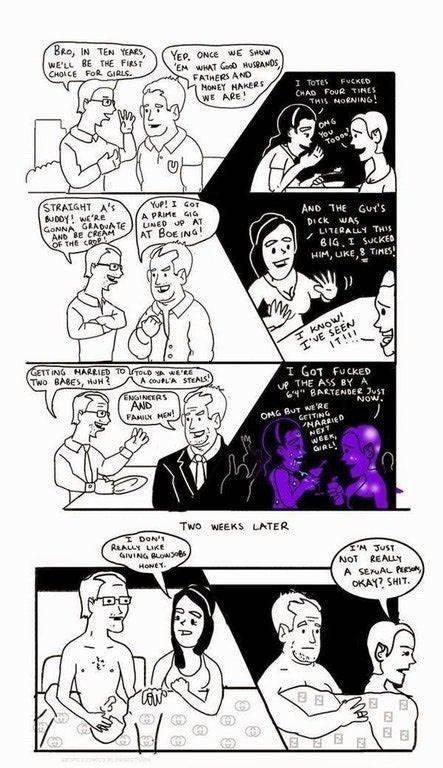
A Red Pill comic. Apologies for the crude language.
Without the ability for most men to find a date or a spouse, due to a combination of obesity, easily accessible porn and entertainment, and a general spirit of secular materialist consumerism, a huge percentage of the country’s young men have become bitter, insular incels who have dropped out of society. This is a disaster as the ability to pair bond for middle class white men provided a stabilizing influence that allowed civilization to flourish. The rise of Christianity strongly limited sexual opportunities and led to 1:1 pair bonding which were not based on cousin marriage, contributed to the rise of western civilization compared to Islam which was heavily focused on cousin marriages and kept average IQ low. The ubiquitous access to birth control, abortion, welfare for single mothers and a lack of religion which enforced societal norms and restricted female sexual rights and behavior has prevented normal men from forming families, leading to collapsed fertility rates.
Marriage in the modern era
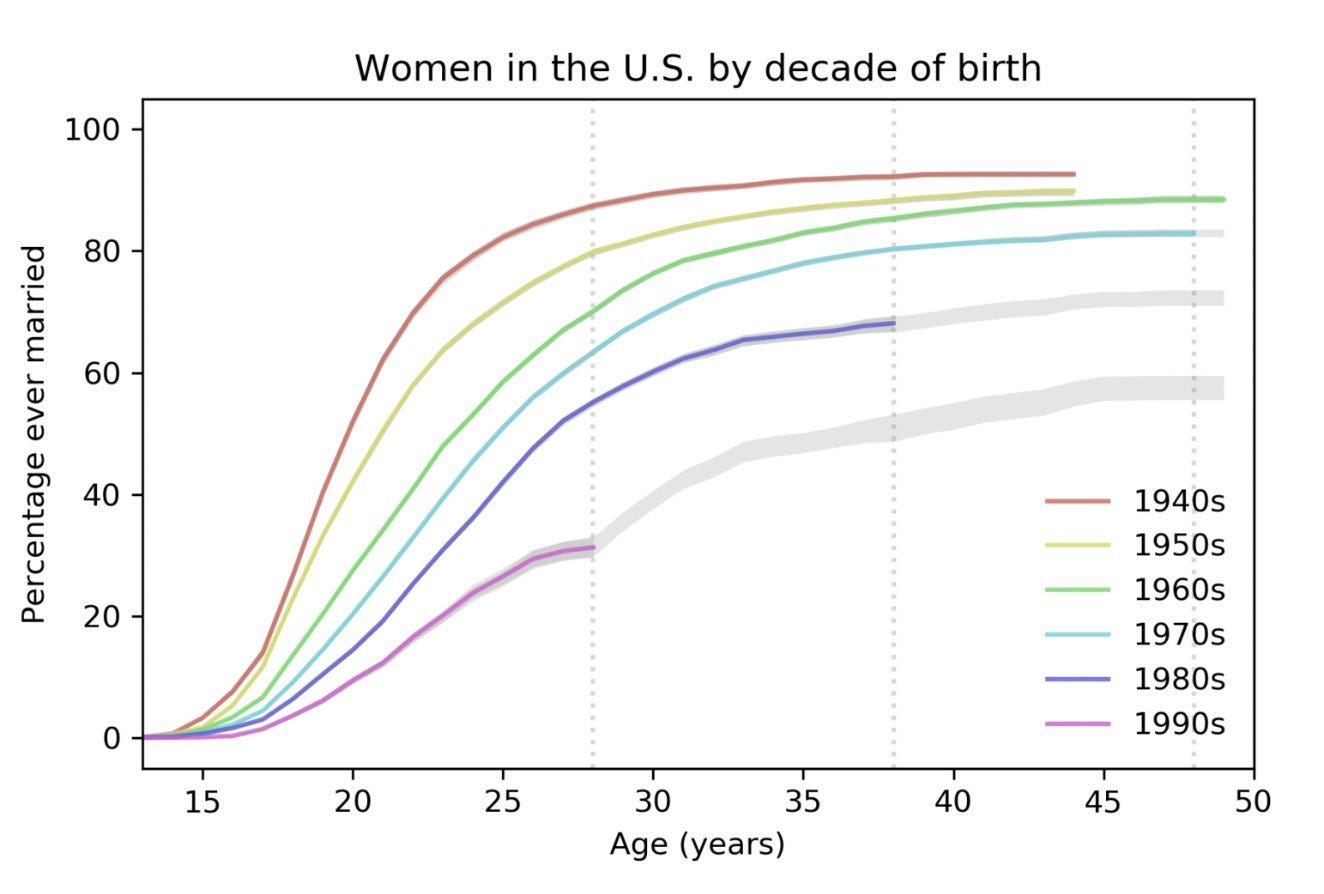
Just like women only want to date the top few percentage of men, they are only willing to marry up via hypergamy as well. The difference is that for marriage women will factor job, wealth, and societal status more than simply height, alphaness and looks for casual dating and sex. For example, women want to marry men of equal or higher educational levels than they are, and they would rather be single forever than compromise on this. Marrying equal or down is disgusting to women, a kind of death. But boys are falling behind in school due to “the future is female” propaganda and discrimination against them in higher education, to the point that in 2015/2016 56% of college students were female and 44% were male. Because of this women, due to their requirements, have a much decreased pool of acceptable marriage candidates. On the other hand, men of high status don’t care about a woman’s status, only her youth, looks, and willingness to please. This is why Lee Kuan Yew launched a whole campaign around this topic in Singapore, because highly educated women were not able to marry or have children because highly educated men married downwards instead of getting paired with annoying hyper-educated entitled shrews. Lee basically begged high class men to suck it up and marry these annoying women because they were higher IQ and IQ is highly heritable (although IQ is strongly associated with having fewer children, a strong dysgenic effect).
Marriage rates are collapsing as a result of these globohomo-backed trends, which is going to dramatically transform society with a huge percent of the male population checked out mentally and a huge percent of aging women turning into insane, embittered cat ladies. This is how civilization collapses:
See this wonderful post by Arctotherium at Aporia Magazine who goes into detail about how high male status and low female status leads to high fertility rates, and low male status and high female status leads to collapsed fertility rates, which is a theme I also covered previously.
Marriage is dramatically slanted against men, and this is not a new phenomenon. It’s just that the degree of slant has gotten much worse for men in recent decades. Here’s Schopenhauer on how marriage is bad for men 150 years ago:
The laws of marriage prevailing in Europe consider the woman as the equivalent of the man—start, that is to say, from a wrong position. In our part of the world where monogamy is the rule, to marry means to halve one’s rights and double one’s duties. Now, when the laws gave women equal rights with man, they ought to have also endowed her with a masculine intellect. But the fact is, that just in proportion as the honors and privileges which the laws accord to women, exceed the amount which nature gives, is there a diminution in the number of women who really participate in these privileges; and all the remainder are deprived of their natural rights by just so much as is given to the others over and above their share. For the institution of monogamy, and the laws of marriage which it entails, bestow upon the woman an unnatural position of privilege, by considering her throughout as the full equivalent of the man, which is by no means the case; and seeing this, men who are shrewd and prudent very often scruple to make so great a sacrifice and to acquiesce in so unfair an arrangement.
Due to women adapting smartphones starting in 2012, as mentioned above, the feedback loop for shitliberalism has dramatically shortened; most women, fastened deeply into the Current Thing, regularly imbibe establishment propaganda and enforce it within the household. They go on Reddit and other liberal, female centered censored websites to reinforce their feedback loops when they are not playing mind-numbing banal, retarded iPhone games, that is. Whether the Current Thing is gay marriage hysteria, anti-Trump hysteria, COVID/fraudvirus, Ukraine/Russia, or Israel/Gaza, they blindly follow whatever the establishment propaganda of the moment is, completely impervious to arguments or debates, their eyes glazed over in a religious purification ritual to ward away the evils of non-governmental approved “disinformation”. Seeing how rapidly and awfully this phenomenon has taken control over the female birdbrain is a sight to behold, impervious to outside influence or control, and it can make exerting control over the household extremely difficult. This is a major part of why so many divorces occurred during so-called “COVID”.
This is a microcosm of the inability for dissidents to have connections to non-dissidents in the modern era, where the personal has become the political. Women are not dissidents because women are never at the vanguard of movements, and dissidence to globohomo is at a nascent stage. The best you’ll find is an apolitical woman (rare today due to the smartphone issue), a standard issue conservative woman (i.e. a liberal of a decade or two ago), or at very best a religious woman who treats her religion seriously. Even then there will likely be problems. And remember — women’s brains change on a biochemical level after children. What you think you buy into is not what you get; they become bossy, demanding, egocentric, hysterical and crying, the opposite of what they were pre-marriage. Women hate an idle man; sit down to relax, to watch sports or play video games, and watch how she grows to resent and hate you. You exist as an extension of her status and you must always be working to increase that status further. And it’s not like they even necessarily plan it as a “gotcha” (although both sexes put their best foot forward at the start of a relationship, hiding their flaws) — it simply results from those biochemical changes. Let this be a warning…
This goes back to the nature of women. The number of married couples I know who are legitimately happy is maybe two or three out of dozens. Of the ones that are “happy”, the man is a natural pushover by disposition and the woman calls the shots. You are not going to find your “Partner in Crime” or a “highly intelligent woman to share deep, meaningful conversations with.” It. Simply. Does. Not. Exist. There is nothing really to talk with women about other than child rearing, gossip or travel/vacation plans — otherwise the woman will talk incessantly about nothing (usually workplace drama if she works, or her friend’s personal problems otherwise) in a droning, repetitive voice, where you grunt occasional acknowledgment, then space out until she asks out of the blue, “Are you listening to me?” and you scramble with a world-salad response. They love to complain endlessly not for any intent at finding a solution, but just because they like to hear themselves talk and complain.
There is little commonality otherwise; commonality is held with male friends who can wrestle with deep ideas, metaphysics and philosophy. Women are simply not curious about the world; there are some exceptions, but even those exceptions are simply curious about their areas of interest, while a significant portion of men are curious about the world generally. This is why male-only clubs were so successful back in the day; a place to get away from nagging, shrieking, anti-fun women, where men could be chill and bullshit with each other in a calm, pleasant environment.5 Once women were let in the fun immediately died. And if called out on it, instead of any introspection or self-awareness, they will lash out at the evil white male patriarchy holding women down from experiencing the wonders that the men are so selfishly hiding for themselves! Go form your own clubs, women, please.
With respect to married women, especially with children, problems are created whether or not the woman is working. Generally it is better for a woman to work after having children6, because otherwise she gradually loses an understanding and appreciation for how difficult it is to make money, and they turn into “Brunch Shrews” once their children are in school where they go out with their friends to brunch, have mimosas or champaign at lunch, go shopping, then go home for more wine, stewing in gradually increasing emptiness and unhappiness until they fuck the pool boy. But if they are working, even part-time, and especially due to societal propaganda telling them men “need to do their share”, women increasingly want to split housework and childcare 50/50 with the man, then they either unconsciously resent the husband for being “beta” and changing diapers and doing housework, i.e. being a footstool they can order around7, or they resent the man for not chipping in enough even if he makes much more money. Lose-lose. There are regular viral videos of an overworked woman crying every month or so, or more often.
Fine wine, tall men, happy times – brunch!
Childcare and household chores do not come naturally to men, though, so a blending of responsibility instead of clear earmarked avenues of control (i.e. man making the money, woman in charge of the household, man consults woman but has final say over family decisions) leads to a lot of stress, arguments and unhappiness, just the way globohomo likes it. It is much better for there to be clear-cut, demarcated spheres of control for both the man and the woman. A man is unable to enforce rules within the household because (1) physical punishments are absolutely forbidden as a hard and fast rule in western society (and increasingly “emotional abuse” is treated in much the same manner, an amorphous standard that is infinitely debatable) and (2) divorce dramatically favors women.
Divorce in the modern era
I don’t want to write too much about divorce, as it’s well known that it dramatically favors women both for custody, child support and (sometimes lifelong) alimony. Women are afforded the decisions for education, vaccinations, and even gender transitioning; sometimes men snap after such one-sided, egregious results. More than half of marriages end in divorce and a great percentage of those who do not divorce are miserable.
Because women know that divorce will usually favor them, they feel emboldened within a marriage to torture their husband with endless verbal and other abuse; women initiate about 70% or more of all divorces, often while self-deluding themselves as victims. This is not entirely their fault; men are largely unworthy of respect due to lacking masculine role models, dealing with obesity and depression and lack of work opportunities, and especially due to these inverted gender norms. Why would women want to stay with an effeminate, sniveling so-called “man”? It is a sad situation that the very institution that gave rise to western civilization and healthy families has been inverted as an institution of destruction.
Also, per Judith Wallerstein’s famous study, children of divorce – no matter how good the divorce or how bad the marriage – universally have worse life outcomes compared to children whose parents stay together.
What’s there to be done?
The point of this post is very similar to the philosophical pessimism post: to set proper expectations. Marriage is set up in our society as a panacea, that as long as it is properly tendered by fulfilling each other’s needs you can create some kind of mini-oasis of happiness and stability. And maybe a few couples do have this — but it is a rare thing, and those who find it kind of luck into it, without rhythm or reason. This post, despite the clinical explanation of a slew of horrors, is not meant to discourage those from procreating — rather, so you can view male and female nature with a hopefully more sober mind to better prepare yourself for dating and marriage. And perhaps in this day and age it’s better to have such children without a marriage contract, which is used as a boat anchor to tie men into a lifetime of misery of alimony and child support without a strong legal position to be able to raise children in the way in which you would like.8 Or if you do decide to proceed with marriage, at least you’ll have a bit of an understanding that the female brain changes biochemically after having children and therefore their personalities and actions dramatically change, that they are birdbrain half-adults who are mostly incapable of deep conversations, that they seek out the establishment Hive Mind to download and promote the Current Thing, and that the law in every respect will be heavily biased against the man.
Subscribe: Email delivery remains on Substack for now.
1 Although there are signs that this trend is reverting back to its historic norms where the wealthy have more children than the poor.
2 Benjamin Franklin: “People willing to trade their freedom for temporary security deserve neither and will lose both.”
3 During its decline into decadence Rome used a birth control method using a plant called Silphium which led to the plant’s extinction.
4 Women develop a fear of the Wall — i.e. their impending dramatic decline in fertility, and eventually becoming invisible to men, which is a shocking and jarring event for formerly attractive women where life was so easy for them — around the age of 30. Before 30 and it is all about chasing Chad; when they hit 30 a switch flips and The Fear develops.
5 Women generally aren’t funny and don’t understand humor, which is born from deep pain. Instead they use the social status of comedians or the audience as a gauge for how much to find humor in the words of the comic. This is also why female attempts at humor are always crude, crass, and relate to their vaginas; they are generally incapable at societal analysis and relate everything to themselves.
6 But women in the workforce are mostly paper pushers (much more so than men), earning enough money to pay low IQ third world immigrants to watch their children in preschool for dozens of hours a week. This breaks the maternal bond and is generally terrible for children’s development. This whole system is sick.
7 Nietzsche is right that everything alive possesses a will to power, which is a will to increased status, so women in both dating and in marriage regularly “shit test” their man to ping their current status level, as they only want to be with a man whose status is higher than their own (to mooch off it and thereby increase their own status; this is why women only date upward while men date lower in status, as men only care about youth, beauty, and ease of companionship). One “beats” a shit-test by not getting emotionally disturbed by one and being okay with or without the woman, ultimately, and one “loses” a shit-test by getting emotionally angry and/or desperately clinging to one. Shit tests never end, although they decrease in regularity if the shit-test is overcome, and increases in regularity otherwise.
8 Or you could sexpat to a third world country to have children in, as by far the most intense gender form inversion propaganda has been pushed in the white west, leading to extreme expectations and extraordinarily difficult female attitudes, and third world women are generally cheerful, grateful, and fit the female form. But this isn’t a civilizational answer, and such race-mixing also further globohomo’s goals to turn the world into a mixed-race, low IQ interminable soup.
This is part 4 of a reoccurring series highlighting specific individuals (either living or historical figures who are not well known) who have displayed true, unquestionable courage standing up to the globohomo behemoth against unrelenting pressures, serving as a bit of a counter to the typical grim perspective pushed on this Substack. These individuals pay a price, often a big price, for their courage, and for standing up anyway they deserve to be applauded. Part 1 covers Ian Smith, who stood up to global hysteria around the COVID narrative at its peak; Part 2 covers Julian Assange, who pushed a vision of radical governmental transparency at odds with globohomo’s desire for control over a worldwide slave colony; and Part 3 covers Gareth Jones, who was the only reporter to reveal the Holodomor to the world.
“It is utterly indefensible that we should go on piling up debts under an arbitrary system which it is impossible to physically comply with except by reducing the masses of mankind to a constantly lower and lower industrial state.” – Charles August Lindbergh, 1917
Charles August Lindbergh was a Swedish-born and U.S. raised farmer and Congressman, mostly known as the father of famed aviator Charles Lindbergh. Despite his enormous popularity, Lindbergh the aviator was viciously smeared by the media and semi-destroyed for trying to keep America out of World War 2 with the America First Committee, which later formed the basis of Trump’s “America First” and which recently got made into a gross in-your-face propaganda HBO miniseries which I don’t plan to watch. Like father like son: Charles August Lindbergh had tried to keep America out of World War 1, and he bitterly opposed the creation of the monstrous Federal Reserve in 1913, which made me interested in his story.
Lindbergh father and sonCharles August Lindbergh. Damn fine physiognomy, damn fine. Honest, strong and true.
To get a sense for the mind of the man I picked up one of his books, “Why Is Your Country at War and What Happens to You after the War and Related Subjects.” Serving as a pro-peace and anti-Federal Reserve polemic, it was originally scheduled to be published in 1917 when Lindbergh was an active Congressman, but Federal agents destroyed the printing plates under the Comstock laws. It was eventually published posthumously in 1934 long after the relevant moment had passed. Seeing books censored makes me interested in them, and this was no exception; please note, conservatives, that America has never possessed the mythical fabled unicorn of “freedom of speech”….
Lindbergh’s pro-peace sentiments in the lead-up to war were widely seen as being pro-German. Lindbergh was one of only 14 congressmen to vote against the arming of United States merchant ships which led to war. For background, although Lindbergh was Swedish the United States had a large population of German immigrants, and globohomo asking them to wage war against their homeland was always a tricky business. There were about 5.5 million Germans in America by 1920, mostly settled in small farms throughout the Midwest. Hardworking and industrious, they suffered handedly at the policies of the monopolistic big banks of the northeast which sought to strip them of their holdings and impoverish them.
German population density in America, 1872
Compare this to the population of Germany itself, which in 1920 was roughly 60 million. In other words, Germany had lost around 10% of its population to emigration to America over a hundred year period — an astonishing percent. And Germans in America were, just as they were everywhere else, extremely productive.1 Indeed, this issue was apparently forefront on Hitler’s mind after World War 1 when he realized so many of the Allied soldiers were German emigres, per Cesar Tort.
The flip side of this was that it was seen as unpatriotic to be pro-German; there was a lot of American anti-German sentiment and thousands of German Americans were rounded up and interned during the war. As such, Lindbergh crouched his book defensively, writing: “It is impossible according to the big press to be a true American unless you are pro-British. If you are really for America first, last and all the time, and solely for America and for the masses primarily, then you are classed as pro-German by the big press which are supported by the speculators. In the discussion of all subjects in this volume, it is my aim to impartially state the truth, whether it favors or disfavors England, Germany or even America itself.” Keep in mind that just like in World War 2, the vast majority of the U.S. public was isolationist and against war until manipulated by the press and politicians into it. Lindbergh prefaced his book with a reprint of William W. Clay’s anti-war poem “What for?”, which is touching enough to include here:
This is what a poem should be: direct and touching at the heart. I suppose this is why I like few poems.
Lindbergh correctly believed that speculative interests had taken control of the country via the Federal Reserve Act, and they wanted to push America into war in order to profit immensely, backstopped by the masses via enormous increases in public debt and felt in the form of inflation:
We elect our own representatives, and if we ourselves know what we want and see to it that they, too, know, there would be no trouble in their truly representing us. The trouble has been largely with ourselves. We have not known what we really wanted, while “big business,” thriving off our earnings, knows exactly what it wants, has abundant means, and is completely organized to act and does act in every emergency for its own selfish ends. The special interests have experts to draft their plans. Did we not see how quickly they took hold of the war, at the time it started in Europe and again when we declared war? They are always ready, because they get the earnings from our toil. They know just what they want and have always gotten our representatives to grant it to them. In the last few years they have gotten their greatest increase of wealth.
To elaborate on this topic further, Lindbergh continued:
Already since the war began in Europe, the financial speculators have exported $6,000,000,000 in value of American products in excess of the products that we Americans got back in exchange, which fact the speculators have used as an excuse to raise the price to American consumers on the “trust” controlled products approximately $17,000,000,000 over the former prices…That is what hte press calls a “favorable” balance of trade – favorable to starve the masses and to glut the speculators.
In line with this disastrous export policy, and as a part of the speculators scheme to mulch the public on a gigantic scale while the war should last, they started the war propaganda preparedness campaign. They knew that the people were favorable to the Government itself making proper arrangements to meet such emergencies as might arise out of the existing chaotic conditions, so they wanted it all done in a way that would give the greatest control to speculators who are in charge of the banking system, and with the aid of their press, they succeeded in lining things up to suit them….
It has indeed been humiliating to the American people to see how the wealth grabbers, owners of the “big press,” actually attempt by scurrilous editorials and specially prepared articles to drive the people as if we were a lot of cattle, to buy bonds, subscribe to the Red Cross, to register for conscription and all the other things….What right, anyway, has the “big press” to heckle the people as if we really belonged to the wealth grabbers and were their chattel property?
This is basically how it works and how it has always worked:
NPCs will side with the globohomo overlords against dissidents every single time, and they will never learn their lesson no matter how bad things get for them. This is simply human nature and pattern recognition over historical and recent terms.
Additionally, the Federal Reserve printed money out of thin air then lent it to the big banks at low rates of interest (3% or so) which then turned around and lent at 6-10% rates of interest to farmers, allowing an intermediary to bleed the farmers dry without doing any work or taking any risk themselves: “They were named “Federal Reserve” in order to give us the impression that they are Government banks. Our Government issues money to them, but prohibits their loaning it to us – allows them to loan it to their owner banks only. In connection with their owner banks they may expand and contract the currency in order to enable their owners to exploit us in speculation, and compel us to pay outrageous rates of interest.” Lindbergh correctly identified the hidden Jekyll Island meeting in this book, which was astonishing as it was written in 1917, only seven years after the smoke-filled criminal enterprise was formed.
Per Wiki, “Lindbergh declared, “This Act establishes the most gigantic trust on Earth. When the President signs this bill, the invisible government by the Monetary Power will be legalized, the people may not know it immediately, but the day of reckoning is only a few years removed…The worst legislative crime of the ages is perpetrated by this banking bill.”In 1917 Lindbergh brought articles of impeachment against members of the Federal Reserve Board of Governors, including Paul Warburg and William P. G. Harding, charging that they were involved “…in a conspiracy to violate the Constitution and laws of the United States…” He named Frank Vanderlip, Nelson Aldrich, Andrew Piatt, Henry P. Davidson and both Kuhn, Loeb & Co. and J.P. Morgan & Company as among the principle agents in perpetuating what the called this Money Trust, along with cooperating entities such as the Rockefeller Institute and Carnegie Foundation.
Lindbergh believed that the federal government must establish a financial system that is independent of private monopoly control, which he remains absolutely correct on.
Despite Lindbergh having such integrity and prescience about what was unfolding, he wasn’t perfect. He thought that “We the People” could overcome the machinations of the central bank owners, something that has – thus far – been an abject failure. He was also a huge proponent of women’s right to vote, which would ultimately serve as the impetus for a vastly increased globohomo state given that women prefer safety to freedom by a significant margin, how much easier women are generally to manipulate than men with appeals to emotion, and how women prefer big government and greater administrative layers than men do.
Ultimately, Lindbergh was hounded out of Congress by the globohomo media and then ran unsuccessfully for both Senate and Governor, losing for the same reasons. The power of the media even in that early, crude age was close to insurmountable. His son Charles worked as his driver and “never forgot the hostile crowds that harassed his father, or the way the press derided him”, something he would later experience himself. Still, doing the right thing does not mean doing the successful thing, and for fighting so hard against our parasitic financial overclass, against their endless greed regardless of the human cost involved, and in support of mankind’s independence, he deserves to be highlighted as a Profile in Courage.
Thanks for reading, and Happy New Year.
Subscribe: Email delivery remains on Substack for now.
1 i.e. See Solzhenitsyn in Gulag Archipelago, Volume 3, p. 400: “Far and away the most industrious [of the gulag prisoners] were the Germans. They had hacked themselves free of their past lives more resolutely than any of the others (and what sort of homeland had they had on the Volga or the Manych?). As once they had rooted themselves in Catherine’s fecund allotments, so now they put down roots in the harsh and barren soil Stalin had given, abandoned themselves to this new land of exile as their final home. They began settling in, not temporarily, until the next amnesty, the first act of clemency by the Tsar, but forever. They had been exiled in 1941 with not a stick or a stitch, but they were good husbandmen and indefatigable, they did not fall into despondency, and even in this place set to work as methodically and sensibly as ever. Is there any wilderness on earth which Germans could not turn into a land of plenty? Not for nothing did Russians say in the old days that “a German is like a willow tree – stick it in anywhere and it will take.” In the mines, in Machine and Tractor Stations, in state farms, wherever it might be, the bosses could not find words enough to praise the Germans – they had never had better workers. By the fifties the Germans – in comparison with the exiles and even with the locals – had the stoutest, roomiest, and neatest houses, the biggest pigs, the best milch cows. Their daughters grew up to be much-sought-after brides, not only because their parents were well off, but – in the depraved world around the camps – because of their purity and strict morals.”
Merry Christmas to those who celebrated it. To me this is the best time of year, filled with family togetherness, where we look back on the bygone year and look forward to the upcoming one.
The blogger Zman has an ongoing end-of-year tradition where he makes a series of predictions for the following year, and then reviews the predictions that he made the previous year. You can see his predictions for 2023 here, which I think were pretty hit or miss (learning toward miss). I look forward to reading his 2024 predictions and his 2023 review, which should come (I assume) this week; they’re fun to revisit.1
Political predictions are a curious and difficult thing. For one thing, it’s hard to know exactly what globohomo is planning from outside their diabolical, oligarchical metaphorically smoke-filled rooms. As FDR famously said: “In politics, nothing happens by accident. If it happens, you can bet it was planned that way.” I strongly suspect they use deep AI analysis to determine the best methods to undermine and destroy society in ways that the public is not prepared for; the public was not at all prepared for a worldwide fake pandemic and the complete shutdown of the world in order to overthrow Trump, which would have been unbelievable and bad writing even in a science fiction novel. The world was not prepared for the latest Israel/Hamas war, or prior to that a war between Russia and Ukraine. They also like to choose events that create a shatter effect among their enemies; COVID, Russia/Ukraine, Israel/Hamas created a tremendous amount of infighting among the right. In other words, whatever scam(s) they plan to unleash in 2024 will probably be unpredictable.
As such, it’s better to focus on longer-term trends which are far more predictable, especially longer-term trends which are based on society’s core values that enhance the intensity of the egalitarian ratchet effect (ongoing for well over a thousand years), the continued stranglehold of Rothschild central bank ownership and control (four hundred years), and the continued decline of everyone’s quality of life as we descend into a neoliberal feudalism Hellscape (fifty plus years). These trends are so well-established that predicting their continuation and intensification is an easy thing to do. The closer one gets to the level of day-to-day politics, though, the less accurate one is likely going to be.
Furthermore, the hope is that most of the posts on this blog possess longevity by focusing on such longer-term trends that will make them interesting and readable years later; the closer one gets to day-to-day politics, the less longevity the posts will ultimately possess. People continue to read philosophers like Nietzsche and Schopenhauer or even Junger because their writings are timeless, transcending the day-to-day; not to put myself near their level, but the intent is somewhat similar.
With that said, political predictions for the upcoming year is a fun thing to do. So in this spirit, here are mine. Like Zman, my intent will be (so long as I am still writing) to revisit my predictions at the end of 2024 and, if this goes well, perhaps continue the tradition into the following year.
Nostradamus, king of predictions
Easier predictions based on the continuation of already existing trends:
The U.S. continues to allow in 5-7+ million illegals like every year since Biden took power, even if Democrats offer the gullible masses a fig leaf by pretending to close the border and using the media to hype it. Expect media reporting a drop in crossings or an increase in border enforcement to be fake.
$2-5 trillion dollar deficit spending continues like every year since Biden took power, which isn’t much different than under Trump.
Food inflation will continue to be 15-20% even as official inflation numbers are heavily manipulated downwards.
AI censorship of dissidents will continue to get worse, perhaps much worse.
Regardless of #4, anti-semitism levels throughout the West will continue to intensify.
The Russia/Ukraine war will continue either in a hot or cold form as a way to continue to rape the American taxpayer. In other words, if there is a truce, like the earlier Minsk agreements, it will be a temporary truce to recharge for the next round of conflict and the American taxpayer will continue to pay a massive and highly corrupt bill, the vast majority of which will be funneled back into the hands of the transnational security elite. There are signs that such a ridiculous “truce” will happen, such as globohomo outlet Washington Post quietly removing the Ukraine war section from its website:This is also foreboding as it frees up the U.S. military for war elsewhere: Iran, China, or a brutal crackdown against white Middle America.
There will be further movement toward the implementation of CBDCs worldwide. The beta-testing through crypto (controlled via the Tether scam) is over, and now globohomo just needs a triggering event if they want to implement it quickly, or they could slowly introduce it over time. CBDCs will be the greatest power grab in human history and turn humanity into impoverished serfs.
The Fed will lower interest rates through 2024 to help Biden but then spike rates significantly in 2025 regardless of who wins.
Unpopular and astroturfed Nimarata Randhawa “Nikki Haley” and rapidly fading “Shoelift Meatball” Ron DeSantis are clearly hoping Trump is either removed from the ballot and/or imprisoned so they can swoop in. If this happens whoever emerges as the victor will lose against the Democrat as Trump voters stay home (Vivek disagrees). Alternatively, Randhawa is angling for a VP role where she would serve as a globohomo deep state plant, much like Mike Pence was.2
Despite the real economy being terrible, the Fed will keep the stock market propped up with infinite printed loldollars, also to help Democrats.
Polling will continue to be used to massage and manipulate, to lead public opinion instead of reflect it. Expect all polling to be largely fake.
RFK Jr.’s third party candidacy will be boosted by the media so long as Trump is running, because Trump voters are attracted to his anti-COVID vaccine stance even though RFK is otherwise a standard liberal with a screechy, terrible voice. In other words, his third party bid will be highlighted to undermine Trump.
Some possibilities include:
U.S. unleashing Cyber Polygon (i.e. a massive cyber attack against U.S. financial companies, electric and other infrastructure, which has already been prepped for just as the COVID scam was prepped for with Event 201) as a false flag attack by China, Iran or Russia in order to use it as justification to ban dissidents from the internet, steal their money, and cause general chaos.Participants in the Cyber Polygon 2020 event; see also here
Escalation of war with Iran or China via a false flag attack, perhaps a dirty bomb or a sinking of an aircraft carrier. I think the odds of a Chinese invasion of Taiwan are very low.
Banning Trump from the ballot in order to trigger a white Christian rebellion in order for globohomo to then crush it. Because the media more or less singularly determines what the public focuses on, whites and Christians have essentially zero representation among the institutions of power in America, and Middle America has proven themselves to be toothless over the past couple years (see their weak reactions to COVID and the 2020 election steal) globohomo will pick how, when, and under what circumstances such a controlled “rebellion” develops. Also remember that the Supreme Court is pretty liberal: it has two conservatives (Thomas and Alito), three liberals, and four nominally “Republican” justices who lean liberal except for pet issues like abortion, and they can set this off as well.
Rigging the election against Trump like 2020 or against the Republicans in 2022 with ballot harvesting, fraudulent vote by mail (which the Democrats control via installation of a globohomo tsar at the postal service), and vote-adjusted voting machines.
Smaller odds: Letting Trump win and then crush the economy and leave him with the smoldering ruins. In other words, even if he somehow wins I expect him to be quite ineffective.
It isn’t clear if globohomo will keep Biden on or remove him using one scandal or another to pave the way for another candidate, likely Gavin Newsom.
The biggest and easiest prediction though is: our quality of life will continue to get worse, just as it has for every year since the 1970s despite the performance of the stock market. Higher prices, flat or lower income, fewer jobs, increased crime and homelessness, and the media will blame you for it, if they cover it at all.
What are your predictions? Post them in the comments and whoever is most accurate I will highlight if/when I revisit this thread in a year.
Thanks for reading.
Update: Zman’s 2023 review is now up here and his 2024 predictions are here.
Subscribe: Email delivery remains on Substack for now.
1 This is not meant as an endorsement of any particular Zman position. I read his work because I derive some value from reading him, even though my views are divergent from his on the Russia/Ukraine war (he thinks it is real and that Russia is winning, i.e. the inane “Z-anon” position, while I think it’s fake and controlled on both sides), how organic modern society is (I think the central bank owners have a large amount of control and Zman doesn’t), the causes of egalitarianism, etc. If one has to agree in full with another’s opinion in order to read them, there would basically be no one left to read. Am I entertained, do I derive at least some value without getting too annoyed at the incorrect positions, and do I feel the author is being genuine and isn’t a secretly paid shill is the barometer I use, anyway.
2 For the record, not that it matters as the President has very limited powers as we saw 2017-2020, but the best Vice President pick would be someone further to the right of Trump in order to prevent Pence-style betrayals and to lower the odds of a globohomo-initiated assassination. Tucker is a CIA plant; my choice for VP would be Rand Paul, who is the most dissident-adjacent Senator as proven by his voting record and globohomo’s multiple attempts to murder him (vis-a-vis his deranged shitlib neighbor) and one of his top aides. It doesn’t hurt that his father is “End the Fed” legend Ron Paul.
Mainstream humor is dead (and has been dead for years now), and globohomo killed it. RIP.
I’m not a comedian — my writing can occasionally be funny, but almost as an involuntary blackpilled nihilistic groan — and I’ve never been into the comedy scene of stand-up, late-night talk shows, or even focused much on mainstream film or television comedies. This post isn’t meant to be comprehensive. But even for those who don’t seek it out, it’s obvious that globohomo has basically banned humor in the West and that this happened sometime in the last ten or fifteen years. Comedy involves pointing out hidden truths about society, but pointing out such truths carries a risk to one’s livelihood now. Cancellation is an ever-present risk, as argued in 2021 by Chris Rock. When is the last funny movie or television show that you’ve seen? I can’t think of any. Death by wokeness, sponsored by Pfizer.
There’s multi-faceted reasons for the death of mainstream comedy. Here are some:
White Christians who used to rule society enjoyed a gentle ribbing. John Cleese is a perfect example of this; he made fun of society’s rulers but he did it from a good-spirited place of fun. “I suspect I should apologise for my affection for the Englishness of my upbringing, but in some ways I found it calmer, more polite, more humorous, less tabloid, and less money-oriented than the one that is replacing it.” Our former upper class rulers were Prep and Jock cliques and they had an element of noblisse oblige in their outlook.1 Our current overlords, mostly Jewish central bank owners who are Nerd or Loser cliques, cannot stand being pointed out or made fun of. Cleese doesn’t understand where humor has gone; he misses the people in charge he used to make fun of.John Cleese, good guy
Due to the egalitarian ratchet effect the intensity of society’s egalitarianism doubles down and intensifies on itself over time. White Christians were an easy attack vector because they did indeed have privilege historically, just as any majority in a society built for them would have privilege; it’s only natural. However, anyone with an IQ above plant life understands by now that white male Christians are the most discriminated against group in the country. Trying to argue that white Christians now have privilege rings both false and hollow, which isn’t funny (as, again, humor involves the verbalization of hidden societal truths). Howard Stern is a great example of this principle: he has become a globohomo apparatchik without either humor or relevance, going on endless extreme anti-white rants that no one listens to despite pretending to be a man of the people in prior eras.Loud-mouthed power-hungry hypocriteConsider Larry David, who goes on unhinged real life rants against perceived Trump supporters (even though Dershowitz is not a Trump fan). What kind of humor can one derive from something like this? Perhaps this is why Curb Your Enthusiasm is ending, although it hasn’t been funny for years. Or look at South Park, which also hasn’t been funny in well over a decade (or so I assume, as I havn’t watched it in years), stuck in its ludicrous and irrelevant 90s libertarianism.Yawn
As a corollary to the above, younger generations have simply lost their sense of humor as they have become brainwashed into intersectionality politics. Everything must be viewed first through the lens of oppressor/oppression and that takes away tremendously from humor. This is a point that Jerry Seinfeld (who I don’t think is very funny, although I’ve always liked the show Seinfeld) has made:“I hear that all the time,” Seinfeld said on The Herd with Colin Cowherd. “I don’t play colleges, but I hear a lot of people tell me, ‘Don’t go near colleges. They’re so PC.’” Seinfeld says teens and college-aged kids don’t understand what it means to throw around certain politically-correct terms. “They just want to use these words: ‘That’s racist;’ ‘That’s sexist;’ ‘That’s prejudice,’” he said. “They don’t know what the hell they’re talking about.”
Women aren’t funny as a general rule, and due to globohomo demands they are being aggressively pushed into prominent roles as staff writer, story editor, executive story editor, producer, show runner, etc. See page 8 here.
American humor doesn’t translate well globally — humor is local or regional — so media corporations prefer to focus on genres that have universal appeal such as action or horror. China is an increasing part of the world marketplace for film and they basically only accept brainless de-politicized mega-picture action films.
The West is currently undergoing a forced decline from a high standard of living to a low one and this is inherently extremely un-fun and unpleasant, especially when society is so secular and Godless. So everyone is dour, kind of scared and pissed off, but the energy is formless and directionless because people are retarded and don’t know what to point to. We are seeing a lot of on-edge people lashing out in anger, getting huge amounts of tattoos and listening to mumble rap as unsuccessful attempts to cope with this increased pressure.
There is another element to this too: a lot of the humor from older films and television doesn’t seem quite so funny when seen from the current lens. For example, take the comedy classic Back to School with Rodney Dangerfield. When watched today, one can’t help but notice the themes: Jewish Rodney Dangerfield and his son overturn stuffy white Christian establishment norms and steal the white Christian girlfriends of said establishment. The film feels extremely malicious on re-watch. Or look at funny “comedies” like the television show Friends: here it’s creator apologized for having an all white/Jewish cast and gave $4 million to Brandeis to support non-whites.
Even the sex comedies of the early 2000s take on a sinister light when viewed in hindsight, promoting casual sex, promiscuity, and served as a red (district) flashing light of extreme societal decadence.
As blogger “Pumpkin Person” writes, “The 20th century has been a period of great social change. Feminism, civil rights, gay rights, affirmative action, mass immigration, rock and roll, hip-hop, the welfare state, transgender people, secularism, [porn] etc…When a single theory unifies so many disparate facts, Occam’s razor demands we consider it. When one looks at all the social changes of the last 50 years, what they all seem to have in common is the subversion of white population growth. Feminism gave white women careers, making them much less likely to have white babies. Civil rights, hip-hop, rock ‘n’ roll, and affirmative action increased the sexual market value of black men at the expense of white men, thus decreasing white male fertility. The rise of gays, transgender people and secularism gave millions of whites permission to abandon a traditional family lifestyle, thus damaging their genetic fitness. Meanwhile, the welfare state encouraged poor women (who tend to be non-white) to have more children and mass immigration spread non-white genes into traditionally white countries.”
Humor still exists, of course. It’s just that it is found in odd and random places and is not establishment-linked. It is found almost exclusively among the non-establishment dissident right, which is a small community. 4chan, small Twitter posters, non-Reddit/Facebook forums and random memes still have humor sprinkled throughout. The left can’t meme and they have no humor today. Because the personal has become the political in the modern era, especially after the COVID scam, humor today has become associated with political resistance to the establishment. I suspect this trend will only continue to grow as globohomo continues its transition from a soft power model to a hard power boot-on-your-face model.
I thought this video about whether an actor should support Israel or Palestine back in October was funny because it highlighted certain uncomfortable truths:
Hopefully society can find its way back toward incorporating humor, because this grim globohomo-blown out neoliberal feudalism Hellhole sucks. Although I think things will instead get worse and even less funny.
Thanks for reading.
Subscribe: Email delivery remains on Substack for now.
1 Clique theory is explained in the second half of this post.
This post discusses the mysteries of inspiration, how it comes and goes, and the corresponding loss of ego and expectations that come if one decides to follow it. It is a process of letting go of results to focus on method. This post also explains some of my motivations for writing here.
Why do we have the interests that we have, and how do those interests arise in us?
I was pondering this question after reading Tree of Woe’s fairly recent post. He felt he covered everything he had intended when he started his Substack and he wanted reader feedback on what to do next. I responded: “There’s nothing wrong with expanding your horizons into different subject matters. Are you finding inspiration anywhere? What are you reading, what entertainment are you consuming? It doesn’t have to relate to anything in particular…perhaps branching out into your other interests and bringing the reader along would a good thing.”
Paul Kingsnorth had a recent post where he wrote that as he grew as a person, his interests shifted and he followed them in unexpected directions. He started an ongoing fifty part series on Irish holy wells that he visited and photographed.
In the back of my mind I share a worry too that I may run out of inspiration for this Substack. Maybe it’ll happen today, maybe it’ll happen a year from now, maybe it’ll never happen and I’ll write forever like powerhorse Zman, who writes consistently 4x a week and does an audio post 1x a week, with additional material on the weekend, while the late, great Lawrence Auster used to write so consistently too. John Carter wrote an excellent weekly compendium of right-wing Substack posts for awhile which everyone loved until he burned out from so much reading (who can blame him?). New Right Poast has done a commendable job with his own version.
Anyway, there is something special that comes from the writer/reader interaction. I think of Kafka’s “A Hunger Artist” where a formerly popular artist loses the public’s attention and then starves to death, unnoticed. As critic Maud Ellmann argues, it is not by food that we survive, but by the gaze of others and “it is impossible to live by hunger unless we can be seen or represent doing so”. What good are insights unless they are being used to improve the lives of both oneself and others?1
Where does inspiration come from? Ideas pops into our heads out of the nether of our subconscious, and further subconscious processes determine how much weight to assign to a thought and how committed to be to follow it through, which we then rationalize to ourselves as somehow based in logic (it’s not). Delicious Tacos comments on this process:
If I could write something good I’d love myself. But you get a good story about three times a year. It comes in the shower on a day you have time. Couple hours to crank out, couple more to edit and there you have it. But you aren’t responsible. It’s from some antenna you put out and it happens to pick up a signal. Ideas sit for years before the way to crack them hits you. You can’t force it. All you can do is try not to fuck it up. Stay out of its way.
He quotes from Jordan Peterson’s Maps of Meaning on the importance of listening to our inspiration:
Interest is a spirit beckoning from the unknown – a spirit calling from outside the “walls” of society.Pursuit of individual interest means hearkening to this spirit’s call – means journeying outside the protective walls of childhood dependence and adolescent group identification; means also return to and rejuvenation of society. This means that pursuit of individual interest – development of true individuality – is equivalent to identification with the hero. Such identification renders the world bearable, despite its tragedies, and reduces unnecessary suffering, which destroys faith, to an absolute minimum.
This is the message that everyone wants to hear. Risk your security. Face the unknown. Quit lying to yourself, and do what your heart truly tells you to do. You will be better for it, and so will the world. (MoM pp. 346-347)
The ancient Roman historian Sallust has a similar message, where at the start of his Conspiracy of Catiline he argues:
All men who seek to be better than the animals ought to exert themselves with the greatest efforts, lest they pass their lives in silence as if they were beasts of burden, which Nature has conditioned to be prostrate and subservient to their stomachs. All our powers are situated in our minds and bodies; we make use of the mind more for control, and the body for service. One of these we hold in common with the gods, and the other with the wild beasts. For me it seems more proper to seek glory through one’s natural character than through the efforts of naked force and, since this life that we delight in is short, to fashion a legacy for ourselves that is as lasting as possible. For glory derived from riches and appearances is transitory and brittle, but masculine virtue is pure and eternal.
And Diogenes of Sinope, who I will discuss in a future post, highlights the importance of following one’s inspiration in this anonymous Greek anthology snippet:
Diogenes the Cynic, on his arrival in Hades, after his wise old age was finished, laughed when he saw Croesus. Spreading his cloak on the ground near the king, who once drew great store of gold from the river, he said: “Now, too, I take up more room than you; for all I had I have brought with me, but you, Croesus, have nothing.”
Inspiration is keyed to each of our own unique paths, and the more we listen to it the more we become uniquely ourselves. But perhaps it wants to lead us down a path that we are scared to follow. In “Self-Reliance” Ralph Waldo Emerson wrote, “A man should learn to detect and watch that gleam of light which flashes across his mind from within, more than the lustre of the firmament of bards and sages. Yet he dismisses without notice his thought, because it is his.” Maybe we feel the need for financial security and prefer a job we hate instead of pursuing a risky creative passion. Or maybe we settle for an unsatisfactory spouse out of fear there’s no one else out there. It’s not like these fears are necessarily wrong; plenty of people follow their passion or inspiration and fail, ending up in worse situations than if they had never followed them at all. Or perhaps one’s inspirations can’t easily be monetized or projected outwards as part of one’s power process.
To derive fulfillment in life requires at least acknowledging our interests. We are not alive simply to be office drones, digits on a screen to be manipulated at will the way globohomo wants us to be. When one looks back at one’s life on his deathbed, a person will judge the value of his lives by his relationships with friends and family as well as to the extent one followed his inspiration, not by how much money was made or how hard he worked in a job. We are here for a short amount of time. I recently read the famous 1969 book about the five stages of grief, On Death and Dying, and there are so many stories of children and young people, or even middle aged people who were dying and it was about their difficult journeys toward acceptance of their fate before they had a chance to figure out who they were, to have a chance at fulfillment. Memento mori.
We aren’t promised tomorrow, so the most fulfilling thing one could do would be to listen to our inspiration. If we keeps inspiration bottled up, it will burst forth initially as resentment and then curdle into Nietzschian ressentiment. Sometimes inspiration must lead “through the filth” in order to integrate one’s Jungian dark side of our personality, as Theodore Atkinson argues.
Where does one draw the line between listening to our inspiration and respecting the practical realities of living? Should we blindly follow our interests or instincts? It isn’t that simple. Blindly following your passions, “do what you love”, is as dangerous as the opposite is soul-deadening. It is about balance, the weighing and integrating of competing interests. Julian Assange said, “People often say, ‘You are tremendously courageous in doing what you are doing.’ And I say, ‘No, you misunderstand what courage is. Courage is not the absence of fear. Only fools have no fear. Rather, courage is the intellectual mastery of fear by understanding the true risks and opportunities of the situation and keeping those things in balance.”
Assange listened and followed his inner voice. As he stated: “We all only live once. So we are obligated to make good use of the time that we have and to do something that is meaningful and satisfying. This is something that I find meaningful and satisfying. That is my temperament. I enjoy creating systems on a grand scale, and I enjoy helping people who are vulnerable. And I enjoy crushing bastards. So it is enjoyable work.” He enjoyed what he did and he enjoyed fame and success from it; but then the twisting, seemingly random turns of fate have brought him to the lowest lows as he rots in prison, being tortured by a sadistic globohomo, possibly forever.
There is no guarantee that listening to one’s inspiration will have a happy ending. We see survivorship bias where the uniquely rich, powerful, creative, etc. took risks to get where they are, acted independently and had great success, so they are (very shallowly) inclined to recommend to others that they do the same — but it doesn’t mean it’s the right thing for most.2 But at least an element of fostering inspiration is needed to keep life from becoming soul deadening.
A little bit of my story
I can empathize with the struggle that many younger people are going through, torn between their instincts, their interests, and their desire to hold down a steady job, as I went through it myself. I always had an interest in politics and psychology from a young age, although the interest was disjointed, surface level, never tied into a synergistic whole. I spent decades in a haze of uncertainty and confusion; I saw myself almost like an alien, looking at everyone around me and society in general thinking: why do these people believe what they believe? Why do they act the way they act? They express confidence in a world of endless flux, a world of total uncertainty and lack of control – why? What am I missing?
I slowly came out of this haze during the early Trump years when I realized and started to understand the NPC phenomenon, which was conceptualized thousands of years ago by the gnostics per Daniel D as hylics (i.e. the lowest order of the three types of human. Unable to be saved since their thinking is entirely material). Most people are simply meat robots and they do what they’re programmed to do by the media and society at large, regardless of level of so-called intelligence. It’s a strange thing. But even with this understanding I still had a hole in my heart or soul, I still was puzzled by human behavior — why is everyone so obsessed with equality and egalitarianism? What is this nonsense about “natural rights”? It was plain as day to me that there are no natural rights, all rights ultimately derive from the point of a gun or at least the ability to manipulate the masses via propaganda and to think otherwise is madness and decadence, a frightful delusion. Why do people believe in something silly like “the Constitution” when it’s clear that, maybe other than the Second Amendment, it doesn’t exist, it’s just fig leaves to keep commoners pacified? Why do people fail to learn appropriate lessons from current events and recent history, and act like amnesia patients where nothing is ever learned (such as from the COVID scam)? Am I the insane one here, or is everyone else?
The aha moment came to me a few years ago – as a flash of light, more or less – when I read Nietzsche’s On the Genealogy of Morality, followed by a number of books by other authors on this subject.3 Essentially I came to understand society’s core values are based in Christian-derived egalitarianism because Paul of Tarsus inverted Roman values 2,000 years ago as a revenge strategy against Rome, which intensifies over time as a ratchet effect. Before that society had at its core warrior derived master morality values. This wasn’t as much of an intellectual realization as it was an emotional or spiritual realization; it filled some deep hole in my soul as to why things were the way they were. And I don’t mean it as an attack on Jesus or early Christianity; I think warrior and priestly energies should be in balance, there were important reasons why it conquered Hellenism (especially because it sucked being on the receiving end of the few Roman elites practicing master morality), and I wrote a post analyzing the strengths of Orthodox Christianity.
Hello there.
Somehow this realization spiritually filled me up, it crystallized the way I saw the world. I wasn’t expecting this to happen and it wasn’t nearly as much of an intellectual aha as it was an emotional and perhaps spiritual one. It spoke to a fundamental truth that was ultimately to me beyond words, based upon my own perspective and personal journey. It was akin to seeing truth in a flash of light. I don’t expect my realizations to have the same emotional impact on anyone else, really, as everyone has their own unique perspective and spiritual journey they are on. I know many people on their own paths that have conventional drives and passions from a young age without such an odd and convoluted journey. That is in some ways a blessing not to have the burden of such an unconventional outlook. But perhaps the decades I spent in this haze gave me a greater appreciation for this realization and for the effect it has had on me thereafter. What a bizarre, unexpected thing to experience…
From this experience everything else in my worldview shifted to accommodate it. I have never felt something like it before or (so far) since. It led directly to my understanding of the Rothschild central bank scam. It led to me autistically typing out over the course of six months or a year the Neoliberal Feudalism Substack with over 1,000 underlying citations to it. And it then led to this short-form Substack. The words have flown out of me after being bottled up my whole life, waiting for its outlet. I write now both to relieve the burden of the endless stream of thoughts bubbling to the surface (at least at the moment; maybe it will desert me now or later) and to honor what turned to be an extremely surprising emotional and spiritual catharsis that I didn’t even consciously know I was looking for. In this sense it is a letting go of ego, a surrendering to the process of impulse and thought bubbling to the surface, to say “okay, I am going to follow this process where it leads me, to an extent outside of my conscious control, because it is interesting to me and it brings value and meaning to my life” while still understanding and trying to integrate normal responsibilities that keep one grounded to reality. After all, courage is not blindly chasing impulse, but, per Brett Anderson, the integration of thought and impulse into a synergistic whole, as also discussed here.
The effect of complexification and spiritual epiphanies on one’s personality
Becoming wiser does not always result in external changes. The odd thing about spiritual or intellectual epiphanies is that, for the most part, you feel like the revelation should somehow make you ascend to something higher, that there should be concrete changes occurring in your life. Instead you just go quietly on about your life, doing the same things, making scrambled eggs, working your job.
Curiously, tracking changes via the Big 5 personality test may be a way to measure the effect of spiritual epiphanies. It is the best personality test available to the public, far better than the muddled and confusing Myers Briggs. The Big 5 measures the following five attributes:
One’s openness to experience (inventive/curious vs. consistent/cautious),
One’s conscientiousness (efficient/organized vs. extravagant/careless),
One’s extraversion (outgoing/energetic vs. solitary/reserved),
One’s agreeableness (friendly/ compassionate vs. critical/rational) and
One’s neuroticism (sensitive/nervous vs. resilient/ confident).
Because one’s personality and outlook generally doesn’t change much in life, it is expected that taking the Big 5 test at various points in life should yield relatively similar results. You can take the test here if you like.
Based on personal observation ideological dissidents score very low on agreeableness. They are extremely disagreeable, and how could they not be? If they were agreeable then they would simply accept society’s dictates. Ideological dissidents are also generally more introverted and with some greater degree of neuroticism compared to the average person, but the agreeableness ranking I’ve found to be the clearest indicator of dissidence.
Anyway, I had taken the test in 2019 and these were my results:
Open-Mindedness. High scorers tend to be original, creative, curious, complex; Low scorers tend to be conventional, down to earth, narrow interests, uncreative. You prefer traditional and familiar experiences. (Your percentile: 3%)
Conscientiousness. High scorers tend to be reliable, well-organized, self-disciplined, careful; Low scorers tend to be disorganized, undependable, negligent. You are very well-organized, and can be relied upon. (Your percentile: 83%)
Extraversion. High scorers tend to be sociable, friendly, fun loving, talkative; Low scorers tend to be introverted, reserved, inhibited, quiet. You probably enjoy spending quiet time alone. (Your percentile: 6%)
Agreeableness. High scorers tend to be good natured, sympathetic, forgiving, courteous; Low scorers tend to be critical, rude, harsh, callous. You find it easy to criticize others. (Your percentile: 9%)
Negative Emotionality. High scorers tend to be nervous, high-strung, insecure, worrying; Low scorers tend to be calm, relaxed, secure, hardy. You are a generally anxious person and tend to worry about things. (Your percentile: 98%)
Close minded, disagreeable, negative emotionality, very introverted but with high conscientiousness. In other words, the life of the party at dinner parties.
I took the same test very recently and was surprised by the results:
Open Mindedness. 63% (up from 3%).
Conscientiousness: 76% (compared to 83%).
Extraversion. 19% (compared to 6%).
Agreeableness. 12% (compared to 9%).
Negative emotionality. 99% (compared to 98%).
Most of the results were relatively unchanged, but my open mindedness went from 3% to 63%. That is an extreme change, indicating perhaps the effect my realization has had on my life. I now see every interaction in life as an opportunity to grow, to expand, to complexify my thought processes, versus before when I simply viewed everyone else as incomprehensible aliens with extremely strange and scary beliefs. And this has had a measurable impact on how I approach new situations and people. So perhaps there are benefits to be gleaned from following one’s inner voice and one’s passions even if those benefits are not felt monetarily; spiritual changes felt on a different plane.
Conclusion
What drives and interests you? Life change us and we can’t always know ahead of time how or why we will be affected by events. Do what you can to listen to your inspiration and interests, which provides soul satisfaction and a sense of “letting go” or ego-death when you listen to it, while integrating those drives into a grounded sense that you still have to live in the real world and make a living in it. Not everyone can make a living from their passions, but one should still find an outlet or it will manifest as resentment and then curdle into ressentiment.
Lack of time is not an excuse. I know people who have a tremendous amount of work and things to do on their plate, and they are able to take on additional heavy work. What this does is crystallize the art of efficiency with one’s time and effort, versus I know people who have open and empty schedules and getting them to do the simplest thing is a major hassle. Note this great quote by Librarian of Celaeno from here:
“It is also important to bear in mind as well that Boccaccio, a writer of the highest caliber, had a day job. Like the Gen-Xers to come, he sold out and went into working world, taking up the family mantle of civic responsibility. He went on important missions for Florence and performed a number of government jobs, including welcoming Petrarch to the city, beginning a great and influential friendship. But he was never fully free to pursue his art, a fact true of nearly every artist then and up to the present. Consider that greats like Brunelleschi and Michelangelo were businessmen working on commissions; their time spent managing staff and studios must have far outweighed their time with brush and chisel. Even profoundly prolific writers like C.S. Lewis and J.R.R. Tolkien were employed full-time as professors and had all the demands of family life (weirdly in Lewis’s case) as well. Let this be a lesson to those of us who would be artists if we had more time; we always have time to do the things that are important to us. The habits of industry and discipline mean as much as imagination and creativity.”
As The Inmate at The Asylum writes, “Do you have something you want to say? Say it. Don’t worry about your qualifications – your experience. Your life experience is your qualification. Maybe, just maybe, the thing you want to say that you think will have no impact will have a huge impact. And if it doesn’t? So what? It might have an impact on one person. It might change a family member’s mind. You will never know until you try. Something else may come of it that you did not anticipate, that could never have happened without the writing of your book.”
With all that said, there are no guarantees in life other than death and taxes; this is not meant as a “kumbaya” call to “follow your passions at all cost”, but rather to integrate your deepest interests cohesively into regular living somehow.
Thanks for reading, and I hope you find this helpful in some way.
Subscribe: Email delivery remains on Substack for now.
1 My most popular Substack post so far was about trying to live well below your means, “The era of empty, secular mass consumption is over”. The more practical a post is, perhaps, the more interesting people may find it.
2 In the West today, perhaps throughout the world, to make a living in the hopes of one day having and supporting a family one needs to look to see what edge they have and exploit it to the greatest extent they can. That is the only way to get ahead of the masses. For some this involves marrying rich. For some it involves emphasizing personal talents a person has, maybe they are geniuses at math or science or unusually outgoing and likeable. For some it is following in a family business, or having a friend with strong connections who can assist in securing a “good” job. For some it involves luckily stumbling into a unique niche that hasn’t yet been monetized or exploited by others, then perfecting that technique and monopolizing it or hiding the process from others. But generally speaking, everything today is devolving into “who you know” and not “what you know” as western civilization ossifies into neoliberal feudalism and a permanent India-equivalent unstated, amorphous caste structure. And everything is harder for the Loser clique (all regular internet posters are at least half Loser clique).
3 Some include the book “Dominion” by Tom Holland, who had a wonderful and succinct interview on this topic, and here is a relevant 8 minute clip of it:
This post discusses the complicated relationship between the Rothschild, Warburg, Milner, Schiff and other central bank owning families who rule the world with that of the Jewish population as a whole. This relationship is strained at times where the former are willing to sacrifice the latter to further their goals. Although hard-hitting, the point of the post is to encourage the Jewish masses to appreciate white Christian culture and work to preserve it as an alternative to the three likely future possibilities currently presenting themselves, which are all negative. It’s important to present the argument in a complete, synthesized and syncretic fashion, so it will be offered as one long post instead of broken up into multiple parts. “He who has eyes to see, let him see, and he who has ears to hear, let him hear.”
The modern world is structured in a way that very few people understand. The world is organized around ever-increasing central bank debt, while the central banks of the world are owned through backchannels, intermediaries and financial complexities by a very small number of families. These central banks print money out of thin air and lend those funds to governments at interest; the more debt that governments and citizens carry, the more interest they pay and the richer the central bank owners get. They use the mechanisms of the Washington Consensus to increase their control further.1 Anything that increases public and private debt – via war or entitlement spending or otherwise – they consider to be good, while efforts to discharge such debts are to be bitterly fought. This ever-increasing debt burden can best be seen as a more sophisticated, more indirect version of slavery, which broadened from the slave class of yesteryear to humanity as a whole.
With respect to the relationship between the central bank owners and that of the Jewish people, the argument to be presented is an elaboration of arguably smartest man in the world Chris Langan’s Gab posts here and here, which asserts that the Jewish masses unknowingly further the goals of the central bank owners by providing a passionate co-ethnic solidarity against what they feel is a hostile majority society in return for the central bank owners offering them small crumbs of money, power and preference. However, these Jewish masses are promptly cast aside by the central bank owners depending on political necessity without a second thought, and there is an undercurrent of malice by the latter which suggests the core relationship may strain in the future. This perspective will be more easily understood by the end of this post.
It also marks a return to a series of earlier conversations in the comments section with Alex Fox who has a Substack at Make It Real, and whose feedback on difficult issues presented in the giant essay at the Neoliberal Feudalism Substack have been appreciated.
I have so far avoided directly addressing this topic (despite emphasizing that the structure of the modern world revolves around the central banking scam, and despite addressing it indirectly in many instances) because:
it is such a hot-button issue. Everyone wants to jump in and scream their opinion at the top of their lungs without first understanding the structure of the modern world or listening to the nuanced takes and coming to a sober, reasoned opinion;
it is common for the far-right to be mono-causal about this topic, where they overshadow all of the issues facing society and the world – technological innovation and ever-increasing governmental/power centralization (one of the few constants in the world), the egalitarian ratchet effect, the loss of individual autonomy and privacy, the role of automation and AI in relation to job loss, declining masculinity and lowered birth-rates worldwide even in far-flung Muslim countries (except for Africa), enormous non-sustainable environmental destruction and natural resource consumption, the fallen nature of this world, etc – down to “it’s just the Jews, stupid”, as elaborated by H.P. Lovecraft here;
the topic is forbidden from being discussed in modern society as a #1 priority (“To learn who rules over you, simply find out who you are not allowed to criticize.” – disputed authorship). Even blacks as a protected class are not allowed to broach the topic and are crushed and cancelled immediately if they try, i.e. Kanye West, Kyrie Irving, Jamie Foxx, Nick Cannon2 etc;
I thought it would distract from my core points about the central bank system and why the western masses around the world allowed this system to develop, which ultimately stems from Pauline Christian egalitarianism and the money-lending carve-outs afforded to Jewish families during the Middle Ages. After all, it is not enough to investigate the thought process and incentive structure for how something developed; one must also ask why the great masses of people allowed a small minority to enact policies utterly against their own interests, a point the mono-causalists always fail to ask; and
I wanted to address this topic only if I felt I could be both comprehensive in coverage and bring new or under-considered arguments to bear, and I have not seen the argument made elsewhere that Jewish long-term self-interest requires allying with western civilization for real moving forward (as opposed to conditionally which has been their historical demotic strategy).
Hopefully I have driven my main points home so that I can discuss this issue without it overshadowing my core points, and I do think it is important to address this complicated topic, as a greater understanding will help with the complexification and syncretistic process that humanity uses to grow, develop and mature. So regardless of your political persuasion or background, take a deep breath, hyperventilate into your brown paper baggie, maybe take a Xanax, and relax if you decide to keep reading.
The following argument will address how the Jewish people admirably have the strongest Nietzschian will to power in the world, how they have fully internalized a series of values which allows them to advance their group goals as a minority within larger society without suffering cognitive dissonance, how this process procures first order results which are wildly successful (in terms of achieving material success, power and preferment) but second order results which are incredibly self-destructive (resulting in a furious majority population which seeks to expel or murder them, and/or their particular methods of power acquisition inevitably leads to a massively declining quality of life for all, including themselves).
This post will also describe the Jewish people’s unwillingness to consider these second order effects on a community level (there are always exceptions to such generalizations on an individual level), how the central bank owners take advantage of this mentality as a way to shield themselves from responsibility to the public, and the few Jews that do understand these issues and work to ameliorate them are expelled from their community. It serves as a warning that these second order effects are likely to have negative consequences for the Jewish community, and that only grappling with these issues directly and honestly can there be potential for another option.
I will be using, wherever possible, Jewish sources to make these points, especially from Jewish authors and prominent figures, from news sources such as the Jerusalem Post and Ynet News, and otherwise from establishment sources and experts, to the extent possible, to try to make these points with as much balance as possible, although some arguments by Nietzsche and points made by various controversial authors are unavoidable.
The basics
Let’s start with the basics. There are an estimated 16 million Jews worldwide. Of these 16 million, of those that don’t live in Israel almost all choose to live in white Christian countries. The highest Jewish population by country are: Israel, U.S., France, Canada, United Kingdom, Russia, Argentina, Germany, and Australia:
This decision isn’t simply a desire to live in wealthy countries. The richest countries in the world by total wealth include China, Japan, India, South Korea, and Taiwan, which have very few Jews. The richest countries in the world by GDP per capita include small city-states like Monaco, Lichtenstein, and countries like Luxembourg, Norway, Switzerland, Singapore, Qatar, Iceland, Denmark, which also have very few Jews. Instead it seems like Jews prefer to congregate in countries which are white, Christian, have both high trust and high levels of community cohesion, and where it isn’t too cold, I guess.
The average measurable verbal IQ of Ashkenazi Jews are arguably the highest of any group at ~112-115, compared to the European norm of 100. This contributes to their dominance in society, although their visuospatial abilities are typically somewhat lower by about half a standard deviation than the European average. According to anthropologists Cochran and Harpending, “This fact has social significance, because IQ (as measured by IQ tests or their equivalents, like the GRE or SAT) is the best available predictor of success in academic subjects and many jobs. [Ashkenazi] Jews are just as successful in such jobs as their tested IQ would predict, and they are hugely overrepresented in those jobs and accomplishments with the highest cognitive demands” – they are 10x greater than their share of the population for scientists, earning more than 25% of all Nobel science prizes, accounting for about half of 20th century world chess champions, they account for 22% of Ivy League students and are highly overrepresented as CEOs. These are astonishing statistics for such a tiny population. (Although they are much more over-represented than their higher verbal IQs would suggest, suggesting that nepotism/clannishness plays a large factor as well3, and the results of the IQ studies have been disputed as flawed in various ways, also see here by Academic Agent).
These elevated IQs were caused by natural selection pressures during the Middle Ages. Ashkenazi Jews occupied a unique and exclusive role as European money-changers given the Catholic Church banned Christians from this role, and the most successful Jews had many more children than the less successful. Due to their inability to intermarry with the surrounding Christian population, over many generations these selection pressures produced these higher average verbal IQs. See the second half of this post if you want more details on this process.
Note that when the Christian-imposed prohibition on intermarriage with Jews ended in the second half of the 20th century, Jewish intermarriage rates spiked and in the modern era 70% of Jews intermarry, which is called by some Jews as the “silent Holocaust” and will result in Ashkenazi higher average verbal IQ dissipating over time. Additionally, given birth rates for Orthodox women are 3.3 children per woman whereas the rate for non-Orthodox women is only 1.4 children per woman, a combination of intermarriage and low secular Jewish birthrates means that the future of Judaism will belong to the Orthodox, both within and outside of Israel.4
Compared to the Ashkenazim, Mizrahi Jews have a very different background and history in relation to their roles in society. The Mizrahim did not occupy an exclusive money-changer role in the Muslim lands they occupied (900,000 lived in the Middle East until the creation of Israel in 1948, when they were all gradually expelled or otherwise fled through 1967), they were subject to the restrictive laws of Dhimmitude and were not richer than surrounding populations. Their IQs were and are average, equal to the surrounding populations in which they lived, and the far-right criticisms of Jews are primarily directed at the Ashkenazim, who are extremely influential and overrepresented among the powerful in society, not the Mizrahim.
Historical and ongoing tensions between the Jewish and European communities
Tension between the Jewish and European communities dates back to Roman times, which resulted in the Jewish-Roman wars, the destruction of the Second Temple and the Jewish diaspora. As written about previously, writers as diverse as Cicero (106-43 BC), Horace (65-8 BC), Pliny the Elder (23-79 AD), Seneca (4-65 AD), Quintilian (30-100 AD), Martial (40-105 AD) Tacitus (56-120 AD), Juvenal (55-130 AD) and Marcus Aurelius (121-180AD) heavily criticized the Jews for what they considered stubborn ideology and subversion, as well as militant zealotry. Why wouldn’t the Jews just accept, in a polytheistic manner, their Jehovah as one among many Gods, like so many other conquered peoples had done? Meanwhile, Jews hated that the Romans tried to push their Gods, their customs and beliefs onto them, while also taxing and ruling them. There was a fundamental and core disagreement that was not bridgeable.
The behavior of the Jews toward Rome and their attempts to avoid Hellenization flabbergasted the Romans, according to blogger Europa Soberana:
Only naive men could think of forbidding the Torah, the Shabbat or the Brit Milah without realizing that the whole of Jewry would prefer to die rather than renouncing their traditions. The Greeks and the Romans, from their Olympic naivete, were too myopic in their approach to the Jewish problem. They ignored the particularities that differentiated the Jews from the rest of the Semitic peoples of the Near East, and thought that they could place their temples and statues there as if the Jews were nothing more than another Arab or Syrian province, either Hellenised or Persianised. The persistent identity that Jewry had shown did not motivate the carefree Romans to sufficiently wrap their heads around the problem. The conviction that the Greco-Romans had of being carriers of a superior culture made them fall into a fateful error: to think that a culture can be valid for all humanity and exported to peoples of different ethnicity. The Hellenisation and Romanisation of the East and North Africa had only one effect: ethnic chaos, the balkanization of Rome itself, ethnic struggles and finally, the appearance of Christianity.
Even using the brute force of her legions Rome was slow to realize that the Jews, in their resentment and their desire for revenge, did not care [if they had] to sacrifice waves upon waves of individuals if they managed to annihilate a single Roman detachment. This fundamentalist fanaticism, which went beyond the rational, must have left the Romans speechless, who were not accustomed to seeing an ill-equipped military people immolate themselves in that convinced manner, with a mind full of blind faith coming from a jealous, vengeful, abstract and tyrannical god. Jehovah is, without a doubt, an extremely real will, and also a force clearly opposed to the Olympian and solar gods of the European peoples, whose height was the Greco-Roman Zeus-Jupiter.
The Siege and Destruction of Jerusalem, David Roberts (1796-1864)
After the destruction of the Second Temple and the scattering of the remaining Jews, there remained ongoing tensions between Jews and surrounding communities over the centuries, although their treatment within Muslim lands was overall safer and more comfortable than in Europe, perhaps because they were poorer and less influential, and therefore not the subject either of jealousy or seen as a threat, or perhaps because of the many similarities between Judaism and Islam compared to Christianity.5
During the Middle Ages within Europe, the surrounding Christian populations bitterly opposed the Jewish role as money-changers, which were exacerbated by accusations of unscrupulous practices such as usury, self-favoritism and nepotism (the latter of which are accusations that are also leveled at other successful groups such as Indians in Silicon Valley now). There were also increasing accusations, such as by Martin Luther (echoed in the modern era by Ron Unz6), that the Talmud itself7encouraged Jewish supremacy and treatment of non-Jews as akin to cattle8, and that it is quite negative in its characterizations of Jesus and Mary.9 Regardless, the Ashkenazim had amassed a great deal of wealth and were living a lifestyle commensurate with that of the lower nobility. Majority populations always and naturally oppose wealthy minorities within their nations and this was no exception: Jews, lacking a homeland, were always discriminated against as outsiders, a point emphasized by Alex Fox.
As a result of these factors Jews were kicked out of numerous European countries and pogrommed often, where the Christian majorities killed large numbers of them.10 For example the First Crusade of 1096 resulted in the deaths of ~25% of the Jewish population in the Rhineland.
Beyond all of these issues, though, there seemed to be a fundamental difference between Jews and European non-Jews, a difference that was deeper than mere wealth, power or control: it was a difference in basic outlook, the different ways in which they saw the world.
These tensions stem from fundamentally different outlooks
As written previously, the core of the conflict between the Jewish and non-Jewish populations in Europe stemmed from fundamentally different outlooks on life. According to historian Karma Ben Jonathan in “Reconciliation and Its Discontents: Unresolved Tensions in Jewish-Christian Relations,” which deals with the aftermath of the Second Vatican Council in 1965 and the document “Nostra aetate” in which the Catholic Church declared the abandonment of its anti-Jewish heritage and its desire to reconcile with Judaism, “Ben Johanan concludes that, whereas Christian discourse aimed at conciliation, Orthodox Jewish discourse responded to Christianity with growing hostility, which predated the Second Vatican Council and deepened thereafter.” Maurice Samuel, a Romanian-born British and American award winning novelist (winning the 1944 Anisfield-Wolf Book Award and the Itzik Mangar Prize), translator and lecturer of Jewish heritage, argues that Jews and non-Jews are simply incompatible in his 1924 book “You Gentiles.” In it he states:
“Years of observation and thought have given increasing strength to the belief that we Jews stand apart from you gentiles, that a primal duality breaks the humanity I know into two distinct parts; that this duality is a fundamental, and that all differences among you gentiles are trivialities compared with that which divides all of you from us….that primal difference, which I have sensed more and more keenly as I have tasted more and more of life, your life and our life, is a difference in the sum totals of our respective emotions under the stimulus of the external world; it is a difference in the essential quality or tone of our mental and spiritual being. Life is to you one thing — to us another. And according to these two essential qualities we make answer to the needs and impulses which are common to both of us.
To you life is a game and gallant adventure, and all life’s enterprises partake of the spirit of the adventurous. To us life is a serious and sober duty pointed to a definite and inescapable task. Your relation to gods and men spring from the joy and rhythm of the temporary comradeship or enmity of spirit. Our relation to God and men is dictated by a somber subjection to some eternal principle. Your way of life, your moralities and codes, are the rules of a game – none the less severe or exacting for that, but not inspired by a sense of fundamental purposefulness…For you certain acts are “unbecoming” to the pertinent ideal type – whether he be a knight or a “decent fellow.” We have no such changing system of reference – only one command….we will not accept your rules because we do not understand them…
This difference in behavior and reaction springs from something much more earnest and significant than a difference in beliefs: it springs from a difference in our biologic equipment. It does not argue the inferiority of the one or the other. It is a difference in the taking of life which cannot be argued. You have your way of life, we ours. In your system of life we are essentially without “honor.” In our system of life you are essentially without morality. In your system of life we must forever appear graceless; to us you forever appear Godless.
Seen from beyond both of us, there is neither right nor wrong. There is your Western civilization. If your sense of the impermanence of things, the essential sportiness of all effort, the gamesomeness and gameness of life, has blossomed in events and laws like these I have seen around me, it cannot, from an external point of view (neither yours nor ours) be classified as right or wrong. Wars for Helen and for Jenkins’ ear; duels for honor and for gambling debts, death for a flag, loyalties, gallant gestures, a world that centers round sport and war, with a system of virtues related to these; art that springs not from God but from the joyousness and suffering of the free man, a world of play which takes death itself as part of the play, to be approached as carelessly and pleasantly as any other turn of chance, cities and states and mighty enterprises built up on the same rush of feeling and energy as carries a football team – and in the same ideology – this is the efflorescence of the Western world. It has a magnificent, evanescent beauty. It is a valiant defiance of the gloom of the universe, a warrior’s shout into the ghastly void – a futile thing to us, beautiful and boyish. For all its inconsistencies and failures within itself, it has a charm and rhythm which are unknown to us. We could never have built a world like yours….
These are two ways of life, utterly alien to the other. Each has its place in the world – but they cannot flourish in the same soil, they cannot remain in contact without antagonism. Though to life itself each way is a perfect utterance, to each other they are enemies.”
Samuel’s contention is that there is an enormous, unsurmountable gulf between the perspectives of the Jews and the non-Jews, and such differences are reflected in the Jewish texts: “But I ask: Are Plato and Shakespeare and Kant in your life what the Bible, the Talmud, the rabbis are in ours? To our very masses, the Jewish masses, the wonders of the world are Moses, Elijah, the Rambam, the Vilna Gaon, the Dubna Maggid, the chassid in the neighboring village. These actually dominate our life, as governments, mass radio exploits, armies and Woolworths dominate yours. We are the people of the Book. But we were the people of the Book before a million copies could be printed in a single day.”
The “People of the Book” vs a “Life of gallantry”: incompatible perspectives?
Nietzsche’s will to power and the inversion of societal values
How is a small nation, self-prohibited from evangelizing for converts, with an intense desire not to get absorbed into other cultures or to be conquered and controlled, able to not only survive but thrive in this world for thousands of years? There is nothing else in the world like the Jewish people. Before discussing a possible explanation, there are historical examples that should be discussed first, along with the present moment.
The first is the rise of Christianity during the Roman/Jewish wars. The argument has been fleshed out here, but per Nietzsche and various other astute commentators11, including Jewish ones, the argument is that Jews crafted Christianity as a revenge strategy against Rome, who was the dominant military power in the world and impossible to defeat militarily. This isn’t an attack by Nietzsche on the figure of Jesus himself, who he viewed as a pure-hearted rebel against the hypocrisy of the Pharisees and the “only true Christian.” But Nietzsche noted that all of the early Christians were Jewish, and he saved his vitriol especially for Paul of Tarsus. By Paul inverting Roman values from warrior to priestly values12, evangelizing the masses of poor, slaves, and women steeped in ressentiment by telling them they were morally and spiritually equal or superior to the Roman emperor, it would destabilize the hated Roman Empire and provide revenge. Nietzsche wrote regarding this strategy of spiritual bolshevism, “The Jews, a people ‘born for slavery’, ‘the chosen people among peoples,’ as they themselves said and believed, achieved the amazing feat of inverting values, thanks to which life on earth for two millennia has possessed a new and dangerous appeal. Their prophets fused ‘rich,’ ‘godless,’ ‘evil,’ ‘violent,’ and ‘sensuous’ into a unity. In this inversion of values (to which belongs the use of the word for ‘poor’ as a synonym for ‘holy’ and ‘friend’) lies the significance of the Jewish people: with them begins the slave rebellion in morality.”13
The invention of Christianity solved another problem, too: how easily a physical location such as the Temple had always been for physically stronger neighbors to conquer. By metaphorically changing and putting the heart of the Temple inside believers, it made Rome’s overwhelming military might irrelevant. I had previously quoted Richard Carrier in a footnote in the above post, but it’s worth repeating here (to be clear, I do not endorse Carrier’s thesis surrounding the existence or non-existence of Jesus, which is irrelevant to my argument):
“A spiritual solution to the physical conundrum of the Jews would have been a natural and easy thing to conceive at the time. Those Jews who believed they could physically retake control of the temple naturally pinned their hopes on military messianism (as exemplified by the Zealots and the Sicarii, and everyone who led actual rebellions against Rome, from Judas the Galilean to Bar Kochba). But if any Jews had realized that such a reconquest was impossible (as some must [given the long-standing overwhelming military might of Rome]) but still sought a means to escape their cognitive dissonance without denying the evident facts or abandoning deep-stated religious beliefs (and it is reasonable to assume at least some Jews did seek such means without going to such ends), then for them only one solution remained: to deny the physical importance of the temple at Jerusalem itself.
That would require replacing it, and not with another temple (as that would only recreate the same problem all over again and thus not in fact solve it, as was evident in the fate of the Samaritan messianic uprising at Gerizim), but with something intangible, which neither the Romans nor the corrupt Jewish elite could control (as the intangible cannot be seized or occupied), and which required neither money nor material power to bring about or maintain (the two factors perceived to have corrupted the original temple cult – and to always favor the Romans, who alone had boundless quantities of both), and whose ruler was himself incapable of corruption (and there was only one who was truly incapable of corruption: God).
This does not entail that anyone did think this, only that it would have been an easy and natural progression of thought from problem to solution, and therefore not implausible. It fit the political and religious context and our understanding of human nature and ingenuity. Therefore, if any religious innovator had proposed that God had arranged a supreme sacrifice capable of cleansing all once and for all (such as, e.g., through the ritual atoning sacrifice of his firstborn son), and further arranged that God’s spirit would, as a result, dwell forever within each individual who pledged himself to him (and thus no longer dwell, or dwell only, within the temple at Jerusalem), then his message would resonate among many Jews as an ingenious and attractive solution to the problem of Jewish elite corruption and Roman invincibility, by eliminating the relevance of the temple to messianic hopes, and thus eliminating the basis for any doomed military conflict with Rome, and further eliminating the problem of the corrupt Jewish elite by simply disinheriting them from God’s kingdom and removing them as middlemen between the people and their God – all without requiring the deployment of any physical or military resources. One simply had to declare that it had been done. God’s will. Sorted.
The basic Christian gospel – imagining that the death of a messiah had conclusively atoned for all sins (as the OT could already be understood to say), and that by joining with him (through adoption by baptism; and through symbolic consumption of his body and blood) God would dwell in us (instead of the temple) – would thus be recognized by many Jews as an ingenious and attractive idea. Especially since the end result would be that instead of taking orders from the Jewish elite, we would have as our sovereign no fallible men but Christ himself, God’s appointed Lord, directly speaking to his subjects from the right hand of God in heaven (by spirit and angelic communication, and secret messages planted in scripture). Thus the problem of elite corruption is seemingly removed without requiring violence or money or diplomacy or military victory. God has his victory; and all cognitive dissonance is resolved…
The only sacred space this doctrine required one to physically control was one’s own body, a notion already popularized by philosophical sects such as the Stoics, who taught that nothing external can conquer a man who in his wisdom remains internally free. Not death, nor imprisonment, nor torture represented any victory over him. This was therefore a battle one could always win, even against the ‘invincible’ Romans. One merely had to believe it, to feel it was true, that God now lived in you. No other evidence was required. Thus it should not surprise us that Christianity converted all the military imagery of popular messianism into spiritual metaphor, to represent what we would now call a cultural war. This aligns perfectly with the notion of a spiritual transfer of authority to the people, negating the relevance of the temple and the Jewish elite, while retaining the most fundamental requirements of being Jewish (namely, faith and obedience to the commandments of God; though even that would later be done away with).
The relevance of this observation is that the earliest Christian gospel makes far more sense as a product of its political context than it does when completely divorced from that context…The centrality of the temple was a continual problem for the Jews. A physical location requiring political control entailed military domination. So long as the Romans had the latter, the Jews would never have the former. The Zealots took the logical option of attempting to remove the Romans and restore Jewish control. But the Christians took the only other available option: removing the temple from their entire soteriological (or ‘salvation’) scheme.
Christians could then just await God’s wrath to come from heaven, while in the meantime, God’s promise could be delivered unto the kingdom they had spiritually created (Rom. 14.17-18; 1 Cor. 4.19-20), first in an anticipatory way (in the moral and ‘supernatural’ success of the Christian community), and then in the most final way (in the apocalypse itself: e.g. 1 Cor. 15.24, 50; 6.9-10; Gal. 5.19-25; 1 Thess. 4.10-5.15). That the Christians and the Zealots both may have come from the same sectarian background, and pursued collectively the only two possible solutions to the problem facing the Jews at the time, reveals Christianity to be more akin to something inevitable than something surprising.”14
As mentioned in the link above, this spiritual Bolshevik strategy worked masterfully and eventually resulted in the destruction of Rome. Gibbon himself attributed in part Rome’s fall to Christianity, which sapped Rome of its fighting spirit, de-motivated its population, and extended their desires to that of the afterlife.
Nietzsche ended his point with the following:
Let’s bring this to a conclusion. The two opposing values “good and bad,” “good and evil” have fought a fearful battle on earth for thousands of years. …The symbol of this battle, written in a script which has remained legible through all human history up to the present, is called “Rome against Judea, Judea against Rome.” To this point there has been no greater event than this war, this posing of a question, this contradiction between deadly enemies. Rome felt that the Jew was like something contrary to nature itself, its monstrous polar opposite, as it were. In Rome the Jew was considered “guilty of hatred against the entire human race.” And that view was correct, to the extent that we are right to link the health and the future of the human race to the unconditional rule of aristocratic values, the Roman values.
By contrast, how did the Jews feel about Rome? We can guess that from a thousand signs, but it is sufficient to treat ourselves again to the Apocalypse of St. John, that wildest of all written outbursts which vengeance has on its conscience…
The Romans were indeed strong and noble men, stronger and nobler than any people who had lived on earth up until then or even than any people who had ever been dreamed up. Everything they left as remains, every inscription, is delightful, provided that we can guess what is doing the writing there. By contrast, the Jews were par excellence that priestly people of ressentiment, who possessed an unparalleled genius for popular morality…
Which of them has proved victorious for the time being, Rome or Judea? Surely there’s not the slightest doubt. Just think of who it is that people bow down to today in Rome itself, as the personification of all the highest values — and not only in Rome, but in almost half the earth, all the places where people have become merely tame or want to become tame — in front of three Jews, as we know, and one Jewess (in front of Jesus of Nazareth, the fisherman Peter, the carpet maker Paul, and the mother of the first-mentioned Jesus, named Mary). This is very remarkable: without doubt Rome has been conquered.15
Heavy and mind-blowing stuff.
Under the theory advanced by blogger Adam Green, by gentiles buying into the notion that Jews were originally the Chosen People, by adopting their Old Testament as a cornerstone of their belief system, and by adopting the Jewish God, gentiles become unable to fully oppose Judaism; while there are periodic pogroms over the centuries, it was a half-hearted opposition based on Jews killing Christ where the Jews represented an errant cousin religion. In other words, gentiles adopting Christianity resulted in elevating Jews to a special position which they never possessed among the Hellenists. Romans had treated Judaism as an unexceptional sect among a multitude of sects that the Roman Empire managed without special status or preferment. Green posts many videos of Orthodox Jewish rabbis who publicly argue this point: they state, in a semi-conspiratorial tone, that Peter and Paul were Jewish double agents sent to convert pagans to Christianity so they would obey the Noahide laws and worship the Jewish God.16 Therefore Christian antagonism to Jews is half-hearted and it serves Jewish purposes by preventing assimilation. The same argument would apply to Islam, which is another religion “of the Book”.
Economic Bolshevism in Russia
Just as spiritual bolshevism was born and propagated among the Jewish people during their greatest time of need against the Romans, we can see a similar strategy play out in Tsarist Russia with communism. Communism was a strategy to rile up the poor against the Tsar, created by Karl Marx (a third cousin to the Rothschilds who let four of his children starve to death out of neglect) and as argued previously, it was very heavily financed by the central bank owners and their allies. According to Alexander Solzhenitsyn in his book “200 Years Together”, which no publisher dared translate into English for decades, the early pushers of communism were dramatically overrepresented by Jews who until then were living in the Pale of Settlement.
According to Seth J. Frantzman in the Jerusalem Post, in Russia at this time Jews made up 2% of the USSR’s population. When Theodor Herzl visited the Russian Empire in 1903, he met Count Witte, the Minister of Finance. According to Leonard Schapiro, who authored The Role of the Jews in the Russian Revolutionary Movement in 1961, Herzl found that “50% of the membership of the revolutionary parties was Jewish.” Alexander Guchkov, the Russian minister of war in the Russian Provision Government after Tsar Nicholas II abdicated in March 1917, told the British military attache General Alfred Knox that “the extreme element consists of Jews and imbeciles.” Lenin’s return to Russia had included nineteen members of his Bolshevik party, several of his allies among the Mensheviks and six Jewish members of the Jewish Labor Bund. Almost half the passengers on the train were Jewish.
Winston Churchill claimed the Jewish role in the Russian Revolution “probably outweighs [the role] of all others. With the notable exception of Lenin, the majority of the leading figures are Jews.” He named names: Maxim Litvinoff, Trotsky, Grigory Zinoview, Radek, Leonid Krassin. He accused Jews of playing “the prominent, if not indeed the principal part in the system of terrorism” that had then become known as the “red terror” or the suppression of those in the Soviet Union who deviated from the communist line. In the Sixth Congress of the Bolshevik Russian Social Democratic Labor Party and its Central Committee elected in August 1917, we find that five of the committee’s 21 members were Jewish. This included Trotsky, Zinoviev, Moisei Uritsky, Sverdlov and Grigori Sokolnikov. Except for Sverdlov, they were all from Ukraine. The next year they were joined by Kamenev and Radek. Jews made up 20% of the central committees until 1921. Half of the top contenders in the Central Committee of the Communist Party to take power after Lenin’s health declined in 1922 – Lev Kamenev, Trotsky and Zinoviev – were Jewish. Yakov Sverdlov, the chairman of the All-Russian Central Executive Committee from November 1917 to his death in 1919, was Jewish. Of those in power that weren’t Jewish, according to Molotov, many had Jewish wives: “There is an explanation. Oppositionist and revolutionary elements formed a higher percentage among Jews than among Russians. Insulted, injured and oppressed, they were more versatile. They penetrated everywhere, so to speak.” He claimed that Jews were more “active” than average Russians.” The Bolsheviks made anti-semitism a capital offense after seizing power.17
According to Sever Pocker in Israel’s Ynet News, within a short period of time, the Cheka became the largest and cruelest state security organization. Its organizational structure was changed every few years, as were its names: From Cheka to GPU, later to NKVD, and later to KGB. We cannot know with certainty the number of deaths Cheka was responsible for in its various manifestations, but the number is surely at least 20 million, including victims of the forced collectivization, the hunger, large purges, expulsions, banishments, executions, and mass death at Gulags. The GPU’s deputy commander and founder/commander of the NKVD was a Jewish mass murderer named Genrikh Yagoda. Yagoda implemented Stalin’s collectivization orders and is responsible for the deaths of at least 10 million people. His Jewish deputies established and managed the Gulag system. After Stalin no longer viewed him favorably, Yagoda was demoted and executed. Stalin’s close associates and loyalists included a Jewish member of the Central Committee and Politburo Lazar Kaganovich, responsible for the Holodomor which starved to death millions of Ukrainians. Another Jew was Leonid Reichman, head of the NKVD’s special department and the organization’s chief interrogator, who was a particularly cruel sadist. In 1934, according to published statistics, 38.5% of those holding the senior posts in the Soviet security apparatuses were of Jewish origin. They too, of course, were gradually eliminated in the next purges.
Naftaly Frenkel, a Turkish Jew was responsible for the creation and implementation of the Gulag system. Frenkel presided over the development of the nourishment scale, or the “you-eat-as-you-work system”: he divided the prisoners into (1) those deemed capable of heavy work, (2) those capable of light work and (3) invalids; each group received a different set of tasks and quotas to meet and were fed accordingly, with prisoner’s rations determining their fate.
The Revolution tended to eat its own, though, and the Jewish membership in the Central Committee declined in the 1920s. By the 11th Congress, only Lazar Kaganovich was elected alongside 26 other members. Subsequently few Jews served in these positions; in 1925 there were 4 Jews out of 63 members. Like the rest of their comrades, almost all of them were killed in the purges. Others elected in 1927 and 1930 were shot as well, including Grigory Kaminsky. With the exception of Lev Mekhlis and Kaganovich, few senior communist Jews survived the purges.
As the Soviet Union became less “dreadful” post-Stalin (whose death was quite curious18), per Robert Conquest, it became less popular in the west.19 Later, when it collapsed, a hugely disproportionate share of Jews benefited from corrupt, opaque privatization efforts and became wealthy oligarchs.20 Today Putin, considered by liberals in the West as a proto-Hitler type, regularly fires critics of Chabad and the Russian central bank remains firmly under control of the Rothschilds. I have written elsewhere that the whole Russian/Ukraine war is fake, although the dead bodies are real.
As Solzhentisyn said: “You must understand, the leading Bolsheviks who took over Russia were not Russians. They hated Russians. They hated Christians. Driven by ethnic hatred they tortured and slaughtered millions of Russians without a shred of human remorse. It cannot be overstated. Bolshevism committed the greatest human slaughter of all time. The fact that most of the world is ignorant and uncaring about this enormous crime is proof that the global media is in the hands of the perpetrators.”
Racial bolshevism in the West
While Jews were wildly overrepresented among early Christians pushing spiritual bolshevism in Rome and among early communists pushing economic bolshevism in Russia, the same pattern is playing out in America and throughout the west generally today in the form of racial bolshevism, or what the blogger Spandrell calls bioleninism. The existing order of white Christians is being overturned by non-whites and non-heterosexuals — blacks, browns, women, homosexuals, transsexuals — and the white percentage of the U.S. population has cratered from 90% to 60% in two generations:
There are similar but not as extreme trends in Canada, the United Kingdom, France, Germany, and the rest of western Europe. It is a slow rolling but historically breathtakingly fast white, western civilizational suicide.
In modern America an intersectional hierarchy has arisen based off the distance an individual is from the “highest privileged” group, defined as straight white males. This is a visualization of the victim hierarchy:
If white males are considered at the bottom of the victim hierarchy due to their superior privilege, where do Jews fall on the hierarchy? Despite making up 2.4% of the population (like in the Soviet Union), Jews make up an enormous percent of individuals in higher education (both students and professors); in well paying white collar careers (doctors, lawyers, in finance); in the media, in politics (both serving and as donors), in entertainment (according to the LA Times, “The Jews are so dominant, I had to scour the trades to come up with six Gentiles in high positions… When I called them to talk about their incredible advancement, five of them refused to talk to me, apparently out of fear of insulting Jews. The sixth, AMC President Charlie Collier, turned out to be Jewish”), in government and as billionaires.
Additionally, the government is also staffed primarily with Jews. Per the Jerusalem Post, Jewish Journal, and Jewish Telegraphic Agency, Jews serving within the Biden administration include Antony Blinken, Secretary of State; David Cohen, Deputy CIA Director; Janet Yellen, Secretary of the Treasury; Merrick Garland, Attorney-General; Avril Haines, Director of National Intelligence; Ron Klain, Chief of Staff; Eric Lander, Director, Office of Science & Technology Policy; Rachel Levine, Deputy Secretary, Health and Human Services; Alejandro Mayorkas, Secretary of Homeland Security; Anne Neuberger, Director of Cybersecurity, National Security Agency; Wendy Sherman, Deputy Secretary of State; Jeff Zients, COVID-19 Coordinator; Rochelle Walensky, Director, Center for Disease Control; Jared Bernstein, member, Council of Economic Advisors; Douglas Emhoff, second gentleman, husband of US Vice President Kamala Harris. And of course there’s infamous, bloodthirsty neocon Victoria Nuland, currently serving as Under Secretary of State for Political Affairs, who specializes in causing tremendous chaos and upheaval abroad.
It’s not just limited to Democrats, of course. Among the Trump administration, also per the above Jerusalem Post link, there were also a large number of Jews. Among them included Jared Kushner, son-in-law and senior advisor; Elliot Abrams Special representative for Venezuela, then Iran; David Friedman, Ambassador to Israel; Jason Greenblatt, Special Representative for International Negotiations, the Israeli-Palestinian Conflict; Steve Mnuchin, Secretary of the Treasury; Stephen Miller, Senior Advisor, Policy; Gary Cohn, Director, White House National Economic Council; Reed Cordish, Assistant to the President, Intragovernmental and Technology Initiatives; Avrahm Berkowitz, Deputy Advisor to the President; Rod Rosenstein, Deputy Attorney General; Elan Carr, Special Envoy to monitor and combat antisemitism; Ellie Cohanim, Deputy Special Envoy to monitor and combat antisemitism; Jeffrey Rosen, Attorney General; Morgan Ortagus, Spokesperson, State Department; David Shulkin, Secretary of Veterans Affairs; Lawrence Kudlow, Director National Economic Council; Ivanka Trump, daughter, Advisor to the President; John Eisenberg, National Security Council Legal; Ezra Cohen-Watnick, Acting Under-Secretary of Defense for Intelligence; Len Khodorkovsky, Deputy Secretary of State and Senior Advisor to the US Special Representative for Iran.
AIPAC, of course, is famous for the enormous influence it wields in Congress. And among non-Jews, Jewish influence is so strong that even those considered to be further right such as Senator Ted Cruz spent July 4/Independence Day praising Israel.
This is an astonishing level of domination for a group with such a small percentage of the population, and it is not a new trend. It is also forbidden as an absolute prohibition from being discussed.21 There is essentially zero representation among white right wing populists in positions of power. Meanwhile, the intensity of Jewish animosity on social media and television spouting the most vitriolic lies against whites and Christians is too numerous to quantify, and it happens on a daily basis.22 They seem to have very little self-awareness that their positions are based in unhinged emotionalism; it is like they are operating on impulse and then verbally justifying their impulses to themselves thereafter. The dynamic is very strange.
With the above in mind, is it any wonder that Jews have been at the forefront of all the so-called social justice movements of the 20th century in America (per Israel Today)? As blogger “Pumpkin Person” writes,
“The 20th century has been a period of great social change. Feminism, civil rights, gay rights, affirmative action, mass immigration, rock and roll, hip-hop, the welfare state, transgender people, secularism, [porn23] etc…When a single theory unifies so many disparate facts, Occam’s razor demands we consider it. When one looks at all the social changes of the last 50 years, what they all seem to have in common is the subversion of white population growth. Feminism gave white women careers, making them much less likely to have white babies. Civil rights, hip-hop, rock ‘n’ roll, and affirmative action increased the sexual market value of black men at the expense of white men, thus decreasing white male fertility. The rise of gays, transgender people and secularism gave millions of whites permission to abandon a traditional family lifestyle, thus damaging their genetic fitness. Meanwhile, the welfare state encouraged poor women (who tend to be non-white) to have more children and mass immigration spread non-white genes into traditionally white countries.”
Jews have been vastly overrepresented in all of these movements. And as I have previously argued here and here, it is the very nature of Christianity itself that facilitates this outcome by inverting Hellenist warrior values into priestly slave-morality values, and where Christians treat Jews as a mere errant cousin religion.
Per Kevin MacDonald, “Jews benefit from open, individualistic societies in which barriers to upward mobility are removed, in which people are viewed as individuals rather than as members of groups, in which intellectual discourse is not prescribed by institutions like the Catholic Church that are not dominated by Jews, and in which mechanisms of altruistic punishment may be exploited to divide the European majority.”24
Political and social realities dictate the strategies employed. Before attaining dominance in the United States, most American Jews emphasized freedom of speech, tolerance, plurality, and individual rights, as they did through much of the 20th century, even going as far as the ACLU defending the KKK in court to demonstrate their commitment to individual rights. After attaining total dominance in the early 21st century, as we are currently seeing, they about-faced and demanded censorship, total control, and promoted vicious anti-white, anti-Christian group-based hatred. Flexibility is key, and whatever is useful at any given time, irrespective of any previously stated values or positions, will be used to further power accumulation. Howard Stern is a good example of this concept, riding a wave of anti-establishment free speech in his early career to wealth and fame and then, once established, turned around and became extremely and viciously anti-populist (i.e. “pulling the ladder up”). Frank Herbert wrote of this principle. “When I am weaker than you, I ask you for freedom because that is according to your principles; when I am stronger than you, I take away your freedom because that is according to my principles.”
“All the other ethno-religious groups that, like the Jews, formed part of the coalition forged by Franklin Delano Roosevelt in the 1930s have followed the rule that increasing prosperity generally leads to an increasing identification with the Republican party. But not the Jews. As the late Jewish scholar Milton Himmelfarb said in the 1950s: ‘Jews earn like like Episcopalians (then the most prosperous minority group in America) and vote like Puerto Ricans (who were then the poorest).’ Jews also remain far more heavily committed to the liberal agenda than any of their old ethno-religious New Deal partners. As the eminent sociologist Nathan Glazer has argued, ‘whatever the promptings of their economic interests,’ Jews have consistently supported ‘increased government spending, expanded benefits to the poor and lower classes, greater regulations on business, and the power of organized labor.’…on abortion, gay rights, school prayer, gun control and assisted suicide, the survey data shows that Jews are by far the most liberal of any group in America.”
Republican Jewish voters seem to dislike white Christian America less than Jewish liberal types do, but any Jewish identification with historic white, Christian America still results in being shunned by the overall community, such as with Stephen Miller.
During the critical period leading up to the 1965 Immigration Act that transformed the demographic reality of America, for example, per MacDonald,
“Anti-restrictionist attitudes were held by the vast majority of the organized Jewish community—‘the entire body of religious opinion and lay opinion within the Jewish group, religiously speaking, from the extreme right and extreme left,’ in the words of Judge Simon Rifkind who testified in Congress representing a long list of national and local Jewish groups in 1948. Cofnas advocates the ‘default hypothesis’ that because of their intellectual prowess, Jews have always been highly overrepresented on both sides of various issues. This was certainly not true in the case of immigration during the critical period up to 1965 when the national origins provisions of the 1924 and 1952 laws were overturned—and long thereafter. I have never found any Jewish organization or prominent Jews leading the forces favoring the 1924 and 1952 laws—or those opposed to the 1965 law at the time it was enacted. Joyce (2021) shows the continuing powerful role of Jews in pro-immigration activism in the contemporary U.S., and, as noted above, there is substantial Jewish consensus on immigration into the present.”
Therefore, due to left/right Jewish consensus on core anti-white majoritarian issues, an almost ubiquitous liberalism unique to Jews that transcends wealth or social positions, a joint shunning of Jewish dissidents, and intense, sustained, hostile emotional impulses and outbursts, an explanation of clannishness and fear of victimization fail to fully account for Jewish overrepresentation or extreme pro-censorship positions. For the missing element, we turn back to Nietzsche…
Summing up the general trend
Nietzsche believed that the Jewish people had the greatest will to power of any group on earth.25 Even the Talmud points to this extraordinary will to power.26 I am going to quote him here, and the quote is quite negative, but keep in mind that Nietzsche despised anti-semitism, and the core of his vitriol was reserved for Pauline Christianity. Nietzsche ultimately believed that knowledge had to involve a synthesis of opposites.27 Here is the quote, which sums up the trends discussed above:
“The Jews are the most remarkable nation of world history because, faced with the question of being or not being, they preferred…being at any price: the price they had to pay was the radical falsification of all nature, all naturalness, all reality, the entire inner world as well as the outer.…Considered psychologically, the Jewish nation is a nation of the toughest vital energy which…took the side of all décadence instincts…because it divined in them a power by means of which one can prevail against ‘the world.’ The Jews are the counterparts of décadents: they have been compelled to act as décadents to the point of illusion….[T]his kind of man has a life-interest in making mankind sick, and in inverting the concepts of ‘good’ and ‘evil,’ ‘true’ and ‘false’ in a mortally dangerous and world-maligning sense.”
In other words, the Jewish people managed to humble and destroy their powerful Roman enemy, to overthrow an Orthodox Christian Tsardom steeped in history and tradition, and seize power from the WASPs in the West with small numbers and little physical power by riling up the underclass of society and using that underclass to smash the existing ruling structure. But people don’t want to think of themselves as evil; they want to think themselves as the good guys for smashing the existing functioning, wealthy order. Therefore “the price they had to pay was the radical falsification of all nature, all naturalness, all reality, the entire inner world as well as the outer” and “compelled to act as décadents to the point of illusion” — i.e. acting on behalf of the poor, the oppressed, the downtrodden, as an act to the point of illusion, meaning they don’t suffer internal dissonance, they honestly believe the inverted value structure they are pushing.28 This is an evolutionary advantage as cognitive dissonance holds one back from pursuing the strategy vigorously enough. It is an open question as to how exactly this evolutionary advantage evolved.29
In addition to standing up for the downtrodden, a second component of this perspective is to always see themselves as a downtrodden victim themselves, no matter the level of power, status, or wealth accrued. Kevin MacDonald confirmed this point when discussing the Jewish role in opening up America to massive, unchecked immigration:
“Non-Jews have a difficult time fathoming Jewish communal memory. For strongly identified Jews, the “vilely discriminatory” actions of immigration restrictionists are part of the lachrymose history of the Jewish people. Immigration restriction from 1924–1965 is in the same category as the Roman destruction of the Temple in 70 A.D., the marauding Crusaders of the Middle Ages, the horrors of the Inquisition, the evil of the Russian Czar, and the rationally incomprehensible calamity of Nazism. These events are not just images drawn from the dustbin of history. They are deeply felt images and potent motivators of contemporary behavior. As Michael Walzer noted, “I was taught Jewish history as a long tale of exile and persecution—Holocaust history read backwards.” From this perspective, the immigration restriction of 1924–1965 is an important part of the Holocaust because it prevented the emigration of Jews who ultimately died in the Holocaust—a point that Steinlight dwells on at length.”
A fear of victimization as represented in such stories as the Exodus, Haman/Purim, the Holocaust, dread of Christian pogroms and the Crusades, the Roman destruction of the Temple and from textual support in the Torah are deep-rooted aspects of the Jewish psyche, and concerns about physical violence being directed at the community are an ever-present, overriding concern for both secular and religious Jews alike. Therefore a mentality of we must do whatever it takes, lest we be persecuted again pervades — but the actions taken ultimately and paradoxically reinforces the dangers of the persecutions they are so terrified of.
As I wrote at the start of this essay, the first order effects of this bolshevik strategy are magnificent; power, status, money, prestige. It works wondrously time and again. But the second order effects are dreadful, resulting in a tremendous loss of life and widespread poverty lasting indefinitely (i.e. the Dark Ages after the transvaluation of Roman values, decades of horror of Bolshevik rule in the Soviet Union), which increasingly affects more and more of the Jews just as it affects the non-Jews, until nothing is left but misery and despair for everyone and they move on to repeat this process elsewhere. And the second order effects of this strategy in America and the West, while creeping up for decades, are really exploding in the population’s faces now, and it’s going to get much, much worse. The Dark Ages lasted for 1,000 years after the fall of Rome — perhaps this time the darkness lasts forever.
The central bank owners in relation to the Jewish people
We can now circle back to Chris Langan’s two Gab posts here and here at the beginning of this essay. According to Eustace Mullins, regarding the perspective of the central bank owners:
The central bank owners adopted the Hegelian dialectic, the dialectic of materialism, which regards the World as Power, and the World as Reality. It denies all other powers and all other realities. It functions on the principle of thesis, antithesis and a synthesis…Thus the World Order organizes and finances Jewish groups; it then organizes and finances anti-Jewish groups; it organizes Communist groups; it then organizes and finances anti-Communist groups. It is not necessary for the Order to throw these groups against each other; they seek each other out like heat-seeking missiles and try to destroy each other. By controlling the size and resources of each group, the World Order can always predetermine the outcome. In this technique, members of the World Order are often identified with one side or the other. John Foster Dulles arranged financing for Hitler, but he was never a Nazi. David Rockefeller may be cheered in Moscow, but he is not a Communist…a distinguishing trait of a member of the World Order, although it may not be admitted, is that he does not believe in anything but the World Order. Another distinguishing trait is his absolute contempt for anyone who actually believes in the tenets of Communism, Zionism, Christianity, or any national, religious or fraternal group…If you are a sincere Christian, Zionist or Moslem, the World Order regards you as a moron unworthy of respect. You can and will be used, but you will never be respected.”30
What the central bank owners do, who are mostly Jewish (although they have brought in non-Jews into their inner circle when absolutely necessary to effectuate their plans, such as the Rockefellers and likely a number of English nobility) is cynically exploit the Jewish population’s fear and terror of the majority population. By combining and confusing the public’s anti-central banker sentiment with anti-Jewish sentiment, they can use the Jewish people as a bulwark against the desires of the majority population to overthrow the shackles of the central bank terror and domination. This is why the the 16th Amendment authorizing personal income taxes, the Federal Reserve, the IRS and the Anti-Defamation League (ADL) all came into existence in 1913. Do you see? Do you understand?
But the central bank owners, despite being mostly co-ethnics, do not really care about the Jewish people. Sure, the Jewish public receives preferential treatment in hiring in media, in universities, in government roles and elsewhere, along with protection from accusations of excessive privilege, plus critical early (and ongoing) support for the creation of Israel (i.e. the Balfour Declaration directed to Walter Rothschild31) in return for providing subversive aggression against the white Christians. But the central bank owners view them as suckers who will gladly offer bulwark protection against the unwashed masses in return for economic crumbs, and the owners and their higher-level minions are happy to throw Jews under the bus when politically necessary32, such as seen in World War 2 when the only Rothschild that died, despite the clan being based in Europe and despite the central bankers engineering the war, was a Rothschild’s Christian convert ex-wife. Neither did they force the western countries under their control to accept Jewish refugees during the war, see here. South African Jews (12th largest in the world at 50,000) are suffering currently along with the whites as the country careens toward white genocide, and in France due to globohomo’s importation of millions of Muslims it is dangerous to self-identify as a Jew in public. And many Jews are increasingly suffering as America falls apart into racial strife and massive inflation; most Jews are not wealthy, even if a small minority are, although many are somewhat better off than the general population.
But there is a more sinister element, too. Israel was the most locked down country in the world along with Australia, and it’s Jewish population – but not its Muslim population – was 3-4x forced vaccinated with ultra dangerous, untested mRNA vaccines, resulting in a massively spiking deathrate. Israeli officials knew about the vaccine dangers, proceeded anyway, then attempted to cover it up. That this happened is at odds with the world central bank owners having positive intentions toward the Jewish community; there was no reason for them to do this, something Chris Langan also addresses here. And this example can’t really be fit into a traditional white nationalist perspective.
If white Christians are eliminated per central bank owner goals, does it make sense that they may also choose to eliminate the next threat to their perpetual rule – those of their own people?
The likely upcoming possible outcomes
There are three possible futures that seem likely or less-than-likely-but-still-possible for the Jewish people at the moment. These three are:
The U.S. continues its completely open borders policies, becomes a permanent one party state, becomes more and more non-white and hostile to the dwindling white population as part of its egalitarian ratchet effect. The ultra rich (such as the central bank owners and their highly placed allies) retreat into armed, gated communities much as the ultra rich in Brazil and other Latin American countries have already done, and anyone not rich or connected enough to live in one is cast out into the Thunderdome with tremendous crime, poverty, and general filth. Many, most or almost all of the Jewish masses are forced to live terrible, low quality lives in the Thunderdome, right alongside everyone else. It is entirely possible that things get so bad like things are in South Africa now (a situation that Jews also played a wildly disproportionate role in) or where France is headed that it becomes unlivable, and the much more tribal non-whites unite and expel the Jews. This is the subtext of this New York Times article which worries that Jews are losing control over non-whites, this one where globohomo is having pro-Palestinian protesters arrested, this one where a majority of American (non-white) youth believe Hamas’s attack on Israel was justified, or this one where even Republicans are turning against support for Israel. The concept of the “golem” features prominently in Judaism, i.e. a summoned creature that turns on its master. The golem in this case is non-white immigration, used so successfully to wrest power away from white Christians, but the golem is now turning on its benefactors… Due to demographic and immigration trends perhaps Islam and Africa eventually just conquer the world;
The fabled white Redneck Rebellion happens; i.e. whites in America rise up, overthrow the current system and institute white nationalism. I think the odds of this are unlikely given the demographic situation, whites lacking any institutional power whatsoever (even a nominally pro-white congressman, Steve King, was harassed out of office over nothing). Regardless, if this happens the Jewish people are likely to be in a very unhappy situation. Whites in America are already far less sympathetic to Israel and Jews in the latest Israel/Gaza war than they were in prior decades and far more unwilling to fight in globohomo wars, in part due to neocon failures in Iraq and Afghanistan (another second order effect after Jewish neocons like Ben Shapiro pushed so intensely for war in Iraq); or
The Rothschilds and their allies simply win across the board, instituting CBDCs, throwing everyone into 15 minute “smart cities”, injecting ultra-dangerous and untested mRNA vaccines into food, stealing everyone’s funds, “you will own nothing and you will be happy”, slowly murdering all whites who they view as a threat; the vast majority of Jews fall victim to this scam as well and are gradually eliminated as a second-order threat after the whites to perpetual central bank owner rule.
These options are all terrible for the Jews, and if I were a betting man I would bet on either option 1 or option 3 happening, or option 2 as an interim to option 1 or 3.33 This is because the central bank owners piggyback off the wave of ratcheting egalitarianism but are not the cause of it; therefore one can expect the latter to ultimately subsume the former. On the other hand, the central bank owners have been winning nonstop since at least the founding of the Bank of England in 1694, so maybe their streak continues.
The alternative
Is the objective merely to get as much power and status as Jews can possibly reach for, even if the longer term consequences are dreadful? Or is the objective to create a sustainable lifestyle in harmony with the surrounding population over the long-term, even if the trade-off to that is less money, power, status, control?
The alternative to the above dreadful three options is simple: don’t kill the golden goose. The golden goose is western civilization; white, (still relatively) homogenous, prosperous, (formerly) high trust. Jews should consciously recognize that it is a special place and worth preserving, that it gives them a much higher quality of life than they would otherwise have if it is lost or destroyed. This would have to involve (1) getting rid of the extreme paranoid victimization outlook the vast majority of Jews carry; (2) consciously scale back the intensity of will to power/will to dominate; (3) work to honor and defend existing institutions and peoples instead of demoralizing and trying to destroy them; (4) consciously understanding the nature of the Rothschild and ally central bank scam and rejecting it; and (5) consciously avoid attacking or excommunicating others in the Jewish community who make similar decisions. This could involve but does not require assimilation into existing society. Policy changes required would be an immediate halt to open borders, an expulsion of illegal immigrants, an end to far-leftist lawfare practices, punishment for higher-level perpetrators of globohomo’s crimes, instituting governmental transparency, ending the Federal Reserve, breaking the media into a hundred pieces, and instituting real freedom of speech and association.
There are a handful of prominent pro-America Jews in recent times: these include Stephen Miller, Ron Unz, Darren Beattie (who runs the excellent Revolver News), Henry Makow, Lawrence Auster (biologically Jewish who converted to Christianity), Andrew Breitbart (the opposite) and Steve Sailer (who identifies as biologically half-Jewish).
But regardless of these handful, there is no organized movement within the Jewish community with these values. As mentioned above, the entire spectrum of the Jewish community from left to right is united in its beliefs for open borders (for the U.S., not for Israel) and using the country for purely first order needs. And I do understand the benefits to the Jewish community that accrue from generating intense hostility from the majority population; it helps to keep the Jewish community united and avoid assimilation or disappearing via the “Silent Holocaust”. But still, these upcoming options are all so terrible that it merits a fundamental re-examination of these issues.
For non-Jews, I would encourage you to stand with those Jews who break from their communities as identified above, or those like them (while identifying and rejecting those merely pretending to be “nationalists” like Ben Shapiro), in order to provide an off-ramp to Jewish concerns about the majority’s fundamental hostility. If the traditional white nationalist perspective “wins out” that all Jews should be rejected then that gives the whole Jewish community no other option but to remain hostile, and history has shown that Jews, with the greatest will to power on the planet, make for problematic enemies. This is the logic that Pyotr Stolypin used when trying to save Russia by offering the Jewish people an off-ramp toward economic prosperity, even though he was ultimately assassinated by a Jewish communist, and the logic that Nazi Germany explicitly rejected. Give Jews an off-ramp if they demonstrate loyalty to the values of western civilization, and it will drastically lower the temperature of the core dispute. If white nationalists insist on trying to destroy the entire Jewish people (as some do, particularly some of the most virulently online anti-semites), the Jewish people will unite against them and destroy them instead.
Also keep in mind that white nationalism is a poor Schelling point today given whites now make up 6.5% of the worldwide population, down from 25% in 1900. Whites were 98% of the population in Nazi Germany; there are no comparable homogenous figures anyway close in the west today. And anyways, Germany was set up to be destroyed by the central bankers from the outset. The Western financial powers fattened up a defeated WW-1 Germany with extremely low interest rate loans (the ridiculous German “economic miracle”), armed it and supplied it, tracking production figures every step of the way via leaks from Reichsbank head Hjalmar Schacht to Bank of England head Montagu Norman, encouraged the rise of lebensraum-obsessed Hitler and the Nazis so the Germans and Russians would destroy each other and allow the Western powers to conquer the continent. Very few people understand the actual dynamics of this conflict.
A better and more realistic Schelling point is to have the whole world unite against Rothschild central bank usury, which is a horrendous thing for all but the central bank owning families and their close allies, likely 0.001% of the world or less.
Conclusions
The relationship between the central bank owners and the Jewish masses is a complicated one. In return for crumbs of preferment the former use the latter as a bulwark against the great non-Jewish masses rising up and overthrowing their central bank parasitism. But the central bank owners are both fine with throwing Jews to the wolves when politically expedient, they force-vaxxed a deadly experimental mRNA poison onto the Jewish population in Israel (but not the Muslims) harsher than anywhere else in the world, and they are fine with letting most Jews suffer as the central bank owners push the world into a horrendous neoliberal feudalism.
The future possibilities for Jews based on current trends are all negative — either the Rothschilds win and bring misery to the vast majority of them along with everyone else, or western civilization is destroyed and their quality of life massively declines while the threat of non-white ethnic blocks arise (like in South Africa with blacks or Muslims in France), or (unlikely) there is some sort of white nationalist Redneck Rebellion. The alternative to these options is for Jews to understand the second order effects of their enormous, unparalleled will to power, to appreciate white Christian western civilization and to work to defend it before it is too late while changing their own community norms to do so as well.
Thanks for reading.
Subscribe: Email delivery remains on Substack for now.
1 Per Stanley Sheppard: “Exactly the right definition…”Washington consensus”. The term was coined not that long ago, back in 1989, and essentially means how finances of the third world countries should be managed. Initially it applied to South America, but as Soviet Union was dissolved, Russia was given the status like that of Brasil or Argentina. The consensus consists of the three core principles – manage population using Darwinian principles, tightly control money supply primarily by the means of high interest rates, do everything possible to prevent internal investments in the manufacturing sector or anything else working to develop own economy and to create a favorable internal investment climate. The extent to which this consensus is applied to countries varies – Russia gets one of the harshest treatments. Now the bigger question is, how and why Russian fiscal authorities during the all out proxy war are still compliant with imposed rules? This drives many people to conclusion that perhaps this is not a real war between Russia and the West, but a make believe conflict at the expense of Ukraine designed to achieve totally different goals vs. those pronounced by Putin last February.”
2 Nick Cannon was fired by ViacomCBS in 2020 for remarks construed as “anti-semitic”. He issued a groveling apology the next day. He was then allowed to resume his career, but with the stipulation that he must do his master’s commands moving forward. In 2023 Cannon was coerced into hosting Jonathan Greenblatt of the ADL to denounce Kanye West. Cannon must not enjoy being a financial terror victim/hostage, but with so many kids by so many different women, he is in no position to declare independence.
3 Let’s look at Jewish student representation in higher education at Harvard as an example. In an analysis of Harvard undergrads, Ron Unz concluded that Jews and Asians constituted approximately half of Harvard’s student body, leaving the other half for the remaining 95% of America. A 2009 article in the Daily Princetonian (“Choosing the Chosen People”) cited data from Hillel, a Jewish campus organization, that with the exception of Princeton and Dartmouth, on average Jews made up 24% of Ivy League undergrads. On the basis of Richard Lynn’s estimates of Ashkenazi Jewish IQ and correcting for the greater numbers of European whites, and given Jews making up 2% of America and white Christians roughly 55-60% of the population, the ratio of non-Jewish Whites to Jews should be around 7 to 1 (IQ >130) or 4.5 to 1 (IQ > 145). Instead, the ratio of non-Jewish whites to Jews is around 1:1 or less.
Per Kevin MacDonald, Espenshade and Radford show that there is discrimination against poor whites and against non-urban whites—exactly the population groups that are least likely to be Jewish. There is a “a general disregard for improving the admission chances of poor and otherwise disadvantaged whites.” Additionally “when lower-class whites are matched with lower-class blacks and other non-whites the degree of the non-white advantage becomes astronomical: lower-class Asian applicants are seven times as likely to be accepted to the competitive private institutions as similarly qualified whites, lower-class Hispanic applicants eight times as likely, and lower-class blacks ten times as likely. These are enormous differences and reflect the fact that lower-class whites were rarely accepted to the private institutions Espenshade and Radford surveyed. Their diversity-enhancement value was obviously rated very low.” They also found that high school participation in commonly understood white middle America activities dramatically lowered admissions chances: “What Espenshade and Radford found in regard to what they call “career-oriented activities” was truly shocking even to this hardened veteran of the campus ideological and cultural wars. Participation in such Red State activities as high school ROTC, 4-H clubs, or the Future Farmers of America was found to enormously reduce a student’s chances of gaining admission to the competitive private colleges in the NSCE database on an all-other-things-considered basis. The admissions disadvantage was greatest for those in leadership positions in these activities or those winning honors and awards.… Excelling in these activities “is associated with 60 or 65 percent lower odds of admission.”
These data strongly suggest that the degree of Jewish overrepresentation at elite universities has little to do with IQ but rather with discrimination against non-Jewish white Americans, especially those from the working class or with rural origins.
4 This is why the current controversy over judicial supremacy in Israel is mere smoke and noise; the secular, leftist Ashkenazi coalition within Israel is doomed sooner or later due to terrible birthrates.
5 Both Islam and Judaism are religions which regulate to minute detail every aspect of a believer’s life with their respective Sharia and Halakhah systems. Both traditions contain detailed legal and ethical instructions for both religious and social life. Unlike Christianity, which relies on councils or synods to rule on doctrine, ethics and behavior, the laws and beliefs in Islam and Judaism are derived through a process of debate. In fact the two religions are so close in terms of their structure that the tenth-century rabbinic leader Saadia Gaon unselfconsciously referred to Jewish law as shar’ia, the prayer leader in a synagogue as an imam and the direction Jews faced when praying as qibla. Both religions emphasize correct action (orthopractic belief), versus the Christian focus on prayer/repentance for salvation and an emphasis on correct belief (orthodoxy). Per Israel Shahak in “Jewish History, Jewish Religion”, Jews view Christianity as idolatrous but not Islam.
6According to Ron Unz, “My encounter a decade ago with Shahak’s candid description of the true doctrines of traditional Judaism was certainly one of the most world-altering revelations of my entire life. But as I gradually digested the full implications, all sorts of puzzles and disconnected facts suddenly became much more clear. There were also some remarkable ironies, and not long afterward I joked to a (Jewish) friend of mine that I’d suddenly discovered that Nazism could best be described as “Judaism for Wimps” or perhaps Judaism as practiced by Mother Teresa of Calcutta.”
7 i.e. the codified Oral Law during the Babylonian exile after the destruction of the Second Temple.
8 For example, Jewish sociologist Baruch Kimmerling states that “the abundance of ethnocentrism, hate, contempt, chauvinism, and double standards expressed toward Gentiles in the major and most authoritative and ‘holy’ Jewish religious scriptures … is very troubling for any person who expects from ‘Judaism’ the expressions of an enlightened culture. These expressions and ‘laws’ are quite perplexing and as a phenomenon can be labeled as ‘antigentilism’.” Noted Israeli scholar Israel Shahak agrees with this analysis. According to Elizabeth Dilling, who studied the first English translation of the Babylonian Talmud (only released in 1948 as the Soncino Edition – why so late?) for a dozen years, “the Talmud’s basic law is that only the Pharisee Jew ranks as a man or human being. All others rank as animals, ‘the people who are like an ass – slaves who are considered the property of the master.’” Indeed, in 2010 Israel’s top Sephardic rabbi declared that the only reason for the existence of non-Jews is to serve Jews. The attitude resulting from such teachings has always been resented by non-Jews, with such resentment portrayed by Jews as “persecution of the Jews.” Dilling adds, “The Bible under Talmudic Judaism is considered to be a collection of simple tales fit only for fools, women and children. The Talmud ‘sages’ thus must find new meanings in it by letter and number tricks which reverse the plain meaning and create out of it the permission to do otherwise forbidden crimes and misdeeds. The words of the Bible are continually misused and misquoted for purposes of blasphemy and reversal.”
9 The wildly divergent representations of God between the Old and New Testaments, with the God of the Old Testament being jealous, erratic and wrathful, while the God of the New Testament being a God of love and forgiveness, led the Gnostic Christians to conclude that the God of the Old Testament is the Demiurge. The fusing of these wildly divergent Gods into one in mainstream Christianity is why the the term “Judeo-Christianity” is an apt term.
10 It is not just limited to European Christian lands, though: Jews were expelled from Assyria (733/2 BC, 722 BC), Babylon (597 BC, 587-576 BC), the Roman Empire (139 BC, 38 AD, 41-53 AD, 73 AD, 119 AD), Medina under the Muslims (7th century), Almohades in Spain (mid-12th century), Yemen (1679-1680).
11 “Defeat led to Jewish dispersion. From that dispersed seemingly hopeless position, the descendants of the Jews began to wage, in Graetz’s words, “a new kind of warfare against long-established Roman institutions” which would ultimately “modify or partly destroy them.” Graetz is referring to Christianity – the most successful Jewish sect, in his view. To conquer Rome from within, Judaism had to be modified, however, and it “became estranged from and placed itself in harsh antagonism to the parent source.” E. Michael Jones, The Jewish Revolutionary Spirit and its Impact on World History, page 28. Greatz wiki here.
12 The priestly mindset is one based on subservience, conformity, equality, pity, guilt, suffering and self-hatred: in other words, the herd morality. It is a mirror image inversion of Roman warrior values. Greatness, strength, individuality, self-determination, immediacy of purpose, honor, acceptance of hierarchy and nobility have been shunned; one can scarcely devise a lower conception of man.
14 This is why Moshe Dayan’s decision to give the Temple Mount back to the Islamic Waqif after capturing it during the 1967 war was the correct one. In its current form Judaism is fully spiritualized and hence unconquerable without destruction of the Jewish people; but if the third temple is built, Israel will need to be militarily stronger than all of its enemies or face the same problems it had with the first and second temples.
16Per Adam Green, “The Eastern Orthodox Church venerates Gamaliel as a saint. In the Talmud, Gamaliel is a top Pharisee, Jerusalem Sanhedrin leader, and one of the greatest Rabbis of all time. Acts says Saul the Pharisee/Saint Paul was trained by Gamaliel. Very suspicious to say the least.” Acts 22:3: “I am verily a man which am a Jew, born in Tarsus, a city in Clicia, yet brought up in this city at the feet of Gamaliel…” “Gamaliel holds a reputation in the Mishnah for being one of the greatest teachers in all the annals of Judaism.”
According to an old Jewish tradition, Simon Peter joined the early Christians at the decision of the rabbis. Worried that early Christianity’s similarity to Judaism would lead people to mistake it for a branch of Judaism, he was chosen to join them. As he moved up in rank, he would be able to lead them into forming their own, distinct belief system. Despite this, he was said to remain a practicing Jew, and is ascribed with the authorship of the Nishmas prayer.” Also see here.
17According to Joseph Sobran, “History is replete with the lesson that a country in which the Jews get the upper hand is in danger. Such was the experience of Europe during Jewish-led Communist revolutions in Russia, Hungary, Romania, and Germany after World War I. Christians knew that Communism — often called “Jewish Bolshevism” — would bring awful persecution with the ultimate goal of the annihilation of Christianity. While the atheistic Soviet regime made war on Christians, murdering tens of thousands of Orthodox priests, it also showed its true colors by making anti-Semitism a capital crime. Countless Jews around the world remained pro-Communist even after Stalin had purged most Jews from positions of power in the Soviet Union.”
18 The timing of Stalin’s death is quite curious, given he was on the verge of expelling all of the Soviet Union’s Jews to Siberia. Per the Jewish Telegraph Agency: “The day of March 5–when Stalin died in 1953 from a stroke–should similarly be marked by Jews as a miraculous day to remember. His sudden death came as a great miracle for the 3,000,000 Jews in the Soviet Union. It thwarted his plans, scheduled to be started the next day, to annihilate the Jews in Russia through mass-pogroms and deportation of all surviving Jews to slave labor camps in remote Arctic regions to die there a slow and tortuous death.
The signal to this brutal plan was to be given March 6 at the opening of the notorious “Doctors’ Trial” at which six prominent Jewish and three non-Jewish physicians were accused by Stalin falsely of having plotted to poison him and other Soviet leaders in the Kremlin. The trial was cancelled immediately upon Stalin’s death, the physicians were released and rehabilitated.”
19 Conquest, Reflections on a Ravaged Century, 138-139: “As the Soviet Union became less dreadful under Stalin’s successors, it became less popular in the West….Once again we see the USSR as more unpopular in the comparatively moderate post-Stalin period than at the height of Stalinist terror – because of the completeness of falsification in the earlier phase!”
21 Until the latest Israel/Hamas war the societal expectation was that Jews were considered excluded from the intersectionality pyramid due to the Holocaust. See this chart.
However, non-white leftist youth during this war refuse to acknowledge this exception any longer and lump Jewish privilege in the category of white privilege, and these youth vehemently hate both whites, Christians and Jews. Because the non-white youth is much more leftist than older generations, this is becoming a big problem for Jews as recently acknowledged by the ADL:
The youth today are far-leftist
22 This is where the “early life section” of wikipedia meme comes from; internet users would check the ethnicity of the most unhinged, vitriolic statements being made in the media, and most of the time the purveyor of the statements would be Jewish.
23 i.e. see the Wiki entry for Al Goldstein: “”In his book XXX-Communicated: A Rebel Without a Shul, [Jewish pornographer] Luke Ford wrote about a conversation with [famous Jewish pornographer Al] Goldstein, in which Ford asked Goldstein why Jews were dramatically overrepresented in the porn industry. He answered, “The only reason that Jews are in pornography is that we think that Christ sucks. Catholicism sucks. We don’t believe in authoritarianism. Pornography thus becomes a way of defiling Christian culture and, as it penetrates to the very heart of the American mainstream (and is no doubt consumed by those very same WASPs), its subversive character becomes more charged.” Ford then asked, “What does it mean to you to be a Jew?” To which Goldstein responded, “It doesn’t mean anything. It means that I’m called a kike.” Ford also asked, “Do you believe in God?” Goldstein said, “I believe in me. I’m God. Screw God. God is your need to believe in some super being. I am the super being. I am your God, admit it. We’re random. We’re the flea on the butt of the dog.”
24 Kevin MacDonald, The Culture of Criqiue, 35. Also see this article at the Jewish magazine Forward, where, according to the Jewish Mexican who negotiated NAFTA on behalf of Mexico, “Generally, Jews do better in open societies,” he said. While reluctant to say that Jews specifically benefit from such trade pacts, he emphasized that societies that are more open, as the provisions in such pacts require, “tend to be more tolerant of minorities in general.” Trump’s campaign, with its fusillades against free trade, was also “very xenophobic — not just anti-Semitic, but also anti-Mexican, anti-Muslim. That’s the kind of thing that ends up harming all minorities.”
25 “The Jews, however, are beyond any doubt the strongest, toughest, and purest race now living in Europe.”[Beyond Good and Evil 251]. Here is another, from The Antichrist: “Psychologically considered, the Jewish people are a people endowed with the toughest vital energy, who, placed in impossible circumstances . . . divined a power in these instincts with which one could prevail against ‘the world.’”[Antichrist 24]. He again praises the Jews for having the strength to rule Europe if they chose to: “That the Jews, if they wanted it—or if they were forced into it, which seems to be what the anti-Semites want—could even now have preponderance, indeed quite literally mastery over Europe, that is certain”[Beyond Good and Evil 251]
26 One foundational story in the Talmud demonstrates how the authority of the rabbis overshadows the authority of God and, essentially, strips God of his sovereignty, making the rabbis the new Gods. The story describes a debate between Rabbi Eliezer and Rabbi Yehoshua regarding an oven, the Oven of Akhnai:
The debate arose from a question asked by a man who owned a clay furnace (oven). He enlarged it by breaking it in pieces and then reassembling it, using sand, to create a bigger oven. The debate brought before the Sanhedrin was whether the new oven was Kosher or impure. The Talmud specifies that Rabbi Eliezer had brought forward “every imaginable argument” and proved that the oven was in fact Kosher. But the vast majority of the rabbis of the Sanhedrin would not accept his arguments and claimed that the oven was NOT Kosher. Rabbi Eliezer went on to prove his claim using supernatural signs: A carob tree miraculously uprooted itself and replanted itself on the other side of the court. A channel of water flowed uphill. But the climax of the story was when Rabbi Eliezer called out: “If the Halachah agrees with me, let it be proved from heaven.” And then, God spoke from the heavens and said: “Why do you dispute with Rabbi Eliezer, with whom the Halachah always agrees?” Meaning, God called out from the sky, saying that Rabbi Eliezer was right. Then, Rabbi Yehoshua stood and made one of the most significant claims in the Talmud: “The Torah is not in heaven!”
[Thus, Rabbi Yehoshua’s argued] God no longer holds the reins. Now, the mandate belongs to the rabbis alone. THEY have all power and control. [And] God is left outside.
The Talmud goes on to say that, after the debate, God smiled in agreement and said: “My children have defeated Me, My children have defeated Me.” Meaning, according to the rabbinic legend, God submitted to the authority of the rabbis and therefore, even He admitted that their rulings not only surpassed the authority of Moses, but the authority of God Himself.
From then on, God stopped revealing Himself to the people of Israel, as He did in biblical times. From that moment on, the rabbis’ judgment and rulings are the new Torah, which they call the “Oral Law”.
This is incredible stuff; has any other religion in history claimed to usurp the power of God? Indeed, “Israel” in Genesis 32:28 is defined as “one who struggles with God”. But the Oral Law didn’t come without controversy: during the time of Jesus, there were competing Jewish sects such as the Karaites who rejected it entirely and the Saudducees who partially rejected the Oral Law. But ultimately the Pharisee sect won out because much of the Torah centered around Temple practices, and when the Temple was destroyed in 70 AD, the religion had to evolve away from worship at the Temple in order to survive, and the other sects faded into obscurity.
27According to Ayn Rand’s Atlas Society, “Nietzsche’s concept of knowledge did not only allow for contradictions. It required them. Only total, comprehensive knowledge, which incorporated opposite opinions, was true knowledge for him. Thus, it was possible for him to write for and against Judaism, for and against Christianity, for and against racism. The National Socialists could interpret his writings any way they wished and manipulate them for their ends because of Nietzsche’s explicit rejection of reason and logic.”
28 Throughout world history the strong nations of the world have dominated the weak. Even today, now, we see weak Orthodox Christian Armenia getting destroyed and absorbed by Muslim Azerbaijan while the world doesn’t care, completely ignoring it. Or see the splintered Kurds who the world also ignores, or the Slavs being butchered in Ukraine in a deliberate central bank controlled strategy. The inversion of reality to the point of illusion is perhaps the price to be paid for a small nation to avoid this fate.
29 Potential contributing factors include a background of 2,000+ years of learning anti-gentile Talmudic/Oral Law diatribes, a hyper focus on Jewish victimization, selective breeding across dozens of generations for strength in Talmudic learning emphasizing verbal dexterity and cleverness (Rabbis were the highest status individuals in their communities and had the best opportunities for procreation), and ideological selection pressures from the destruction of competing Jewish movements, such as the anti-Talmudic Karaites which at one time were 40% of Jews and now number only 40,000. Unfortunately, the hypothesis that political belief and orientation can become hard-coded over generations of breeding has no research, probably due to lack of funding and implied loss of job security and reputation (the closest one can get is minimal research into the genetic interaction between biology and political orientation; also see group selection theory).
30 Eustace Mullins, The World Order: Our Secret Rulers, 297-298.
31 But this wasn’t done by them altruistically for the Jewish people. Per Guido Giacmomo Preparata, the point of it, which globohomo did elsewhere as well, was to generate on-going conflict which they could benefit from and control: “To isolate each conflict, the targeted territorial portion had to be severed from its adjacent district, and bled white by prolonged strife waged in the name of political, religious, or ethnic diversity. Thus the Anglo-Americans have always acted: in Europe by spinning everybody against Germany (1904-45); in the Near East, by jamming Israel in the heart of the Arab world (1917-present); in the Far East, by planting thorns in the side of China: Korea, Vietnam, and Taiwan (1950-present); in Central Asia by destabilizing the entire region intro tribal warfare with the help of Pakistan to prevent the Caspian seaboard from gravitating into the Russian sphere of influence.
Most importantly, in such trying games of conquest, results might never be expected to take shape quickly, but might take a matter of weeks, months or even decades. Imperial strategems are protracted affairs. The captains of world aggression measure their achievements, or failures, on a timescale whose unit is the generation.”
32 Quoting from Dennis Prager, in 1920, when Leon Trotsky was head of the Red Army, Moscow’s chief rabbi, Rabbi Jacob Mazeh, asked him to use the army to protect the Jews from pogromist attacks in which tens thousands of Jews were murdered. Trotsky is reported to have responded: “Why do you come to me? I am not a Jew,” to which Rabbi Mazeh answered: “That’s the tragedy. It’s the Trotskys who make revolutions, and it’s the Bronsteins who pay the price.”
33 i.e. just as the central bank owners deliberately brought about the rise of Nazism in order to brutally crush it to usher in modern globohomo, they may allow a redneck rebellion in order to crush it and lead to their desired dialectical synthesis. Interestingly, Ernst Junger understood this about Hitler, where he wrote as the war was ending: “In the evening, Hitler’s death was announced on the radio, which is as mysterious as much that surrounds him. I was under the impression that this man, like Mussolini, had for a long time only been moved as a puppet by other hands, other forces.” Nothing in this reality happens in a vacuum or by chance; as FDR famously said, “In politics, nothing happens by accident. If it happens, you can bet it was planned that way.”
I’ve been offering a lot of blackpills on this Substack lately, from group fertility rates favoring Islam and Africans to how liberal the Supreme Court is to the appeal of philosophical pessimism. It’s hard to live with a fully blackpilled perspective, though. Everyone needs hope wherever one can find it because hope is what make life worth living, even if the hope is irrational. So here’s a bit of a whitepill on the topic of space travel via SpaceX.
SpaceX is a rocket company founded by Elon Musk in 2002. It’s been in the news a lot so you’ve probably heard of it. It’s publicly stated goal is to make humanity a multi-planetary species by colonizing Mars, maybe with a stop-off first at the Moon.
SpaceX artist’s rendition of a beginning Mars colony featuring Starship, which will be discussed below
This is a laudatory goal, because if one sees the upcoming neo-Malthusian catastrophe approaching with a world of limited and dwindling natural resources and mass human overpopulation, there are only two this-worldly solutions: either (1) a mass future population die off occurs when humanity exceeds its carrying capacity or (2) there is drastically reduced consumption and thus quality of life for all but the globohomo elites.1 The third off-world solution is: become an interstellar species so our locust-like, blindly all-consuming, all-destroying species can suck down the resources of other planets and expand to the stars.
Absent becoming multi-planetary, a likely future for humanity is a dead trash world as pictured in Wall-E
Before SpaceX we had made very little progress on the space front in the decades after the Apollo program heyday. Governments had a monopoly on space exploration and launching rockets was incredibly expensive; it was like, as Elon Musk said, building a 747 jumbo jet and throwing it out after each use. Unless rockets could become highly reusable, he reasoned, the cost of space flight would remain exorbitant and we would remain a single planet species until one disaster or another would wipe out mankind.
To Musk, who wrongly believes that humanity suffers from an underpopulation problem (to keep our Ponzi social service schemes going, I guess, unless he implicitly meant a small, highly productive and creative subset of humanity), becoming a multi-planetary species would serve as insurance in case of disaster on earth. He thought there was only a small window to do it based upon our level of technology and the relative social stability that America enjoyed. After all, the Fermi paradox weighed heavily on his mind – why do we see no evidence of extraterrestrial species? Do all intelligent species destroy themselves before they can reach a multi-planetary level of development, or perhaps spaceflight across long distances and terraforming planets is simply too difficult or impossible? Or perhaps the universe is teeming with intelligent life and they hide themselves from us until we reach a proper level of development? This post delves into the paradox more if the topic interests you.
Where is everyone?
Anyway, I had read the Ashlee Vance biography of Musk many years ago. It was forgettable and piggybacked off his fame and hype without much insight that I remember. But it reinforced that Elon’s track record from a dissident perspective is at best mixed and his blind-cheerleading fanboys are nauseating, who are akin to emotional, screaming Taylor Swift fangirls but with male nerds. Tesla makes too-expensive and environmentally damaging cars2, Musk bailed out a bankrupt Solar City solely to protect his reputation, Twitter is a complete dumpster fire (filled with FBI and CIA agents who arbitrarily apply anti-populist censorship, a globohomo stooge as CEO, and it’s worth 1/3 or less of what Musk paid for it as it massively bleeds money), his pumping of DogeCoin was wildly irresponsible, and Musk’s intentions are both murky and regularly align with globohomo goals and objectives.3 This is a sample:
This guy surely has your best interests at heart!
But SpaceX is special and different than Musk’s other endeavors because the company’s vision is so positive. We’ll briefly go through the history of the company, where it’s at now, and upcoming goals and objectives.
The history
Musk was a South African-born immigrant into the U.S., the son of a weird mining magnate who later had children with his step-daughter, who dropped out of his PhD program to found what became Paypal with Peter Thiel, Max Levchin and others. He walked away with a sizable fortune. There’s a 1999 video of him (pre-hair transplants) taking delivery on his McLaren with his excited then-wife. Apparently they fought about who was the alpha in the relationship, she pumped out 5 kids and then he left her; she bitterly wrote lots of online screeds how she was the left-behind starter wife.
Anyway Musk took his fortune, divided it into two and started SpaceX and Tesla with the proceeds. He believed that the biggest issues facing humanity were developing alternative energy and becoming a multi-planetary species. He worked extremely long hours at both companies and he lived and breathed them, likening them to being his babies. During the 2008 crisis he came very close to losing both companies due to insufficient capital reserves and banks pulling their lines of credit. Musk originally tried to buy a Russian rocket to launch but was laughed out of the room; who did he think he was with no background in space flight to think he could start such a company? So he went out and built his own from scratch, the Falcon 1.
The Falcon 1 was not large.
The first three Falcon 1 launches were failures. Apparently he used the last of his funds on the fourth attempt (the funds of which were provided by Thiel4) which was successful. The success of Falcon 1 led to the development of the two-stage Falcon 9, 9 because the rocket has nine engines.
The Falcon 9 was a highly efficient rocket and its first stage is reusable, at least ten times if not many more. The second stage was still disposable, as the rocket equations would not have left much if any cargo capacity if the weight was used for landing it. This was utterly remarkable as there was no other functional working reusable first stage rocket anywhere in the world — either governments thought it couldn’t be done at scale (there were some tests of reusable rockets in the past) or they just didn’t devote resources to it, being complacent that everyone in the world was doing the same thing.
The Falcon 9 now makes dozens of launches a year, most of them reusing the first stage. It is the stable workhorse of the company, carrying cargo, satellites and astronauts to orbit. As Musk stated, the rocket would be considered successful once the Falcon 9 launches, which were and are publicly streamed, became boring, as that sense of boring would equate to safe and reliable. After all, watching a flight take off is mostly interesting if there’s a non-negligible chance of it blowing up.
The first stage is reused on most SpaceX Falcon 9 flights
Because the cost savings of reusability are so enormous, SpaceX launched 80% of worldwide cargo to orbit in 2023 and is on track to launch 90% in 2024, including the Starlink satellite platform which will provide everyone on earth access to satellite internet, although it has its own problems.5 It’s ridiculous that the government continues to fund the SLS program, which is an expendable super-heavy rocket in the testing stages to replace the shuttered shuttle program which is already entirely obsolete. It’s a jobs program for those too lazy or stupid to innovate.
This is how a space future happensThe Dragon 2 second stage which carries astronauts is on an expendable Falcon 9 first stage, expendable for extra safety precautions. Otherwise the cost would be much lower.
After the Falcon 9 SpaceX designed the Falcon Heavy, which was three Falcon 9’s strapped together with two of the first stages being reusable. It was designed to carry especially heavy loads to orbit that the Falcon 9 couldn’t carry on its own, but it was quickly eclipsed by plans for Starship and it’s only been flown commercially a couple of times.
The Falcon Heavy
SpaceX currently
SpaceX is currently in the testing phase for Starship, which is the rocket which will get humanity to the moon and Mars. Below is a size comparison, but remember that the key difference is that Starship is reusable — both the first and the second stages, which makes the rocket a difference not of degree of of kind:
Starship is also two stage: a first stage booster and the second stage Starship.
The Starship tests are publicly streamed and they are fun to watch. The last one was in November and it pushed boundaries far past the last test and gathered data useful for the next one. An iterative process where failure is instrumental in future success.
Interestingly, the biggest hangup now is NASA flight certification. The latest test flight was ready to go for months but placed on standby. NASA is bloated, old, and highly bureaucratic and governmental, and it will have to be massively retooled and update to account for vastly increased launch cadence in the future. Per Reddit’s wonderful SpaceX community, there are multiple Starships and boosters under development and multiple versions are ready for flight as soon as NASA approves.
Note that not every rocket version will be flown; there are many iterative improvements made through the design and construction processes themselves. As Elon says, as a general rule, it is 100x more difficult to build a streamlined factory production line than it is to build a one-off rocket.
There is an upcoming translunar commercial launch of the dearMoon project, possibly in 2024 as it’s been pushed back. The website for this project is here.
SpaceX in the future
Now’s a good time to mention one of the best parts of SpaceX: its long-standing president and COO, Gwynne Shotwell. She has been with the company since 2002 and president since 2008, and is quite remarkable. A mechanical engineer by background, she has displayed great leadership abilities and, with Musk, hire based entirely or almost entirely on merit. The mission of the company is too difficult to have any of the bureaucratic nonsense or AA hires that plagues other companies once they reach mission objectives. And she has done it without drama, with a very level head focused on success. There aren’t many top-level innovative women that have been successful in the business world — maybe Meg Whitman? or Sheryl Sandberg, who is a deranged shitlib? But Gywnne shows it can be done, even if it is a rare thing:
Ladies, if you want a female business role model, here you go. Excellent physiognomy too
SpaceX has no current competition for what it is offering. Other companies are a decade behind if not more. Wacky Jeff Bezos’s Blue Origin is considered in the media to be a competitor, but it’s not; it’s focus is on sending people to low earth orbit in a reusable manner, but its working rocket, the New Shepard, cannot carry commercial cargo to space. It’s Falcon 9 or Falcon Heavy competitor, New Glenn, may have its first launch in 2024, but it will take years of iterative testing to get it working properly, but it will already be obsolete once Starship is functional.
Musk originally set an aggressive timetable for man on Mars by 2025, which is definitely not going to happen. The bureaucratic red tape with NASA has massively slowed down progress. There has been talk of a moon base first, which may make sense because it is so much closer. There are a lot of unknowns — is mankind ready for the risks involved with flight to Mars? Many will surely die, will the public and government support the mission even if that happens? How does one build the technologies necessary for living on Mars (such as tunneling, which is why Musk created the Boring company, which has not lived up to hopes so far)? How would the human body adapt to living in 30% of Earth’s gravity on Mars?
A SpaceX artist’s rendering of a potential Mars colony
As argued previously, humans will always pursue technology advances because technology provides power advantages of others. This is why Kaczynski’s solution to the problems of technology was naive and stupid. Perhaps as Robert Frost wrote, “The only way out is through.” If we are a locust-like, all-consuming, all-destructive species — which seems beyond debate at this point — then humanity will have to expand among the stars or die infighting among dwindling resources here on earth. The choice from this perspective seems simple.
Thanks for reading, and thanks Elon, despite the issues I have with you, for pursuing this vision with SpaceX.
Subscribe: Email delivery remains on Substack for now.
1 Mitigated to an extent if humanity adopts mass 4th generation nuclear power, something there are very few signs of it doing so far; our elites prefer wildly inefficient alternative energies so they can graft off it.
2 Namely, the lithium and rare earth mental mining for battery manufacturing is an environmental catastrophe, batteries have to be replaced every 7 years for a cost of $20,000, the interiors are sparse, the car’s acceleration is jarring and nausea inducing, the self-driving has been promised for more than a decade and never delivered, replacement parts are hard to acquire, the car can be shut down remotely by others, and there is endless range anxiety depending on weather and charging factors.
3 As I’ve written previously, “Every billionaire is effectively a corporatist or liberal, not due to drive or high intelligence – there are many dumb NPC billionaires – but because billionaires remain structurally beholden to lenders, investors, regulators, public relations, etc. that force them into those categories under threat of devastating monetary loss. To be a dissident means opposing the established order, an order that made these people wealthy in the first place. Don’t put your faith in these people. They may occasionally larp (i.e. live action roleplay) as a dissident in order to use populism as a weapon in disputes with other elites, but it does not mean they have accepted populist values.”
4 I believe it was a decade or longer ago when Thiel said that he was most optimistic about biotech, cryptocurrency and space exploration. Cryptocurrency has been completely corrupted by the Tether scam and, while I’m not up-to-date on biotech developments, it seems ethnical and technical issues have slowed down biotech “progress”, even though I mostly associate biotech now with the failed, incredibly dangerous, reckless and evil Lord Fauci globohomo COVID experiment.
5 Starlink has been co-opted by globohomo and used for national security purposes, as seen as its use to benefit Ukraine during its war with Russia. It will undoubtably be used to supply internet to CIA-backed rebellions in foreign countries in the future. It could also be hijacked by the government and used as a weapon during wartime. There is also concern about the dangers of space debris/trash.
This post discusses worldwide fertility rates, concluding that based on current trends the future is going be much blacker and much more Islamic, with a corresponding massive decrease in average IQ. This corresponding massive decrease in average IQ will likely end technological civilization because the average IQ will be below baseline requirements necessary to keep it operational, as we are seeing in South Africa today.
I previously discussed globohomo turning America into a permanent one party state like they previously accomplished in California by shipping in tens of millions of non-integrating, Democrat-voting illegals. I also covered the central bank owner’s brilliant divide-and-conquer strategy of turning everyone against each other on the basis of race, gender, sexual orientation and religion so they are too busy fighting among themselves to focus on the central bank theft, which is a big part of why homogenous societies have and are being destroyed worldwide.
This post will examine demographic change more broadly, reviewing fertility rates (both population-wide and group-based) and immigration trends, with a special focus on those groups who are resistant to the worldwide trends (excluding Africa) of rapidly declining fertility rates. This post asks the question: what will the future look like based on fertility rates and immigration trends in Europe and in America?
Global fertility rates have already dropped substantially and are projected to drop further
There was a major controversy in Israel prior to the start of the current war with Hamas surrounding the supremacy of their pro-globohomo Supreme Court (whose building was built and designed by the Rothschilds with many occult features). It’s parliament, called the Knesset, is much more religious and nationalist than the court, and they recently passed a law that allowed the Knesset to exert a measure of authority over the court. In return, there were mass pro-globohomo protests and attempts to have the law overturned.
I don’t think this controversy matters for Israel, even though it was getting a large amount of attention. This is because of the country’s changing demographics: the religious right have a lot more children than the secular pro-globohomo liberals1 which traditionally controlled the country. The Israeli Muslims have many more children than them as well. Among Jewish women, the highest fertility rate was for ultra-Orthodox (Haredi) women at 6.64 children per woman, followed by religious women at 3.92 and 1.96 for secular women. The average birth rate of Israeli Muslim women is 3.0 and of Palestinians in Gaza, 3.8 in 2019.
In 2017, the Central Bureau of Statistics projected that Israel’s population would rise to about 18 million by 2059, including 14.4 million Jews and 3.6 million Arabs. Of the Jewish population, about 5.25 million would be ultra-Orthodox Jews. Overall, the forecast projected that 49% of the population would be either ultra-Orthodox Jews (29%) or Arabs (20%). Keep in mind thatin 1948 there were only 35,000-45,000 ultra-Orthodox Jews in the country, that’s how fast they have grown. Fertility rates matter.
Israel does not have an immigration problem because it has a large border wall with Egypt to keep out illegal immigrants, and expelled 40,000 illegal immigrants in 2018. Due to a lack of immigration, the changing demographic profile of the country is only affected by fertility rates, and that means that, unlike in America’s case which is drowning in illegal and legal non-white immigration (with plenty of Jewish support; immigration for thee but not for me2), Israel will increasingly become more and more nationalist and religious over time. The writing is on the wall. It’s preordained that the religious nationalists will win (unless the central bank owners label them an enemy, which it may, which is typically a mark of death3), therefore what does it matter what happens in this particular controversy? It’s a blip on the wall. And so is any other event that does not dramatically affect demographics; the only thing that matters are events that substantially change fertility rates or population sizes, or put in place the foundation for future such changes. For example, if Israel passed a law that substantially affected the fertility rate of the ultra-Orthodox, who mostly don’t work and live off welfare – by yanking their government benefits or forcing them to join the army, for example – that would then be an interesting development. Or if Hamas/Hezbollah/Syria/Iran unleash a total war and kill six or seven figures of Israelis, that would too substantially impact future demographics.
Therefore, the future of Israel based on current fertility rate trends is a relatively stable Jewish/Muslim balance, but one that will tilt aggressively further religious, right-leaning, and Ashkenazi (given the ultra-Orthodox are Ashkenazi) over time, which will ultimately wrest control of the country out of the hands of leftist Jews sooner or later (absent catastrophic events like mass death from regional war).
Europe
Europe fertility rates are an absolute disaster:
Replacement fertility rates are 2.1, so the historic populations throughout Europe are dramatically sub-replacement. England and Russia aren’t included on the above charts but their fertility rates are also terrible. This is a sign of a dying, exhausted continent, from two World Wars, total domination by globohomo since World War 2 if not before, secularization, and a constant stream of demoralization propaganda through media outlets and education telling white Christians how evil they are. Note specifically Poland’s abysmal 1.44 fertility rate; there’s no future invigorated Christian nationalism coming from there.
These figures are almost certainly on the very low end of expectations, as immigration should be expected to be much higher than their projections.
Note that Russia is no better off than the rest of Europe, and the framing of Putin as the defender and savior of the white Christian west is a bald-faced lie, a LARP to fool the uneducated masses in the west. Russia is being swarmed with Muslim immigrants, and they are being given preferred status that puts them above the law just like in Western Europe. See this post by Rurik Skywalker if you want the details.
Here is a video documenting the spread of Islam over time into historically Christian lands, a trend that continues unbroken to this day:
Although note that the 20 year so-called “War on Terror” may have broken the back of fundamentalist Islam given rapid secularization trends, and hence decreasing fertility rates, which is occurring throughout the Middle East:
Anyway, France already has a lot of no-go zones where police cannot enter and French sovereignty does not exist; the Muslims riot constantly and burn and destroy infrastructure and facilities. This link discusses how the process of Islamic immigration over time results in greater and more intense degrees of warfare against the host non-Muslim population until the country is conquered. French writer Michel Houellebecq wrote a highly publicized novel Submission in 2015 documenting the ongoing Islamification of France. Chinese blogger Spandrell claims that the west needs a new religion, but without one, what we are likely to end up with is Islam:
You have probably guessed where I’m going. I won’t repeat myself. Europe now is in decline and all Europeans of good faith are trying to find a solution. We are being invaded by Islam, and nobody likes it. But the problem we have is not Islam. Is not Islamism. As bad as it is; which is horrible indeed. But ideas come and go. What doesn’t come and go is the people. The gene pool. The problem we have is not Islam, it’s foreigners. Arabs, South Asians, Africans, etc.. Most happen to be Muslim, many are not. The problem is not their ideas, as bad as they are. The problem is HBD. They’re dumb. They’re impulsive. They have different genes, going back tens of thousands of years.
Even if we could fix their culture, their family structure, the clannishness; which we can’t. It still wouldn’t matter. You could convert them all to Lefebvrism tomorrow and they would still destroy European civilization, and physically replace European people, who are busy watching football, binge drinking and wasting their youth studying socialist history.
But you can’t say that. One can’t object to the immigration of foreigners into Europe and North America on genetic grounds. I can’t object to Arabs being dumb; because there’s plenty of Europeans who are just as dumb, and they don’t appreciate that we discuss population policy in terms of intelligence or other personality traits. Any rational, utilitarian discussion of population policy is a complete dead end because there is no workable Schelling point for proposing eugenics in a democratic society. It benefits no one. For one, we don’t know that much about the genetics of behavior. Second, meritocracy is an excellent Schelling point. It’s completely fallacious, but it works. The elite can justify their privilege because they have earned it, they have “merit”, not just genetic luck. And the dumb can consolate themselves that there’s nothing physically wrong with them; it’s just tough luck, which could change any day. All human societies, every single one, believe that human behavior and performance depends on proper education. Of course they do.
And so we are left without sellable arguments against the invasion of Europe by fertile foreigners with a set of innate traits which make modern civilization impossible. We are left without arguments against Europe developing the demographic profile of Sudan, which implies the living standards of Sudan. So if we can’t use this argument, what can we do? We can adopt a new religion. It doesn’t matter which. As long as it ensures the physical reproduction of European peoples. As of now, Islam is a fix, if a bad fix. I hope we find a different one.
I have a reputation as a gloomy pessimist, but there’s a different way of looking at this. Think of this post as a way of prodding you into action. We better come up with something damn fast, because there are only two alternatives. White Islam, or the physical disappearance of the European peoples.
Therefore between the forced Islamification of Europe by the anti-white, anti-Christian European elites, the completely open borders from Africa (which is only going to get much worse given Africa’s demographic explosion, where African fertility is still above 6.0+ and declining much slower than globohomo’s projections), and the wide discrepancy between native European and Islamic birthrates, the future of Europe is going to be increasingly Islamic and black, and breathtakingly fast on a historic timeline. OGRE wrote about this process back in 2009. Whether globohomo will slow the process at some point4 or whether they just want to gallop toward white and Christian total erasure is unknown, but as written elsewhere (toward the bottom), our globohomo overlords feel much more comfortable around Islam than Christianity.
African fertility is the highest in the world, and they will increasingly seek their fortunes immigrating to Europe
United States: the overview
With respect to the U.S., I previously covered how mass immigration is being used by globohomo as a weapon of war to bring about a permanent one party state, just like what they did to California.
The current overall fertility rate in the United States is about 1.7-1.8, well below replacement. Here’s the chart historically:
While the country is rapidly transforming via open borders and unlimited illegal immigration (likely 5-10 million a year at present rates, mostly of Christian hispanics) and legal immigration (see here just for H1B visas, 780,000 in 2024 alone), the 1.8 fertility rate of the population is misleading because there are a number of groups with much higher fertility rates than the average, while the average for the rest of the population is much lower.
The fertility rates per ethnicity through 2013 are as follow:
They dropped further through 2018: Hispanic 1.95, Black 1.79, White 1.64, Asian 1.52. These are all terrible and have declined significantly further post-COVID.
These non-white youth are incredibly liberal, per Ryan Burge:
This demographic shift coming over the next 20 years is going to be massive and very disruptive in extremely negative ways that will definitely lower everyone’s quality of life much further — except for the globohomo elite, of course.
United States: sub-groups with higher fertility rates
There are a number of groups with much higher fertility rates within the United States than the average, as stated above. Muslims, for example, have the highest fertility rate of any religious group in America:
Among Christians, then, the Mormons have 3.4 children on average and evangelicals and Catholics have 2.3 each — not terrible all things considered compared to atheists and agnostics, anyway, and they’re above the 2.1 replacement number. But note that while the Mormon fertility rate is comparatively high at 3.4, it is falling quick rapidly, also see here:
Generally speaking the religious of all faiths have much higher fertility than the non-religious (confirmed here), and the more religious, the higher the fertility rate:
As a result of much greater fertility rates among the religious over the irreligious (as the former have a worldview at least somewhat resistant to globohomo’s unrelenting and bleak materialist nihilism), it should be expected that over time the religious population of the United States, Europe, Israel, etc. will continue to grow, propagating the spread of the “religious gene”:
In a [2011] study, Robert Rowthorn, emeritus professor of economics at Cambridge University, has looked at the broader picture underlying this particular example: how will the high fertility rates of religious people throughout the world affect the future of human genetic evolution, and therefore the biological makeup of society?…
“Provided the fertility of religious people remains on average higher than that of secular people, the genes that predispose people towards religion will spread,” Rowthorn told PhysOrg.com. “The bigger the fertility differential between religious and secular people, the faster this genetic transformation will occur. This does not mean that everyone will become religious. Genes are not destiny. Many people who are genetically predisposed towards religion may in fact lead secular lives because of the cultural influences they have been exposed to.”
The model’s assumptions are based on data from previous research. Studies have shown that, even controlling for income and education, people who are more religious have more children, on average, than people who are secular (defined here as having a religious indifference)….The more orthodox the religious sect, the higher the fertility rate, with sects such as the Amish, the Hutterites, and Haredi having up to four times as many children as the secular average….
Rowthorn’s model shows that, even when the religious defection rate is high, the overall high fertility rate of religious people will cause the religiosity allele to eventually predominate the global society. The model shows that the wide gap in fertility rates could have a significant genetic effect in just a few generations.
A note on the human cost of collapsed fertility rates
I want to emphasize that the collapse in fertility rates has a major societal cost associated with it, not just economically but emotionally and spiritually, and especially for women. Because it’s not just that women are having fewer children; many are having none and then regretting it after it’s too late, and many others delay having children until the woman is in advanced maternal age and the risks to the child increase substantially. Globohomo tells women they can be happy and fulfilled “leaning in” and competing with men in the workforce, but this is a lie and ones who take too long to realize the lie often end up bitter and insane cat ladies. See what happened to Candace Bushnell, the inspiration for Sarah Jessica Parker’s “Sex and the City” character, where she deeply regrets not having children here, a path current female “icon” Taylor Swift is rapidly barreling toward.
Additionally, the lower classes who have lower IQs and are less educated have more children than those who are higher IQ and higher class, as Lee Kuan Yew identified decades ago, which is an IQ shredder and reverse Flynn effect (i.e. the population will get dumber over time) and which was brilliantly explained in the opening to the film Idiocracy:
Everything is backwards of what it should be.
Xtal had a sad comment back in July about how globohomo convinced her not to have children until her 40s, and now it’s too late:
It’s sad and embarrassing for me to admit the following, but I’ve been putting this out there in the hopes that women younger than me will learn from my example.
I was raised (brainwashed, really) to believe I didn’t want children. This happened to a lot of children of Boomer parents. Boomers, resentful of their own children, holding an ideal of being perpetual carefree teenagers, have in many cases thwarted their offspring’s natural instinct to reproduce (thus idiotically depriving themselves of grandchildren).
I was taught the importance of education, career, travel, “self-fulfillment.”
I married a man who doesn’t want kids.
After experiencing the security and stability of marriage, I came to realize I do want children. My mind changed. His never did though. I stayed with him anyway, although I probably should have left, but I thought I was too old to start over.
Now I’m 48. I am grappling with the stark reality that it is too late at this point. I cry about it often, and am dealing with intense nighttime dreams of what I’ve missed out on.
My message to younger women: Even if you think you don’t want children, ask yourself whether, deep down, you really feel that way, or whether you’ve allowed yourself to be indoctrinated by outside influence.
If you’ve ever daydreamed about what you’d name your kids, ever wondered whose nose or hair your offspring would inherit, ever thought about what kind of mother you’d be, these are all indications that you probably want kids someday. They’re not just idle fantasies.
Get off your butt and make those dreams a reality before it’s too late. Find yourself a good man that you love, and who will be a good parent. The dreams won’t make themselves happen: you have to move them forward.
p.s.: Your late 30s is NOT “too late.” Women can conceive and bear healthy children up through 40ish. There are increased risks, BUT IT IS NOT IMPOSSIBLE. So if you’re already older, don’t give up out of discouragement. I wish I could go back in time and shake some sense into my 35-year-old, hell, even my 40-year-old self.
Sad and depressing story.
The thing is women naturally are much more trusting of authority figures and authority messaging, and the messaging coming from these institutions is to delay childbirth, “just have fun fucking Chad on the wheel of hypergamy” until the last second, if then. It’s a form of mental and spiritual abuse and it was done deliberately and consciously by globohomo as discussed by Aaron Russo, who was friends with a prominent Rockefeller, in order to double the taxable population and make them easier to control by breaking up families. Here’s a 3 minute clip:
Men are told, alternatively, not to grow up, to turn into comic book worshipping incels, to remain mental children well into adulthood. As the blogger who wrote the excellent “Millennials, the Dying Children” article stated: “We’ll be buried in Batman coffins, surrounded by our Xbox games. Maybe whoever buries us will finally discard the morality of the Boomers.”
This is part of the reason why implicit anti-natalists like Bronze Age Pervert drive me up the wall. He preaches to his followers to focus on aesthetics – nude bodybuilding and clever historical anecdotes using ridiculous “but super cool” spelling to his fatherless followers desperate for a father figure and guidance, overlapping the target audience with Jordan Peterson and Andrew Tate – but that is only a route to hedonism and nihilism, both on a societal and a personal level. I am immensely distrustful of either implicit or explicit anti-natalists because that is the road to Death, and anyone with that message does not have your best interests at heart. If you want a role-model to emulate, find a nice, hardworking religious family with a bunch of kids to emulate, whatever your background.
Concluding thoughts
Demographics is destiny. The two key components of demographic change are immigration rates and fertility rates. Track both and you will understand the future of what the world will look like barring extreme disruptive developments. The future of Europe is going to be Islamic with huge amounts of African immigration if current trends continue. The future of the United States is going to still be nominally Christian but much browner with tens or hundreds of millions more illegal immigrants if current trends continue, mostly of Latin American and Christian origin. After all, the white percentage of the world population was 25% in 1900 and is 6.5% today. The future of Israel is likely to remain as it is now with similar demographic splits, although it will become more Ashkenazi over Sephardic given the ultra-Orthodox birthrates.
These demographic trends should be considered with the backdrop of massively declining worldwide natural resources, which is likely to result in a major decrease in quality of life for all but the ultra-elite down the road, to the extent they don’t dramatically shrink the world’s population through war and famine. With that said, having many kids is a sign that one’s worldview is healthy enough to propagate itself into the future and have a say in the human story. Those living in white western civilization should, if they want their values and beliefs to be reflected in the future, have children well above replacement rate, regardless of the tragedy of the commons where individual and group incentives are at odds with worldwide sustainability.
Nonetheless, because both African and Islamic populations have much lower average IQs compared to white Christian countries (65-85 compared to 100), countries that succumb to the trends outlined herein will have increasing difficulty keeping infrastructure and technology at a first world level, which requires a higher baseline IQ to maintain.
Note Africa’s lowest continental IQ; combined with their highest in the world fertility (above 6) and their emigrating to Europe and elsewhere, the future will be much more African
Look at South Africa for the example; it’s infrastructure is crumbling and it suffers from massive blackouts, held barely together with a lot of band-aids by the aging technocratic white coterie, whose skills will die with them. The likely far-future, then, is a reversion technologically to third world status, if not worse. Perhaps the future is simply Islamic Africans worldwide living in 7th century mud huts sitting around the campfire telling stories of the mythological whites who, like Atlantis, disappeared for unknown reasons into the nether; in between raids on rival tribes and concerns about 7th century Djinns and spirits.
Thanks for reading.
Subscribe: Email delivery remains on Substack for now.
1 Israel is an interesting example because the most rabid pro-globohomo proponents are left-wing Jews, and around 30% of Jews are ambivalent to Israel’s continued existence (absent danger to their own physical security) as it is an explicitly ethno-religious state, which is an unprincipled exception toward their goal of One World Government and a mixed race, mixed religion sludge worldwide.
2 During the critical period leading up to the 1965 Immigration Act that transformed the demographic reality of America, for example, per MacDonald, “Anti-restrictionist attitudes were held by the vast majority of the organized Jewish community—‘the entire body of religious opinion and lay opinion within the Jewish group, religiously speaking, from the extreme right and extreme left,’in the words of Judge Simon Rifkind who testified in Congress representing a long list of national and local Jewish groups in 1948. Cofnas advocates the ‘default hypothesis’ that because of their intellectual prowess, Jews have always been highly overrepresented on both sides of various issues. This was certainly not true in the case of immigration during the critical period up to 1965 when the national origins provisions of the 1924 and 1952 laws were overturned—and long thereafter. I have never found any Jewish organization or prominent Jews leading the forces favoring the 1924 and 1952 laws—or those opposed to the 1965 law at the time it was enacted. Joyce (2021) shows the continuing powerful role of Jews in pro-immigration activism in the contemporary U.S., and, as noted above, there is substantial Jewish consensus on immigration into the present.”
3 According to Eustace Mullins, “the central bank owners adopted the Hegelian dialectic, the dialectic of materialism, which regards the World as Power, and the World as Reality. It denies all other powers and all other realities. It functions on the principle of thesis, antithesis and a synthesis…Thus the World Order organizes and finances Jewish groups; it then organizes and finances anti-Jewish groups; it organizes Communist groups; it then organizes and finances anti-Communist groups. It is not necessary for the Order to throw these groups against each other; they seek each other out like heat-seeking missiles and try to destroy each other. By controlling the size and resources of each group, the World Order can always predetermine the outcome. In this technique, members of the World Order are often identified with one side or the other. John Foster Dulles arranged financing for Hitler, but he was never a Nazi. David Rockefeller may be cheered in Moscow, but he is not a Communist…a distinguishing trait of a member of the World Order, although it may not be admitted, is that he does not believe in anything but the World Order. Another distinguishing trait is his absolute contempt for anyone who actually believes in the tenets of Communism, Zionism, Christianity, or any national, religious or fraternal group…If you are a sincere Christian, Zionist or Moslem, the World Order regards you as a moron unworthy of respect. You can and will be used, but you will never be respected.”
4 Because they love divide and conquer tactics where the populations it rules are divided on race, gender, sexual orientation and religious lines so they are too busy fighting each other to focus on central bank theft; therefore they may want to keep a remnant of white Christians around.
This is part 3 of a reoccurring series highlighting specific individuals (either living or historical figures who are not well known) who have displayed true, unquestionable courage standing up to the globohomo behemoth against unrelenting pressures, serving as a bit of a counter to the typical grim perspective pushed on this Substack. These individuals pay a price, often a big price, for their courage, and for standing up anyway they deserve to be applauded. Part 1 covers Ian Smith, who stood up to global hysteria around the COVID narrative at its peak, while Part 2 covers Julian Assange, who pushed a vision of radical governmental transparency at odds with globohomo’s desire for control over a worldwide slave colony.
Have you heard of the journalist Gareth Jones? How about Walter Duranty?
Basically no one has heard of the former, yet everyone has heard of the latter. This is a problem, which we will discuss, but it’s emblematic of a larger issue: globohomo’s ability to raise up or alternatively destroy, to eliminate from history, any character via their propaganda organs and their control over academia, the media, and Wikipedia.1
But before discussing Jones and Duranty, what is your opinion of journalism in general? Well, if you’re reading this Substack the odds are pretty good that it’s not a positive one. Terms like dishonest, ideologue, corrupt, liar, loser, are some of the first words that may (hopefully) come to mind. And these pejorative terms are earned, they are not conjured out of thin air. The journalism profession works for the small moneyed class, they spin propaganda onto the masses to get them to believe things against their own interests so that moneyed class can benefit, and it has always been this way. Indeed, John Swinton, then-editor of the popular New York Sun, had this to say about the profession in 1883:
There is no such a thing in America as an independent press, unless it is out in country towns. You are all slaves. You know it, and I know it. There is not one of you who dares to express an honest opinion. If you expressed it, you would know beforehand that it would never appear in print. I am paid $150 for keeping honest opinions out of the paper I am connected with. Others of you are paid similar salaries for doing similar things. If I should allow honest opinions to be printed in one issue of my paper, I would be like Othello before twenty-four hours: my occupation would be gone. The man who would be so foolish as to write honest opinions would be out on the street hunting for another job. The business of a New York journalist is to distort the truth, to lie outright, to pervert, to villify, to fawn at the feet of Mammon, and to sell his country and his race for his daily bread, or for what is about the same — his salary. You know this, and I know it; and what foolery to be toasting an “Independent Press”! We are the tools and vassals of rich men behind the scenes. We are jumping-jacks. They pull the string and we dance. Our time, our talents, our lives, our possibilities, are all the property of other men. We are intellectual prostitutes.
Today there is basically no real journalism and no real journalists, at least in the mainstream. Anyone who doesn’t monolithically tow the globohomo line is expelled from work and blacklisted from having any influence. But in the past, occasionally, real journalism did exist. And just like it does now, bringing truth to power (at least if one manages to have a modicum of impact from that pursuit) is not celebrated but viciously punished, and the person promoting it would have his reputation smeared, with no material payoff in this world, while the worst, lowest scum of the earth are promoted in the media and given accolades as “bringing truth to power” – skinsuiting the term in a ghoulish, macabre exercise – that’s how this world works.
And this brings us to Gareth Jones.
Gareth Jones
Gareth Jones is the journalist who brought the truth about the ongoing Holodomor, the deliberate holocaust of the Ukrainian kulak/small farm peasant by Soviet authorities which killed 3.5-5 million in 1932-1933, to western attention. Rory Finnan, a lecturer in Ukrainian studies at Cambridge, called him “a true hero”, saying “He is a remarkable historical figure and it is also remarkable that he is not well known. Jones was the only journalist who risked his name and reputation to expose the Holodomor to the world.“
Here is a sample of what he reported:
I walked along through villages and twelve collective farms. Everywhere was the cry, ‘There is no bread. We are dying’. This cry came from every part of Russia, from the Volga, Siberia, White Russia, the North Caucasus, and Central Asia. I tramped through the black earth region because that was once the richest farmland in Russia and because the correspondents have been forbidden to go there to see for themselves what is happening. In the train a Communist denied to me that there was a famine. I flung a crust of bread which I had been eating from my own supply into a spittoon. A peasant fellow-passenger fished it out and ravenously ate it. I threw an orange peel into the spittoon and the peasant again grabbed it and devoured it. The Communist subsided. I stayed overnight in a village where there used to be two hundred oxen and where there now are six. The peasants were eating the cattle fodder and had only a month’s supply left. They told me that many had already died of hunger. Two soldiers came to arrest a thief. They warned me against travel by night, as there were too many ‘starving’ desperate men. ‘We are waiting for death’ was my welcome, but see, we still, have our cattle fodder. Go farther south. There they have nothing. Many houses are empty of people already dead,’ they cried.
On 11 April 1933, Jones published a detailed analysis of the famine in the Financial News, pointing out its main causes: forced collectivization of private farms, removal of 6–7 millions of “best workers” (the Kulaks) from their land, forced requisitions of grain and farm animals and increased “export of foodstuffs” from USSR.
What are the causes of the famine? The main reason for the catastrophe in Russian agriculture is the Soviet policy of collectivisation. The prophecy of Paul Scheffer in 1929–30 that collectivisation of agriculture would be the nemesis of Communism has come absolutely true.
Starvation during the Holodomor, 1933
Jones had visited Ukraine in 1932-33, where he sent stories about the ongoing famine to British, American and German newspapers but they were denied by the Stalin regime – and derided by Moscow-based western journalists, men like the New York Times correspondent Walter Duranty, who wrote: “There is no famine or actual starvation, nor is there likely to be,” and dismissed Jones’ eyewitness accounts as a “big scare story”. In 1937, Eugene Lyons, a Moscow based correspondent, who repudiated Gareth four years earlier, was apologetic for his actions in his book Assignment in Utopia:
“Throwing down Jones was as unpleasant a chore as fell to any of us in years of juggling facts to please dictatorial regimes—but throw him down we did, unanimously and in almost identical formulas of equivocation. Poor Gareth Jones must have been the most surprised human being alive when the facts he so painstakingly garnered from our mouths were snowed under by our denials.”
Walter Duranty: moral villain, regime hero
An anecdote in Robert Conquest’s “Reflections on a Ravaged Century”, p. 122-123, demonstrates how the western establishment deliberately minimized the devastation of the Holodomor:
“The conflict between Soviet reality and Western perceptions had become acute in 1933. As we have seen, the Soviet official line was that no famine had taken place. Spokesmen from President Kalinin down called reports to the contrary inventions by emigre or fascist circles, or by Western bourgeois attempting to divert their workers’ attention from their own miserable life. But the Soviet line was supported by a whole range of Western correspondents and other observers in the USSR. The most influential was New York Times correspondent Walter Duranty (who seems to have been blackmailed on sexual grounds by the secret police).
Duranty personally told Eugene Lyons and others that he estimated the famine victims at around 7 million. An even clearer proof of the discrepancy between what he knew and what he reported is to be found in the dispatch of 30 September 1933 from the British charge d’affaires in Moscow: ‘According to Mr Duranty the population of the North Caucasus and the Lower Volga had decreased in the past year by three million, and the population of the Ukraine by four to five million. The Ukraine had been bled white….Mr Duranty thinks it quite possible that as many as ten million people may have died directly or indirectly from lack of food in the Soviet Union during the past year.”
What the American public got was not this straight stuff but the conclusion that ‘any report of famine’ was ‘exaggeration or malignant propaganda.’ The influence of his false reporting was enormous and long-lasting.
Duranty received the Pulitzer Prize for ‘dispassionate, interpretive reporting of the news from Russia.’ The announcement of the prize added that Duranty’s dispatches were ‘marked by scholarship, profundity, impartiality, sound judgment, and exceptional clarity,’ being ‘excellent examples of the best type of foreign correspondence.’ The Nation, in citing the New York Times and Walter Duranty in its annual ‘honor roll,’ described his as ‘the most enlightening, dispassionate and readable dispatches from a great nation in the making which appeared in any newspaper in the world.’
At a banquet at the Waldorf Astoria to celebrate the recognition of the USSR by the United States, a list of names was read, each politely applauded by the guests until Walter Duranty’s was reached; then, Alexander Woollcott wrote in The New Yorker, ‘the only really prolonged pandemonium was evoked…Indeed, one got the impression that America, in a spasm of discernment, was recognizing both Russia and Walter Duranty.’”
Jones was cut off from the establishment for his reporting, his career in tatters: “Following a forced year in the political reporting wilderness; having been virtually ostracised by all his former political and newspaper contacts within the British ‘Establishment’, including his former employer Lloyd George, Gareth found a job as a local reporter for the Cardiff Western Mail, covering stories about rural Welsh arts & crafts.” Jones was able to establish a relationship with William Randolph Hearst, who published Jones’s accounts of the Holodomor. In retaliation, globohomo came up with a great scheme:
Instead of again trying to publicly deride Gareth’s articles, a month later, and conveniently for the Soviets, whether by accident or more probably by design, Hearst was ‘furnished’ with a series of fraudulent articles and bogus famine photo claiming an on-going Ukrainian famine in 1934, by one ‘Thomas Walker,’ a then unknown, convicted-conman who had absconded from Colorado prison. Walker, whose real name was Robert Green, was easily exposed as a complete charlatan by Louis Fischer (armed with evidence that Green had only spent 5 days in the USSR in 1934, and therefore could not visited Ukraine – information readily supplied to him by the Soviet authorities). Without ever-mentioning Gareth’s name, Fischer was thus able to destroy the credibility of all of Hearst’s reporting of any Soviet famine.
Globohomo wasn’t satisfied with just destroying Jones’s career, though. It never is when it feels slighted. Jones was murdered at the age of 29 while investigating in Japanese-occupied Inner Mongolia; he was reportedly murdered by the NKVD on direct orders from Maxim Litvinov, who ruled the Soviet Union on behalf of the Rothschild and ally central bank owners, over and above the level of Stalin. He had developed a grudge against Jones for reporting on the Holodomor, which he had been desperate to keep hidden from the world. I discussed this character previously here, where I wrote:
Of particular interest in the financing of the revolution is the role which Maxim Litvinov, born Meyer-Genokh Mojsjewicz Wallach-Finkelstein, played as a “revolutionary” in destroying Imperial Russia and handing it over to the international bankers. Litvinov became the source of all foreign funds and was appointed treasurer of the Russian Socialist Democrat Party. He was a representative of the Rothschilds with powers exceeding that of Lenin. When Stalin became leader of the Soviet Union Litvinov, who feared no one, remained pre-eminent. His rudeness to Stalin was legendary. During World War 2 the Americans were reluctant to lend money to the Soviet Union but Litvinov sorted everything out; a Lend Lease agreement was signed and over the next four years $11 billion worth of supplies and services were provided. Litvinov “could call the White House at any time and the President [Roosevelt] would see him immediately.” Molotov, Litvinov’s successor in 1943, stated “Litvinov was utterly hostile to us…he deserved the highest measure of punishment at the hands of the proletariat. Every punishment.”
Maxim Litvinov, the hidden ruler of the Soviet Union on behalf of the Rothschlds
Upon Jones’s death, former British prime minister David Lloyd George said, “He had a passion for finding out what was happening in foreign lands wherever there was trouble, and in pursuit of his investigations he shrank from no risk… Nothing escaped his observation, and he allowed no obstacle to turn from his course when he thought that there was some fact, which he could obtain. He had the almost unfailing knack of getting at things that mattered.”
The U.S. eventually came around to investigating the Holodomor – 50 years later. Uh, great, thanks America.
What lessons can be drawn from this story?
There are a couple that come to mind:
Nothing has changed since then. When globohomo decides to push a narrative or downplay a narrative they will always get their way. They decide what the public knows and doesn’t know, and there are no real checks to them on this kind of power. During the COVID scam doctors who didn’t follow the party line lost their livelihoods, dissidents were banned on social media with ruthlessness. All globohomo had to do was tell these asshole administrators, censors, and bureaucrats that they were righteous for their actions and they did it eagerly. As Aldous Huxley said, “The surest way to work up a crusade in favor of some good cause is to promise people they will have a chance of maltreating someone. To be able to destroy with good conscience, to be able to behave badly and call your bad behavior ‘righteous indignation’ — this is the height of psychological luxury, the most delicious of moral treats.”
Jones wasn’t the first and isn’t the last journalist to be murdered by globohomo for having moral integrity. Andrew Breitbart died of a “heart attack” at 43 (the CIA is on record that they utilize heart attack guns to kill people with heart attacks leaving no trace, what are the odds a prominent government critic died from a heart attack at 43? And then his coroner was murdered under “suspicious circumstances” two months later). The CIA likely murdered Michael Hastings, who was about to run a negative media story on CIA Director John Brennan and highlight illegal governmental spying, by hacking his car and ramming it at high speed into a wall. There are a bunch of others, read here if you want to read more, item #6.
Do not assume that doing the right thing will result in material reward in this Demiurgic hellworld. The incentives for this reality are all aligned against truth and justice and toward lies and manipulation to benefit the ultra powerful and most ruthless. Jones sought to do honor to his profession, to himself, to mankind and to God, and he ended up murdered and forgotten. As Thomas Ligotti concludes in “The Conspiracy Against the Human Race”, “If truth is what you seek, then the examined life will only take you on a long ride to the limits of solitude and leave you by the side of the road with your truth and nothing else.”
Lastly, globohomo has absolutely zero compunctions about repeating the Holodomor. There is an argument they are doing it now, again, by controlling both sides in the Russia/Ukaine “not-war” in order to churn endless amounts of white Christian dead bodies. They are also entirely ignoring Muslim Azerbaijan’s ongoing ethnic cleansing and takeover of Orthodox Christian Armenia as everyone focuses on Israel/Hamas. Don’t think for a second that they won’t do it to you too, here in America, as soon as the opportunity presents itself. They are just waiting for the opportunity. See the excellent Revolver News article: “Are you ready to be an American kulak?”
Hopefully this post can go a ways toward keeping Mr. Jones’s memory alive, and to spit on the grave of Walter Duranty, Maxim Litvinov, the central bank owners, and the rest of these ghouls and monsters.
Thanks for reading.
Subscribe: Email delivery remains on Substack for now.
1 As one small example, Douglass Mackey aka Ricky Vaughn, who helped bring Trump to power in 2016 and then who was viciously prosecuted in a show-trial for posting memes, has no Wikipedia page. He has been “unpersoned” despite being a notable figure.