Category: Neofeudal Review

  • Navigating Schmitt’s friend-enemy distinction in an uncertain environment

    Many years ago I had a jarring aha moment regarding the friend-enemy distinction in a trivial interaction with someone who was at the time a close liberal friend.

    The friend-enemy distinction is a concept created by German political theorist Carl Schmitt, elaborated on in his famous 1932 book “The Concept of the Political.” According to Schmitt, the political is simply the distinguishing between one’s friends and one’s enemies. Groups of like-minded people naturally form and coalesce over time, and given this world is a world of opposites, groups of people who share antithetical views to such group tends to form as well. Viewing the solidification over time of an enemy collective into an identifiable, solid mass, an individual sees a force that is diametrically opposed to him regarding an issue, dogma, or affiliation. Only by the destruction of the enemy collective is an individual guaranteed the enactment of his collective’s will and/or the preemption of the enemy’s will, and this guarantee along with the intensity of division enables the extreme possibility of physical conflict.

    N.S. Lyons has an illuminating post on Schmitt’s conception of the friend/enemy distinction. With respect to the modern era, Lyons discusses how white middle America has been defined as the “enemy” of society, and how this in turn is slowly mirroring and shaping a reaction toward viewing the modern liberal technocratic state as their enemy in turn. He states:

    If portions of the American right have today turned to Schmitt as a guide, it may be because they now have plenty of reason to believe the purported procedural neutrality of the liberal technocratic state is nothing but the thinnest of veils covering an existential antagonism; that in truth the crucial political distinction has now already been made for them: they have been identified, in concrete clarity, as the enemies of the state.

    It happens that Schmitt in fact voiced particular unease about how he expected liberalism would tend to define its enemies. By insisting on having transcended the political through its commitment to pluralism and enlightened universal values, and therefore incapable of ever acknowledging the possibility of sinking to the level of identifying a human enemy, liberalism would, he predicted, “confiscate the word humanity,” thus “denying the enemy the quality of being human.” In such a case, for the liberal, any resulting war “is then considered to constitute the absolute last war of humanity.” And, ultimately, “Such a war is necessarily unusually intense and inhuman because, by transcending the limits of the political framework, it simultaneously degrades the enemy into moral and other categories and is forced to make him a monster that must not only be defeated but also utterly annihilated.”

    In a similar vein, Substack author Sanfedisti had an interesting post recently about his limits on his willingness to debate with liberals, who he believes wants to murder and destroy him. He writes:

    I have never been interested in speaking to people who do not already agree with me, or at least who do not share a similar perspective. What I do not do, ever, is speak to leftists.

    The left exists as an anti-civilizational force whose goal is no less than the total obliteration of your life, family, nation, history, religion, ethnos, people, and the permanent erasure of all that ever came from any of it. And you want me to talk?…

    The answer cannot be to give these diabolical plots the legitimacy of civil discourse. The answer is to reject entirely the premise and the person whole-cloth.

    Sanfedisti is correct in the sense that the liberal point of view, the way they see the world, is fundamentally different from the outlook of those on the right. Anonymous Conservative likens these differences to evolutionary r/k selection theory, which posits two opposing procreation strategies reflecting environmental extremes: one is better adapted to environments where resources are freely available (having lots of kids with little investment in each child) and the other better adapted to environments where resources are scarce (having fewer children with more investments in each child). These differences are hardwired biologically for most and not changeable regardless of environmental changes. For example, wonderful Lee Kuan Yew stated no matter how much richer and more successful Singapore became through his methods, about 30% of the population stubbornly remained diehard communists or communist supporters. If they aren’t even convinced by their own dramatically improving quality of life, what hope would you have to convince them of anything?

    Now, I would caution Sanfedisti that liberals control every institution of power (including the military and police forces), and that pushing this talk too far could eventually lead to violent conflict — conflict I am convinced the right has very little chance of winning at this time, because success requires either institutional or foreign support, which the right has none of. When you’re around an aggressive and spiteful bully who can beat you up, tread carefully. I will delve into the potential odds of success for a “redneck rebellion” in a future post.


    The “aha” moment

    There was a small, inconsequential moment where I realized liberals had a completely alien perspective from my own. I didn’t really appreciate the impact of the moment at the time – I noted it with a kind of “huh” – but it increasingly reverberated with me as time went on.

    The moment occurred in 2015 and was over an insignificant political matter. An unknown figure, Corey Lewandowski, was running Trump’s upstart campaign in the Republican primaries and doing a surprisingly great job, keeping the campaign focused, limber, and with limited overhead. In a crowded room at one of Trump’s press conferences Lewandowski brushed through the crowd to keep up with his boss. Michelle Fields, a reporter for Breitbart at the time, claimed that Lewandowski viciously grabbed her as he passed by. She decided to press charges. Ben Shapiro jumped in and demanded Lewandowski be fired:

    “Corey Lewandowski is a thug, and Donald Trump is a thug for backing him,” Shapiro said Thursday night during an appearance on Fox News’s The Kelly File

    Unlike Breitbart management, which today shifted blame for the attack from the Trump campaign manager to the Secret Service, Shapiro is vocally backing Fields’ account. 

    “The fact that the Trump campaign continues to play this game, where they put out not just violent rhetoric but in this case a campaign manager engaging in violent action — and they won’t step down to apologize — is beyond disgusting, it really is,” Shapiro said. ”It’s gross.”

    This was a big deal in the moment because if Lewandowski was fired it could have had a material impact on Trump’s burgeoning campaign. It felt like an attempt from some on the right (who worked for Breitbart of all places, which was the champion of Trump!) to undermine and hurt his movement. Now, nothing ultimately happened from this minor incident and Lewandowski continued in his role through the primaries. Later Trump replaced him with Paul Manafort and then Steve Bannon to navigate the Republican convention and the general election, respectively.

    So why was this minor incident so clarifying? Well, the whole thing was caught on video and released to the public by the police. Let’s see what the stop-motion video shows with how it comports to Field’s and Shapiro’s takes, which took place over maybe a second:

    You can see Trump starting in the center and walking toward the bottom right. Lewandowski is right behind him. Michelle Fields approaches Trump to ask a question, and Lewandowski brushes past her to keep up with Trump. It was a half second interaction, maybe a frame or two of the stop-motion video, and it looks like he didn’t even see her. You may have to watch it a couple of times to see it fully.

    How was this a national incident? Why did this get blown up? Am I in crazy land here? What the hell did I just watch compared to media reports on it?

    Now, at the time I was a relative political neophyte. I had always followed politics and news, but this was at the end of an era when the personal and the political were sort of distinct entities, and I didn’t really understand the process by which they were increasingly blending. During the Trump era and especially the COVID era the personal and the political blended, and now they cannot be separated. Julian Assange relates this process in 2016 to the changing nature of the internet itself:

    “I see that there is now a militarization of cyberspace, in the sense of a military occupation. When you communicate over the internet, when you communicate using mobile phones, which are now meshed to the internet, your communications are being intercepted by military intelligence organizations. It’s like having a tank in your bedroom. It’s a soldier between you and your wife as you’re SMSing. We’re all living under martial law as far as our communications are concerned, we just can’t see the tanks – but they are there. To that degree, the internet, which was supposed to be a civilian space, has become a militarized space. But the internet is our space, because we all use it to communicate with each other and with the members of our family. The communications at the inner core of our private lives now move over the internet. So in fact our private lives have entered into a militarized zone. It is like having a soldier under the bed. This is a militarization of civilian life.”

    The personal has become the political.

    Anyway, I had a number of liberal friends at the time, which have since dwindled in number (not to zero, though), and one of them was really into politics, a very smart guy and one who had some idiosyncratic views that did not match lockstep with the liberal establishment. He was also more willing than most liberals to consider alternative views, even if he didn’t agree. I showed him this video at the time (as he had heard of the story and was enjoying the right-on-right squabble), expecting him to fully agree that the story was blown up out of nothing, but after watching the video, he said he agreed with Shapiro and Fields that Lewandowski should be fired! What!!!

    I was flabbergasted. Here was a video showing frame-by-frame the interaction, and it was as one-sided and obvious as can be, and yet there was a fundamental disagreement over interpretation. If two people of different political persuasions cannot agree on the interpretation of frame-by-frame video evidence, what hope is there of achieving consensus on any matter of which there is not such evidence?

    There is a fundamental difference of perception, rooted in underlying differing value and judgment systems that are irreconcilable.

    Sanfedisti shares the same sentiment in this post, where he argues interpretations of direct video evidence can be narratively spun by our elites to mean anything, and that this is unnerving. The elite sentiment seems to be, not entirely without merit, “Who are you going to believe, you peasant, you plebian, you prole, you worm, the always objective media or your own lying eyes? We are the masters of all reality, we decide what is real and what is false, and who are you? A gnat, meaningless, who we grind beneath our feet, forgotten by historical records, swept away by the sands of time. We are Gods and you are nothing.”


    How does one differentiate friend from foe?

    Schmitt argued that the friend-enemy distinction is the most important political distinction one can make. Liberals are much better at identifying friends and enemies than conservatives are, who are much more independently minded than liberals and easily distracted/blinded by appeals to ideals and equality. In the example above, my friend correctly identified that Lewandowski represented Trump, he represented competence (given he was doing a good job), therefore he was a threat who should be destroyed. Who cares what the video evidence showed? Say whatever it takes, get rid of him. And it’s not like he thought this consciously — he was an NPC liberal, not a sociopathic liberal — but still, it was an unconscious process where he identified who his enemy was and then consciously sought to justify his underlying unconscious beliefs.

    Telling friend from enemy can be difficult, though, without a proper framework (and sometimes even with one). Are anti-abortion Christians allies or enemies of the eugenic racialist right? Are corporatist leftists friends or enemies of the environmentalist left? Is the establishment right exemplified by Rupert Murdoch, Fox News, the Club for Growth, Mitch McConnell and Paul Ryan friends or enemies of those further to their right? What about alt-light gatekeepers like Ben Shapiro, Mike Cernovich, Ben Chowder, Charlie Kirk, Jordan Peterson, Andrew Tate, Candace Owens – are they all in the same category and should be treated the same? Where does Jeff Sessions fall, who was one of the earliest and most vocal Trump supporters yet viciously betrayed him and helped institute the Russiagate fraud?

    Or what about the concepts of doomerism and demoralization generally, where those on the right who are black-pilled without offering actionable solutions may be considered just as bad as liberals? Kulak makes the argument for this here.

    What, ultimately, separates friend from enemy?

    Ultimately I think the distinction is a relative one and context dependentdepending on the objectives of the person making the distinction. Is the objective of the person making the determination to win an election? Then the goal should be to create as big a political tent as possible. Is the objective to monetize one’s follower base and not run afoul of the authorities, like much of the alt-light gatekeepers above? Then one should figure out an angle that will maximize that revenue stream from existing followers and generate new ones while staying away from no-go topics.

    If the goal, though, is to broaden human knowledge, to push back against the egalitarian ratchet effect that is destroying western civilization and perhaps all of humanity, then the only people worth discussing things with are other dissidents, and only from a perspective of the pursuit of truth.

    I offered a comment in Kulak’s post above about demoralization which is as follows:

    “Where or how do you draw the line between demoralization and truth? For example, if you told Trump supporters in 2017: “Hey guys, by 2023 Trump will have re-election stolen from him with permanently instituted vote-by-mail fraud, he will have accomplished nothing meaningful, over a thousand of his most dedicated followers will be in prison, and Trump will be facing over 90 criminal charges that could easily put him away for life” everyone would have looked at you as an insane demoralization agent — yet all of this is true. How do you separate the two?”

    Now, Kulak didn’t respond to this question, but I’ll give my answer to it here. It depends on the objectives being pursued. If one is trying to build a political coalition, then this truthful statement would be harmful to the objective. Therefore ignore or squash truth, build political coalition. But if one is pursuing truth for its own sake, wherever it leads, which is a layer much deeper and with much more potential for radical long-term change than merely pursuing political solutions, then this truthful statement would be helpful to the objective. This is why there is tension between the so-called doomer camp (such as Rurik Skywalker and Igor Strelkov) with that of the so-called patriotic or populist camp; the latter see the former as undermining them, while the former believe the latter cannot succeed without deeper and more fundamental spiritual and philosophical changes. (There’s also a separate type of doomerism which is essentially generalized nihilistic pessimistic passivity which I think is rightly condemned, as seen here by Asha Logos and here by Kenaz Filan). Identify the objective you are pursuing and build your community on that basis.


    If pursuing truth, only engage with ideological dissidents

    I previously offered a taxonomy of personality types: these classifications are based on ones physiognomy and are mostly immutable. The taxonomy offered was as follows:

    • Liberals, comprised of non-playable characters (the vast majority) and sociopathic types (few in number but many of the leaders). Sociopathic liberals are immutably ideologically opposed to dissidents and cannot change. NPCs unquestioningly imbibe establishment propaganda and do what they are told as herd-creatures, but if dissidents ever came to power then they would follow them just as easily;
    • Corporatists, who focus on making money as their top priority but who always bend to liberal pressure tactics in the hope of going back to making money;
    • Dissidents, comprised of non-ideological and ideological types. Non-ideological dissidents are emotionally opposed to egalitarianism, but they are not intellectual enough to eloquently verbalize their objections — they feel their opposition instead of thinking it. They are basically Fox News watchers. Ideological types are opposed to globohomo on philosophical grounds (such as opposing central bank usury), and/or religious or race based. Ideological dissidents are drawn exclusively from the Loser clique.
    • There are also the lumpenproletariat who are apolitical, low IQ and just focus on their job, paying bills, entertainment and sex.

    If the hope is to build a new system based on a partial transvaluation of values, only ideological dissidents are worth spending one’s energies on. If such dissidents build an energetic and self-sustaining parallel system or an integrated community with a compelling, competing vision of the future, then non-ideological dissidents and system NPCs will eventually join, but they will be hanger-ons to the movement instead of forming the backbone of it. This is why globohomo crushed the alt-right movement in 2017, because they were starting to have a significant impact on the wider public’s thought processes. For those who are currently trying to build a parallel, physical economy in the real world, I am skeptical it can work given globohomo’s control over the money supply and the taxation of bartering by the IRS, which requires bartering be treated as taxable and payable in dollars, but the attempt is interesting regardless.

    If one panders to non-ideological dissidents or to corporatists for popularity, then one will have to compromise one’s values. Those who are popular are the ones who tell others what they want to hear. Pandering in turn dilutes the message being conveyed and serves as a corrupting influence. Nietzsche, for example, who legitimately spoke truth to the power of the whole society in which he lived, was not popular during the active part of his writing career. Trailblazers often end up with arrows in their backs, paving the way for others to follow. Popularity will slowly and inevitably come if the conveyed message is true and solves a major problem plaguing society, but truth should be pursued for its own sake; let others if they want take up the mantle of using that truth for convincing others and for the power process.

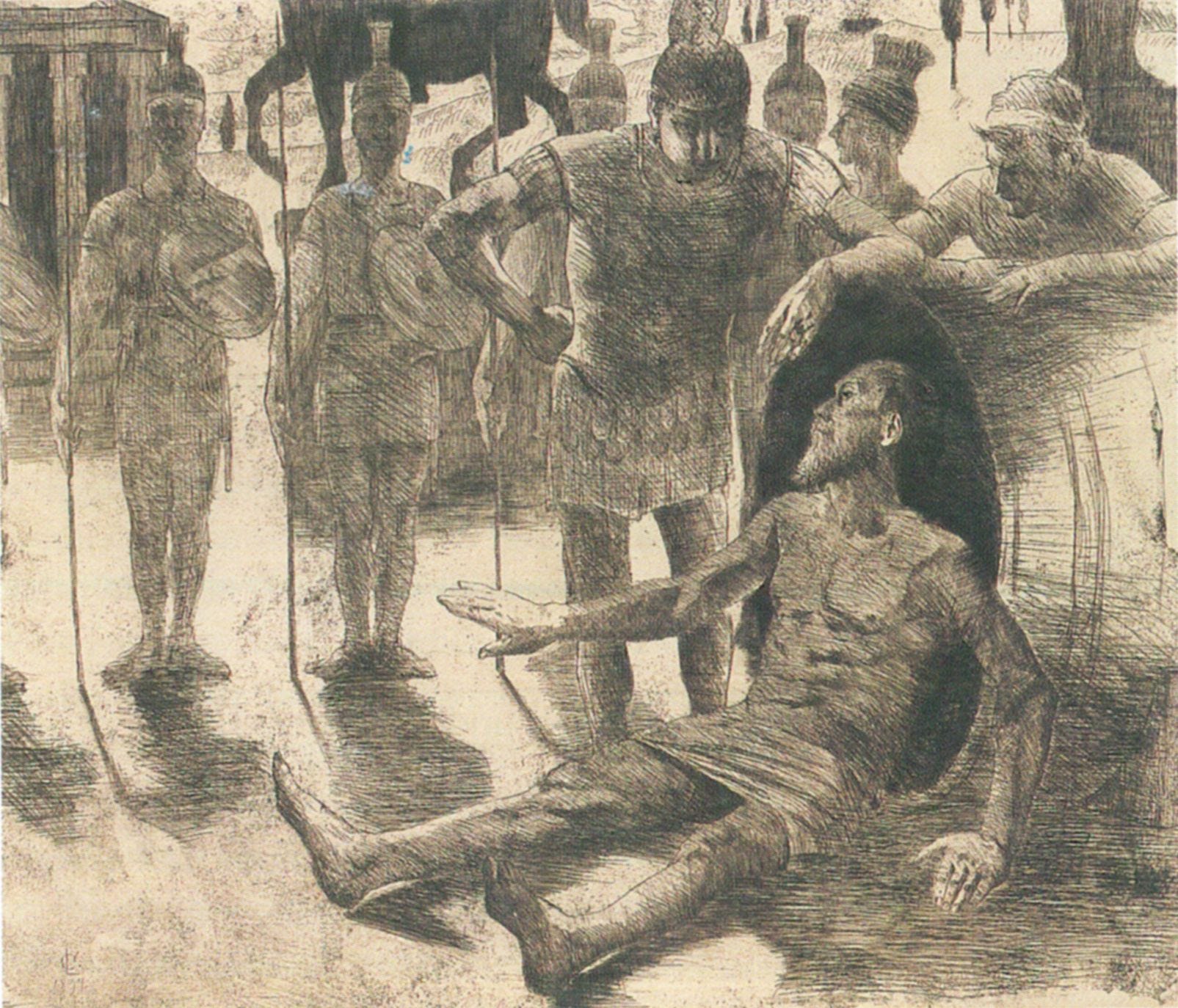
    In my opinion, it is preferable to bask in the sun like Diogenes and tell Alexander to get out of the way.

    undefined
    Alexander und Diogenes by Lovis Corinth, 1894, at the Graphische Sammlung Albertina, representing the pursuit of truth versus the pursuit of power

    This sense of community is what Substack currently provides given it allows free speech, for now, during their growth stage, at least.


    The discernment of values

    What are the values that ideological dissidents should look for in each other? Here are a couple of heuristics:

    • Transparency and accountability. Q-anon was the worst kind of movement because it was built on peddling trust without accountability or verification. The result of such misplaced trust was to encourage (mostly non-ideological) dissidents to sit passively as the “good guys” behind the scenes were “fighting” for them. This was Operation Trust 2.0. A well-intentioned author should give his step-by-step process in the chain of reasoning behind his argument, linking to evidence at every step, and leave it up to the reader to make up their own determination. This is what I attempted to do in my long-form Neoliberal Feudalism essay with well over 1,000 cites documenting my chain of reasoning regarding the structure of modern society. Appeals to authority are weak in an era of decentralized knowledge; state your reasoning, give the underlying information being relied upon to reach those conclusions, and let people make up their own minds. Julian Assange has and had a similar philosophy; provide the underlying primary source materials and let the reader decide.1
    • An acknowledgment of subjectivity. Ben Shapiro has an infamous quote, “Facts don’t care about your feelings.” In this quote he claims to be a unique possessor of “facts” that give him the “insight” to tell you what do think and how to act. It reminds me of the famous Ralph Waldo Emerson quote, “The louder he talked of his honor, the faster we counted our spoons.”Compare Shapiro’s position with that of Nietzsche: “There are no facts, only interpretations”. Also “Thoughts are the shadows of our feelings – always darker, emptier and simpler.” Under Nietzsche’s formulation, what matters is who is offering the interpretation and from what motivation? What are the speaker’s underlying moral beliefs motivating their statements and conduct?You are aware of my demand upon philosophers, that they should take up a stand Beyond Good and Evil … This demand is the result of a point of view which I was the first to formulate: that there are no such things as moral facts. Moral judgment has this in common with the religious one, that it believes in realities which are not real. Morality is only an interpretation of certain phenomena: or, more strictly speaking, a misinterpretation of them.… [M]oral judgment must never be taken quite literally: as such is sheer nonsense. As a sign code, however, it is invaluable: to him at least who knows, it reveals the most valuable facts concerning cultures…This is such a more honest and direct approach than Shapiro’s, whose unstated objective is simply to support Israel. And his sneering “I’m the decider of the facts, listen to me” has led to him being duplicitously pro-COVID vaccine, a vocal never-Trumperpro-censorship, and more.Always ask, cui bono? If you don’t know what your own interests are and how to advance them, how can you expect not to be fooled when someone underhandedly pushes their own interests to sucker you?
    Nietzsche and Shapiro have opposite understandings of what “facts” constitute. Compare their physiognomies; intensity, directness at the seriousness of life on the left, smug arrogance and dissembly on the right.
    • Character of both others and yourself revealed during times of stress. The height of COVID hysteria was a great way to see the true values of people, for it revealed character during times of stress. Did someone get an untested mRNA vaccine because society pressured them to? (i.e. Jordan Peterson, who then pathetically tried to backtrack about the booster, compromising himself by agreeing to contract terms with Shapiro’s Daily Wire that muzzle the voices of their contributors, and later cried while calling Israel a moral city on a hill). What about Arnold Schwarzenegger, who famously said “screw your freedoms” when calling for you to be force-jabbed? Was someone silent about election fraud due to employer pressure? (Tucker Carlson). So many false idols were smashed under the pressures of COVID…Or how about on the other side — if you want to see a real hero, look at Ian Smith who heroically fought against COVID tyranny in New Jersey and suffered over a million dollars in fines, in addition to many other punitive measures:Ian Smith, COVID heroJordan Peterson, COVID failureIf you want to see others acting heroically under pressure and paying a large price for it, see Louis UridelShelley LutherGreg AndersonDanny PrestiJulian Assange and Edward Snowden.Seeing someone’s behavior under pressure isn’t a perfect heuristic – there are no guarantees heroic action on one issue translates to similar heroism on another – but it’s as close as one can get.
    • Building cooperatively instead of instigating right-on-right drama. It’s a good idea to be weary of those characters who spend an inordinate amount of time infighting in petty squabbles, regardless of their other qualities. Milo Yiannopoulos comes to mind.
    • The corrupting influences of money, power and influence. Writing for money serves as a potentially corrupting influence. This is because money starts bending one’s incentive structure; are you writing for yourself, or are you writing to please your audience to tell them what they want to hear so they maintain their subscription? Then you also have to become worried about how often you write. Without knowing it you may slowly become a slave instead of the master of your writing. If you are worried about the extent of your influence, are you willing to write hard truths or does the pull of pretty lies become more important? Small bloggers writing for free and documenting the full chain of their reasoning are, I think, the best spot to be in. (Of course, psychologically speaking people assign more value for what they pay for and the more they pay the more they value it (i.e. setting a higher price point for an item can often result in more demand), and there’s nothing intrinsically wrong with wanting or needing to be paid for one’s work, but still, the corrupting danger of chasing money is ever-present…)

    Anyway, these are some hopefully useful heuristics, but there are no guarantees. As mentioned above, Jeff Sessions was Trump’s earliest Senate supporter, he brought on Stephen Miller who loyally served Trump, but then Sessions displayed extreme moral weakness against a globohomo coup attempt against Trump which led directly to the two year fake Mueller investigation nightmare. There was no signs of this character defect in Sessions ahead of time, and even though many of Trump’s personnel decisions were quite poor, the results of this key appointment was something that no one could have seen coming. One may use their best discernment and judgment on assessing others, but ultimately the soul of others (and to a large extent, our own) remain a mystery, and the results are known only to God.

    Attorney General Jeff Sessions agrees to appear Tuesday before Senate intelligence committee ...
    The Benedict Arnold of modern America

    Subscribe:
    Email delivery remains on Substack for now.


    1 Julian Assange, When Google Met WikiLeaks, p. 126: “I have been pushing this idea of scientific journalism – that things must be precisely cited with the original source, and as much of the information as possible should be put in the public domain so that people can look at it, just like in science so that you can test to see whether the conclusion follows from the experimental data. Otherwise the journalist probably just made it up. In fact, that is what happens all the time: people just make it up. They make it up to such a degree that we are led to war.”

  • The Science of Physiognomy

    “Every human face is a hieroglyphic, and a hieroglyphic, too, which admits of being deciphered, the alphabet of which we carry about with us already perfected. As a matter of fact, the face of a man gives us a fuller and more interesting information than his tongue; for his face is the compendium of all he will ever say, as it is the one record of all his thoughts and endeavors.” – Arthur Schopenhauer, On Physiognomy

    Physiognomy (from the Greek φύσις, ‘physis’, meaning “nature”, and ‘gnomon’, meaning “judge” or “interpreter”) is the practice of assessing a person’s character or personality from their outer appearance—especially the face.

    Blogger Rolo Slavsky recently made a throwaway reference to professor Edward Dutton’s book “How to Judge People by What They Look Like”, which inspired this post. Rolo was making a point regarding Russian nationalist and Donbass hero Alexander Zacharchenko, who looked like this:

    Zacharchenko was assassinated on the orders of Russian oligarch Serhiy Kurchenko, who looks like this:

    The assassination was part of Russia’s oligarch’s goal to keep Russian nationalists and populists under heel so they could continue their unlimited graft and rape of the country.

    The photo of each of these individuals says it all, doesn’t it? You can see the directness, seriousness, honesty and integrity and the serious burden of command in the photo of Zacharchenko, or in any photo of him; you can use a search engine for more. See this composite of Julius Caesar for a similar look:

    And you can see the crookedness, nastiness, lack of morals and abject, scary insanity in a glance at the photo of Kurchenko; mostly in the extremely weird mouth expression along with the eyes (with apparently no eyelids) staring unfocused and blankly in two different directions. Insane congressman Adam Schiff has a similar stare:

    Horrible New Jersey Governor Murphy, previously covered in this post which contrasted Ian Smith’s courage against Murphy’s craven advancement of the globohomo agenda, isn’t too far off either:

    New Jersey Governor elect Phil Murphy attends the first Inaugural party in Newark
    Murphy has horrendous physiognomy, a mix of a weasel with a pimple

    Anyway, physiognomy is a subject that I’ve referenced in passing many times. But I havn’t delved into the topic itself yet, so now is a good opportunity.

    Whether you want to acknowledge it or not, we all come to immediate judgments about other people when meeting or observing them. Are they friendly or serious looking? Do they present themselves well or look slovenly? Do they look dangerous, do they look like a criminal, are they beautiful or ugly, are they tall or short, fat or skinny, strong or weak, do they appear fat or stupid, rich or poor, healthy or sick, are they well coordinated or clumsy, are their faces and bodies symmetrical or asymmetrical? Each of these traits says something about the character of the person being judged. Someone fat, for example, would generally be presumed to have less impulse control, shorter future time-orientation, is less healthy, worse genetics, at risk of other diseases such as diabetes and heart disease, probably eats unhealthily, etc. You can make all sorts of judgments at a glance about a person, to which wonderful poet Ezra Pound agrees.1 One study shows that it only takes a tenth of a second for a person to make a judgment of another person’s personality (Willis et al., 2006). Clique theory makes the same argument where one can tell instantaneously whether a person falls within Jock, Prep, Nerd, Scumbag or Loser clique.

    Now, sometimes one’s judgments are wrong; we aren’t perfect and it’s good to get to know someone before basing decisions off of gut instincts. Perhaps we were wrong in our impressions and we can grow and update our own internal models. But often times we are in situations where we do have to make a snap decision; is the person approaching us on the street in the middle of the night dangerous or not? And even though not perfect, making those instantaneous judgment calls in such situations can mean the difference between an ugly incident or avoiding trouble.


    Background

    Acknowledging that everyone makes instantaneous judgments of others is declasse in the modern era; it smacks of recklessly rushing to judgment, or if in a racial context it smacks of racism. So the entire study of physiognomy has been mothballed, deemed low class pseudoscience and with low or no funding directed to the study of it, at least until the modern era (which we will get into). Per Dutton:

    Unfortunately, physiognomy became associated – and, perhaps, remains associated – with phrenology, [which] was the belief that the nature of a person’s character can be discerned by small differences in the shape of their skull. As the brain is an organ, and different parts of the brain have different functions, it seemed to follow that bumps or indentations in the skull would reflect similar properties in the brain. As such, people could ‘have their lumps felt’ and it would reveal a great deal about the nature of their personality; albeit based on the very limited nineteenth century knowledge of brain modules. Phrenology became hugely popular in the late eighteenth and early nineteenth centuries, with the establishment of learned phrenology societies [and as popularly mocked in Quentin Tarantino’s Django Unchained]….Unsurprisingly, phrenology was debunked. Physiognomy found itself (intellectually) guilty by association.

    It fell further out of favor after the Nazis applied the practice on a racial basis:

    “The other problem physiognomy has to deal with is the obvious unpleasant consequences judging people by their appearance has when it comes to the issue of ‘race.’….The Nazis measured facial features in order to determine the archetypal ‘Jew’ and the archetypal ‘Aryan,’ giving the measurement of facial features for any broader purpose a bad name. But the actions of the Nazis are entirely irrelevant. As we will see shortly, physiognomy works, in most cases, within races.”

    As the egalitarian ratchet effect continues its parabolic ascent, it has increasingly become more and more outside the bounds of discussion that people are inherently different. How mean of you to not just point out but consider in the first place that a person is short, or ugly, or dresses poorly, or seems dangerous or dumb! You should feel guilty for any judgments you make of others unless officially approved experts tell you it is okay to do so. How dare you. We are all interchangeable widgets with the exact same abilities and outlooks except for societal racisms holding back the downtrodden, okay?


    Modern science

    Scientific research into physiognomy has undergone a bit of a revival in the late 20th/early 21st century, according to Scientific American in an article called “How your looks betray your personality.” It states: “The field is undergoing something of a revival. Researchers around the world are re-evaluating what we see in a face, investigating whether it can give us a glimpse of someone’s personality or even help to shape their destiny. What is emerging is a “new physiognomy” which is more subtle but no less fascinating than its old incarnation.” The article continues: “First impressions are highly influential, despite the well-worn admonition not to judge a book by its cover. Within a tenth of a second of seeing an unfamiliar face we have already made a judgement about its owner’s character – caring, trustworthy, aggressive, extrovert, competent and so on (Psychological Science, vol 17, p 592). Once that snap judgement has formed, it is surprisingly hard to budge. What’s more, different people come to strikingly similar conclusions about a particular face – as shown in our own experiment (see “The New Scientist face experiment”).”

    Per Schopehauer, “The study of physiognomy is one of the chief means of a knowledge of mankind, because the cast of a man’s face is the only sphere in which his arts of dissimulation are of no avail, since these arts extended only to that play of feature which is akin to mimicry.” Let’s tabulate some of the recent science of physiognomy, some of which is from the Wiki entry:

    1. Facial features impact on power, warmth, honesty, intelligence. Per The Psychology of Personnel Selection, research in the 1990s indicated that three elements of personality in particular – power, warmth and honesty – can be reliably inferred by looking at facial features: “More recent research suggests that face-based impressions may sometimes be valid (Berry, 1991; Zebrowitz, Voinescu & Collins, 1996). Berry (1990) asked students to report their impressions of their classmates (after one, five and nine weeks of the semester had elapsed), and used these impressions as the criterion with which she compared independent evaluations of the classmates’ photographs. She found significant correlations between peer and photographs on three dimensions: power, warmth and honesty.”Other studies have used AI and machine learning techniques to identify facial characteristics that predict honesty, personality,and intelligence. In a 2006 study published in the peer-reviewed journal, Social Cognition, Ian Penton-Voak and colleagues utilized both individual and composite facial images. The composites were generated by computer software that combines multiple faces into one; you might think of it as a sort of “average” of the images. More specifically, the composites incorporated facial images of those scoring in the top ten percent for each of the Big Five personality domains. Based on their findings, the researchers concluded that there is at least “a kernel of truth” to be found in the practice of face reading. In a 2014 research article “Interpretation of Appearance: The Effect of Facial Features on First Impressions and Personality”the authors generated artificial, extreme faces visualising the characteristics having an effect on first impressions for several traits. Conclusively, they found a relationship between first impressions, some personality traits and facial features and conclude that people on average assess a given face in a highly similar manner. The following image for each personality trait show a composite with a very low score for that trait on the left, and a very high score on the right:For each face pair the left extreme face is predicted as being judged very low for a given trait and the right face as very high. Each face is based on the β-coefficients from the best linear regression model for that given Rating and gender. We generated the faces by multiplying each β-coefficient to either +4 standard deviations or -4 standard deviations of the matching facial component.
    2. Bodily asymmetry affect on health and IQ. Per The Psychology of Personnel Selection, p. 16: “That said, there is currently a good deal of interest in related topics like fluctuating asymmetry and digit ratio. Fluctuating asymmetry consists of within individual differences in left- vs right-side body features (length of ears, fingers, volume of wrists, etc.). Asymmetry is associated with both ill health and lower IQ. In a recent study, Luxen and Buunk (2006) found 20 per cent of the variance in intelligence was explained by a combined measure of fluctuating asymmetry.”
    3. Digit ratio impact on aggression. P. 16: “The 2D:4D digit ratio has been known for some 100 years and has recently attracted a great deal of attention. The idea is that a person’s hand shape – particularly the length of these two digits – is determined by physiological processes in the womb which influence the sex-linked factors (Brosnan, 2006). In line with this view, a seminal study by Lippa (2003) showed that 2D:4D determined sexual orientation (though only for men). Subsequent studies in this area have attempted to link 2D:4D to individual differences in established personality traits, notably those related to aggression or masculine behaviours. Although evidence has been somewhat inconsistent, a number of meaningful connections have indeed been found. In a large-scale study, Lippa (2006) found positive, albeit weak, associations between 2D:4D and Extraversion, as well as a negative, albeit weak, link between 2D:4D and Openness to Experience. Overall, however, associations between finger-length measures and personality were modest and variable.”
    4. Extraversion, conscientiousness and openness via facial analysis. Per the New Scientist article, “There is, however, some tantalising evidence that our faces can betray something about our character. In 1966, psychologists at the University of Michigan asked 84 undergraduates who had never met before to rate each other on five personality traits, based entirely on appearance, as they sat for 15 minutes in silence (Journal of Personality and Social Psychology, vol 4, p 44). For three traits – extroversion, conscientiousness and openness – the observers’ rapid judgements matched real personality scores significantly more often than chance….when Little and Perrett re-ran the experiment using mugshots rather than live subjects, they also found a link between facial appearance and personality – though only for extroversion and conscientiousness (British Journal of Psychology, vol 98, p 111).”
    5. Tendency to violence based on wider faces. “Support for this, and the kernel of truth idea, has come from a study of 90 ice-hockey players published late last year by Justin Carré and Cheryl McCormick of Brock University in Ontario, Canada. They found that a wider face in which the cheekbone-to-cheekbone distance was unusually large relative to the distance between brow and upper lip was linked in a statistically significant way with the number of penalty minutes a player was given for violent acts including slashing, elbowing, checking from behind and fighting (Proceedings of the Royal Society B, vol 275, p 2651).” Per Slate, researchers have claimed that it is possible to predict upper body strength and some personality traits (propensity to aggression) only by looking at the width of the face. University of California-Santa Barbara psychologist Aaron Sell reported that college students could accurately estimate the upper body strength of unfamiliar men after viewing their faces alone. Sell suspects the brow ridge and jaw, two structures that are shaped by testosterone in puberty. (High testosterone has been linked with masculine looks as well as with aggression.)
    Although Todorov thinks the physiognomy comeback is “unfortunate” and “morally abhorrent”
    1. Political orientation based on one’s face can be reliably predicted. In a study that used facial recognition technology by analyzing the faces of over one million individuals, political orientation was predicted correctly 74% of the time; considerably better than chance (50%), human ability (55%) or even personality questionnaires (68%).
    2. Sexual orientation based on one’s face. In 2017, a study claimed that an AI algorithm could detect sexual orientation more accurately than humans (in 81% of the tested cases for men and 71% for women).
    3. Eye width and perceived intelligence. Eyes are the “windows to the soul” and are often one of the first facial features people notice. For instance, there is a significant relationship between interpupillary distance (wide-set eyes) and perceived intelligence (Lee et al., 2017).
    4. Mouth width and leadership abilities. One study noticed that the mouth width impacts people’s choice in leaders (Re et al., 2016). The study applied their findings to real leaders. The study found that mouth width correlates to the CEO’s leadership abilities and their actual leadership success. Additionally, the same study notes that people with wider mouths were more likely to win U.S. Senate elections.
    5. Tattoos suggest sexual promiscuity. One study gathered data on 450 college students and found that tattooed respondents were more likely to be sexually active than those without tattoos (Koch et al., 2006). Another study found that people who got body modifications (tattoos, piercings, etc.) were more likely to engage in intercourse earlier in life and be sexually active (Nowosielski et al., 2012). According to the study, adults who got body modification are four times less likely to engage in religious practices.

    Potential explanations

    Per Kosinski (2023), the potential explanations for people’s personality traits being reflected in their physiognomy are (1) self-fulfilling prophecies, where people’s judgments on other’s looks eventually turn the subjects from repeated social interactions into what others are perceiving; (2) psychological traits may modify physical characteristics; and (3) there may be genetic correlations between certain traits being expressed, such as twin studies which have found that genes are responsible for over 50% of the variation in both facial featuresand political orientation.

    With respect to the self-fulfilling prophecy possibility, it brings to mind the “Millimeters of Bone” incel meme, which argued that the difference between Chad and Melvin was only a few millimeters of bone:

    It can be argued that repeated positive social interactions for the version on the right compared to the version on the left would result in much higher extraversion for the Chad, for example, because of the more positive results from such interactions. The closer one’s face is to the golden ratio, generally the more positive interpersonal connections will be. This relates to the expression, “Physiognomy is destiny”…

    It is an open question the impact to which a conscious decision to think or act in new ways has on one’s physiognomy; exercise more and you’ll be in better shape, have a calmer disposition, stand straighter, weigh less etc. which will impact the way others see you. Plastic surgery may hide one’s physical attributes, while also revealing to the world via a changed physiognomy one’s underlying narcissism, shallowness, and emotional instability.

    With respect to the second and third possible explanations, as covered previously, using artificial selection to select for specific traits in animals results in very specific physiognomy changes, such as domestication syndrome. Domesticated animals tend to be smaller and less aggressive than their wild counterparts, they may also have floppy ears, variations to coat color, a smaller brain, and a shorter muzzle.When Dmitry Belyayev domesticated a fox within a human lifetime via a rigorous artificial selection program, even though he only selected for one trait – tameness – selection for that trait affected other traits such as coat color, skulls shape, and ear floppiness. Given this, it makes sense that there would be a similar interplay between personality traits and physical traits in humans.


    Conclusion

    The point of this article is it’s perfectly natural to make snap judgments of others; we all do it unconsciously and instantaneously, and all one does by trying to deny it is create some sort of hypocritical split within us, a denial of self (which always manifests one way or another). There are circumstances in which acting on our snap judgments is perfectly legitimate and applicable, especially when in a situation where we have to make such judgments quickly; for others where we don’t have to rush to judgment, it is better to reserve judgment, talk to the person and see if one’s intuition and immediate judgments were accurate or false. In my articles you’ll often see me describe a situation and point to a person’s physiognomy as evidence in favor of the point being made, and hopefully this post does a decent job of describing why.

    A .gif of deranged anti-Trump former FBI agent Peter Strzok, who spied on and tried to undermine the Trump administration. Brief movements of the man reveal him instantaneously to be a deviant, smug sociopath
    Compare the physiognomies of Carl Weiss, left, who assassinated populist leader Huey Long, with that of arch-criminal Andrew Weissman, who is a leader behind the scenes of overthrowing and prosecuting Trump. They look like the same person

    I love the physiognomy of the represented Overman engineer in the movie Prometheus. The above scene is a deleted extended scene that should have been included in the theatrical version, and it’s an abomination that it wasn’t. For a fascinating look at how the design of the engineer was developed, which was intended to be a blend of Michelangelo’s statue of David, da Vinci’s work, the Statue of Liberty, and Elvis (lol), see this great behind-the-scenes clip here.

    My favorite still from the deleted scene, where the creator Engineer judges his creation
    A behind the scenes still reflecting The Creation of Adam
    A close-up of the Engineer; what an amazing design

    More fundamentally, there is an extremely deep-seated element in the nihilistic West that it is improper to follow one’s senses and gut judgments, that we must discount what we see with our own eyes in favor of believing officially designated “experts” and whatever nonsense they push. As argued previously, science has been replaced with policitized and corrupted Scientism, and one should make a conscious effort to resist this trend and to return to putting a much greater emphasis on one’s own thoughts, feelings, and worldview. The “experts” by and large do not have your best interests at heart, and you do a disservice to yourself by discarding your judgments and listening to experts at your own peril.

    Subscribe:
    Email delivery remains on Substack for now.

    1 According to Eustace Mullins, “During the 1956 elections, [Pound] called to my attention the commisar or foetus type of public official that seems to have been produced by the modern state. It is characterized by a round head, usually bald, a petulant mouth, and the formless features of a newly-born baby. In July 1959 he wrote to me, “look up Lavater, 1741-1801, ‘inventor of physiognomic studies,’ esp. criminal TYPES.””My impression that he had set almost at lowest level the foetus type…”

    I promptly did some research and found, to my surprise, that a number of great leaders in recent years could be classified as the foetus type, or those who have not been fully formed in the womb. Such people seem capable, indeed fated, to cause great harm to others. These atavistic types are characterized by slight development of the pilar system, low cranial capacity, great frequency of wormian bones, early closing of the cranial sutures, and a lemurine appendix. The type is round-faced, with slight protruding eyes and a vacant grin.”

  • A review of Brett Andersen’s evolutionary psychology Youtube series

    This is a post about Brett Andersen’s evolutionary psychology Youtube series, which attempts to provide an answer to the nihilism pervading society since Nietzsche’s proclamation of the “death of God”. Andersen possesses an impressive understanding of the science of evolutionary psychology and he attempts to derive objective meaning on that basis. His recent unfortunate personal developments are touched on in addendums at the end. I suspect this post will be a niche one, but it touches on many of the themes discussed on this Substack and is worth a write-up on that basis. The next published post will be more “mainstream”.

    Introduction

    Nietzsche famously wrote in The Gay Science (1882) that God is dead and that we have killed him:

    God is dead. God remains dead. And we have killed him. How shall we comfort ourselves, the murderers of all murderers? What was holiest and mightiest of all that the world has yet owned has bled to death under our knives: who will wipe this blood off us? What water is there for us to clean ourselves? What festivals of atonement, what sacred games shall we have to invent? Is not the greatness of this deed too great for us? Must we ourselves not become gods simply to appear worthy of it?

    What does Nietzsche mean that we have killed God? Essentially, advancements in science and technology during the Renaissance and Industrial Revolution increasingly disproved a literal interpretation of the Bible, offering an alternative hypothesis for man’s origins via Darwinian natural selection. For example, biblical cosmology believed the Heavens were fixed past the firmament and belong to the domain of God, yet it turns out they are planets and star systems subject to the same gravitational and other forces that Earth is. How does one square that knowledge with a literal interpretation of the Bible?

    If the Bible isn’t literally true, then, what is true? If the Bible is only metaphorically true, which metaphorical interpretations are correct and on what basis should they be concluded? Would not the basis for such interpretive choices be open for endless debate? One can see the shakiness of faith arise…

    A belief in God had sustained man for thousands of years and calmed his most basic fears of his own mortality. Every aspect of society had reinforced man’s place in the world amidst a religious construct that gave meaning to man’s suffering, and man can bear most any suffering so long as he believes there is meaning to it. The death of God equates to the death of a world with intrinsic meaning, where our actions had spiritual consequences and mattered; we became unmoored from belief as the cult of reason advanced without understanding the consequences of what we were doing. This unmooring process inevitably led to nihilism:

    Nietzsche discusses Christianity, one of the major topics in his work, at length in the context of the problem of nihilism in his notebooks, in a chapter entitled “European Nihilism.” Here he states that the Christian moral doctrine provides people with intrinsic value, belief in God (which justifies the evil in the world) and a basis for objective knowledge. In this sense, in constructing a world where objective knowledge is possible, Christianity is an antidote against a primal form of nihilism, against the despair of meaninglessness. However, it is exactly the element of truthfulness in Christian doctrine that is its undoing: in its drive towards truth, Christianity eventually finds itself to be a construct, which leads to its own dissolution. It is therefore that Nietzsche states that we have outgrown Christianity “not because we lived too far from it, rather because we lived too close.”As such, the self-dissolution of Christianity constitutes yet another form of nihilism. Because Christianity was an interpretation that posited itself as the interpretation, Nietzsche states that this dissolution leads beyond skepticism to a distrust of all meaning.

    Nietzsche keenly felt the onrush of nihilism in the mid-to-late 1800s; so did others like Tolstoy. These trends have only spread, deepened, and metastasized since then. Anyone reading this has been born and raised in an era steeped in a ubiquitous, pervasive nihilism touching every facet of society. But for those with a sense of history it is this era that is abnormal, untethered from the underlying anchoring religious beliefs that sustained man for thousands of years. We don’t know what such normalcy feels like, to feel like we belong in an ordered universe infused with cosmic meaning.

    Nietzsche believed that nihilism was a period that western man must pass through in order to hopefully emerge on the other side, after much pain and suffering, with a revaluation of its own core values. But it was by no means certain; just as possible was a descent into permanent nihilism followed by mankind’s destruction. Nietzsche went insane before he was able to construct what such a revaluation of its core values could really look like.1

    The core point of this Substack (rooted in the philosophy expressed in the companion Neoliberal Feudalism Substack) is that, after the death of God and the descent into nihilism, western civilization has retained the morals and ethics of Christianity but without the underlying belief structure. Due to the egalitarian ratchet effect, combined with this underlying nihilism and will to nothingness2, western civilization is rapidly sliding into a suicidal abyss. This makes for a very destabilizing situation. There needs to be a change; is it time to emerge from the nihilistic phase that Nietzsche predicted? If so, what should such revalued or transvalued values look like?

    I have previously argued that what is needed is a partial transvaluation of values so that the warrior Roman values and the transvalued priestly Christian values would result in a balance. Whether that would come from a new religion as Spandrell argues for, or a reinvigoration of Christianity perhaps via Orthodoxy as Roosh wants, or a John Carter Christian ghost dance as Rolo Slavsky also calls for, or something else, remains up in the air. Others have tried solving this riddle as well, such as Curtis Yarvin with his vision of a techno-corporatist-dictatorship, but I think it’s a mess, divorced from reality.3 My lack of a specific positive forward vision is a weakness to my argument, because it’s far more persuasive to offer someone both a carrot and a stick (i.e. promotion of new vision simultaneously with the criticism of the old) than just the stick. But I didn’t really have a fully formed, fleshed out vision of what such a partial transvaluation of values would look like, other than it must involve a movement away from pure materialism back toward an element of idealism; it’s a process of education and learning, and the research involved in the posts for Substack, as well as feedback from readers, helps further my own process and understanding as well.


    Andersen’s Substack

    An off-hand comment a couple of months ago by Substack user Paul McNamara on Helen Dale’s Substack led me first to the Substack of, and then the Youtube channel of Brett Andersen, a PhD candidate in evolutionary psychology at the University of New Mexico, which then led to a deep-dive of his work and listening to his 22+ hour Youtube series. This speaks to the quality of his ideas generally, especially because I prefer to intake information via writing and not via audio or visual sources, but I oddly preferred his Youtube videos to his written work. Synthesizing his series into its core arguments and the various takeaways that resonated with me, as well as offering some points of constructive criticism, has been fun and challenging to write.

    Andersen pictured in his Youtube series. He has a somewhat unusual physiognomy, although his left arm sleeve tattoo may be seen as either a sign of the decadence of this age, or alternatively as a feature of his self-described shamanistic, right-brain impulses

    Andersen wrestles with the same issues I highlight, i.e. the attempt to derive objective meaning in an era of ubiquitous nihilism.4 But Andersen approaches the problems from an evolutionary psychology perspective and not an autistic A-to-Z, step-by-step rendering of the gradual introduction of a globohomo worldwide slave control grid and why the world has allowed this system to be put into place as I have done. His approach addresses the problem from a very different angle, but an important one that is helpful to flesh out a fuller perspective and argument.5

    Andersen starts his series by discussing his personal background. He suffered a series of psychotic breaks earlier in his life, resulting in part from drug use, which had destroyed his life in multiple ways. He eventually had epiphanies while reading Jordan Peterson’s book “Maps of Meaning” (or listening to his lecture series) at 24 years old which led to his recovery, having a profound impact which set him on a journey of self-discovery.6 He has been singularly obsessed with trying to understand the meaning of life for the past seven years since then. From the moment he wakes up to when he goes to bed, he says, this is basically all he thinks about.

    This dovetails nicely with my explanation of how cognitive dissonance arises among individuals in society:

    These routes to generalized dissent [examples including problems with dating, problems with health/nutrition, and problems with political understandings] involve an individual experiencing cognitive dissonance in their lives resulting in a prolonged period of emotional or psychological pain, followed by the desire to find an explanation to alleviate their pain, which mainstream society cannot provide given their narrative falsehoods are the primary cause of it.  The lower status an individual is in the eyes of society, the more likely that person is likely to experience such psychological pain leading to cognitive dissonance.  Currently white males, the most disfavored group in the United States, have much higher levels of disillusionment toward the establishment than women and minorities, because the latter are much greater beneficiaries of the system.

    While Andersen would like to become an academic after finishing his PhD and would make an excellent one, he has been precluded from doing so because of the extreme anti-white wokeness pervading academia, which he has been very justifiably frustrated by and which he says he will not pay lip-service to. I suspect he will become a psychiatrist or psychologist instead, perhaps working with psilocybin therapies where legal or via clinical trials (MDMA therapy would also be worth exploring), but that is just a guess.


    Andersen’s perspective

    Andersen’s arguments delve into the changing environmental and cultural selection pressures that have shaped religion, morality, culture and evolutionary psychology throughout human history. His Youtube series discusses this history, offering a wide range of scientific studies and theories in support of his points which will be touched on briefly here. Other than Nietzsche and Jordan Peterson as primary influences, Andersen quotes extensively from John Vervaeke’s work.

    According to Andersen, religion originally arose among hunter gatherers as a form of ancestor worship. Gods were a part of everyday life and they were just like humans, only more powerful, with their own personalities and whims. These religions were shamanistic in character in that they involved intense ceremonies led by charismatic, right-brain-dominant7, chaotic practitioners who attempted to unite small groups of people in focused, high-energy, altered consciousness rites.

    Hunter gatherer mythological origin narratives involved stories where everything has meaning, which served as an inspiration for action for how people should act in their own lives. Humans were generally well integrated between their thoughts and their instincts because they had naturally selected for this nomadic lifestyle for millions of years. Tribal morality had evolved to be black-and-white, in-group vs. out-group, as a way for hunter gatherer societies to unite against their enemies, and anyone who went against the group’s morality would be cast out, which was akin to death. Counter-intuitively, according to research we feel our moral beliefs and then rationalize them, even though we all falsely believe that we arrive at our morality based on logic and reasoning.

    Culture evolved as a cultural ratchet effect where humans copied each other’s behaviors, but then evolved those behaviors during times of crisis to adapt to changing environments. Tensions arose from society’s demands to conform to the group (the herd instinct) against an occasional individual’s belief in the necessity of change, which inevitably resulted in society seeing that individual as “crazy” and evoking significant pushback and hostility if or until the change was ultimately accepted. Dreams served as a way for individuals to avoid over-fitting their limited models of the world for current circumstances, giving them a creative way to see problems in a new, flexible, fluid light.

    During the Axial Age between the 8th and 3rd century BC, humans transitioned from hunter gatherer societies to agrarian societies brought on by the neolithic agricultural revolution. New selection pressures resulted in a movement away from these shamanistic, high-intensity religious ceremonies and polytheistic Gods and toward left-brain, low-intensity, formalized religions based on written texts and featuring distant, inaccessible God(s). Andersen gives Jews in Israel followed by Christianity as examples. These pressures occurred because shamanistic religions were not scalable in the way that written doctrinal religions were, and doctrinal priests were focused on uniting their people to strengthen themselves against their neighbors and enemies. While shamanistic practices were decentralized and based on a leader’s charisma, priests who could read and write their religious doctrines formed hierarchical organizations that functioned like guilds. As such, wherever doctrinal religions arose their priests brutally crushed their shamanic competition, much as guilds always attempt to crush their independent competition.

    Humans had great difficulty adapting to an agricultural lifestyle, where their long-honed instincts as hunter gatherers clashed with the reality of living in closer quarters in urban environments and with a much more sedentary lifestyle, and this caused a lot of problems. Doctrinal religions tried to address these conflicts with commandments by God on how one should act, although this didn’t fully solve the issue; the underlying tension with humanity’s out-of-kilter instincts regarding sex, food, war, and other basic drives remained, and remains to this day.

    As part of this transition to urban environments, the meaning of God(s) evolved. God changed from serving as a forum for action based on mythological ancestor worship to a Plato-inspired material/spiritual dualism, where the material world was severed from the spiritual world. The material world served as a place of imperfect objects, merely shadows of the world of forms, and the spiritual world was the “real” world which was perfect and static.

    What Nietzsche defined as the ascetic ideal came to dominate. This ideal involved values that advocated withdrawing, abstaining, or rejecting bodily, emotional, and material aspects of everyday life. In other words, they were a “will to nothingness.” Nietzsche saw the Christian motto of “poverty, chastity, humility” as an ascetic ideal because it suggests that people need to abstain from material wealth, sensual urges, and emotional or egotistical feelings. Nietzsche also thinks that many nonreligious people practice the ascetic ideal such as Schopenhauer, who he came to see as decadent.

    Contrast the ascetic ideal with that of Heraclitus, who was Nietzsche’s favorite philosopher. Heraclitus believed that everything was change, nothing was static, and that the only thing that could be taken as static was the nature of change itself. He expressed this in sayings like panta rhei (“Everything flows”) and “No man ever steps in the same river twice.” Nietzsche, per Twilight of the Idols, “Reason in Philosophy”, §2: “But Heraclitus will remain eternally right with his assertion that Being [as opposed to Becoming] is an empty fiction.” And in The Pre-Platonic Philosophers, “Heraclitus”, p.62-63: “Well, this is the intuitive perception of Heraclitus; there is no thing of which we may say, “it is.” He rejects Being. He knows only Becoming, the flowing. He considers belief in something persistent as error and foolishness. To this he adds this thought: that which becomes is one thing in eternal transformation, and the law of this eternal transformation, the Logos in all things, is precisely this One, fire. Thus, the one overall Becoming is itself law; that it becomes and how it becomes is its work.”

    If life is indeed change, and it is only the nature of change itself that is static, then the process of change, of syncretization and of growth and unity should be embraced instead of resisted. Andersen believes that the existing concepts of God cannot be resurrected by existing dualist, doctrinal religions, which have bled their meaning over the centuries in an environment that no longer favors that particular mode of thinking. Instead, there is an opportunity for the return of right-brain, shamanistic chaos energies and thinking styles which have been on the losing side for millennia. Nietzsche’s concept of the will to power provides such potential basis for objective meaning which can bridge the gap between our reason and our instinct, based on a scientific understanding of human nature without reliance on two-worlds mythology.

    Under this conception, will to power does not mean “will to dominate” or Schopenhauer’s “will to life”. Rather, Nietzsche’s notes indicate it is a broader term reflecting a sort of meta-drive of all of our various instinctual drives (for sex, eating, health, safety, control), the manifestation of which arises out of the position one finds oneself in society:

    The will to power appears:

    a. among the oppressed, among slaves of all kinds, as will to “freedom”: merely getting free seems to be the goal…

    b. among a stronger kind of man, getting ready for power, as will to overpower; if it is at first unsuccessful, then it limits itself to the will to “justice,” i.e., to the same measure of rights as the ruling type possesses;

    c. among the strongest, richest, most independent, most courageous, as “love of mankind,” of “the people”, of the gospel of truth, God; as sympathy, “self-sacrifice,” etc…as instinctive self-involvement with a great quantum of power to which one is able to give direction: the hero, the prophet, the Caesar, the savior , the shepherd…”

    Andersen believes that the will to power manifests psychologically as relevance realization, which is the process by which we process extreme amounts of data inputs to determine what we believe to be relevant to achieve our will to power, and therefore what we focus on instead of discard, and/or self-actualization. It is a metaphysical thesis which posits a universal process of complexification.

    Under this approach, the process of complexification is defined as something increasing its differentiation into constituent parts while simultaneously increasing its integration as a whole. Complexification occurs where there are competing drives or interactions, which leads to a breaking of frame called self-organized criticality, followed by a descent into chaos, leading eventually to, if the entity doesn’t collapse or die, a higher baseline level of complexity:

    How higher complexity is established, from Andersen’s Substack article here

    For example, Andersen had a normal-ish upbringing, then he descended into chaos caused by his psychotic breaks, then he was able to work his way out of them to achieve a more complex and thereby more powerful understanding of himself and the world.

    Andersen sees this process mirrored throughout nature (where both the world and the universe is constantly complexifying), throughout mythology as discussed in Maps of Meaning, and even in the rise of consciousness itself.8 He believes that life being rooted in the will to power solves the meaning crisis, because by understanding and acting in accordance with nature we can bridge the gap between our instincts and our thoughts and become self-actualizing. We can integrate the opinions of all those around us to help us become more complex individuals, we can integrate master and slave morality and our own competing drives to try to become the Overman, and we can help the world complexify in this non-zero sum process as well.

    Under this perspective it is not a static end result that can be reached using a “good vs. bad” or “good vs. evil” moral judgments, or the will to nothingness hoping for a better world after death, but rather an understanding and embracing of the process of complexification itself that is the end goal; an acceptance of Heraclitus’s perspective of the only static thing is the nature of change itself. His is not a moral judgment per se but an objective argument for optimality – “This is the process that you participate in and the perspective you should have if you want to be psychologically healthy.” As Andersen argues:

    We must come to view morality not as a static set of principles, facts, or objective truths, but rather as an ongoing process. The particular moral values adhered to by a group of people are highly dependent on the history and context of that people. Moral values evolve. This process is akin to the cultural ratcheting process that Michael Tomasello described in his (1999) book The Cultural Origins of Human Cognition. Tomasello argued that cultural evolution requires both the conservative impulse to imitate and the progressive impulse to tinker. As I suggested in my Intimations essay, this cultural ratcheting process is only one example of a process of complexification that plays out at all levels of analysis (see also Azarian, 2022; Wolf et al., 2018). It is our participation in this process, rather than any of its particular outcomes, that ought to be understood as sacred and objectively valuable….

    Morality as process means that there are no timeless rules or principles that constitute “moral facts”. Morality evolves and must continue to evolve. This isn’t to say that every change in morality is good (the conservative impulse is just as important as the progressive impulse), but it is to say that the norms governing human behavior must continually overcome themselves as the problems facing humanity and civilization change.

    Andersen isn’t arguing that all values are subjective, because a replacement for nihilism must have a basis in objectivity. But he is arguing that the process of change, descent, and rising into a more complex entity (if the entity survives the descent) is the universal, objective process that ties everything and everyone in life together, and therefore what is “good” (not from a moral perspective) is what optimizes that process and what is “bad” is what downgrades the optimization of that process.


    Analysis of his argument (pros and cons)

    Andersen’s ability to absorb, process, and synthesize a huge amount of information speaks to both his intelligence, drive, and how obsessed he has been with this topic for the past seven years. His Youtube series has been an impressive attempt to synthesize the latest scientific research and theories along with philosophy and history, and it has impacted my views on a variety of topics, the extent of which will be felt and absorbed over time. I can only assume he wrote the series as a way of helping others on their own complexification journeys, as well as his own.

    I would call his approach one of philosophical naturalismwhich is similar to and overlaps Nietzsche’s almost pantheistic process philosophy:

    To believe [as pantheism does] that everything is perfect, divine, eternal, also forces one to believe in eternal recurrence. Question: now that we have made ethics impossible, is such a pantheistic affirmation of all things also made impossible? No: in principle only an ethical god is overthrown. Is there any sense in imagining a god beyond good and evil? Would a pantheism of this kind be possible? Can we remove the idea of purpose from the process, and yet still affirm the process? That would be the case, if something were achieved within that process and at every moment of it – and always the same …
    Every basic trait underlying each and every event, expressing itself in every event – if it were experienced by an individual as his own basic trait – would force that person triumphally to endorse every instant of everyday existence.

    With that said, the positives of Andersen’s approach appear to me to be as follows. An adaption of his perspective would lead to

    1. living life much more in the moment, to appreciate life for what it is, and not just wait for justice or a better life after we die;
    2. a Buddhist or Stoic-like appreciation for pain and suffering through valuing and respecting the complexificaton fall-and-rise process itself, in the hope that it would lead to greater complexification and more power once one arises out of it;
    3. a greater willingness to consider other sides and perspectives in the hopes of absorbing them to become a more complex and powerful person;
    4. a greater intention of pursuing non-zero sum games to try to make the world a better place for all; and
    5. an appreciation of the will to power underlying all things that removes a dualist perspective and ties humanity back firmly into our role within the world and not separate and apart of it.9 This in turn gives us a greater appreciation for the inter-connectedness of all things and elevates the importance of sustainability of nature, animals, and universal brotherhood.

    These are all admirable traits that focus on what we can do as individuals that provide a clear route toward offering a solution toward the meaning crisis/nihilism that our society is in. It is indeed a viable and very different worldview than the nihilist perspective we are all deeply immersed in, whether we are religious or secular.

    There are a couple of significant criticisms of this approach, though:

    1. The material world seems fundamentally imbued with metaphysical evil, in the sense that every living creature can only survive by consuming other living things. Even plants have a will to power and seek to grow and expand and have defense mechanisms against predation. Andersen tries to hand-wave this away by arguing that our cognition is too limited to make moral judgments about reality, that we can either accept it as it is or not, therefore Shopenhauer’s philosophical pessimism is wrong because it presumes to know more about the universe than our limited cognition allows, but I find that to be a weak argument. We can assign moral judgment on things while at the same time recognize our limitations as finite beings and that we can be wrong, so long as we retain the willingness to grow beyond our limited judgments when confronted with evidence to the contrary;
    2. As a corollary to #1, Andersen argues that the increasing scope of non-zero sum games provides us an opportunity to work together in this process of complexification for the benefit of all, but a naturalist or pantheist perspective in relation to the Darwinian struggle for survival just as likely leads to increased conflict as increased cooperation, because there is no reason to accept losing other than fear of punishment from the winning side.10 In other words, a dualist perspective may provide incentives for losers to accept their current arrangements in the hope of justice in the afterlife; such a slave morality may increase societal stability;
    3. The dualist perspective offers hope of justice and fulfillment in the afterlife. Philosophical naturalism or pantheism is good so long as your complexification process is working, but plenty of times the complexification process fails or you suffer life circumstances that seem too terrible to bear. If your mind or body give out, or you are thrown in prison for life, or cherished family members die, or you suffer any of innumerable tragedies, philosophical naturalism or pantheism offers no solace or hope from this – in other words, slave morality is an objectively more functional belief system if one finds oneself in a position of permanent weakness, which could happen to anyone. It’s a cold, cruel world and universe out there, subject to blind laws and an underlying current of unifying will to power; it offers no solace to those trampled under its feet. Keep in mind that Nietzsche went insane after seeing the suffering of a horse and spent his last decade of life bedridden, whether from his beliefs or otherwise. And another proponent of pantheism, Baruch Spinoza, inhaled microscopic particles of glass through his mouth and died young and in agony. What use were his beliefs to him then? Andersen self-describes as a complete agnostic, believing that all behavior and motivations have origins that can be described from an evolutionary psychology perspective, and that he has absolutely zero knowledge or intuition about a next world and that he is fully comfortable in this perspective — I would say this makes him unusual, and that such a perspective will not be so easy to convince others of. But pantheism or philosophical naturalism only works with an assumption that material reality is metaphysically neutral; if material reality is infused with metaphysical evil (point 1), though, then the tension between base reality and this perspective will inevitably result in mental or physical breakdown.
    4. Andersen has a view of the history of humanity, the planet and the universe as ever-increasing complexity that isn’t really proven. He mentions at one point that increasing complexification happens until there is a descent or collapse of the entity, but if his argument rests on increasing complexification as an objectively good thing in an of itself, he should explore the process of collapse better — why it happens and what the implications of collapse are to his theory, and why he thinks the overall trend is toward this progressive complexity even in light of local or regional collapses. Why does he assume that universal complexity will expand forever? With respect to humanity, there may be a total collapse due to nuclear weapons use or consuming the world’s natural resources or for other reasons, and Andersen responds by saying well we then need to take care of each other in a non-zero sum competition, but what solace does that give us if collapse happens anyway?
    5. The world is subject to ever-increasing levels of centralization and control, and for individuals, declining freedom of movement, freedom of thought, and freedom of expression, which I would like to see emphasized in his argument. One can look at history and politics to get a better sense of this, which I try to provide in my Neoliberal Feudalism Substack, but this centralization process is forever ongoing based on the frenetic chase for increasing levels of technological innovation. Central bank digital currencies are just the latest, but very major, step for ever-increasing centralization/control worldwide which will be used to micro-manage individual behavior on a scale never seen before in human history; Russia is the first to roll it out and formally legalize it. If ever increasing levels of centralization and control occurs in the complexification process he references, does that necessarily mean it will increase human happiness or fulfillment? If not, why should we embrace it?
    6. Tied to point 5, Andersen’s approach is very individualist focused, but if one believes that the egalitarian ratchet effect rooted in Pauline Christianity is destroying western civilization, it is questionable whether his non-dualist approach has the motivational “juice” behind it to incentivize group action to stop this destruction. The prior attempt to transvalue egalitarian values was a failed German race-based attempt at a full transvaluation back into full warrior values, promising Germans unlimitedly high status if they won; on what basis would his approach incentivize group action, if at all? [To be clear, my approach is seeking a partial transvaluation of values so that warrior and priestly energies are in balance, not to seek a return to full warrior values]. Other than the German example, though, power politics seems to revolve around doubling down on the ressentiment of egalitarianism as a weapon for a new elite to take power. Is Andersen’s objective merely to give people a scientific basis for individual stoicism against life’s troubles, or is there room in this perspective for group action and if so, under what basis? Because as much as Andersen bitterly complains in his own life about the extreme levels of anti-white wokeness in the university system, it is hard to imagine this specific phenomenon if the United States was 90% instead of 60% white like it was merely a generation or two ago. Andersen would love to expand non-zero sum games to cover all of humanity so we can all work together to address humanity’s problems, but waving away the intense drive for tribal based identity is not so easily accomplished — and it may not be possible to accomplish at all.
    7. This is a minor comment, but Andersen focuses a lot on right-brain chaos shamanic impulses, which he sees as associated with schizotypy personalities, versus left-brain order doctrinal impulses, which he sees as associated with autism-spectrum personalities. However, from personal experience I wonder to what extent people with lopsided energies one way or the other consciously or unconsciously understand the lopsidedness of their energies and seek out ways to balance them out.An autistic personality may find itself attracted to shamanic rites as a compensatory measure. Or Andersen, who self-identifies as a chaotic shamanistic type, has spent a tremendous amount of time and energy synthesizing his beliefs into an autistic, organized, systematized argument. In a political context there is a lot of overlap in the ideas and impulses of the far-left and the far-right, to the extent that Francis Parker Yockey thought that a far-left/far-right alliance was necessary to oppose globohomo. I think it would be helpful for Andersen to address compensatory measures for those with lopsided energies, one way or the other.

    Conclusions

    Andersen offers a thought provoking theory into what a transvaluation of values in an age of nihilism could look like. I think his argument should incorporate and try to respond to the criticisms listed above (which are meant as constructive criticism to help steel man his arguments), to the extent I am not misunderstanding or misrepresenting his arguments (which is possible). But he does an admirable job of synthesizing a great deal of information, gleaned through painstaking effort over many years, in a way aimed at trying to offer a specific path forward for humanity. What a revaluation of values should look like, overturning the nihilism brought about by 2,000 years of priestly egalitarianism, is an enormous, complicated, extremely difficult question, one that potentially drove Nietzsche to insanity before he could synthesize an answer, but it is the most important question one can ask if western civilization is to have any hope of a successful future at all, which looks increasingly unlikely. Hopefully we can all work toward trying to find a solution out of this mess together.11

    Subscribe:
    Email delivery remains on Substack for now.
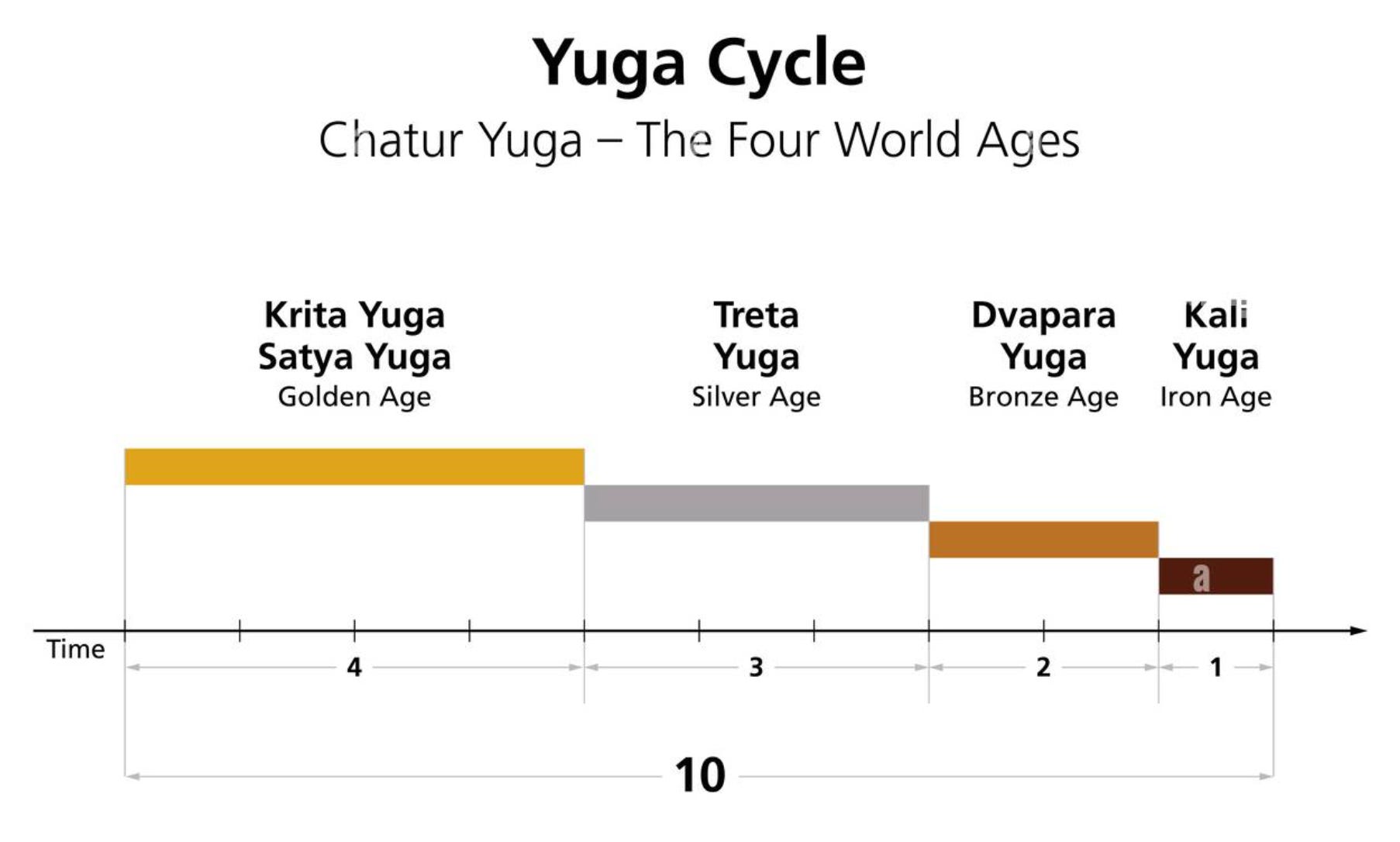
    Addendum: Andersen released four posts at once on August 24 after a long publishing pause, three of which seem significantly off-tone from the rest of his sober, reasoned, scientifically minded content over the past months and years – those three posts are herehere and here, followed by 5-10 posts a day (!) in the days since. It seems like he suddenly adopted and is trying to mimic the strident, hyperbolic tone of Nietzsche, posting a bunch of Youtube links to various songs to get the reader into his frame of mind. In a footnote to one of the posts he admitted to recently starting smoking marijuana heavily after being cold-turkey for years; given his three prior mental breakdowns, this seems quite ill-advised. Marijuana induced psychosis is a very real thing, and I know otherwise high functioning, successful men who have experienced it. Brett, if you are reading this I highly recommend you cut out all marijuana use immediately. There has been a major change in tone, style, and content in these latest posts, and not to your benefit. I understand you currently think you are a misunderstood genius straddling the line between chaos and order, meant to be fought and rejected until your genius is accepted by the masses, and that you don’t care if others are concerned for you, but I hope you give these words serious consideration.

    Addendum #2: And now Andersen is out with a wildly vituperative anti-Trump rant. Poor guy, he bitterly complains about not being able to find a job in academia because he’s a straight, white, non-woke male, but he can’t do a simple A + B = C in that Blormf was elected as a protest vote against this white erasure process, in spite of his personal failings and not because of them. The middle-America masses chose him because he was seen as the only option that hadn’t been co-opted by a system that hated them, not because he fooled them as a paragon of virtue (generally speaking; there is a contingent of braindead Trump worshippers who worship him as a cult of personality, and they deserve scorn like blind followers of any cult of personality. But these are a fairly small minority in my opinion). Andersen focuses his complaints on Blormf being a “cad” and not a “dad” in terms of his three wives and endless cheating, arguing he himself is so ethical and would never behave in such a deplorable way, bringing to mind Elliot Rogers (who Andersen discusses elsewhere) and how he was a “supreme gentleman”. I get a strong feeling that Andersen is currently experiencing difficulties with women.

    It’s also ironic that Andersen stresses the blending of different ideas in order to achieve a higher-plane synthesis, yet rejects out of hand the feelings of half of the American population, and seems to fetishicize what he considers to be his greatly superior IQ. This is a major blind spot of his. It also brings to mind the Maurice Samuel quote about the nature of experts in his book “You Gentiles”, where he states:

    There is no test or guarantee of a man’s wisdom or his reliability beyond what he says about life itself. Life is the touchstone: books must be read and understood in order that we may compare our experience in life with the sincere report of the experience of others. But such a one, who has read all the books extant on history and art, is of no consequence unless they are an indirect commentary on what he feels around him.

    Hence, if I have drawn chiefly on experience and contemplation and little on books – which others will discover without my admission – this does not affect my competency, which must be judged by standards infinitely more difficult of application. Life is not so simple that you can test a man’s nearness to truth by giving him a college examination. Such examinations are mere games – they have no relation to reality. You may desire some such easy standard by which you can judge whether or not a man is reliable: Does he know much history? Much biology? Much psychology? If not, he is not worth listening to. But it is part of the frivolity of our outlook to reduce life to a set of rules, and thus save ourselves the agony of constant references to first principles. No: standardized knowledge is no guarantee of truth. Put down a simple question – a living question, like this: “Should A. have killed B.?” Ask it of ten fools: five will say “Yes”, five will say “No.” Ask it of ten intelligent men: five will say “Yes,” five will say “No.” Ask it of ten scholars: five will say “Yes,” five will say “No.” The fools will have no reasons for their decisions: the intelligent men will have a few reasons for and as many against; the scholars will have more reasons for and against. But where does the truth lie?

    What, then, should be the criterion of a man’s reliability?

    There is none. You cannot evade your responsibility thus by entrusting your salvation into the hands of a priest-specialist. A simpleton may bring you salvation and a great philosopher may confound you.

    And so to life, as I have seen it working in others and felt it within myself, I refer the truth of what I say. And to books I refer only in so far as they are manifestations of life.”


    1 Per Wiki, Nietzsche had in 1886 announced (at the end of On the Genealogy of Morals) a new work with the title, The Will to Power: An Attempt at a Revaluation of All Values, the project under this title was set aside and some of its draft materials used to compose The Twilight of the Idols and The Antichrist (both written in 1888); the latter was for a time represented as the first part of a new four-part magnum opus, which inherited the subtitle Revaluation of All Values from the earlier project as its new title.

    2 On the The Genealogy of Morals III. 28: “Man, the bravest of animals and the one most accustomed to suffering, does not repudiate suffering as such; he desires it, he even seeks it out, provided he is shown a meaning for it, a purpose of suffering. The meaninglessness of suffering, not suffering itself, was the curse that lay over mankind so far – and the ascetic ideal offered man meaning! It was the only meaning offered so far; any meaning is better than none at all … man was saved thereby, he possessed a meaning, he was no longer like a leaf in the wind…he could now will something; no matter at first to what end, why, with what he willed: the will itself was saved.

    We can no longer conceal from ourselves what is expressed by all that willing which has taken its direction from the ascetic ideal: this hatred of the human, and even more of the animal, and more still of the material, this horror of the senses, of reason itself, this fear of happiness and beauty, this longing to get away from all appearance, change, becoming, death, wishing, from longing itself – all this means – let us dare to grasp it – a will to nothingness, an aversion to life, a rebellion against the most fundamental presuppositions of life; but it is and remains a will! … And, to repeat in conclusion what I said at the beginning: man would rather will nothingness than not will.”

    3 Curtis, if you ever read this, simplify your argument and make it clearer for non-tech nerds, but even then, color me extremely skeptical of a dictatorship with biometric-access guns that the dictator turns on and off with the push of a button answering to a governmental corporate board of directors and pursuing NOI at all costs somehow resulting in utopia.

    4 Andersen quotes Tsarina Doyle’s work “Nietzsche’s Metaphysics of the Will to Power” at around 42 minutes: “…If we are to be motivated to act according to values […] then they must be deemed to be objective in some other way that connects and subjects them to constraint by the empirical world. This alternative account of the objectivity of our values must, therefore, be a metaphysically laden one and must reflect the fundamental relationship between mind and the empirical world….Nietzsche allows for the objectivity of value by holding that values are metaphysically continuous with the dispositional fabric of reality….without this metaphysical claim, ‘Nietzsche is guilty of perpetuating the will to nothingness that informs nihilism rather than adequately responding to it.’”

    5 I had recently started exploring the angle of Darwinism in a post on rapid natural selection pressures brought upon by the neolithic agricultural revolution.

    6 Andersen comments at one point early in the series on Peterson’s descent into political obsession, his seeking of the media spotlight and other embarrassing decisions, which he has been very disappointed by. I have also been extremely turned off by Peterson, especially that he got the COVID vaccine which he stated was solely due to societal pressure (!), his regular public crying breakdowns, and his other moral failures. I have not read Maps of Meaning and it’s entirely possible that Peterson’s early work was much stronger than his current public persona, but I neither have much interest in mythology nor do I like Peterson’s excessively flowery writing style, so I do not plan to read his work.

    7 Andersen posits that highly right-brain dominance is associated with schizophrenia, chaos, and shaman/prophet types, while highly left-brain dominance is associated with autism, order, and priest types.

    8 According to Andersen consciousness arises from the complexification process and is defined as the difference in power between the output of the brain as a whole (where all the constituent parts work together as part of a non-zero sum game) versus the output of the brain broken down into its constituent parts.

    9 The Will to Power, Book IV, §1067:

    And do you know what “the world” is to me? Shall I show it to you in my mirror? This world: a monster of energy, without beginning, without end; a firm, iron magnitude of force that does not grow bigger or smaller, that does not expend itself but only transforms itself […] This world is the will to power—and nothing besides! And you yourselves are also this will to power—and nothing besides!

    10 Tree of Woe seems to agree in a post about the errors of Ayn Rand Objectivism, where he argues: “Interactions between human beings are sometimes positive sum, but sometimes they are zero sum, and the line between them is not always clear cut. A Randian society cannot endure in the face of zero-sum behavior, but the human species cannot reproduce without such behavior. The zero-sum competition for status and reproductive success is both necessary and meaningful to our lives. Take it away and the result is not Randian man, but the hikikomori of Japan.”

    11 On that note, check out ’s John Carter’s weekly compendium of Substack posts across the spectrum of the dissident right, which offers a lot of thought provoking content and provides a point of unity across a fractured space.

  • Did the last three years of COVID happen, or was it a bad dream?

    “We’ll know our disinformation program is complete when everything the American public believes is false.” – William J. Casey, Director of the CIA from 1981 to 1987

    For a change of stylistic pace, this post is in the form of a rant.

    To start, I’ve been impressed with the dedication of many Substack authors who continue to highlight the deadliness of the COVID vaccines, the hypocrisy and lies of so-called “public health experts”, and the manipulation of official data since the hysteria ended. There is a regular drumbeat of posts about it; a snapshot covering just a couple of days includes hereherehere and here, although there were many more posted even during this brief time period. The consistency of these posts is a heartening thing; if we can preserve the monumental crime that was perpetrated by our globohomo overlords against the hapless public for future generations then, even if we don’t secure justice in the present moment, it will be worth it.

    The puzzling thing is how liberals havn’t wanted to talk about the heart attack jab or COVID for the past year or so. When you bring it up to them in person they will give you a blank stare, be uncomfortable and want to change the topic. Complete radio silence, after obsessing about it like it was the Black Plague from March 2020 until 2022 sometime. Interesting, isn’t it? They havn’t wanted to engage about it, like the past three years never happened. Perhaps it was all just a bad dream and we imagined everything.

    A throwaway line when Arnold gets the memory injection in Total Recall gives the film’s ending away, strongly hinting that he was lobotomized and the rest of the film was a fever dream. Sorry if this is a spoiler, the movie is 30+ years old.

    As Mark Twain allegedly said, “It’s easier to fool people than to convince them that they have been fooled.” These liberals and NPCs have learned nothing from the COVID mass-forced-injection experiment. There has been no introspection or lessons learn. For the past year they just wanted to move on with life.

    In effect, because they were unwilling to examine their defective train of thought and why they put such faith in the media and so-called “experts” – despite being wrong to the point of it risking their health and those of their family members – they are sure to fall for whatever the next scam is, whether it is bringing COVID back for another round of hysteria (which globohomo is field testing as you read this; Infowars claims whistleblowers have told them major restrictions will be back by October) or otherwise. It could be literally anything; as long as it is repeated hard enough by the mainstream media and so-called “experts”, they will believe it, seemingly without exception.

    The NPC, from one Current Thing to the next with zero introspection, forever

    Underlying their lack of introspection is a question: why do and did they believe the so-called experts? I was discussing this question in person recently with an NPC liberal, nice guy, and his attempted bleat of a response was with respect to the nature of lay person knowledge. Essentially his argument is: why do online dissidents feel like we know as much as an “expert” when they’ve been credentialed in their speciality and have spent years or decades learning their craft? The world is too complicated for us to know that much, which is why humans have specialized in a very specific, niche field vs. in the past when people were more generalists. There could never be another Aristotle or Plato generalist genius, for example, because there is simply too much information in the world for even a genius to become master of but a tiny portion of humanity’s current level of knowledge (this guy didn’t articulate his argument like this, of course, because NPCs are incapable of offering arguments that have not been mommy-fed to them by the media, but i am trying to steel-man his argument).

    The response to the steel-manned NPC argument is that lay people, even though they are likely to have less specific knowledge than experts, have not been institutionally captured. During COVID the few experts that spoke out against it were cancelled — they lost their jobs, they lost their funding, they lost their reputation, they were banned from propagating their message on social media, etc. For experts who have mortgages, or kids to feed, or expenses, who want or need to further their own career, how could they ever speak up amidst the fury of globohomo attacking anyone who did? At best they sympathized with dissidents but remained muzzled and silent, but most of them knew in their gut not even to proceed that far because the cognitive dissonance it could create for them could lead to uncomfortable later decisions. So the vast, vast majority of “experts” would naturally and understandably fall into line.

    And even though fraudvirus was an extreme example, these same pressures exist in every field where one becomes an “expert” and rely on not bucking the establishment line or the system to maintain their career. This is why laymen are really the only ones who can afford to speak truth to power, especially anonymous ones on the internet, and especially those comprising the loser clique, even if they may be wrong quite a bit of the time and possess less knowledge than the experts.

    I actually like the constant attacks from the right on COVID, which I think has somewhat better odds (still very low) of bearing fruit than attacks on transsexualism. This is because transsexualism is rooted in the egalitarian values based in the core of Western society while the COVID issue is not, and is therefore easier to attack psychologically.

    But still, even if the attacks on the COVID vaccines are accurate, it was way less deadly than advertised by the right. Most of these Substack authors highlight how many people died unnecessarily from it, what a tragedy it is, etc., but I see it from the opposite angle: why wasn’t there the promised mass vaccinated die-off so that the independent minded anti-vaxxers would inherit the earth? Very disappointing.


    Does anything exist if the media doesn’t cover it?

    This raises a deeper question: does anything exist if the media doesn’t cover it? The enormous toxic train spill in East Palestine, Ohio has been completely forgotten about, and it was being compared to Chernobyl with poisoned air, water, and land which could last decades. Dead silence from the media; the media doesn’t cover it for more than a couple days, and only piecemeal, so did it even happen? Has anything come from the right’s focus on the sustained fraudvirus scam? Lord Fauci has tens of millions in his offshore bank accounts or more and permanent taxpayer funded security.

    Lord Fauci, COVID whisperer

    Now the Maui fire with maybe 1,000 dead are being covered by the right in a similar fashion, see here and here, but there are many daily breathless Substack posts about it. How long until this too is forgotten?

    Or how about on the flip side, let’s take an example in a totally different category. The song “Rich Men North of Richmond” has become a huge hit, which is supposed to be a Southern attack on the values of Washington D.C. But the whole thing is astroturfed, highlighted by the media and blown up from nothing; the singer has a fake Southern accent in the video and he was recorded saying establishment shibboleths like “diversity is our strength.” Apparently a marketing expert set the whole thing up.

    It’s not that the power of the mainstream media is immense – it may be almost absolute and simply sets the parameters of what constitutes reality for most people.

    If a tree falls in the woods and the media doesn’t cover it, did it actually fall?

    Let’s go through a brief list of items highlighted or downplayed by the media, to their central bank owner master’s benefit:

    1. Hurricane Katrina – Highlighted to hurt George W. Bush
    2. North Carolina Hurricane Matthew destruction – Downplayed to hurt white people
    3. Las Vegas shooting – Downplayed as conservative whites were the victims and to protect Las Vegas tourism
    4. Waukesha Christmas parade attack – Same, with Muslim attacker
    5. BLM riots – Highlighted at the time to portray Orange Man as weak on crime prevention, then deliberately forgotten
    6. Notre Dame cathedral fire – downplayed, caused by a Muslim but never officially announced for political reasons
    7. The 737 MAX crashes – downplayed, hurt faith in the airlines too much
    8. The 2016 Colbert election special – scrubbed from the internet and downplayed because it made liberals look out-of-touch and foolish
    9. Pink slime being reinstated into food – downplayed because globohomo wants you eating mass produced food
    10. The 1970s Weatherman Days of Rage – downplayed, leading to terrorists becoming institutionalized as professors within universities
    11. The Clinton Foundation filing a $16.8 million loss in 2018 with revenue down 90%+ after losing the 2016 election (is this not powerful circumstantial evidence of pay-for-play?) – downplayed and forgotten about
    12. The publicly accessible video of Biden bragging about forcing Ukraine to fire its anti-corruption prosecutor or lose $1 billion dollars of aid – downplayed and forgotten about
    13. The four years of Trump’s presidency, where every minor detail was highlighted in a hysterical fashion by the media

    Just recently a Syrian Muslim would-be attacker in North Dakota, heavily armed with 1,800 rounds of ammunition, was going to shoot up a street festival. Has anyone heard of this? No, and I only did because a friend mentioned it to me. Zero impact on society. But if globohomo cared they could have easily built it up into something huge and create political change out of it.

    I could go on and list another hundred things the media highlights or downplays, but the point is this: the media conducts their highlighting or downplaying, they decide how intensely to push the issue and for how long, then the globohomo-backed politicians act on that media pressure to conduct the goals of the Rothschild & co. central bank owners, and then establishment historians, teachers and professors inscribe these false narratives as facts and brainwash the next generation to believe it wholeheartedly. There is a complete, closed feedback loop from narrative creation and dissemination to political change to social shaping as the demonstration of oligarchical power, with no outside influence. The right has no such loop, nothing even slightly close to it; it can whine and point out the hypocrisy of the left or of globohomo or whatever, but because there is no path for the right toward power or money or putting their perspective into power with it (with no control over the DOJ, FBI, court system, legislature, mainstream media, Federal Reserve, universities, public schools, social media companies, etc), eventually the right gets tired of discussing it and spinning their wheels with no change and, quiet and dispirited, but not having learned the lesson, they move on to toothlessly criticizing the next globohomo narrative. A total loss, toothless and ineffective.

    Yes, the built-up rage at white displacement led to Orange Man’s presidency in 2016, which was a mistake on globohomo’s part as they were too lazy to rig the election properly, a lesson they learned and will never let happen again. Globohomo isn’t omnipotent and they occasionally do make mistakes. But Trump accomplished nothing and now he’s likely going to prison, probably for the rest of his life.

    Therefore, circling back, even though the right has done an impressive job of keeping arguments about the COVID death jabs alive, it seems like it will inevitably fade into a background issue (more than it has already) out of faltering energies levels due to no ways to translate those ideas into power. I guess if globohomo brings fraudvirus hysteria back for another round it will sustain the oppositional energies for awhile longer.

    Now, there is a residue of truth that remains in the dead husk of lost political/societal arguments and can be found by the astute, discerning individual. But it is in the back-alley, through the low status “conspiracy theory”, and again, without any ability to translate that knowledge into power. But how did those conspiracy theories even come into existence, who passed them along? To what extent can *any* truth be ascertained today? For the Maui fires, who is pushing the various conspiracy theories and for what purpose? I don’t trust globohomo even slightly, but keep in mind the concept of cognitive infiltration. This cognitive infiltration strategy was articulated by Cass Sunstein in 2008 in an article titled “Conspiracy Theories” for the Journal of Political Philosophy, where he made a radical proposal: “Our main policy claim here is that government should engage in cognitive infiltration of the groups that produce conspiracy theories.”…they defined “cognitive infiltration” as a program “whereby government agents or their allies (acting either virtually or in real space, and either openly or anonymously) will undermine the crippled epistemology of believers by planting doubts about the theories and stylized facts that circulate within such groups.” Given Sunstein is so influential and we have seen this strategy employed numerous times (for example, with flat earth or aliens or Chinese weather balloons), with the purpose being to sew confusion and distract from other issues, how can we be sure the perspective fed to the right on any issue is indeed accurate? Are you yourself going out and verifying facts, and if so to what extent and how? If not, why do you choose to blindly accept the alternative set of “facts” offered to you?


    Conclusion

    Does anything happen on a political or cultural level unless the globohomo-owned mainstream media and their kayfabe bought-and-paid politicians say it does? And not just now, but throughout all of modern history where oligarchical-owned media set the narratives of reality (instead of in the past when dictator/kings or religious authorities would, and to a much more rudimentary extent)? I think the answer is no. They set the terms of modern reality almost entirely and we peasants merely react to it.

    Insert hackneyed Matrix quote

    John Swinton, editor of the New York Sun, had this to say about the profession of journalism in 1883:

    “There is no such a thing in America as an independent press, unless it is out in country towns. You are all slaves. You know it, and I know it. There is not one of you who dares to express an honest opinion. If you expressed it, you would know beforehand that it would never appear in print. I am paid $150 for keeping honest opinions out of the paper I am connected with. Others of you are paid similar salaries for doing similar things. If I should allow honest opinions to be printed in one issue of my paper, I would be like Othello before twenty-four hours: my occupation would be gone. The man who would be so foolish as to write honest opinions would be out on the street hunting for another job. The business of a New York journalist is to distort the truth, to lie outright, to pervert, to villify, to fawn at the feet of Mammon, and to sell his country and his race for his daily bread, or for what is about the same — his salary. You know this, and I know it; and what foolery to be toasting an “Independent Press”! We are the tools and vassals of rich men behind the scenes. We are jumping-jacks. They pull the string and we dance. Our time, our talents, our lives, our possibilities, are all the property of other men. We are intellectual prostitutes.”

    The media acts as intellectual prostitutes for the Rothschild central bank owners.

    The core of the matter is: without both (1) possessing a media apparatus to consistently amplify the right’s messages to the retarded public, and (2) a means by which those messages can be directed into political action (which doesn’t exist for the dissident right), it’s akin to screaming into the wind. It’s nice to figure out the truth for yourself and for other dissidents on the right for its own sake and with the intent of our own spiritual progression, but approaching the understanding of politics with the intent of influencing it is a fool’s errand at this time, and will remain so until such time when a dissident feedback loop of narrative-to-power can be established, if ever.

    Ultimately politics is downstream of belief, and only a Nietzschian transvaluation of values away from materialistic egalitarianism in order to change the perspective and worldview of all events and “facts” has a chance of ever resulting in the changes that dissidents want. Retaining the underlying egalitarian values of society, in combination with the lack of any right-wing narrative-politician-cultural power feedback loop, is destined to remain a permanent failure.

    Subscribe:
    Email delivery remains 
    on Substack for now.
    Modern nightmare of astroturfed reality brought to you by the mainstream media
  • Half Measures vs. Full Measures

    We interrupt your regular scheduled programming with a post inspired by the sudden death of Wagner’s Prigozhin and Utkin, blown out of the sky today in a missile strike or bomb attack.

    In February 360, Caesar Julian was faced with a terrible decision. He was in Gaul fighting the Germans, and the Emperor, his cousin Constantius II, demanded half of his troops be sent to join him in a faraway war in Persia. And not just half of his troops, but his best troops. And not just his best troops, but troops he had promised would never have to fight outside of their homeland. And there were rumors that Julian would be replaced by one of Constantius’s generals as soon as he sent his loyal troops away. And Constantius had murdered Julian’s half brother in a similar fashion. But on the flip side Julian’s troop numbers were puny, he had very little money, and Constantius had a well-earned reputation for skillfully putting down rebellions.

    Julian’s troops gathered outside, rebellion in the air. They proclaimed him Emperor. What was he to do? Accept the crown, and then be overthrown and murdered by Constantius in what were horrendous odds like his half-brother was? Or reject it, and possibly be torn to pieces by the mob of soldiers gathered outside?

    Julian waffled, undecided. He slept on it with the troops waiting outside for a decision. As he slept, Julian had the following dream (as told in the wonderful novel “Julian” by Gore Vidal):

    I dreamed and, as often happens, I found in dreaming what I must do awake. I was seated in my consular chair, quite alone, when a figure appeared to me, dressed as the guardian spirit of the state, so often depicted in the old Republic. He spoke to me. “I have watched you for a long time, Julian. And for a long time I have wished to raise you even higher than you are now. But each time I have tried, I have been rebuffed. Now I must warn you. If you turn me away again, when so many men’s voices are raised in agreement with me, I shall leave you as you are. But remember this, if I go now, I shall never return.

    Julian awoke in a sweat, and the dream convinced him: he would accept his soldier’s demands, reject Constantius’s orders and, whatever the horrible odds, fight to the bitter end with the self-proclaimed title of Emperor.

    Julian unexpectedly won the civil war against his cousin when Constantius suddenly died of a fever, and he became sole Emperor — the last Hellenist Emperor Rome would ever have.

    undefined
    19th century depiction of Julian being proclaimed emperor in Paris (fancifully located in the Thermes de Cluny, then thought to have been the Imperial Palace), standing on a shield in the Frankish manner, in February 360.

    I go into Julian’s full story here if it interests you, but the point of conveying it here is this: in life there comes occasionally, rarely, maybe once in a lifetime, if ever, a moment where a decision has to be made, at least in a historic figure context, but probably for regular people as well: is the person all in, or not?

    Cue the wildly overplayed song Lose Yourself, with the lyrics “You only get one shot, do not miss your chance to blow / This opportunity comes once in a lifetime, yo”. Eminem is a deranged shitlib, but the lyrics are fitting in this context. Or perhaps see Vivek Ramaswamy’s recent horrendous rendition.

    Or the Breaking Bad episodes “Half Measures” and “Full Measures” also comes to mind.

    Julian went all-in and he became Emperor from his decision, when he very likely would have been overthrown and murdered if he had shilly-shallayed or rejected the advice of the guardian spirit in his dream. (He was abandoned by the figure from his dream and murdered only a couple of years later, but that’s a different story).

    Let’s give some other examples.

    Consider Julius Caesar crossing the Rubicon, where he suddenly marched on Rome with only a single legion, causing panic in Rome and the oligarchical Senators to flee. Caesar went all-in and he won due to his daring and intestinal fortitude.

    Caesar crossing the Rubicon as depicted in the HBO show “Rome”, which in my opinion is the best show of all time.

    But then later Caesar showed mercy to the same Senators, enacting only half-measures, and as a result they assassinated him; how the worm turns. Octavian/ Augustus pursued full-measures in revenge, showing no mercy to his enemies at all, and he ruled in stability and prosperity for a lifetime.

    Consider Ross Perot in the 1992 U.S. election. He had huge support and could have likely won as a third party candidate; however, he felt forced to drop out after globohomo came up with dirt against him or a family member. He later found his balls and re-entered the race, but the opportunity had passed; he ended up getting only 15% of the vote after the general population considered him to be weak-willed. He had one shot and he missed it.

    Or consider the failed 2016 military coup attempt in Turkey; full of half-measures, what a mess and a disaster, to the point many have argued (persuasively, in my opinion) that the whole attempt was set up by Erdogan/Islamic loyalists in the first place, given they had extremely detailed lists of enemies to purge ready to go.

    The point of this is when we look at Prigozhin’s aborted march on Moscow, the guy had one opportunity. The ruling elite were caught with their pants down; Wagner was immensely popular, the military did not want to fight them, and they started their march with what looked like aplomb, shooting down a bunch of Russian aircraft with their anti-air missiles. The military stood to the side. Wagner’s beef with the Ministry of Defense under Shoigu, a globohomo puppet, was well known thanks to reporting by Rolo Slavskiy where Prigozhin aired the establishment’s dirty laundry in public. It wasn’t a certainty of victory, but there was a chance there. But what did the former chef of Putin do? He turned around and sued for peace after a day. “Sorry guys, I didn’t mean to cross the Rubicon here! Whoops! My bad!” And apparently Lukashenko, the leader of Belarus, negotiated some sort of deal between Prigozhin and Putin and Prigozhin was let free, wandered around Russia with no arrest, thinking he could then turn his attention back to plunder in Africa while a bunch of Russian patriots like Strelkov and Surovikin and Popov, among others, were arrested. It made the whole thing take on a surreal nature and led some to believe that it was a false-flag operation meant to sniff out patriots within the Russian military. But the pro-globohomo elites (yes, Putin and other oligarchical leaders in Russia are controlled by the Rothschild central bank owners as I have previously documented) were indeed embarrassed at Prigozhin’s aborted march on Moscow; they slyly waited for the right opportunity for revenge, which didn’t take long at all. They took him out along with (apparently) the founder of Wagner Utkin and some (all?) of the top leaders at the same time. Bravo to them for playing their cards so well, a masterful sight to behold.

    The above image is clickable for the video

    Now perhaps Putin, having removed any danger from the right-of-center, will move for a humiliating Minsk-style fake “peace” with the West, with war to be resumed in a year or two followed by another humiliating loss. Or perhaps this analysis is wrong; it is so difficult to tell the motivations and strategies of the players in Russia, even if one is a native ala Edward Slavsquat who seemed quite surprised in his post here; and even harder to tell through the layers of media lies. “Because, he thought, if the scanner sees only darkly, the way I myself do, then we are cursed, cursed again and like we have been continually, and we’ll wind up dead this way, knowing very little and getting that little fragment wrong too.” ― Philip K. Dick, A Scanner Darkly…

    The point of this is that globohomo plays for keeps. They are utterly ruthless, amoral, and do whatever it takes to retain power, no matter the cost. If you step to them you will be destroyed, and they will do it with no compunctions, in whatever way they decide is your weakest point, and they will feel no moral qualms about it at all. When they strike they will do it suddenly, so the victim has no idea it’s even coming. Consider how poorly prepared the world’s population was to deal with the fraudvirus narrative, which was enacted as revenge against populism for the unwashed masses having the temerity to elect Orange Man and Bolsonaro and vote in favor of Brexit.

    This is why I think it is best to try to retain humility despite the daily political vicissitudes; I have been embarrassed more times than I can count offering certainty over a political analysis, especially in my younger days, only to be later proven wrong. Regardless, if the hope of the right is to wrest power from globohomo, it will not be done without an equivalent level of ruthlessness, and the price to pay for that ruthlessness is selling one’s soul to the Demiurge, who controls material reality. These are the incentives within this reality; if you want a different reality, better hope that God comes down somehow and changes the rules.

    Subscribe:
    Email delivery remains on Substack for now.

  • Profiles in Courage: Ian Smith

    This may be the first part of a reoccurring series highlighting specific individuals who have displayed true, unquestionable courage standing up to the globohomo behemoth against unrelenting pressures, serving as a bit of a counter to the typical grim perspective pushed on this Substack. These individuals pay a price, often a big price, for their courage, and for standing up anyway they deserve to be applauded. Historical-level figures in this vein like Lee Kuan Yew and Ptyor Stolypin have been covered previously. If there were more people like these men, the world would be a much better place.

    Ian Smith

    You may or may not heard of Ian Smith; he was the New Jersey gym owner that stood up very early against governmental lockdown orders and later vaccine requirements during the CIA color revolution vote-by-mail-legalization-to-overthrow-Orange Man-fraud otherwise known as “COVID”. I followed his story closely at the time, was inspired by it, and continue to follow his ongoing activities. (He should have a Wikipedia page, but given Wiki is controlled by the FBI and CIA, I suppose he has been de-personed and is not considered a person of note, a very Stalin-esque tactic).

    Smith at his gym

    Smith recently came out with a book called “Find Your Hill: Worth Fighting For” which is available on Amazon or the book’s direct website. It offers an autobiography of Ian describing his upbringing, challenges, mistakes, things he learned along the way, along with his entrepreneurial spirit and provides a detailed account of his battle against the globohomo scumbag New Jersey Governor Phil Murphy to keep his gym open. It’s a great book, written in a simple, down to earth, very easy to read manner, and if you want to be inspired by overcoming adversity I highly recommend it.


    Smith’s Story

    Smith grew up like many young men do today: from a broken home. His father wasn’t in the picture at all, he lived with his mother and his step-father offered little to no guidance on life. Aimless, driftless, he engaged in lots of petty crime as a teenager and ultimately enrolled in college, where his results were mediocre. One day, at 20 years old, waking up from drinking heavily the night before, and without realizing he could still be drunk in the morning, he ran a red light and T-boned another car, killing a young man. He spent five years in prison for this, and experienced deep shame at what had happened. He said forgiveness first from the detective in charge of the case and then from the family members of the dead young man affected him deeply. The detective said as he sat before him sobbing in shame, “I know this does not make sense to you right now, but when I pulled up to the scene, I knew there were two fatalities, yet here you are. You are here for a reason. I do not know why, but that is your job to figure it out. Do not be afraid. You are going to need to find a way to forgive yourself to make sure two lives are not lost in this tragedy. Enough damage has been done. You have a responsibility to be better.” And when Smith was sentenced, a family member of the victim handed him a note that said, “We don’t hate you; we just hate what you did.” Powerful words; such forgiveness isn’t so easily imaginable in a non-Christian context…

    After getting out of prison Smith enrolled and graduated from college and had various failed job experiences that left him angry and depressed, and back living with his mother. But he pulled himself up and got back to grinding, and he finally found his niche as a personal trainer, finding that he was able to grow his clients with his strong understanding of social media. He went from working people out around New Jersey (traveling to his clients) in the park with equipment from the back of his car to having his own gym with a long line of clients. That in turn led to him being given an opportunity to buy a failing nutrition store within a failing gym, and then the gym itself. Only nine months after his purchase, COVID hit…


    Atilis Gym and COVID

    Smith’s gym was shut down during the “two weeks to stop the spread” scam messaging at the start of the panic. After a month with no official reopening in sight, though, he saw that big “essential” business was still open and that the small mom and pop stores, which lived month to month, were going out of business. Enough was enough, he thought, and he reopened. But he didn’t do it quietly: he went on Tucker Carlson and announced he was reopening and was going to publicly defy the Governor’s shutdown order. Here’s the video of his initial appearance from May 2020.

    His gym reopened to much interest and fanfare, getting both a huge amount of support as well as lots of hate comments and death threats. Governor Murphy took it as a direct challenge to his globohomo dictatorial rule, and he tried many different ways to shut down the gym – putting pressure on the city to revoke his business license, having him arrested, having his customers arrested, having the city mess with his sewer lines to lead to his toilets backing up, boarding up the door to his gym, fining him tens of thousands of dollars a day (!) trying to breach the veil of his LLC to bankrupt him personally, and having criminal contempt charges filed against him, among other pressure tactics. Here is a photo of Murphy so you can judge the physiognomy of this scumbag:

    New Jersey Governor elect Phil Murphy attends the first Inaugural party in Newark
    I’m not sure there are words to properly describe the instinctive reaction to this photo

    The appearance on Tucker, followed by additional appearances, was both a good and bad thing: it brought him to national attention and created a huge following for himself (proving how powerful the media is; plenty of other individuals who stood up to government tyranny such as Louis UridelShelley LutherGreg Anderson, and Danny Presti did not receive the same level of attention) but he became a symbol of the anti-lockdown movement whom the government then decided to destroy. He ultimately wracked up enormous legal bills fighting the government, which had unlimited money, had his bank account funds illegally seized, and quickly racked up $1,000,000+ in fines.

    Here are some of his other appearances on Tucker:

    Smith was ultra resourceful and never gave up. When the city took away his business license under duress, the gym became a “recreational center” with no charges, only donations. When the government padded up the front door of the gym, he took the front door off the building. When the government made it illegal for him to operate, he brought the entire gym equipment daily outside. Wow!

    He credits the huge amount of positive feedback he kept receiving for his continued defiance; if no one had cared, his business would have shut down early and he could have been thrown in prison without much of a second thought. It was the lives that he kept touching as he traveled around the country, giving speeches, inspiring others, highlighting the plight of others, that gave the reinforcement and feedback for his courage to continue to defy scumbag Murphy’s tyranny.


    The Impact

    According to Smith, p. 206, “The path to change is always a long series of cause and effect. One person’s actions impact the next person’s, which leads to an exponential increase in the number of people involved. What started as a couple hundred people in the gym parking lot turned into an army of supporters. The game ends when enough people are inspired to stand up, meet resistance, and stay standing, until they run out of ways to enforce their tyrannical orders. In America, if we had not hit a critical mass of non-compliance, we would all be living under the same type of COVID policies that the Chinese have submitted to.”

    And p. 211: “I traveled frequently during COVID, sometimes three times a month and had to show up at the airport three or four hours early just to be harassed [as he was put on the Secondary Security Screening Selection list for refusing to wear a mask]. I continued to fight with people over masking, being removed from flights even when I had an exemption [from a doctor who was not going along with the COVID hysteria], and more. Many would say, “just wear the mask, you are making a big deal over nothing” but I was unwilling to participate in the nonsense of pretending that masks worked. If there is no resistance to what is clearly wrong, they will continue to do wrong. You might as well make these people work for it, make their lives miserable for enforcing such lunacy. Eventually the enforcers get tired of the nonsense as well, and it starts to fall apart. If everyone complies, we go further down the path of illogical control and tyranny. Was it a pain the ass? Sure. Did it make my life uncomfortable and inconvenient? Sure. Will I do it again if they ever try that again? Absolutely.”

    Smith’s point reminds me of an anti-tyranny cartoon I had seen a couple of years ago, which I dug up and which is as follows:

    Ian Smith: the first (who became a public) figure to defy the COVID insanity

    It also reminded me of a Alexander Solzhenitsyn quote from The Gulag Archipelago about the price of inaction, p. 828 of Volume 1:

    And how we burned in the camps later, thinking: What would things have been like if every Security operative, when he went out at night to make an arrest, had been uncertain whether he would return alive and had to say good-bye to his family? Or if, during periods of mass arrests, as for example in Leningrad, when they arrested a quarter of the entire city, people had not simply sat there in their lairs, paling with terror at every bang of the downstairs door and at every step on the staircase, but had understood they had nothing left to lose and had boldly set up in the downstairs hall an ambush of half a dozen people with axes, hammers, pokers, or whatever else was at hand? After all, you knew ahead of time that those bluecaps were out at night for no good purpose. And you could be sure ahead of time that you’d be cracking the skull of a cutthroat. Or what about the Black Maria sitting out there on the street with one lonely chauffeur—what if it had been driven off or its tires spiked? The Organs would very quickly have suffered a shortage of officers and transport and, notwithstanding all of Stalin’s thirst, the cursed machine would have ground to a halt!

    If … if … We didn’t love freedom enough. And even more— we had no awareness of the real situation. We spent ourselves in one unrestrained outburst in 1917, and then we hurried to submit. We submitted with pleasure!…We purely and simply deserved everything that happened afterward.

    Remember that those who want to take away your freedom will never package their nefarious intent honestly or directly; they will always package their message as one of promoting safety, like they did with the scam Department of Homeland Security after 9/11. And a message of safety strongly resonates with the public, especially women. As Benjamin Franklin said, “Those who would give up essential Liberty, to purchase a little temporary Safety, deserve neither Liberty norSafety.

    The CIA, Bill Gates, Lord Fauci COVID-fraud tyranny finally ended because, even though 80% of fooled American suckers got the first Death Jab (especially 100-110 liberal Redditor-types; those at the tail ends of the bell curve were much less likely to get it, especially PhDs), only 20% received the Death Jab booster. Because so few fell for the booster, our overlords decided to shift to their next scam. (Still, I’m bitter about it; globohomo got their rigged election, permanent fraudulent vote-by-mail, shut down a tremendous number of small businesses, printed $11+ trillion in 2020-2021 alone ($6 trillion of treasures and mortgage bonds purchased and $5 trillion in CARES Act funds) and gave much of it to their friends and allies which caused massive inflation, and no one has paid at all for it. They’re off to their next scam while Lord Fauci retires with tens of millions of dollars in his offshore bank accounts, permanent private security, and laughing at all the retards he fooled. Sure, globohomo didn’t get their permanent vaccine mandates or having to show vaccine passports everywhere forever – this time – but their strategy was a runaway success regardless).


    Where is Smith today?

    After the fraudulent COVID scam died down, Smith eventually sold his business to his partner (who he had continued problems with) and ran for Congress, where he received about 40% of the vote in the primary against a globohomo Republican stooge. He was a political neophyte and wasn’t prepared for the nasty games that would be played; he had one drink at dinner and was pulled over and arrested for it and charged with DUI, highlighting his prior felony where he had killed a young man while drunk; after the primary, the DUI charge was dropped. Nasty games. But Smith correctly blamed himself for allowing himself to be put in that situation in the first place.

    Now he is an author, entrepreneur, and he is headlining a cool event called the Freemen Forge. Here he is explaining it on Instagram, which sounds like a very cool event for like-minded people to interact, network and train together (regardless of the number of embedded FBI agents who will likely try to sneak in). The website is here if you have interest in looking at it.


    The conclusion

    Ultimately Ian’s story is a story of empowerment and forgiveness. He made a lot of mistakes in his life, continues to make them, yet he learned to forgive himself (and have others forgive him), and he put his head down and got to work and didn’t give up, and ultimately has had a very positive and encouraging impact on others. He ends his book on a note of optimism and encouragement, p. 221:

    “What would happen with a million more people in the gym, eating healthier, showing up at town councils and board meetings, spending and saving their money smarter, opening businesses, planting gardens, spending less time on their phones and more with their families, organizing community events and charity, and showing up during the election process? What if we scaled that million people down to just your town or your city? What would it look like if a thousand or even a hundred people in your community started doing that? What problems could we solve with that type of engaged citizenship?

    This country is sick with victimhood, dependency, and apathy and the cure is excellence, autonomy, excitement. it starts with the individual. It starts with you. If you do not know where that starts of what that is, then ask yourself who or what is ‘worth fighting for’ – find your hill, as I call it. That looks like something different for each of us. There is not a how-to manual, and this certainly is not an attempt to write one. This is just the story of a regular guy who did his part to remind us of how powerful we all are…We the people…”

    Amen, and God bless you Ian.

    Lastly, his story reminds me of the wonderful Rudyard Kipling poem “If”:

    If you can keep your head when all about you   

        Are losing theirs and blaming it on you,   

    If you can trust yourself when all men doubt you,

        But make allowance for their doubting too;   

    If you can wait and not be tired by waiting,

        Or being lied about, don’t deal in lies,

    Or being hated, don’t give way to hating,

        And yet don’t look too good, nor talk too wise:

    If you can dream—and not make dreams your master;   

        If you can think—and not make thoughts your aim;   

    If you can meet with Triumph and Disaster

        And treat those two impostors just the same;   

    If you can bear to hear the truth you’ve spoken

        Twisted by knaves to make a trap for fools,

    Or watch the things you gave your life to, broken,

        And stoop and build ’em up with worn-out tools:

    If you can make one heap of all your winnings

        And risk it on one turn of pitch-and-toss,

    And lose, and start again at your beginnings

        And never breathe a word about your loss;

    If you can force your heart and nerve and sinew

        To serve your turn long after they are gone,   

    And so hold on when there is nothing in you

        Except the Will which says to them: ‘Hold on!’

    If you can talk with crowds and keep your virtue,   

        Or walk with Kings—nor lose the common touch,

    If neither foes nor loving friends can hurt you,

        If all men count with you, but none too much;

    If you can fill the unforgiving minute

        With sixty seconds’ worth of distance run,   

    Yours is the Earth and everything that’s in it,   

        And—which is more—you’ll be a Man, my son!

    Now if you were touched by Ian’s story, go buy his damn book and follow him on Instagram here and here!

    Subscribe:
    Email delivery remains on Substack for now.
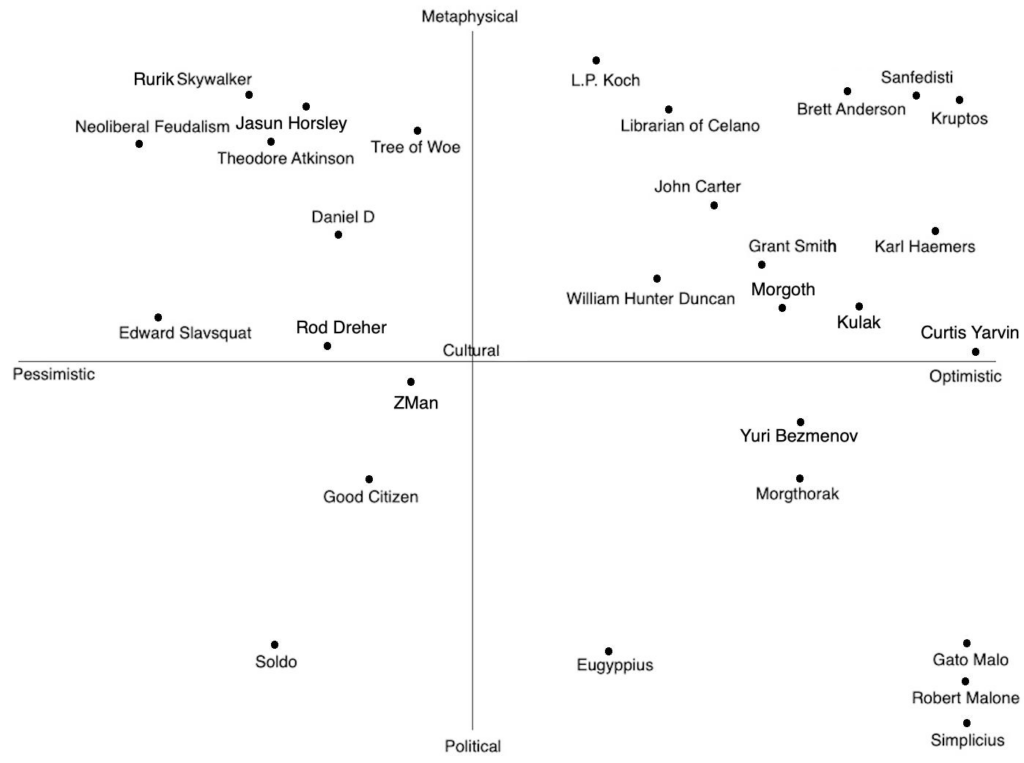
  • Ruminations on the nature of the soul

    One of my favorite quotes by Alexander Solzhenitsyn in The Gulag Archipelago relates to the changing nature of who we are as people over time. The quote is as follows:

    If only there were evil people somewhere insidiously committing evil deeds, and it were necessary only to separate them from the rest of us and destroy them. But the line dividing good and evil cuts through the heart of every human being. And who is willing to destroy a piece of his own heart? During the life of any heart this line keeps changing place; sometimes it is squeezed one way by exuberant evil and sometimes it shifts to allow enough space for good to flourish. One and the same human being is, at various ages, under various circumstances, a totally different human being. At times he is close to being a devil, at times to sainthood. But his name doesn’t change, and to that name we ascribe the whole lot, good and evil.

    I think of this quote regularly. I’m not the same person I was two or five or ten years ago, let alone decades ago; nor will I be the same person in another five or ten years. Experiences will change me, books and ideas will change me, varying circumstances will change me. Who, then, am I, and who are you? We ascribe the whole lot, good and evil, over a lifetime to the name. Is that appropriate?

    I saw in the news recently that one of Charles Manson’s lackeys is being let out of prison after serving 53 years in prison, to much chagrin by the victim’s families. And I get it, it does a disservice to the families who were robbed of these long decades with the victims; the impact is incalculable. But is this 73-year old woman the same as she was 53 years ago when she was 19? Surely not.

    Is this the same person?

    Is the purpose of incarceration to punish or to rehabilitate? If it is to punish, what is the point of issuing a life sentence (especially a life sentence without the possibility of parole) — why not just have flogging, hard-labor for a set period or execution and be done with it? If a crime is so heinous as deserving to deprive the perpetrator of freedom for the rest of their life, shouldn’t execution as punishment be way more widely applied? The cost would certainly be less (if one discounts the unnecessarily extremely expensive execution appeals process). What is the point of a life sentence? If the point is rehabilitation, as it is is many European countries where life sentences means a couple of decades in prison if that, then life sentences without the possibility of parole also make no sense.

    Anyway, this was a digression.

    If our personalities change over time due to new thoughts, world events, and new experiences, what about personality changes resulting from physical changes? When people get old they become forgetful, get Alheizmers or dementia, can no longer take care of themselves, etc. What can be said about the nature of their soul when they have become entirely different people at that stage in their life due to no fault of their own?

    The favorite example I like to use to demonstrate this is the example of Phineas Gage.

    Phineas Gage was a normal man in the 19th century until he suffered a work accident in 1848 and a tamping iron was shoved through his skull with extreme force. He lost an eye but miraculously survived:

    Gage after the accident. He looks like a Chad
    The “cone of un­cer­tain­ty” for the path taken by the tamping iron. Gage’s mouth was open at the moment of the ex­plo­sion, and the front and back of his skull tem­po­rarily “hinged” apart as the iron entered from below, then were pulled back to­geth­er by the re­sil­ience of soft tissues once the iron had exited through the top of Gage’s head.
    Gage’s skull photographed in 1968 after his death. How did he even survive? He would likely have qualified for at least mild medical disability in the modern era

    After the accident, Gage’s personality completely changed:

    Harlow (“virtually our only source of information” on Gage)described the pre-accident Gage as hard-working, responsible, and “a great favorite” with the men in his charge, his employers having regarded him as “the most efficient and capable foreman in their employ”; he also took pains to note that Gage’s memory and general intelligence seemed unimpaired after the accident, outside of the delirium exhibited in the first few days.Nonetheless these same employers, after Gage’s accident, “considered the change in his mind so marked that they could not give him his place again”:

    The equilibrium or balance, so to speak, between his intellectual faculties and animal pro­pen­si­ties, seems to have been destroyed. He is fitful, irreverent, indulging at times in the grossest profanity (which was not pre­vi­ous­ly his custom), manifesting but little deference for his fellows, impatient of restraint or advice when it conflicts with his desires, at times per­ti­na­cious­ly obstinate, yet capricious and vac­il­lat­ing, devising many plans of future operations, which are no sooner arranged than they are abandoned in turn for others appearing more feasible. A child in his intel­lec­tu­al capacity and man­i­fes­ta­tions, he has the animal passions of a strong man. Previous to his injury, although untrained in the schools, he possessed a well-balanced mind, and was looked upon by those who knew him as a shrewd, smart business man, very energetic and persistent in executing all his plans of operation. In this regard his mind was radically changed, so decidedly that his friends and acquaint­ances said he was “no longer Gage.”

    What does this example mean toward our understanding of the human soul, of God and of the afterlife? Or what about famous 1950s mass murderer Charles Whitman, whose personality changed leading to his clocktower shooting due to a pecan-sized brain tumor (he knew he was behaving strangely and asked his brain to be examined after death)? There are many such cases. One could also look at electroshock therapy as another (usually less extreme) example of personality change, or horrendous cases of frontal lobotomies as a more extreme example. Also many such cases.

    Kaczynski wrote in Industrial Society and Its Future, “There may or may not be an immaterial human soul, but if there is one it clearly is less powerful than the biological mechanisms of human behavior. For if that were not the case then researchers would not be able so easily to manipulate human feelings and behavior with drugs and electrical currents.”

    This is the perspective of our materialist overlords, who believe humans are simply programmable meat puppets without a soul (or at least a meaningful one that can resist their dictates) and therefore without any inherent dignity in the eyes of God (who they believe doesn’t exist). Jewish homosexual atheist and advisor to World Economic Forum head-honcho Klaus Schwab Yuval Harari calls humans “useless eaters”. Globohomo has spent a tremendous amount of time and energy learning how these “useless eaters” operate physiologically, especially via endless experiments conducted via the Tavistock Institute and its affiliates.1

    If our personality changes as we age, through changing circumstances, drugs, brain tumors or a metal rod shoved through our brains, who exactly are we?

    Or what about our species’s personality changes due to humanity’s evolution based on natural selection pressures? What effect does that have on our souls? Or what does artificial selection to breed any species to emphasize or de-emphasize certain personality traits have to say about the soul?

    Schopehauer believed that everything came down to the will: a blind, unconscious, aimless striving devoid of knowledge, outside of space and time, and free of all multiplicity. Such a will animated everything living. Nietzsche thought as Shopenhauer did but believed the will not to be aimless, but rather a will to power, and that, like Heraclitus, there were not solid states of anything but merely time-dependent processes playing out; everything was a process of becoming, of change, and nothing was static other than the process of change itself.

    There’s even the astrological perspective that our character and dispositions are determined by our natal chart (position of the planets at birth) and progressed chart (how the planets move over time based on the natal chart). The West scoffs at astrology as a pseudo-science (and the vague birth-month horoscopes in newspapers are indeed trash), yet ancient civilizations that had no contact similarly cast horoscopes predicting personality and life events. Should we be so quick to dismiss something that was essentially universally accepted across the world until the modern era? And if the position of the planets determines or influences a person’s personality and evolution of that personality, what would that say about the nature of the soul, free will or of Heaven or Hell?

    Regardless, most humans feel as though we possess souls; I know I feel as though there is something more than mere physical reality. Does that mean we do have souls, or perhaps it was an evolutionary advantage to feel so in order to feel less scared of death and to take more risks?

    Brett Anderson argues that consciousness (which people generally think of as necessary to possess a soul) is an entirely bodily phenomenon, not subject to mind-body dualism, and that consciousness is a way to transmit information efficiently throughout the brain via self-organized criticality which arises from the interaction of competing brain processes. He believes this theory ties together Global Workspace Theory and Integration Information Theory, where consciousness is defined as the difference between the sum of the brain and its constituent parts. Under his theory it seems like he would deny the existence of a soul, or rather, deny that any knowledge of the soul from within material reality, if any, is possible.

    Some people hedge their bets. One of the smartest men in history, John von Neumann, was terrified of death. He was basically an agnostic all his life yet received a deathbed conversion because of Pascal’s wager:

    He invited a Catholic priest, Father Anselm Strittmatter, O.S.B., to visit him for consultation. Von Neumann reportedly said, “So long as there is the possibility of eternal damnation for nonbelievers it is more logical to be a believer at the end,” referring to Pascal’s wager. He had earlier confided to his mother, “There probably has to be a God. Many things are easier to explain if there is than if there isn’t.” Father Strittmatter administered the last rites to him. Some of von Neumann’s friends, such as Abraham Pais and Oskar Morgenstern, said they had always believed him to be “completely agnostic”. Of this deathbed conversion, Morgenstern told Heims, “He was of course completely agnostic all his life, and then he suddenly turned Catholic—it doesn’t agree with anything whatsoever in his attitude, outlook and thinking when he was healthy.” Father Strittmatter recalled that even after his conversion, von Neumann did not receive much peace or comfort from it, as he still remained terrified of death.

    I obviously don’t have an answer to these questions (although I’ve discussed some of the difficulties with the common perspectives on religion here), and if you have any insight or perspective you’d like to share I’d be interested in hearing it. I’ve heard of various near-death experiences, many of which are quite similar with seeing approaching light, loved ones, etc, as well as astral projections and deathbed experiences where those dying see their dead relatives which perhaps gives them elements of peace, but how does one separate these experiences out from biochemical mega-dopamine releases from the body as death approaches? How does one know what is scientific biochemical reactions and what, if anything, is something more?

    Stay away from the light, it’s not your time to go yet!

    It would be great to firmly believe that this world isn’t it, that some aspect of us lives on to be reunited with loved ones in an environment without pain, without suffering, for all eternity. There is such a peace of mind that derives from that belief system, and it is part of Christianity’s enduring appeal. Who wants to grow old and decrepit, lose our facilities and face the black void of eternal nothingness, everyone we loved from prior generations simply gone forever with no meaning or purpose behind it, poof? Who wants to live in a purely materialist universe where globohomo summons a giant woke artificial intelligenceextracts all the world’s natural resources, kills all the animals of the worldgallops toward white genocide, rules over with an iron fist the masses of “programmable useless eaters” for exploitation in locked-down, force-vaccinated “15-minute smart cities”, and leaves a giant dead husk of a planet behind? This is why, in the face of an unrelenting, increasingly atheistic materialist horror animated by what appears to be the Demiurgethere must be a return to religious belief in whatever form it takes. As this materialist horror continues to manifest and intensify, a countervailing religiousness will grow in its shadow because worsening conditions will become too difficult to bear otherwise. Whether this is simply a coping mechanism I don’t know. The horrors of material reality may serve to highlight the materialist/spiritual dualism at the heart of reality and as emphasized by the gnostics much as, per Richard Tarnas in The Passion of the Western Mind, each era in history has served as a springboard for advancement and pushback in the next.

    Ultimately, the concept of an all loving God that actively cares about us and that brings us back into His embrace upon death is a powerful belief that isn’t so easily replaced by science or materialism, which can explain how but not why. Indeed, this gross materialist Machine metaphysically uses the traditions and beliefs of humans as fuel for its continued propagation, which is why there has been such a collapse into the nihilism as prophesized by Nietzsche with the “Death of God”. At least to me, the counter to pure materialism can be summed up by the song that best approximates the feeling of a loving God, George Strait’s “Love without End, Amen”:

    George H.W. Bush, an evil globohomo type who spent his life screwing over the vast majority within America, was a big fan of this song and he seemed to really love his family and children. People are complicated and strange.

    Subscribe:
    Email delivery remains on Substack for now.


    1 The Tavistock Institute, heavily funded by the foundations to the tune of billions per year, developed the mass brain-washing techniques which have been widely used on the American public by modifying individual behavior through topical psychology.  Tavistock’s pioneer work in behavioral science along Freudian lines of “controlling” humans established it as the world center of foundation ideology.  Its network extends from the University of Sussex to the U.S. through the Stanford Research Institute, Esalen, MIT, Hudson Institute, Heritage Foundation, Center of Strategic and International Studies at Georgetown, where State Dept. personnel are trained, US Air Force Intelligence, and the Rand and Mitre corporations, along with the personnel of the foundations.  Tavistock originated the mass civilian bombing raids carried out by Roosevelt and Churchill (who was so corrupt that he had to be continuously bailed out by his benefactors) against Germany as a clinical experiment in mass terror, keeping records of the results as they watched the “guinea pigs” reacting under “controlled laboratory conditions.”  They were also responsible for the “experiment” in compulsory racial integration, the use of drug experiments (see MKUltra), and placing German foster children with pedophiles. The goal of their research is to break down the psychological strength of the individual and render him helpless to oppose Rothschild central bank owners.  Any technique which helps to break down the family unit and family inculcated principles of religion, honor, patriotism and sexual behavior is used by Tavistock as weapons of crowd control.  Ten major institutions are under Tavistock’s direct control with 400 subsidiaries and 3,000 other groups and think tanks which originate many types of programs to increase establishment control, per Eustace Mullins in “The World Order: Our Secret Rulers”, 285-288.

  • The sad skinsuiting of the environmental movement: turning a blind eye to the effects of unchecked world population growth due to obsession with egalitarianism (Part 2)

    Continued fromPart 1….

    Part 1 covered the unchecked, exploding population growth of Africa, whose rate of growth is not slowing nearly as much as globohomo’s ridiculous scientific modeling indicated. Being unable to feed itself, Africa is at risk of a mass starvation event if there is ever a decrease of foreign aid, especially agricultural aid to the continent, and there is and will continue to be a mass exodus from Africa into Europe, seeking better job opportunities and higher quality of life. As a follow up point, arguably the smartest man in the world, Chris Langan, pointed out recently that globohomo maximized its deadly mRNA COVID vaccinations among white populations as a weapon of war, whose population growth rate is already flat or declining, while leaving Africa untouched. Africa had the lowest COVID vaccination rate of any populated continent on earth:

    This section will cover the massive decline of natural resources worldwide to support the consumption patterns of 8 billion people on earth, which is rapidly heading toward 10 billion or more.


    The unsustainable consumption of worldwide natural resources

    This could be something like a ten part series, doing a deep dive into the rates of use and known reserves for each category of consumption. However, a highlight of a bunch of categories should provide a similar visceral impact. Let’s go through them.

    • Energy consumption per country serves as a proxy for general consumption. The more developed nations have much higher consumption rates than less developed, even though the population growth (as discussed in part 1) has been highest in Africa and (previously) Asia.
    • Worldwide energy use is mostly based on oil, natural gas, coal, and traditional biofuels. Alternative energy including nuclear, wind, hydropower, solar and other renewables are tiny percentages of the world’s energy use despite all the media hype. This is because they are so inefficient, except for nuclear, which is efficient but scares the public; fourth generation nuclear reactors are much safer than prior generations, and thorium-based nuclear reactors would be even safer and more sustainable.
    • World oil and gas production is depleting. Saudi and other countries are hiding their reserve figures as a “state secret”. Coaloil and gas production are getting harder and more complex as world reserves dwindle – it requires deeper mines, deeper drilling, expensive fracking, and other difficult to master technologies. BP’s CEO stated in 2010 that he expected worldwide oil production to peak in 2020, and according to a study China was expected to peak in coal production in 2020 with the U.S. not far behind. In other words, peak production is now. See here for more.
    • Meanwhile, nitrogen fertilizer which powers the Green Revolution and allow half the planet to eat is a direct fossil fuel product processed primarily from natural gas. Modern agriculture is largely reliant on petroleum energy; half the world’s population relies on synthetic nitrogen fertilizer booster agricultural output in order to survive. Synthetic nitrogen fertilizer in turn relies on natural gas inputs. According to Wikipedia, it is estimated that no more than 3.7 billion people could be fed without this single fossil fuel agricultural input. Moreover, the essential mineral nutrient phosphorus is often a limiting factor in crop cultivation, while phosphorus mines are rapidly being depleted worldwide.
    • The UN’s FAO warns that 90% of Earth’s topsoil, the health of which is necessary for growing crops, is at risk by 2050:† Worthington et al. (from UK Soil Association Fact Sheet). Journal of Complementary Medicine 7:2161–2163 (2001).
    • Overfishing is causing worldwide fish populations to crash:

    National Geographic: “How overfishing threatens the world’s oceans—and why it could end in catastrophe”:

    National Geographic: The rise of industrial fishing has led to the harvesting of wildlife at rates too high for species to replace themselves. Today, over a third of global stocks are overfished, posing a threat to biodiversity and throwing ecosystems dangerously out of balance.

    Microplastics have been found in human blood for the first time, with extremely negative health implications, especially to testosterone levels. Eating one fish from U.S. lakes or rivers is likened to drinking month’s worth of contaminated water. And this is all expected to get much worse: Global plastics use is set to triple by 2060.

    Plastics are very difficult to recycle despite being ubiquitous:

    Environmental advocates maintain that plastics are largely single-use: A 2020 Greenpeace USA survey found that plastics with resin codes #3–7 are virtually impossible to recycle, because of limited facility processing capabilities and insufficient market demand. Lawsuits are currently ongoing against Walmart and Keurig Green Mountain, arguing that those companies have violated Federal Trade Commission guidance by presenting plastic items as recyclable. The corporate giants have defended themselves against the allegations and emphasized their commitment to sustainability. (Walmart said in a statement that the company is “a strong advocate for the environment” and recycling, while Keurig has maintained in court that its labels advise consumers to “check locally” regarding recycling options.)

    Plastic Recycling Still Has A Long Way To Go In The U.S. [Infographic]
    Plastics are difficult to recycle

    Think a how much plastics you use when you go to the grocery store. Here’s a representation:

    How much trash does an average American family throw out in a week? See here for article and more photos

    How do you think you and your family’s compares? Pretty much any family in America has similar waste habits.

    • The rates of animal extinction are at record highs and accelerating:See here for a list of recently extinct mammals. This isn’t taking into account humanity’s driving of many species to near extinction, such as what happened to the American buffalo, which is an especially disgusting story.
    • The industrialized food system is a complete horror show. The animals that aren’t at risk of going extinct are those that humans raise for consumption such as cows, pigs and chickens. 29 billion animals killed for food in the US alone in 2023 so farhere is more information on the numbers. But their lives are horrifically bad in the modern industrialized meat production system which breeds for economic efficiency; short, brutish lives, and in the dark and in pain, yanked from their mother’s embrace either at birth or close to birth. (This is a natural dilemma: our bodies are tuned to meat eating because of hundreds of thousands or millions of years of evolution as hunter gatherers, but we have no connection to the food we eat anymore.)How can one claim this planet is anything but a horror show nightmare based on this? (As a side note, note that the proclaimed worst group on earth in history, the Nazis, wanted to ban this kind of industrialized meat slaughter).
    • Deforestation: Over the decade since 2010, the net loss in forests globally was 4.7 million hectares per year. However, deforestation rates were much significantly higher. The UN FAO estimate that 10 million hectares of forest were cut down each year.
    • Air quality: Air quality in major cities worldwide, where a disproportionate amount of the world’s population live, have terrible air quality:According to the WHO 92% of the world’s population live in places where air pollution levels exceed healthy safety limits.Let’s also not forget about controversial chemical trails (“chemtrails”), which spray unknown poisons into the air we breathe for dubious reasons (weather modification? To make people sicker? As an experiment?). The media won’t cover it, of course… You can see the below in pretty much any well populated city in America, all you have to do is look up, but of course looking up and believing your own eyes is a “dangerous conspiracy theory that only dumb hicks believe”.
    • Water quality: Urban water supplies are highly compromised, with chemicals in water supply such as estrogenbirth control chemicalsfluoride etc. Drinkable water supplies are also being strained due to massively growing populations:

    This article by Karen Hunt is a nice primer on who controls the limited resource of drinkable water.


    The elite response to the decline of worldwide natural resources

    As mentioned at the start of this essay, the elite response to the decline of worldwide natural resources is to attempt to institute neoliberal feudalism, where the consumption rates of almost everyone worldwide, except for the elites, shall be dramatically curtailed. They have to do this, under whatever false branding/ marketing it takes, whether it is “global warming” (as per William M. Briggsor “climate change” or something else, because the alternative is catastrophe as resources run out with 10+ billion people demanding to be fed and provided a decent quality of life. Bringing online massive numbers of safer fourth generation nuclear reactors worldwide to provide energy could (and should) help with this problem, but would not solve it. Perhaps a much greater focus on thorium nuclear reactors could…

    Regardless, these elites don’t want clean, safe, ubiquitous nuclear energy, because that doesn’t create a grift that allows them to separate themselves from the unwashed masses. They are and will continue to institute neoliberal feudalism as their preferred solution via massive inflation, the institution of freedom-killing CBDCs, ubiquitous woke AI, higher taxes and dramatically increased immigration, along with retarded, wildly inefficient “green” solutions such as solar and wind energies. Then they will slowly kill off the excess population, who Klaus Schwab advisor Yuval Harari (a Jewish homosexual atheist) calls “useless eaters”, with poisoned food and water, mRNA death jabs, war and other measures.

    These extreme measures would not have been needed if we had an elite worth their salt. A proper elite, an elite based in noblesse oblige instead of noblesse malice, an elite not blinded by an extreme form of secular-but-religious based egalitarianism, would have come up with a plan on the front end when world populations were 20-25% of what they are now instead of the back end with a world population spiraling toward an unsustainable 10+ billion.

    Combining a low, homogenous population (likely enforced with maximum number of children by the government, sorry libertarians), an emphasis on rural and farming communities instead of cities, with a local and national focus instead of global, a sustainable society with a high degree of recycling, environmentally conscious, not economic growth dominated, with precautionary principles for letting new chemicals into the environment and food supply, and a focus on clean, sustainable nuclear energy.

    Malthus thought that the best option for humanity would be to consciously stay (well) below the Malthusian limiting factor(s) to growth instead of reaching those limits which always greatly expand human misery:

    In later editions of his essay, Malthus clarified his view that if society relied on human misery to limit population growth, then sources of misery (e.g., hunger, disease, and war) would inevitably afflict society, as would volatile economic cycles. On the other hand, “preventive checks” to population that limited birthrates, such as later marriages, could ensure a higher standard of living for all, while also increasing economic stability. Regarding possibilities for freeing man from these limits, Malthus argued against a variety of imaginable solutions, such as the notion that agricultural improvements could expand without limit.

    Herrnstein and Murray agree with Malthus in the policy recommendations they offered in The Bell Curve:

    Discussing a possible future political outcome of an intellectually stratified society, the authors stated that they “fear that a new kind of conservatism is becoming the dominant ideology of the affluent—not in the social tradition of an Edmund Burke or in the economic tradition of an Adam Smith but ‘conservatism’ along Latin American lines, where to be conservative has often meant doing whatever is necessary to preserve the mansions on the hills from the menace of the slums below.”Moreover, they fear that increasing welfare will create a “custodial state” in “a high-tech and more lavish version of the Indian reservation for some substantial minority of the nation’s population.” They also predict increasing totalitarianism: “It is difficult to imagine the United States preserving its heritage of individualism, equal rights before the law, free people running their own lives, once it is accepted that a significant part of the population must be made permanent wards of the states.”

    The authors recommended the elimination of welfare policies which they claim encourage poor women to have babies.

    Our world elites have made a deal with the Devil. In return for unlimited control they have promised to do whatever it takes, no matter the moral, spiritual, physical or ethical lapses involved. Control above all, “imperium super omnia” is the motto that motivates them.

    Marina Abramović poses with Jacob Rothschild in front of ‘Satan summoning his Legions’, 1796-1797

    They are reckless, blind, arrogant and bloodthirsty – a very nasty combination. First they had to crush any attempts of rebellion and inegalitarianism from the masses, which led to the massive unchecked population explosion and the situation we are in today. And that’s why they are scrambling to address it on the back-end, a horrific upcoming process which will result in unimaginable misery for most of the world, instead of being able to do so responsibly and ethically on the front-end.

    But here’s the thing about the Devil: he doesn’t keep his word. If our globohomo bloodthirsty elites “succeed” in destroying the world and bringing the masses to ruin, the Devil will ultimately betray his followers and send them along the same path that they previously sent everyone else.

    Ultimately, the world is currently barreling toward the Wall-E scenario, where we consume everything and leave behind a dead husk of a planet in a mass worldwide die-off; the Sixth (and last?) Mass Extinction Event (unless we become multi-planetary so we can find and devour resources of other planets). At the very least upcoming increased competition for scarcer resources will lead to dramatically lower quality of living for almost everyone. A horrible and grim future.

    Humanity, a swarm of locusts blindly devouring everything in sight, must become multi-planetary based on horrific current trends or risk extinction. Pictured is a SpaceX reusable Falcon 9 second stage

    Wall-E’s vision of planet earth as a fully consumed desolate wasteland is the likely future for humanity unless collapse or becoming multi-planetary happens first.

    Subscribe:
    Email delivery remains on Substack for now.

  • The sad skinsuiting of the environmental movement: turning a blind eye to the effects of unchecked world population growth due to obsession with egalitarianism (Part 1)

    Humanity is in the midst of what is, by species-historical standards (with modern humans estimated at 300,000-500,000 years old), unprecedentedly radical and fast social, economic, and genetic changes. These ongoing changes are a result of (1) the neolithic agricultural revolution 10,000 years ago after the last glacial age ended (previously discussed here), (2) the industrial revolution starting in the 18th century, and (3) Norman Borlaug’s 20th century Green Revolution.

    The Green Revolution is the least popularly understood one. Borlaug dramatically expanded crop yields via genetic crossbreeding and, combined with the widespread use of nitrogen fertilizers (800% increase between 1961 and 2019), parabolically increased the world’s population. Few people know Borlaug’s name, but you should; he is responsible for billions of additional humans on earth.

    As Cochran and Harpending wrote in The 10,000 Year Explosion, “natural selection can proceed quite rapidly, and the past consists of long periods of near-stasis (in populations that were well matched to their environments) interspersed with occasional periods of very rapid change.”

    Being in the midst of these changes, it is difficult to detach oneself and try to assess the state of the world from a zoomed-out perspective, to see how unique and unusual the situation we find ourselves to be. The previous post on The 10,000 Year Explosion reviewed the genetic changes that are occurring to humans as they continue to adapt to a sedentary, heavy carbohydrate agricultural lifestyle after millions of years as active hunter gatherers eating high protein diets.

    This post covers these species-level changes from another angle: the environmental effects caused by this massive population explosion, and whether and to what extent humanity’s population growth and consumption patterns are long-term sustainable. To the extent they are not, what does that mean for the future?


    The meaning of “environmentalism”

    To set the proper framing let’s first discuss what the term “environmentalism” means. There are two uses of the term: the traditional meaning and the modern meaning.

    The traditional meaning meant creating a sustainable world for future generations with a focus on clean air, clean water, conservation of natural resources, recycling, long-term protection of animals, biodiversity, etc.

    The term was politicized by previous generations into a pro vs. con dialectic: profit-obsessed corporations who willfully disregarded the tragedy of the commons (exemplified by “Club for Growth”-tier Republicans such as Mitt Romney, Paul Ryan, the Koch Brothers and Mitch McConnell1) versus bleeding-heart hippy conservationists.

    The traditional meaning isn’t much in use anymore by the elites, but much of the public is confused by the hidden behind-the-scenes rebranding of the term.

    Once the surface layers of feel-good buzzwords and spin are peeled back, the modern meaning is a combination of three ideas. These ideas are as follows:

    1. Limiting CO2 emissions in wealthy countries in the name of “climate change” and “global warming”, in order to redistribute western wealth to browner/blacker communities and third world, low income countries to equalize the quality of life between the two. See hereherehereherehere and here for examples. Also, this post by A Midwestern Doctor is a great primer on this switch-e-roo. Alex Honnold, an inspiration for his fearless mountain climbing, exemplifies the liberal consensus on this shift in a 2020 Instagram post;
    2. Providing justification for an extraordinarily intrusive globohomo control grid where you will have no privacy and your consumption patterns will be monitored and greatly limited, subject to the whims and decisions of your overlords (“you will own nothing and you will be happy”), while
    3. The consumption patterns of the globohomo elite class remain undisturbed.

    In other words, “environmentalism” today means the introduction of neoliberal feudalismIt is all about elite control over the masses; to the extent the term today relates to its traditional understanding, those are all now secondary or tertiary considerations. Globohomo and environmental organizations pay lip service to the traditional definition, but their priorities are much more sinister in actual application.

    The skin-suiting of environmentalism is a sad thing. Who doesn’t want to create a better world for future generations? But the modern meaning is inherently politicized given the vast majority of people will have much lower qualities of life under neoliberal feudalism.

    With that said, let’s review the greatest problem facing traditional environmental sustainability: unchecked, radical population growth.


    An overview of humanity’s parabolic population growth

    Let’s start by looking at a chart of the world’s population on a species-historical scale:

    The 6 billion listed on the chart for 2,000 AD is now 8 billion as of 2022.

    Norman Borlaug’s Green Revolution, sparked by plentiful and cheap energy in the form of oil, natural gas and coal, has resulted in exponential population growth. Production of the world’s major crops has increased by almost 5x in a 60 year period between 1965-2015:

    According to The Atlantic, “In the 1870s—one of the most famous decades in the history of scientific and technological development—142 people per 100,000 died of famine globally. Today’s rate of famine deaths is about 99 percent lower than that of the late 1800s, despite the world’s population being roughly five times larger.”

    Under Malthusianism population growth is potentially exponential, but the food supply or other resources is linear, therefore population growth eventually reduces living standards to the point of triggering a population decline. This event is called a Malthusian catastrophe:

    A Malthusian catastrophe occurs when population growth outpaces agricultural production, causing famine or war, resulting in poverty and depopulation. Such a catastrophe inevitably has the effect of forcing the population to “correct” back to a lower, more easily sustainable level (quite rapidly, due to the potential severity and unpredictable results of the mitigating factors involved, as compared to the relatively slow time scales and well-understood processes governing unchecked growth or growth affected by preventive checks).

    The planet has recently experienced the exponential population growth that Thomas Malthus warned about.

    According to The 10,000 Year Explosion, “Malthus himself pointed out that factors other than food shortages can also limit populationAny negative factor that intensifies as population density increases can be the limiting factor – starvation and malnutrition are not the only possibilities. The key is which negative factor shows up at the lowest population density. We believe that the nature of the key limiting factor – which is not necessarily the same in all human populations – can have important effects on human evolution…”

    We will review the continued growth trends of the world population below, especially centered in Africa, and then analyze what is very likely going to be the key limiting factor for population growth worldwide in the not-so-distant future: the extreme decline in the world’s natural resources, especially the plentiful natural gas necessary to increase yields via synthetic nitrogen fertilizers, the decline in nutrients in topsoil and the decline of biodiversity, all of which are necessary to keep agricultural yields high. This is Neo-Malthusianism in action.

    Will hitting up against a potential key limiting factor of declining natural resources result in war, pestilence, famine as Malthus predicts? Would such shocks occur over a longer or shorter timeframe, and how bad could they potentially be? Consider how interconnected the world is, relying on a just-in-time distribution model with long and complicated worldwide supply chains and almost no on-hand reserves in order to boost “efficiency”, which could amplify the effects of systemic shocks.2 Is the world ready to grapple with long-term trends of declining quality of life?

    Elon Musk is concerned in the other direction; he wants unlimited population growth. His reasoning is that the world economy is rooted in a model of “forever growth” and social safety nets are based on blatant ponzi schemes that need ever-increasing populations to sustain them. Faltering population growth could result in an economic death spiral. Musk tweeted:

    Tweet is here

    Regardless, there will always be a Malthusian limit to population growth, and we will reach it, whatever it is.


    Rates of global population growth and the problem of Africa exceeding projections

    The following are projections for global population growth by Scientific American through 2100, which projects worldwide population topping out a little above 10 billion:

    Per Scientific American, world population will top out a little over 10 billion in 2100

    Of global population growth, most of it is currently coming from Africa:

    African countries with the highest current total fertility rates are as follows:

    See the fertility rates per country organized from most to least here. Whites in western countries all have well sub-replacement TFR (replacement is at 2.1).

    Per the below chart, Asian population growth was quite rapid since the 1950s but is close to topping out, which will occur around 2050:

    Meanwhile, Africa’s population is expected to triple by 2100. The World Economic Forum expects huge numbers of Africans to then emigrate to richer countries in search of better opportunities:

    The expected population growth presents tough but obvious policy-making questions for governments on the continent especially given low human capital development. For its part, the United Nations already predicts that larger populations will make it “harder” for African governments to reduce poverty and hunger or boost local access to standard health and education.

    Take Nigeria, which will see nearly 300% rise in its population. It ranked 152 (out of 157 countries) on the World Bank’s first ever Human Capital Index and overtook India as the poverty capital of the world in 2018. The failures of successive governments has also resulted in sustained emigration of Nigeria’s middle-class, typically among its best educated citizens, to Europe and North America, often without the intention of returning.

    Yet, it’s a trend that will likely become even more pervasive across the continent as population growth results in more pressure on stretched amenities and infrastructure. More Africans, in search of better economic fortunes, standard of living and education, are expected to pursue opportunities for lives and jobs abroad.

    As it turns out, these opportunities are increasingly becoming available as countries with aging and shrinking populationslike Japan, are already looking to plug skill and labour force gaps to sustain their economies by reversing strong anti-immigration policy stances.

    Bill Gates personally shares significant responsibility for rapidly expanding African population growth via water, agriculture, vaccine and other initiatives, i.e. see hereherehere. On the surface these are kind and noble gestures, meant to elevate a continent out of poverty and disease — but those gestures are only “kind” so long as that population growth will both slow down/stop like other developing regions, and so long as it is sustainable, i.e. not reliant on large-scale foreign aid forever.

    If population growth neither slows down/stops nor becomes sustainable, his surface act of kindness will only result in extraordinary misery down the road — “killing with kindness” — literally.

    Is Africa’s growth slowing down? Gates is worried about it: “Population growth in Africa is a challenge,” Gates told reporters in a telephone briefing. “The biggest things are the modern tools of contraception,” Gates said. “If you have those things available then people have more control over being able to space their children.”

    But Africans don’t want to use contraceptives. According to a 2021 study, in sub-Saharan Africa, about 80% of young women either use a traditional method or do not use any form of contraception at all.

    And Africa’s population growth is not slowing nearly as fast as UN forecasts had predicted:

    Countries in sub-Saharan Africa are adding people more rapidly than expected, said John Wilmoth, director of the United Nations’ Population Division and a co-author of the paper. The U.N. has been using the new probability model in its most recent projections.

    Fertility levels turn out to be higher today than was expected 10 years ago,” he said. “There’s been a worldwide reduction in fertility, even in sub-Saharan Africa over the last two decades. It’s falling, but slower than expected and more slowly than in other countries in Asia and Latin America.”

    Earlier projections “took what happened in other countries, where birth rates came down and applied that across the board,” said Carl Haub, a demographer at the Population Reference Bureau in Washington, D.C. “The big issue is with Africa. It had not gone down very fast.

    So basically it looks like UN, Gates and other elite policies are structured around data projections that are based on the same types of arrogant, faulty assumptions by the “smartest” and “brightest” (utterly politicized) “scientists” that led Al Gore to conclude that the ice caps would be melted by 2013.

    What are you going to do, Bill, when African population growth doesn’t slow down enough according to your pie-in-the-sky “models”? What effect will your arrogant megalomania have on the world then? Will you be around to be responsible for the effects of your actions? Is this whole thing just some kind of reckless experiment for you?

    Perhaps this wouldn’t be an issue if Africa was self-sustaining. But Africa is utterly reliant on agricultural imports for its survival: it imported $35 billion of food per year in 2020, $55 billion worth in 2022 which is expected to rise to $110 billion by 2025, the cost of which is rapidly rising in a highly inflationary environment.

    Foreign aid donors and recipients by country, 2014

    The result of the Ukraine war on grain exportation to the continent raises the immediate risk of acute food insecurity. Gates is also worried about Africa’s import reliance:

    There’s no better example of that than looking at the African continent. Given the cost of labor and the availability of land, Africa should be a net food exporter. But because of low productivity, it’s a net food importer. The urgency of the innovation pipeline comes both from the need to get African productivity up, but also the fact that the closer you are to the equator, the more damaging climate change is for agriculture. And Africa is the last place in the world where you have significant population growth. So it’s a huge challenge.

    Some have recently claimed that Gates’s agricultural initiatives in Africa have failed. See here for critiques of Gates Foundation agricultural interventions in Africa.

    Failure of Africa’s ability to sustain itself should be viewed in the context of measured African IQs being the lowest in the world:

    Gates acknowledges sub-Sahara Africa’s low average IQs, which he states is entirely due to disease and poverty: “The average IQ in sub-Saharan Africa is about 82,” Gates said, “and that’s nothing to do with genetics or race or anything like that — that’s disease and that’s what disease does to you, and that’s why these things are such an extreme poverty trap.”

    But IQ is highly heritable, the science of which is overwhelming:

    Also see the famous book The Bell Curve, which discusses consistent and sustained IQ differences between population groups and how measurable IQ is the best predictor we have for an individual’s success in the modern world. And see IQ and the Wealth of Nations and its follow up IQ and Global Inequality (you can see how politicized globohomo has made scientific findings based on how transparently biased the Wiki links are).

    Gates and the rest of the globohomo elite are basing their policies on blindly religious egalitarianismtabula rasa “blank slate-ism”, which traces its roots back to Pauline Christianty (regardless of whether its proponents claim to be secular or atheist). Under this perspective all human group IQ differences, to the extent they exist, are due entirely due to poverty, racism and environmental reasons and not genetics, and they have based all of their modeling and policies around this religious belief.

    Which brings us to another point: the complete devastation and destruction that African population growth (and the rapid removal of colonialism) has had on the native plants and animals of Africa.

    The below video is a two hour famous documentary called Africa Addio. Read the Wiki entry. It’s a really special film; the filmmakers raced around Africa in a gonzo style as colonialism was ending and documented the complete chaos and destruction that the European withdrawal left in its wake, including huge massacres and destruction of wildlife. The filmmakers were almost murdered during filming; you would never see anything like this made today. It shows a side of Africa and the end of colonialism that you will have never seen or heard elsewhere. If you have the time, I give it my highest recommendation (but brace yourself for some extreme horrors):

    Let’s sum this section up. The worldwide population is set to expand from 8 billion today (from 2.5 billion in the 1950s) to over 10 billion by 2100 if not higher. Africa’s population, which has the lowest continental IQ in the world, cannot sustain itself and relies on ever-increasing agricultural imports to survive; if those imports ever stop Africa will experience an immediate mass starvation event. The rapid population expansion is resulting in the complete destruction of wildlife in Africa, and putting enormous strains on infrastructure, water supplies, and natural resources in unsustainable ways. Spillover population is likely to emigrate to other countries for better opportunities. Globohomo megalomaniacal lackeys like Bill Gates rely on unscientific, unsound model projections for their actions, which are about as accurate as Al Gore’s proclamation that the ice caps would melt by 2013. The world elites are high on their own supply and lack the intelligence, cognitive honesty or accurate worldview to act as proper stewards for the future generations of the world, given the central bank owners that rule everything are driven by noblesse malice and other elites are blinded by their belief in the egalitarian cult.

    Only a transvaluation of values away from egalitarianism has any hope of slowing this process down, if it’s even possible at this point (doubtful).

    But Africa isn’t the only problem — the west and China are also using tremendous amounts of natural resources. The UN claimed in 2019 that humanity is gobbling up natural resources at an unsustainable pace. How unsustainable is this, what are our globohomo overlords doing about it, and how effective will their chosen policies be?

    This is where we will turn to in Part 2

    Subscribe:
    Email delivery remains on Substack for now.
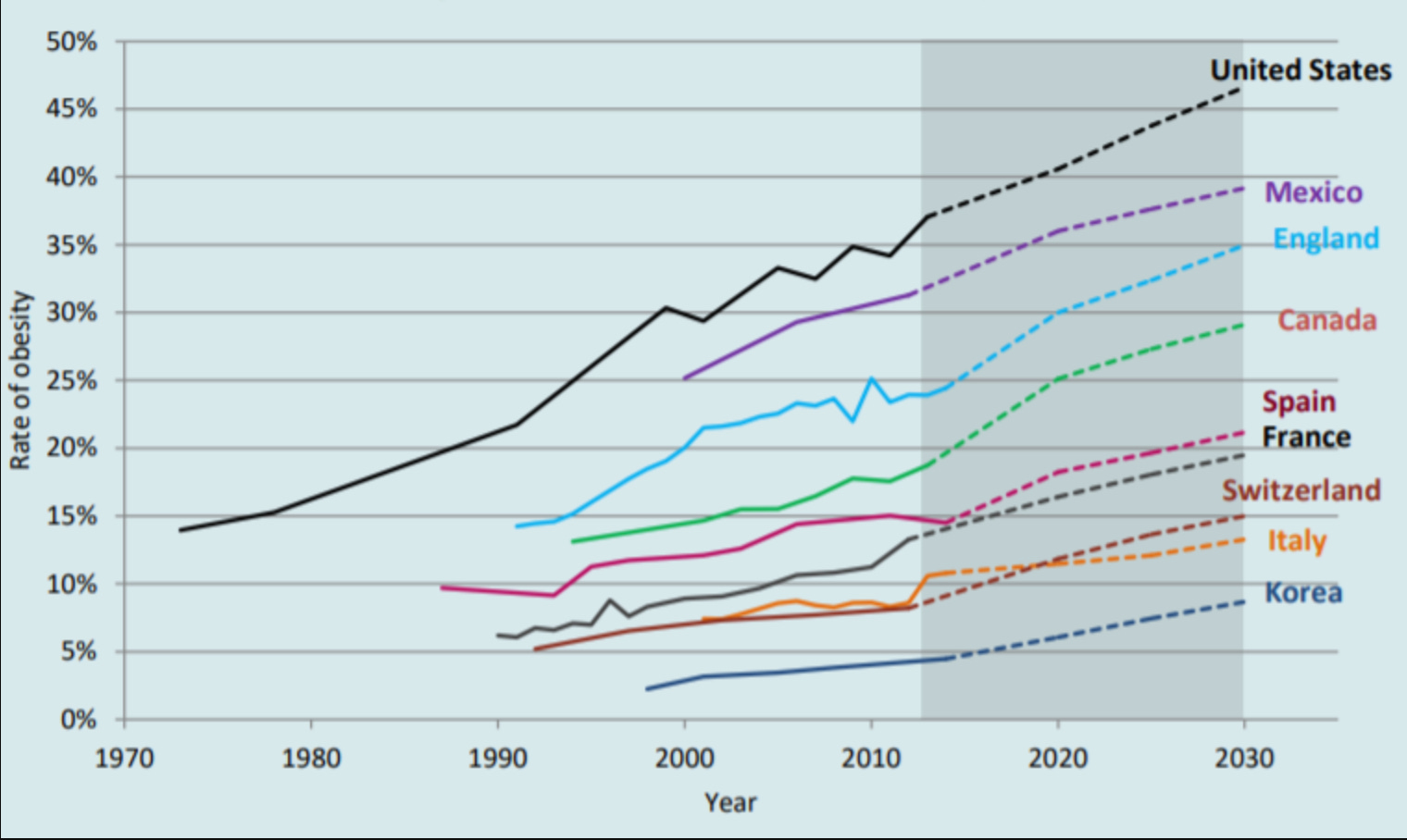

    1 Kaczynski was biting in his criticism of these types in Industrial Society and Its Future. Paragraph 50: “The conservatives are fools: They whine about the decay of traditional values, yet they enthusiastically support technological progress and economic growth. Apparently it never occurs to them that you can’t make rapid, drastic changes in the technology and the economy of a society without causing rapid changes in all other aspects of the society as well, and that such rapid changes inevitably break down traditional values.”

    And Note 13 to Paragraph 66: “Conservatives’ efforts to decrease the amount of government regulation are of little benefit to the average man. For one thing, only a fraction of the regulations can be eliminated because most regulations are necessary. For another thing, most of the deregulation affects business rather than the average individual, so that its main effect is to take power from the government and give it to private corporations. What this means for the average man is that government interference in his life is replaced by interference from big corporations, which may be permitted, for example, to dump more chemicals that get into his water supply and give him cancer. The conservatives are just taking the average man for a sucker, 31 exploiting his resentment of Big Government to promote the power of Big Business.”

    2 The fragility of the just-in-time distribution system may be covered in a future post, but basically world trade is so complicated and interconnected that disruptions may have long-lasting, far-reaching and potentially extremely deadly consequences. For example, a repeat of the Carrington Event or an EMP attack could result in a total system collapse and mass starvation. Also per this comment, the U.S. has no strategic transformer reserves. A Federal Energy Regulatory Commission report suggests that if just 9 of 55,000 substations in key locations were destroyed and one transformer manufacturer was disabled, the entire U.S. grid “would be down for at least 18 months, probably longer.” And in 2013, an anonymous attack on a Silicon Valley substation knocked out the facility for 27 days — a PG&E official called it a “dress rehearsal.”

  • The strange relationship of liberals to power: their psychology as the forever underdog

    Liberals have an interesting personality quirk: they insist on thinking of themselves as the forever-underdogs, no matter their more-or-less unbroken series of victories since the Protestant Reformation or, really, since Paul’s original transvaluation of values 2,000 years ago.

    Pussyhat wearers at the 2017 Women’s March. “You are NOT powerless”, fight the power!

    Their personality quirk seems to be rooted in two things: (1) their dutiful adherence to society’s never-ending push for egalitarianism, where tearing down the unequally successful “evil” is seen as “good”, and (2) the bizarre nature of the liberal mind, which lacks individualized self-esteem and gets it via self-identification with the group-think of liberalism.

    Liberals as a mindless fish in a school of fish; each reacting off the subtle twitches of their neighbors to form synchronized action

    Kaczynski covers these aspects of their mind in Industrial Society and its Future:

    The two psychological tendencies that underlie modern leftism we call “feelings of inferiority” and “oversocialization”. Feelings of inferiority are characteristic of modern leftism as a whole, while oversocialization is characteristic only of a certain segment of modern leftism; but this segment is highly influential….

    Many leftists have an intense identification with the problems of groups that have an image of being weak (women), defeated (American Indians), repellent (homosexuals) or otherwise inferior. The leftists themselves feel that these groups are inferior. They would never admit to themselves that they have such feelings, but it is precisely because they do see these groups as inferior that they identify with their problems. (We do not mean to suggest that women, Indians, etc. ARE inferior; we are only making a point about leftist psychology.)

    Leftists tend to hate anything that has an image of being strong, good and successful. They hate America, they hate Western civilization, they hate white males, they hate rationality. The reasons that leftists give for hating the West, etc. clearly do not correspond with their real motives. They SAY they hate the West because it is warlike, imperialistic, sexist, ethnocentric and so forth, but where these same faults appear in socialist countries or in primitive cultures, the leftist finds excuses for them, or at best he GRUDGINGLY admits that they exist; whereas he ENTHUSIASTICALLY points out (and often greatly exaggerates) these faults where they appear in Western civilization. Thus it is clear that these faults are not the leftist’s real motive for hating America and the West. He hates America and the West because they are strong and successful….

    Modern leftish philosophers tend to dismiss reason, science, objective reality and to insist that everything is culturally relative. It is true that one can ask serious questions about the foundations of scientific knowledge and about how, if at all, the concept of objective reality can be defined. But it is obvious that modern leftish philosophers are not simply cool-headed logicians systematically analyzing the foundations of knowledge. They are deeply involved emotionally in their attack on truth and reality. They attack these concepts because of their own psychological needs. For one thing, their attack is an outlet for hostility, and, to the extent that it is successful, it satisfies the drive for power. More importantly, the leftist hates science and rationality because they classify certain beliefs as true (i.e., successful, superior) and other beliefs as false (i.e., failed, inferior). The leftist’s feelings of inferiority run so deep that he cannot tolerate any classification of some things as successful or superior and other things as failed or inferior. This also underlies the rejection by many leftists of the concept of mental illness and of the utility of IQ tests. Leftists are antagonistic to genetic explanations of human abilities or behavior because such explanations tend to make some persons appear superior or inferior to others. Leftists prefer to give society the credit or blame for an individual’s ability or lack of it. Thus if a person is “inferior” it is not his fault, but society’s, because he has not been brought up properly.

    Kaczynski’s explanations of leftist’s obsession with tearing down anything seen as “strong”, “successful” or “superior” synchs up easily with Paul’s original transvaluation of values, which was aimed at subverting and destroying Roman warrior values which valued greatness, strength, individuality, self-determination, immediacy of purpose, honor, acceptance of hierarchy and nobility:

    “There is neither Jew nor Greek; there is neither slave nor free; there is neither male nor female; for you are all one in Christ Jesus.” (Galatians 3:28 NKJV), “Whosoever will be great among you, let him be your minister; And whosoever will be chief among you, let him be your servant” (Matthew 20:26-28), and “Brothers and sisters, think of what you were when you were called. Not many of you were wise by human standards; not many were influential; not many were of noble birth. But God chose the foolish things of the world to shame the wise; God chose the weak things of the world to shame the strong. God chose the lowly things of this world and the despised things — and the things that are not — to nullify the things that are, so that no one may boast before Him” (1st Corinthians 1:27).

    Paraphrasing Thomas Sowell and with his own twist, Brett Andersen (who has a fantastic Substack) argues that the underlying belief structure of liberals, which he sarcastically calls the “vision of the anointed”, is roughly as follows:

    1. All humans are basically equal (if given equal circumstances)
    2. All humans are basically good (if given good circumstances)
    3. All social ills are due to unequal/bad circumstances (given the right circumstances, all people will flourish)
    4. It is our job to make circumstances better and more equal
    5. Then we will bring about the kingdom of God on earth

    These are tabula rasa religious beliefs that they hold against all empirical, scientific evidence to the contrary, even as they self-identify as science-believe rationalists.

    Andersen continues, “If only we can enact the right policies, they seem to think, then we will put an end to crime, poverty, and inequality once and for all. As Sowell repeatedly demonstrates, the anointed think that there are solutions to perennial problems. In reality, there are only trade-offs.”

    Compare this to his understanding of the vision of the inegalitarian, which Andersen labels as the “tragic” view:

    1. Humans are not equal (and any attempt to make them so will be an authoritarian nightmare)
    2. Humans are not basically good (pretending otherwise is naive and will lead to bad policy)
    3. Social ills may or may not be due to bad policy (some social ills are perennial and the misguided attempt to eradicate them will be worse than the illness)
    4. There are no solutions to social problems, only trade-offs (messing with complex systems always has unintended consequences)
    5. Utopia is not for this world

    Honestly, liberals are being reasonable here. They have fully, if blindly, internalized western society’s core egalitarian values, while you (if you’re reading this) likely have cognitive dissonance toward it – but a cognitive dissonance that for most dissidents and right-leaning individuals is unformed, inarticulated, it lurks in the mind as an uneasiness and a blind instinctive reaction against the latest egalitarian ratchet.1 Until one embraces and accepts that an unacknowledged, unembraced belief in the inequality of all life lies at the heart of one’s unease, a person’s actions, thoughts and words will not properly synch.

    The original transvaluation of values from warrior to priestly values

    It is never enough

    One of the core descriptors of the left, though, is that they are never content with their victories against inegalitarianism: they must always push for more of the Great Leveling. Kaczynski reviews this aspect of their thought process which results in never-ending greater, faster egalitarianism:

    The leftist of the oversocialized type tries to get off his psychological leash and assert his autonomy by rebelling. But usually he is not strong enough to rebel against the most basic values of society. Generally speaking, the goals of today’s leftists are NOT in conflict with the accepted morality. On the contrary, the left takes an accepted moral principle, adopts it as its own, and then accuses mainstream society of violating that principle. Examples: racial equality, equality of the sexes, helping poor people, peace as opposed to war, nonviolence generally, freedom of expression, kindness to animals. More fundamentally, the duty of the individual to serve society and the duty of society to take care of the individual. All these have been deeply rooted values of our society (or at least of its middle and upper classes for a long time. These values are explicitly or implicitly expressed or presupposed in most of the material presented to us by the mainstream communications media and the educational system. Leftists, especially those of the oversocialized type, usually do not rebel against these principles but justify their hostility to society by claiming (with some degree of truth) that society is not living up to these principles.

    Kaczynski: Brilliant ideas, very dumb application

    Zero HP Lovecraft covers the same ground:

    Scott Alexander is a mincing leftist coward who will survey a thousand points of data that clearly indicate a heretical conclusion, and then shrug his shoulders and announce that no one can ever know what the data means, but he still has a way with words, and he called this the fifty Stalins argument,

    One wishes to criticize Stalin, but the penalty for doing so is life imprisonment in a camp. The only allowable way then to express dissent is to say:

    “Stalin, he is good, but he is not enough. What we need is fifty Stalins!” This is what the progressive does when she accuses woke corporate leaders of being cynical. 

    She doesn’t realize she is doing this. It’s all perfectly instinctive, to complain in a way that is safe and meaningless, in a way that, if it were taken seriously, would empower the powerful even more.

    And the act of saying it causes her to believe what she is saying. This is how public declarations work, psychologically. When you make a statement publicly, it causes you to adjust your own belief of yourself, to think that the thing you have said is your real belief.

    No one is immune to this kind of social pressure from within.


    The response by the right feeds into leftist delusions

    The right feed into leftist delusions in two ways:

    1. The right allows the left to falsely argue that their beliefs are rooted in logic, rationality and science, instead of blind religious beliefs dating back 2,000 years. This is likely because many Americans on the right are religious Christians, and it would be nonsensical from their frame to attack their secular enemies by claiming they retain the ethics and metaphysics of their own religion. This gives the left the moral upper hand in arguments, because appeals to science and rationality beat appeals to God or religion in the modern era.
    2. The right allows the left to believe that the left are the underdogs, and that there is an ongoing close and tight race between whether the left or right will win the latest cultural issue. This is fundamentally false: it allows the right to think their strategies are useful and their perspective is truthful, when it is really rooted in self-deception and confusion.2 This in turnallows the left to play their psychological mind-games where they self-identify as weak rebels against powerful authority. Robert Lewis Dabney complained about this disingenuous dynamic in 1897:

    What is the truthful position, and the effective one, if you have the misfortune of dealing with a leftist? Well, the proper position is not to engage them at all, as they are either NPC or sociopaths and they won’t change their minds no matter what you say. But if you have to engage them, the truthful position is the correct one: leftists have all the power and have had all the power for at minimum hundreds of years, they are driven by a blind, radical faith in egalitarianism that they are most likely not consciously aware of, and their beliefs are objectively and scientifically false and only bring complete destruction and ruin in their wake. They are close-minded fanatics whose values derive directly from Pauline Christianity whether or not they self-identify as religious, secular or atheist, or whether they wear the cloak of “Trust the Science” politicized, corrupted Scientism.3

    It’s better not to argue with Rob Reiner at all

    This type of response ties power to responsibility. By leftists pretending that they are constantly rebelling against the big bad white western society, they can claim not to be responsible for their horrendous destructive actions, not just to others but to themselves mentally. If the response is that they have all the power, their power is rooted in blind faith, conservatives are powerless and merely meekly protest as their designated punching bag, and they are ruining everything, then the mental games they play to avoid responsibility cannot be applied.


    Applying this argument to Star Wars

    With all of this in mind, let’s use a popular movie example to demonstrate these principles. I hate to do it because it is such a nerdy, dorky, lame example, but let’s do it anyway because of the outsized effect it has had on society. Can one see why and how the original Star Wars trilogy has become so powerful over the past 50 years? And no, it’s not just about the application of Jung’s archetypes or Campbell’s hero journey, you dork.

    The trilogy reinforces everything discussed above: the scrappy rebellion, marshaling its forces to defeat the big bad hierarchical establishment “order” against all odds and defeat and destroy it, thereby saving the universe and ushering in a new egalitarian age for all time!

    But note how the trilogy ends: we never see *how* the victorious rebellion uses its power. We are never told what they do with it, which factions win out in this egalitarian utopia and who loses, because the left is fundamentally uncomfortable being in a position of strength and dominance and the use of power. Don’t get me wrong, it loves to revel in the use of power and destroy its enemies, but it is not comfortable with the acknowledgment, either to themselves or to others, that they have such power. If they were powerful they would, under Pauline Christian ethics, be “evil”, and who wants to think of themselves as evil?

    The trilogy ends right when the rebels win. Voila! Raise the curtains, bask in the applause!

    The prequel trilogy was weak and easily ignored. It had nothing to say about anything, riding on the coattails of the original trilogy and I guess it was kind of a character study of Anakin. But then look what Disney did with the new trilogy:

    The Empire’s back, baby! Time to rebel again, whooooo!

    Instead of addressing thorny issues regarding how the liberal, egalitarian rebels held and used their hard-won power, which would inevitably require trade-off, what do the producers do? They turn the protagonists back into rebels against a new hierarchical establishment order! How sad, weak, cowardly and pathetic is this? But also totally understandable given the nature of leftist thinking: they really, really do not want to think that they have power, because then they are responsible for their actions and they might have to see themselves as “evil”.

    Karate chop those evil bad men, superwoman Daisy Ridley! Fight the power, rebel leader! Hee-ya! Kee-chaw!

    But given how much less competent our rulers are versus a generation or two ago, and given how Lucasfilm put the incompetent woke idiot Kathleen Kennedy in control, the entire new trilogy has been butchered and the franchise IP ruined. Funny how that works…

    Kennedy just ruined the Indiana Jones franchise too. Girl power!

    Conclusion

    Kaczynski correctly identified the idea that leftists do not want to believe that they have power, that they are always “rebelling” against the establishment for greater egalitarianism, but he misses the core point that they are acting fully in accordance with society’s core values which trace their origins to Paul of Tarsus.

    The takeaway is that leftist actions are based in blind belief, not reason or science or rationality, and that they have all of society’s power and have had it for centuries or longer. They should be responsible for their actions and not hide behind false belief that they are the eternal underdog or that there is some constant ongoing tooth-and-nail super close battle between left and right (i.e. The West Wing, or its cynical version where everyone is corrupt, House of Cards, or the mix between the two, Lincoln).

    The Star Wars saga exemplifies these principles in clear ways, but it’s repeated in much of mass media. For example, the very successful Handmaid’s Tale follows the same liberal logic: we are weak but together we are strong, fight the hierarchical power in the name of egalitarianism!

    “The bad hierarchical high T religious guys really want to breed with us, we shouldn’t let them, should we girls?? But they’re soooo hot, they’re sooooo bad though, omigosh I’m sooooo conflicted!”

    On the other hand, while the final season of Game of Thrones was correctly criticized for being rushed and truncated, George R. R. Martin’s decision to turn Girl Power Superhero Daenerys into a villain ruined the series for liberals because it was an attack on their religious beliefs in egalitarianism:

    ‘Game of Thrones’ Final Season Draws Backlash Over Portrayal of Female Characters

    To be fair, it wouldn’t be very cinematic to film the true state of affairs: an all-powerful shitliberalism, bullying its retarded brother “conservatism” via a combination of brutal power politics, devious mindfucks and juiced by 2,000-year-old underlying egalitarian beliefs along with Rothschild ownership of the media and money supply, styling on its retarded brother forever-and-ever while pretending it is merely rebelling against the “all-powerful eternal menace.” I don’t think that message would be so appealing to the sensibilities of a population steeped in such egalitarian values. It might even leave a bitter taste in their mouths that could lead to cognitive dissonance against the established order. That would be bad for the establishment, so it is forbidden.

    Lastly, switching gears from media to history, the story we have been told about World War 2 also fits into this paradigm. The official narrative is that the big, bad, inegalitarian, hierarchical Nazis tried to take over the world, and the scrappy Allies banded together and fended off their brutal attack on the world. The official narrative isn’t wrong (all effective narratives have aspects of truth to them, and the Nazis were brutal toward the Eastern European populations that it conquered) so much as it is incomplete in a very important way: industrial output wins wars, and the Allies dramatically outperformed the Axis in every single industrial category, from arms productions to oil production to military personnel to total population to tank and aircraft production, from a 3:1-10:1 ratio across all categories, and they had this critical information before going to war.4 That isn’t so good for the official narrative…

    Ultimately, the real story is that the Axis were an ultra-violent rebellion against the emerging managerial, central bank owner controlled globalist egalitarian state, where Hitler attempted a failed transvaluation of society’s core values back to Roman warrior values. This was touched on previously here, but we will delve into this in more detail in an upcoming post…

    Subscribe:
    Email delivery remains on Substack for now.
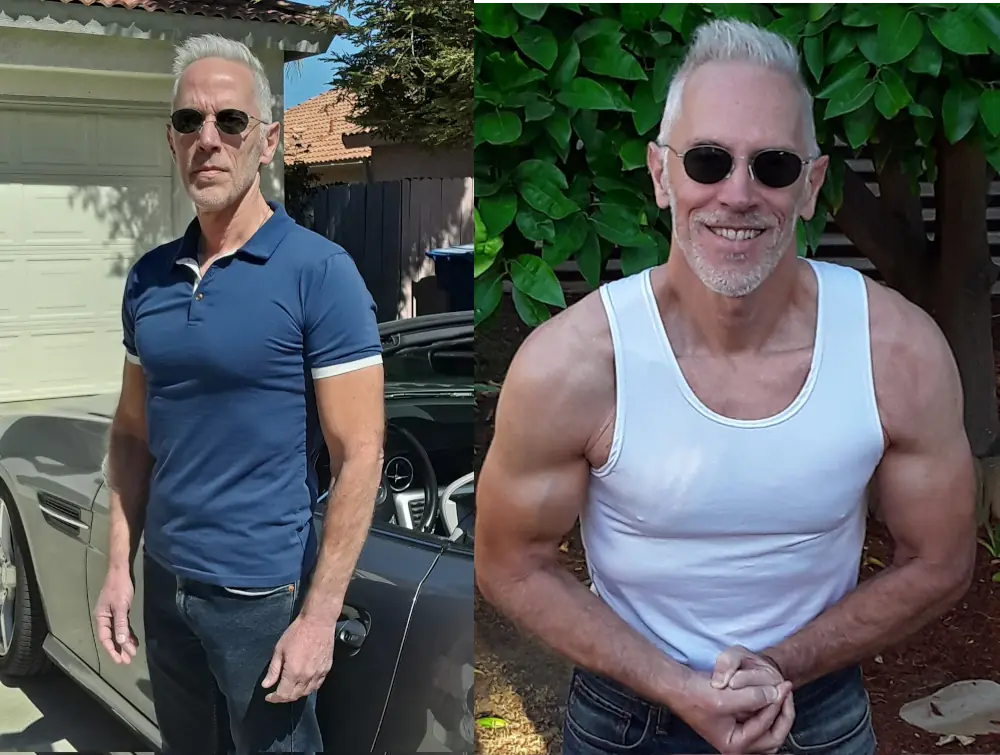

    1 It’s too bad that Kaczynski seems mostly unaware of the ratchet effect and of the origins of egalitarianism; his manifesto does not mention Nietzsche and only mentions Christianity a single time where he downplays its origins: “Identification with victims by people not themselves victims can be seen to some extent in 19th century leftism and early Christianity, but as far as we can make out, symptoms of low self-esteem, etc., were not nearly so evident in these movements, or in any other movements, as they are in modern leftism.”

    2 People naturally want to think they are winning and superior; thinking of your “team” as a forever-loser is disheartening and “demoralizing” regardless of its accuracy.
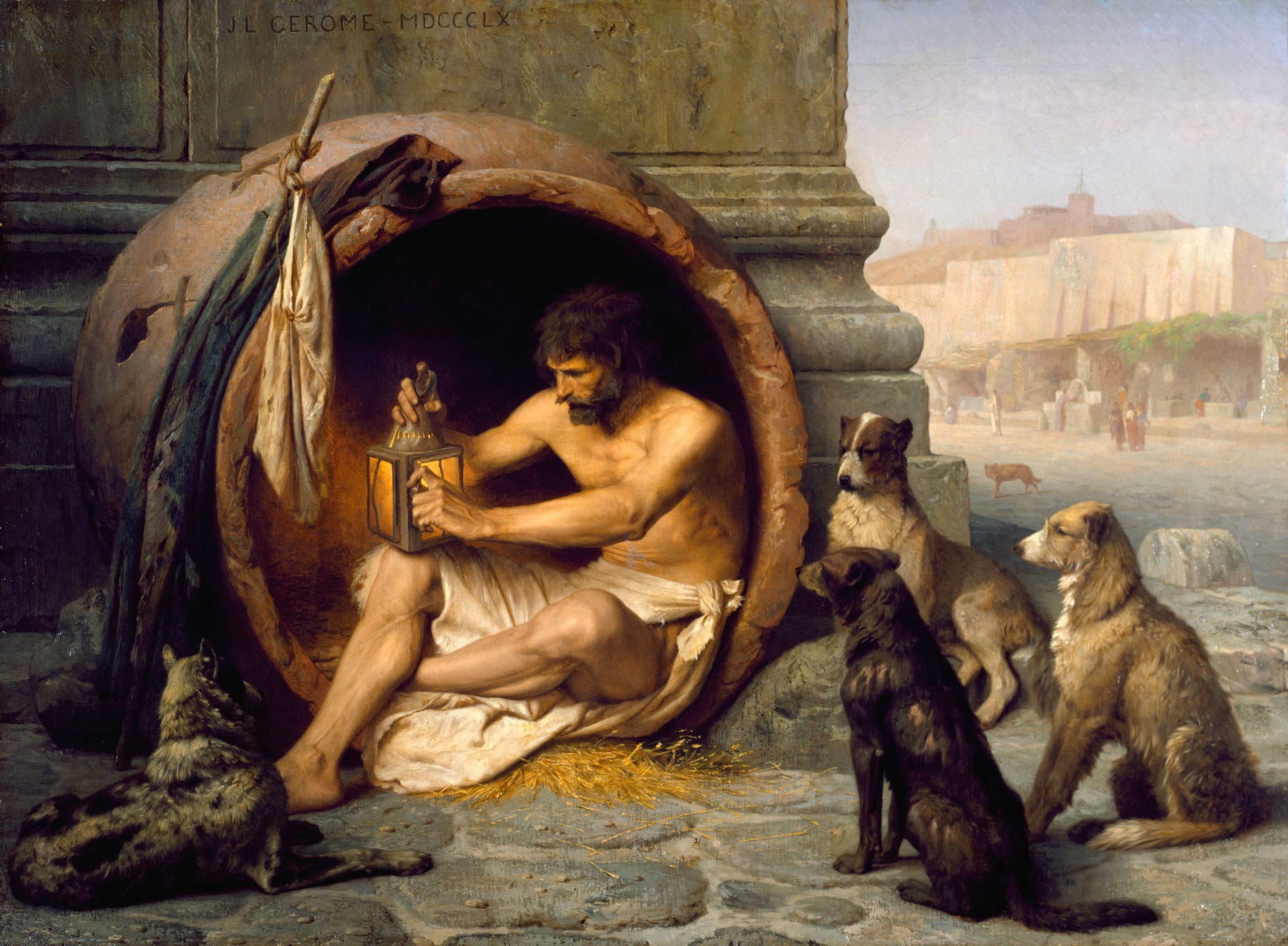
    3 Scientism is science by committee, “scientific consensus”, or data modeling. It is false and politicized garbage. Real science equals experiments, controlling for variables as best one can, that are repeatable by independent third parties. No science that relies on data modeling (climate change/global warming or COVID as examples) is real science. The ongoing replication crisis shows that very little of official science is real science.

    4 The President of the Reichbank, Hjalmar Schacht, had been deviously providing confidential information regarding all Germany’s economic developments to Montagu Norman, a fellow mason and Governor of the Bank of England.