

This post explores the covert influence of the CIA through the Congress for Cultural Freedom during the Cold War, which secretly funded writers, philosophers, and artists to promote anti-communist but left-leaning egalitarian ideals while subtly manipulating cultural narratives. The discussion critiques the elite’s role in shaping global power structures, media, and culture, suggesting that modern intellectuals and artists continue to be compromised by financial elites, perpetuating a system that stifles true intellectual independence.
“The first task of any ruling group is to keep itself in power.” – CIA founding member Miles Copeland
Welcome back. In this post I’d like to explore the transition from nation to empire, which necessitates a societal shift from allegiance based on shared blood ties to one based on ideology. This is required because it allows multi-ethnic and tribal groups to operate under the same governing umbrella. We can see this rule manifest with (1) Rome, which fought the Social War (91-87 BC) in the lead-up to empire and later Christianity came to serve as an empire-wide ideological “glue”; (2) the British empire, which highlighted the benefits of colonialism to natives including civilizing missions, liberalism, and free-market capitalism, (3) the French Revolution and subsequent Napoleonic era where the idea of universal republicanism and citizenship replaced monarchical blood ties; (4) the Ottoman Empire, which transitioned from a system based on kinship and tribal affiliation to a bureaucratic, imperial system emphasizing Islam and loyalty to the Sultan, and (5) the USSR, while nominally influenced by ethnic ties among Slavic (really semitic) peoples but increasingly defined itself by the ideology of Marxism-Leninism, uniting disparate peoples under a communist banner rather than kinship.
Rurik Skywalker correctly dislikes ideologies in general, seeing them as clever bait-and-switches to allow minority groups to rule over majority kin-based nations, but this is the price to be paid for empire, which seems to manifest both to fill power vacuums as well from a nation’s increasing ambition and greed.
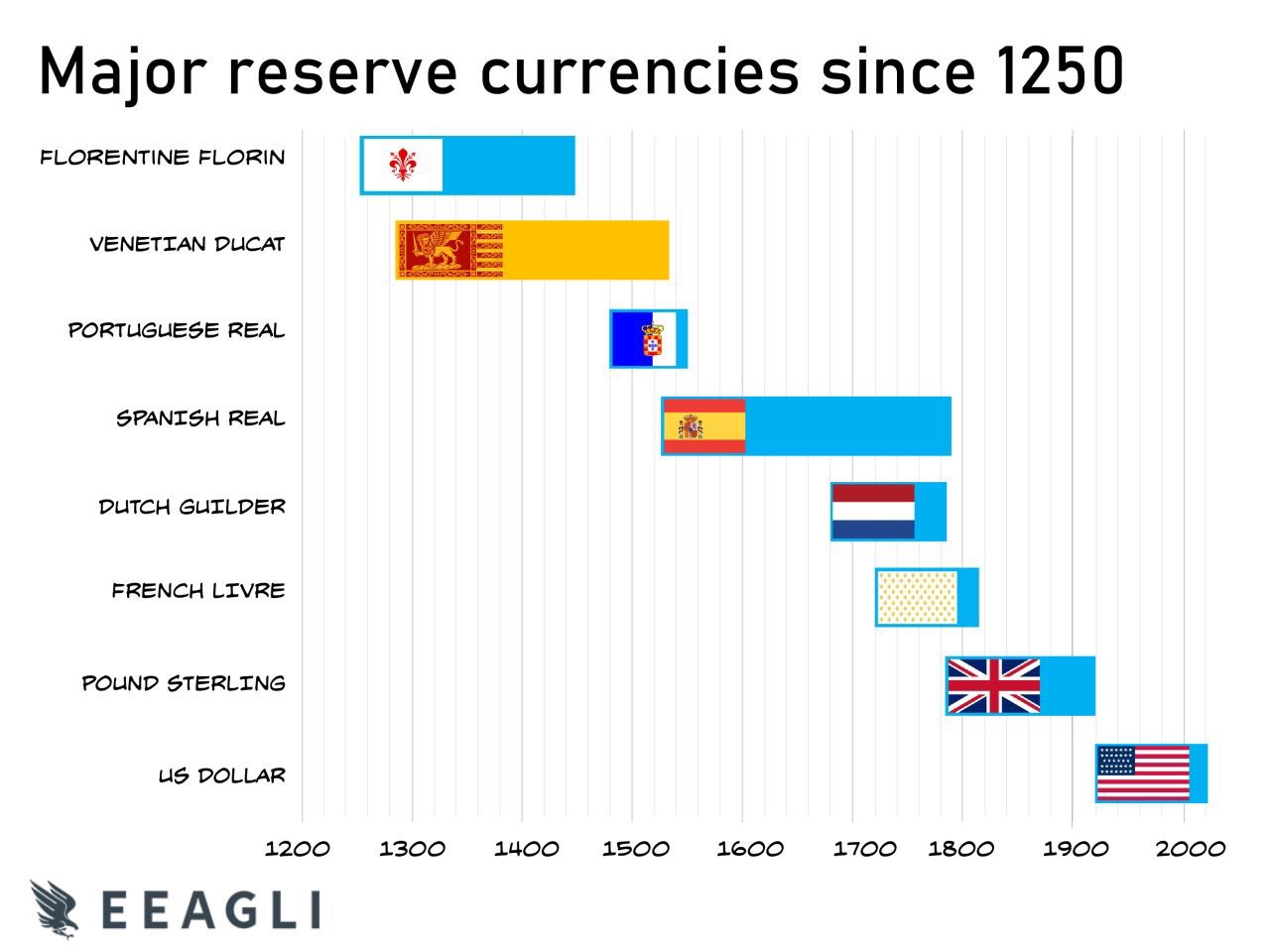
We can also see this process play out in the United States, which transitioned from a European-derived Protestant nation to an empire after World War 2 with a new ideology centered around free market capitalism and elite-controlled false “democracy”.1 This ideology allowed the American empire to spread beyond its borders as it sought to establish global hegemony. Its power was centered in the Rothschild owners of the Federal Reserve and Bank of England, previously discussed here, which conquered the United States in 1913.2 By controlling the nation’s money supply, the central bank owners bought up independent media outlets they didn’t already control and molded public opinion toward it’s own interests, bailed out their allies whenever banking crises arose (while offloading the bailout onto the public in the form of inflation), and funded the security state such as the CIA and FBI to crush those people and entities antithetical to their interests.3
This brings me to the book The Cultural Cold War (1999) by British journalist and historian Frances Stonor Saunders, which was recommended by Max V. Carp. The book delves into how the CIA spent enormous amounts of taxpayer dollars without any checks or balances in order to oppose the Soviet Union’s communist propaganda in the aftermath of World War 2. I’m going to discuss some of the details that stood out to me, but I will say upfront that I disliked this book (although I still appreciate the recommendation). The reason I dislike it is that it serves as a limited hangout: it provides lots of information about how the CIA pushed free market capitalism and “democracy” to win over the hearts and minds of the undecided throughout the world, but it’s largely an itinerary of who created what organization, how they received funding from either the CIA or the Ford or Rockefeller foundations, and who was connected to other organizations in order to push this ideology. While technically true, it completely misses the forest for the trees4; both the United States and the Soviet Union were controlled by the central bank owners, and the latter created this conflict as an excuse to drive up debt to unlimited levels.5 Without such a superpower conflict it would not have been possible to justify unlimited defense spending or to forcibly integrate the world into the neoliberal order:
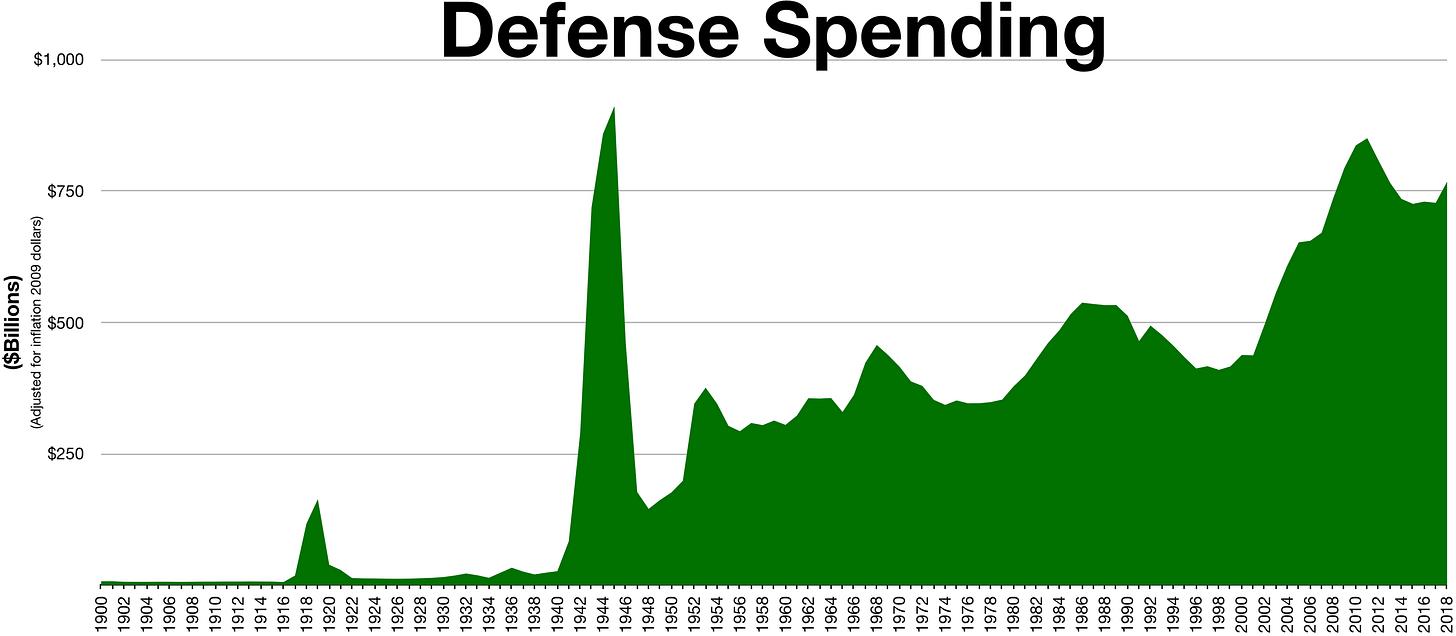
These central bank owners printed unlimited funds out of thin air and pushed capitalist and communist ideologies for their future long-term gain, where their ultimate goal was and is to transition to a One World Government with permanent worldwide neoliberal feudalism, a period we are transitioning into now. Saunders’ book is focused on a specific downstream aspect of this process while obfuscating the bigger picture, much as the “counter-elites” today are promoted and funded to push civic nationalist culture-war issues and ignore the higher levels of control.
Because of this dissimulation and smokescreen those reading this book will be hopelessly confused, it conveys no predictive power for the future, and therefore the establishment was eager to promote the book: reviews included The New York Times, Arthur Schlesinger Jr., Monthly Review, The Nation, The American Spectator, National Interest, Edward Said and The Guardian. This is a major red flag: if the establishment doesn’t like a book they don’t write reviews about it; they either refuse to cover it at all or they have it banned from publication. That was a signal that this book was a limited hangout. Indeed, the author has a major establishment background, common establishment characteristics6 and a bizarre physiognomy (note the short, mannish haircut and the horrible art behind her). Before buying a book it is best to check the reviews; if they are from establishment outlets then you’re almost certainly going to be reading dreck made to confuse proles. The year of publication is also important as it will generally reflect both the cultural milieu and obey the limitations of the Overton Window.

As such I really can’t recommend this book. I thought about putting it down early once I understood the nature of the content, but unfortunately I found a number of the details of the story interesting and so I kept reading it.7 Someone with a high level understanding of how the world works may derive benefit from reading it, but my belief is that anyone without such an understanding will walk away from it more confused than they were when they began.
With all this said, let’s delve into some of the details of the CIA’s operations to sway hearts and minds that stood out to me.
The post-World War 2 environment
World War 2 cannot be properly understood without discerning the strategies of the international financial elites, who plotted to build up Germany and then viciously destroy it. Guido Preparata has the best and most insightful book on this topic, Conjuring Hitler, which is a must read and which I discussed here. The modern era simply cannot be understood properly without this backdrop understanding. Basically, the backstory is this: internationally-minded Jewish financiers started the Bank of England in 1694 which allowed them to print money out of thin air and lend it at interest to the government; they and their allies (Rothschilds, Warburgs, Schiffs, Goldman, Lazard, Meyer, Sachs, Lehman, Kuhn, Loeb, Morgenthau, Rubenstein etc.) then captured the United States in 1913 with the creation of the Federal Reserve and captured Russia when they overthrew and murdered the Tsar and his family in 1918. They also controlled Germany post-World War 1 by installing Hjalmar Schacht, a protege and disciple of Montagu Norman, who was the head of the Bank of England, who Schacht fed confidential industrial production figures to so that Norman and his backers would feel comfortable setting in motion World War 2. Modern wars are industrial wars, and what became the Allies would outproduce the Axis in every industrial category by a 4:1 to a 10:1 ratio; Norman knew these figures and therefore the war was over before it began. But to get to the war’s start required a flexibility and flipping of alliances (i.e. see the Molotov–Ribbentrop Pact), including America’s, utilizing the media to rapidly shift public opinion:
[Nicolas Nobokov, Secretary General of the Congress for Cultural Freedom, wrote] The bulk of American public opinion had switched twice in three years in its feelings toward Russia. First it was against – after the partition of Poland and the “fiendish” Finnish war. Stalin in newspaper cartoons looked like a nasty mixture of a wolf and a bear. Then, as abruptly, opinion was for Russia: after the Nazi invasion of Russia in 1941. Stalin was suddenly beautified, represented as a knight in armour defending the Kremlin against a horde of Teutons, or reproduced from Margaret Bourke-White’s slenderized and idolized profile photographs. And then, in 1943, the pro-Russian feeling was enhanced by Stalingrad.
After the war the international financial elites set up dueling rival superpowers who would “compete” with each other (but work together behind the scenes) in order to effectuate worldwide centralization, modernization, and massive debt increase goals. As one example (not repeated in Saunders’ book), Norman Dodd stated that while investigating tax exempt foundations, he interviewed H. Rowan Gaither, president of the Ford Foundation. Gaither explained to Dodd, “Most of us here were, at one time or another, active in either the OSS or the State Dept., or the European Economic Administration. During those times, and without exception, we operated under directives issued by the White House, the substance of which was to the effect that we should make every effort to alter life in the U.S. as to make possible a comfortable merger with the Soviet Union.” The Ford Foundation and other such foundations spends vast amounts of money to promote division in America, polarizing it on the basis of race, gender, sexual orientation, and has backed many revolutionary groups in the U.S. engaged in riots and other criminal offenses. These upper elite plans were made on a generational or longer level and not on the timeframe of a month, a year, or a decade.
Therefore after World War 2 what was needed was an about-face to turn the allied Soviet Union into the next controlled pseudo-enemy, before working to undermine that setup toward One World government. The about-face worked as follows:
To overlook the role of the British government in manufacturing a cosy image of Stalin during the wartime alliance is to ignore one of the crucial truths of the Cold War: the alliance between the free world and Russia against the Nazis was the moment at which history itself seemed to connive in the illusion that Communism was politically decent. The problem facing the British government after the Second World War was how to set about dismantling the untruths it had systematically constructed or defended in the previously years. ‘During the war, we had built up this man, though we knew he was terrible, because he was an ally,’ explained Adam Watson, a junior diplomat recruited to the IRD as its second-in-command. ‘Now the question as, “How do we get rid of the Good Old Uncle Joe myth built up during the war?”’ Many British intellectuals and writers had worked for the government in its propaganda departments during the war: now they were being called upon to disabuse the British public of those lies they had worked so inventively to protect.
After the war Europe was broke, destroyed; it would be rebuilt with superpower funding and controlled with new narrative propaganda. As high-ranking CIA official Tom Braden late stated, “We’ve got to remember that when we’re speaking of those years that Europe was broke. If there was a dime to be had anywhere it was probably in some criminal organization. There wasn’t any money. So they naturally looked to the United States for money.” Yet United States control would ultimately result in intellectual and moral corruption and cowardice, much as Rome’s final defeat of it’s long-time enemy Carthage gave way to decadence and greed per Sallust (previously covered here).
The winner flush with money
“We couldn’t spend it all. I remember once meeting with Wisner and the comptroller. My God, I said, how can we spend that? There were no limits, and nobody had to account for it. It was amazing.” – Gilbert Greenway, CIA agent
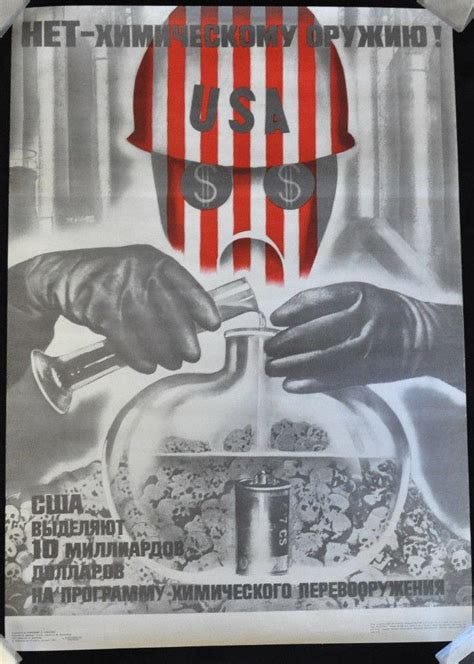
After the war the elites resurrected a communist boogeyman for the capitalist West to oppose through NSC 68, a 1950 National Security Counsel policy paper, which called for direct opposing the Soviet Union instead of detente or containment. It demanded uniformity of thought and action and led to a quadrupling of the psychological budget within two years. This opposition would be via both hard and soft power: hard power through nuclear bomb development, ICBMs, sponsoring overthrows and revolutions and the space race, while soft power would be pursued via the CIA, formally established in 1947, which would fund cultural institutions through shell corporations using plausible deniability in order to promote movies, books, music, art, publications, poetry, historians (such as George F. Kennan, Arthur Schlesinger, Robert Conquest and Hannah Arendt), scientists, critics and other cultural media to highlight the “open” Western “decentralized” societal values compared to the “rigid” values of a totalitarian, centralized Stalinism. Domestically God was promoted as a counterpoint to communist atheism – “one nation under God” was added to the Pledge of Allegiance in 1954 – and the CIA worked hand-in-hand with the movie studios to promote films with approved messaging. In Europe one of the biggest avenues for promoting CIA messaging was the Congress for Cultural Freedom (established 1950) which was headed by CIA agent (with a Jewish background) Michael Josselson, and another was Allen Dulles’s National Committee for a Free Europe, which was funded and controlled by the CIA with various private philanthropic interests (Henry Ford II, Francis Spellman, C.D. Jackson, John C. Hughes, Junkie Fleischmann, Arthur Schlesinger, Cecil B. DeMille, Dwight D. Eisenhower, etc.) serving as fronts. Dulles understood that the success of the Cold War depended on “it’s ability to appear independent from government, to seem to represent the spontaneous convictions of freedom loving individuals.” The CIA also heavily invested in foundations: in 1976, a Select Committee appointment to investigate US intelligence activities reported on the CIA’s penetration of the foundation field by the mid-1960s: during 1963-6, of the 700 grants over $10,000 given by 164 foundations, at least 108 involved partial or complete CIA funding. More importantly, CIA funding was involved in nearly half the grants made by these 164 foundations in the field of international activities during the same period. The Ford, Rockefeller and Carnegie foundations were considered the best kind of funding, with billions upon billions of dollars of funding.
The Congress for Cultural Freedom was well-funded by American taxpayers during a time when Europe was financially devastated. In other words, it was the only option for those who weren’t aligned with the Soviets but still wanted to engage in cultural activities and get paid for it – after all, a man has to eat. As Donald Jameson explained:
The main concern for most scholars and writers really is how you get paid for doing what you want to do. I think that, by and large, they would take money from whatever source they could get it. And so it was that the Congress and other similar organizations – both East and West – were looked upon as sort of large teats from which anybody could take a swig if they needed it and then go off and do their thing. That is one of the main reasons, really I think, for the success of the Congress: it made it possible to be a sensitive intellectual and eat. And the only other people who did that really were the Communists.
There were other perks, too. According to Jason Epstein, “When visiting intellectuals came to New York, they were invited to great parties; there was very expensive food all around, and servants, and God knows what else, far more than these intellectuals themselves could have afforded. Who wouldn’t like to be in such a situation where you’re politically correct and at the same time well compensated for the position you’ve taken? And this was the occasion for the corruption that followed.” This is reminiscent of the “counter-elite” parties hosted by Peter Thiel, Curtis Yarvin and their ilk in New York City in recent years and elsewhere for approved intellectuals in their orbits.
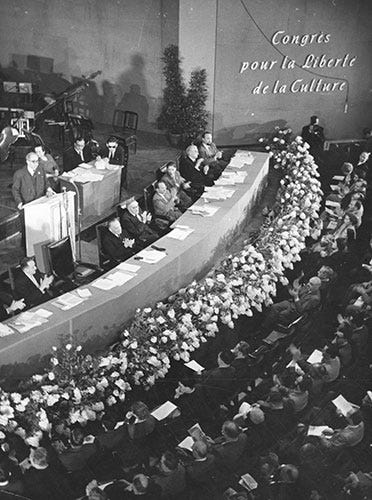
Although the Congress’s CIA funding was initially concealed, it eventually became an open secret that all involved later denied, despite knowing the truth. As Melvin Lasky said, “Well, who’s gonna give the money? The little old lady wearing sneakers from Deduke, Iowa? Will she give you a million dollars? Well, I mean, pipe dreams! Where will the money come from?”
The Congress aimed to target and promote former communist leftists (the “non-communist left”) while largely ignoring or disparaging the right:
The department realized the usefulness of accommodating those people and institutions who, in the tradition of left-wing politics, broadly perceived themselves to be in opposition to the centre of power. The purpose of such accommodation was twofold: first, to acquire a proximity to ‘progressive’ groups in order to monitor their activities; secondly, to dilute the impact of these groups by achieving influence from within, or by drawing its members into a parallel – and subtly less radical – forum.
Later, figures like James Burnham would lament that focusing on the non-communist left was a mistake – but by then, it was far too late.
Prominent cultural figures feeding at the trough
Among those who came to Berlin in June 1950 to the founding conference were the following writers, philosophers, critics and historians: Franz Borkenau, Karl Jaspers (who declared “Truth also needs propaganda”), John Dewey, Ignazio Silone, Jacques Maritain, James Burnham, Hugh Trevor-Roper (who, to his credit, realized that the Congress’s lavish funding could only have been funded by America and thought that the East/West dialectics was disingenuous), Arthur Schlesinger, Jr., Bertrand Russell, Ernst Reuter, Raymond Aron, A. J. Ayer, Benedetto Croce, Arthur Koestler, Richard Löwenthal, Melvin J. Lasky, Tennessee Williams, Irving Brown, Sidney Hook, “godfather of neoconservatism” Irving Kristol (founder of Encounter magazine, which was published by Fredric Warburg (who also published Orwell) and sponsored by Victor Rothschild; Kristol was also father of the odious neo-con Bill Kristol), and Nicolas Nabokov. At its height, the CCF had offices in 35 countries, employed dozens of personnel, and published over twenty prestigious magazines. According to Nabokov, “No one before had to tried to mobilize intellectuals and artists on a worldwide scale in order to fight an ideological war against oppressors of the mind, or to defend what one called by the hackneyed term ‘our cultural heritage’….To lead a rational, ice-cold, determinedly intellectual war against Stalinism without falling into the easy Manichean trap of phony righteousness seemed essential to me, especially at a time when in America that ideological war was getting histrionically hysterical and crusaderishly paranoiac.” He was referring to McCarthyism which, as a right-wing populist backlash against communism, the secretive and elitist globalist Congress (and CIA) secretly opposed.
In 1952, for example, the Congress sponsored a festival featuring works or appearances by Igor Stravinsky, Leontyne Price, Aaron Copland, Samuel Barber, the New York City Ballet, the Boston Symphony Orchestra, the Museum of Modern Art in New York, James T. Farrell, W.H. Auden, Gertrude Stein, Virgil Thomson, Allen Tate, and Glenway Westcott. Also on the programme were Jean Cocteau, Claude Debussy, William Walton, Laurence Olivier, Benjamin Britten, the Vienna Opera, Covent Garden Opera, the Balanchine troupe, Czeslaw Milosz, Ignazio Silone, Denis de Rougemont, Andre Malraux, Salvador de Madariaga, and Guido Piovene. Over the next thirty days there were performances by a hundred symphonies, concertos, operas and ballets by over seventy twentieth-century composers. The scale of funding was massive.
Meanwhile, Julian Huxley, Mircea Eliade, Andre Malraux, Guido Piovene, Herbert Read, Allen Tate, Lionel Trilling, Robert Penn Warren, W.H. Auden, Thornton Wilder, Jayaprakash Narayan were just some of the names grading the pages of magazines created by or affiliated with the Congress. Later Saul Bellow, J.D. Salinger, Truman Capote and Shirley Ann Grau would also be promoted. The writer William S. Burroughs – whose dreadful Naked Lunch I reviewed here – was reportedly a CIA agent tasked with corrupting youth. His contemporaries Jack Kerouac and Allen Ginsberg were given similar assignments.
Artists were not exempt from this process. Far-leftist Jackson Pollock, a key beneficiary, owed his success to the CIA, major foundations, and the Rockefeller-funded Museum of Modern Art. He fit the ideal profile for marketing modern art as a means of drawing leftists away from traditional communist art. As fellow-artist Budd Hopkins stated, “If you conceive of [the great American painter], first of all, he had to be a real American, not a transplanted European. And he should have the big macho American virtues – he should be rough-and-tumble American – taciturn, ideally – and if he is a cowboy, so much the better. Certainly not an easterner, not someone who went to Harvard. He shouldn’t be influenced by the Europeans so much as he should be influenced by our own – the Mexicans and American Indians, and so on. He should come out of the native soil, not out of Picasso and Matisse. And he should be allowed the great American vice, the Hemingway vice of being a drunk.” Pollack had never ridden a horse and had left Wyoming as a young child, but no one disbelieved the image created. Georgia O’Keefe also benefitted from this process, as did Diego Rivera and Mark Rothko.
Patronage, in CIA agent Tom Braden’s terms, “carried with it a duty to instruct, to educate people to accept not what they want, or think they want, but what they ought to have. ‘You have always to battle your own ignoramuses, or, to put it more politely, people who just don’t understand.’” But abstract expressionism was objectively terrible. “It was like the emperor’s clothes,” said Jason Epstein. “You parade it down the street and you say, ‘This is great art,’ and the people along the parade route will agree with you. Who’s going to stand up to Clem Greenberg and later to the Rockefellers who were buying it for their bank lobbies and say, ‘This stuff is terrible?’” Shoving the hideous art into the face of the masses and fooling them into thinking they actually liked or appreciated it fed our elites’ God complex, that they could distort and control reality. This trend has continued to this day with stuff like a taped banana selling for $6.2 million (there is also a large tax dodge and/or money laundering component to this) while beautiful art from 100+ years ago sells for maybe 3,000 Euro. The art world is all about who you know and connections, not beauty or aesthetic value.
When the truth of the Congress’s funding source eventually came out in 1966, most of the craven individuals associated with the project pathetically tried to deny knowledge of the funding, publicly humiliated that they were whores jumping for dollars. They scurried and dissimulated their lies like rats. True art is dangerous, anti-establishment and cannot be subject to elite funding; see ARX-Han’s Incel if you want an decent example of actual unsponsored modern art. The pursuit of power and money inherently has a corrupting influence to it; it requires adherence to certain red lines of thought (much as our current counter-elites are subject to), it requires compromises of principles and attitudes, and this cannot be avoided no matter how sensitive one is to it. It is inherent in participation of the process. Jason Epstein explained,
It was not a matter of buying off and subverting individual writers and scholars, but of setting up an arbitrary and factitious system of values by which academic personnel were advanced, magazine editors appointed, and scholars subsidized and published, not necessarily on their merits – though these were sometimes considerable – but because of their allegiance….What most irritated us was that the government seemed to be running an underground gravy train whose first-class compartments were not always occupied by first-class passengers: the CIA and the Ford Foundation, among other agencies, had set up and were financing and apparatus of intellectuals selected for their correct cold-war positions, as an alternative to what one might call a free intellectual market where ideology was presumed to count for less than individual talent and achievement, and where doubts about establishment orthodoxies were taken to be the beginning of all inquiry…It had at last become clear how bad a bargain the intellectuals had made, that it could never have been in the interest of art or literature, of serious speculation of any kind, or even of humanity itself, for them to serve the will of any nation.”
As CIA agent Tom Braden said, “Power was the first thing that went wrong with the CIA. There was too much of it, and it was too easy to bring to bear.” At the same time, he also wrote “Truth was reserved for the inside. To the outsider, CIA men learned to lie, to lie consciously and deliberately without the slightest tinge of the guilt that most men feel when they tell a deliberate lie.” And as Deputy Inspector General Edgar Applewhite later stated, “We were not the least inhibited by the fact that the CIA had no internal security role in the United States.” This is reminiscent of the 51 intelligence “experts” who falsely claimed that the Hunter Biden laptop story was false right before the 2020 election. Ernst Junger correctly stated when he was 100 years old, “The sociological definition of elite is already an indication of the corruption of the concept. A warning, for me, to no longer trust even the elites, but now only the great loners.”
Conclusion
Eustace Mullins has a great statement about the nature of our upper elites which is relevant for this discussion. He wrote that the central bank owners
adopted the Hegelian dialectic, the dialectic of materialism, which regards the World as Power, and the World as Reality. It denies all other powers and all other realities. It functions on the principle of thesis, antithesis and a synthesis…Thus the World Order organizes and finances Jewish groups; it then organizes and finances anti-Jewish groups; it organizes Communist groups; it then organizes and finances anti-Communist groups. It is not necessary for the Order to throw these groups against each other; they seek each other out like heat-seeking missiles and try to destroy each other. By controlling the size and resources of each group, the World Order can always predetermine the outcome. In this technique, members of the World Order are often identified with one side or the other. John Foster Dulles arranged financing for Hitler, but he was never a Nazi. David Rockefeller may be cheered in Moscow, but he is not a Communist…a distinguishing trait of a member of the World Order, although it may not be admitted, is that he does not believe in anything but the World Order. Another distinguishing trait is his absolute contempt for anyone who actually believes in the tenets of Communism, Zionism, Christianity, or any national, religious or fraternal group…If you are a sincere Christian, Zionist or Moslem, the World Order regards you as a moron unworthy of respect. You can and will be used, but you will never be respected.
This quote is so apt because it succinctly explains the nature of the Cold War: as a false dialectic used by the upper elites to effectuate unstated longer-term ends toward increased control over mankind. Saunders completely misses the bigger picture in her book, and because of that anyone reading it (unless they already have a firm understanding of the structure of the modern world) is going to be hopelessly confused. And I think this was intentional on her part. She spends a lot of time referencing the Ford Foundation, for example, but she never discusses it’s goals or objectives, despite the importance of the Dodd investigation and Gaither quote above – because her goal is not to illuminate the structure of the world, but to obscure it.
Now, The Cultural Cold War did shine a light on the lightweight, compromised, power-hungry, hypocritical intellectuals who upheld rigid ideological lines from higher-ups, serving as hacks for money and status – indeed, they were ultra sensitive to their self-conception as being distinct from the unwashed masses (a very common urban vs. rural historical pattern) and they conspired with their masters to destroy the Western nations under ideological gobblygook. Perhaps this was inevitable – power has a mind of it’s own, it abhors a vacuum, it was time by historical standards for Britain to pass the baton of empire to America, and perhaps Rene Guenon’s conception of the Kali Yuga is in play (i.e. for the world to become more materialist and secular until it can no longer do so, after which a new era will begin, covered previously here and here). With that said, I don’t cheer for America’s march toward imperial excess driven by flimsy and misguided ideologies. This path has led to the destruction of both historic Western populations and is now accelerating toward much darker outcomes.
Lastly, remember that the CIA has never learned its lessons. Its members have never been punished for their illegal activity, they have gotten away with everything they do scot free, they were up to their eyeballs in pushing the COVID fraud and the Ukraine war scam and staying in Afghanistan for twenty years to rape the U.S. taxpayer to the cryptocurrency scam. They stymied Trump’s presidency from 2017-2020, overthrew him in an illegal coup, and then worked with the Biden administration to bus in twenty million illegals in the past four years alone before fully skin-suiting Trump, who was facing life imprisonment and bankruptcy under false charges, and he now does whatever he is told. Not to mention older CIA stuff like killing JFK. The people involved and this organization are deeply nefarious, and the CIA should be disbanded, although it is deeply and possibly irreversibly entrenched in the existing order.8 Meanwhile, one may note that the publicly promoted individuals who are nominally against these people – Tucker Carlson, Andrew Tate – are themselves children of CIA officials, while Musk9 and Thiel are deeply entangled with the national security apparatus. See this Note and this follow up by the great Ian Smith, previously covered here, on how our current crop of influencers remain as controlled as they’ve always been. And the platforms themselves are no different, as we can see with 4chan, with Twitter10, and with Telegram. I’ll cover the current crop of compromised “influencers” in a future post because only the medium has changed; the underlying strategy of marionetted puppets dancing on strings to keep the public entertained and titillated remains exactly the same.
The intended purpose of this post, ultimately, is the political blackpill: to recognize that no one in the mainstream represents your interests, and that those who seem to serve as distractions or ritual sacrifices to maintain the illusion of choice. This world is ruled by the demiurge, and acceptance of the political blackpill is the first step on the spiritual path. No one is coming to save you: to live is to be endlessly crucified between the opposites. From that realization arises the only real question: how can one pursue an individuated life toward wholeness, and thereby – without design or expectation – radiate subtle influence on the world around us? Because the ultimate gravity of belief rests not with influencers or external figures, but with the Self within – if we can only realize it.
Thanks for reading.
Subscribe:
Email delivery remains on Substack for now.
1 False because in a “democracy” the oligarchs who control the organs of mass media control the population.
2 When Marx wrote The Communist Manifesto, the fifth plank read: “Centralization of credit in the hands of the state, by means of a national bank with state capital and an exclusive monopoly.” Lenin later said that the establishment of a central bank was 90% of communizing a country.
3 The reasons why the Rothschilds and other moneylenders won are a combination of (1) Europe giving Jews the exclusive right to money lend during the Middle Ages, previously discussed here, and (2) because Christianity as an ideology is deeply rooted in noahidism and the egalitarian ratchet effect, where gentiles adopt Yahweh as their God and grants privileges to Jews that it doesn’t grant to any other religion, preventing it from being effectively opposed. This is a point Adam Green regularly makes.
4 Much as counter-elite apparatchik Mike Benz does now with his OCD intricate analysis of the modern censorship apparatus. The subtext to Benz’s work is that reform of the system is both possible and desirable, and he obfuscates to the nature of the problem by referring to it as a “blob” (just as Yarvin falsely calls it the “Cathedral”). However, the denotation of this Substack is that reform is not possible and that deeper fundamental change cannot occur without (1) a wider public understanding of the actual structure of this globalized system, which Benz obfuscates and (2) without a transvaluation of values away from ratcheting egalitarianism, both of which are antithetical to the system as it exists.
5 Which was hidden for a number of decades with declining debt/GDP ratios as the U.S. economy grew as a superpower post-war. When economic times are good and lasts for decades no one likes a naysayer; how many people care the effects it will have two or three generations down the road?
6 Per Orwell in 1984, “It was always the women, and above all the young ones, who were the most bigoted adherents of the Party, the swallowers of slogans, the amateur spies and nosers-out of unorthodoxy.” And per MacDonald, discussed here, “Anti-restrictionist attitudes [re: immigration] were held by the vast majority of the organized Jewish community—‘the entire body of religious opinion and lay opinion within the Jewish group, religiously speaking, from the extreme right and extreme left,’ in the words of Judge Simon Rifkind who testified in Congress representing a long list of national and local Jewish groups in 1948.”
7 Hating a book either for its content or its style but deriving enough benefit in reading it is the hardest position for a reader to be in; after all, if a book is written poorly, has a bad message and one derives no benefit from it it’s easy to stop reading it and discard it. Whether to continue reading or to discard it involves a balancing of factors, as discussed with Joshua Derrick in the comments here.
8 Much like its precursor, the Praetorian Guard, which only dissolved after being militarily defeated by a force with an entirely different metaphysics.
9 One may note that Musk shut down the Twitter files investigation as a limited hangout once he purchased the platform in order to protect the credibility of the CIA and FBI, as discussed here. For more on Musk’s nefarious background see here.
10 Musk outsourced Twitter content moderation to the ADL. “This isn’t that hard. Freedom of speech doesn’t mean freedom of reach” per Jonathan Greenblatt, CEO of the ADL on April 5, 2022; “New Twitter policy is freedom of speech, but not freedom of reach” echoed Elon Musk November 18, 2022. On April 17, 2023 it became Twitter’s new content policy.
[…] is a continuation of my previous post, which analyzed how societal influencers in the Cold War were widely controlled by the elites, […]
[…] back. In two of my recent posts (here and here) I discussed how elites used influencers – each within their own niche, both right […]
[…] back. As a follow up to my two previous posts on how mainstream influencers are controlled (here and here), I wanted to write something about someone who I like: Owen Benjamin. Few public […]