

This essay examines Marshall McLuhan’s tetrad of media effects as a framework for understanding how communication technology shapes human perception. It explores how each advance reorganizes sensory priorities, social structures, and thought patterns while retrieving elements from past forms of communication, and what the medium reverses into when pushed to its limit. It then applies this framework to emerging LLM technology.
Welcome back.
Many of you have likely heard of Marshall McLuhan (1911-1980), who coined the phrase “the medium is the message” and the expression that Timothy Leary appropriated, “turn on, tune in, drop out.” McLuhan became known as the “father of media studies” and heavily influenced a wide range of modern philosophers such as Jean Baudrillard, previously covered here, and influencers. He has many similarities to Jordan Peterson1, which is an unfortunate but helpful comparison. He argued that the technological medium shapes humanity in all-encompassing ways – for example, the adoption of the written word fundamentally set modern man apart from prehistoric man, and the invention of the printing press led directly to the modern nation state because it promoted a standardized mass man, each individual influenced by the same printed material (something covered previously from another angle here).2 Today, everyone is glued to their phones and people are atomized to a level never seen before in human history; we text instead of call or meet in person, we stare at screens all day transfixed by the Current Thing, and we are increasingly interacting with AI instead of with others. Communications technology has a fully transformative effect on the person using it, mind, body, soul, and this is not new.
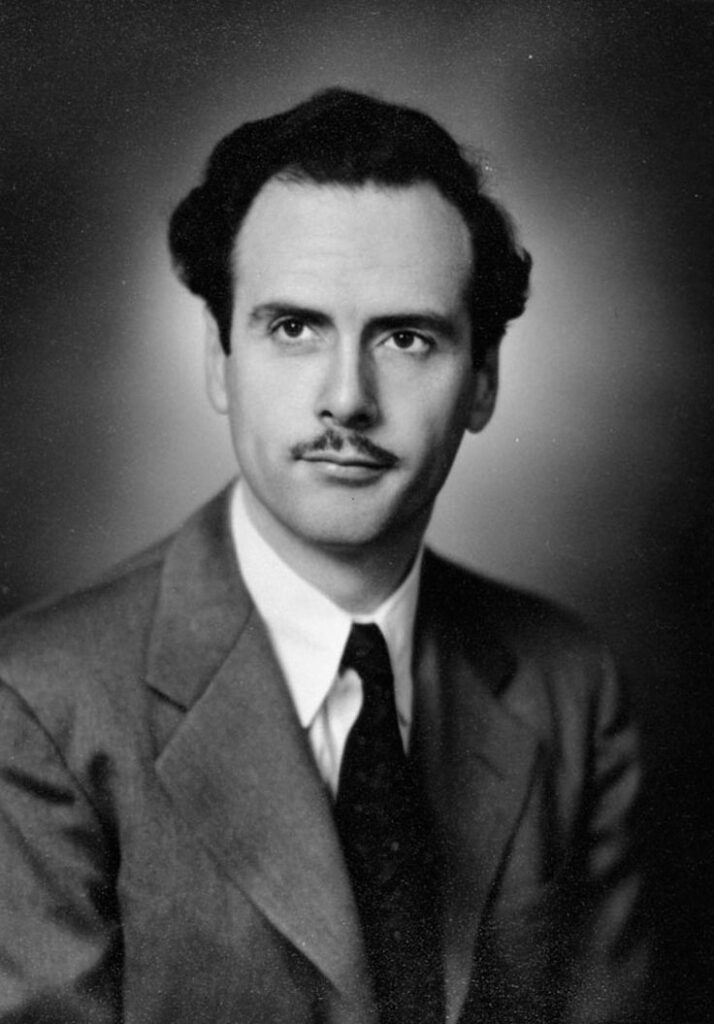
I read his The Medium is The Massage (1967)3 and it was a light, smart read, with some creative and innovative visual features; I followed up with it with his Playboy interview (1969) which you can read here, along with Laws of Media (1988), published posthumously by his son Eric. In these McLuhan holds himself out as an expert, making many wild and wrong predictions4, along with some accurate predictions like the advent of the internet. My intent is not to pick McLuhan apart; that wouldn’t be worth a post. Rather, his tetrad of media effects is a brilliant way of looking at how media changes the way people approach the world, and this aspect is worth delving into, although I cannot recommend Laws of Media otherwise as it is written in an obnoxiously academic, self-important style by McLuhan’s son.
Let’s delve into the tetrad.
The Tetrad: McLuhan’s Fourfold Lens
McLuhan argues that technology warps the ratio of the senses of the people who use it. Before modern technology, and especially before the advent of the written word, the senses were balanced; however, the adoption of the written word followed by the printing press dramatically skewed the senses of the user toward the senses of sight and substantially downgraded touch, taste, hearing and smell. One may see this dramatic skewing when a third world tribe is exposed to the written word5; within one generation they are completely different in outlook and perspective. This process was greatly exacerbated by the advent of the printing press.6 Further changes in the mode of communication with the telegram, radio, film, television, the internet and now artificial intelligence skewed the senses and how people interact with the world in totally different and often contradictory ways. By understanding how the medium affects perception, one may become more conscious of these processes and regain an element of free will in relation to them. This is important because our default is that we do not process such changes as they occur, but rather cling to earlier stages of development until long past the point where we should have recognized the changes they imparted (which McLuhan called the “rearview-mirror view of their world”).7
His tetrad consists of four questions that can be applied to any medium, as follows:
- What sense does the medium enhance?
- What does the medium make obsolete and which sense does it downgrade in importance?
- What sense and style does the medium retrieve that had been obsolesced earlier?
- What does the medium reverse or flip into when pushed to extremes? [This relates to Jung’s concept of enantiodromia, although I don’t think McLuhan ever referenced Jung directly].
Using the example of radio:
- Enhancement (figure): What the medium amplifies or intensifies. Radio amplifies news and music via sound.
- Obsolescence (ground): What the medium drives out of prominence. Radio reduces the importance of print and the visual.
- Retrieval (figure): What the medium recovers which was previously lost. Radio returns the spoken word to the forefront.
- Reversal (ground): What the medium does when pushed to its limits. Acoustic radio flips into audio-visual TV.
This tetrad resembles Jung’s conception of astrological ages, where symbols and meanings of prominence in one era fade into the background of another, while dormant energies from prior eras resurface. It’s not quite the same, of course, and increases in communications technologies make time speed up faster and faster, where centuries collapse into decades which collapse into years, in line with Rene Guenon’s conception of the increased solidification and speeding up of the world, discussed here.
Applying the tetrad conception to television, the internet, and now artificial intelligence, we see the following:
Television
- Enhances: Visual immediacy, passive spectatorship, mass emotional resonance. It delivers collective experience with synchronized rhythm.
- Obsolesces: Print culture and deep reading, analytical thought, community-based storytelling. Localized meaning yields to centralized narrative.
- Retrieves: The tribal campfire, mythic spectacle, and oral tradition, but in synthetic form. The image replaces the word as the organizing force.
- Reverses into: Mass sedation, symbolic flattening, atomized spectatorship, passive omnipresence masquerades as connectedness. Eventually, it reverses into distraction-as-sovereignty – attention becomes the only freedom left.
The Internet
- Enhances: Interconnectivity, hypertextual thinking, speed, and access. It amplifies lateral association and decentralized participation.
- Obsolesces: Linear logic, singular authority, and stable identity. It erodes canon, tradition, and memory.
- Retrieves: The bazaar, the archive, the commons – the sense of vast unbounded knowledge once held in ancient libraries or oral encyclopedias.
- Reverses into: Surveillance, fragmentation, hyper-niche identity, and algorithmic manipulation. It breeds isolation under the guise of pluralism, and information abundance flips into existential paralysis.
LLMs:
- Enhances: Linguistic productivity, access to knowledge, simulation of human conversation. It extends and amplifies writing and thinking assistance (drafts, summaries, analysis, even code), emotional simulation (therapeutic dialogue, reassurance, companionship), education (tutoring across domains, democratized access to expertise), and organizational cognition (accelerated research, planning, coordination). In short, the thinking and communicating mind is externalized and multiplied, while human internal dialogue becomes an interface.
- Obsolesces: Certain traditional forms of mental effort and knowledge-seeking, for example memorization and rote learning (replaced by instant querying), classical search engines and browsing behaviors, traditional gatekeeping institutions of expertise (e.g., encyclopedia, schoolteacher, journalist), solitary thinking or slow reading. LLMs encourage dialogic outsourcing of cognition. Also obsolesced: genuine silence and mental stillness. The gap between stimulus and response collapses.
- Retrieves: The pre-literate or oral tradition – the sage, the oracle, the dialogue partner, similar in some respects to the Delphic oracle. The symbolic registry of LLMs is a partial black box where the programmers have limited understanding of its inner workings, much like the human brain. These tools call back the Socratic method (question-based inquiry), the confessional priest, therapist, or storyteller, even the daimon or inner voice, now simulated externally. In their ability to compose, they retrieve the scribe or secretary, now instant and tireless. LLMs also retrieve alchemy: they transmute base inputs (scraps of prompts) into structured symbolic form.
- Reverses Into: Epistemic confusion, dependency, and simulated reality. Potential reversals include: displacement of the human voice by mimicry, language without soul, de-skilling of cognition, people become unable to think without the model, hyperreality – where outputs dominate and warp human perception of truth, meaning, or creativity, and the digital panopticon where every thought is externalized, logged, surveilled, mined. Ultimately, LLMs may reverse into semantic collapse, where language is so manipulable, so contextless, that meaning itself decays.
We can see the changes wrought by LLMs happening among the younger generations now. Since smart phones became common in 2012 (per this post by ) people have been increasingly staring at their screens wherever they go – queue the sad family with both parents and both kids looking at their phones quietly, not talking, at dinner – and children are growing up with YouTube, TikTok, and increasingly relying more and more on LLMs to do their thinking for them. By contrast, boomers are analog – most can’t use computers very well and they are not glued to their phones like younger generations are. Communications technologies distort and fundamentally change every aspect of our lives, and while we cannot stop each ratchet of technology (turning into a Luddite and putting ones head in the sand is not a solution, and neither is Kaczynski’s), being more aware of the effect it has may allow us to approach it with more understanding and hesitation. Because each new medium asks the same question in a different disguise: which part of you is this replacing, and do you notice it happening? And now what is being replaced is the outsourcing of symbolic function, what used to be called soul-work; the dissolution of interiority into exterior simulation. In effect, it is the manifestation of the end of the Age of Pisces as represented by the twin fish: from maximum spirituality at the start of the Age to minimum spirituality at the end of it.
Thanks for reading.
Subscribe:
Email delivery remains on Substack for now.
1 “Look a bit closer at both nationalism and industrialism and you’ll see that both derived directly from the explosion of print technology in the 16th Century. Nationalism didn’t exist in Europe until the Renaissance, when typography enabled every literate man to see his mother tongue analytically as a uniform entity. The printing press, by spreading mass-produced books and printed matter across Europe, turned the vernacular regional languages of the day into uniform closed systems of national languages–just another variant of what we call mass media–and gave birth to the entire concept of nationalism. The individual newly homogenized by print saw the nation concept as an intense and beguiling image of group destiny and status. With print, the homogeneity of money, markets and transport also became possible for the first time, thus creating economic as well as political unity and triggering all the dynamic centralizing energies of contemporary nationalism. By creating a speed of information movement unthinkable before printing, the Gutenberg revolution thus produced a new type of visual centralized national entity that was gradually merged with commercial expansion until Europe was a network of states.”
But there is a paradox:
“We confront a basic paradox whenever we discuss personal freedom in literate and tribal cultures. Literate mechanical society separated the individual from the group in space, engendering privacy; in thought, engendering point of view; and in work, engendering specialism— thus forging all the values associated with individualism. But at the same time, print technology has homogenized man, creating mass militarism, mass mind and mass uniformity; print gave man private habits of individualism and a public role of absolute conformity. That is why the young today welcome their retribalization, however dimly they perceive it, as a release from the uniformity, alienation and dehumanization of literate society. Print centralizes socially and fragments psychically, whereas the electric media bring man together in a tribal village that is a rich and creative mix, where there is actually more room for creative diversity than within the homogenized mass urban society of Western man.”
2 Both (1) are/were Canadian thinkers shaped by a Christian moral imagination, concerned with the dissolution of meaning and the degradation of human consciousness under modernity, (2) insist structure matters more than surface (McLuhan analyzed media as reshaping perception, thought and social structure, while Peterson sees narratives as psychological ecosystems for meaning and order, (3) appealed to ancient forms as correctives to a diseased present (McLuhan via Catholicism and typographic awareness, Peterson via Judeo-Christianity and Jungian structures), (4) each became a translator-figure bringing esoteric insights (McLuhan: media theory, Peterson: Jung, Nietzsche, Dostoevsky) into public view, and (5) both were establishment figures, elevated to positions of authority: Peterson as a surrogate father figure for lost young men, while McLuhan advised top executives at General Motors, Bell Telephone, Canadian Prime Minister Pierre Trudeau, won the chairmanship of a Ford Foundation seminar on culture and communications and a $40,000 grant (equivalent to millions today), and became head of the University of Toronto’s Center for Culture and technology.
3 The typist of the original draft spelled “message” wrong and McLuhan decided to keep it in.
4 He predicted dissolution of the United States based on rising tribalism, he argued that television would remain low definition and fundamentally distinct from film, he predicted the imminent end of elections, that both the automobile and mega cities like LA and NYC would disappear, that marketing and stock market would die too, that automation would result in lives of leisure (ha!), and he argued in favor of one world government manipulating people into believe whatever the elites wanted, where we are seeing propaganda becoming more and more sophisticated with artificial intelligence.
5 “It is the medium itself that is the message, not the content, and unaware that the medium is also the message–that, all puns aside, it literally works over and saturates and molds and transforms every sense ratio. The content or message of any particular medium has about as much importance as the stenciling on the casing of an atomic bomb….
Any culture is an order of sensory preferences, and in the tribal world, the senses of touch, taste, hearing and smell were developed, for very practical reasons, to a much higher level than the strictly visual. Into this world, the phonetic alphabet fell like a bombshell, installing sight at the head of the hierarchy of senses. Literacy propelled man from the tribe, gave him an eye for an ear and replaced his integral in-depth communal interplay with visual linear values and fragmented consciousness. As an intensification and amplification of the visual function, the phonetic alphabet diminished the role of the senses of hearing and touch and taste and smell, permeating the discontinuous culture of tribal man and translating its organic harmony and complex synaesthesia into the uniform, connected and visual mode that we still consider the norm of “rational” existence. The whole man became fragmented man; the alphabet shattered the charmed circle and resonating magic of the tribal world, exploding man into an agglomeration of specialized and psychically impoverished “individuals,” or units, functioning in a world of linear time and Euclidean space.”
6 “In isolated pockets, [old tribal cultures] held on until the invention of printing in the 16th Century, which was a vastly important qualitative extension of phonetic literacy. If the phonetic alphabet fell like a bombshell on tribal man, the printing press hit him like a 100-megaton H-bomb. The printing press was the ultimate extension of phonetic literacy: Books could be reproduced in infinite numbers; universal literacy was at last fully possible, if gradually realized; and books became portable individual possessions. Type, the prototype of all machines, ensured the primacy of the visual bias and finally sealed the doom of tribal man. The new medium of linear, uniform, repeatable type reproduced information in unlimited quantities and at hitherto-impossible speeds, thus assuring the eye a position of total predominance in man’s sensorium. As a drastic extension of man, it shaped and transformed his entire environment, psychic and social, and was directly responsible for the rise of such disparate phenomena as nationalism, the Reformation, the assembly line and its offspring, the Industrial Revolution, the whole concept of causality, Cartesian and Newtonian concepts of the universe, perspective in art, narrative chronology in literature and a psychological mode of introspection or inner direction that greatly intensified the tendencies toward individualism and specialization engendered 2000 years before by phonetic literacy. The schism between thought and action was institutionalized, and fragmented man, first sundered by the alphabet, was at last diced into bite-sized tidbits. From that point on, Western man was Gutenberg man.”
7 “All media, from the phonetic alphabet to the computer, are extensions of man that cause deep and lasting changes in him and transform his environment. Such an extension is an intensification, an amplification of an organ, sense or function, and whenever it takes place, the central nervous system appears to institute a self-protective numbing of the affected area, insulating and anesthetizing it from conscious awareness of what’s happening to it. It’s a process rather like that which occurs to the body under shock or stress conditions, or to the mind in line with the Freudian concept of repression. I call this peculiar form of self-hypnosis Narcissus narcosis, a syndrome whereby man remains as unaware of the psychic and social effects of his new technology as a fish of the water it swims in. As a result, precisely at the point where a new media-induced environment becomes all pervasive and transmogrifies our sensory balance, it also becomes invisible. This problem is doubly acute today because man must, as a simple survival strategy, become aware of what is happening to him, despite the attendant pain of such comprehension. The fact that he has not done so in this age of electronics is what has made this also the age of anxiety, which in turn has been transformed into its Doppelgnger–the therapeutically reactive age of anomie and apathy. But despite our self-protective escape mechanisms, the total-field awareness engendered by electronic media is enabling us–indeed, compelling us–to grope toward a consciousness of the unconscious, toward a realization that technology is an extension of our own bodies. We live in the first age when change occurs sufficiently rapidly to make such pattern recognition possible for society at large. Until the present era, this awareness has always been reflected first by the artist, who has had the power–and courage–of the seer to read the language of the outer world and relate it to the inner world.”