

Behind the façade of compassion and care, the long-term care industry exposes the true economics of modern death. Private equity, insurance schemes, and government subsidies turn the decay of the body into a revenue stream. The “care” system is not a moral failure but the logical endpoint of secular materialism: the monetization of our fear of the void.
Welcome back. This is a post about the West’s approach to aging and end-of-life care.
I have had a few personal experiences with this subject, but really not too many yet. (1) My grandfather reached his 80s, pissed through all his money and then arguably starved himself to death – he stopped eating, but it’s also possible he had cancer or something, we don’t know – his belief was that when you get old don’t let a doctor open you up, because if you do then you’ll die of the complications from the surgery itself. He died at home. (2) My other grandfather had family support and some longterm care insurance, which we will discuss, and he died at home after battling cancer for years. (3) A family friend had a stroke right after getting the COVID booster, and lingered with a small amount of consciousness and round-the-clock live in care for two years before dying – gruesome. (4) Another relative lost her mind young to early onset Alheizmers, a very nice lady, and she also had at-home assistance, which was paid out of pocket and very expensive. (5) Another relative of mine in her 90s lives in an old age facility, a very nice one as far as these things go, and she has longterm care insurance – a good policy – otherwise the out-of-pocket expenses would be close to $10,000 a month – wow, that is crazy.
Modern America has a really schizophrenic approach to aging – first, it is entirely youth obsessed and the elderly are ignored and hidden far away from the media spotlight. Second, even though the elderly are out of the media spotlight, they are generally desperate to live for as long as they can, to take every breath they can, because they are secular, materialist, and terrified of death and the possibility of the Void; the boomers are ready, willing and able to stack on unlimited debt so they can live a little longer, as points out here. This terror is magnified by the ubiquitous propaganda that hypnotizes the masses until old age when they belately come to realize, with mounting regret, that they never lived their own lives. discussed the top five regrets of old people, and the #1 regret is that they were never true to their inner selves – they ignored their individuation journey which, for many (including myself), only begins around midlife. This reminds me of the film About Schmidt (2002), which is about an elderly man played by Jack Nicholson who slowly and haltingly comes to realize he wasted his life, which I discussed in this Note. So of course one will be terrified by death if one has not lived.
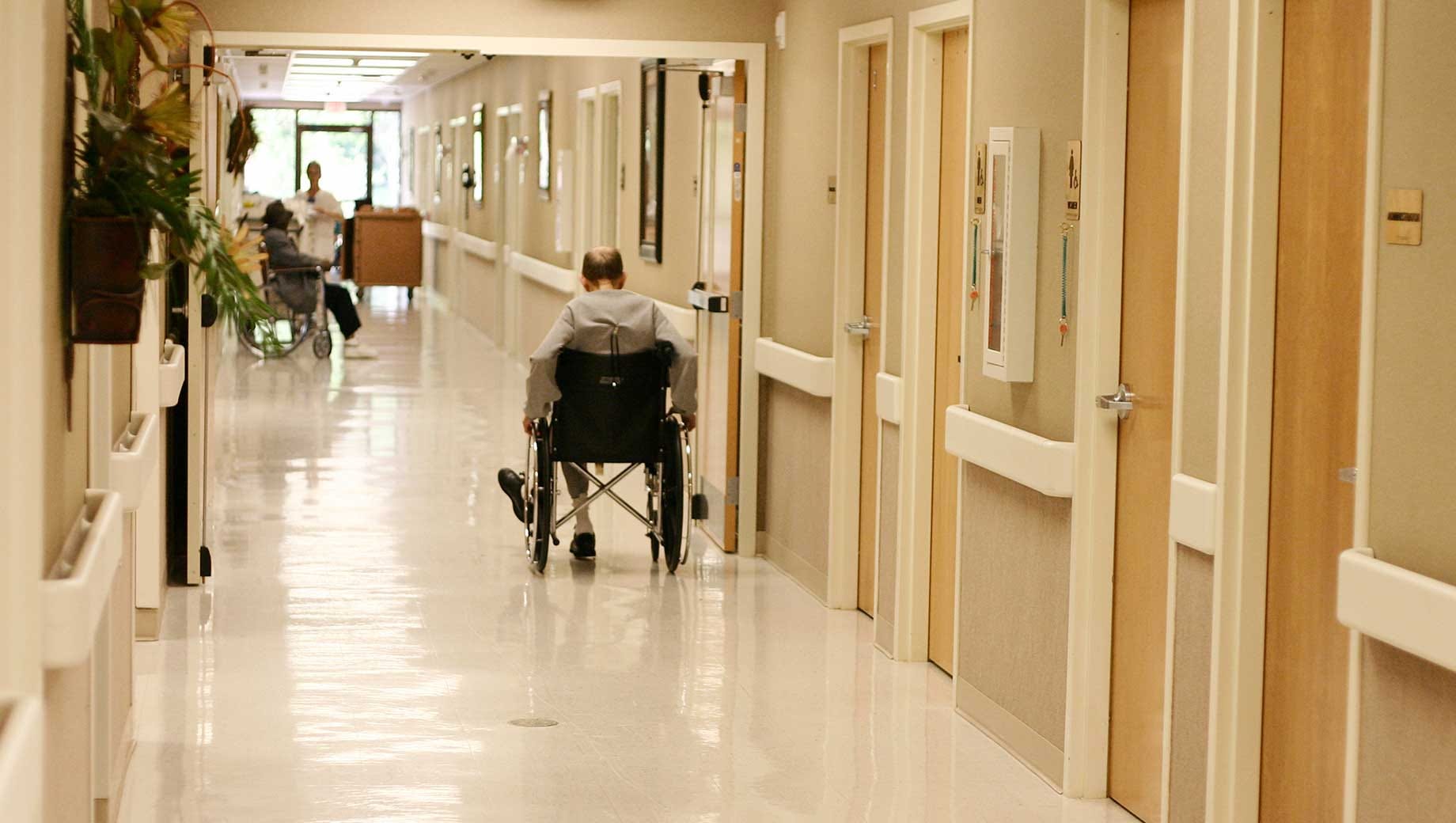
Because modern America is so atomized with low fertility rates, a lot of aging people do not have family to take care of them so they end up in a really basic Medicaid facility – if that – where they expire in a pretty gruesome way from neglect.1 As someone wrote, “I volunteered as a driver for meals on wheels and the state of many elderly people was appalling. Many of them we were their only social interactions. They’d get low quality trash meals once per day and that’s all they got to eat. Also one lady we delivered to every week, seemed normal & in good health, then the next week we went there her relatives were there dividing up all her possessions after she died. They had an estate sale and there was a little portable TV with a plaque on it that said her husband was awarded it on retirement after working at a local company for 40 years, they were selling it for $5. The company was long out of business too, shut down due to NAFTA.”
In the third world today and for basically all of human history, an elderly, infirm individual would naturally be taken care of by family because there would be no other alternatives. They would also have lived more of their own life for themselves (as they were not subject to such intense propaganda) and they would have had a worldview that was more religious, more other-worldly, and therefore less scared of death. I think of Eskimos who didn’t want to be a burden on their family and so went out into the cold to freeze to death (which apparently is an easy way to go, just getting groggy and falling asleep).
Each person has a unique perspective toward death and often we do not know how we will react to it until we are faced with the situation. I don’t know how I would react if I make it to elderly age, or if I came down with cancer or heart disease. I don’t think I would want to be around if my brain was failing; developing bodily infirmity seems more preferable. I think of Stephan Hoeller, 93, who is still sharp mentally despite being weak physically. I think of Revilo P. Oliver, who killed himself as he was physically declining; alternatively I think of Emil Cioran who wanted to kill himself but chickened out and his Alheizmers took hold and he went out in a really dragged out, gruesome manner in a facility. I would like to think that if I was declining mentally that I would take advantage of an assisted suicide facility both for certainty and for lack of pain, but who knows how certain these things even are? I heard of a woman who went to a assisted suicide clinic, the suicide pod failed and they had to strangle her to death.
The Financials
I also think of how rich the owners of these assisted care facilities are getting. The way it works is as follows: a facility will either take someone with long term care insurance, or if they’re middle class the person will max out their debt (reverse mortgage or sell their home) in order to stay there, and after they lose all their assets then they will be allowed to get on Medicaid (which won’t cover them if they have assets) and end up in a basic facility. The cost of staying in one of these facilities is many thousands of dollars a month; for a decent facility it is around $10,000 a month, for a basic one at least $5,000 through Medicaid. The cost of a nice place is staggeringly expensive.2
So the owners cut services to a minimum and they are able to generate huge profits – I think perhaps this is why there are a lot of Orthodox Jewish owners of nursing facilities who make enormous amounts of money, yet try to be very quiet publicly about how this system works. Yes, there is government oversight and yes, it is a low status and difficult profession with a lot of dealing with gruesome stuff (infirmity, disease, complaints, cleanliness issues, personnel issues, litigation, etc), but they are apparently tremendous money makers. As states, “Crazy, right? It’s the end of the line for your “greatest wealth transfer in history’“ – bled dry by the ‘care system’. I remember an explosion of these facilities a few decades ago when private equity got involved, their access to cheap capital and a guaranteed payment from the Feds created a goldmine. A numbers game, they backed into how much they could spend on facilities, care, and operating expenses when subtracted from their guaranteed $, and then just need to meet their occupancy targets….My wife’s side of the family has 4 elderly living in the Mesa Arizona area, I’ve watched them start out in the higher end facilities and then downsize as the funds began to run out. They’ve switched facilities 3 or 4 times.” concurs, stating “Something, anything, must be done to expose and educate about this sick process of long term care, if people cannot take care of elderly relatives at home how awful the whole thing is, I honestly think a lot of people just have no idea about nursing homes, Medicaid, LTC, etc unless they have personally dealt with it. Dont forget about private equity buying nursing homes too. Its truly an embarrassment to our society, and I think exposes the all around greed and lack of caring in this country. Truly sick.” And details his father’s experience in the old age system here, while a Redditor shares his grim experience here.
Now, many of the elderly today have long term care insurance, which was handed out like candy to the middle and upper class a couple of decades ago, and many of the policies had 5% compounding interest provisions in them. The insurance companies miscalculated; too many people held onto the policies, people lived longer than expected, and so the insurance companies lost a lot of money on these policies. The premiums have therefore increased massively in the past twenty years and the number of companies offering these products has fallen to a shadow of what it once was, so what we are seeing today with millions and millions of people living in nursing homes is not going to be the wave of the future. Other countries which apparently have decent aging care facilities – Norway (or maybe not), Sweden, Denmark, Japan – are all historically homogenous cultures with high societal trust, but America today is a desolate wasteland, not homogenous at all and with very low societal trust, so deciding on some government policy to improve things is simply not going to work. sees a similar situation in Italy. The people derive the culture and the government comes from that, not the other way around really, so these long term care facilities are never going to get better. I think of Ben Stiller’s performance as a tyrannical nursing home facility worker in Happy Gilmore, although the general attitude of staff in real life seems to be more laziness, neglect and sullenness than malice; and, to be fair, these Medicaid facilities are generally massively underfunded and understaffed, they are very hard jobs, and many of them are also occupied by new immigrants – dealing with endless elderly complaints will likely grind down most workers mentally over time.
https://www.youtube-nocookie.com/embed/avOOB6Xei_E?rel=0&autoplay=0&showinfo=0&enablejsapi=0
has a great post about the nursing home system, where he states, “In many ways, these places are like prisons, and the patients are for all intents and purposes incarcerated. There may be no bars on their cells, but most of them couldn’t walk out to escape anyhow. How many of us picture our final years being like this? All alone, surrounded by often incompetent and usually uncaring strangers. “Caregivers” who don’t care. That seems like a brutal way to wind up our painfully short lifespan. My loved ones can count on me, and a few others, to come and see them. But there are so many cases, especially in the horrific nursing homes, where elderly people are relegated to staring out of the window at a world they no longer are a part of, with the full realization that their children or grandchildren aren’t coming. Some patients receive no visitors. Ever. Their families have forgotten them, naively secure in their fleeting youth. Or they don’t have any family. No children to not visit them enough.”
The government wants to massively slash Medicaid funding, too: correctly notes, “No wonder that slashing social benefits, Medicare, Medicaid are all on the top of the government’s list — we can take severe cuts to those as a given. But then what’s there to do the year after? Sure, cutting social spending will result in lower consumption (and lower GDP growth), but resource depletion won’t stop just because we no longer give adequate medical and financial support to retired citizens…” Trump’s BBB bill slashed Medicaid spending by 15%, although it was not primarily targeted at old age facilities3, and this is just the start.
The Future
I think the future is going to be a reversion to the mean to an extent: elderly people will have to live with their children, if they have any, or end up on the streets (further exacerbating the gentrification of panhandling, which notes is already a trend), and/or facility quality will continue to decrease. Because we are toward the end of the greatest mass consumption event in human history, and along with it the greatest secularism in human history, I do think there will be some sort of return to religion, and hopefully with it some sort of trends away from the atomization we are all experiencing – even though it is getting worse with LLMs and with work from home – because otherwise it makes me sad to think of how terrible end of life care is going to be for people moving forward, which will make the care afforded today look good by comparison.
Ultimately, modernity’s refusal to confront death mirrors its metaphysical void: that our end-of-life system is the materialization of our spiritual condition of secularism, atomization, and nihilism. As someone wrote, “Abused as kids by parents, abused as elders by caregivers. Abused as adults by the system. Lol at this world. And we keep reproducing.” This world is some kind of demiurgic Hell, especially for those sensitive to injustice. Perhaps we are simply witnessing the outer form of a civilization that long ago died inwardly – the body now lingering, fed by tubes and policy, afraid to let go. In a way, it is similar to the final “pagan” generation of Rome, which was utterly unwilling to address the ascension of Christianity and the death of the old world as described by Edward J. Watts in The Final Pagan Generation:
The ‘final pagan generation’…is made up of the last group of elite Romans…who were born into a world in which most people believed that the pagan public religious order of the past few millennia would continue indefinitely. They were the last Romans to grow up in a world that simply could not imagine a Roman world dominated by a Christian majority. This critical failure of imagination is completely understandable. At the beginning of the second decade of the fourth century there had never been a Christian emperor, and the childhood and early adolescence of members of this generation living in the East coincided with moments when the resources of the Roman state were devoted to the suppression of Christianity. The longest-lived of this group died in an empire that would never again see a non-Christian sovereign, and that no longer financially supported the public sacrifices, temples, and festivals that had dominated Roman life in their youth. They lived through a time of dramatic change that they could neither anticipate nor fully understand as it was unfolding.
As the old Romans watched their gods fade into memory, we too watch the death of the only faith we ever truly had – the belief that progress could postpone death forever.
Thanks for reading.
Subscribe:
Email delivery remains on Substack for now.
1 I wrote about my former stepfather who thought he would die homeless under a bridge, but a childhood friend let him live with him until the end.
2 From here: “Wife and I checked out one of these in our area. $270K is the cheapest possible buy in for a small one BR apartment ($410K if you want to get 80% it back when you die) plus $5.5K/month with no care. If you need care, the price goes up depending upon how much care you need. Triple the buy in and add 50% to the monthly for a place we might actually want to live in. Monthly charges are raised annually. They will take some number of Medicaid patients in the skilled nursing facility part. Long wait lists (years)for the nicer units.
The cheapest way to spend your golden years is probably in an assisted living group home. I got my sister into one of these. It did not take Medicaid. 10 years ago it was $3K/month for a private room in a large house in an upscale tract neighborhood. Full time staff and meals included. Assisted living in a facility with a private apartment is probably $6-15K depending upon the area and niceness.
Wife and I are trying to figure out what to do if we fail to drop dead on schedule.
Wife’s sister has dementia and is a facility where almost everyone is on Medicaid. It’s actually not bad physically, but there are no activities. Her husband takes her out almost every day. Otherwise she would sit and stare at the wall.”
3 According to Dr. William H. Dow, professor of health policy and management at UC Berkeley School of Public Health and director of the Center on the Economics and Demography of Aging, “Although the primary focus was not on older adult health care, various provisions will have adverse effects. One is that the loss of dual Medicaid coverage for some Medicare enrollees will make it harder for them to financially access long-term care.
Another effect that nursing home experts are concerned about is a provision that bars enforcement of a Biden-era rule mandating minimum staffing levels in long-term care facilities, so the result is that the BBBA is preventing nursing home quality improvements.
More indirectly, state budgetary pressure has often led to cuts in state-funded home and community-based services for older adult caregiving, so that is a potential concern. The biggest wildcard is that the magnitude of the tax cuts in the bill will raise the national debt by about three trillion dollars over the next decade, which would trigger a deficit-reduction provision that would significantly cut Medicare provider reimbursement rates—unless Congress chooses to waive their own rules.”