
Category: Living Opposites

  • A dissident history of the Trump campaign and presidency (Part 2)

    This is part 2 of 3 of a series looking back at the campaign and presidency of Donald Trump from a dissident perspective. Part 1 dealt with the Trump 2015-2016 campaign, this part will look at Trump’s presidency, and Part 3 will review COVID and the 2020 election.

    Welcome back. In Part 1 we examined the history of Trump’s 2015-2016 presidential campaign from its humble beginning through the primaries where, via a combination of Trump’s excellent Twitter and debate skills, his ability to brand his opponents using fun and derogative labels, heavy media attention, sophisticated targeted social media advertisements, along with his ability to nimbly switch campaign managers to cater to the requirements of the moment, he won the nomination and then went on to defeat Hillary Clinton in the general election by razor thin margins against almost insurmountable odds. Very few people thought he would win, although Steve Bannon ridiculously said Trump had 100% chance of winning. Even Trump didn’t think he would win and was shocked and perhaps horrified that he did. It was a true feel-good Rocky Balboa moment, a great David-and-Goliath story, but in Part 2 the “Trump Train” gets derailed – and we will look at why. This section is fairly technical as the maneuvers used against Trump were legalistic, obfuscating, indirect, and with plausible deniability for each act to the maximum extent possible; this is why both James Comey (FBI head), Andy McCabe (acting FBI head after Comey was fired), Bill Priestap (who worked under McCabe), Lisa Page (who conspired with Peter Strzok to overthrow Trump) were all attorneysSo bring your big-boy hat for this part; Part 3 will be easier to read.

    Before getting into the details of Trump’s presidency, though, let’s set the stage.

    Trump’s shock win created a number of problems for multiple parties. Trump hadn’t thought of the day after the election; his energy and resources went into the campaign and he had insufficient staff prepared to transition to the presidency. Not only that, but the Republicans with government experience were almost all never-Trumpers: to get a sense of it, former president George W. Bush (2000-2008), 2008 Republican nominee John McCain and 2012 Republican nominee Mitt Romney all hated Trump and did not vote for him. Republican Senate leader Mitch McConnell and Republican House leader Paul Ryan both hated Trump. And this feeling extended down to the staff and personnel level. Although Trump’s heart was at least somewhat geared toward populism, there was simply almost no existing bench of populists to draw from who had prior government experience. He was about to enter shark infested waters unarmed and dressed in bright yum-yum yellow shorts, covered in plankton.

    Uniparty chums. What mattered to them wasn’t Republican versus Democrats – those were labels for the rubes – but “them” versus “us”

    There were different problems for the establishment. Although it had prepared the Steele Dossier as what Peter Strzok would call an “insurance policy” against Trump’s possible win, it was caught flat-footed. The security state had been on top for too long; they had gotten a bit soft and complacent, and given Trump was seen as such a clown figure who was so far behind in the polls they didn’t prepare more for his possible win. There were certain macro plans concealed from the managerial overclass in D.C. that voted overwhelmingly Democrat (90.86% for Hillary and 4.09% for Trump) pertaining to Agenda 2030 and beyond to dramatically lower the quality of life for those living in the West – how would these plans be affected by a bombastic populist in the White House? What if Trump was effective in pursuing his agenda?

    Worse than stymying the globalist proactive agenda, though, there were very significant defensive concerns as well: the FBI had been spying on Trump’s entire campaign using the NSA search databases, and before that the spying apparatus had been weaponized by Obama and Eric Holder after Obama’s 2012 election win. The intensity and depth of the spying made Watergate look like a walk in the park. If Trump’s administration somehow managed to prove criminality on this front, it could not only set back the globalist plan but ran an unknown risk of dismantling it entirely. On top of that, as an outsider without blackmail hanging over his head like for every officially approved politician Trump threatened the sinecures of the Washington establishment; the unelected civil service sucked down massive taxpayer funds and benefits while doing very little actually work, and if he managed to figure out the labyrinth D.C. system it could be a threat to their livelihoods.

    It was unacceptable. Trump had to be stopped; his agenda, his personnel, his vision. Eradicated. Smart, ambitious people had to become fearful that if they worked with Trump the media would brand them the Devil, their careers would be destroyed and they would run the risk of imprisonment. David Plouffe, Obama’s 2008 campaign manager, summed up the sentiment“It is not enough to simply beat Trump. He must be destroyed thoroughly. His kind must not rise again.” “His kind” meant non-controlled populists from outside the system. They would do whatever it took: twist and break any law, turn the media’s hysteria up to maximum for years to rile up the general population, especially women and non-whites, and engage in lawfare practices and smears. As political theorist Carl Schmitt famously said, “Sovereign is he who decides on the exception.” A lot of exceptions were about to be made – but, as we will see, at a significant cost (whether intentional or unintentional).

    The basics should be mentioned. There are three branches of government which are meant to serve as checks and balances on each other: the Executive branch headed by the President (in charge of the Department of Justice, the FBI and other government departments, along with serving as the Commander in Chief of the Armed Forces), the Legislative branch (Senate and House), and the Judicial branch. Both the Legislative and Judicial branches were utterly hostile to Trump, and as we will see he was unable to gain control over the Executive branch which initiated a slow-moving coup attempt against him through the DOJ and FBI.

    There are three intertwined topics discussed herein: (1) the establishment’s attempts to stymie Trump from accomplishing anything (via the counter-intelligence operation, lawfare, and extreme media hysteria); (2) Trump’s attempts at effectuating policy changes, both via executive action and in his interactions with the House and Senate; and (3) Trump’s personnel choices. I considered offering a simple chronological timeline herein, but because of the complexities of the issues separating it by category makes for a better read.

    Let’s continue.


    The Counter-intelligence operation

    The Washington establishment attempted to paralyze the Trump administration from the get-go using a counter-intelligence investigation into Trump himself. These attempts would lead to the appointment of a Special Counsel who would prevent Trump from uncovering prior wrongdoing under the shield of “active investigations” (because if Trump declassified information subject to that investigation it would be branded as obstruction of justice and result in impeachment and criminal charges) and to put him on the defensive so he would waste time and energy, also hurting his ability to fire unelected civil service enemies or to advance his agenda.

    The counter-intelligence operation was officially opened on July 31, 2016. The FBI used the Clinton-funded Steele Dossier (through Fusion GPS intermediary, working ironically with Russians like Igor Danchenko) as a significant part of its basis for opening its counter-intelligence operation against Carter Page, a low level Trump staffer and FBI informant (“operational contact”) in order to “legally” spy on the Trump campaign. Why did it matter that the FBI spied on Page? Because the FBI could legally spy on anyone within two-steps of a counter-intelligence target, i.e. any of Carter Page’s contacts and any of the contacts of his contacts. That meant anyone in the campaign. The Nunes memo in 2018 corroborated these allegations.

    undefined
    Steve Bannon called Devin Nunes, a congressman for 20 years and the chair of the House Intelligence Committee from 2015-2019 until California redistricted his district in revenge (after which he went to go lead Truth Social), Trump’s second-strongest ally in Congress

    Additionally intelligence agent Stefan Halper was used to claim on September 19, 2016 that another very low level Trump staffer George Papadopoulos was a Russian spy, enabling the first FISA FBI warrant. James Comey did not inform congressional oversight (the “Gang of Eight”) of this counter-intelligence operation against Trump despite being legally required to do so because of its inherently fraudulent, criminal nature and when called out on it in March 2017 by Elise Stefanik he blamed one of his subordinates, Bill Priestap. You can see how flat footed he is caught with the line of questioning in the first three minutes of this video:

    To be clear, this wasn’t the start of FBI spying on Trump or his campaign, which started as soon as he began runningSpying in this context means use of the NSA search databases which suck up all electronic data and which has everyone’s phone, internet, and email records, along with access to your various cameras and microphones via Total Information Awareness. The FBI had access to this database which they routinely abuse, and they even installed a terminal within the D.C. office of Perkins Coie, the law firm Hillary used, to make the process even easier and to create a legal privilege shield. A declassified FISA report stated that the FBI ran 3.1 million illegal FISA searches on American citizens in 2017 alone, compared to 7,500 combined searches by the NSA and CIA in the same year. In 2023 the DOJ Inspector General revealed that more than 10,000 federal employees have access to the NSA database for surveillance inquiries, more than 3.4 million search queries were ran between 12/1/2020 and 11/30/2021, and approximately 30% were outside the rules and regulations that govern warrantless search, showing the pattern of illegal governmental behavior had only expanded – but keep in mind that the epicenter of the criminal activity is the National Security Division within the DOJ and it is exempt from any Inspector General oversight.  Anyway, the FBI can as of 2020 look at your web browsing history, emails, anything you have ever typed on your phone or computer and any audio you have made in the vicinity of your digital devices legally without a warrant.  Then they use parallel construction to prosecute, i.e. constructing a legal basis not based upon the spying, a strategy used for a long time now.  See also the Room 641A controversy, a telecom interception facility operated by AT&T for the NSA as part of its warrantless surveillance program as far back as 2003 and a facility that is likely copied throughout the country. This setup, i.e. legalized ubiquitous spying by the intelligence apparatus combined with woke AI and CBDCs, will eventually form the basis of assigning Chinese-style social credit scores to everyone in the country, cutting out dissidents from the system entirely and stealing their wealth.

    Anyway the head of the NSA, Michael Rogers, was aware of the spying on the Trump transition team and went to go meet with them without approval from higher ups on November 17, 2016. He was not part of the Obama-team criminal enterprise and because of this the criminals wanted him removed from his post as reported by the Washington Post the very next day (falsely claiming it was a recommendation from October). It’s likely he informed the transition team that there was an improper FISA warrant focused on a computer server in Trump Tower suspected of links to Russian banks (and which found nothing, but the spying continued), and as a result of informing them the transition team immediately switched out of Trump Tower.

    The goal of the FBI running this operation, later dubbed “Spygate”, was to initiate what became the Trump-Russian collusion scam. By claiming Trump was an agent of or working in direct collusion with Russia he would not be able to implement his agenda with that cloud hanging over him, while giving Republican “decepticons” in Congress, led by Mitch McConnell and Paul Ryan, an excuse not to cooperate with him on his agenda.

    The leaked texts by FBI agents Peter Strzok and Lisa Page showed the typical elite perspective: “I want to believe the path you threw out for consideration in Andy [McCabe]’s office that there’s no way he gets elected – but I’m afraid we can’t take that risk. It’s like an insurance policy in the unlikely event you die before you’re 40” and, in one particular message when Page asked if Trump would ever become president, Strzok reportedly replied, “No. No he won’t. We’ll stop it.” Strzok was the #2 counter-intelligence officer and he stated “The [Obama] White House is running this”. There was a cover story that Strzok and Page were having an affair to explain their 50,000 text messages over the course of a year – most of which have not been released and were permanently wiped, and most of the limited released texts were redacted – but that was likely a lie and their communications were simply about undermining and overthrowing Trump. Both Strzok and Page were married and remained married despite the alleged “cheating”. Lying constantly to the public for ulterior motives was and remains par for the course; why would it be any different here? Strzok and Page were later fired after these text messages came out and Strzok gave incredibly smug and strange Congressional testimony. Look at his movements and physiognomy to get an understanding of this kind of individual:

    coy GIF

    Trump fired FBI head James Comey, who gave critical support for this operation, on May 9, 2017 acting on the recommendation of Attorney General Jeff Sessions and Deputy Attorney General Rod Rosenstein for a series of insubordinate actions.1 This wasn’t really a problem for the team acting under Comey as acting FBI Director Andrew McCabe was fully onboard with the agenda of Spygate. Indeed, in some ways it was a good thing as it could be used as the predicate to paralyze Trump’s administration through the appointment of a Special Counsel; with National Security Advisor Mike Flynn out of the way and globalists who replaced him installed in the NSC (discussed in the personnel section below) there were no expected problems from that angle. A Special Counsel had to be appointed by the head of the Department of Justice, though, and Attorney General Jeff Sessions was perceived as a Trump loyalist (52-47 Senate confirmation vote, showing he wasn’t very well liked by the establishment despite decades as a Senator), while his deputy Rod Rosenstein would do what he was told (sworn in on a 94-6 Senate vote, showing his globalist loyalties). It’s curious why Sessions picked Rosenstein as his deputy; perhaps he had to in order to get Senate approval.

    Rosenstein has the physiognomy of a haunted, guilty rat

    Department of Justice officials came to Sessions and told him that he had a conflict of interest as an early Trump supporter and because of two incidental, forgettable interactions with the Ambassador from Russia which he had forgotten about when asked about it at his confirmation hearing. He was advised to recuse himself from any investigation into Trump by the Department of Justice. Meanwhile another point of leverage was pursued: in March 2017, Senators asked the FBI to conduct a criminal perjury investigation into Sessions based on these two brief, forgettable interactions. Deputy Director Andrew McCabe assigned FBI agents to investigate. (McCabe was later fired for lying under oath with a mountain of evidence about leaking spun narratives damaging to Trump. Because of the sympathy in D.C. for his criminal actions, his firing was later reversed and his legal fees paid for by the government.)

    Sessions acquiesced to the demands of the DOJ officials and recused himself from their investigation into Trump’s Russia connections. If he hadn’t have done this the perjury investigation would have been used to force him out; one way or another he would have been made to recuse. Trump was furious, rightly considering this an act of deep betrayal by Sessions; he would never have appointed a man as head of the Department of Justice if he had known he would be so willing to roll over for one’s enemies. Sessions would later lose his attempt to run again for Senate because of his lack of support from the Republican base which turned on him due to his betrayal.

    On May 17, 2017 Rod Rosenstein appointed Robert Mueller as Special Counsel to investigate links between the Trump administration and Russia. Mueller was just a figurehead, though, and the same operatives in charge of the counter-intelligence operation against Trump continued their work under Mueller. To a significant extent the process was the punishment as the investigation snared a large number of Trump allies who had to spend extreme amounts of time and money trying to defend themselves.

    The investigation would go on until March 2019 when newly appointed Attorney General and establishment lackey William Barr would wrap it up, prepared to move on to the next step of the establishment narrative. This will be discussed further in the personnel section, but keep in mind that any cabinet post must be approved by the Senate and roughly a third of the Republican Senate is directly controlled by arch-globalist Mitch McConnell, while most of the others are milquetoastTherefore the only confirmable personnel would be disloyal globalists. Barr would prevent sunlight from being cast on undesirable establishment activities, fail to prosecute criminal misdeeds and work to undermine Trump at key opportune moments such as his total unwillingness to investigate 2020 election fraud.

    Mueller ultimately found no actionable charges against Trump and he came across as a doddering, forgetful fool in his testimony to Congress, but his objective had been accomplished: to paralyze the Trump administration and run out the clock on the 115th heavily Republican majority Congress – the newly installed 116th Congress had a Democrat House and only a razor-thin Republican Senate – and prevent sunlight being shone on the FBI’s extreme criminal activity by hiding it under the guise of an “active investigation.” Later on in 2022 the FBI would raid Mar-a-lago to get back the physical copies of the documents that proved FBI/DOJ criminality from Trump, which he had held on to but was unable to release due to the “active investigation”, a motive that was never explained to the clueless public.

    Note that more than two dozen phones belonging to members of Mueller’s team were wiped clean of data before the Justice Department’s inspector general could review them. Andrew Weismann, a hateful and deranged top prosecutor on Mueller’s team, “accidentally wiped” his cell phone, causing the data to be lost. The cell phone of FBI lawyer Lisa Page was misplaced by the special counsel’s office. When it was eventually obtained by the DOJ inspector general the phone had been restored to its factory settings, wiped of all data. The phone of FBI agent Peter Strzok was also obtained by the inspector general’s office which found “no substantive texts, notes or reminders” on it. The DOJ Inspector General Michael Horowitz would go on to whitewash the illegal Crossfire Hurricane investigation by claiming that their actions were negligent and not based on “political bias or improper motivation influenced”.

    The Democrat-controlled House in 2019 ensured that Trump would not be able to pass meaningful legislation and hobbled him with two House initiated impeachment votes. The first one was for looking to investigate Biden’s publicly stated corruption within Ukraine: he bragged about forcing Ukraine to fire its anti-corruption prosecutor or lose $1 billion dollars of aid (“If the prosecutor’s not fired you’re not getting the money [$1 billion]. Well son of a bitch, he got fired, and they put in place someone who was solid at the time.”) Here’s the video:

    An investigation into establishment corruption could have put a major dent in their longer-term plans for Ukraine. The country had undergone a color revolution by the CIA in 2014 and the establishment was preparing for a transition away from the 20-year Afghanistan war, which nimbly transitioned into the endless Ukraine/Russia war where many tens or hundreds of billions of U.S. taxpayer dollars are being funneled through Ukraine back into the hands of the transnational security elite. It would have been wholly inappropriate in their eyes to let Trump spoil the upcoming party or to reveal their activities. Many establishment Republicans were in on the charade including Mitt Romney. One may note with curiosity that liberal operative Norm Eisen drafted 10 articles of impeachment for the Democrats a full month before President Trump ever called the Ukraine President in 2018 and who personally served as special counsel litigating the Ukraine impeachment.

    The second impeachment was for January 6, launched one week before his term expired and which will be discussed further in Part 3.


    Utilizing the House and Senate to undermine the populist agenda

    As mentioned in Part 1, the expected outcome of the 2016 elections was that the Republicans would control the House and Senate by a decent margin and Hillary would win the presidency. This gridlock would ensure business-as-usual for the uniparty and both the Republicans and Democrats could use the gridlock as an excuse for why they were unable to fulfill their respective agendas. While not a top priority, the establishment preferred to maintain the illusion of a two-party system when doing so would not conflict with larger goals.

    Trump’s highly unexpected victory threw a wrench into these plans. The Republicans controlled the House, the Senate, and the Presidency, so they would have no excuse for not passing their stated agenda. This was a problem because they really did not want to pass any portion of Trump’s agenda to re-negotiate trade deals, to close the southern border, to get rid of DACA or to overturn Obamacare. McConnell had played a major role in destroying the Tea Party movement by behind-the-scenes maneuvers such as backing establishment candidates and withholding funds from populist candidates, and there was no way he was going to let populists fulfill their agenda here. He controlled roughly 1/3 of the Republican senators and he would strongly prefer to work with Democrats to undermine Trump. This post analyzed the voting record of the Republican senators and which concluded they were almost universally establishment-oriented and weak. On the House side Paul Ryan despised Trump although he was willing to work with him on certain issues like tax cuts for the ultra rich (Trump endorsed Paul Ryan to try to get into his good graces; Ryan would repay him by doing everything he could to impeach him).

    McConnell prevented Trump from making any recess appointments, a highly unusual move showing beyond doubt how much he despised Republican populism. Also see here for more information.

    McConnell also refused to change the legislative filibuster requirements to a simple majority instead of requiring 60 votes to overcome it, ignoring Trump’s request here and here to change the rules because otherwise Congress would remain paralyzed. This specific filibuster still stands today – and gridlock is not necessarily a bad thing, requiring a significant majority for major legislation can be good, but anyone with a brain knows it will be removed by Democrats as soon as it is politically expedient. Liberals play for keeps; decepticon Republicans fiddle weakly while Rome burns.

    What did the Republican-dominated Congress deliver? With Trump’s approval it passed tax cuts for the ultra rich (and refused to remove the hedge fund carried interest tax loophole despite Trump promising to do so) and passed a bipartisan First Step Act to let felons out of prison. They failed to kill the bloated mess of Obamacare which drastically increased medical insurance prices for most citizens. John McCain cast the deciding vote as he was dying of brain cancer:

    When McCain died the whole political establishment turned out to his funeral: Bush, Obama, Clinton, Cheney, Gore, the whole gamut. Only Trump was excluded as a political outsider. McCain embodied among the worst of globalist values: an endless appetite for war, corruption, graft, and lies.

    Congress also passed cosmetic changes to NAFTA despite Trump’s campaign for radical reform, and Trump attempted a weak bit of a trade war with China with some Congressional support and which failed. The Republican controlled Congress was unwilling to pass funds for border security by building the wall, to deal with illegal aliens, or to pass a infrastructure bill – McConnell hated anything to do with American populism and he would ally with the Democrats to prevent it from happening although, as a very seasoned and skillful politician, he made sure to enact his moves behind closed doors. Maintaining institutional credibility in the eyes of the public for the Uniparty remained a priority – although not a top priority – for McConnell.

    One accomplishment was that Trump worked with the Senate to appoint three Supreme Court justices. If Hillary had won the Court could have taken an alarming far-leftist turn. Trump’s justice picks were all varying degrees of bad – Gorsuch was okay to a limited extent while Amy Cohen Barrett is a moderate-leftist except on abortion, while Brett Kavanaugh is a crying feminist type reminiscent of a more liberal Jordan Peterson even though the same liberals almost lynched him. The only two “real conservatives” on the bench are Thomas and Alito.


    Trump’s personnel choices

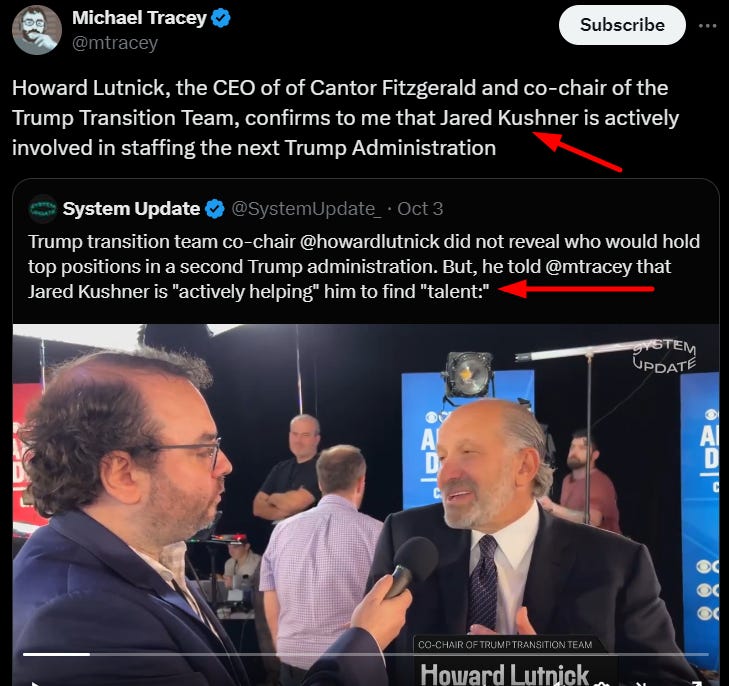
    Trump’s personnel choices were widely perceived as one of the weakest points of Trump’s administration. His picks were generally geared toward globalists either out of necessity (there were very few populists with government experience and populists were not going to be confirmed for cabinet posts in the McConnell-dominated Senate, at least not after the earliest 2017 picks when Trump arguably had a bit of a mandate), or because he thought dealing with the administrative state would somehow be like hiring and firing employees in business, or out of listening to the wrong people (such as Jared Kushner), or out of laziness and poor administrative ability. He ended up bitterly fighting with many of his personnel as they actively attempted to undermine his agenda, an extremely poor position to be in given his life-and-death battles against the active FBI and DOJ coup attempts and endless, intense media smears.

    Let’s discuss Trump’s transition to the presidency and then highlight some of his especially poor personnel decisions. There will be a focus on the National Security Council position because the NSC did not need Senate confirmation; therefore, who Trump picked for that role was entirely up to him and provides helpful insight into his thought process (or lack of one) without requiring a filter of political consideration. Also note that the NSC was the only institution that could have offered a measure of protection against the FBI coup attempt “counterintelligence operation”, which is why they targeted Mike Flynn as a top priority (to be discussed).

    Transition to Presidency

    Chris Christie, one of Trump’s primary opponents who later endorsed him, was initially put in charge of Trump’s transition team on May 9, 2016; apparently this was a placeholder as almost no one expected Trump to actually win, although Christie treated the job seriously. By October, it was reported the transition team had grown to more than 100 staff, many of whom were policy experts brought on to compensate for a dearth of policy staff employed by the Trump campaign. The election was held on November 8, 2016 and only three days later on November 11 Christie was removed and Trump’s children along with Jared Kushner were named to the transition executive committee. On the same day, Christie’s close associates Richard Bagger and Bill Palatucci were both removed by Trump from the transition team. Globalist Vice President Mike Pence was nominally put in charge of the transition and eventually the truth came out: it was Jared Kushner who had Christie fired because Christie had prosecuted Kushner’s father more than a decade prior. According to Christie:

    If a guy [Kushner’s father] hires a prostitute to seduce his brother-in-law and then videotapes it and then sends the videotape to his sister to attempt to intimidate her from testifying before a grand jury, do I really need any more justification than that?” Christie said in a recent interview with PBS. “I mean, it’s one of the most loathsome, disgusting crimes that I prosecuted when I was US attorney.”

    Jared with his father Charles, who “hire[d] a prostitute to seduce his brother-in-law and then videotape[d] it and then sen[t] the videotape to his sister to attempt to intimidate her from testifying before a grand jury”. Amazing.

    This was the first inkling that Kushner, a 36 year old nepo-baby who got into Harvard based on a multi-million dollar donation from his father, would for some unknown reason have almost total control over Trump’s decision making process. It was also a sign that Trump did not care much about displaying loyalty to those who had backed him as Christie had done.

    On November 10 Trump met with Barack Obama. He looked quite uncomfortable, back hunched:

    On November 22 Trump announced there would be no Hillary investigation into her private server despite his campaign pledge to “lock her up”. Senior adviser Kellyanne Conway went on MSNBC’s “Morning Joe” and conceded that with the campaign behind him, Trump isn’t looking to prosecute Clinton. “I think when the president-elect, who’s also the head of your party, tells you before he’s even inaugurated that he doesn’t wish to pursue these charges, it sends a very strong message, tone and content” to the rest of the GOP, she said. “ … I think he’s thinking of many different things as he prepares to become the president of the United States, and things that sound like the campaign are not among them.” Be careful what you say publicly, though: just because Trump decided to “show magnanimity” does not mean that his words would be forgotten. As argues:

    Here’s the part many reading this don’t want to hear: Trump did this to himself. You can’t campaign on locking up your enemies and being this great bull in a china shop-type figure, and then let your enemies run your administration instead of locking them up. You also don’t threaten to invalidate an election and encourage your supporters to take drastic action, then do nothing after the action begins. One does not fish in the Rubicon, as they say. Actions have consequences, the bolder (or more foolish) the action, the graver the consequences.

    The next day Trump picked never-Trumper and globalist Nikki Haley as Ambassador to the UN. On December 8 Trump picked globalist Andy Puzder as his labor secretary (later withdrawn). On December 17 Trump appointed General Kelly, a noted globalist who was willing to serve under Hillary to head Homeland Security.

    Interestingly, outgoing National Security Advisor Susan Rice wrote a memo-to-self on January 20, 2017, the day of Trump’s inauguration, in which she outlined that on January 5, 2017 FBI head James Comey and Deputy Attorney General Sally Yates told Obama, Biden and herself that Trump was subject to an active counter-intelligence operation. They were worried about new National Security Advisor Mike Flynn becoming aware of it, as he would have the operational expertise to understand what was going on and counter it. This was written as a cover-your-ass email in case the effort to overthrow Trump later collapsed. In other words, the efforts to begin the “Trump = Russian collusion” efforts began immediately after the election and with White House approval (to reference again the Peter Strzok text “The [Obama] White House is running this”) – and they had to, for the reasons outlined at the start of this essay. Their behavior was simply too corrupt and criminal to be able to back down; their only choice was further escalation.

    Early presidential appointments

    Trump was inaugurated on January 20 and was attended by an estimated 300,000-600,000 people. Liberals gloated that Obama commanded much greater crowd sizes, but it’s unclear if the photos showing small crowd size was taken early in the day. Also, given D.C. votes consistently 90%+ Democrat, the fact that a Democrat president would command a larger crowd size than a president that commanded 4% of the local area vote wouldn’t be surprising. Anyway, apparently many of the staff who worked on Trump’s campaign were blocked by a never-Trumper named Johnny DeStefano from attending the inauguration; DeStefano was put in charge of hiring staff in the administration and he either slow-walked or bungled the job, apparently intentionally not hiring campaign staff for positions within the administration (although, to be fair, Bannon (the gold standard for the populist wing) appeared to like him).

    On the same day Trump appointed notorious globalist Gary Cohn to be his National Economic Counsel director. James Comey was not fired and remained as head of the FBI. There was no DACA repeal on Trump’s inauguration day despite his campaign promise to do so on day one. Trump had initially kicked off his campaign taking aim at DACA, vowing to “immediately terminate President Obama’s illegal executive order on immigration immediately” in his presidential announcement speech on June 16, 2015, and again during an August 31 rally in Arizona.  After a year of expressing intentions to strike a deal that “will make people happy and proud,” a draft of a White House Executive Order terminating the DACA program was leaked on January 25, 2017, the same day Trump said Dreamers shouldn’t be “very worried” because he has “a big heart” in an ABC interview.  He would later order an end to DACA in September, which would then get held up by the courts.

    On January 22, 2017 globalist, nepotistic Jared Kushner was sworn in as Senior White House advisor, while Mike Flynn was sworn in as the National Security Advisor. Because of Flynn’s experience, knowledge, honesty and integrity, he was the top target of the establishment to take out. The FBI entrapped him claiming they just wanted a meet-and-greet, then claimed that he misled Vice President Mike Pence (who, as a deep state operative, was secretly working in tandem with the FBI) and others about the nature and content of his standard communications with Russian ambassador to the United States Sergey Kislyak. Robin Townly, a Mike Flynn ally and NSC director, was then denied high-level security clearance by the establishment and forced from the NSC; denying security clearances for Trump allies on flimsy pretexts was used to prevent many from assuming important roles. On February 13, 2017, Flynn himself was forced to resign — removing the most important impediment against the launch of the false Russiagate scam that would be used as the “insurance policy” to paralyze Trump’s administration.

    Mike Flynn

    Here are some other dates in the first few months of Trump’s presidency which offers a feel for his transition from populist rhetoric during the campaign to globalist governing realities. As mentioned, it’s hard to blame Trump entirely for this given the paucity of nationalist populists with experience (but then again, how much does experience ultimately matter versus loyalty to a shared vision?).

    Jan 30, 2017: Reports that General Kelly “wins” and prevents anti-immigration hardliner Kris Kobach from being #2 at DHS.

    Feb 7: Betsy DeVos, a never Trumper and former supporter of common core, is appointed as Secretary of Education.

    Feb 16: Robert Harward, a globalist deep statist, turns down Trump’s request for him to head the NSC.

    Feb 20: Trump picks H.R. McMaster, also a globalist deep statist, to head the NSC.

    March 14: McMaster tries to fire Ezra Cohen-Watnick from the NSC, who exposed the Susan Rice wiretapping information to Devin Nunes; Kushner blocks it by going directly to Trump.

    March 15: Neocon Dina Powell is appointed as Deputy National Security Advisor.

    April 5: Trump removes Steve Bannon from his NSC post.

    April 6: Bannon calls Jared Kushner, who is rapidly assuming power, a “cuck” and a “globalist”.

    April 7: Trump attacks Assad in Syria despite a campaign pledge to have a non-interventionist foreign policy.

    April 8: Reports that McMaster wants a 150,000 ground war invasion in Syria.

    April 9: KT McFarland, a nationalist and Flynn ally, forced to leave the NSC. Reports that McMaster pushed her out.

    April 12: Trump says Bannon is a “guy who works for me” and downplays the roll Bannon played in the election. Reports are Bannon is on the verge of being fired or quitting. He eventually leaves officially in August.

    April 14: Trump officially declines to name China a currency manipulator.

    April 17: Trump congratulations Erdogan on becoming essentially an Islamist dictator in Turkey.

    April 22: Trump tells AP that DACA is here to stay. Pence announces that Trump will honor Obama’s agreement with Australia to take thousands of high risk Muslim “refugees” that Australia had denied asylum.

    April 25: Reports that Trump, at pressure of Dina Powell, McMaster and Gary Cohn, will give a massive amount of weapons to Saudi Arabia as well as civilian nuclear reactors.

    April 26: Ivanka says publicly that accepting Syrian refugees “has to be part of the discussion, but that’s not going to be enough in and of itself.”

    April 28: Trump’s tax plan is released. It increases government deficit an estimated $6-10 trillion over a decade, decreases taxes on the 1% (including hedge fund managers, breaking a campaign promise), and potentially increases taxes on the upper-middle class.

    April 28: Trump announces “I’m a nationalist and a globalist. I’m both.”

    April 28: News reports that the head of Trump’s media team, Helen Aguirre Ferre, is a notorious and virulent never-Trumper.

    April 30: Sebastian Gorka, a former Breitbart reporter and nationalist, is out of the White House; reports that McMaster pushed him out.

    May 9: James Comey is fired. Major leaker and Obama holdover/donor David Laufman remains in key position at DOJ.

    May 17: Johnny DeStefano, who heads Trump staffing despite never supporting Trump publicly, continues to block pro-Trump political appointees.

    May 18: Steve Mnuchin refuses to support the reinstitution of the Glass Steagall Act in his first Senate banking appearance, in effect encouraging banks to take on additional risk and offload that risk onto the public (i.e. privatizing profits and socializing losses).

    May 20: Trump agrees to $350 billion weapons deal with Saudi Arabia, including civilian nuclear reactors; Jared Kushner and McMaster reportedly high-five over the deal. Kushner would later be rewarded by Saudi with a $2 billion “investment” and McMaster went on to a series of lucrative consulting, teaching and board positions.

    Kushner and McMaster

    May 23: Thousands of rejected Australian Muslim refugees begin being screened to be accepted into the U.S.

    May 24: Never Trumper Virginia Boney, who has no national security experience, is revealed to be part of NSC; she has support of Lindsay Graham and John McCain.

    May 27: Reports that Trump is doubling the number of refugees allowed into the US for fiscal year 2017 from the current rate of 830 per week to 1,500 per week. Brian Hook, who serves under Tillerson at State and is an avowed never-Trumper, is responsible for this.

    May 30: Senate majority leader McConnell refuses to use the “nuclear option” to end the fillibuster to pass healthcare reform, tax reform, or anything else.

    May 31: Reports that Trump has not ended Obama era catch-and-release policy at the border.

    June 1: Time Warner CEO says Trump won’t have impact on proposed AT&T merger.

    June 5: Trump supporters Corey Lewandowski and David Bossie will not be joining the administration to help create a media war room despite earlier expectations.

    As of June 6, none of the anti-Trump leakers involved have been fired or prosecuted (other than Reality Winner who received security clearance in February and who was not one of the principal leakers). Never Trumper Helen Aguirre Ferre remained at the head of Trump’s media team.

    I’m going to end the play-by-play here, but it should be sufficient to demonstrate that even when Trump had total control over certain personnel as he did with NSC selection his picks were schizophrenic and increasingly globalist. Nationalist populists like Steve Bannon were increasingly sidelined and then removed entirely.

    Regarding Bannon specifically, he had a giant ego and wanted to take credit for Trump’s achievements, and he also loved stirring the pot of drama and backstabbed the administration out of anger at being sidelined on his way out by talking to establishment leftist author Michael Wolff – in other words, he seemed to be a pretty bad employee. But it’s also clear that the populist agenda was being undermined quite intensely. It’s hard to separate good from bad with him, although there was no one else who cared so passionately about actually fulfilling the agenda that Trump ran on. Look at Bannon’s whiteboard of ideas, this was a creative guy who cared:

    While the media was screeching hysterically about Trump and his administration at a level of intensity not seen in modern history, the media was unable to effectively concentrate the public’s attention on more than one or two things at once. Bannon’s plan was to “flood the zone” with a thousand initiatives which potentially could have countered, at least to some extent, the power of the media. Alas, Trump ultimately went in a different direction…

    That different direction was Jared Kushner, whose level of control over his father-in-law remains one of the great mysteries of the presidency. It’s possible Kushner was simply Trump’s handler, much like Kanye West’s handler was “celebrity personal trainer”, Tavistock educated, Canadian- governmental-handler Harley Pasternak who threatened to take his children away from him if he didn’t play ball. Alternatively, Trump needed a core constituency of allies and white Christians nationalists were missing from government (even nominally pro-white congressman Steve King was hounded out of office over nothing). Kushner represented the AIPAC element, so where else could he have turned for protection against the bloodthirstiness of the left?

    Anyway, Trump ended up feuding with many of his cabinet and other picks. He raged (correctly) at Jeff Sessions’ for his betrayal, he picked H.R. McMaster, a globalist to lead the NSC who offered him no protection against the security state’s coup and who wanted a giant war in Syria; he picked extreme warmongering neocon John Bolton to be his National Security Advisor from 2018-2019, and who later wrote a book blasting Trump; he picked Rex Tillerson to be his Secretary of State and he and Trump got along terribly; he picked Gary Cohn to be his National Economic Counsel director and Cohn illegally stole documents off Trump’s desk and then bragged about it; deep state Mike Pence stuck in the shiv in Trump’s back on January 6 as did Dan Coats, the Director of National Intelligence from 2017-2019 when he affirmed in 2018 the false FBI narrative that Russians had interfered in the U.S. election. I don’t blame this all on Trump — again, there was close to no nationalist populists to choose from with relevant experience, and cabinet picks had to be confirmed by the establishment Senate — but he surely could have done much better than this abysmal track record which made all his other problems much worse.

    undefined
    Trump with neocon warmonger John Bolton, CIA head Gina Haspell (who was understated and stood away from the public eye but sought to undermine Trump however she could) and deep state actor Dan Coates. What a mess. Note Andrew Jackson on the wall, one of the greatest Americans of all time for destroying the Second National Bank.

    Thankfully, at least Trump kept hypocritical globalist Mitt Romney away, although he played with Romney by entertaining his plea for a cabinet position at a dinner which was famously captured on camera:

    Squirm, Mitty Boy!

    Trump executive actions and foreign policy

    Trump did have some limited effect through executive actions and on foreign policy. He pulled out of the Paris accords on June 1, 2017 which would handicap America but allow China and other third world countries to pollute essentially at will. The withdraw was complete in 2020 but the Biden Administration re-joined in 2021.

    Trump withdrew from the proposed Trans-Pacific Partnership in 2018, although he later flip-flopped and signaled an openness to reconsider it. The Biden administration has not rejoined it as of 2024, meaning the establishment is not now in favor of TPP.

    Generally Trump’s instincts were pacifistic. Trump resisted his National Security Advisor Mcmaster’s desire for a 150,000 boots-on-the-ground invasion of Syria. Instead, he opted to bomb some empty Syrian airfields after giving Syria opportunity to evacuate them. He also tried to get North Korea to give up their nuclear weapons, an attempt that Kim Jong Un wisely resisted as it would have set up North Korea for a future CIA-sponsored color revolution.

    Trump did initiate the withdrawal from the 20-year Afghanistan war by signing an agreement with the Taliban, although the implementation was delayed so that Biden could claim credit for it in 2021. Julian Assange stated eloquently that the purpose of the Afghanistan war was a “forever war” so that the transnational security elite could graft off the U.S. taxpayer indefinitely:

    The U.S. initiated the Russia/Ukraine war a mere six months after the withdrawal from Afghanistan, ensuring the rape of the U.S. taxpayer under the guise of another forever war would continue (Russia initiated the start of the war but that was after the 2014 U.S. CIA color revolution overthrowing the democratically elected president and eight years of heavily arming the Ukrainians who shelled the Donbass constantly, killing over ten thousand people).

    Trump pursued an executive order to end Deferred Action for Childhood Arrivals (DACA), an Obama executive order to allow a large number of illegals to stay within America — i.e. Trump merely rescinded an executive order by his predecessor — but a district court judge issued a nationwide injunction to stop the rescission and the Supreme Court affirmed the district court judge in a 5-4 decision on technical grounds in an excellent example of despicable lawfare. Chief Justice Roberts joined with the liberal justices on the decision. Biden reinstated DACA back in 2021.

    Trump also tried an executive order on the “Muslim ban”, pushed by Bannon and immigration hardliner Stephen Miller and which decreased the number of refugees from certain Islamic countries into the United States. A single district court judge in the state of Hawaii, personal friends with Obama, issued a nationwide injunction against it and the Supreme Court eventually upheld the ban in a 5-4 decision (this time with weirdo Roberts joining the conservatives).

    undefined
    The Hawaii district court judge and Obama friend Derrick K. Watson who thought he could issue a nationwide injunction against a presidential order

    Just before the 2020 elections Trump passed an executive order to gut civil service protections, which was a critically important move given the class consciousness which has arisen among the unelected civil service in Washington D.C. and which is overwhelmingly pro-globalist and anti-populist in outlook. The order was rescinded under Biden.


    A note on the media

    The media was used throughout Trump’s term as a naked weapon of war against his administration. Any claims to objectivity were completely discarded.

    Per the Swiss Policy Research analysis, most western media coverage is provided by one of only three news agencies: the Associated Press, Reuters and Agence France-Presse. Six companies control 90% of U.S. media due to the Telecommunications Act of 1996, and the top shareholders of Time Warner, Comcast, Disney, News Corp are Vanguard, Blackrock and Statestreet, all establishment entities.  The structure of the modern world will be discussed in Part 3, but basically all establishment media was turned hard against Trump immediately after his shocking election win in order to imprint the message that Trump was the equivalent of Hitler.

    The intensity of the message pushed was unlike anything seen in the modern era until equalled or exceeded by the COVID “pandemic”, which will be discussed in Part 3. The population’s acceptance of this hysteric messaging gave rise to the non-playable character (“NPC”) meme because people who had faith in the media were not able to cope with the level of intense propaganda aimed at them. They glitched out, focused exclusively and intensely on Trump and became the complete opposite of their normal selves. The spigot of intense propaganda relating to Trump was not turned off until the start of COVID when the same people who so passionately hated him (because the media told them to) shifted to worrying about a worldwide “pandemic”.

    The way the media worked was as a closed circuit echo chamber. One organization would report some false propaganda and then the next organization would piggyback off of and build off it in an ever-intensifying loop. They would also use the same key words in order to help hypnotize the public. We saw above how Andrew McCabe was the originator of some of these false leaks for which he was later fired.

    Here are just two examples among an uncountable number of them:

    Additionally, every Trump administration figure was personalized and profiled in depth with every action and statement held aggressively under a microscope, which is a common Saul Alinksi “Rules for Radicals” tactic (who was Obama’s inspiration; Alinski incidentally dedicated his book to Lucifer).

    The media also highlighted with intense hysteria the Charlottesville “Unite the Right” rally where attendees clashed with Antifa members. James Fields, who was in his car when far-leftist agitators started hitting it, pushed on the gas to flee for his life, running over an obese woman who may have died from a heart attack. Consecrating the event with blood, Fields was charged with murder and sentenced to life imprisonment.2 The media then demanded that Trump disavow everyone at the rally and crucified Trump for his quasi-unwillingness to do so (as he likely instinctively knew it was a trap). Regardless, the media would hype this event hysterically in order to try to smear Trump as a white nationalist, and there were no subsequent major gatherings of Trump supporters outside of rallies until January 6. Charlottesville, in essence, removed the right’s tentative willingness to try to organize offensively; 1/6 would remove the right’s willingness to try to organize defensively.

    Meanwhile, as mentioned in Part 1, the establishment came to understand the threat of unregulated free speech on social media after Trump’s shocking win. They forced Facebook to accept extreme government censorship demands, they had Twitter (where a large number of FBI and CIA agents were embedded as moderators) ban and shadow ban a huge number of influential far-right users, they made 4chan basically unreadable with bots and FBI agents, they banned populist right Subreddits such as /r/TheDonald, they imprisoned Julian Assange and destroyed Wikileaks and many other tactics. These tactics would grow more extreme under Biden.


    A note on the economy

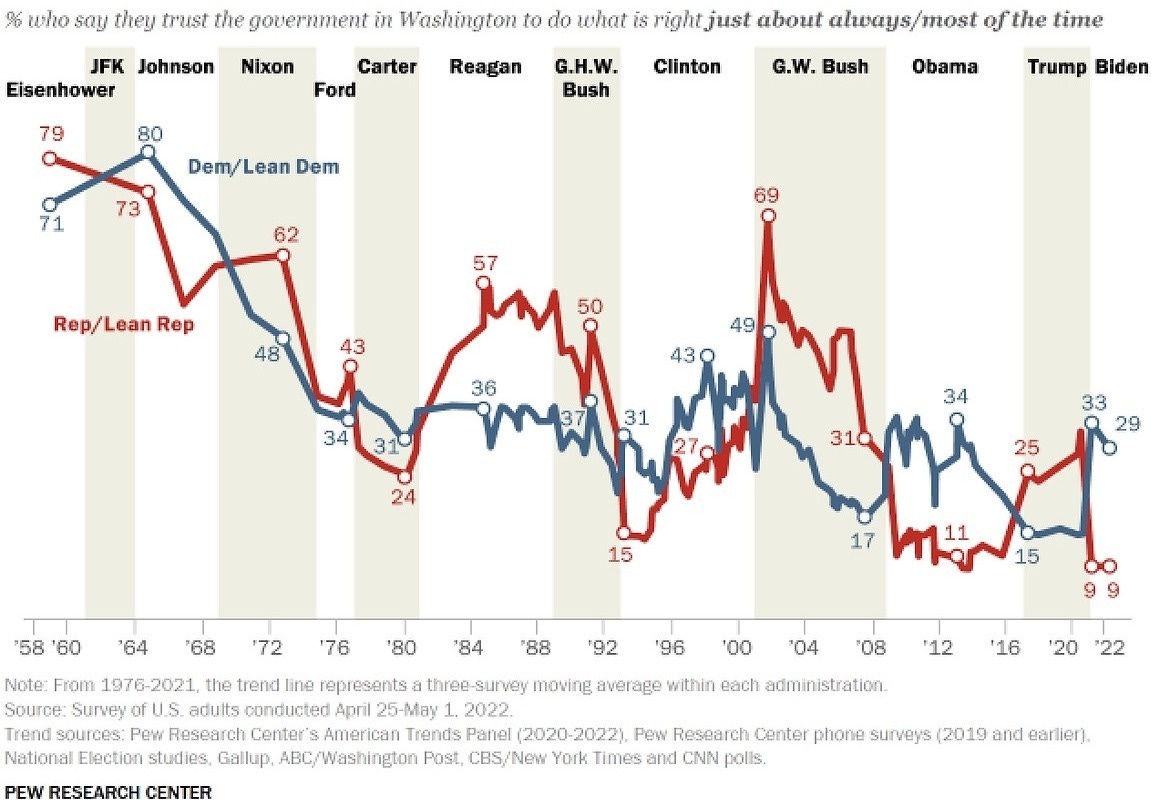
    With all of Trump’s battles with the establishment, his polling was consistently in the low 40%’s – not good but not catastrophic:

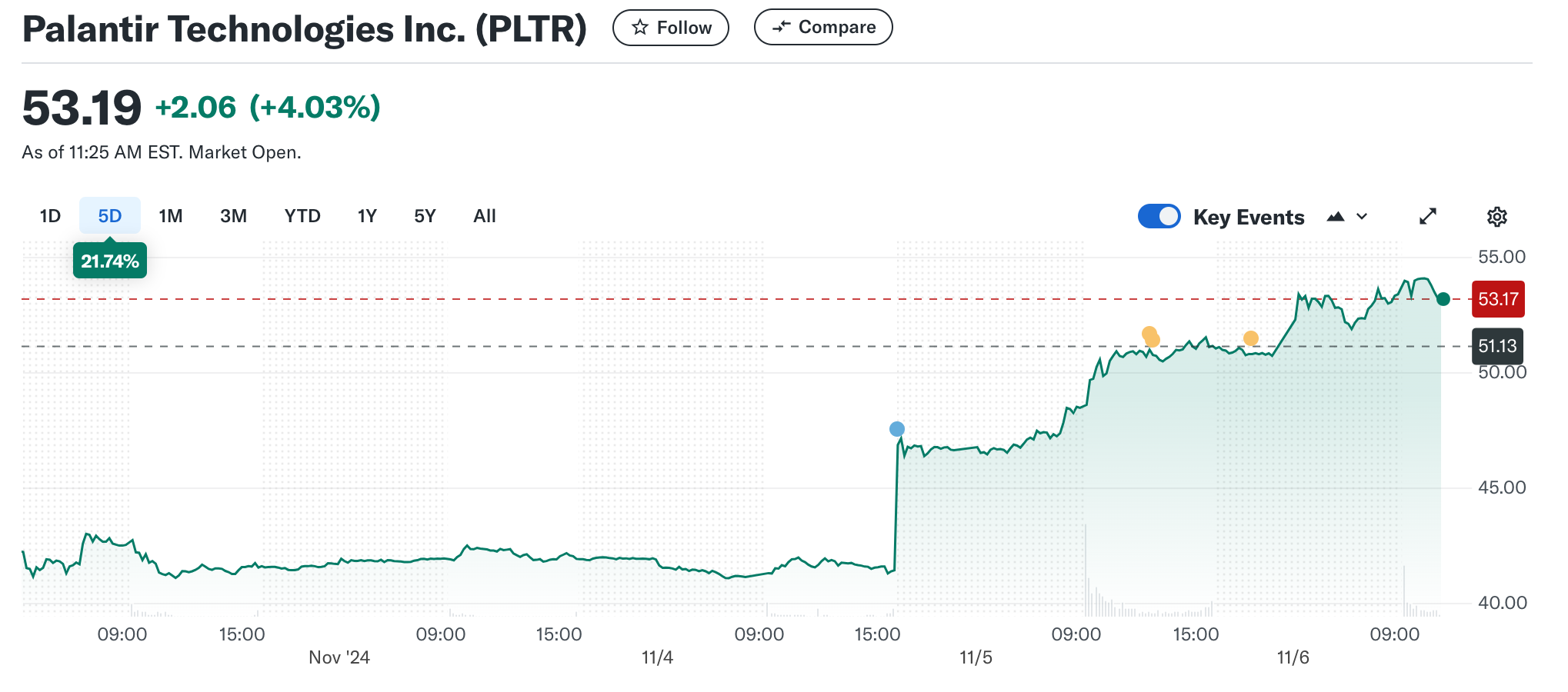
    Part of the reason for this was that the stock market did well under his presidency:

    Part of the reason for this was Trump consistently hammered the Federal Reserve to lower rates – he even wanted them to go negative (as lower rates equal higher asset values); instead they raised them a bit but not much until 2020:

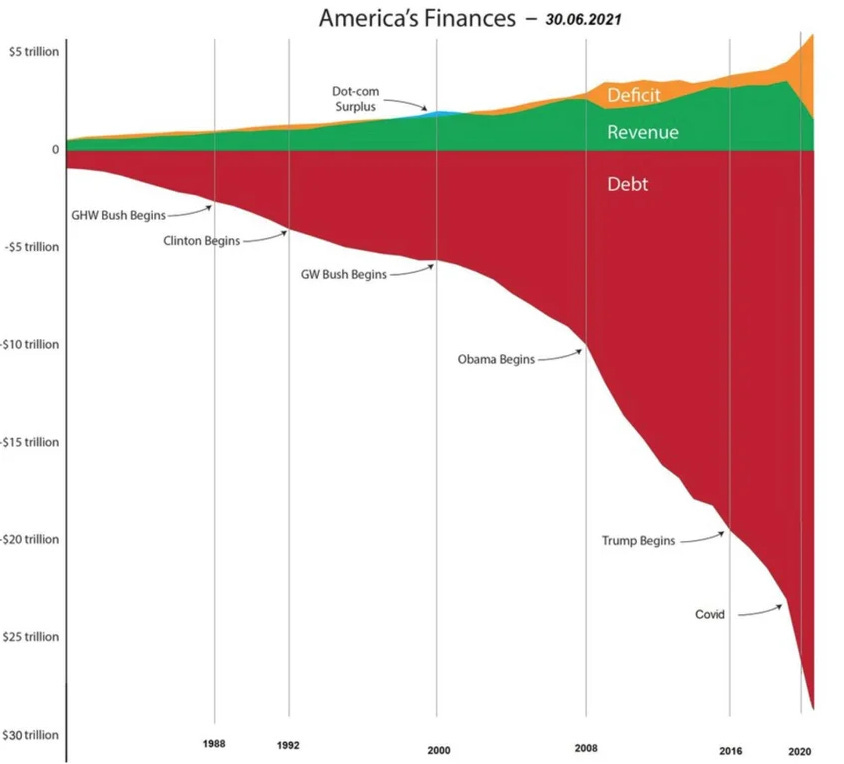
    Trump’s low approval rating was kept above catastrophic levels by low interest rates, a rising stock market and drastically increasing central bank debt and which increased regardless of president or party:

    In other words, the core, fundamental problem with American finances continued to get substantially worse under the “small government” Republican party which controlled the House, the Senate, and the Presidency. In a democracy people vote to take from their children’s futures until there is nothing left and if you want to reign in government spending you will be booted from office.


    Conclusions

    The threat of a populist president united D.C. through class interest to oppose his presidency at every turn. Only a few at the very top knew of the bigger picture plans of the realities of Agenda 2030 and beyond; everyone else was working off either class instinct, media hysteria, or core hatred of white Middle America. Even though Trump was essentially toothless against fighting back against these hyenas, by sticking to the rule-of-law he inadvertently awakened the average person to the existence of the so-called “deep state” and uniparty based off their intense, sustained and over-the-top hostilities when they instituted their Schmittian exceptions in order to do whatever they could to “get” Trump. The existence of the deep state was unfathomable prior to Trump and would have been considered an unhinged conspiracy theory; as a result of his presidency the truth is out in the open. According to Alexandru Constantin, “My dad, a Russian/Romanian who reluctantly followed my mom to the U.S. and who I don’t think was ever happy here, used to explain his distaste for America in these terms, ‘the difference between Eastern European governments and the West is that the Eastern Euros had the decency to be honest that they were corrupt pieces of shit instead of pretending to be good guys fighting for your freedom.’” After Trump, the wool was off the eyes of a substantial portion of Americans and things would never be the same again. And it’s much more costly for a regime to rule via hard power versus via soft power, although many regimes throughout history have ruled via hard power for long periods of time.

    This brings us to the end of Part 2. In Part 3, we will look at the so-called COVID pandemic as well as the 2020 election and its aftermath.

    Thanks for following.

    Subscribe:
    Email delivery remains on Substack for now.


    1 Comey also kept seven CYA memos to himself containing highly classified material in the safe of his house in case he was fired or his illegal activities were eventually prosecuted; after he was fired he illegally leaked portions of those memos to the media. The issue was later dropped as part of Michael Horowitz’s cover-up. “Comey violated FBI policy and the requirements of his FBI Employment Agreement when he chose this path,” Horowitz wrote toothlessly. This memo was relevant to both the ongoing investigation into Flynn and as documentation of a potential attempt to obstruct the Flynn investigation. “Rather than continuing to safeguard such evidence, Comey unilaterally and without authorization disclosed it to all.” Comey argued to Horowitz that he felt the issue was of “incredible importance to the Nation, as a whole” and that he felt leaking the information was “something I [had] to do if I love this country.” But Horowitz responds: “Comey’s own, personal conception of what was necessary was not an appropriate basis for ignoring the policies and agreements governing the use of FBI records, especially given the other lawful and appropriate actions he could have taken to achieve his desired end.”

    2 There is something occult about this principle; if an establishment narrative results in at least one death of a member or ally of the establishment then that narrative gains a significant boost in narrative power. We will see how they flailed about hoping to secure such a death on January 6 (discussed in part 3) by lying that multiple security officers died, although ultimately failing when only one died and from an unrelated health issue. Given Ashli Babbitt was a Trump supporter her death did not count for this purpose.

  • A dissident history of the Trump campaign and presidency (Part 1)

    This is part 1 of 3 of a series looking back at the campaign and presidency of Donald Trump. Part 1 deals with the Trump 2015-2016 campaign, Part 2 will look at Trump’s presidency, and Part 3 will look at the 2020 election.

    This is a look back at the Trump 2015/2016 campaign and presidency from a dissident perspective. It’s hard to believe these events were almost a decade ago; I was intensely following every tick and update in the news cycle as it happened, and it served as my second major update to my political worldview (the first was the 2007/2008 online political rants by Mencius Moldbug, which have been preserved online here if you scroll down a bit; he hasn’t said anything useful in years, but I’ll always be grateful for his early writings on what he referred to as the “Cathedral”). Trump’s efforts and the intense governmental and media responses to him led me to a more concrete understanding of the “deep state” and the NPC phenomenons, while the so-called “COVID pandemic” opened my eyes to the global structure of the modern world. His presidency, for all its trials and tribulations, was a unique one that stood apart from both the Democrats and the Republicans that came before him, and for that it is worthy of study. As I get older and my memory fades a bit as the details retreat into the past, as younger generations come up without having experienced it, as historians begin to try to shape history with their subjectivity and spin, and as we head into the 2024 election cycle with Trump’s potential imprisonment, it’s helpful to write down my own perspective of what transpired.1

    All of the following is from memory without relying on any underlying books or long-form support. I experienced it all in the moment and this should offer a different perspective.


    Trump declares his candidacy

    Trump famously launched his presidential campaign on June 16, 2015, riding down the escalator at Trump Tower two days after his birthday. He was sixty nine years old.

    Trump had previously run for president on the Reform Party ticket in 2000 in what was widely considered to be a marketing gimmick, ultimately withdrawing after sabotaging the candidacy of Patrick Buchanan2, and he had considered running for president in both 1988 and in 2012, the latter of which he ended up supporting “binders full of women” Mitt Romney. Still, one can compare Trump’s relative lack of eloquence in 2015 with this interview he gave with Oprah in the 1980s and see a substantial difference, a difference which has only grown over time (and the same would apply to other elderly politicians such as Joe Biden):

    It was unclear what made Trump decide to run this time around: some argued it was another marketing stunt to promote his brand, some argued Trump was doing it selflessly to improve America in his advanced age (after all, why take on the headache otherwise? He was living an amazing life), and some argued it was a Democrat ploy to create chaos in the Republican camp by splitting the globalist and populist wings of the party by running as a comically far-right populist – as Trump was a registered Democrat from 2001-2009 and was good friends with many powerful liberal politicians, including Bill and Hillary Clinton who attended his 2005 wedding to Melania (and both had connections to Jeffrey Epstein, although only Bill had visited Epstein’s island and flown on his plane on many occasions):

    Image
    The Clinton’s at Trump’s wedding

    Indeed, Bill Clinton “casually encouraged” Trump to run on this basis.


    Trump’s strategy

    The GOP strategy for George W. Bush, John McCain and Mitt Romney had been a “big tent” strategy — they assumed they would get the white and Christian vote, and so they spent much of their time “reaching out” to socially liberal independents, hispanics, and women and ignoring their base. Trump’s strategy would go the other direction: even though whites were a rapidly falling percent of the U.S.’s population (65%~ or so, down rapidly from 90% at the passage of the 1965 Immigration Act) and were increasingly an aging demographic, his approach would be to juice and energize this demographic by appealing to anti-immigration, protectionist, and law and order sentiments, perceived as “dog whistles” for all the -isms and -phobias out there (i.e. see this Washington Post article claiming that “America First” was a Nazi code signalalso here). Whites felt like a despised, dis-privileged and long-forgotten group by the establishment3, with a rapidly shrinking middle class status and if he could tap into their desires and provide them a voice, there was the off-chance that their enthusiasm could launch him right to the top. He wanted to model his themes around restoring the greatness of America much as Ronald Reagan had done (indeed, the “Make America Great Again” slogan came from Reagan):

    Trump would double down on these sentiments at every opportunity and never apologize, in affect widening the otherwise ever-narrowing Overton window when he wasn’t punished for his outbursts. He would speak from the hip and from the heart, not relying on teleprompters or media strategists; he already had many decades dealing with the media and being in the spotlight and he was in his element. For example, he claimed that Mexico “wasn’t sending their best” where “they’re bringing drugs, they’re bringing crime, they’re rapists, and some, I assume, are good people”, then doubled down on it:

    These comments were common, and it was completely without precedent.

    Pushback from the media was weak despite his statements; he was considered a clown figure who had no chance of winning either the nomination or the presidency, and it was assumed he would turn off independents and cause lots of chaos in the Republican party just as the Clintons had hoped for. There were many Republicans extremely turned off by his crassness, his casual racisms, his unpresidential speaking style, including many normal voters who expressed these sentiments to me personally – they cared a lot about rhetoric and style, presentation, and to them Trump made a mockery of the whole system (indeed, the mockery of the system was one of the main selling points to his supporters who felt excluded from the political process after the FBI-led implosion of the Tea Party movement). Additionally, given his entertaining showmanship and background in television with The Apprentice he dramatically increased viewers of political media networks. CNN, MSNBC, Fox, etc. all had big spikes in viewership regardless of their stances – everyone had an opinion about Trump and either loved him, wanted entertainment or (later) hated him.

    A counter to the “Trump as an intentional agent to destroy the Republican party” was that his powerful Trump brand could be tarnished through such a strategy, but a counter to that argument was that his brand was not significantly impacted until after he won the nomination and especially after he won the election, when shocked liberals turned their mockery and scorn into red-hot hatred which ultimately made his brand radioactive – a major loss, because prior to running in 2015 Trump’s brand commanded a major premium and he licensed it for controversial Trump Steaks, Trump University, and many resorts and hotels.

    There were three phases to the Trump campaign, coinciding with his three campaign managers. He pivoted from one phase to the next adroitly and it increased hopes for his level of political cunning and skill (hopes which were later proven to be misplaced).

    1. First Phase: Primaries. The first phase was Corey Lewandowski leading Trump’s campaign in the primaries. Trump did not want to expend too much money as he likely thought he would lose and it would be a marketing gimmick; Corey didn’t have much political experience, I don’t think he was paid all that well, but he was a go-getter and a hands-on hustler and he turned out to be a pretty effective campaign manager. He later went on to monetize his influence with Trump via lobbying and became a political commentator. Ben Shapiro, who was extremely anti-Trump leading up through the general election, claiming he would never, ever vote for him (later changing his mind for 2020), while working for Breitbart tried to get Lewandowski fired and criminally charged in a completely nonsensical event (which I discussed in detail here).
    2. Second Phase: Republican National Convention. The second phase was highly experienced and skilled political operative Paul Manafort being brought in to help Trump navigate the internal politics at the Republican National Convention, where insiders were angling to use complex maneuvers to take the nomination away from him and give it to Ted Cruz. Ultimately Manafort was successful in quashing the intrigues and getting Trump nominated, although the price to pay (I think) was Trump being forced to nominate deep state operative Mike Pence as his Vice President as an insurance policy (a tactic that was previously used against Reagan who had Director of the CIA George H.W. Bush placed on his tail). Although, to be fair, Pence also shored up Trump’s support with social conservatives who did not trust him due to his past Democrat affiliation and prior support for abortion. (Manafort was later punished and imprisoned for assisting Trump through the RNC process via FARA charges that were directly applicable to his boss Tony Podesta, but Podesta got off scot-free as the brother of John Podesta of Hillary Clinton campaign manager and Pizzagate fame.)
    3. Third Phase: General Election. The third phase was Steven Bannon being brought in for the general election. Bannon ran Breitbart which was the earliest and largest media supporter of Trump’s campaign, and Breitbart became very popular and successful as a result of Bannon’s efforts (and once he left it faded into neocon oblivion). Bannon was a hard-drinking Irish populist who had interest in esoteria such as Julius Evola and he had made his fortune through investment banking, securing a small ownership percentage of the show Seinfeld. Bannon well understood the populist phenomenon although he had a huge ego and wanted to secure the limelight and credit for himself. We will return to Bannon in Part 2 of this essay (as the establishment targeted him in revenge and eventually sent him to prison for contempt of Congress in 2024), but he deserves some credit for increasing Trump’s popularity through the general election.

    I’ll offer some additional comments on each of these phases.


    First phase: Primary

    John McCain had lost badly against Obama in 2012. The expected nominee for the Republicans in 2016 was Jeb Bush, who was backed by his powerful Bush family including two prior recent presidents as well as his steel-willed mother. Jeb served as the governor of Florida from 1999 to 2007, he was very tall, he was married to a hispanic woman, he had the right politics and connections and had solid name recognition. He was considered a shoe-in. Just as the presidents were Bush (Sr) → Clinton → Clinton second term → Bush (Jr) → Bush (Jr) → and then Obama (2x), this would set up a Bush vs. Clinton match in order to continue each family’s legacies.

    The problem with Jeb was that he was a gawky, fairly inept nepo-politician. He became known for his statements like “please clap”, standing on his tiptoes to try to appear more dominant, and selling overpriced items like guac bowls. Trump, who was excellent at sniffing out his opponent’s weaknesses called him “Low Energy Jeb”, a nickname which stuck. Trump came up with many other nicknames that stuck against other candidates such as Lyin’ Ted for Ted Cruz (while mocking his wife’s appearance and accusing his father of helping assassinate President John F. Kennedy), Little Marco for Marco Rubio (who infamously called him “Big Don”, a terrible response), Pocahantas for Elizabeth Warren (because she faked having Indian heritage), Crooked Hillary, and other memorable comments like “Look at that face!” referring to Carly Fiorina. When John McCain criticized Trump, Trump responded, “He’s not a war hero – he’s a war hero because he was captured. I like people that weren’t captured.” Great stuff.

    Trump dominated all of the primary debates and he soared in the polls. I had to scrape the Archive website to find this, but the following shows the polling for the 2015-2016 Republican nomination. One can see that it was an open-ended free for all until Trump emerged victorious:

    Also of note is how inept the Republican National Committee was. The RNC did not have control over picking the candidate — the voters had real power to decide because of the RNC’s weaknesses. This is in stark contrast to the Democratic party, where their committee had steel-eyed control over the nomination process and could pick or choose whoever they liked without voter input — this is how Joe Biden was nominated in 2020 as he came in a distant third and fourth place during the early Democrat voting primaries, then he mysteriously came in first in South Carolina despite poor polling and then “won” Super Tuesday. Of course, Hillary Clinton would be chosen and nominated in 2016 because she played along with stepping aside and supporting Barack Obama during his upstart 2008 campaign.

    One of the interesting moments was when the RNC, working in conjunction with Fox News where its owner, Rupert Murdoch, hated Trump with a burning passion (although his deputy Roger Ailes who turned Fox News into the behemoth it was liked him; he died shortly after the election in 2017), instructed gun-for-hire Megyn Kelly4 to dynamite Trump with an extremely devious question during a debate. Trump was perceived as being weak with women because of his apparent misogyny so she went in for the kill. She asked him, “You don’t use a filter. However, that is not without it’s downsides, in particular when it comes to women. You’ve called women you don’t like “fat pigs”, “dogs”, “slobs”, and “disgusting animals”. Your twitter account -” and Trump cut her of and responded: “Only Rosie O’Donnell.” The whole crowd laughed.

    This became one of the defining moments of his campaign and showed his genius for quick wittedness and charm. However, this incident along with many others revealed to the public how deeply anti-populist Fox News was. For example, they asked Trump detailed questions about how he would pay for his proposals and then after he answered Fox showed detailed graphs showing how his math didn’t add up, whereas Jeb received only softball questions. After one primary debate the “conservative” pollster Frank Lutz used a fake focus group to turn attention and support away from Trump (part 1 and part 2). Eventually Fox’s animus would become quite obvious where, for example, former Speaker of the House Newt Gingrich would be cut off for speaking about George Soros.

    Trump’s one-liners regularly went viral and support for Trump on social media, especially Twitter and 4chan with creative and funny memes (especially using Pepe the Frog), became a important part of his success. After the election the establishment would map right-leaning posters on social media and force those companies to ban those posters in addition to demanding severe content moderation; an especially influential individual, Douglass Mackey, would be criminally charged for shitposting. They also filled up 4chan with bots and FBI agents, rendering it unreadable.

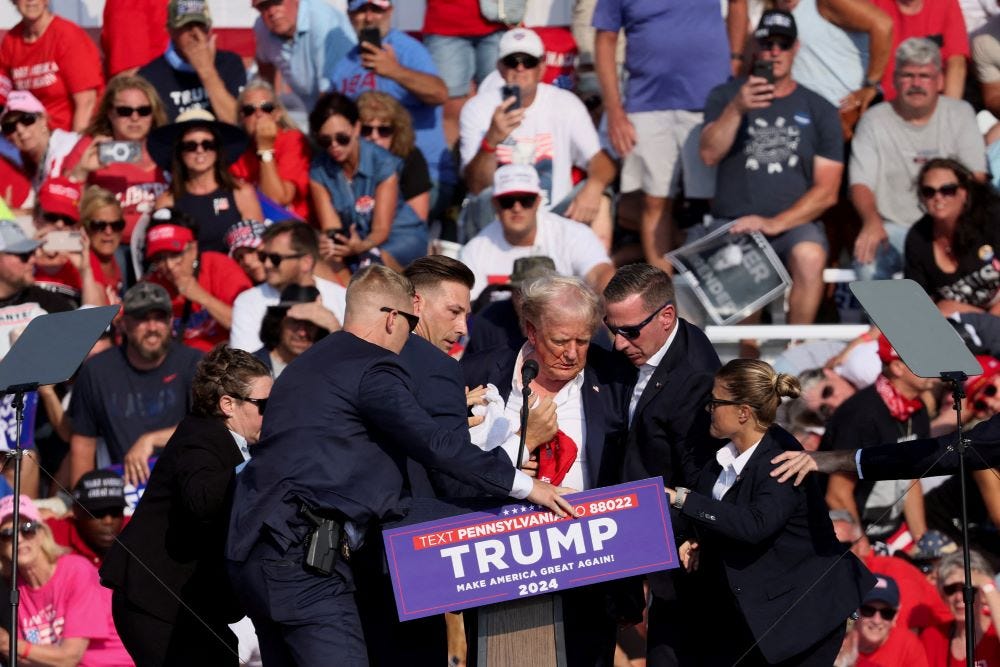
    Trump ended up dominating the Republican primaries, easily winning Super Tuesday on March 1. There were a number of security related incidents, one on March 12 at a rally (and the arrested man was only charged with misdemeanors) and one later on November 6.


    Second phase: Republican National Convention

    Jared Kushner was apparently responsible for firing Lewandowski, and he worked with Paul Manafort to hire Cambridge Analytica to provide data analytics for Facebook and other social media for targeted advertising. Cambridge Analytica was later targeted and destroyed by the establishment as revenge for helping Trump in his campaign, and Facebook was forcibly revamped under threat of antitrust action to ensure that populists could not advertise on the platform again by enforcing strict establishment censorship policies. Zuckerberg tried to resist for a bit believing such censorship would hurt his platform but he ultimately caved under the weight of the full establishment court-press.

    Anyway, Mickey Edwards (who served in Congress for 16 years and was chairman of the House Republican Policy Committee) offered comments at Politico where he argued for taking the nomination away from Trump using a complex manuever. Ted Cruz was chomping at the bit and told RNC attendees to “vote your conscience” while being boo’d during his speech. However, Paul Manafort out-manuvered them.

    One can see Trump’s dramatic entrance at the 2016 RNC, held on July 18-21, on CBS where the commentators alluded to his clown-like attitude; the media still wasn’t treating him seriously:

    Efforts to remove him continued even after the RNC.


    Third Phase: General Election

    Trump brought on Steve Bannon to lead his general election campaign in August 2016 against Hillary Clinton, which was a brilliant move. Bannon would be used to help fine-tune Trump’s messaging to increase white enthusiasm for the candidate further. There were three presidential debates which were interesting at the time but completely forgettable in retrospect; I don’t recall anything about any of the three, and both seemed to do okay during them. Contrasted with Trump’s message to “Make America Great Again” – a focus on the population and state of society – Hillary’s message was “I’m With Her” – a focus on her ego and her gender, which arguably sums up the core differences between their campaigns. Trump consistently egged on his crowds with chants of “Lock Her Up!” for possession of a private server holding classified documents (which Anthony Weiner had access to through his wife Huma Abedin).

    “And I’ll tell you what. I didn’t think I’d say this, but I’m going to say it, and I hate to say it. But if I win, I am going to instruct my attorney general to get a special prosecutor to look into your situation, because there has never been so many lies, so much deception,” he said at the Oct. 9 presidential debate. “There has never been anything like it, and we’re going to have a special prosecutor.”….

    In Florida on Oct. 12, he told the crowd that “this corruption and collusion is just one more reason why I will ask my attorney general to appoint a special prosecutor,” and later adding, “She has to go to jail.”

    Meanwhile, Hillary smeared “half” of Trump supporters as “a basket of deplorables” in a September speech.

    Strangely, Hillary was filmed having some sort of episode where she lost control of her motor functions while being asked a question by Debbie Wasserman Schulz on June 10, 2016:

    And on September 11, 2016 Hillary was filmed collapsing and being tossed into a van like a slab of beef:

    Perhaps because of these medical issues, but also substantially because of how dominant she was in polls, Hillary took time off in the stretch of campaigning.

    Speaking of polls, Hillary was dominating essentially all polls up through the general election itself, leading by an average of 3.2 points:

    This gave her an 88% chance of winning per RealClearPolitics:

    Pollster Nate Silver gave Trump a 28.6% chance to win, higher than other pollsters.

    Indeed, Hillary did win the popular vote by a substantial amount — you can see above she won by 2.1% versus a projected 3.2%. But because we live in a constitutional republic instead of a democracy in order to ensure that less populated states still have a say in national politics, Trump won three critical swing states by a total margin of 107,000 votes, clinching his victory. It was a number of the state polls that were substantially inaccurate; the national polls were pretty close to the final results.

    Trump did this despite (or perhaps because of) being treated as a clown joke by the establishment. He ran a shoestring budget where the Trump campaign spent $343 million, only about 59% as much as the Clinton campaign. (Interestingly, Harvey Weinstein had a close relationship with Hillary and donated around $50,000 to her, hosted a star-studded fundraiser for her, and bundled around $1.5 million for Democrats alone since 1990. The “Me Too” movement originating with Weinstein happened in October 2017; would it have materialized if Hillary had won? The odds would have been substantially lower, I think – he could have utilized much greater political clout against it.)

    There were a couple of interesting political developments that impacted the final election result. For one, there was an “October surprise” with the release of the Access Hollywood tape where Trump bragged, “I moved on her like a bitch” and “I don’t even wait. And when you’re a star, they let you do it. You can do anything. … Grab ’em by the pussy. You can do anything.”
    This caused a huge uproar given its crassness and sexism, comments that would have forced any other candidate to withdraw. Look at the uproar over the nothingburger over Mitt Romney’s “binders full of women” comments back in 2012. Globalist agent Mike Pence plotted to backstab Trump and media outlets called for Trump to withdraw. Reince Priebus, then the chairman of the Republican National Committee, told Trump, “You have two choices. You either drop out right now, or you lose by the biggest landslide in American political history.” But Steve Bannon said that he told Trump that he still had a “100% probability of winning.” To his credit, Trump shrugged off the intense media hostility and moved forward regardless.

    Billy Bush who interviewed Trump in the video was punished by the establishment but then let back in the fold after a brief banishment due to his family connections.

    One should note that establishment Republicans refused to vote for Trump: George W. Bush refused, John McCain refused, Mitt Romney refused. In other words, Trump was a true anti-establishment candidate given the 2000-2008 president, the 2008 Republican nominee and the 2012 Republican nominee all refused to support him. Additionally the so-called “conservative” National Review came out against Trump and even laughably tried to run their own candidate, David French, against him. Among the United States’ 100 largest newspapers by paid circulation, 57 endorsed Hillary Clinton while only two, the Las Vegas Review-Journal and the Florida Times-Union, endorsed Donald Trump, an astonishing disparity of media and elite support. It is easy to imagine that if Trump had lost – as everyone expected him to – the full establishment would have smeared the populist right as a minority of extremists that deserved and needed to be suppressed.

    Still, an essay by Michael Anton, writing under a pseudonym, in September called “The Flight 93 Election” about how America was transforming into a totalitarian state and this was the last chance to stop it also helped bolster (to a small extent) spirits and motivation about voting, at least to those on the far right. Peter Thiel endorsed Trump and spoke at the Republican Convention, then watched the election results with Curtis Yarvin (In 2017, BuzzFeed News published an email exchange between Yarvin and Milo Yiannopoulis in which Yarvin said that he’d watched the 2016 election returns with Thiel. “He’s fully enlightened,” Yarvin wrote. “Just plays it very carefully”). Thiel would later grow disillusioned at what he saw as Trump’s incompetence.

    On the Hillary front there were two major developments that worked against her. In June and July 2016 Wikileaks released a trove of Democratic National Convention emails which led to the Pizzagate conspiracy theory5 and showed that the DNC heavily favored Hillary over Bernie Sanders. This did substantial harm to support for her campaign. (Hillary proposed drone striking Assange and later he would be indefinitely jailed on fake charges and Wikileaks effectively destroyed in revenge, while rumored DNC leaker Seth Rich was assassinated in public on July 10, 2016 with the assassin never caught; it was likely done by an FBI agent for the purposes both of revenge and to prevent the forming of an alternative narrative to the planned Russia hack narrative being planned by the security state). Assange’s general motivations and personality were covered in a prior post here.

    The second negative development for Hillary was that on October 28, 2016, eleven days before the election, FBI head James Comey notified Congress that the FBI had started looking into newly discovered emails relating to Hillary’s email server.6 The public notification of the reopening of this investigation may have swung critical swing state voters away from Hillary. Comey, who was a major supporter of Hillary despite his nominal “Republican” voter registration, felt forced to re-open it because police officers in New York City had acquired Hillary’s backup server documents that were on Anthony Weiner’s computer and were threatening to go public with it. By reopening the investigation but actually doing nothing to investigate he felt he could both pacify the New York police and to ensure Hillary’s victory would not be contaminated by illegitimacy. But still, he reopened the investigation specifically because he thought Hillary was so far ahead in the polls that she simply could not lose. He wrote as much in his autobiography: “It is entirely possible that, because I was making decisions in an environment where Hillary Clinton was sure to be the next president, my concern about making her an illegitimate president by concealing the restarted investigation bore greater weight than it would have if the election appeared closer or if Donald Trump were ahead in all polls. But I don’t know.” He repeated the admission verbally in an interview.

    A couple comments on election night. The New York Times had an incredible live needle meter on their website showing the odds of each candidate’s victory, updated as new results came in. The New York Times like all media was highly confident of Hillary’s victory, so they tried to appear a bit neutral with this meter. The needle looked like this and it fluctuated wildly during the night, starting close to 100% that Hillary would win and then over time moving further and further in Trump’s direction:

    Image

    For those who watched the results live on this website as I did, it was an incredible, once in a lifetime experience; it felt like Rocky Balboa overcoming impossible odds. I was screaming at my screen as were many others.

    After being blown out so badly by this result, in subsequent elections the New York Times either removed the needle entirely, removed its live features or otherwise limited its scope.

    The New York Times wasn’t the only one who was blown out, of course; all the mainstream media was. Of particular note was Stephen Colbert’s election night special; he had a whole Showtime live show which was supposed to inaugurate Hillary’s reign and where he could gloat at the broken, defeated middle America white masses, but instead he gets more and more scared throughout the show and starts drinking live on air. It was a really special show and of course Colbert ruthlessly scrubbed every reference to it from the internet (including from torrent sites), although here is a 12 minute clip of it. It feels like a funeral:

    Even Trump was shocked that he won and possibly horrified. He did not have a concrete plan in place for what he would do if he won as he spent all his efforts on campaigning.

    Hillary refused to concede the night she lost; John Podesta told the waiting crowd to go home. Apparently she threw a $950,000 champagne bottle at the television screen in rage. She blamed everyone else for her loss instead of herself; she focused her ire on James Comey and later on women generally for not being sufficiently “with her.” Her foundation, long accused of pay-for-play, lost a staggering $16 million dollars in 2018 following her loss as she had no more influence to offer donors.


    Conclusion

    Trump’s win based on polling and general sentiment was unexpected both to himself, his opponent, the deep state and society broadly. James Comey was confident enough that Hillary would win based upon her ubiquitously wide lead in all polling to re-open the investigation into her email server in order to assist her legitimacy. Trump had no solid plan for how he would govern if he won and the establishment was not prepared for him to win either, although Mother Jones reported the existence of the infamous, unproven, Clinton-funded Steele Dossier that would form the basis of the Russia-Trump collusion (which Peter Strzok would refer to as the “insurance policy”) a week before the election, and the FBI formally initiated spying on Carter Page, a low level Trump staffer and FBI informant (“operational contact”) in order to “legally” spy on the Trump campaign7 (although they were already spying on it through the entrapment of George Papadopoulos), a topic we will return to in Part 2. If one takes a conspiratorial view where the establishment planned for Hillary to win, one may also note that it would have planned for divided government: the Republicans also won the House and the Senate with substantial margins: 246-187 Republicans to Democrats in the House, and 54 to 44 Republicans to Democrats in the Senate.

    How the newly elected president with no prior political experience would handle things while his party controlled Congress, along with how the establishment would try to stymie his efforts, will be explored in Part 2. How these forces coalesced in the 2020 election will be reviewed in Part 3.

    Thanks for reading.

    Subscribe:
    Email delivery remains on Substack for now.


    1 It’s strange, I both expected and predicted Trump to be convicted back in July 2023 (writing “So here is the call: the call is that Trump is very likely going to prison. It will happen one way or another, even though all of the charges and potential charges are ridiculous both on their face and in the details”) and am still sad and disappointed when he was actually convicted. I felt internally it should be addressed again, but a format of more predictions didn’t seem correct. When I seized on this format I immediately felt an extreme urge to put pen-to-paper immediately and the demand felt overwhelming and oppressive. Carl Jung experienced a similar feeling with his autobiography Memories, Dreams and Reflections where he commented:

    A book of mine is always a matter of fate. There is something unpredictable about the process of writing, and I cannot prescribe for myself any predetermined course. Thus this “autobiography” is now taking a direction quite different from what I had imagined at the beginning. It has become a necessity for me to write down my early memories. If I neglect to do so for a single day, unpleasant physical symptoms immediately follow. As soon as I set to work they vanish and my head feels perfectly clear.

    2 From here: “In one sequence, the film shows how Stone helped sabotage the Reform Party’s chances in the 2000 presidential election by urging Pat Buchanan to run as a Reform candidate, then backing Trump to run against Buchanan. In part because of Trump’s brash attacks on his rival (“He’s a Hitler lover,” Trump repeatedly says about Buchanan), the Reform Party imploded, paving the way for Bush’s contentious win that year.”

    3 My preferred label for the “establishment” or the “deep state” is “globohomo”, which is a portmanteau of globalization plus either homosexuality or homogenization, and it is an umbrella term where the U.S. government including its security state are just one part of a broader structure. However, the label is pejorative and this essay is meant to be more objective and appeal to a broader audience than my typical posts, where I am typically comfortable with stream-of-conscious subjectivity, so I will stick with more neutral terms herein.

    4 Kelly was very popular at the time but later imploded her career with a poorly-thought-out strategy to appeal to liberals by moving to NBC. Now she sits in the netherworld, ranting to basically no audience.

    5 I provide links to Wikipedia sometimes because it can provide basic information on a topic, but keep in mind Wikipedia is run by far-leftists and spooks and the information presented within on any politicized topic is going to be twisted into a gross facsimile of itself. Unfortunately I don’t have the resources to provide in-depth research on every point being made.

    6 The initial investigation was headed by Peter Strzok who changed the description of Clinton’s actions from “grossly negligent”, which could be a criminal offense, to “extremely careless”. Strzok would later go on to lead the Crossfire Hurricane coup attempt against Trump.

    7 The FBI could legally spy on anyone within two-steps of a counter-intelligence target, i.e. any of Carter Page’s contacts and any of the contacts of his contacts. That meant anyone in the campaign.

  • A list of dissident films

    This is a culture post about mostly modern-era dissident films.

    I was pretty happy with my last pop culture post about the wonderful ABBA, so I thought I would hit popular entertainment from another direction: a list of films reflecting dissident themes, most from within the modern era (post-2000).

    First, why care? Well, whatever content one consumes, even if you decide to reject it, it becomes a part of your psyche and impacts you – it leaves an imprint of the framing on your mind. Very few people understand this. The woke movement succeeds by putting it’s ideas in your mind even if you consciously reject it. This is why I try to limit the content I consume. For example, I have David Rockefeller’s autobiography to read and have been very reluctant to read it; I know the man and what he stands for, and his attempts to justify his actions to the public using extreme deception and duplicitous language, crouched in the most vile filth and lies, is going to require a lot of mental stamina to get through, if I do decide to read it. It will leave an imprint.

    In the same way, watching content that highlights dissident themes serves to reinforce one’s worldview, so to the extent such content can be consumed it is a good thing. Although content in film and television reflecting these themes is quite rare, while less rare in books if one knows where to look.

    Second, let’s define dissidence for purposes of this thread. The globohomo world order is centered around a core belief in egalitarianism, a belief which ratchets over time as an egalitarian ratchet effect. Super-imposed over the belief in egalitarianism is the privately owned central bank systemBeing a “dissident” to this system is to acknowledge without judgment the inegalitarianism inherent in reality in all its various facets. No individuals, groups, religions, or anything else in this reality is equal – distributions occur on bell curves – and nothing humanity can do can ever make the unequal equal. That doesn’t mean humanity shouldn’t work to decrease inequalities, it’s just that there’s a world of difference between laboring to do so in the knowledge that it can never be fully accomplished (which is how Lee Kuan Yew approached it) versus coming up with ideological excuses (racisms, sexisms, -isms, -phobias, etc.) and if only humanity could banish them with control and violence it would be here.

    An acceptance of inegalitarianism within film hits on at least some of the following themes, and the more the better:

    1. The negative correlation between materialism and spirituality,
    2. populism as a check on the horrors of oligarchy,
    3. a king or dictator as a check on the horrors of oligarchy,
    4. the importance of immigration restrictionism,
    5. standing against globohomo-sponsored wars,
    6. a promotion of religion at the expense of secularism,
    7. an emphasis on community and family togetherness, and
    8. resistance to groupthink and globohomo propaganda.

    This definition excludes some large categories of male oriented films: pro-globohomo war films (Black Hawk Down, Lone Survivor or American Sniper), high-testosterone 80s action films (Predator, Alien), and action/adventure films like the great Master and Commander, even though these films highlight warrior brotherhood and various forms of masculinity.

    Lastly, one has to be careful when looking at historical films or other forms of entertainment. These films embodied a particular moment of the cultural zeitgeist, and due to the egalitarian ratchet effect many APPEAR to be inegalitarian compared to the standards of today, but that is not how they were received at the time. Just like watching Archie Bunker now looks amazingly anti-politically correct but that is not how it was perceived at the time, or Married with Children or any of the 80s action movies which weren’t woke, etc. Pretty much everything looks anti-globohomo when you look back on it twenty years later. So the idea is for films that meet as much of the above themes as possible but especially in the context where they buck whatever the zeitgeist is in the era in which it was released.

    The following list is in no particular order, except for the final film which towers above the rest. It is also not meant to be comprehensive.

    1. Fight Club (1999), trailer here. It’s anti-consumerist and wrestles with how to find meaning after Nietzsche’s death of God and how to form brotherhood in an era of atomization. One of its producers, Art Linson, recalled the first screening of the film for Fox’s executives: they were, he said, “flopping around like acid-crazed carp wondering how such a thing could even have happened.” There were rumors that Rupert Murdoch loathed the movie so much that Bill Mechanic (the executive who green-lighted it) might have been quietly nudged from his position.
    1. They Live (1988), trailer here. Put on the special sunglasses and they reveal subliminal messages in the media to consume, reproduce, and conform. The glasses also reveal that many people are actually aliens with skull-like faces. Anti-consumerist, resistance to groupthink and globohomo propaganda.
    1. District 9 (2009), trailer here. An anti-immigration parable where low IQ, aggressive actual aliens who cannot integrate are dumped into a city and how they are handled. It also covers the sophistication of government propaganda in smearing its identified enemies. It’s originator Neill Blomkamp included other messages such as government malice and incompetence to add complexity and to get the film made, but the core message is still there.
    1. Elysium (2013), trailer here. The ultra-rich live on an exotic wonderful artificial colony in space and everyone living on earth lives in terrible poverty and crime. The film highlights the basic theme of what globohomo is trying to do to the world. Also directed by Neill Blomkamp.Edit: It’s been a number of years since I saw this film, but an alternative interpretation pointed out in the comments by Martin Castillo may be to view “Elysium” as the rich west and how Elysium should open its borders to the rest of the world. It’s possible either interpretation may work; I’ll have to re-watch it, but note this point of caution on this one. If it’s ambiguous it shouldn’t be included on this list.
    1. Idiocracy (2006), trailer here. From Mike Judge, this movie touches on the ever-decreasing intellectual and spiritual quality of the masses who have been shorn of hard conflict which is necessary to bring out higher qualities; it also touches on dysgenics and how higher IQ individuals have fewer children than low IQ individuals.
    1. Office Space (1999), trailer here. Also from Mike Judge, this film touches on the dehumanization and emptiness of modern office work and the empty propaganda used to promote it.
    1. American Psycho (2000), trailer here. This is a classic film demonstrating that spirituality and materialism have a direct inverse correlation. Patrick Bateman has all the money in the world but he is dead inside. The modern West is fully built around the pursuit of money and is, per Jung, “extraverted as Hell.” It is going to have an extremely difficult time as the West’s consumption patterns continue to decrease. This film was very difficult to get made and took many years to do so because the book on which it was based was so incredibly violent. At one point Leonardo Dicaprio was set to star in it but he thought it would detract from his female fans so he withdrew, and Christian Bale really wanted the role so it eventually went to him.
    1. Margin Call (2011), trailer here. This film highlights the cynicism and greed of Wall Street and how they offloaded their losses onto the retarded heads of the public during the 2008 financial crash.
    1. Passion of the Christ (2004), trailer here. Hollywood refused to finance or promote this movie so Mel Gibson took on the financing and promotion of the film himself. It became an enormous hit and is spawning a sequel which will also do well. Globohomo does not like promoting Christianity so for Gibson to succeed on this passion project was a pretty amazing story. Later on Gibson, who is part of a sedevacantist Church, ran afoul of Hollywood entirely and has been semi-blacklisted since then.
    1. Apocalypto (2006), trailer here. This is an amazing adventure/action story, also written and directed by Mel Gibson, told from an indigenous perspective, showing the horrors of the Mayan human sacrifice culture before the arrival of the Europeans with their civilizing Christianity. Globohomo hates this film because it does not offer moral equivalence between cultures and because it promotes traditional notions of masculinity and the importance of family. It wasn’t available for free on any streaming service last time I checked as a result.
    1. Barry Lyndon (1975), trailer here. This is a questionably dissident Stanley Kubrick film, but I included it because it shows the emptiness of material wealth — Lyndon becomes ultra rich through marriage, but he loses his child and then wants to die. Also, Lyndon desperately wants to be accepted into high society but he has the wrong upbringing so no matter what he does he is unable to bridge that gulf. Lyndon also spends a lot of time wandering listlessly which shows the strangeness and randomness of life. The film isn’t predictable which is a good thing. It also has the most beautiful cinematography of any film I’ve ever seen.
    1. The Day of the Jackal (1973), trailer here. The film covers the betrayal by Charles de Gaulle of the pieds-noirs in Algeria and the OAS’s attempts to assassinate him in revenge, focusing on a fictional hiring of an independent, professional lone-wolf “jackal” while also covering the French government’s creative, intelligent and often brutal tactics in tracking him down. The film is a nail-biter and feels like a short film in how fast it goes even though it’s well over two hours long; it holds up exceptionally well. The actor who played the jackal was superbly cast and I havn’t seen him in anything else – he looks like a chameleon, being able to blend in anywhere. I like his physiognomy and it’s reflected in his politics. Ebert has a good review here. There was a more recent remake with Bruce Willis called “The Jackal” which was mediocre.
    2. Eyes Wide Shut (1999), trailer here. Another Kubrick film, apparently the final cut was butchered by the studio and Kubrick died right after the film was made. In it Tom Cruise infiltrates a masked orgy of an unnamed secret society, which is reminiscent of the 1972 Rothschild ball.
    1. Nightcrawler (2014), trailer here. This film shows Jake Gyllenhaal as a weird outsider (echoing Travis Bickle to some extent from Taxi Driver, which is not included on this list because Robert De Nero is such a deranged shitlib) using underhanded and illegal tactics in order to advance his career; it also shows the intersection between business, the media and voyeurism. It is a dark and nihilistic film and has the kind of ending one can expect from it.
    1. The Matrix (1999), trailer here. This is a class gnostic-themed film about how the material world is an illusion and truth is found on an inward journey of exploration. Additionally, it shows how globohomo views the masses of humanity as simply digits on a screen to be exploited. All of the sequels were terrible and the director siblings later both became transsexuals.

    And…drum roll please…the most dissident film I’ve seen:

    The Angry Birds Movie (2016), trailer hereEven though it’s a cartoon based on a video game – the furthest thing one would expect to have dissident themes, which one would expect to be a shallow cash grab aimed at children – I cannot believe this film was made with the themes presented in it. The main character Red is a loner who no one listens to; green-colored pigs come to town with false promises that lull the bird population into a sense of complacency. Sensing something is seriously wrong with the pigs, Red warns everyone and tries to consult with the great American eagle, but everyone is too complacent, lazy and stupid to listen to him, and the American eagle is also fat, lazy and stupid. The pigs end up stealing the eggs of the birds and the population, shocked and demoralized, finally rallies around Red to get it back. The themes expressed in the film are the importance of thinking for yourself, the dangers and non-integration of foreigners, and the importance of community banding together to protect the community. It is an unbelievable film and it has to be watched; someone from globohomo dropped the ball by letting this get made. There’s also a sequel which I havn’t seen but the themes seem stupid based on the plot.

    If you watch any film from this list (and hopefully more than one appears interesting to you), watch The Angry Birds Movie.

    Lastly, I’ve been recommended a bunch of other films to watch that may contain dissident themes – Children of Men, Cool Hand Luke, Zardoz, Brazil, High Plaines Drifter, Pale Rider, The Room, Soylent GreenFalling Down, but can’t vouch for any of these until I see them.

    Thanks for reading.

    Subscribe:
    Email delivery remains on Substack for now.

  • Total victory inevitably leads to decadence

    This is a narrowly-tailored post about how Rome’s destruction of its arch-rival Carthage led to unprecedented material prosperity that undermined the moral foundations of Rome and paved the path to empire. Comparisons to the modern era with the total triumph of Western-style oligarchical managerialism under the propaganda guise of “democracy” are apt.

    This is a post on the Roman historian Sallust’s The Jugurthine War, one of his two fully extant works.1 Based on Quintus Curtius’s translationJugurtha tells a narrative within Roman history which illustrates the principle that achieving total victory is never what it seems. It’s also a great anti-hero story that could make a great film.

    First, about the author. Sallust is the earliest Latin-language Roman historian with surviving works to his name. He served under Julius Caesar, including when he crossed the Rubicon, sharing a meal with him the next night per Plutarch. Sallust had much political and administrative experience along with deeply populist, anti-elitist leanings. He also wrote shortly before the Christian era, around 40 BC, and it is refreshing to see the world before its transvaluation of values under Paul of Tarsus.

    Sallust’s writing is sparse and terse, contrasted against his rival Cicero’s long and poetic speeches.  Nietzsche credits Sallust in Twilight of the Idols: “My sense of style, for the epigram as a style, was awakened almost instantly when I came into contact with Sallust” and praises him for being “condensed, severe, with as much substance as possible in the background, and with cold but roguish hostility towards all ‘beautiful words’ and ‘beautiful feelings’”. Powerful compliment.

    Sallust’s primary focus is on morality: who has or lacks noble virtues, which he believed to be specifically martial virtues. Martial virtues include the willingness to engage in warfare, to fight properly and honorably on behalf on the Roman people, its glory and its ancestors, to pursue right aims and right tactics, and to give one’s life when necessary rather than risk dishonor (as honor and glory were in some sense immortal versus the decaying weakness of the physical form). Stressing marital virtues was especially important for Sallust because he felt that Rome had fallen into decadence, corruption, individualism and greed. To Sallust, martial virtues and chasing wealth were competing priorities; only one could have primacy in both society and as individuals. There is no sense of Nietzsche’s slave morality or the ascetic ideal in his work, although there is a strong sense of Platonism.2

    The Jugurthine War highlights the corruption that Rome experienced in the aftermath of its victory over Carthage in the Punic Wars where they wiped their rival off the map. Achieving unconditional victory may have been as much of a curse as a blessing because life is struggle and lacking challenge for survival leads to decadence and decay.3 We are slowly learning this lesson now as globohomo stands alone, victorious, basking in Fukuyama’s “end of history” in full power on the world stage as corruption and softness grows. As Julius Evola wrote in Ride the Tiger:

    Hegel rightly wrote that the epochs of material well-being are blank pages in the history book, and Toynbee has shown that the challenge to mankind of environmentally and spiritually harsh and problematic conditions is often the incentive that awakens the creative energies of civilization. In some cases, it is not paradoxical to say that the man of good will should try to make life difficult for his neighbor! It is a commonplace that all the higher virtues attenuate and atrophy under easy conditions, when man is not forced to prove himself in some way; and in the final analysis it does not matter in such situations if a good number fall away and are lost through natural selection. Andre Breton was right when he wrote that “we must prevent the artificial precariousness of social conditions from concealing the real precariousness of the human condition.”

    The Jugurthine War features a standout cast of characters: there’s Jugurtha, a kind of antihero/villainous Joker-type mixed with a charismatic Arnold Schwarzenegger; there’s the scandalous corruption of the Roman Senate; there’s Gaius Memmius, the honest elected tribune of the plebs who would hold the Senate to account; there’s the introductions of both Marius and Sulla who would later go on to shake Rome to its foundations. It would make a great movie or limited television series if globohomo wasn’t busy pushing worthless slop onto the masses to rot their brains.

    Sallust chose to cover this conflict because “for the first time action took place to oppose the arrogance of the nobility.” Let’s see what he means…


    Jugurtha’s background

    Numidia was a large region in North Africa that bordered the remains of Carthage. The king of Numidia helped the Romans defeat and destroy Carthage, and in return for his loyalty and assistance the territory of Numidia was greatly expanded. When he died his son Micipsa ascended to the throne.

    Numidia was in modern day Algeria and Tunisia and featured harsh desert terrain

    Micipsa brought into the royal household his brother’s bastard child Jugurtha as a favor (which, as we will see, will prove the maxim “no good deed goes unpunished”). However, Jugurtha was the product of a relationship with a concubine so he was not included in the line of succession. Micipsa had two legitimate heirs who were both much younger than Jugurtha.

    When Jugurtha came of age he was handsome, charismatic, with a manly disposition. He mastered horsemanship and hunting, practiced with the javelin and competed with his peers in running. He soon became famous and everyone loved him, as he was humble despite his growing accomplishments.4

    An ancient coin depicting Jugurtha in his later years

    Micipsa grew worried about Jugurtha’s ambition and popularity, so he shipped him off to assist the Romans during the Numantine War, hoping he would be killed in the fighting. Instead Jugurtha distinguished himself with his courage and sharp and probing mind, he learned the Roman worldview, tactics and strategies, and made allies out of many of them. He also saw how corrupt Rome had become. When he went home with letters from Rome praising him, Micipsa felt compelled to elevate Jugurtha into the royal family and adopt him. He was clear that Jugurtha was to share Numidia with Micipsa’s two sons upon his death. Then he promptly died.


    Jugurtha becomes king

    Soon after Micipsa died, Jugurtha, who had nurtured a hidden but overweening ambition, arranged an ambush and murdered Micipsa’s younger son. The older son, Adherbal, shocked, raised an army and faced Jugurtha’s forces on the field of battle, but he lost and then fled to Rome. Imagine this: a father magnanimously adopts a bastard child of his brother as his own, then the adopted bastard child kills one of his blood children and seizes the rest of the country from the other child.

    Jugurtha’s actions were a scandal in Rome but the Senate thought: why should we get involved in this? It’s not our business. Furthermore Jugurtha, who understood Rome’s ways, bribed as many Senators and powerful individuals as he could get his hands on: “Therefore he sent a few ministers to Rome a few days later with an ample supply of gold and silver; he directed them first to satisfy his old friends with gifts, and then reach out to new people. The goal was to do whatever could be done with lavish giving in the shortest time possible.”

    Adherbal pled his case to the Senate, highlighting his family’s loyalty and the treacherous, ungrateful character of his cousin, as well as the cruelty Jugurtha inflicted on Adherbal’s loyalists — “As for those captured by Jugurtha, some have been crucified, others thrown to wild animals; the few allowed to live have been imprisoned in darkness to live out a ‘life’ worse than death amid sorrow and pain.” But his speech was for naught; the faction in the Senate who had received bribery and favors emerged victorious. They ruled that Adherbal and Jugurtha would divide Numidia equally between themselves.

    Jugurtha was unhappy with this arrangement, though. He wanted all of Numidia, and he tried but failed to goad Adherbal into war with underhanded, violent provocations. Adherbal was mild in temperament and was afraid of Jugurtha’s power so he did not respond. So Jugurtha shrugged, discarded even a pretext for war and invaded Adherbal’s lands, destroying his forces in battle and chasing him to a fortress hideaway. Adherbal sent word to Rome asking for help again. Rome sent important senior officials to mediate but Jugurtha would not lift the siege. He captured Adherbal and tortured him to death, along with the Roman citizens within the city’s walls who had supported him.


    Superficial war with Rome

    When word of Jugurtha’s actions reached Rome, the same agents of the king minimized his atrocities. It looked like Jugurtha would get away with his crimes because of the massive bribes handed out except for the actions of Gaius Memmius, the elected tribune of the plebs. Memmius was “a keenly intelligent man opposed to the power of the nobility, [and he] explained to the Roman people that the gridlock was an attempt to whitewash Jugurtha’s crimes by a few of his senatorial collaborators.” As a result Rome reluctantly declared war on Jugurtha, but Jugurtha bribed the consul sent to wage the war, Lucius Calpurnius Bestia, and Calpurnius agreed to extremely light peace terms. The Senate waffled at this scandalous result while the lower classes were outraged; the upper classes were torn between their love of bribes and their fear of the masses.

    undefined
    The Romans in their Decadence, French painting by Thomas Couture, 1847

    Gaius Memmius stirred up the passions of the plebs again, referring to the assassination of the populist Gracchus brothers5 (which I may cover in a future post) and demanded that Jugurtha at the very least come to Rome to answer to the Senate for his crimes. Jugurtha reluctantly agreed, but when he came he bribed the tribune of the plebs Caius Baebius, who protected the king by telling him not to speak to the tribunal. So the plebs left the tribunal having been played for fools.

    Despite Jugurtha’s apparent victory, he miscalculated and overreached by ordering the murder of a potential rival in Rome. While the murder was successful, the assassin was caught. Jugurtha was then expelled from Italy by an outraged Senate, and he is supposed to have said while leaving, “If the right buyer comes along, this city is a corrupt one, and one that will soon be destroyed.”

    The war resumed between Numidia and Rome. Through guile and corruption Jugurtha surrounded Rome’s unmotivated army and forced its soldiers to pass, humiliated, under the yoke in a surrender ritual.

    undefined
    Illustration by Tancredi Scarpelli of the Romans being sent under the yoke

    The Roman people were again outraged at this result, and they forced a measure (against strong Senate opposition) against those who had taken bribes from Jugurtha. The plebs and the Patricians were set against each other. According to Sallust, this sorry state of affairs was due to the lack of external threats after the defeat of Carthage:

    The habits of partisanship, factionalism, and all related pernicious practices had arisen in Rome a few years before due to excessive leisure and the abundance of all things that mortal men consider most important. Before Carthage was destroyed the senate and the Roman people handled the political affairs of the republic peacefully and with discipline; rivalries among citizens for glory or domination did not exist. Fear of the external enemy kept the state focused on useful domestic endeavors. But when this fear lost its hold on the minds of the citizenry, unrestraint and arrogance inevitably grew, as these vices go hand-in-hand with opulence. Thus the leisure they hoped for during their hardships was – after they had gotten it – more bitter and unkind than their original troubles. So the nobles abused their positions to indulge their vices, and the people abused their liberty to indulge their own; every man stole, plundered, and robbed for himself. Thus everything was pulled forcibly to two extremes; and the republic, which was caught in the middle, was torn apart.

    Does that not sound like the state of affairs today?

    After suffering the latest humiliation, Rome finally had enough. The consul Metellus prepared to take the Jugurthine war seriously and with an eye for achieving victory.


    Real war with Rome

    Knowing the strength of Rome, Jugurtha knew that he would not be able to defeat them head-on — at least not at first. He adapted classical insurgency/guerilla tactics, employing flexible hit and run strategies, promising alternatively to surrender and then reneging and refusing to engage in outright combat. Over time this would drain and confuse Roman forces who were fighting in a hostile territory with unknown terrain. In response Metellus adapted counter-insurgency tactics; taking and razing key fortresses and food supplies, turning Jugurtha’s allies with promises and pressure, and killing the adult male population of any towns seen as excessively loyal to Jugurtha. “These tactics frightened the king much more than the previous battle that had gone badly for him. For while he had placed all his hopes in making use of hit-and-run tactics, he was forced to follow around his opponent; when he was deprived of the ability to conduct defensive operations in his own areas, he had to carry on the fight in other places.”6

    A depiction of Numidian cavalry

    These tactics over time worked and had a cumulative effect. Meanwhile Metellus’s second in command, Marius, decided to seek the consulship, which he won with the support an enthusiastic pleb class and then usurped Metellus’s command in Numidia even as he was closing in on victory.7 Marius’s own second in command Sulla would later engage in a bitter civil war against Marius himself.8 Even when an ambitious military commander sought glory and martial virtues over money, it seems it was difficult to separate such ambition from what benefitted Rome itself.

    When Marius took command he removed the land ownership requirement of serving in the military which had existed until this point. Per Quintus Curtius, “By allowing anyone to sign up – and inevitably making such enlistees dependent on his personally – Marius was establishing a precedent that years later would eventually undermine the Senate’s authority [and pave the way for a transition to Empire].

    Jugurtha was finally captured when his ally, Bocchus I, the king of Mauretaina (modern day Morocco), who together with Jugurtha had lost numerous battles against the Romans, was faced with a stark choice: turn Jugurtha over to Sulla in order to re-ingratiate himself with Rome, or turn Sulla over to Jugurtha as a hostage bargaining chip in order to attempt to end the war that way. Bocchus was torn, undecided at such a momentous decision, but he finally made up his mind. Bocchus chose the side of the Romans and Jugurtha was betrayed and handed over.

    undefined
    Jughurta’s betrayal and capture by Bocchus I (c. 108 BC)

    The Romans took Jugurtha back to Rome, paraded him in a Triumph for Marius, then threw him into the Tullianum where he was either starved to death or strangled after a number of days.

    Numidia was carved up with the western portion going to Bacchus as reward and the eastern part eventually became a Roman province.

    Sulla wore a ring for the rest of his life portraying his capture of Jugurtha despite Marius being awarded the credit for it, hinting at their later rivalry which would engulf the Republic and set the stage for Julius Caesar’s ascendancy.


    Concluding thoughts

    As G. Michael Hopf states, “Hard times create strong men, strong men create good times, good times create weak men, and weak men create hard times.” The fact that Jugurtha was able both to rise to power in such an ignoble fashion and then to keep it for so long by bribing Roman Senators and high ranking officials reflected Rome’s moral and ethical decline. Romans sought individualism, power and money at the expense of the state, which led to such instability that it only stabilized by a transition from Republic to Empire. The roots of decline were in Rome’s total victory over Carthage which led to widespread complacency and decadence. Only the constant struggle born from serious challenges can keep virtue from descending into vice. This is an important lesson repeated throughout history but never ultimately learned because the victory over ones enemies always feels so good, like candy before a toothache. Globohomo has been on top for so long, has had it so good since they unambiguously defeated all their enemies, and is richer and more powerful than any nation that has ever come before, so the corresponding decadence which exists today is likely the worst that humanity has ever experienced. Harder times are ahead, but the silver lining is hopefully they can eventually lead to a rebirth of virtue.

    Thanks for reading.

    Subscribe:
    Email delivery remains on Substack for now.


    1 The other being Conspiracy of Catiline, which is the inspiration for Francis Ford Coppola’s upcoming poorly reviewed epic Megalopolis which looks like a mess per the teaser.

    2 The War of Jugurtha, II: “For as a human being is composed of both a physical form and a soul, all of our earthly pursuits attend to the nature of either the body or the soul. Thus a beautiful body, great riches, physical strength, and all other attributes of this type melt away in a short time; but surpassing deeds of character are, like the soul, eternal. Ultimately the goods of the body and of fortune have both an inception and a conclusion. Everything that has risen falls, and all that is created grows old. But the soul is imperishable, eternal, and the pilot of mankind; it moves and comprehends all things, but is not itself moved.”

    3 From the Conspiracy of Catiline, X: “…and when Carthage, jealous of the Roman Empire, was destroyed root and branch and every land and sea lay open; then, at last, Fortune began to vent her disfavor and all began to become turbulent. Those who had easily borne labors, dangers, insecurity and bitterness now found that leisure and riches – so desirable in some situations – were instead a burden and source of woe. Thus first the love of money grew, and then the love of power as well; these things were essentially the building blocks of all evils. Greed overturned honesty, good faith, and the other positive virtues; in their place it nurtured arrogance, cruelty, neglect of religious duty, and the idea that everything could be bought for a price….after riches began to be considered a substitute for honor, and when glory, power, and force followed as a consequence, virtue grew feeble; humble circumstances were held a disgrace, and innocence began to be regarded with malice. As wealth grew steadily, luxury and greed combined with arrogance took possession of the youth. They freely took what they wanted, consumed with reckless abandon, and placed scant value on their own possessions while coveting those of others; shame, modesty, and all things human and divine were thought of as nothing. There was no sense of moderation.”

    4 As an aside, growing up without parents can be a double-edged sword: the child loses protection and guidance but is free from parental expectations and demands, becoming free to pursue their own ends in their own way. This is why many Disney movies start with the death of the parents (see Bambi, Frozen, Cinderella, Snow White, Tarzan, etc). Back to the Schwarzenegger comparison, compare the physiognomy of Arnold’s carbon-copy bastard son who grew up with little contact with his father with that of his legitimate son. Without having a safety net, perhaps the bastard child instinctively knows he must rely on himself…

    5 The War of Jugurtha, XLII: “After Tiberius and Caius Gracchus, whose ancestors gave so much in service of the republic during the Punic and other wars, began to champion the legal rights of the plebs and reveal the crimes of the wealthy elites, the guilty nobility was dismayed. They put obstacles in the way of the reforms of the Gracchi: they used the allies and the Latin communities of Italy, as well as the Roman knights, who distanced themselves from the plebs out of hope of an alliance with the nobility. First Tiberius was killed violently; then a few years later his brother Caius, who had taken up the same cause, met the same fate. One was a tribune and the other a commissioner for colonies. Marcus Fulvius Flaccus was killed along with them. It must be said, however, that the spirit fo the Gracchi – with its lust for victory – was insufficiently moderate. But a good man would prefer to be defeated rather than eradicate injustice through evil conduct.”

    6 Quintius Curtius had an interesting footnote on this: “This important sentence encapsulates the essence of counterinsurgency operations…Metellus’s strategy throws Jugurtha off his game and takes the initiative away from him. Instead of chasing Jugurtha around, he forces the Numidian to chase him around.”

    7 The Gods expressed their favor for Marius via divination. “By some chance at the same time at Utica a diviner [a trained soothsayer who could ‘read’ the entrails of sacrificed animals for predictions of present and future events’] uttered an extraordinary and momentous prophecy when Caius Marius was sacrificing some animals to the gods: the soothsayer told Marius that he should listen to his inner spirit and conduct himself with trust in the gods; he should put fortune to the test as often as he could with the knowledge that all his enterprises would turn out favorably.” Indeed, he ended up holding the office of consul an unprecedented seven times and died peacefully. Still, Plutarch relates that, ever an ambitious man, Marius lamented on his deathbed that he had not achieved all of which he was capable, despite his achievements.

    8 When I think of Sulla, other than thinking of dictatorship and proscriptions, I think of the inscription on his grave. An epitaph, which Sulla composed himself, was inscribed onto the tomb, reading, “No friend ever served me, and no enemy ever wronged me, whom I have not repaid in full.”

  • An exploration of gnosticism

    “Know thyself” – the inscription written above the portico of the Temple of Delphi

    This is a post about gnosticism.

    For readers familiar with this Substack, a regular point is made how (1) globohomo forcing neoliberal feudalism onto the world along with (2) global overpopulation leading to a future neo-Malthusian catastrophe means that those without spiritual grounding and intentionally decreased consumption are going to be ill-prepared as their material quality of life continues to decline. We can already feel the decline in both our pocketbooks but also psychically; it’s hanging heavy in the air, as Paulos points out. It’s going to get much worse. Lurking behind globohomo’s actions and a study of human history is the possibility of a creative, sadistic, malevolent Demiurge, the builder/maintainer of material reality who enjoys torturing God-souls.

    undefined
    The archetype of the Creator is a familiar image in gnostic sympathizer William Blake‘s work. Here, the Demiurge prays before the world he has forged.

    For newer readers interested in how these topics were covered previously, see the following discussions about the problem of evilthe nature of the soulphilosophical pessimismhere and here on the need to live beneath our means, and an analysis of the environmental movement and neo-malthusianism. I’ve also covered Eastern OrthodoxyCatholicism and Protestantism as part of the egalitarian ratchet effectJews and Judaism, and have future post(s) planned on Islam.

    The perspectives offered in these essays increasingly points towards a gnostic understanding of the world. This alignment has been occurring naturally like water flowing downstream or the pieces fitting together like a jigsaw puzzle, whichever analogy you prefer. Even my studies on individuals such as Ernst Junger pointed in curious gnostic-leaning ways. In his war journals he wrote, “I harbored the suspicion that this world is modeled on the perfidious prototype of the charnel house [i.e. place of death]”. But there is no certainty being proffered here; merely guideposts along a journey with an unknown destination.

    This post will also serve as a possible response to Erik Hoel’s erudite post about the 21st century dynamics surrounding mob behavior. He proposes that the 21st century will take the action of mob behavior and the reaction of what he calls “sovereign citizens” (i.e. rich and powerful people who use elements of the mob to protect themselves from becoming victims of it) in order to reach a yet unknown dialectical synthesis. Perhaps individuated gnosticism can be such a synthesis.

    Gnosticism: New Light on the Ancient Tradition of Inner Knowing” by Stephan Hoeller offers a clear, concise, and very readable overview of the topic and I highly recommend itHoeller runs an open sacramental neo-gnostic church called the Ecclesia Gnostica which has active parishes in Seattle, Portland, Austin, and Los Angeles. Hoeller is 92 years old but apparently still gives lectures which are recorded and published; he comes across as erudite and considered in them. Here’s a fairly interesting article in LA Weekly on his church.

    Stephan A. Hoeller
    Physiognomy check from 2020. Hoeller seems to have kind, intelligent eyes that feel pain. Well put together for being such an advanced age. Not a fan of the goatee.

    Defining gnosticism

    There is much confusion around the term “gnosticism”, but there are two basic meanings.

    The first definition

    The first use is basically a smear by exoteric Christians against those they don’t like, including against each other. According to scholar Ioan Culianu:

    Once I believed that Gnosticism was a well-defined phenomenon belonging to the religious history of Late Antiquity. Of course, I was ready to accept the idea of different prolongations of ancient Gnosis, and even that of spontaneous generation of views of the world in which, at different times, the distinctive features of Gnosticism occur again.

    I was soon to learn, however, that I was a naif indeed. Not only Gnosis was gnostic, but the Catholic authors were gnostic, the Neoplatonic too, Reformation was gnostic, Communism was gnostic, Nazism was gnostic, liberalism, existentialism and psychoanalysis were gnostic too, modern biology was gnostic, Blake, Yeats, Kafka were gnostic….I learned further that science is gnostic and superstition is gnostic…Hegel is gnostic and Marx is gnostic; all things and their opposite are equally gnostic. (see Hoeller, 182)

    The core of this interpretation is an accusation that one’s opponents are using the pursuit of an Ideal as an idol that is not the ineffable Godhood – whether that be environmentalism/Gaia worship, race, economic equality/communism, etc. Through the pursuit of this Ideal – usually a secularized, blind devotional religious energy – with the correct understanding or outlook, adherents believe they can bring Heaven to Earth materially.

    N.S. Lyons goes into various uses of the term here. As L.P. Koch states: “Calling the left “Gnostic” worked because it is seen as a swear word both by materialist atheists and Christian fundies. It’s ironic though because today’s right-wing thought is full of Gnostic motives. Besides, the idea of mystical union with something higher to transcend the endless running in circles in our reality is something important and present in any real religiosity that isn’t merely subscribing to some authoritarian belief system.”

    Even within exoteric religion the ideal of the ineffable God can be – and often is – perverted into a quest for political and material power. Indeed, the incentives of any institution based on expansion always corrupts in a sense.1 This is the reason for the Albigensian Crusade where Catholics under Pope Innocent III murdered and burned to death anywhere from 200,000-1,000,000 gnostic, peaceful Cathars (and a bunch of Catholics, too; “Caedite eos. Novit enim Dominus qui sunt eius”) and the same reason why the horrific Fourth Crusade resulted in the sack of Constantinople. Institutions will rationally not allow threats to their power to manifest, even peacefully; they live according to politics, not metaphysics despite the window dressing.

    undefined
    Massacre of the Cathars
    undefined
    A 15th-century miniature depicting the conquest of Constantinople by the Crusaders in 1204

    Perhaps this use of the term “gnostic” is why Jasun Horsley in his recent interview with Rurik Skywalker stated he used to consider himself gnostic but no longer does.

    The second definition

    The other definition of gnosticism is as follows, even though it is an umbrella term that encapsulates many different movements with differing beliefs (i.e. Elcesaites, Mandaeism, Simonians, Valentinianism, Basilidians, Marcionism, Manichaeism, Catharism, etc). Gnosis begins with an understanding that the incentive structure of material reality is fundamentally flawed. See this June 10, 1991 Time magazine article by Lance Morrow, who states that one could agree with any two of these three propositions, but not all three: (1) God is all-powerful. (2) God is all-good. (3) Terrible things happen. You can declare that there is an all-powerful God who allows terrible things to happen, but this God could not be all-good. On the other hand, there might be an all-good God who lets terrible things happen because he does not have the power to stop them; thus he is not all-powerful. At the beginning of his Summa Theologiae, Thomas Aquinas admitted that the existence of evil is the best argument against the existence of God.

    As terrible things happen, if God is good then he cannot be all-powerful. This leads to an understanding that this material realm was created and is controlled by a malevolent Demiurgic creator (and/or a bumbling one; one of it’s common names, Yaldabaoth, means “the childish god”) and that by adopting an attitude of asceticism, humility and philosophical pessimism, by grappling with the contradictions inherent within this reality to try to achieve a higher-level synthesis, by trying to perfect our own phenotypes via our own unique spiritual, intuitive journeys, a gnosis that has to be personally and mystically experienced and not merely learned via exoterism, one may hope to spiritually ascend from this realm both on earth (via a higher-level state of mind) and in the afterlife.

    Unlike the traditional story of Adam and Eve where the serpent resulted in mankind’s fall, under the gnostic interpretation Eve and the serpent awaken Adam out of his materialist slumber; the knowledge of good and evil is what allows him to reconnect to the Godhood beyond the range of the Demiurge.

    undefined
    William Blake, The Temptation and Fall of Eve, 1808

    Hoeller breaks this definition of gnosticism down into fourteen core beliefs, p. 187:

    1. There is an original and transcendental spiritual unity from which emanated a vast manifestation of pluralities.
    2. The manifest universe of matter and mind was created not by the original spiritual unity but by spiritual beings possessing inferior powers.
    3. One of the objectives of these creators is the perpetual separation of humans from the unity (God).
    4. The human being is a composite: the outer aspect is the handiwork of the inferior creators, while the inner aspect is a fallen spark of the ultimate divine unity.
    5. The sparks of transcendental holiness slumber in their material and mental prison, their self-awareness stupefied by the forces of materiality and mind.
    6. The slumbering sparks have not been abandoned by the ultimate unity; rather, a constant effort directed toward their awakening and liberation comes forth from this unity.
    7. The awakening of the inmost divine essence in humans comes through salvific knowledge, called “gnosis.”
    8. Gnosis is not brought about by belief or by the performance of virtuous deeds or by obedience to commandments; these at best serve to prepare one for liberating knowledge.
    9. Among those aiding the slumbering sparks, a particular position of honor and importance belongs to a feminine emanation of the unity, Sophia (Wisdom). She was involved in the creation of the world and ever since has remained the guide of her orphaned human children.
    10. From the earliest times of history, messengers of Light have been sent forth from the ultimate unity for the purpose of advancing gnosis in the souls of humans.
    11. The greatest of these messengers in our historical and geographical matrix was the descended Logos of God manifest in Jesus Christ.
    12. Jesus exercised a twofold ministry: he was a teacher, imparting instruction concerning the way of gnosis; and he was a hierophant, imparting mysteries.
    13. The mysteries imparted by Jesus (which are also known as sacraments) are mighty aids toward gnosis and have been entrusted by him to his apostles and their successors.
    14. Through the spiritual practice of the mysteries (sacraments) and a relentless and uncompromising striving for gnosis, humans can steadily advance toward liberation from all confinement, material and otherwise. The ultimate objective of this process of liberation is the achievement of salvific knowledge and with it, freedom from embodied existence and return to the ultimate unity.

    A common gnostic understanding, exemplified by Marcionism, is that the God of the Old Testament and the God of the New Testament are different Gods; the God of the Old Testament is the Demiurge, a wrathful, demanding, spiteful tribal God who created and rules over material reality (perhaps explaining why the Chosen People are so dominant on the material plane despite being so few in number). The God of the New Testament, a God of love and forgiveness, cannot be easily reconciled with the God of the Old Testament, and this gives credence to the Godhead/Demiurgic split.

    CDN media
    The Flammarion engraving by unknown artist, 1888

    Paul and the Gospel of John have a curious role in gnosticism: they are both seen as sympathetic to gnosis (indeed, Paul never met Jesus and his vision of Jesus is what led to him becoming a Christian), while at the same time as Nietzsche argued and as I’ve pointed out (also here), Christianity was likely created as a brilliant way to invert Roman values and, via spiritual bolshevism, to smash the existing Roman order as revenge for the destruction of the Second Temple. Nietzsche had called Jesus the “one true Christian”, believing that Paul corrupted his message right at the start. There is a contradiction here which needs further contemplation and synthesis.

    Another common theme of gnosticism is that it seems to arise spontaneously throughout history with similar core beliefs only to be brutally suppressed, likely because of how anti-authoritarian, pacifistic and anti-materialist it is. It is almost like there is a personality type attracted to it – introverted, free-thinking, pessimistic and sensitive to injustice – and it has to manifest in a particular way religiously. Whether it takes hold and for how long depends on cultural, political, religious and other factors which impacts how far the gnostic idea spreads, but its core ideals always prevent it from succeeding in the material realm against religions that are more power centric, more political, more materialistic.

    Gnosticism also has much in common with Buddhism, sharing philosophical pessimism2 and ideas that enlightenment involves asceticism and personalized insight, as well as aspects of Hinduism. As Hoeller states in an interview:

    The accusation that Gnostics are world-hating pessimists was first voiced by the heresy-hunting church fathers of the early centuries A.D. It was false then, and it is false now. Most religious systems recognise that the world is imperfect, as indeed do Gnostics. The difference between the Gnostic position and others concerns the origins of this imperfect state of the world. Judeo-Christian orthodoxy places the blame on human beings: their original sin came to corrupt not only humans themselves, but all of creation. Gnostics, on the other hand, have always held that the world did not fall but was created in a grossly imperfect way to begin with.

    Professor Gilles Quispel, the late, great scholar, was wont to tell the tale that when observing the destruction of a British fighter plane over Holland in World War II, he had the sudden insight: “Valentinus the Gnostic was right: earthly life is tragic.” Gnostics, like Buddhists, recognise that earthly life is filled with suffering, cruelty, and impermanence. I have noted on occasions that we live in a gigantic slaughterhouse cum cafeteria – all forms of life kill and consume other forms to nourish themselves. Some creatures exhibit behaviour that is not related to stilling their hunger. Cats play cruelly with their prey. Some insects kill and eat their mates while copulating; indeed cannibalism is rampant among many species. Natural disasters bring much suffering and death in their wake. On the other hand, Gnostics have always felt that humans can attain to freedom from this suffering world by attaining to Gnosis, that is, a higher kind of consciousness, which allows the liberated Gnostic to soar above this tragic world.

    “All forms of life kill and consume other forms to nourish themselves” is a critical point. For those who feel a pull toward living the Golden Rule – do unto others as you would have them do unto you – it is impossible to live up to that standard because one must consume other living things in order to survive. Even a plant screams if it’s being eaten and unleashes secretions to ward away predators. This contradiction between ethics and material reality form, for me, the core gnostic argument.


    Gnosis and physiognomy

    While all humans and perhaps everything alive contains an element of the God-spark within it, perhaps only a subset is likely capable of achieving gnosis, which involves perfecting our archetypes (or physiognomy, the science of which is discussed here).

    Man is a hodge-podge of a material body crafted by the Demiurge, a personality formed by the movement of the planets i.e. astrology, and a piece of the ineffable God-soul. Reflecting this composition, there are three levels of spiritual development: those ruled entirely by materialist desires (hylics), those ruled by the mind (psychics) who are confused but questioning, and finally those ruled by the spirit (pneumatics) who have achieved enlightenment. These are equated to levels of sleep: wakefulness (materialism), dreaming (psychics), and deep sleep (pneumatic).3 Some gnostic sects believe that souls reincarnate until they tire of materialism and become pneumatics. L.P. Koch argues: “Everybody criticizes genetic/biological blank slatism, but it’s soul-level blank slatism that stands in the way of understanding so many aspects of our world. Perhaps we just haven’t (re-)found a language to talk about these things yet, although the NPC meme has done much to bring such heresy back into the modern world.” And: “The measure of someone’s mental-spiritual development: pain tolerance for truth and uncertainty. And what the person decides to do with it.”

    William Blake, Jacob’s Ladder, from here

    It is an interesting question to what extent specific religious beliefs are phenotype-derived versus culture-derived. It’s hard to imagine an extravert optimist being attracted to gnosticism without significant cultural influences, and even then its hold would likely be fairly weak. Certain beliefs will do better in certain periods; during a period of dramatically increasing material quality of life such as America experienced in the wake of World War 2 gnosticism would likely have had very limited appeal, while in a period of increasing neoliberal feudalism as we are in now I think gnosticism will do well and the prosperity gospel will do quite poorly…

    To clarify on this point further, Ernst Junger noted in his interview with Julien Hervier at 90 years old in his “The Details of Time”, “An aversion to violence and brutality is certainly innate in some men: they like it or do not like it.” And the same could be said for one’s attraction to materialism or psychology or exotericism or esotericism; these are traits built into who we are, and we can merely try to perfect who we were meant to become. You’re not going to convince Gandhi or Hitler to adopt each other’s viewpoints; it is beyond each’s physiognomy to adopt such alien perspectives. Junger continues, p. 38:

    “On my table, I found a book entitled Hassidic Tales, edited, I believe, by Martin Buber. Anyway, I read several anecdotes, one of which I greatly liked, the one about Rabbi Zousya. He said to his audience or to his pupils, “When I go to heaven, I won’t be asked whether I lived like Moses, I’ll be asked whether I lived like Rabbi Zousya.” I consider that essential: everyone has to fulfill what he received at birth; it’s the only thing that I can say to those young people. You have to lay out your money advantageously, that is, develop your own capacities to an optimal degree. That’s very dangerous, of course, for Rabbi Zousya thought that, as Rabbi Zousya, he had lived according to the law. But what is the law for someone who is born a pickpocket? Nietzsche has an answer for that, naturally, but Rabbi Zousya lived a long time before Nietzsche. After Nietzsche, the matter looks very different, and it becomes very perilous, but that’s all I wish to say about this topic.”

    This quote ended enigmatically – I’m not sure exactly what Junger meant with this Nietzsche reference, a Darwinian survival of the fittest of phenotypes? But it does raise an interesting point. If we are to become the best version of ourselves possible by following our intuition (balanced by our reason, feelings and senses), what would one prone to say, being a serial killer be encouraged to do? And this is where the importance of balancing intuition against an established ritualistic tradition comes in — learning from those who have come before, their wisdom and mistakes, so that one doesn’t fall as easily into the pitfalls of ego. This is a core point that perennialist scholar Frithjof Schuon makes here when analyzing Sufi esotericist Rene Guenon’s philosophy, quoted at length:

    Besides there is, in the expression “chose a path”, when applied to a case like that of Guénon, something inadequate, tiresome and awkward-sounding; for Guénon was intrinsically a “pneumatic” of the “gnostic” or “jnāni” category; and, in this case, there is no question of a “path” or at least, if there is, the meaning is so altered that the expression itself becomes misleading. A pneumatic is in a way the “incarnation” of a spiritual archetype, which means that he is born with a state of knowledge which, for other people, would actually be the goal, and not the point of departure; the pneumatic does not “go forward” towards something “other than himself’; he stays where he is in order to become fully what he himself is—namely his archetype—by ridding himself, one after the other, of veils or outer surfaces, shackles imposed by the ambience or perhaps by heredity. He becomes rid of them by means of ritual supports— “sacraments”, one might say—not forgetting meditation and prayer; but his situation is nonetheless quite other than that of ordinary men, even prodigiously gifted ones. From another point of view it must be recognized that a born gnostic is by nature more or less independent, not only as regards the “letter” but also as regards the “law”; and this does not make his relation with the ambience any simpler, either psychologically or socially. At this point the following objection has to be parried: does not the “path” consist for every man in getting rid of obstacles and in “becoming oneself”? Yes and no; that is to say: metaphysically it is so, but not humanly because, I repeat, the pneumatic “realizes” or “actualizes” what he “is”, whereas the non-pneumatic realizes what he “must become”—a difference at once “absolute” and “relative” about which one could argue indefinitely….

    What the natural gnostic seeks, from the point of view of “realization”, is much less a “path” than a “framework”—a traditional, sacramental and liturgical setting which will allow him to be ever more genuinely “himself’, namely a particular archetype of celestial “iconostasis”….

    “Know thyself” was the inscription written above the portico of the Temple of Delphi; that is, know thine immortal essence but also, by that very token, know thine archetype. This injunction no doubt applies in principle to every man, but it applies to the pneumatic in a far more direct manner, in the sense that he has, by definition, awareness of his celestial model in spite of the flaws which his earthly shell may have undergone in contact with an all too uncongenial ambience. Paradox is part of the economy of this world below, given that the limitlessness of Universal Possibility necessarily implies unexpected, if not incomprehensible, combinations of things; phenomena can be what they are, but vincit omnia veritas.

    Rene Guenon

    Schuon touches correctly on the inequality of souls; we all have a touch of the divine within us (hence, an element of egalitarianism), but the development of souls is wildly unequal. The vast majority of people today (and perhaps always) are unthinking hypic NPCs, fooled constantly by propaganda who havn’t even begun their spiritual paths or to discover who they really are. They are shuffling empty zombies, rotating between work, eating, and imbibing establishment propaganda, sports and Netflix.

    For those seeking to develop spiritually within an existing framework, according to Hoeller, gnosticism shares many of the same “ritual supports” as Catholicism: in the Gospel of Philip there is baptism, Chrism (anointing), the Eucharist, a rite of Redemption (possibly related to a final purification and absolution from earthly faults) and a supreme mystery rite of the Bridal Chamber.


    The dangers of gnosticism

    Much like philosophical pessimism, the dangers of gnosticism appear to be that it can lead to passivity, resignation, an inclination to withdraw from interacting with the real world as a “lost cause” or, in extreme cases, possibly even suicide. Because the outlook de-emphasizes the value of real world action it also tends to lose consistently against other ideologies and outlooks that inspire action and, really, being on the losing side of things is not fun. As L.P. Koch eloquently argues here:

    This danger of esoteric ideas is also present in Gnosticism: clearly, some gnostically inclined folks have taken all of that way too far. Escapism is not the solution, and neither is waging war against reality itself, dreaming up an utopia of eternal bliss instead of engaging with the world as it is, suffering and all.

    Transcendence means seeing the unseen as reflected in the material world, not overcoming the material world by declaring it irrelevant. It means paying more attention to reality, not less, with the mind firmly oriented towards the higher and the lower worlds simultaneously….

    All things esoteric are dangerous. It’s all-too easy to lose the plot and go off the rails, as so much nonsense in the New Age department and other cultist delusions over the course of history have shown, including parts of the so-called Gnostic movements.

    Hence, it is understandable, at least to a degree, why the church has always considered Gnosticism, Hermeticism, and all kinds of other mystic movements as heretic abominations.

    Religion plays the role of a guardian, a protector that keeps people from plunging headlong into dangerous terrain that might turn them into madmen and, ultimately, throw them into the arms of the Devil. The scientism of our age has played a similar role: it has kept the masses from exploring fringe ideas that might threaten the fabric of society and their personal sanity.

    The thing is, though, that some of us will never be content with this sort of “protection.” In our search for truth, we are willing to face the danger. Our longing tells us that there must be more out there than meets the eye.


    Conclusion

    Hoeller argues in an interview that Carl Jung, the greatest gnostic of our era, believes that we are entering, with great difficulty and pain, the Age of Aquarius where mankind’s spiritual abilities will be changed and uplifted in accordance with gnosis. He states:

    [Hoeller]: Speaking of Jung, it is no doubt known to many that his mysterious and long-awaited book Liber Novus (The Red Book) has been published at last. One of the principal disclosures to be found in this work is Jung’s belief that the Age of Aquarius is upon us, that significant changes in the consciousness of humanity are taking place, and that more of the same may be expected in the future. The “Aeon of Aquarius,” as Jung calls it, will eventually bring great psychological changes in its wake, amounting to a new religious consciousness which will differ greatly from the religious consciousness of the Piscean Age. It will manifest primarily in a new God-image that was very important to the ancient Gnostics and that in various ways has made its appearance throughout history in the esoteric tradition.

    Two thousand and some years ago a new religion constellated itself in the Mediterranean region. With that religion came a new myth of redemption, centred in the image of Jesus, the Saviour God. Now Jung is telling us in The Red Book that the Aeon of Aquarius is upon us, and with it comes the new God-image of the God within. This image is of course none other than the God to whom St. Paul referred as “the Christ in you, our hope of glory.” It is also the indwelling Christ affirmed and venerated in the Gnostic tradition.

    There is no doubt that Jung saw in the new Gnostic Renaissance, which began with the discovery in 1945 of the Nag Hammadi library, a manifestation of his own prophecy in the then still secret Red Book. The connection of Jung’s prophecy with the tradition of Gnosis is unmistakable.

    In his Red Book, Jung stated clearly that the task of the present and near future was “to give birth to the ancient in a new time,” and he clearly meant the Gnostic tradition is in fact that ancient thing to which he and others were giving birth.

    I have spent a very large portion of my adult life studying and commenting upon the work of Jung and the Gnostic sacred writings. I should say, then, that humanity today is experiencing the rebirth of Gnosticism, and its principal God-image is being born in a new time. The esoteric as well as the exoteric implications of this process are momentous.

    I hope this positive hope for the future will bear fruit. Alternatively, perhaps a focus on gnosticism is simply a reinterpreted Ghost Dance, i.e. a retreat into powerless mystical esotericism as the possibilities for truly meaningful change shut, as John Carter warns here. The Ghost Dance didn’t help the Indians, in the end…

    I’ll continue to post about my exploration of gnosticism and other relevant topics as time goes on. Thanks for being part of the journey and for reading.

    Subscribe:
    Email delivery remains on Substack for now.


    1 As Eugene Ionesco stated, There are certainly two types of people: those who live according to metaphysics and those who live according to politics. The latter are not horrified by evil. They live in this world and are content therewith. Those who live according to metaphysics know that evil is posed to us as an enigma. Theologians themselves live according to politics; this is the reason why religions find it very difficult to explain how evil was introduced in the world.” As quoted in Guido Preparata’s “The Political Scripting of Jesus”.

    2 “By laying a heavy emphasis on human life as something that needs to be
    drastically reworked due to the First Noble Truth of dukkha, Buddhism has been
    disparaged as pessimistic. Naturally, Buddhists deny that their religion is any such
    thing. It is a system for uncovering our true nature—and nothing else. Nevertheless,
    Buddhism and pessimism cannot be pried loose from each other. The likeness
    between them is simply too pronounced to be overlooked. Buddhists claim that they
    are not pessimists but realists. Pessimists make the same claim. Buddhists also claim
    they are not pessimists because their founder’s teachings showed a way out of
    suffering for all sentient beings. Pessimists also have their plans toward this end.”

    —Thomas Ligotti, The Conspiracy Against the Human Race

    3 From this quite dense post by Jean Borella reposted at Sensus Catholicus, “But the point that seems most significant to us concerns what Guénon calls, in The Demiurge, the “pneumatic world”, distinguished from the “hylic” and “psychic” worlds. Approaching these gnostic (and Pauline) names to the Vêdânta doctrine, he writes: “He who has become aware of the two manifested worlds, that is, of the hylic world, the set of gross or material manifestations, and of the psychic world, the set of subtle manifestations, is twice born, Dwidja ; but he who is conscious of the unmanifested Universe or the formless World, that is, the pneumatic World, and who has reached the identification of himself with the universal Spirit Âtmâ, he alone can be called a Yogi, that is, united with the Universal Spirit”. And, a few lines further on, he establishes the correspondence of these three worlds with the three states of wakefulness, dreaming, and deep sleep. In such a cosmology, manifestation thus comprises only two worlds, corporeal and psychic, the pneumatic world being unmanifested, and the “Pleroma, neither manifest nor unmanifest”. Now, as we know, according to Man and His Becoming, universal manifestation comprises three worlds, the third being constituted by the intelligible or informal realities. Compared to the Gnostic conception of The Demiurge, the manifested universe is thus expanded by an additional degree, the one that India calls Mahat or Buddhi. Hence, the state of deep sleep (sushuptasthâna), which is the state of Prâjna (the “knowing one”), no longer corresponds only to the unmanifested degree of pure Being, but also encompasses the informal manifestation: “Buddhi must in a certain manner be included in the state of Prâjna.””

  • Neo-feudal aphorisms

    This post is in a different style to previous posts on this Substack; it’s an experiment of short-form aphorisms (i.e. a concise, terse, laconic, or memorable expression of a general truth or principle), although I did cover the aphorisms of Diogenes of Sinope previously and I enjoy the aphorisms of others such as L.P. Koch’s here. Many of the below expressions could be expanded to their own posts and perhaps some of them will be, but it’s fun to try a new style regardless (and not just fun but perhaps required; my attention has been scattered recently). Some of these you may recognize from comments left on Notes, others are new. The topics covered are disparate and eclectic.

    Here they are:

    On technology: If the establishment isn’t publicly attacking a piece of technology, that means they own or control it. I can’t think of any examples that works against this rule. Encryption and VPNs are a joke against government surveillance. Tik Tok was banned because globohomo did not own it outright; Signal’s encryption offers no protection as it is a government funded project. In particular, any technology that advertises how great its security measures are is a skinsuited macabre ghoul where they not only lack shame about deceiving their customers, they invert the deception and push it as a benefit to their users, thinking they are despicable and retarded cretins. If you’re going to lie, cheat, and steal, and least be a little ashamed and discrete about it (Google’s evil was so extreme they eventually felt enough shame, I guess, to remove their “Don’t be Evil” motto).

    On the four stages of corporate growth: Owen Benjamin had a great bit on his stream about the four stages of corporate growth:

    • Stage 1: Focus on the customer (delivering cheap prices and great quality).
    • Stage 2: Focus on the distributor (maximizing the distributor profits).
    • Stage 3: Focus on the shareholder (maximize the shareholder profits).
    • Stage 4: Completely invert the values of the company and attempt to corrupt and kill the customers.

    We can see this with Disney pushing transsexualism and anti-white bigotry on its customers who hate it, we can see this with Facebook banning endless numbers of its customers and filling the remainder with globohomo slop propaganda, we can see this with Google which intentionally broke their search engine to promote wokeness, we can see this in all fast food which has all sorts of terrible and unnecessary chemicals in its food to slowly poison its consumers (to the extent their food is even food; at Wendy’s, for example, only 56% of their chicken breast was actually chicken1), we can see this with Bud Light pushing trans or the NFL pushing Black Lives Matter and spitting on the American flag, we can see this with all sorts of entertainment – film, television, books, video games – that push wokeness even though it dramatically hurts its bottom line.

    On the importance of a grounding mechanism: Without a grounding mechanism, how can a person separate one fleshed-out argument from another in an era utterly lacking credible institutions or “experts”?

    There are a number of grounding mechanisms. The one I use is a recursive refinement of my worldview by judging it against its predictive capacity for the future; if a prediction turns out to be wrong, I update my perspective accordingly.

    Another mechanism is the traditional scientific method where experiments can be repeated by third parties, but that unfortunately has been corrupted in an era of establishment funding, scientific “modeling” and the “scientific consensus.”

    Whatever you believe, it’s important to have a grounding mechanism or it’s too easy to fall off into schizophrenic paranoia and fantasies. See here for some additional commentary.

    On weight loss drugs: The public’s response to Ozempic based on what I’ve seen anecdotally is mind boggling; they express fascination with it and seem half a step away from wanting to try it if they’re overweight and not on it already. If you point out that basically every weight loss drug in the past that actually works has been yanked from sale because of extreme side effects – see Fen-PhenMeridiaAcompliaFinteplaBelviq, and a bunch of others – and that the better a weight loss drug works the more likely it is going to kill them, they look at you with empty, bovine eyes, and grunt some form of acknowledgment before wanting to change the topic. I usually expect them to drool a bit out of the side of their mouth but I havn’t seen it yet. OK guy, the new wonder weight loss drug is really great, sorry for poo-pooing it, I’m just a dumb pessimist who sees the glass as half-empty, har-har, you should definitely get on it and just drop dead. Drop dead right now, you’re too stupid to live.

    On small talk: I had dinner with a bunch of normies recently. Topics of discussion: which giant health care provider was better than the other, allergies and other reoccurring health issues, family members getting cancer, globohomo travel plans, how the new Taylor Swift album is.

    This is why I’m a recluse.

    On Biden’s cabinet: How many Dementia Joe cabinet members can you name without looking?

    Everyone serving in Orange Man’s administration had a media magnifying glass placed on them, which aped Saul Alinksi’s rules for radicals -“Pick the target, freeze it, personalize it, and polarize it.”

    It’s the opposite in Dementia’s administration. No one in the public knows who any of these people are; I follow politics pretty closely (well, less closely these days but still more than most) and I barely know who some of them are. For example, Secretary of State Antony Blinken’s stepfather Samuel Pisar was the longtime lawyer and confidant of Robert Maxwell, who in turn was the father of Ghislaine Maxwell. These so-called “elites” have all sorts of connections like this and could make for a good investigation. But is it worth the effort? It’s easy enough to smear them all with a brush as demonic, soulless, anti-white sociopaths…

    Everything we eat can be rebranded as healthy: For some reason, likely due to autism or asperger’s, or alternatively due to my lesser need for material possessions than most, I’ve always been much less influenced by branding and marketing than other people. TikTok branding expert Matt Rosenman has a great series where he redesigns existing brands to appear much healthier even though nothing about the product has changed. See his great videos here. In this one he rebrands Coke. One may have to be logged into Tiktok to view the links, which is annoying.

    Is the lotto rigged? We know that every mainstream institution in America has been skinsuited and corrupted, without exception, yet many people think that the Powerball and Megamillions lottos, and even the scratchers, are somehow above board. It reminds me of the McDonalds Monopoly scam where the guy in charge of security gave out the top prizes to friends and family; they even made a documentary series about it. Why should one assume any of these government-sponsored games are above board? Sure, they take 50% in taxes off the top and another 50% of the remainder if you take your winnings in a lump sum, but isn’t it better for globohomo to take 100% of the funds instead of 75%? What would stop them? It certainly isn’t morals, ethics, or likely even logistically challenging for them.

    A Jewish warning on immigration: Stephen Steinlight of the Center for Immigration Studies (cis.org/Steinlight), who was previously National Affairs Director at the American Jewish Committee (AJC) for eight years, warned American Jews back in 2001 that the unlimited open borders policies they were promoting essentially ubiquitously as a community would likely result in summoning a tribal-based non-white golem that would turn on them. He recommended a reconsideration of these policies toward much less immigration as well as much increased assimilation. He was of course ignored. Here’s the 2001 article.

    On scapegoats: Why did globohomo throw Jeffrey Epstein, Harvey Weinstein, and Sam Bankman-Fried to the wolves? These were all rich, powerful, well connected liberal Jews – isn’t it strange and odd that they were cut off and let go? How do you reconcile this? I have my theories, but interested in hearing thoughts of others on this.

    On Cyber Polygon: Globohomo is laying the groundwork for a false flag U.S. attack on its own infrastructure in order to usher in CBDCs and possible martial law, which will result in the largest loss of freedom in human history.

    That’s not to say this will happen – they did prepare for it though via the Cyber Polygon event, much as they prepared in advance for the COVID scam with Event 201 – but it’s one of the tools in globohomo’s belt to unleash depending on political strategy or necessity.

    On so-called foreign aid: Another fraudulent round of so-called “aid” has been given to Ukraine, Israel and Taiwan.

    Don’t be fooled: very little of the money earmarked for Ukraine is actually going to Ukraine. The vast majority of it is being funneled through Ukraine back into the hands of the transnational security elite, as Julian Assange so eloquently explained about the same process in Afghanistan (I post this video all the time and will continue to do so until it sinks in):

    It is simply a very conscious raping of American citizens under a very flimsy propaganda cover.

    The same process applies to Israel and Taiwan, although at least Israel probably gets more actual war material than Ukraine does.

    On dropping out: Dropping out is the inevitable result of the oligarchy in charge of the West “managing” and controlling public opinion in the name of so-called “democracy”. If you have no power at all – and the peasants in the West have very little – then what is the point in participating in the charade?

    In the foreword to the George Schwab translation of Carl Schimtt’s “Political Theology”, Tracy B. Strong argues that Schmitt commented on this point:

    “Schmitt, with explicit reference to Max Weber, sees danger in the increasing sense of the State as “a huge industrial plant” (PT, 65). Increasingly this plant “runs by itself… [and] the decisionistic and personalistic element in the concept of sovereignty is lost” (PP, 48). For Schmitt, this is a developmental process. As he lays it out in the Barcelona lecture, the history of the last 500 years in the West shows a common structure, even though as the controlling force has changed, so also has what constitutes evidence, as well as social elite. Thus in the sixteenth century the world was structured around an explicitl understanding with God and the Scriptures as foundational certainties; this was replaced in the next century by metaphysics and rational (“scientific”) research and in the eighteenth by ethical humanism, with its central notions of duty and virtue. In the nineteenth century economics comes to dominate…and, finally, in the twentieth century technology is the order of the day. And this is at the core of his claim that ours is an age of “neutralisation and depoliticization”: whereas all previous eras had leaders and decision makers, the era of technology and technological progress has no need of individual persons….

    The point of [Schmitt’s] analysis of the centrality of the exception for sovereignty is precisely to restore, in a democratic age, the element of transcendence that had been there in the sixteenth and even the seventeenth centuries— Hobbes, Schmitt believes, understood the problem exactly. Failing that, the triumph of non-political, inhuman technologizing will be inevitable.”

    On feeling alive: George Gurdjieff stated that “Man lives his life in sleep, and in sleep he dies.” As a result, a person perceives the world while in a state of dream. He asserted that people in their ordinary waking state function as unconscious automatons, but that a person can “wake up” and become what a human being ought to be. Thoreau said “the mass of men lead lives of quiet desperation.”

    The world only becomes alive when you subsume your ego and start listening to your intuition. It doesn’t mean you have to listen to it blindly – you don’t and shouldn’t, it still needs to be balanced against one’s intellect, emotions, and sensations – but it’s a very important element to feel whole. The globohomo system has worked very hard to make you doubt your instincts and intuition and to discard them as much as possible.

    See populist Mike Benz’s Tweet here for some additional context.

    On the hedonic treadmill: Let’s say you get everything you want. You win the lottery. You have a mile of 10/10 chicks lined up around the block to do whatever you want; any girl you like would love to be with you. You grow to be a 6’5” musclestud (if you’re not one already). Your IQ jumps to 200. Everyone in the world knows you and acknowledges you and admires you. You have every great car out there, a dozen homes and heads of state call you for advice. Your health is great and you’re likely to live to 120.

    What would the end result of all of this be after you calm down and adopt to your new situation?

    It would be boredom. You would be bored.

    And this is because the satisfaction of desire results in only boredom until what springs from you mysteriously is new desire; you chase the new desire until you satisfy it and are bored again and the cycle repeats.

    This is what’s called the hedonic treadmill.

    In other words, satisfaction of any material desire will at best result in boredom, not happiness or satisfaction. The itch for fulfillment can only be scratched, to the extent it can be, by a quest for spiritual fulfillment and connection to God.

    For more, see this post on philosophical pessimism…

    On Trump the Peaceful: Despite Trump’s flaws – of which there were many – he does deserve the label of Trump the Peaceful. Zero new wars started during his administration; he pulled out of Afghanistan (globohomo delayed the actual withdrawal until Biden entered office so he could claim credit as globohomo pivoted to the Ukraine forever-war), tried to disengage America from Ukraine, and even the small-scale attacks he felt forced to engage in (such as bombing an empty Syria airfield) were very light. There were also basically no domestic terror attacks initiated by the CIA/FBI under his administration.

    Trump the Peaceful is also a pretty funny label.

    On the upcoming end of mass air travel: Globohomo wants the end of mass air travel, and as steps toward that result Boeing fired 65 competent white males for being “hateful” since 2020.

    At some point planes will start regularly falling out of the sky.

    On Black Lives Matter: Black Lives Matter is apparently headed toward bankruptcy after being extremely and stupidly corrupt, but that was never the point. The point was to drive a wedge between blacks and Trump leading up to the 2020 election which the establishment was desperate to steal, which they successfully pulled off using a wide variety of tactics, and they also had the benefit of teaming with Antifa to burn down a tremendous number of small Republican-leaning businesses. Now that globohomo has “fortified” their elections (“they were not rigging the election; they were fortifying it”) with permanent vote-by-mail, a Democrat postal service tsar, permanent ubiquitous surveillance, and letting 20 million Democrat-leaning illegals into the country in the last four years, BLM is possibly not a necessary component of their 2024 strategy (if they don’t want skinsuited Trump to win) – hence they may be okay with cutting it loose for a bit under a cloud of corruption, which they can then resurrect and bring back from the dead as politically expedient. Gross.

    Louisiana Arby’s manager found dead in a walk-in freezerHe was accidentally locked in when the latch was broken. What a way to go. This reminds me of the guy who got accidentally locked in a tuna pressure oven and died that way. “This is the worst circumstances of death I have ever, ever witnessed,” said Deputy District Attorney Hoon Chun, who noted that he had tried more than 40 murder cases over two decades. “I think any person would prefer to be — if they had to die some way — would prefer to be shot or stabbed than to be slowly cooked in an oven.” What does this say about the nature of reality or of God’s justice to be slowly cooked to death in a tuna oven? Oh, or see this story about a guy who was hit by a car and killed while helping ducks cross the street. Thanks God.

    On balance: Not my aphorism, but as Darren Allen writes:

    Between left and right, between science and religion, between self and world, there runs a tiny little crack, invisible to all the heavy arguments of either side, but into which the small quiet spirit slips and finds itself in a world—no, a universe—of strange mad wonder, in which all great philosophies are reconciled and from which all great ideas and feelings and acts and creations spring like mushrooms from a spore, like palm-trees from an oasis, like gods from the head of Zeus. Here, in this slender eternity, there is truth as hard and useful as brass, and yet, when you reach out for it, it flashes into a smoky spirit and flies away. It’s not to be possessed.

    On mental atrophy: J.K. Rowling, who has been complaining about trannies humiliating women in female sports such as this, is an example of the mental atrophy that occurs when one hits middle age. One grows up and imbibes the zeitgeist of the era of one’s youth; in Rowling’s case it was 2nd wave feminism. But then one hits middle age and their mentality atrophies; they are comfortable with the environment they grew up with but no further — this is a emotional feeling and not an intellectual, reasoned or moral position. So Rowling pushes hardcore 2nd wave feminism in her Harry Potter books but balks at 3rd wave — if she had grown up in a different era the same pattern would have repeated itself with other topics de jure….she deserves to get eaten by the 3rd wave horde she helped bring about…

    On the Israel/Palestine Current Thing: George Soros is apparently funding the current college protests against Israel.

    Maybe he is, maybe he isn’t, who knows. The bigger point about these protests is that the media is deliberately highlighting them, which means it wants to push the Jew/Muslim tensions higher; alternatively, the media does not want to cover the completely open southern border where 20 million illegals have streamed in over the past four years. Maybe more. Or the $1 trillion being printed every 3 months now.

    The media simply decide the framing of what is reality for most people. Today it is Jew/Muslim tensions; yesterday it was George Floyd, BLM, antifa, Putin = Hitler, wearing face diapers and getting experimental and deadly mRNA vaccines. Switch turns on, switch turns off, the masses dance brainlessly to the tune. Such as it’s always been, such as it always will be. Pick a Current Thing sponsored by the FBI and CIA on both sides and play along!

    On the intended audience of this Substack: I’ve been getting some accurate feedback from others that the casual way I throw out terms like “globohomo”, “shitlib”, and “Dementia Joe”, along with concepts such as Rothschild control over the world’s central banks. Combined with a particular writing style that, and I quote, “the only people who can tolerate reading it are those who start their day off by snorting a nice fat line of adderall”, quickly turns off normies from this site. Don’t I care about reach? Don’t I want to have impact? Sure, everyone who writes cares about reach. I’m no exception. But these are important terms and they’re really fun to write, and if I changed my long-form but dense-material writing style to make sense to normies each post would be of interminable book length. Also, because one’s clique and physiognomy are essentially immutable, I’m more interested in connecting with a specific subset of the population: ideological dissident loser clique losers. If someone else wants to take these principles and ideas and dumb it down for a mass audience of eye-glazed NPCs, go right ahead.

    </ends rant, feels self satisfied, normies start leaving>

    <starts feeling nervous>

    Wait, normies, I didn’t mean that, haha, come back!

    Call me?

    The fraud of Jordan Peterson: Crybaby Jordan Peterson, a self-styled master at resisting groupthink but who took the heart attack jab under pressure before publicly proclaiming they would have to kill him before he would get the booster, apparently drew up an anti-World Economic Forum group comprised of…current and former WEF members like Dan Crenshaw. Thanks, Jordan, you’re doing some real amazing stuff here.

    On evil: There is something about what we think of as an “evil” personality — they tend to deny their own darkness. In Jungian terms humans become more whole and complete when we acknowledge our unconscious/subconscious desire and beliefs which regularly are dark and disturbing — by bring the darkness into the light, by acknowledging and incorporating it, we ascend to another level of personal and spiritual development.

    By denying their own darkness, though, these “evil” types tend to subconsciously project their own traits onto their hapless enemies. As Scott M. Peck states in People of the Lie, p.73-75,

    “A predominant characteristic, however, of the behavior of those I call evil is scapegoating. Because in their hearts they consider themselves above reproach, they must lash out at anyone who does reproach them. They sacrifice others to preserve their self-image of perfection….Scapegoating works through a mechanism psychiatrists call projection. Since the evil, deep down, feel themselves to be faultless, it is inevitable that when they are in conflict with the world they will invariably perceive the conflict as the world’s fault. Since they must deny their own badness, they must perceive others as bad….In The Road Less Traveled I defined evil “as the exercise of political power – that is, the imposition of one’s will upon others by overt or covert coercion – in order to avoid…spiritual growth”In other words, the evil attack others instead of facing their own failures. Spiritual growth requires the acknowledgment of one’s need to grow. If we cannot make that acknowledgment, we have no option except to attempt to eradicate the evidence of our own imperfection….Utterly dedicated to preserving their self-image of perfection, they are unceasingly engaged in the effort to maintain the appearance of moral purity. They worry about this a great deal. They are acutely sensitive to social norms and what others might think of them….the words “image,” “appearance,” and “outwardly” are crucial to understanding the morality of the evil. While they seem to lack any motivation to be good, they intensely desire to appear good. Their “goodness” is all on a level of pretense. It is, in effect, a lie. This is why they are the ‘people of the lie.’”

    Also, p. 119: “Evil [is] defined as the use of power to destroy the spiritual growth of others for the purpose of defending and preserving the integrity of our own sick selves. In short, it is scapegoating. [The evil] scapegoat not the strong but the weak. For the evil to misuse their power, they must have the power to use it in the first place. They must have some kind of dominion over their victims.”

    Judges: There’s something very dystopian even just optically that a foreign-born judge, Amit Mehta, sentences political prisoner January 6 defendants to decades in prison.

    On the benefits of an age of uncertain faith: It seems like whatever dogma animates society must discriminate ruthlessly on that basis: Hellenist Rome discriminated on culture and the imposition of Rome’s legendary administrative system but let the locals have the freedom of religion (so long as it was non-exclusive); Christianity discriminated on the basis of religion (except for allowing Judaism) and material knowledge but was perhaps more lenient on culture. With religion it was intrusively meddlesome; for example John Chrysostom reassured his followers that being intrusive and meddlesome on the basis of religion was not done to harm others but to help them. To turn on, hound and hunt their fellows in this way was not to harm them — it was to save them, a concept totally missing from Hellenic thought. Catherine Nixey’s The Darkening Age does a good job describing the desecration and destruction of the ancient world by Christians imposing their religion onto others.

    Personally, I enjoy certain aspects of this current age, particularly the uncertainty surrounding faith. It is that uncertainty that allows a creative exploration of ideas to flourish (for those who are looking for it, anyway). As Emil Cioran wrote,

    “Is there a pleasure more subtly ambiguous than to watch the ruin of a myth? What dilapidation of hearts in order to beget it, what excesses of intolerance in order to make it respected, what terror for those who do not assent to it, and what expense of hopes for those who watch it . . . expire! Intelligence flourishes only in the ages when beliefs wither, when their articles and their precepts slacken, when their rules collapse. Every period’s ending is the mind’s paradise, for the mind regains its play and its whims only within an organism in utter dissolution. The man who has the misfortune to belong to a period of creation and fecundity suffers its limitations and its ruts; slave of a unilateral vision, he is enclosed within a limited horizon. The most fertile moments in history were at the same time the most airless; they prevailed like a fatality, a blessing for the naive mind, mortal to an amateur of intellectual space. Freedom has scope only among the disabused and sterile epigones, among the intellects of belated epochs, epochs whose style is coming apart and is no longer inspired except by a certain ironic indulgence.

    To belong to a church uncertain of its god—after once imposing that god by fire and sword—should be the ideal of every detached mind. When a myth languishes and turns diaphanous, and the institution which sustains it turns clement and tolerant, problems acquire a pleasant elasticity. The weak point of a faith, the diminished degree of its vigor set up a tender void in men’s souls and render them receptive, though without permitting them to be blind, yet, to the superstitions which lie in wait for the future they darken already. The mind is soothed only by those agonies of history which precede the insanity of every dawn.”

    Thanks for reading.

    Subscribe:
    Email delivery remains on Substack for now.


    1 “The other 44 percent is a mixture of water, wheat flour, starch, acids, spices and flavor powders. It also includes fully refined soybean oil, raising agent and more unusual ingredients such a dehydrated chicken powder and smoke flavoring.”

  • A call for a return to isolationism via the Israel/Palestine war

    previously covered the Israel/Hamas war, arguing that Israel was jammed into the side of the Arab world, much like Taiwan with China and Pakistan with India, to further longterm globohomo goals using divide-and-conquer, balance-of-power strategies. This post focuses on the propaganda used by each side in this war, what they are trying to accomplish and how, and argues for viewing politics through a prism of Western re-assertion of self-interest: specifically, a return to isolationism and end to U.S. hegemony. It is a rephrasing of the arguments made herehere and here that almost all modern wars have been unjust. This is a politics/culture post which doesn’t interest me as much these days, but many are stuck on the topic1 and hopefully it may offer some illumination.

    “The first sentence of Nietzsche’s war practice, “I only attack things that are victorious,” is less powerful than the second, “I only attack things where I would find no allies, where I stand alone.”” – Ernst Junger in his commentary on “The Worker”

    The propaganda surrounding the Israel/Hamas war has been fascinating to watch. There is an essentially naked display of tribalism by all sides except for white Christian America, which is prohibited from forming or expressing group solidarity. Instead, they do it by proxy by allying with one of the other parties, in this case either Israel or Hamas representing Jews and Muslims, respectively. These sides utilize intense propaganda primarily with appeals to victimhood – Israel with the hundreds of kidnapped citizens, especially those of women and children, while Hamas with photos of bombed, dead children – because appeals to victimhood are what the West responds to given it is steeped in extreme egalitarianism and is increasingly ruled (at least in its energy) by menopausal, childless women.

    Both sides are spending so much energy with this victimhood propaganda because America is still the world’s sole superpower (for the moment) and it has a significant ability to impact the outcome of this conflict.

    Israel vs. Palestine: an old conflict dusted off for the next Current Thing! Declare your allegiance and play along!

    This topic is to some extent a distraction and a red herring. Emerald Robinson is correct when she stated back in October,“It’s simply astonishing to see the number of Americans who can’t stop talking about the Hamas invasion of Israel while 8 million illegal aliens swarm across their own border [per year]. Look how easily your attention was diverted. Look how quickly you forgot your own nation.” Although that’s changed a little bit in February/March as election season heats up. As discussed repeatedly, including recently about the pro-Palestinian campus protests, unless the media covers something it does not exist for most people.

    In this post we will first review the Muslim approach to the conflict, then the Jewish approach to the conflict, then the West’s approach to the conflict, concluding that historic American’s best interests are served by a return to isolationism – a total withdrawal, let the world fend for itself.

    As a preamble, not everyone within a particular group is the way described herein. To organize and understand the world one must generalize while hopefully keeping an open mind that any particular person has their own perspective and viewpoints that may differ from group opinion. There are plenty of people on each side who would prefer to maintain the status quo, fearful of change in any direction, and some even go against the grain with their own unique perspectives. However, everyone has an element of pull toward group solidarity when (1) that individual is categorized by others on a group basis and (2) that group’s interests are perceived as threatened. That degree of pull is impacted by lots of influences, one’s personality, disposition, outlook, religious beliefs, culture, ideology etc.


    The Islamic approach: cohesive

    Let’s take a look at the psychology of politicized Muslims in America and in Europe. Many are vocal that they want to conquer Israel “from the “[Jordan] river to the sea” with all that entails. Both the Hamas charter calls for the destruction of Israel and Iran regularly calls both for the destruction of the “Great Satan” and the “Little Satan” (U.S. and Israel, respectively).2

    But they are quiet that they generally seek increasing group power and self-assertion in the West itself. Islamic immigration into non-Islamic lands follows a clear and repeatable pattern, which one can read about here (the below percentages for identified countries are higher now).

    As long as the Muslim population remains around 1% of any given country they will be regarded as a peace-loving minority and not as a threat to anyone. In fact, they may be featured in articles and films, stereotyped for their colorful uniqueness (U.S., Australia, Canada, China, Italy, Norway).

    At 2% and 3% they begin to proselytize from other ethnic minorities and disaffected groups with major recruiting from the jails and among street gangs: Denmark, Germany, UK, Spain, Thailand.

    From 5% on they exercise an inordinate influence in proportion to their percentage of the population.  They will push for the introduction of halal (clean by Islamic standards) food, thereby securing food preparation jobs for Muslims. They will increase pressure on supermarket chains to feature it on their shelves — along with threats for failure to comply. France, Philippines, Sweden, Switzerland, Netherlands, Trinidad and Tobago.

    At this point, they will work to get the ruling government to allow them to rule themselves under Sharia, the Islamic Law. The ultimate goal of Islam is not to convert the world but to establish Sharia law over the entire world.

    When Muslims reach 10% of the population, they will increase lawlessness as a means of complaint about their conditions (Paris — car-burnings). Any non-Muslim action that offends Islam will result in uprisings and threats (Amsterdam — Mohammed cartoons). Guyana, India, Israel, Kenya, Russia.

    After reaching 20% expect hair-trigger rioting, jihad militia formations, sporadic killings and church and synagogue burning: Ethiopia.

    At 40% you will find widespread massacres, chronic terror attacks and ongoing militia warfare. Bosnia, Chad, Lebanon.

    From 60% you may expect unfettered persecution of non-believers and other religions, sporadic ethnic cleansing (genocide), use of Sharia Law as a weapon and Jizya, the tax placed on infidels: Albania, Malaysia, Qatar, Sudan.

    After 80% expect State run ethnic cleansing and genocide: Bangladesh, Egypt, Gaza, Indonesia, Iran, Iraq, Jordan, Morocco, Pakistan, Palestine, Syria, Tajikistan, Turkey, UAE.

    100% will usher in the peace of ‘Dar-es-Salaam’ — the Islamic House of Peace — there’s supposed to be peace because everybody is a Muslim. Afghanistan, Saudia Arabia, Somalia, Yemen. Of course, peace never comes. Muslims then start killing each other for a variety of reasons…[Pakistan recently ordered the 1.7 million Afghans under its control around the Durand Line to leave the country within 48 hours as an “ethnic cleanse”, but no one cares as both countries are Muslim.]

    Essentially as they make a foothold into non-Muslim lands they increasingly seek self-assertion and then domination. This is because Islam separates the world into dar Al-Islam (territory of Islam) and dar Al-Harb (territory of war); even Lee Kuan Yew, the great master of nation building, thought Muslims uniquely refused to integrate:

    In the book, Mr Lee, when asked to assess the progress of multiracialism in Singapore, said: “I have to speak candidly to be of value, but I do not wish to offend the Muslim community. “I think we were progressing very nicely until the surge of Islam came, and if you asked me for my observations, the other communities have easier integration – friends, intermarriages and so on, Indians with Chinese, Chinese with Indians – than Muslims. That’s the result of the surge from the Arab states.” He added: “I would say today, we can integrate all religions and races except Islam.” He also said: “I think the Muslims socially do not cause any trouble, but they are distinct and separate.”

    In a tribal conflict within the Middle East they want short-term allies (Christians, liberal women, gays, trannies etc) on their side, and while it is ultimately about subjugation and not oppression, the latter is a propaganda tactic to further the former. This is both understandable and smart, as it is natural to advance one’s tribal interests using any methods available – something those in the West, so steeped in individualism, are not used to.

    Despite their public protests, the Islamic world doesn’t care about the Palestinians except to the extent they can be used to promote their wider interests. If they truly cared at least one Muslim state would be accepting Palestinian refugees. But host Islamic countries that already have a large population of Palestinians as in Egypt, Lebanon, and Jordan have major problems with them as they consistently try to undermine and overthrow their governments; none of them want any more.

    The Islamic world’s strategy, then, is to feign outrage as thousands of Palestinians are killed in order to translate fake outrage into desired political objectives. The more Palestinians who are killed by Israel, the more photos and videos of dead babies and bombed hospitals there will be the better because it inflames the Islamic world against Israel and its supporters in Europe and America which furthers their long-term strategies for Islamic domination.3 This is why they secretly consider, according to unreliable Gaza ministry figures, the tens of thousands of dead so far in Gaza to be a good thing. This is the dead baby propaganda strategy (the Israelis tried this strategy too with the “beheaded babies” and “roasted babies in ovens” propaganda, which failed). It’s a great strategy because it works for its intended purpose of turning world opinion against Israel and Jews, which the Jerusalem Post referred to as a “trap” set by Hamas. Trump warned in mid-March that the world opinion had turned against Israel.

    The desire by both the left and far right to view Muslim nations as victims due to it being brown and technologically backwards betrays a lack of understanding of history. While Islamic countries have been conquered economically and militarily by the West since the 19th century (something I will cover in a future post), there has been no serious attempt to contract the religion since the Crusades. On a historical level Islam has only expanded, never facing any serious contraction except from southern Spain’s Reconquista. See the historical spread of Islam below:

    This expansion is currently headed deeply into Europe based on both immigration and much higher birthrates compared to the native population. Spaceman Spiff comments on the process taking place within Britain here. And see Houellebecq’s famed Submission novel about a white professor who converts to Islam out of a lack of other options.

    Based on immigration and fertility rate trends the future of Europe is black and Islamic unless something drastic changes

    IQ and China fetishist blogger Spandrell argues here and here that unless the West develops a new religion, Islam is simply going to conquer it. Like Houellebecq, he also reluctantly suggests conversion:

    Western elites are hell-bent in allowing unrestricted immigration into Europe and America. Even if they’re all ISIS operatives. Muslims are not deemed to be a threat to the progressive establishment the same way that white-nationalism is, and they’re mostly right about that.

    Given present demographic trends, at this rate large swathes of the West will be Muslim in 20 years time; and again the progressive establishment will do nothing about that; because doing something about that would strengthen the hand of white-nationalists, and that directly threatens the power of the progressive establishment….

    A characteristic of Islam is that it requires of the faithful to take power once it has the numbers to achieve it. A 50% Muslim country, let alone an 80% one, wouldn’t remain progressive for long. Eventually the Muslims will take over. The question is who is going to be part of that. You could remain defiant, and become a jizya-paying white minority, to be squeezed and bullied forever. Or you can convert early and join the fun before the Arabs get too uppity. Ever seen the pictures of the Ottoman sultans? They’re whiter than me. Ever seen the Istanbul elite? They’re whiter than you.

    Maybe an Islamic world conquest won’t be so terrible. It’s masculine, patriarchal, traditional, although it is also primitive and brutal. It certainly beats what globohomo is offering with gay marriage thrown in your face, child trannies, the inversion of every societal value out of spite and neoliberal feudalism. And its pessimistic take on human nature – treating people basically as aggressive, wild cattle that need to “submit” or face physical punishment – seems to be more in line with reality than exoteric Christianity’s optimistic take of the masses’s freedom-to-choose.4

    Now, a counter to the argument about Islamic conquest is that Saudi Arabia is behind the scenes deeply allied with Israel and perhaps even controlled by them (definitely controlled by the central bank owners, though). This is why you end up with stuff like Saudi Arabia entering the Miss Universe pageant, Saudi arresting Israel critics, and the legalization of female drivers with more liberalization upcoming. Likely other Islamic leaders are as well such as Hamas and Iran (see footnote 1) and much of the rest of the Islamic world. And this may be so; but it is a leadership that hides behind closed doors with these actions, ashamed; there is no significant liberal block within Islamic society calling for integration within the globohomo order (except perhaps in Iran), unlike what we will see with Jews below. Also note that the West is increasingly trying to skinsuit imams within their lands, as Eilean Bharraigh explores here.


    The Jewish approach: split

    There is a fundamental split with respect to the Jewish strategy which is not reflected in the simpler Islamic conquest strategy. This split is between nationalist, Zionist religious Jews and globalist, anti-Zionist secular Jews.

    The nationalist, Zionist religious Jewish perspective

    The religious right-wing Jews want to reinstate greater Israel which encompasses the following territory:

    You can see this perspective reflected in Jared Kushner’s recent comments (which are interesting given his influence on Trump) where he hopes to displace Gazans in order to develop beachfront property. His opinions are within the mainstream of Orthodox Judaism. The way he speaks is also interesting, with an understated but extreme arrogant tone even though he is middling IQ and only accepted into Harvard because of Daddy’s $2.5 million donation.

    Given this religious position one can see the changes in Israel’s territory versus that of Palestinians over time, reflecting both victories in 1967 and following the expansion of Israeli settlers into the West Bank:

    Now, a society/civilization never sits still. There is always momentum behind it one way or another: it must always be seeking to expand, otherwise it will contract and die. Such is the nature of viewing a civilization as a Spenglerian living being. Christianity has been on a retreating, dying path for a long time now. Demographics matter just as much as territory changes and both the ultra-Orthodox Jews and Muslims have far more children than secular leftist Jews, meaning the future will likely belong to them.

    In order to effectuate the Greater Israel strategy these right-wing Jews try to tell the world how ethically they are behaving, how they try to minimize Muslim civilian casualties5, that if Muslims win then Israel would be destroyed, and lean heavily on the United States for support. In addition Israeli leadership likely knew about the impending attack and let it happen (see Netanyahu’s prior comments about how countries could be led to war) so they would have a casus belli to destroy Gaza. That Israel leadership could allow the attack to happen should not be a surprise as the Jewish population within Israel was the most forced-vaccinated in the world, demonstrating deep animus toward the population.

    The central bank owner’s ambivalent relationship with the Jewish population has been covered previously; they’re fine with sacrificing the Jewish masses as necessary for broader goals. Regardless, I had the misfortune of watching Fox News for the first time in many years at the start of the conflict and it was wall-to-wall coverage about Israel’s plight. They were trying to drum up support for another Middle Eastern war among the masses — in between commercials plugging evangelical end-of-the-world books and diabetes, obesity and boner pills, anyway.

    The goal of the right-wing Jews, then, is to use this Gaza war as an opportunity to further the Greater Israel project using whichever strategies are necessary as they continue to outbreed and outcompete secular leftist Jews for power and control.

    The globalist, anti-Zionist secular Jewish perspective

    On the other hand, left-wing Jews are highly ambivalent about Israel and many of them openly side with Muslims; see this Slate article which describes some of this energy, or this one about Kamala Harris’s Jewish stepdaughter raising $8 million for Gaza. There are many such examples. Their loyalty is not to an ethnic or religious state but to the vision of globohomo itself; i.e. they have adopted the vision of the central bank owners as their own, to mix the world into a “one world” low IQ soup controlled by our financial overlords followed by a de-population agenda. Their arguments for “equivalence” and “proportionality” are calls for perpetual extension of the conflict, although Israel has decisively lost the propaganda battle and the U.S. is not supportive of the war’s continuation.

    Guido Giacmomo Preparata argued that the point of Israel’s creation and continued existence is to generate perpetual conflict which globohomo benefits from/controls:

    “To isolate each conflict, the targeted territorial portion had to be severed from its adjacent district, and bled white by prolonged strife waged in the name of political, religious, or ethnic diversity. Thus the Anglo-Americans have always acted: in Europe by spinning everybody against Germany (1904-45); in the Near East, by jamming Israel in the heart of the Arab world (1917-present); in the Far East, by planting thorns in the side of China: Korea, Vietnam, and Taiwan (1950-present); in Central Asia by destabilizing the entire region intro tribal warfare with the help of Pakistan to prevent the Caspian seaboard from gravitating into the Russian sphere of influence.

    Most importantly, in such trying games of conquest, results might never be expected to take shape quickly, but might take a matter of weeks, months or even decades. Imperial strategems are protracted affairs. The captains of world aggression measure their achievements, or failures, on a timescale whose unit is the generation.”

    Under this perspective Israel’s existence is needed to provide globohomo leverage over the oil producing countries of the region; if they act out of hand they can be overthrown and destroyed like Qaddafi and Saddam.

    The vast majority of these leftist Jews do not understand the bigger picture, but they feel this perspective on an emotional level for reasons that are complicated and debatable. To this group Israel serves as an unprincipled exception to the globalist vision of dissolving nations and intermixing all peoples to live in poverty as slaves, presided over by a tiny oligarchical banking elite, and therefore they approach it with great ambivalence.6 If Israel was destroyed these leftist Jews might not really care except to the extent their lives become in danger and they need a place to flee.

    General Jewish agreement on open U.S. borders

    Let’s tie Islam’s ongoing demographic conquest of the West in with the Jewish strategy. In the modern era both leftist and rightist Jews were and remain strong proponents of allowing millions of anti-Jewish Muslims and other non-whites into the West.7 They correctly thought they could use unlimited immigration as a wedge strategy against white Christian America for greater power and influence as these immigrants and their children vote overwhelmingly Democrat and for open borders. However, this has had a second order effect of younger white and Christian Americans losing interest in supporting Jews and Israels from the right.

    Nor is the summoned Islamic and intersectional Golem controllable from the left (regardless of Bill Ackman’s temper tantrums), which will be discussed further below. Jewish author Stephen Steinlight had warned about unlimited Islamic immigration back in 2001 when switching approaches could have made a big impact, a message which went unheeded. Jews would either have to wake up and dramatically reverse course on open borders and unlimited immigration within America (as they have supported closed borders and no illegal immigration into Israel) or risk being swallowed by the non-white multitudes. Their best path forward would be to make peace with historic America, understand their role in the Rothschild central bank scam and try to keep America a functional, healthy Christian society, as argued previously. Will they attempt to do so? Highly unlikely, but I doubt such an attempt would be successful at this late stage regardless.


    The Christian approach: broken and confused

    Those in the West are caught between these two perspectives. Because whites and Christians are forbidden from pursuing their group interests directly and have been for generations (learned helplessness), they try to further their interests via supporting proxies – which is a poor strategy and doesn’t work. Look at how the Christian world has responded to Christian Armenia being ethnically cleansed recently (hundreds of thousands of people or more) from Islamic Azerbaijan’s invasion which absorbed 1/3 of the country: cricketsNo commentary at all. Why? Because Christians are forbidden from expressing group solidarity8, and also because the media simply didn’t cover it and for most people if the media doesn’t cover it it doesn’t exist. Instead you have broken men like Aaron Bushnell lighting himself on fire protesting a conflict which he has no ethnic or religious interest in.

    There is a generational divide at play: the increasingly non-white youth generally support Hamas and Islam while older, whiter generations support Israel.

    The generational divide

    Less than half of U.S. youth under the age of 15 are white according to census data. These youth have been brainwashed in school and university into intersectionality politics9; everything is viewed through the prism of oppressor and oppressed. Intersectionality politics derives from Critical Race Theory which was derived from Critical Legal Theory and which itself came from the Critical Theory of the Frankfurt School, an ideology heavily pushed by Jewish intellectuals. Critical Race Theory is simply anti-white racism steeped in intense and complex victimization jargon.

    As such, they see Muslims as victims of a “white” powerful Israel and, due to the laws of intersectionality, the former must be promoted at the expense of the latter (“the last shall be first” deriving ultimately from Christianity).

    A chart of intersectionality politics. The further away from straight white males one is under this paradigm the more preference they deserve. Jews try to exclude themselves from being included in this chart among the privileged, but non-whites increasingly refuse to make this distinction

    The solidly leftist, non-white youth are highly pro-Hamas as a result. Here they are solidly leftist:

    The trend is clear that popular opinion is turning against Israel with each successive generation:

    Corresponding to America increasingly turning non-white:

    One might note that neither Hamas nor Islam generally looks fondly upon the homosexuality and transgenderism that American leftist youth embrace – but that is irrelevant. These youth aren’t pro-homosexual, pro-feminist, or progressive, although that’s how they think of themselves. Instead, they have anti-values; whatever tears down what is white, male, Christian, powerful, etc they consider to be a good thing; it is a toxic combination of Nietzschian ressentiment and the egalitarian ratchet effect. This is why you end up with videos like this one where drag queens, who would be (correctly) brutally suppressed under an Islamic regime, tell young children during story hour to repeat “Free Palestine” (clickable image):

    Kaczynski commented on these anti-values when he argued that leftists have no self esteem. There is thus no conflict between favoring Islam due to intersectionality and their own feelings because those impulses stem from the same cause.

    Meanwhile older generations side with Israel due to the messaging they received from youth about the Holocaust while Christians, especially evangelicals, feel sympathy for Israel because of the religious connection. But younger whites and Christians increasingly feel bitter toward Israel due to the destruction of western civilization which has been presided over by a hugely disproportionate number of Jews. Because of this, and also because of the failed wars in Afghanistan and Iraq, the media propaganda to push war with Muslims is not having the effectiveness that it had in prior wars. It is subject to the law of diminishing returns. But Islam is rapidly spreading through Europe and to a lesser extent America as well. It is a tribal djinn religion of conquest, authoritarianism and anti-technology. Interestingly, Islam and Judaism have much more in common than either with Christianity.10

    Putting this all together, it is not really enough to be reflexively pro- or anti-whatever the mainstream media is pushing because that still feeds into the dialectical action → reaction → synthesis that globohomo utilizes. Instead, start with the baseline: under what approach do I, my family, friends, and extended tribe benefit both in the short term, the medium term, and the long term? This should be the North Star orienting any political question. Sometimes the answers are clear, sometimes the answers are not so clear, and sometimes what is best in the long-term isn’t necessarily what is best in the short or medium-term, or vice versa. For example, many on the far-right are cheering on the Palestinians (“the enemy of my enemy is my friend”) which is perhaps a short or mid-term benefit but a long-term detriment given the ever-expanding Islamic conquest of Europe – unless they want to eventually convert to Islam, in which case this strategy makes perfect sense.

    Elon Musk had an interesting tweet on identity politics recently, agreeing with the argument that Jews do not deserve sympathy from majority America because they pushed anti-white tribal policies for so long:

    More herehere and here. Candace Owens joined in as well, barking at her employer Ben Shapiro. Musk later apologized after Jews pressured major corporations to withdraw advertising on Twitter and he had to go on an apology tour in Israel and then another one to visit concentration camps in Poland with Shapiro. Owens was recently fired by Shapiro and then went off on attacking him.

    In this case, perhaps the best strategy for natives in the West is to simply say: the Middle East is not our problem, let them fight their forever tribal wars, we are done being the world’s policeman and withdrawing our forces and all foreign aid. Deal with your own problems, we have our own to deal with, especially as we are ruled by vicious central bank owning enemies. This is the point John Carter made where he encouraged whites not to join the U.S. military. Things are so bad for the military that they are begging discharged anti-vaxx dissidents to rejoin and looking to enlist illegals. Kenaz Filan declared his neutrality in the Israel/Hamas conflict here. But his is a small minority view; it is blackpilling that so few of majority Americans approach politics with a “cui bono?” mentality.

    Of course globohomo likes and promotes Middle Eastern conflict which maintains dollar hegemony from the petrodollar system; it needs Middle Eastern conflict using Israel as leverage like it does with Taiwan/China, India/Pakistan and Ukraine/Russia. The petrodollar system is about dominance, control, and greed, as the U.S. has all the resources it needs to maintain an autarky but instead set out to conquer the world. And it seems natural for the Western world to focus on Jews given Paul’s strategy to turn gentiles into noahides by incorporating the Old Testament as a cornerstone of Christian belief.

    The benefits of isolationism

    The intensity and sophistication of the propaganda war waged against the hearts and minds of America is fifth-generational warfare in action. It wasn’t so long ago that people generally understood that intervention worldwide was a huge net negative for themselves and a huge net positive for tiny, sinister oligarchical powers. 90% of Americans were against entry into both World War 1 and World War 2 prior to globohomo engineering it’s entry via the power of propaganda and false flag attacks. Heroes like Charles August Lindbergh and his son’s American First Committee11 represented this pro-America isolationist position, but it’s been a very long time since such ideas have been allowed to flourish in mainstream discourse. This shows how very far the West has fallen.

    undefined
    Students at the University of California (Berkeley) participate in a one-day peace strike opposing U.S. entrance into World War II, April 19, 1940

    Given the way things are playing out demographically and technologically – as Europe will turn Islamic due to demographic trends within another couple generations – those in the West may ultimately be faced with being second-class dhimmis to a worldwide, low IQ Islamic caliphate (after which Christians will eventually be wiped out, just as they have been all but wiped out in the Middle East) or alternatively being noahides to globohomo central bank Rothschild control. These are both poor futures unless they reassert their own ethnic and religious identities and are proud to pursue their interests without resorting to proxy battles: and those interests are served by an end to imperium.

    Heroic Charles Lindbergh speaking at an America First Committee rally, following in his wonderful father’s foosteps

    Ultimately, everyone pursues their own personal and group interests and anyone who pretends to be altruistic is either deeply confused/brainwashed or lying, either to themselves or to you. Focus on what is good for those you care about without falling for psychological operations by other groups, who are merely trying to con you for their own benefit. This is Schmitt’s friend/enemy distinction. Do you want to send your hard-earned money for endless foreign wars, paid for by future generations, your taxes and inflation, where $95 billion was just authorized by the Senate yet again to so-called “fund” Ukraine, Israel and Gaza?12 Do you want yourself or your friends or relatives to fight and die to advance the central bank owner goals half a world away? Do you favor a future of non-white Islamic domination? If not, step back and think things through to try to advance your own interests. American interests are best served by an end to American worldwide hegemony as Team America: World Police and a return to autarky isolationism. Stop invading and inviting the world; stop funding the world. End it all. This would certainly have a devastating impact on the value of the U.S. dollar and to the American quality of life which would no longer be able to export inflation or print fiat loldollars to infinity, but no matter; it should be done and it is the morally correct thing to do. There was never a reason to conquer the world other than unquenchable Faustian greed at the expense of the Golden Rule.

    End this abomination of “invade the world, invite the world”

    This doesn’t mean this line of argument will win out in the political realm; it very likely won’t as this world is arguably controlled by a malevolent Demiruge. But no matter; the argument stands on its own merits for your weighing. Maybe it sucks and I’m wrong. Think for yourself.

    Thanks for reading.

    Subscribe:
    Email delivery remains on Substack for now.


    1 As CJ Hopkins stated, “This is Day 202 of Israel’s war on Hamas, or its liquidation of Gaza, depending on your perspective. I haven’t said too much about it publicly. I said a few things about it when it began. That didn’t go well. No one was listening. The propaganda from both sides was already deafening. I described the Hamas attack as mass murder. My pro-Palestinian readers didn’t like that. I described Israel as a typical mass-murdering nation-state, no different than the United States of America, Germany, France, Spain, The Netherlands, the Soviet Union, the British empire, the Ottoman empire, the Holy Roman Empire, or any other mass-murdering nation-state or empire. My pro-Israeli readers didn’t like that. Neither side wanted to hear about history. The history of asymmetric warfare, or terrorism, depending on your perspective. The history of nation-states and empires. They wanted to hear a story about monsters. About the monsters on the other side.”

    2 Although both are servants of the Western intelligence apparatus which created them: Israel created Hamas (also see here) and the Mullahs were installed in Iran. As Guido Preparata has stated, “First they topple Mossadegh (1953), then they handle Iran to Khomeini (1979), much like the Brits handed Russia to the Bolsheviks; it’s a game. Persians in [the west] steeped in conspiratorial literature [will] tell you modern Iran is entirely ruled by the US within these Orwellian configurations.” Rurik Skywalker goes into some of the details about Iran here.

    3 Hamas deliberately operates out of civilian areas, especially hospitals and schools. Their command centers are underneath hospitals (including released drone footage of tunnels under al-Shifa hospital) and they launch rockets from within or next to these locations.

    4 Esoteric Christianity in the form of gnosticism has a decidedly pessimistic take on human nature, both in terms of believing this world was created and is maintained by a malevolent demiurge as well as separated human souls into three categories: hylics/materialists, psychics, and pneumatics depending on the level of development of their soul. Most people are hylics, much fewer are psychics, and very few are pneumatics. Each type of development has a different relationship with religion and with government and society, and applying one type to another just doesn’t work.

    5 Which they don’t care about, but they do care about not unnecessarily inflaming the much larger Islamic world for strategic reasons, plus continued U.S. support is contingent on minimizing those casualties.

    6 For whatever reason globohomo forced Israel (along with Australia) to be the most force-COVID vaxxed country in the world.

    7 During the critical period leading up to the 1965 Immigration Act that transformed the demographic reality of America, for example, per MacDonald, “Anti-restrictionist attitudes were held by the vast majority of the organized Jewish community—‘the entire body of religious opinion and lay opinion within the Jewish group, religiously speaking, from the extreme right and extreme left,’ in the words of Judge Simon Rifkind who testified in Congress representing a long list of national and local Jewish groups in 1948. Cofnas advocates the ‘default hypothesis’ that because of their intellectual prowess, Jews have always been highly overrepresented on both sides of various issues. This was certainly not true in the case of immigration during the critical period up to 1965 when the national origins provisions of the 1924 and 1952 laws were overturned—and long thereafter. I have never found any Jewish organization or prominent Jews leading the forces favoring the 1924 and 1952 laws—or those opposed to the 1965 law at the time it was enacted. Joyce (2021) shows the continuing powerful role of Jews in pro-immigration activism in the contemporary U.S., and, as noted above, there is substantial Jewish consensus on immigration into the present.”

    8 Even tepidly pro-white congressman Steve King was hounded out of office by the media for no reason in 2021.

    9 Although some, like the Indians and Chinese, adapt intersectionality cynically to the extent it promotes their group interests.

    10 Both Islam and Judaism are religions which regulate to minute detail every aspect of a believer’s life with their respective Sharia and Halakhah systems.   Both traditions contain detailed legal and ethical instructions for both religious and social life.  Unlike Christianity, which relies on councils or synods to rule on doctrine, ethics and behavior, the laws and beliefs in Islam and Judaism are derived through a process of debate. In fact the two religions are so close in terms of their structure that the tenth-century rabbinic leader Saadia Gaon unselfconsciously referred to Jewish law as shar’ia, the prayer leader in a synagogue as an imam and the direction Jews faced when praying as qibla.  Both religions emphasize correct action (orthopractic belief) versus the Christian focus on prayer/repentance for salvation and an emphasis on correct belief (orthodoxy).   Per Israel Shahak, Jews view Christianity as idolatrous but not Islam.

    11 This is why Trump the Peaceful used the term America First.

    12 I write so-called because the vast majority of those funds will be funneled through Ukraine, Israel and Gaza back into the hands of the transnational security elite, as Julian Assange said so eloquently when describing the forever-war in Afghanistan:

  • The Praetorian Guard: The maker and breaker of emperors

    This is a post about the Praetorian Guard in Rome and how they became kingmakers, the makers and breakers of emperors. This is important because the modern day Praetorians, the makers and breakers of presidents, the enforcers of globohomo dictates worldwide and the initiators of wars, are the transnational security elite. Therefore to see how the Guard evolved over time, the challenges it faced and how it was eventually disbanded sheds light on our modern kingmaker institutions, the CIA and FBI, which is currently assisting with globohomo tactics to unlawfully imprison Donald Trump, a topic I previously covered last July here.

    As I have written about previously in my discussions of Lee Kuan Yew and Pyotr Stolypin, there are two basic forms of governance:

    1. a so-called “democracy” or “republic” which is in actuality an oligarchy (because those who control the propaganda organs control the population), where the top and the bottom of society ally against the middle class1, ultimately resulting in poverty for all but the upper elites; or
    2. a dictatorship where one man at the very top allies with the middle class against the upper class oligarchy and bottom, resulting in a relative egalitarianism so long as leadership is strong and stable.2

    By the time of Julius Caesar, Rome’s oligarchy in the guise of a “republic” had become decadent and corrupt and the nation was spiraling into the abyss, having lost its virtues in the opulence and wealth gained after defeating Carthage in the Punic Wars.3 Rome was lucky to have a man come in and accept responsibility for the affairs of the state, as the alternative was simply dissolution. One man being responsible for the direction of a nation makes that man acutely sensitive toward maintaining stability and prosperity, otherwise his head will be on the line. The downside of one-man-rule is a conspiracy can kill him (oligarchy is much more resilient against murder or overthrow), along with uncertainties around succession – who will become the next emperor and what kind of emperor would he be, good or bad, weak or strong?

    We think of Roman emperors as almost God-like deities who had total power in their hands: the ability to take life at a whim, the ability to order war, to have sex with anyone’s wives or engage in orgies, to make and change laws however they wished.

    Illustration showing the emperor Nero giving a “Thumbs Down”, signifying the death of a gladiatorial combatant

    In reality, though, emperors were enormously restricted by politics. They were mortal and there was danger to their lives lurking around every corner, with the Sword of Damocles hanging by a hair over their heads. Let’s recount that story:

    As Cicero tells it, [King Dionysius II of Syracuse]’s dissatisfaction came to a head one day after a court flatterer named Damocles showered him with compliments and remarked how blissful his life must be. “Since this life delights you,” an annoyed Dionysius replied, “do you wish to taste it yourself and make a trial of my good fortune?” When Damocles agreed, Dionysius seated him on a golden couch and ordered a host of servants to wait on him. He was treated to succulent cuts of meat and lavished with scented perfumes and ointments.

    Damocles couldn’t believe his luck, but just as he was starting to enjoy the life of a king, he noticed that Dionysius had also hung a razor-sharp sword from the ceiling. It was positioned over Damocles’ head, suspended only by a single strand of horsehair. From then on, the courtier’s fear for his life made it impossible for him to savor the opulence of the feast or enjoy the servants. After casting several nervous glances at the blade dangling above him, he asked to be excused, saying he no longer wished to be so fortunate.

    For Cicero, the tale of Dionysius and Damocles represented the idea that those in power always labor under the specter of anxiety and death, and that “there can be no happiness for one who is under constant apprehensions.” The parable later became a common motif in medieval literature, and the phrase “sword of Damocles” is now commonly used as a catchall term to describe a looming danger. Likewise, the saying “hanging by a thread” has become shorthand for a fraught or precarious situation.

    Damocles sits on a throne, looking apprehensively at a sword suspended above him. Dionysius is standing next to him and gestures at the sword. Servants, courtiers, and guards surround the two men.
    Richard Westall’s Sword of Damocles, 1812

    Danger could arise from usurpers, from wives murdering the line of succession or even their husband to set up their own children as future emperors, and from the Praetorian Guard, who were supposed to protect the life of the emperor but who grew into a kingmaker role. Indeed, being emperor was such a dangerous job (both to themselves and to their family members, such as Livia’s systematic removal of Augustus’ heirs until her own son, Tiberius, was the prime candidate), prone to treachery (Claudius being poisoned by his wife Agrippina) and overthrow, that out of almost 60 imperial reigns regarded as legitimate there was around thirty overthrows and 105 usurpations, an insanely high number. Emperors and their families were at such high risk that Julian’s prefect Salutius thought the position was cursed and turned it down when offered it, as did others at various points in Roman history such as Verginius Rufus and Triarius Maternus Lascivius (who lost his clothes trying to get away from the soldiers trying to force him to accept). It is more surprising, then, that the position was still so desperately coveted by so many, despite how few lived out their natural lives as emperor. Hope, pride, ambition and glory spring eternal, I guess. And if you become emperor, even for a moment, you enter the history books.

    This post is about the relationship between the Praetorian Guard and the office it was supposed to protect and how those roles evolved over time. Why is it relevant? Because as much as we love the concept of separation of powers in America, it is a lie, and power always rests somewhere, whether overt or covert. What is this power? What Carl Schmitt referred to with the excellent expression, “Sovereign is he who decides on the exception“. After all, quis custodiet ipsos custodes?

    In America’s case power rests primarily with the central bank owners who own the Federal Reserve (which prints money out of thin air and then lends it at interest to the government), but secondarily with the transnational security elite. These security elites are represented domestically by the FBI and CIA, along with the “five eyes” of Australia, New Zealand, the United Kingdom and Canada who, as one example, routinely spy on each other’s citizens to get around domestic spying laws. These organizations can make or break any president, senator or congressman — as Chuck Schumer said, “Let me tell you: You take on the intelligence community — they have six ways from Sunday at getting back at you”. Examples include likely having a role in assassinating Kennedy; unjustly taking down Nixon (on a spying allegation that has been dwarfed by Obama’s intense and comprehensive spying operation on his political opposition); appointing former CIA director George H.W. Bush as president and extending their loyalty to his idiot, arrogant neocon man-child son; and stymying the presidency of Trump in a dozen different ways. Look how Speaker Johnson was just skin-suited, or at how these organizations used lawfare to bankrupt Alex Jones. The CIA and FBI (and to a lesser extent the NSA and DOJ) are the modern day Praetorian Guard, the kingmakers behind the scenes.

    Now, I have discussed the tactics of these transnational security elites previously – see here if you want to read the grisly details – but seeing these same types of people use and abuse their power during the heyday of Rome reinforces the concept that ultimate power will always rest somewhere, and the best thing one can hope for is to tie responsibility to power. In other words, everyone should know who is actually in control so they can be blamed if things go wrong, as opposed to getting mad at figureheads, parties or institutions that don’t actually have real power like we do with the figurehead puppet politicians of the central bank owners.

    Let’s go through the history of the Praetorian Guard, how they operated, and why they were so feared. Much of the below information is from Guy de la Bedoyere’s excellent and readable “Praetorian: The Rise and Fall of Rome’s Imperial Bodyguard”.


    The creation of the guard

    During the Roman Republic there was no formal Praetorian Guard. Instead, there were generic soldiers placed on details to guard their commanding officer. Julius Caesar did employ a body of 400 loyal German cavalry during the Gallic Wars which he habitually kept with him, but those foreign troops were not the Guard. In 44 BC he dismissed a bodyguard made-up of Spaniards, a moment of arrogant overconfidence that contributed to his unprotected assassination. Caesar was convinced that possession of a bodyguard was a sign of a man who lived constantly in fear of death, and he decided unwisely to rely on popular goodwill for protection. These events were portrayed in the wonderful TV series Rome, which I highly recommend.

    Man in red and yellow being stabbed by men in white, with a man in green and man in blue joining in. People scattered on the outside of the stabbing are shown shocked
    The Death of Julius Caesar by Vincenzo Camuccini, c. 1805

    During the civil war that followed between Octavian and Antony, Octavian’s bodyguard of ten thousand grew mutinous when Octavian suggested sending them to fight against Antony. Octavian had to back off, fast, and he told the soldiers they would only be needed for emergencies and promised them more money to calm down. Octavian learned an important lesson about a bodyguard of troops: they could be bought, but only under certain conditions, that their vanity needed flattering and that they needed organizing. Another time soldiers almost rioted and killed Octavian over a misunderstanding during a demonstration of games when he had no bodyguard, and another time when starving rioters in Rome stoned and almost murdered him. When Octavian finally secured supreme power in 31 BC, he vowed not to make the same mistake that Julius Caesar had made. This led to the creation of the Guard which would have to swear loyalty to Octavian personally, something that would later transfer to other emperors.

    Octavian, re-styled as Augustus, created the Guard to control the Senate and coerce the Roman aristocracy on his behalf; he would never let himself be put in a situation where the Senate could conspire to assassinate him. He made the Guard permanent and set up the urban cohorts (a military city police force) as a kind of less-prestigious check on and rival to the praetorian’s power. There were not many plots against him, though, because Augustus’s supremacy was unquestioned and no one wanted to return to the chaos of the civil war years. The Guard did foil one plot by a group of senatorial conspirators led by one Fannius Caepio but they were found out and quickly executed. But it was a precarious balance as the emperor needed to have more prestige and influence than the Guard if he was to maintain control, something many future emperors lacked.


    Composition of the guard

    Praetorians were named for a general’s tent or residence on campaign, the praetorium. The word was derived from the word praetor meaning ‘the man who goes before others.’ It was comprised of roughly 8,000-10,000 soldiers (but the numbers differed wildly depending on the era), much better pay (double that of normal legionaries)4 and its members served less time (16 years generally versus the 20 for normal soldiers), it was more prestigious than any of the other armed forces and located right outside Rome during the reign of Tiberius at a place called the Castra Praetoria. This location so close to the center of power served as an ever-looming and sinister influence on those seeking to hold office within Rome itself.

    Map of ancient Rome, the Castra Praetoria is located on the upper right corner on the outskirts of the city

    The Guard were sometimes depicted as privileged bullies as they possessed certain powers and immunities that others lacked: they could thrash a civilian without fear of redress and their court cases would be heard immediately before anyone else, as just two examples of their privilege.

    The Guard was recruited from freeborn Italian Roman citizens aged from their mid-teens to as old as thirty-two, which would remain stable until 193 when Septimius Severus switched recruitment to deserving soldiers from any legion. Command of the Guard went to a man of the equestrian rank (second-grade aristocrats) called the praetorian prefect because if it went to a man of senatorial rank he would be much more likely to try to overthrow the emperor to seize power. Men of equestrian rank were not eligible to hold supreme power. This position of praetorian prefect was one of considerable power and influence to the point where the incumbent could play a dramatically important role in influencing Roman imperial rule, such as Sejanus under Tiberius who came extremely close to toppling the emperor (and his successor Marco may have murdered Tiberius), while Tigellinus under Nero and Perennis under Commodus wielded extraordinary control.


    Evolution of the Guard

    After Augustus’s reign the Guard, like any institution, was gradually replaced by new generations that had no understanding or memory of life before its existence. They became enmeshed in their positions, comfortable in them, and then gradually came to feel entitled to them, especially as younger emperors who had less experience than those in the Guard came to the throne. We can see the same thing today in the U.S. civil service which has an extreme element of entitlement and hatred toward middle America which they see as threatening to their sinecure, as N.S. Lyons points out. Gibbon commented on the Guard:

    Such formidable servants are always necessary, but often fatal to the throne of despotism. By thus introducing the Praetorian guards, as it were, into the palace and the senate, the emperors taught them to perceive their own strength, and the weakness of the civil government; to view the vices of their masters with familiar contempt, and to lay aside that reverential awe, which distance only, and mystery, can preserve toward an imaginary power. In the luxurious idleness of an opulent city, their pride was nourished by the sense of their irresistible weight; nor was it possible to conceal from them, that the person of the sovereign, the authority of the senate, the public treasure, and the seat of Empire, were all in their hands. To divert the Praetorian bands from these dangerous reflections the firmest and best established princes were obliged to mix blandishments with commands, rewards with punishments, to flatter their pride, indulge their pleasures, connive at their irregularities, and to purchase their precarious faith by a liberal donative; which, since the elevation of Claudius, was exacted as a legal claim, on the accession of every new emperor.

    On the topic of Claudius, the Guard elevated him to emperor after they helped a number of disaffected senators assassinate Caligula because they desperately needed someoneanyone to be emperor, without which the Guard would no longer have a secure position and be entitled to status and pay. Claudius was from the correct bloodline despite being a semi-invalid. Claudius reluctantly offered the praetorians a remarkable sum of money which marked the first – but not the last – dubious occasion where outright bribery was used to secure the Guards’ loyalty.

    undefined
    Proclaiming Claudius Emperor by Lawrence Alma-Tadema

    Per Bedoyere, the power that the Guard came to wield to raise or destroy emperors was immense:

    The Guard’s ambitions, and those of its prefects, expanded to fill the voids left by inadequate or vulnerable rulers. Thus, Tiberius’ self-imposed exile to Capri made it possible for the praetorian prefect Sejanus to try to become emperor himself. The disastrous reign of Caligula in 37-41 led to his assassination to the Guard appointing its own emperor in the form of Claudius. The loss of the Guard’s support played a key part in Nero giving up and committing suicide in 68. During the civil war of 68-9 the Guard played crucial roles in the fight between the rivals for the Empire. In the second century AD the succession of strong and effective rulers meant that from 98 until 180 the Guard rarely appears in ancient sources. The dereliction of the reign of Commodus (180-92) brought the Guard back to the fore once more and it was the behavior of the praetorians that led to the murder of Pertinax and the brief and tawdry reign of Didius Julianus. In volatile and unsettled times the Guard acted as catalysts and opportunists, and their prefects as major players, for good or ill.

    The role of the Guard evolved over time too. Originally it was to protect the life of the emperor, but then it was increasingly used to carry out sensitive tasks, perform tax collections, law enforcement, assassinations of the emperor’s enemies (such as Tiberius having the Guard murder Augustus’s last grandson by Agrippa, Agrippa Postumus), and serve as administrators across the Empire. And like most institutions, they gradually came to embody the inverse of what their original function was; i.e. they could kill and overthrow emperors on a whim. That being said, the Guard remainder symbiotically attached to the position of emperor for without an emperor to “guard” there would be no guard, no high status and no pay. In much the same way that without constant “threats” to America the CIA and FBI would not have justification for their control and power, and continued funding – even though most or almost all of these so-called “threats” were created and propagated by these organizations in the first place.

    One interesting anecdote of how the Guard was used was the story in 61 AD of Lucius Pedanius Secundus, the prefect of Rome, who was killed by one of his slaves. This story also highlights how strange and different Rome’s morals and ethics were compared to ours today:

    The motive is not clear; the slave had either been denied his freedom after it had been agreed or had challenged his master for the affections of another male slave in the household. The traditional legal response to such a dramatic situation was to execute all the slaves on the grounds of collective guilt. This excited a popular protest, which degenerated into riots after the senate ordered that the law must take its course. Nero stood fast and ordered praetorians to line the route along which the condemned slaves were led.


    Corruption of the guard

    Any man that ascended to the role of emperor became expected to give the Guard a massive donative. In search of a promised reward, they abandoned the reigning emperor Nero but only because Galba seemed a better financial prospect. When Galba failed to pay they turned on him too: “By 68 a very distinct pattern had formed. The praetorians had emerged as the single group of people whose support, or lack of, could make or break an emperor. Their headquarters, the Castra Praetoria, was turning into the place where emperors and senators went to seek support. Nevertheless, the end of Nero’s reign marked a new twist. This was the first time the praetorians had broken their oath to a living emperor….the revelation that the Guard’s loyalty was transferable was an uncomfortable discovery, firstly for Nero.”

    In the second century AD a series of strong and competent emperors contributed to a period of stability where the Praetorians had no opportunity or perhaps wish to play a part in toppling or appointing emperors, and they spent much more time in the field fighting in the emperor’s various wars.5 But the death of Marcus Aurelius and the ascension of his weak and reckless son Commodus created a power vacuum into which the Guard was sucked into and the praetorian prefect Quintus Aemilius Laetus participated in a successful plot to kill him. In the space of five months they installed another emperor and then abandoned him with unseemly haste. The appalling spectacle is worth quoting at length:

    On 28 March AD 193 the emperor Pertinax was murdered after a reign of just eighty-seven days. His efforts to rule Rome with integrity and order had been generally welcomed. The Praetorian Guard, Rome’s spoilt, privileged and elite imperial bodyguard was the most conspicuous exception. Pertinax had tried to instill meaningful discipline among the swaggering praetorians, who had become accustomed during the reign of Commodus to behaving as badly as they pleased, including hitting passers-by. To soften the impact of the new rules, Pertinax had promised the Guard 12,000 sestertii each, claiming he was matching what Marcus Aurelius and Lucius Verus had paid them on their accession in 160….The praetorians, however, took exception to the idea they might return the favour by improving their behavior. After all, they were aware that Marcus Aurelius and Lucius Verus had actually paid 20,000 sestertii to their predecessors and that Pertinax had possibly only ever paid half of what he had offered. The praetorians killed Pertinax but, terrified of the consequences of what they had done, they dashed back to their camp, the Castra Praetoria, and locked the gates.

    Strangely, everything quieted down and the praetorians realized no one had come after them. Fully aware now that they were the ones who were really in charge, they posted a notice at the Castra Praetoria offering the Roman Empire for sale….

    The praetorians capitalized on the fact that no one could hope to be emperor without their backing. Didius Julianus and Flavius Sulpicianus, each desperate for supreme power, started making rival cash offers to the Guard. The soldiers enthusiastically threw themselves into the auction, running across the camp between the candidates to tell each how much he would have to raise his bid by. Sulpicianus was about to win with an offer of 20,000 sestertii per praetorian when Julianus seized the day with a reckless counter bid of 25,000. Julianus added added for good measure the warning that Sulpicianus might seek revenge for the death of Pertinax and also that he, Julianus, would restore all the freedoms the praetorians had enjoyed under Commodus. So delighted were the praetorians by the new offer they promptly declared Julianus to be the new emperor.

    This event was so extraordinary, tawdry and demeaning that even now it seems barely credible that the Roman Empire could have stooped so low. Herodian described it as a decisive turning point, the moment when soldiers lost any respect for the emperors and which contributed to so much of the disorder that was to follow in the years to come. The Praetorian Guard had brazenly created an emperor purely on the promise of a huge cash handout, consummately and nakedly abusing their position and power. Julianus lasted even less time than Pertinax, having injudiciously offered far more money than he could afford. He was executed on the orders of the senate just sixty-six days after he was made emperor.

    What a morbid but funny story.


    The Guard’s downfall

    The downfall of the Guard came about when they backed the wrong horse in the civil war between Constantine and Maxentius. This culminated in the battle of the Milvian Bridge in 312 AD, which was also the impetus for Constantine’s conversion to Christianity. Constantine’s victory signaled the final conquest of the upstart religion over the Hellenic world, with a brief but doomed attempt by Julian the Apostate to reverse it which I covered previously here.

    undefined
    The Battle of the Milvian Bridge (1520–24) by Giulio Romano

    After Constantine’s victory he disbanded the Guard permanently and dismantled the Castra Praetoria. This did not mean that Constantine did not need a bodyguard, he did, but the Guard had become a liability, undermining the emperor and creating a lot of instability. “In an era when the emperor needed to be able to move with exceptional rapidity around his fragmenting empire and deal with remote rebellions or frontier incursions, an armed bodyguard with a fortified base in Rome was a colossal liability.” Constantine instead created a mounted palace bodyguard, much smaller in number and answerable directly to the emperor instead of to a prefect, which drastically reduced the risks inherent in having a bodyguard – but also removed much of the power and prestige associated with the position.

    Everything has an end and just as the Guard eventually met its own end at the twilight of the Hellenist era and the emergence of the Christian era, our transnational security elite and the unelected civil service will also have their own end down the road, in whatever surprising, circuitous and perhaps tortured direction it may take; perhaps it will take the beginning of a new era, with new and strange values, before it meets its own end.6 After all, the Guard lasted for more than three hundred years through long periods of shocking corruption and decadence — and as we are seeing now, the unelected civil service is burrowing in like a tic on their entrenched positions and dramatically expanding their power and spying apparatus.

    Thanks for reading.

    Subscribe:
    Email delivery remains on Substack for now.


    1 At its best, ancient Greece or early America which allowed individual liberty to flourish. At its worst, Stalin, Mao, and Pol Pot.

    2 At its best, Lee Kuan Yew and Augustus. There are many historical examples of poor dictators due to corruption, weakness, and militant aggression.

    3 A note stressed by the historian Sallust, which will be discussed in a future post.

    4 Interestingly, soldiers did not receive their pay until they were discharged, less deductions for equipment. This may explain the added attraction of accession donatives paid by new emperors to praetorians. Additionally soldiers, including praetorians, were not allowed to marry during their service (as it would decrease their willingness to fight) although many had unofficial wives.

    5 Given the Guard existed to protect the emperor, when the emperor was leading a campaign it makes sense that they also participated in those campaigns.

    6 The way trends are going that would likely be the ascension of Islam in the West.

  • The global world order is centralized at levels above the nation-state

    Until you know who has lent what to whom, you know nothing whatever of politics, you know nothing whatever of history, you know nothing of international wrangles. – Ezra Pound

    In the 2022 Brazil presidential election Brazil’s version of the deep state successfully rigged the election against popular populist Bolsonaro, running the same strategy that they had deployed against Trump in America. Protesters had their funds stolen from their bank accounts and they were held down and forcibly COVID vaccinated against their will and then jailed. Lula, the globohomo candidate, immediately announced that Brazil would begin de-dollarization efforts. Lawfare efforts commenced against Bolsonaro and he fled the country.

    During the 2022 Canadian Freedom Convoy protests against COVID vaccine mandates, Justin Trudeau and one of his top ministers announced that they would steal the funds out of the bank accounts of the protesters. The next day, chagrined, they reversed themselves – they had received a reprimand from above; it was not yet time to roll it out in Canada. Meanwhile, all new trucks by 2025 will have remote kill-switches installed in them, preventing such protests from fomenting in the future.

    In 2022 Pakistan’s National Assembly and Supreme Court ousted populist leader Imran Khan and lawfare efforts were then initiated to imprison him. Khan was ousted because he was neutral in the Russia/Ukraine conflict.

    In 2022 Romania arrested populist clown-figure Andrew Tate because Tate was upsetting globohomo with his pro-masculinity takes. Romania had little to no interest in investigating or imprisoning Tate but did so on orders from above.

    In 2020-2021 the CIA attempted to overthrow Alexander Lukashenko in Belarus, repeating what they accomplished against a democratically elected leader in Ukraine, which was thwarted.

    In mid-2023 Russian nationalist Igor Strelkov and many others were arrested and thrown in prison by authorities with little to no justification offered during the ongoing globohomo-sponsored Ukraine war.

    I could go on as these are just a handful of examples. These events are viewed as disparate events by most people, but I see them as a connected conspiracy, orchestrated from the owners of the world central banks who use the political actors of their nation-state subjects to crush populism wherever it is found.

    Look, all one has to do is observe the worldwide coordinated efforts during COVID to see how global this monster is. Every country in the world worked in lockstep on economic shutdowns and forced untested, deadly vaccinations, including the so-called independent states of China, Russia, Iran, Brazil, Saudi etc. Only Africa was exempt from these forced measures and Sweden feebly resisted to a very limited extent. Dissenters worldwide to this process were banned from the public realm, lost their jobs or worse. Of course the creator of the PCR test, the gold standard of COVID testing, believed the PCR test was wildly inappropriate for testing for COVID (and he curiously died right before the start of COVID), but this was seen as a benefit by globohomo because they could get any result they wanted from the tests depending on the number of cycles they used for amplification (amplifying tests more than 25x would come back positive for anything, and there are reports COVID tests were amplified at varying rates over time but as high as 40x) — in other words, globohomo could create surges of COVID waves at their will depending on political needs.

    See this great post by Iain Davis where he breaks the argument down further:

    All governments in all major economies are avid enthusiasts of SDGs, biosecurity, digitalisation, tokenisation, the censorship of “disinformation,” CBDC (digital money), population surveillance and, most crucially, global governance under the auspices of the United Nations (UN)….This suggests oligarch control external of international relations and conflicts. There is evidence of supranational sovereignty and political authority being exercised, right now, by a global network that operates beyond the reach of national governments”

    Quite evidently, there is very real and bitter conflict between nations and it is causing immense suffering. In fact, one of our chief concerns is that the transition to a MWO will cause significantly more suffering.

    What we are saying is that there is no disagreement on the pillars from any quarter. But this is no claim that national governments are “all in it together.” On the contrary, the fact that there is both conflict and, at the same time, global agreement on the pillars, suggests a “geopolitical reality” that no member of the multipolar fan club seemingly wants to discuss.

    Agreement on the pillars does not suggest all national governments are of one, single hive mind. It suggests that governments do not control the global governance system. They are subject to it, just like the rest of us. The best they can achieve is “partner” status. And they are not senior partners.

    The pillars did not originate with national governments. The pillars were mapped out by public-private globalist think tanks and international organisations that serve the interests of oligarchs.

    The cabal structure is represented as follows from here:

    The BIS is the coordinating entity of the world central banks and is based in Basil, Switzerland. It is not subject to the laws of Switzerland and has its own police force. The BIS itself is owned by a very small number of families although the exact details are of course closely guarded and not released for public consumption. See this link which explains how most of the layers above the Policy Subject level are exempted from paying taxes. In other words, this system is a worldwide parasitical system that extracts wealth from the public for its own consumption.

    The private owners of the world central banks are seemingly animated by a malevolent Demiurgic spirit which seeks a total inversion of human values and quite possibly an end to humanity itself, as Tree of Woe points out here. While they may not be literally inspired by an actual Demon, their actions are indistinguishable from it.

    As Ezra Pound said, “Wars in old times were made to get slaves. The modern implement of imposing slavery is debt.” The central banks of the world print funds out of thin air and then loan those funds to governments at interest. If you think U.S. debt is bad now, look at what is being projected by the Treasury:

    Debt held by the public is a measure of all federal debt that the federal government owes to those outside of the federal government. It includes debt held by individuals, businesses, banks, insurance companies, state and local governments, pension funds, mutual funds, foreign governments, foreign businesses and individuals, and the U.S. Federal Reserve Bank. An increase in government borrowing reduces the amount of money available to other borrowers, putting upward pressure on interest rates and reducing private investment.

    I had previously posted a representation of this neoliberal feudal structure as follows:

    One of the last things that Julian Assange had tweeted was a subset of this structure before he was silenced. I previously covered Assange’s story here.

    Many of you reading this are well educated; most have spent a lot of time following political developments. Why do so few know about this structure even though it is both hierarchical and simple to understand? The answer is they make every attempt to conceal it from the public; even the far right basically just focuses on the World Economic Forum or the Federal Reserve or Jews (the relationship between the Jewish people and the central bank owners I covered previously here). The propaganda outlets would never discuss the actual structure of the world, nor academics or anyone who receives benefits from this system. As the Rothschild firm of London wrote to associates in New York, 1863:

    “The few who understand the system will either be so interested in its profits or be so dependent upon its favours that there will be no opposition from that class, while on the other hand, the great body of people, mentally incapable of comprehending the tremendous advantage that capital derives from the system, will bear its burdens without complaint, and perhaps without even suspecting that the system is inimical to their interests.”

    A system designed like this must stay in the shadows and must keep the world’s population focused on distractions. It is more akin to a parasite on a host than anything else. It is a closed feedback system: it prints unlimited money out of thin air via their privately owned central banks then it feeds the media, academic, intelligence community and political systems which then push values and laws that increase the power of the central banks further and impoverish the general population via increased crime, illegal immigration, etc.  It is a closed system so the ability to impact it from the outside is very low (the limited extent it can influence the system is finding ways to decrease the system’s legitimacy, such as via the Canadian trucker protest during COVID), and the #1 priority of the system is to oppress political threats to its continued propagation – hence, it crushes, viciously, any organized opposition.  It is basically like the mafia.  And this is very dispiriting for those outside the system who want to have an impact: dissident energies and funds are quite limited without any institutional or foreign support, and when this closed system simply ignores them and doubles down on egalitarianism and open borders the energies of dissidents get depressed and then dissolve…

    With that said they are few in number and we are many; hence populism is what the system is most afraid of, because if enough people wake up to how this worked they would be furious and overthrow it. This is why free speech is de-facto banned and any attempts at organizing are immediately infiltrated with federal provocateurs.

    CDN media
    A man painting the Federal Reserve on fire

    Now, this is a train with no brakes: every system carries momentum within it, and if a system is not striving toward something then it could easily break up amidst squabbling and lack of control. This is what European Central Bank President Christine Lagarde means when she says CBDCs are required or else they will lose control (even this Substack is tiny evidence of populist attacks on their control; people are slowly, ever so slowly, waking up): they need to push forward with instituting total, permanent control over the masses via a slave CBDC system or their criminal enterprise could fall apart. They need to further weaken and destroy the host (even though a dead host could kill the parasite) because not doing so entails certain destruction. This is why the EU wants to import 75 million more illegal migrants in furtherance of the Kalergi plan.

    As part of this strategy the central bank owners could issue a transition from a unipolar to a multi-polar world as is currently being publicly hinted at in a number of ways and as argued by bloggers like The Dissident Writer with a surface level analysis here, but such a transition would not change the structure of the above hierarchy, especially the upper layers and hence it is false and a lie, even if it ends up in dramatically lowering U.S. quality of living by BRICS de-dollarizing and shifting off the petrodollar system. The negative inflationary effects of unlimited monetary printing pushing more and more people into poverty was recently covered by Theodore Atkinson here; it will get much worse.

    Note the intentional demarcation within this pseudo-”multi-polar world” between Europe and Russia in accordance with Mackinder’s still-highly relevant 1904 Heartland Theory, as discussed here

    How did this system arise?

    This system originally arose due to carveouts which gave Jewish families the exclusive right to money lend to the masses during the European Middle Ages; see this post and the second half of this post for details on this process. A small, highly successful sub-set came to understand how money is the primary driver for most people and that by manipulating the money supply one could manipulate human behavior for their own ends. There was no competition; no one else understood what money really represented at its core, and it was not the ability to trade, consume or wage war but the ability to shape beliefIt wasn’t usually done as crudely as direct bribery; rather, money was printed out of thin air via the Bank of England (established in 1694) and then funneled to favored causes and organizations that would increase its power and destroy their enemies. As Mayer Amschel Rothschild famously stated, ″Permit me to issue and control the money of a nation, and I care not who establishes its laws.″ His lovely wife also supposedly said, “If my sons did not want wars, there would be none.”

    There has been a flat zero significant1 opposition to this system since the end of World War 2 where Germany was set up for failure by the world’s financial forces. Before that globohomo conquered America in 1913 with the establishment of the Federal Reserve and conquered Russia by overthrowing the Tsar and brutally murdering him and his entire family. China has been owned by globohomo for a long time and their project concluded with the country’s induction into the WTO with US patronage, while Iran has always been a globohomo plaything, first by toppling Mossadegh (1953) and then by handing Iran to Khomeini (1979) who was living in Britain before the handover, much as the British handed Russia to the Bolsheviks (and Lenin was also living in the West beforehand). Rurik Skywalker touches on some of these ideas about Iran in his recent post here.

    Again, there was not significant competition because the Tsar, kings and emperors were operating on a different, lower plane; they saw the use of money incorrectly for tapping its full potential. These kings pursued a personal power maximization strategy, risking their lives and thrones jostling in battles against other kings for territorial changes to improve their reputations. But they were always controlled by the funding that they relied on, and by controlling the money supply the central bank owners could make or break kings (the latter by funding their opposition2) while setting the incentives in place for societal changes as a whole. They had no need to put their own necks on the line or to be identified as the source of power to the public. The central bank owners were five steps ahead and their vision so much greater.

    An illustration of the European balance of power. Who do you think was doing the balancing?

    The understanding of the globohomo structure is critical to understanding the Russia/Ukraine war from the proper perspective. It iseasy otherwise to get fooled by governmental, media or alternative (usually CIA backed) propaganda like from Larry Johnson, Scott Ritter or otherwise, or by bloggers like SimpliciusBoth Russia and Ukraine are mere “Policy Enforcers” of this system and both are beholden to the forces at the layers above them.

    This is a big reason why both garden-variety civic nationalism and far-right white nationalism is a dead end: putting aside that the West is rapidly turning brown and black and that the Germans who elected the Nazis had a 98% white country (i.e. it was an easy Schelling point at the time), and that the white world population has shrunk from 25% of the world population in 1900 to 6.5% today, it doesn’t understand that their globohomo opposition suppresses nationalism everywhere, therefore resistance to it needs to take place on a global basis from a position of populism and nationalism everywhereEveryone in the world other than the tiny number of central bank owning families and their underlings is a slave to this system, therefore everyone has an incentive to upend it. Even if the end goal is nationalism, it cannot be accomplished while this global system is in force. A focus on race, gender, sexual orientation, etc. is a distraction given the scope of the problem, except perhaps to understand the complicated relationship between the central bankers and the Jewish people as a whole. Indeed, encouraging the populations of the world to fight amongst each other, rooted in the egalitarian ratchet effect, is one of globohomo’s chief methods of control to keep people from discovering their ongoing theft. Any objective of self-sovereignty must begin with the identification of this system as it structurally exists and then fought locally and worldwide with the conviction that globohomo’s national “leaders” are mere powerless figureheads for global forces. In other words, the North Star when viewing “new political or social developments” should be with the structure and motivations of the world’s central bank owners in mind. And as OGRE points out, the more knowledge of truth spreads the weaker globohomo becomes.

    Thanks for reading.

    Subscribe:
    Email delivery remains on Substack for now.


    1 Qaddafi in Libya and Saddam in Iraq wanted to get off this system but were destroyed quite rapidly in response.

    2 According to Professor Stuart Crane as told by Gary Allen, “If you will look back at every war in Europe during the Nineteenth Century, you will see that they always ended with the establishment of a ‘balance of power’.  With each reshuffling there was a balance of power in a new grouping around the House of Rothschild in England, France or Austria They grouped nations so that if any king got out of line a war would break out and the war would be decided by which way the financing went.  Researching the debt positions of the warring nations will usually indicate who was to be punished.”

  • ABBA: One of the most life-affirming bands of the modern era

    This is a post about one of the best and most life-affirming bands in the modern era, ABBA.1

    This is a strange topic for a post. Shouldn’t I be discussing how terrible politics is and always will be, with the demonic central bank owners endlessly fooling hordes of eye-glazed NPCs while a malevolent Demiurge tortures the god souls within us as the higher-level God is passive and peaced out? Well, sure, I’ll get back to that in future posts, don’t worry. And maybe reading about an old Swedish band isn’t your cup of tea. But I felt compelled to write this and you get what you pay for, right?

    The specific impulse for this post is that I’ve been listening to ABBA for months on end, with some breaks here or there but to the point family members have told me it’s annoying and to turn it off.

    So now it’s your turn.


    What is ABBA?

    For those who don’t know ABBA, it was a Swedish band between the years 1972 and 1982. It were made up of two married couples, Benny Andersson with Anni-Frid Lyngstad and Björn Ulvaeus with Agnetha Fältskog; the band name was a palindrome of the first letters of their first names.

    Left to right: Anni-Fred, Benny, Agnetha, Bjorn

    Benny and Bjorn wrote and composed the music together and Anni-Fred and Agnetha provided the vocals. Benny had the mark of genius, I think; he was previously part of the Hep Stars, the the most successful of contemporary 1960s Swedish pop groups performing in the English language. Bjorn did not have prior mainstream success although he was a member of a regional band, the Hootenanny Singers. From watching Bjorn’s interviews and reading about him he comes across as an odd and mercurial fellow, obsessed with the latest and greatest in technology: it seems like he pushed the band to adopt cutting edge composing, editing, clothing, and other techniques. These techniques were quite successful both in the music and in the music videos, which hold up very well to this day. Benny credited 90% of the sound of ABBA to the girls, which seems very generous. Both girls had great and distinctive voices although Agnetha’s voice had a higher range.

    The band shot to fame as the winners of the 1974 Eurovision contest with the song Waterloo. This is widely considered the best Eurovision performance of all time. Here it is:

    They were playing to a pre-recorded track but the vocals, which were excellent, were live.

    At the 50th anniversary celebration of the Eurovision Song Contest it was chosen as the best song in the competition’s history.

    undefined
    Appearing on Eurovision

    They were expected to be a one-hit wonder but came out with hit after hit, mostly in the English language but with some Spanish versions thrown in as well. They ultimately released nine albums: Ring Ring (1973), Waterloo (1974), ABBA (1975), Arrival (1976), The Album (1977), Voulez-Vous (1979), Super Trouper (1980), The Visitors (1981) and, after they got back together, Voyage (2021). The band is among the best-selling music artists in history with record sales estimated to be between 150 million to 385 million sold worldwide. The group was ranked the 3rd best-selling singles artists in the United Kingdom with a total of 11.3 million singles sold by 2012.

    To compose their music the songwriters would sit in a cabin for weeks or months on end composing songs on a piano, and then add other instruments and effects thereafter. Although they released many dozens of songs Andersson thought they had maybe ten or fifteen good songs between them they ever wrote; a man of admirably high standards:

    They didn’t like to tour much. I counted 106 concerts over their entire ten year history, pretty minimal for a worldwide sensation. Instead they preferred the process of music creation. Anni-Fred and Agnetha were excellent singers and they both looked sexy in the music videos released.

    Some of their most famous songs include the following (links to the songs with music videos or ABBA performances where applicable): Honey Honey, Thank You for the Music (see below), ”Money, Money, Money”, Mamma MiaChiquititaDancing QueenLay All Your Love on MeSuper Trooper, “Gimme! Gimme! Gimme!”, The Name of the Game, Voulez-Vous (see below), Under AttackOne of UsS.O.S.Does Your Mother Know?Our Last SummerSlipping Through My Fingers, The Winner Takes It All (see below), Take a Chance on MeI Have a DreamFernando, “Andante, Andante”, Angel Eyes, among others.

    Even though I listen to most of these regularly, the one I end up playing on repeat is Voulez-Vous, a little known song that received scant attention when it was released. It’s wild Dionysian energies are deeply attractive to my subconscious as the energies I project in real life are highly rigid and Apollonian, to borrow the terms from Nietzsche.

    Lyric video:

    Live:


    What happened to the band?

    Eventually both couples divorced due to the fame they received, declining ratings and perhaps other reasons. “The Winner Takes It All” (1980), one of ABBA’s best of their later songs, and “One of Us” (1981), dealt with the painful experience of separating from a long-term partner. Ulvaeus said that when he gave the lyrics to the former to Fältskog to read “a tear or two welled up in her eyes. Because the words really affected her.”

    The above song, along with Thank you for the Music, highlights the incredible range and power of her voice:

    After they divorced and the band disbanded none of its members had major solo success on their own.


    The musical

    Long after Abba disbanded Benny and Bjorn worked to bring Mamma Mia to Broadway. They were initially unenthused when pitched the idea but were eventually won over. The musical opened in the West End at the Prince Edward Theatre in 1999 and on Broadway in 2001. As of now it is the ninth longest-running Broadway show and the longest-running jukebox musical in Broadway history.

    The plot of Mamma Mia is quite degenerate – a fatherless daughter about to get married in Greece discovers her aged mother is a blown out slut who slept condomless with three guys in a short period of time and any of them could be her father. She invites all three of them to her wedding and they come, and the film is about discovering who the father is as the wedding approaches as all three men reconnect with the mother. There’s other non-traditional elements including homosexuality and other such things one may notice. The plot is fun as long as you can stomach such degeneracy, but really that’s everywhere these days and the plot is mostly there just to serve as a driver for ABBA songs.

    I’m embarrassed to admit that I’ve spent hours trawling through various Youtube videos to find the best performances of the musical. The curtain call from the 2023 Australia cast I thought was particularly strong:

    Or closer up during an actual performance (not a media call):


    The movies

    The success of the theater production eventually led to two movies, Mamma Mia! and Mamma Mia! Here We Go Again. Here’s the Mamma Mia song from the first movie where the mother discovers her three former lovers are there, sung and performed well by Meryl Streep:

    And here’s Voulez Vous, an excellent rendition:

    Here’s some behind-the-scenes of the making of that scene if you have interest.

    The sequel is a kind of mental trip; the story is nonsensical and barely strung together in order for the rest of ABBA’s best songs to be played. This 40-minute review explaining the sequel’s surrealism was entertaining.

    The cast loved filming the movies so much that they would love to do another, although the cast is getting old (and Julie Waters has cancer) and they’ve gone through all of the good songs already. There are rumors of a third movie in the works.


    Recent activities

    Recently there was a British TV show called Mamma Mia! I Have a Dream to find talent for the Broadway show, much like the 2007 BBC show Any Dream Will Do about finding talent to perform in Andrew Lloyd Weber’s Joseph and the Amazing Technicolor Dreamcoat. It wasn’t very good and it received mediocre reviews.

    ABBA reformed recently for a new album and a high tech hologram concert production in a specially designed London theater called ABBA Voyage. For this production the band members were de-aged by Industrial Light and Magic, again pushing the limits of technology as the band members are all in their 70s. I would love to see it in person one day; apparently it’s coming to Las Vegas soon. Here’s the trailer for the London version:

    Benny recently released an album where he plays some of his favorite songs on piano. Not many songs of the album are from ABBA but the following one was quite good:

    Or see him play it live for an appreciate crowd here. Look how much joy he brings.

    Meanwhile, Bjorn has spent time on Tiktok where brief clips of ABBA songs have been quite popularly set to whatever Tiktok users want to share. There’s some information on it here.

    There’s also a fairly new trend of speeding up ABBA songs using a mode called “nightcore”. Some of the songs actually sound better sped up, for example here is Angel Eyes:

    And then there’s a thousand covers of ABBA songs on Youtube. I’ve particularly enjoyed Francisco Parrino’s piano covers. Here is one:

    There’s also reaction videos to ABBA songs. The below guy Shnootz has reacted to every single ABBA song on his channel. I liked his Voulez-Vous reaction:


    Why was ABBA so good?

    ABBA’s music was so good, as far as I can tell, because of Bjorn’s technology focus and the girls’ attractiveness and wonderful singing voices, but ultimately the “X” factor (to the extent one can pinpoint one individually, when it was really a blending of their talents into something unique) was Benny’s life-affirming personality. Every video I’ve seen him in he exudes joy and happiness. Let’s look at Benny’s natal Sun degree, which 23 degrees Sagittarius, Weber interpretation:

    23-24 deg Sagittarius

    Cancer-Capricorn with sensitive Pisces added makes a damp-dark degree for the Leo/Sagittarius sector of the zodiac. Hopeful and cheerful, possible poisoning, early death, and other dangers, all shortening the life span. Protection is needed. May be forced to travel, perhaps as a homeless refugee. Has Sagittarius bravery and optimism – and Piscean love and compassion which helps for charitable deeds. Often musical, perhaps a muse, bringer of joy, or caretaker.

    Now, I don’t know him personally so can’t speak to the full interpretation, but “forced to travel”, “hopeful and cheerful”, “bravery and optimism”, “love and compassion” and especially “musical, perhaps a muse, bringer of joy” seem to fit the guy very well.

    Anyway thank you for coming on this strange journey of ABBA with me. I know it’s far off from most of my other posts, but exploring new avenues is a big part of what makes this Substack place fun.

    There will be plenty of time for gloom and doom in future posts.

    Thanks for reading (and here, listening!).

    Subscribe:
    Email delivery remains on Substack for now.


    1 Maybe Queen comes close, although I think ABBA has many more good songs.