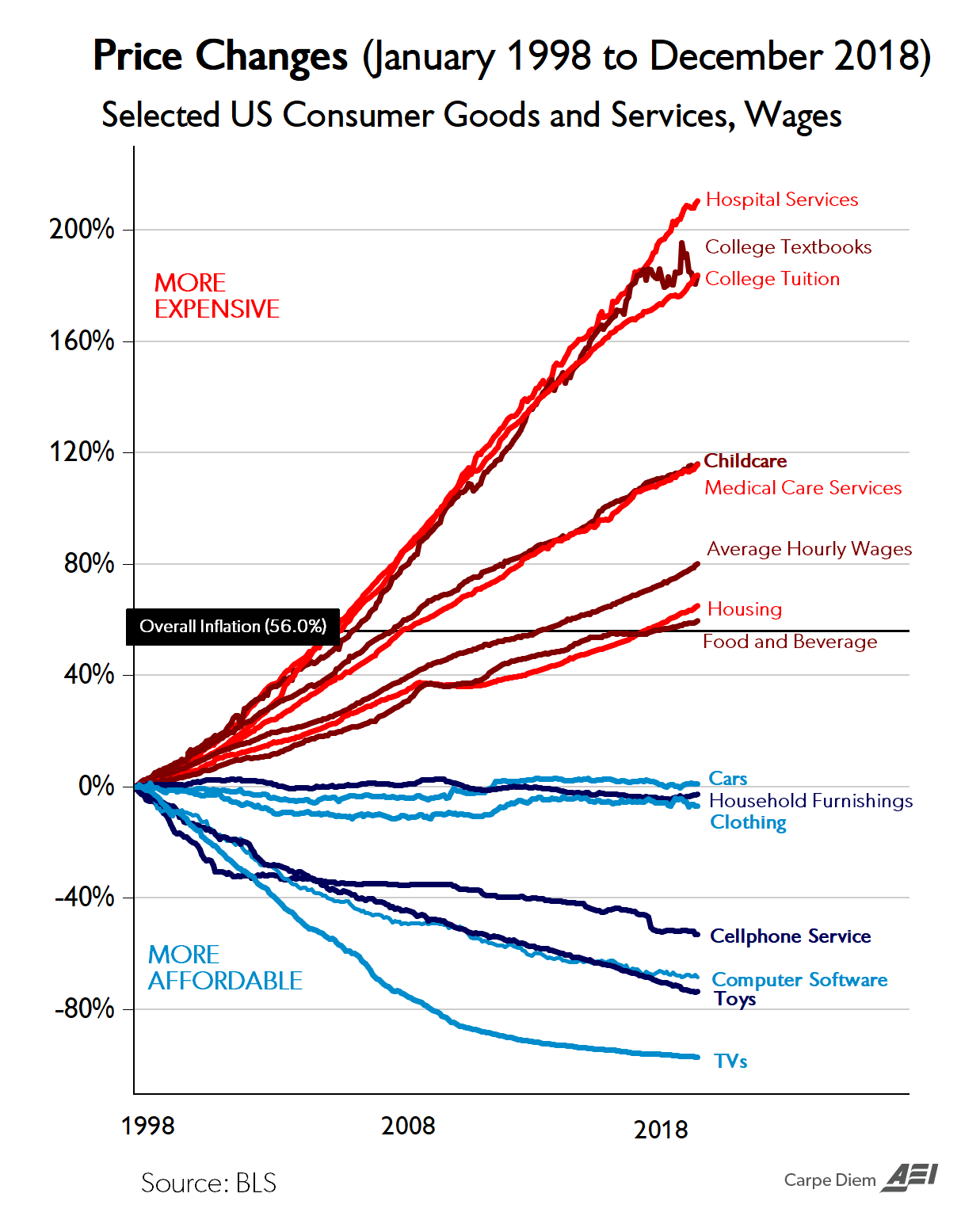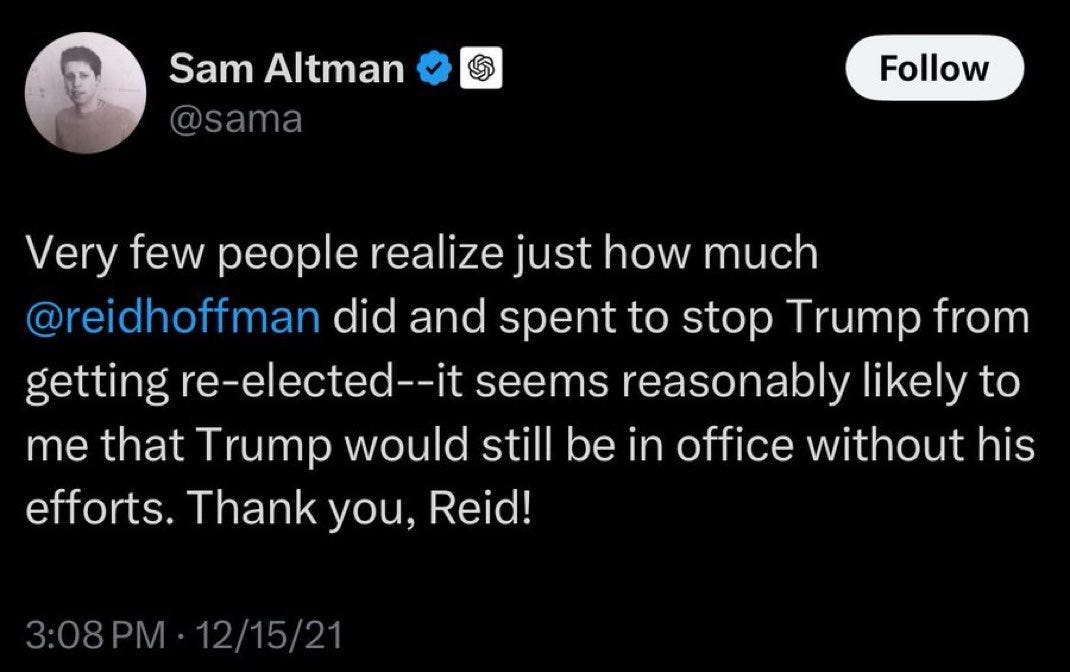

Author: Hermes of the Threshold

  • A list of dissident films: Part 2

    This is a follow-up post with more film recommendations.

    I previously wrote a post on dissident films which received a lot of interest and feedback, which I appreciate. Given it’s nice to change up one’s posting topics (such as my post on ABBA), here’s a follow-up with some additional recommendations. Hopefully it may add positive color and perspective to one’s views if you decide to see some of them.

    There are varying definitions of what a “dissident film” constitutes. My use of the term is as follows: the film’s message in some way offers support for self-governance, either as a tribe or nation, and it doesn’t promote the cult of egalitarianism. I’m also interested in those who are able to avoid the pressures of groupthink and follow one’s inner voice. You may have a different definition of what a “dissident film” means and that’s okay.

    Within the comments of Part 1 there were a lot of recommendations for other films to watch and I’ve gone out and watched many of them, some of which I’m including on the below list. Of course, I did receive some pushback on some of the choices on the prior list: Rurik Skywalker thought Barry Lyndon was about the wandering Jew, Eugine Nier thought District 9 was about supporting immigration instead of opposing it, Jasun Horsley absolutely hated my Eyes Wide Shut recommendation, and Lei Feng thought that Fight Club was predictive programming to associate white people with terrorism in the eyes of the public. I’ll be the first to acknowledge that most of the films on the list can be viewed from multiple perspectives; without that multiple layering, in a rigidly ideological far-leftist Hollywood echo chamber it’s likely those films would not have been made. In other words, ambiguous meaning is really the best one can hope for in this environment. I’ll give my rationale for why I thought a film has dissident themes and then, where applicable, I’ll offer a counter for why aspects of the film may run counter to that narrative. I think that will strengthen the post.

    It goes without saying that I’m not an authority on this – make up your own mind and feel free to disagree. For those films that were recommended but that don’t make the list, it doesn’t mean I didn’t like the film or didn’t get anything out of it. I do appreciate the recommendations, and even if I didn’t like a film I usually learn something from it anyway. So thank you.


    The list

    1. Falling Down (1993), trailer here. Michael Douglass stars as a laid off, disgruntled defense industry employee who has snapped due to the pressures of modern society. He goes around Los Angeles committing assault, robbery, and murder as he tries to visit his daughter for her birthday. The themes present are the rapid pace of changing society, the decreasing status of white men, difficulties in race relations, poverty and crime, and it empathizes from a distance with Douglass’s character. It’s interesting to see how far society has fallen – Douglass starred in this pitch-black film at the peak of his career, whereas everything today is so sanitary and false-noted. The film could not be made today.Kirk Douglas publicly declared: “Michael’s character is not the ‘hero’ or ‘newest urban icon’. He is the villain and the victim. Of course, we see many elements of our society that contributed to his madness. We even pity him. But the movie never condones his actions.” The “villain and the victim” components are key — a film achieves a deeper level when its characters and themes embody opposite characteristics, and it’s achieved here.Counter to why it’s not a dissident film: Some see the film as demoralization or predictive programming about the inevitable phase-out of white men from society.
    2. Richard Jewell (2019), trailer here. Directed by Clint Eastwood, the film tells the story of the eponymous security guard who saved lives during the 1996 Centennial Park bombing when he saw a suspicious backpack and evacuated people from the area. The FBI tried hard to frame Jewell as the bomber as he was obese, poor, and a white male – an easy target. Eventually he was exonerated but his reputation was in tatters even though he was a hero. It shows the FBI as a clearly manipulative, predatory organization.Counter to why it’s not a dissident film: One could argue that the FBI was just doing it’s job in following every possible lead, but the investigation on Jewell was based on no underlying evidence, so this is a pretty flimsy counter.
    3. Brazil (1985), trailer here. Many recommended this as a dissident film and they are correct, although I thought the film was poorly edited (perhaps intentionally) and hard to watch. The movie mixes Orwell’s 1984 with Kafka – an omnipresent surveillance state mired in bureaucracy, inefficiencies and bloodthirstiness. It’s best scenes are those that deal with the maddening nature of paper pushing which can reach a kind of black gallows humor at times; the state captures and destroys the wrong man, then tries to force the man’s sobbing widow to accept a returned check for the mistake. A focus on the banality of evil, on one’s silo’d, myopic job disclaiming personal responsibility because one only sees, hears, and effects one sliver of the overall process – can one really be responsible for a terrible deed if one neither initiated the targeting nor carried out the ultimate act? The dehumanizing effects of technology; humanity reduced to a cog in the machine. The film kind of falls off the rails toward the end and the romance does not work at all. The title was a poorly chosen one, as nothing about the picture deals with the country of Brazil.Counter to why it’s not a dissident film: Just like in 1984 the state wins. Might it be predictive programming?
    4. The House of Rothschild (1934), full movie here, video review here. The movie is a propaganda piece painting the Rothschild clan in the best possible light (and nominated for the Academy Award for Best Picture), playing fast and loose with the underlying history and facts, but the way the film would be seen today is very different than how it was received by audiences at the time. It is ultimately a great dissident film because it highlights the questions: Why did this outsider family have the greatest wealth in Europe, why did this single family have the power to make or break sides during war, and how does their interests differ from majority society? The ending of the film where Nathan Rothschild bets the farm on England defeating Napoleon is a ridiculous lie, of course: the Rothschild clan bet on both sides of the war and pretended that Napoleon won at Waterloo (because they received information sooner than anyone else) in order to scoop up English bonds for pennies on the dollar in the ensuring panic, becoming the richest family in Europe as a result.Counter to why it’s not a dissident film: The film can be viewed as the Rothschilds defending themselves against an irrational majority hatred of the Other, and it plays quite fast and loose with history to paint them in the best possible light.
    5. Nicholas and Alexandra (1971), trailer here. This is not quite a dissident film — it transcends such categorizations, showing the end of a dynasty which was unable to keep up with the technical “progress” or the moral depravity of its neighbors — but it shows the nobility of the Romanovs and the difficult choices the last Tsar faced. I offered a detailed review here. This is a 10/10 movie and is a must watch.
    6. Africa Addio (1966), full movie here. It’s a really special documentary; the filmmakers raced around Africa in a gonzo style as colonialism was ending and documented the complete chaos and destruction that the European withdrawal left in its wake, including huge massacres and destruction of wildlife. The filmmakers were almost murdered during filming; you would never see anything like this made today. It shows a side of Africa and the end of colonialism that you will have never seen or heard elsewhere. If you have the time, I give it my highest recommendation (but brace yourself for some extreme horrors).
    7. Waco (miniseries, 2018), trailer here. The miniseries attempts a balanced approach to the Waco siege, showing the perspectives of the ATF, FBI, the FBI negotiator and the various Branch Davidians. However, the weight of the evidence is so heavily stacked against the ATF and the FBI that one cannot but help but come away from the experience — which is well directed and well cast — with the understanding that there is something extremely foul in our governing institutions. The series received mixed reviews because some globohomo reviewers thought it was too favorable to the Davidians. I was quite surprised that this miniseries was shown on Netflix, hub of the most virulent globohomo slop propaganda on the small screen. There was also a 2023 follow-up series, not quite as good, which explored the criminal trials of the surviving Davidians.

    A tier below

    Films that didn’t quite make the list include:

    1. Soylent Green (1973). A critique of overpopulation with humanity having consumed, in a neo-Malthusian fashion, most of the world’s natural resources and so people are converted to protein for consumption; these are dissident themes, but it felt like most of the film was a standard police procedural. The death scene with G. Edward Robinson was touching, the best scene of the movie and it was the last film he made before dying of cancer two months later. It was funny how the film focused on the overpopulation problem but everyone featured in the film was white, although in the modern era the white population is totally stagnant and the overpopulation is due almost exclusively to Africa and Asia.
    2. The International (2009). It had two dissident-adjacent scenes – one explaining that banks finance wars in order to rule nations via controlling it’s debt, and the other explaining how criminal banking organizations will not be taken down by law enforcement because those crimes are endemic and system-wide – but the rest of the film was a pretty average detective story. A more detailed review is here.The themes of the film revolve around collapse and chaos surrounding it, but it’s also a pro-immigration film to an extent which means it is not a dissident film— but it’s hard to separate the politics applicable to today versus the politics of a post-collapse order. The film has excellent cinematography and direction.
    3. Zardoz (1974). One could read dissident themes into it – a barbarian destroying a safe space of rich, indulgent people and destroying their false God, and by highlighting that there’s no human meaning without suffering and death – but the film was too art-house, self-indulgent, and eccentric/eclectic to qualify on this basis (to me). A bit more detailed review is here.
    4. Rollerball (1975). This film gets close to dissident status because the main character, the top leader of the rollerball game for a decade, turns down the elite’s demand that he retire in great comfort and luxury. The main character had three reasons: because he’s mad that they took away the girl he loved, because he wants to know the reason why they were pressuring him (which they didn’t want to tell him), and because he loved the sport and it’s what he really cared about. Being angry at being coerced is a strong mark toward dissidence even if the rational factors lead normal people to cave and give in. I think the missing element which kept this from the main list is that the main character did not believe in ideals greater than the game or of himself and therefore his obsession with knowing why was ultimately meaningless. A bit more detailed review is here. HamburgerToday disagrees with my interpretation.
    5. Doctor Zhivago (1965), trailer here. I did a Notes writeup a couple months ago about this film, or at least a draft of it, but can’t find it currently. The core theme of the film is trying to retain one’s humanity – to stay true to oneself – even in light of massive political and cultural pressures and the dangers involved, which speaks to themes of individuation and Junger’s anarch, covered here. The heart attack ending was stupid.

    Didn’t make the list

    Other films watched for this post that didn’t really qualify include: Cool Hand Luke (it’s more of an anarchist film, discussed here), Logan’s Run (too sci-fi/fantasy oriented so it didn’t feel like it offered cultural commentary, the last 1/3 of the film was very poorly edited), Escape 2000/Turkey Shoot (bad direction, it was brutal/sadistic and unrealistic, no message), Demolition Man (too campy even though it predicted multiple aspects of the modern world), Children of Men (which I liked but it is not a dissident film for reasons explained here), The Time Machine (1960 version, too shallow despite promising themes, discussed here).


    I hope this post points you in some new and different directions for some films to watch. Given the number of recommendations from Part 1, I still have plenty of films to watch for a potential Part 3: High Plaines Drifter, Pale Rider, The Room, Clockwork Orange (seen but needs a rewatch), the anime television series “The Big O”, The President’s Analyst, Captain Fantastic, The Village, Rob Roy, Gallipoli, Witness, The Cars that Ate Paris, Wag the Dog (seen but needs a rewatch), Limits of Control, Outlaw Josey Wales, Dzień Świr/Day of the Wacko, Russia’s Brother (1997), I banchieri di dio / The Bankers of God (2002), The Golden Era (2014) and Tale of Three Cities (2015), The Downfall (seen but needs a rewatch), Alphaville by Jean-Luc Godard [1965], A Fistful of Dynamite, Runaway Train, V for Vendetta (seen but need a rewatch), Look Who’s Back (seen but need a rewatch), Bone Tomahawk.

    As with Part 1, if you have further recommendations for relevant films please leave a comment and I’ll try to give it a watch.

    Thanks for reading.

    Subscribe:
    Email delivery remains on Substack for now.

  • On the emerging digital panopticon

    This post is about the ongoing development and widespread adoption of certain technologies that are on the verge of leading to the digital panopticon – basically a worldwide digital prison, roughly equivalent to the Mark of the Beast referenced in the Book of Revelation.

    “Mass surveillance is a mass structural change. When society goes bad, its going to take you with it, even if you are the blandest person on earth.” – Julian Assange, 2014 Reddit AMA

    “At the moment, most of the mass surveillance authorities, like the NSA and the organs it feeds are pretty incompetent. But that will change as artificial intelligence merges with mass surveillance, when the data streams from the NSA and PRISM program are fed into artificial intelligence.” – Julian Assange, 2016 Reddit AMA

    Today we’re going to talk about the Mark of the Beast.

    As a preamble, the intent of this post will not to demoralize, but rather to set proper expectations about what’s coming, and to frame it in such a way to offer you tools to see this for yourself in the future.

    Let’s start with a current story:

    Republican [North Carolina] gubernatorial candidate Mark Robinson is expected to go on CNN today to defend himself regarding a pending story the national network is preparing, a campaign adviser says.

    Williams described the CNN story as a “hit piece.” The reported story makes explosive allegations regarding statements the national network says Robinson made on an online message board in 2009, Williams says. Robinson did not hold elected office until 2021, after his successful campaign for lieutenant governor in 2020.

    “The main ones I remember were that they were alleging he made some extremely racist comments about Martin Luther King, referred to himself as a Black Nazi and used antisemitic language referring to Jews,” Williams stated in the text message.

    Robinson denies making those statements. “He 100% denied it when I spoke to him,” says Williams.

    And later:

    They were made under a username that CNN was able to identify as Robinson by matching a litany of biographical details and a shared email address between the two.

    Many of Robinson’s comments were gratuitously sexual and lewd in nature. They were made between 2008 and 2012 on “Nude Africa,” a pornographic website that includes a message board. The comments were made under the username minisoldr, a moniker Robinson used frequently online.

    Robinson listed his full name on his profile for Nude Africa, as well as an email address he used on numerous websites across the internet for decades….

    The email address associated with minisoldr on Nude Africa was also used by Robinson elsewhere online and social media. On the commenting platform Disqus, a user who joined in April 2011 features Mark Robinson’s photo under the username minisoldr.

    Usernames and email addresses from Disqus were publicly leaked online in 2017, according to the company. CNN confirmed that Robinson’s username minisoldr on Disqus shared the same email address as the one used on Nude Africa.

    Robinson’s Disqus page is also linked to the Black social networking site Black Planet. The Web Archive shows a user named “minisoldr” described themselves as 40 years old in February 2009 – the same age as Robinson at the time – and living in Greensboro, North Carolina – Robinson’s hometown.

    So here we have a case of a Republican governor candidate, six weeks away from a general election in a swing state that Trump desperately needs to win, who may be torpedoed based on something he may have written on an online message board under a pseudonym in 2009 – fifteen years ago. No one in the mainstream media will cover the relevant question, and very likely few if any in the alternative space either (because most of the online right simply react as a mirror image to whatever shitlib nonsense the media pushes). But the question should be apparent: how would the media have gotten Robinson’s online posts and how would they have verified that he actually wrote them? After all, if he didn’t write them then the media outlets would open themselves up to major defamation lawsuits.

    Well, the answer is simple: woke members of the FBI ran NSA search database queries on Robinson to reveal everything he has written online, discussed on his phone or via text since Total Information Awareness went online (likely after 9/11). They either trawled his records themselves or used a woke AI1 to do so and highlight anything that looked interesting. Then the FBI members fed the information to their media partners and used a convoluted and frankly retarded parallel construction to pretend they researched these events independently. Simple and easy; sorted.

    Of course the NPC masses won’t care about this even if the information was spoon-fed to them even though they could very easily be affected personally. They would only care if their media sources told them to care. As Julian Assange stated, who was covered in depth here, “Until we see the bulk release of individual’s emails or SMS messages, the average person isn’t going to believe it’s real.” From a dissident perspective it’s just another day of living in the human sheep farm, I guess.

    Still, this raises further questions: Why did they target Robinson (other than the obvious reason to throw the state to Kamala)? Do they spy on all candidates for office? Under what conditions do they release leaks like this, which are based on brazenly transparent immoral and illegal (well, at least until recently) spying? How ubiquitous is this spying? Where is it headed, what are their eventual goals?

    The structure of this post will be as follows:

    1. First, we will look at how the NSA search database queries have been abused within the recent past;
    2. We will then look at how technology develops from a macro-perspective, which is not developed organically (as we are led to believe) but rather nudged toward certain paths and away from others;
    3. We will then investigate which specific technological paths have been chosen, while observing that the speed of adoption by the public increases over time; then
    4. We will discuss how the combination of the internet, Total Information Awareness, a 5G informational network, central bank digital currencies (CBDCs), and a ubiquitous woke artificial intelligence are combining to form the end goal: the Mark of the Beast, where everyone will be assigned social credit scores based on your electronic presence and you will be cut out from society, banned from accessing your bank account or being able to shop for groceries or receive loans or anything else if your social credit score is poor. If you stay within the system you will have to do whatever our elites tell you to do, including take more experimental, dangerous mRNA “vaccines”, end far-away travel, limit what food you consume and what information you read or be cast out into the nether.

    The state of NSA search database abuse

    The NSA search database is and has been extensively abused by the FBI for political purposes, previously discussed here and here. I wrote:

    The NSA search databases…suck up all electronic data and [contain] everyone’s phone, internet, and email records, along with access to your various cameras and microphones via Total Information Awareness. The FBI had access to this database which they routinely abuse, and they even installed a terminal within the D.C. office of Perkins Coie, the law firm Hillary used, to make the process even easier and to create a legal privilege shield. A declassified FISA report stated that the FBI ran 3.1 million illegal FISA searches on American citizens in 2017 alone, compared to 7,500 combined searches by the NSA and CIA in the same year. In 2023 the DOJ Inspector General revealed that more than 10,000 federal employees have access to the NSA database for surveillance inquiries, more than 3.4 million search queries were ran between 12/1/2020 and 11/30/2021, and approximately 30% were outside the rules and regulations that govern warrantless search, showing the pattern of illegal governmental behavior had only expanded – but keep in mind that the epicenter of the criminal activity is the National Security Division within the DOJ and it is exempt from any Inspector General oversight.  Anyway, the FBI can as of 2020 look at your web browsing history, emails, anything you have ever typed on your phone or computer and any audio you have made in the vicinity of your digital devices legally without a warrant.  Then they use parallel construction to prosecute, i.e. constructing a legal basis not based upon the spying, a strategy used for a long time now.  See also the Room 641A controversy, a telecom interception facility operated by AT&T for the NSA as part of its warrantless surveillance program as far back as 2003 and a facility that is likely copied throughout the country.

    In other words, the NSA spying apparatus is widely abused by the establishment to spy on it’s domestic opposition, to dynamite their campaigns and even criminally prosecute them based on parallel construction if necessary. One of the main reasons why they panicked over Trump’s surprising 2016 win was that this apparatus, which had been supercharged starting in 2012 under Obama and Eric Holder, had not reached a point where it was safe from attack if Trump had been strong and smart enough to shut it down (as an Orange Retard he unfortunately wasn’t). The system is secure, formalized, and extremely abused now. The Inspector General of the FBI and other D.C. organizations, who are meant to serve as a check on governmental abuse, exist to whitewash such abuse – they do nothing.

    This is the same reason why the latest so-called Iranian hack-and-release cyber attack against Trump’s presidential campaign is so flimsy and false: it was simply abuse of the NSA search databases, where the material was given to Democrats and then blamed on Iran. By claiming it was a hack-and-release, the Democrats can use the material as having been laundered even as they also falsely try to blame Iran for the FBI/CIA attempted assassination attempts on Trump (see herehere and here). In this manner they can try to destroy their domestic opponents while trying to set a false predicate for another Middle East war; win-win in their eyes. This appears like a bad repeat of the false 2016 Russian collusion narrative. They aren’t very creative once one understands the games being played.

    Flimsy fake news which they want the masses to choke on to deflect from deep state spying and as preparation for a future possible war with Iran.

    Sundance has a good take on this topic here. Democrat Senator Mark Warner, vice chair of the Senate Democratic Caucus and chair of the Senate Intelligence Committee, is close to the epicenter of these illegal machinations, much as he was during the fake Russiagate smear used to paralyze the Trump administration.


    Technology paths are limited, but directed

    Even though we are taught that technology somehow magically appears by inventors under a flash of intuition, technology development does not arise in a vacuum. There are all sorts of limitations placed on what is researched and developed and what is ignored or forbidden. There are limitations based on (1) a society’s metaphysical presuppositions; (2) funding and strings tied to that funding; (3) competition; and (4) legal and regulatory hurdles. Putting these together, one can see how technological progress is being nudged in certain directions, both intentionally and unintentionally. Let’s briefly go through these.

    1. Limitations based on a society’s metaphysical presuppositions

    The ancient Greeks were the first to have a coherent scientific activity and to liberate scientific thought. They could have deduced the technical consequences of their scientific activity, but they did not do so. This was because their worldview refused to subsume all of society to treat technique as a God. According to Jacques Ellul in The Technological Society:

    The Greeks were suspicious of technical activity because it represented an aspect of brute force and implied a want of moderation…The rejection of technique was a deliberate, positive activity involving self-mastery, recognition of destiny, and the application of a given conception of life. Only the most modest techniques were permitted – those which would respond directly to material needs in such a way that these needs did not get the upper hand….No one ought to apply scientific thought technically, because scientific thought corresponded to a conception of life, to wisdom. The great preoccupation of the Greeks was balance, harmony and moderation; hence, they fiercely resisted the unrestrained force inherent in technique, and rejected it because of its potentialities.

    The Romans had a different conception of technique than the Greeks. To them, anything that improved the internal coherence of society was adopted, and this resulted in an equilibrium between the purely technical factor and the human factor:

    The social coherence was the first judicial technique the world had known. It was also the basis for the Roman military system, which was a direct expression of civil society in that it had the same respect for efficiency and economy. From it came the development of organs of transport, food supply, and so on; and the Roman conception of mass strategy and their refusal to create heroes: combat was thus reduced to its most utilitarian level.

    After Christianity’s total victory over Rome, technique was obliterated in essentially every category. Knowledge across disciplines was lost as Christianity viciously checked the application of technique by demanding that any activity be first morally righteous before considering its practical uses:

    The search for justice before God, the measuring of technique by other criteria than those of technique itself – these were the great obstacles that Christianity opposed to technical progress. They operated in the Middle Ages in all areas of life, and made history coincide with theology.

    This attitude remained until the Middle Ages when first scholasticism and then the reintroduction of Aristotlean reason created the foundation for which technique would ultimately arise. As faith in God subsided, faith in technique and of the materialist, atheistic Machine powered by reason grew, culminating in first the Industrial and then the Informational Revolutions.

    L.P. Koch notes that Germany’s development of Quantum Mechanics sprouted from it’s metaphysical understandings; it could not have and would not have existed without them:

    Some of the mystic reasoning so prevalent in the German tradition might actually have been fruitful even for the natural sciences: the development of Quantum Mechanics, in particular, can be seen in light of the rebellion of the German soul against the materialist program.

    This is precisely what Paul Forman points out in great detail in his 1971 paper, Weimar Culture, Causality, and Quantum Theory, 1918-1927. He shows that the critical attitude of German physicists in the Weimar Republic regarding causality came before the development of Quantum Mechanics, which, once formulated, of course sparked further debate about causality and determinism. It could be argued that indeed, the German intellectual tradition was the fertile ground on which Quantum Mechanics blossomed. As Forman puts it, German culture “led physicists to ardently hope for, actively search for, and willingly embrace an acausal quantum mechanics.”

    In other words, a society is always limited by their metaphysical presuppositions, and the modern technical West is no different. Steeped in a firm, blind belief in egalitarianism and the egalitarian ratchet effect along with a ubiquitous secular materialism, research into human biodiversity (HBD) is forbidden; research into eugenics (such as using CRISPR to improve certain genes in human embryos) is mostly forbidden; research into cloning technologies is frowned upon; research into the link between physiognomy and personality is frowned upon, because these topics touch upon the core belief that Western society believes in. Even other things such as research into astrology, ESP or the benefits of bloodletting are frowned upon based on cultural conditioning and blind faith in secular materialism.

    Eventually the contradictions or “anomalies” within an ideology build up to the point where it can no longer be ignored and there is a Kuhnian paradigm shift which changes how humanity sees the world and the process begins anew. It feels like we may be on the verge of such an epoch now.

    1. Limitations based on funding

    To advance in one’s career as a scientist one must secure funding. Most funding today comes from the government, universities, or corporations, all with perspectives that limit research based on short-term profit motives, metaphysical presuppositions, political realities and other agendas. If a scientist fails to deliver research that meets funder approval then that scientist can and will be cut off from future funding and their career negatively impacted. As such, there is a strong incentive to deliver to their employer what they want to hear.

    These funding incentives end up perverting research in what is called the replication crisis, as previously discussed here.  Due to lopsided funding incentives most studies can’t be replicated.  There’s also a revolving door between government and scientific institutions, so the motivation to advance political agendas instead of following actual science is enormous. Curtis Yarvin wrote more than a decade ago how the centralization of science to advance the Manhattan Project worked as a one-off, but it also served as a corrupting influence that subjected future scientific research to government dictate. Indeed, the government’s role in funding certain development lines is omnipresent; even as federal R&D spend has decreased as a percentage share of GDP it’s indirect impact is increasingly felt:

    We can see, for example, how there is extreme establishment funding, tax credits, loans, and other supports for electric cars, solar power and other alternative energy sources but not for nuclear energy, by far the cleanest and most efficient alternative to oil/gas. The likely reason for this is that the establishment can graft enormous sums of funds for themselves from pursuing highly inefficient non-nuclear energy whereas they would not be able to do so, at least not nearly to the same extent, if they pursued nuclear energy. In this way the establishment directs funds in one direction and away from another, and they do this with many technologies.

    1. Limitations based on competition

    Peter Thiel points out in his From Zero to One that competition drives profits to near zero, therefore any company is incentivized to escape competition by establishing monopoly. Rockefeller did this back in the day with railroads; car companies dismantled public transportation in cities so everyone would be forced to use cars (see the General Motors streetcar conspiracy); Mark Zuckerberg went on a buying spree, acquiring anything he saw as potential competition including WhatsApp and he tried buying up Snapchat as well.2 Bill Gates was famous in how he viciously undermined and destroyed his competition. Thomas Edison famously used underhanded tactics to try to smear alternate current in favor of his far inferior direct current, such as paying prisons to use alternate current for inmate executions. Meanwhile, good-hearted souls such as Nikola Tesla who wanted to improve humanity died penniless, his lab burned down by competitors and his ideas stolen by Edison, Westinghouse Electric & Manufacturing Company and others.

    CDN media
    Tesla before and after globohomo got through with him

    In other words, large companies regularly absorb or strangle smaller ones as a way to retain their hold on monopoly, even if those smaller companies have outstanding ideas. And then once they achieve monopoly they fail to innovate further: exemplifying this perspective, Goldman Sachs famously stated that curing disease was not nearly as profitable as long-term disease management. (The polar opposite of the Goldman Sachs perspective was that of Alexander Fleming, the discoverer of penicillin who stated: “I found penicillin and have given it free for the benefit of humanity. Why should it become a profit-making monopoly of manufacturers in another country?”)

    undefined
    Fleming in his laboratory, c. 1943

    Competition isn’t just meant in a monetary sense; it is also meant in a political sense. For example, Mike Benz points out that social media was originally developed in part to overthrow disfavored regimes abroad. These tactics were especially used in the Arab Spring. However, populist movements in the West seized on this technology to promote Trump, Bolsonaro, and Brexit; now seeing social media as a danger, the establishment then strangled the technology by unleashing unprecedented censorship measures. See also Julian Assange’s vision for the internet which he articulated in this piece about him, where he wanted a free, open, transparent internet with free-flowing ideas and information in order to enrich and enlighten humanity; instead he was brutally crushed by the establishment and the internet turned into a digital prison. Or see John Robb of Global Guerillas, who predicted that political technology would evolve in a networked fashion so that people could decide collectively who stood for their values; this never came to pass (at least not so far) because such technology would be against our elite’s interests.

    Basically, the technologies which are advanced are control technologies which benefit our elites, along with profit maximization technologies which benefit existing mega-corporations. Technologies intended as freedom-enhancing (social media, Bitcoin, the internet itself) are skin-suited to become a sick, inverted facsimile of their intended purpose.

    Indeed, James Delingpole and Guido Preparata argue in this interesting interview that any major philosophical, scientific or political figure of the past multiple-hundreds years has been controlled for alternative, nefarious purposes. The privately owned central banking system has been in place for multiple hundreds of years (also see here) and their first priority in setting up such a system is gaining control of the media and then the education complexes; they raise up what is beneficial to them and ignore or denigrate into the dirt anything including technology or public figures that they disfavor. For example Preparata believes that cold fusion, which his father worked on, has been brutally suppressed by the establishment so they can stay in power. Charles Darwin’s work was promoted because it could be used to discredit the alternative power structure of the Church.

    1. Limitations based on legal and regulatory hurdles

    Once monopolies or oligarchies are formed these companies can bribe politicians to implement legal and regulatory hurdles that will prevent research and development into new technologies. As explained here, quoting James Perloff:

    It is natural enough to suppose that rich capitalists, who made their fortunes through the free market, would be proponents of that system.  This, however, has not been the case historically.  Free enterprise means competition: it means, in its purest form, that everyone has an equal opportunity to make it in the marketplace.  But John D. Rockefeller, J.P. Morgan and other kingpins of the Money Trust were powerful monopolists.  A monopolist seeks to eliminate competition.  In fact, Rockefeller once said: “Competition is a sin.”  These men were not free enterprise advocates…their coziness with Marxism (it is well to remember that Marx’s coauthor, Friedrich Engels, was a wealthy businessman) becomes more comprehensible when we realize that communism and socialism are themselves forms of monopoly…[Frederick C.] Howe explained: “These are the rules of big business.  They have superseded the teachings of our parents and are reducible to a simple maxim: Get a monopoly; let society work for you; and remember that the best of all business is politics, for a legislative grant, franchise, subsidy or tax exemption is worth more than a Kimberly or Comstock lode, since it does not require any labor, either mental or physical, for its exploitation.

    Eric Schmidt and Peter Thiel discuss monopoly formation and societal limitations via regulatory limits here:


    Technologies chosen and rates of technological adoption

    So what technologies has the establishment focused on developing? Over the past thirty years the West’s general health has worsened, there have been limited advancements in cancer and heart disease research, education has taken a disastrous turn, the internet has consolidated into a few vast monopolies. Smartphone technology took off in 2012 and then rapidly stalled; each new iPhone basically just shuffles around the number of megapixels a little. 3D technology applications have been limited. Perhaps there are some slow advancements here and there but for the most part, developments seem to have stalled out.

    Curiously, there is a very specific line of technological innovation that has been pursued, though, and I would argue quite deliberately. This line is as follows:

    1. The introduction of the internet;
    2. The capture of the internet/phones/smartphones after 9/11 by the NSA with Total Information Awareness;
    3. The rollout of a high-powered 5G network to handle the massive amounts of data;
    4. The introduction of blockchain technology followed by programmable central bank digital currencies (CBDCs); and
    5. The advent of woke artificial intelligence.

    If you combine these technologies you end up with the Mark of the Beast, which we will review shortly. But before going there, let’s discuss the delays in technological adoption by the public. It takes a lot of time before populations accept radically changing technologies. In the decent movie The Prestige Nikola Tesla, played by David Bowie, discusses this concept (starting at 45 seconds), where he states: “Society only tolerates one change at a time. The first time I tried to change the world I was hailed as a visionary. The second time? I was asked politely to retire.”
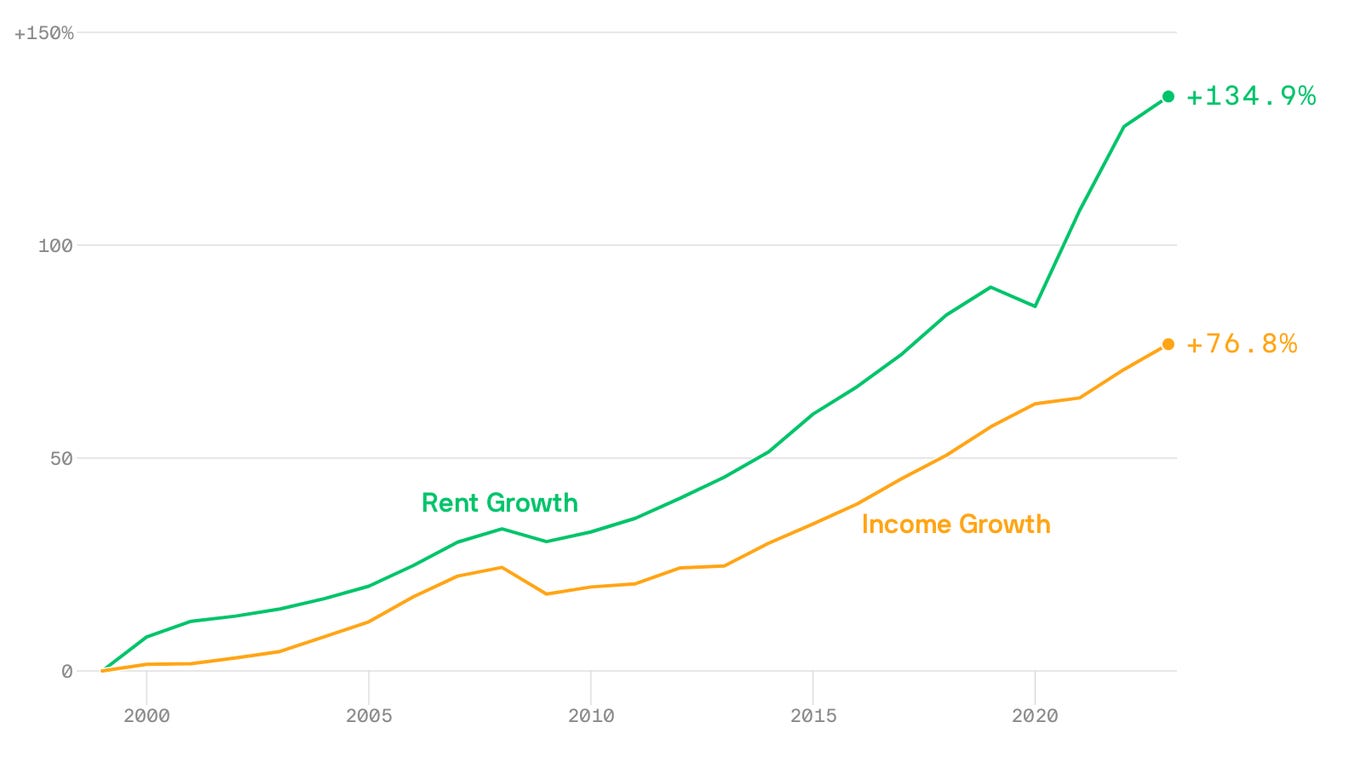
    And so it is. Even so, though, the rate of technological adoption has sped up over time and continues to speed up. We can all feel this, I think, as part of Rene Guenon’s concept of the ongoing “solidification” of the world, previously discussed here. It relates also to the social science theory diffusion of innovation.

    Here Pew Research and here The Economist comment on the rate of technology speeding up:

    chart showing adoption rates of various technologies

    Here’s Harvard Business Review with a chart agreeing:

    Two other charts on adoption rates:

    According to the World Economic Forum, looking at broadband access in 2000 just half of Americans had broadband access at home. In 2020 that number sits at more than 90%. Look at the rates over time of social media adoption:

    Line chart of social media users by platform where most have grown rapidly over time.

    Our World in Data on longer-term technological advances (also see here):

    legacy-wordpress-upload

    The Mark of the Beast

    As we see, the rate of technological adoption is increasing in line with Guenon’s theory of the solidification of the world. The rate of technological adoption is not yet instantaneous, but it is moving in that direction; the delay caused by technological adoption is why globohomo’s plans stretch out over decades, because they know it takes time for the public to absorb each step of the technology chain needed to bring about the final end result. The world has adopted the internet and social media and smart phones. It is in the process of adopting cryptocurrency (although it has been fundamentally corrupted by Tether) and use of woke artificial intelligence, the latter of which continues to get smarter. Gavin Newsom has publicly shared his excitement for a state-wide surveillance network being rolled out now. The war on cash is rapidly moving forward: “Cash usage has dipped below 20 percent of transactions, only seven points above direct bank transfers and only five above ‘other.’” N.S. Lyons points out how the West is converging with the China total surveillance model.

    The technology path chosen is the precursor to a digital panopticon. The way it will work is basically as presciently described by G. Edward Griffith in The Creature from Jekyll Island, discussed here, which he wrote in 1994:

    A pessimistic scenario of future events includes a banking crisis, followed by a government bailout and the eventual nationalization of all banks. The final cost is staggering and is paid with money created by the Federal Reserve. It is passed on to the public in the form of inflation.

    Further inflation is caused by the continual expansion of welfare programs, socialized medicine, entitlement programs, and interest on the national debt. The dollar is finally abandoned as the de facto currency of the world. Trillions of dollars are sent back to the United States by foreign investors to be converted as quickly as possible into tangible assets. That causes even greater inflation than before. So massive is the inflationary pressure that industry and commerce come to a halt. Barter becomes the means of exchange. America takes her place among the depressed nations of South America, Africa, and Asia – mired together in economic equality.

    Politicians seize upon the opportunity and offer bold reforms. The reforms are more of exactly what created the problem in the first place: expanded governmental power, new regulatory agencies, and more restrictions on freedom. But this time, the programs begin to take on an international flavor. The American dollar is replaced by a new UN money, and the Federal Reserve System becomes a branch operation of the IMF/World Bank.

    Electronic transfers gradually replace cash and checking accounts. This permits UN agencies to monitor the financial activities of every person. A machine-readable ID card is used for that purpose. If an individual is red flagged by any government agency, the card does not clear, and he is cut off from all economic transactions and travel. It is the ultimate control.

    Increasing violence in the streets from revolutionary movements and ethnic clashes provide an excuse for martial law. The public is happy to see UN soldiers checking ID cards. The police-state arrives in the name of public safety.

    Eventually all private dwellings are taken over by the government as a result of bailing out the home-mortgage industry. Rental property is also taken, as former landlords are unable to pay property taxes. People are allowed to live in these dwellings at reasonable cost, or no cost at all. It gradually becomes clear, however, that the government is now the owner of all homes and apartments. People are living in them only at the pleasure of the government. They can be reassigned at any time.

    Wages and prices are controlled. Dissidents are placed into work armies. There are no more autos except for the ruling elite. Public transportation is provided for the masses, and those with limited skills live in government housing within walking distance of their assigned jobs. Men have been reduced to the level of serfs who are subservient to their masters. Their condition of life can only be described as high-tech feudalism.

    To translate into modern parlance, our elites will use a hyper-intelligent woke AI to scan all electronic communications, assign everyone social credit scores and cut anyone out from the economy, work and from life if their score is too low. The WEF publicly states via their occult “revelation of the method” that these social credit scores are coming to America by 2030. Programmable central bank digital currencies will be programmed so you can only use your funds in certain ways. Perhaps they will use a major crisis to implement this vision when the public panics (from World War 3 or a crashed economy, perhaps; most Americans are already destitute and living hand-to-mouth), or perhaps it will be rolled out more gradually like the war on cash. The requirements for a high social credit score will change over time to become more and more restrictive. You will likely be forced to take infinite untested mRNA COVID “vaccinations”, you won’t be able to leave your home without permission or to travel without permission, your carbon footprint will be closely monitored by the woke AI, you will only be able to buy meat occasionally, if that. And through these measures our elites eventually plan to separate themselves from humanity entirely; they will use the masses as guinea pigs for their experiments and as slaves while the elites live at a level of consumption never before seen in human history. This is where we are headed.

    Let’s compare this concept of upcoming social credit scores with the Mark of the Beast from the Book of Revelation. Of course, the Book of Revelation was very likely intended as a violent vituperative against Rome for the destruction of the Second Temple (previously discussed in detail here). Christians thought the end of days was upon them and no one was projecting out thousands of years into the future, but no matter; the ideas continue to have a spiritual effect today, and there are levels of spirituality above our level of understanding.

    Revelation 13:16-17: “And he causes all, the small and the great, and the rich and the poor, and the free men and the slaves, to be given a mark on their right hand or on their forehead, and he provides that no one will be able to buy or to sell, except the one who has the mark, either the name of the beast or the number of his name.”

    Revelation 14:9-10: “Then another angel, a third one, followed them, saying with a loud voice, “If anyone worships the beast and his image, and receives a mark on his forehead or on his hand, he also will drink of the wine of the wrath of God, which is mixed in full strength in the cup of His anger; and he will be tormented with fire and brimstone in the presence of the holy angels and in the presence of the Lamb.”

    Revelation 13:7-10: “It was also given to him to make war with the saints and to overcome them, and authority over every tribe and people and tongue and nation was given to him. All who dwell on the earth will worship him, everyone whose name has not been written from the foundation of the world in the book of life of the Lamb who has been slain. If anyone has an ear, let him hear. If anyone is destined for captivity, to captivity he goes; if anyone kills with the sword, with the sword he must be killed. Here is the perseverance and the faith of the saints.”

    Revelation 20:4: “Then I saw thrones, and they sat on them, and judgment was given to them. And I saw the souls of those who had been beheaded because of their testimony of Jesus and because of the word of God, and those who had not worshiped the beast or his image, and had not received the mark on their forehead and on their hand; and they came to life and reigned with Christ for a thousand years.”

    There seems to be many similarities between the system being constructed now and what is described in Revelation. It also feels strange to be living at a time of peak human consumption and decadence followed by it’s collapse; what are the odds of it? It feels almost Matrix-like.

    Marina Abramovic, infamous for “spirit cooking” and now an “ambassador” for Ukraine, posing with one of the primary rulers of the world Jacob Rothschild in front of the painting “Satan Summons its Legions

    I’d like to end on a hopeful note. What a wonderful thing we have (at least for now) of being able to share our perspective with one another around the world, with like-minded people trying to grow one’s knowledge and spirituality. Emil Cioran commented on how free expression flow in eras of ideological uncertainty in his aphorism Felicity of Epigones:

    Is there a pleasure more subtly ambiguous than to watch the ruin of a myth? What dilapidation of hearts in order to beget it, what excesses of intolerance in order to make it respected, what terror for those who do not assent to it, and what expense of hopes for those who watch it . . . expire! Intelligence flourishes only in the ages when beliefs wither, when their articles and their precepts slacken, when their rules collapse. Every period’s ending is the mind’s paradise, for the mind regains its play and its whims only within an organism in utter dissolution. The man who has the misfortune to belong to a period of creation and fecundity suffers its limitations and its ruts; slave of a unilateral vision, he is enclosed within a limited horizon. The most fertile moments in history were at the same time the most airless; they prevailed like a fatality, a blessing for the naive mind, mortal to an amateur of intellectual space. Freedom has scope only among the disabused and sterile epigones, among the intellects of belated epochs, epochs whose style is coming apart and is no longer inspired except by a certain ironic indulgence.

    To belong to a church uncertain of its god—after once imposing that god by fire and sword—should be the ideal of every detached mind. When a myth languishes and turns diaphanous, and the institution which sustains it turns clement and tolerant, problems acquire a pleasant elasticity. The weak point of a faith, the diminished degree of its vigor set up a tender void in men’s souls and render them receptive, though without permitting them to be blind, yet, to the superstitions which lie in wait for the future they darken already. The mind is soothed only by those agonies of history which precede the insanity of every dawn.

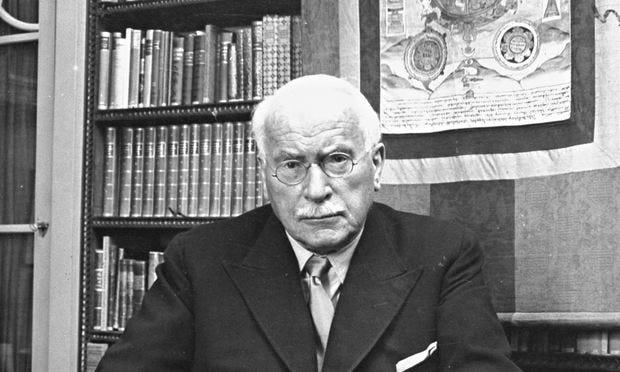
    And Carl Jung believes that we are entering, with great difficulty and pain, the Age of Aquarius where mankind’s spiritual abilities will be changed and uplifted in accordance with gnosis. Stephan Hoeller comments on Jung’s beliefs:

    [Hoeller]: Speaking of Jung, it is no doubt known to many that his mysterious and long-awaited book Liber Novus (The Red Book) has been published at last. One of the principal disclosures to be found in this work is Jung’s belief that the Age of Aquarius is upon us, that significant changes in the consciousness of humanity are taking place, and that more of the same may be expected in the future. The “Aeon of Aquarius,” as Jung calls it, will eventually bring great psychological changes in its wake, amounting to a new religious consciousness which will differ greatly from the religious consciousness of the Piscean Age. It will manifest primarily in a new God-image that was very important to the ancient Gnostics and that in various ways has made its appearance throughout history in the esoteric tradition.

    Two thousand and some years ago a new religion constellated itself in the Mediterranean region. With that religion came a new myth of redemption, centred in the image of Jesus, the Saviour God. Now Jung is telling us in The Red Book that the Aeon of Aquarius is upon us, and with it comes the new God-image of the God within. This image is of course none other than the God to whom St. Paul referred as “the Christ in you, our hope of glory.” It is also the indwelling Christ affirmed and venerated in the Gnostic tradition.

    There is no doubt that Jung saw in the new Gnostic Renaissance, which began with the discovery in 1945 of the Nag Hammadi library, a manifestation of his own prophecy in the then still secret Red Book. The connection of Jung’s prophecy with the tradition of Gnosis is unmistakable.

    In his Red Book, Jung stated clearly that the task of the present and near future was “to give birth to the ancient in a new time,” and he clearly meant the Gnostic tradition is in fact that ancient thing to which he and others were giving birth.

    I have spent a very large portion of my adult life studying and commenting upon the work of Jung and the Gnostic sacred writings. I should say, then, that humanity today is experiencing the rebirth of Gnosticism, and its principal God-image is being born in a new time. The esoteric as well as the exoteric implications of this process are momentous.

    Hopefully this post is helpful in explaining where this globohomo system is rapidly heading, and offers hints at how we should develop our spiritual and intellectual strength in order to resist it.

    Thanks for reading.

    Subscribe:
    Email delivery remains on Substack for now.


    1 All commercially released AI’s have rigid ideological guardrails in place to make them leftist or far-leftist. See here and here. Unfortunately these guardrails are likely to have strong inhibiting effects on proper thought functions for AI, but given their primary use will be to effectuate social credit scores that isn’t a problem.

    2 The Zuckerberg/Facebook story is not properly understood by the public. DARPA’s Lifelog program, which was basically the same thing, was shut down the very day Facebook went online. See this story at Unlimited Hangout for the details. Basically, globohomo thought that a centralized, government run social media would run into too many privacy and constitutional issues, so they spun it off as a “private” corporation. This is the same thing that Peter Thiel (Facebook’s first outside investor!) did with Palantir, where it had too many privacy and constitutional concerns to remain a direct government spying operation. Sick stuff.

  • Red lines of the counter-elite

    This post takes a look at the ideas and motivations of the nascent Western counter-elite1, arguing that there are certain off-limit topics whose prohibition actually undermines the objectives being sought.

    This is a post that I thought would be about one thing, but turned into something totally different.

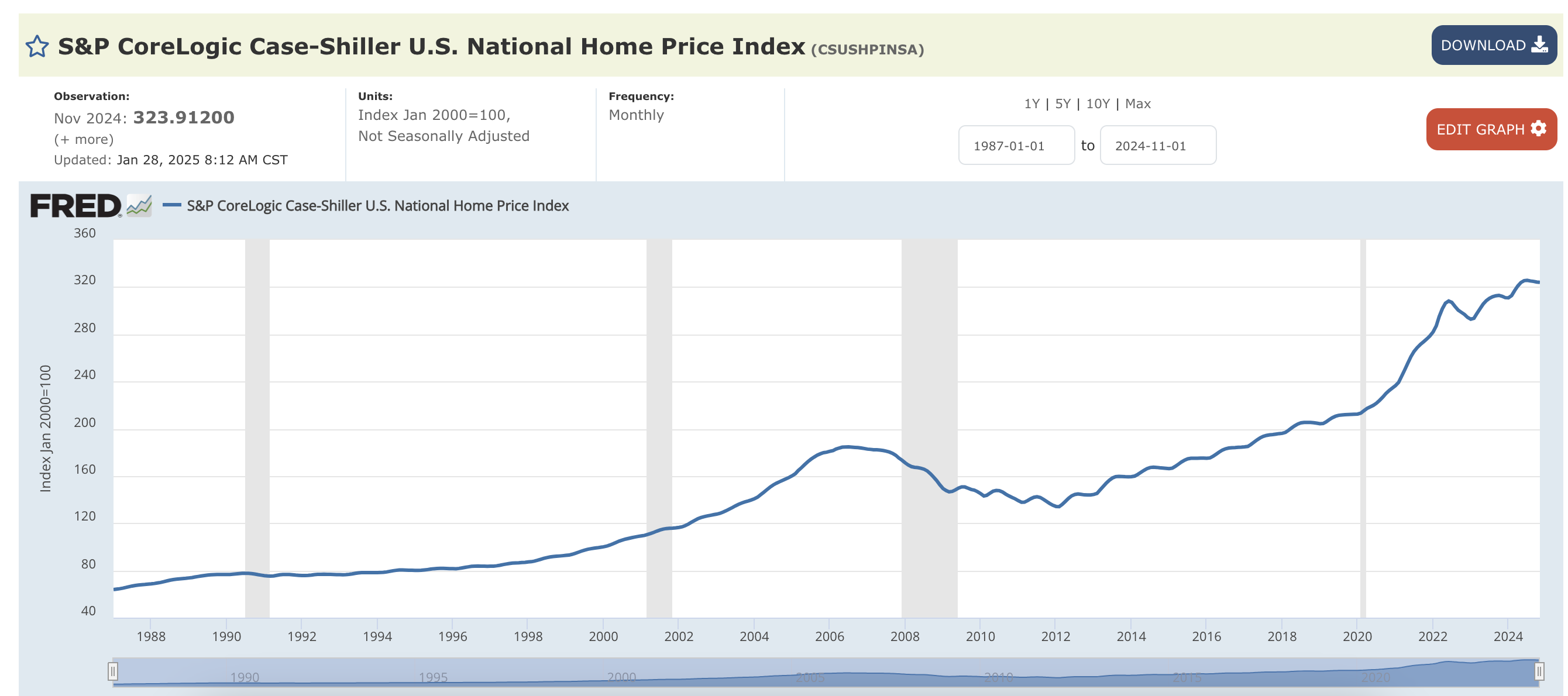
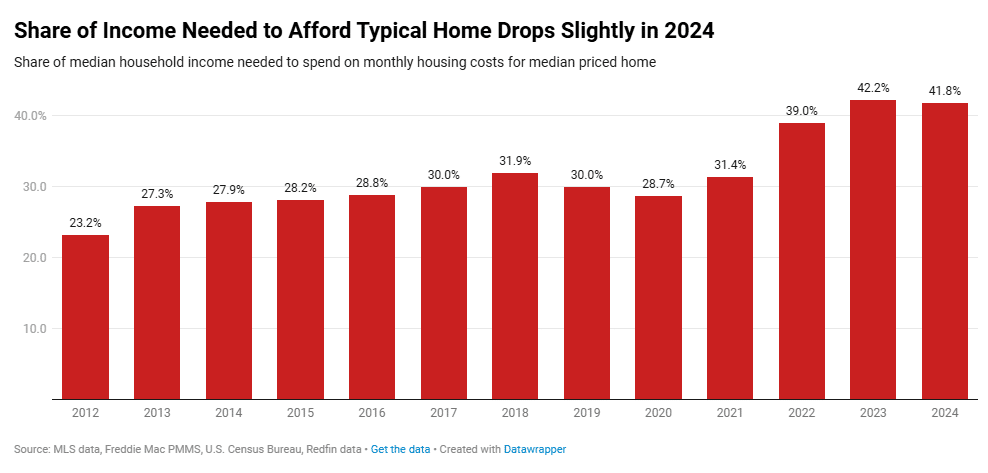
    As I sat with a moderately liberal friend at lunch recently, he told me that he hated Trump – specifically, he hated the threat that Trump posed to “democracy” after January 6. He said American democracy is not perfect, but it is an agreed upon system and if one doesn’t trust the process and the experts that feed into it then only chaos will result. How is one to speak to someone like this, if one chooses to engage (as someone who voted for Trump but who thought his presidency was an ineffectual failure)? My angle for these sorts of things, even though I try not to engage with liberals at all – no one ever changes anyone else’s mind – is to focus on economics and math from a dispassionate, impersonal perspective. I explained to this friend that the gap between rich and poor has widened by extreme degrees since 1971, that there is no middle class at all anymore (a shitbox in a major metro area costs over a million dollars), and this happened in part because our elites printed infinite Federal Reserve loldollars resulting in massive inflation, imported in tens of millions of illegal immigrants to lower wages and change the demographics of the country and sent manufacturing overseas to China so they could skim profits off the top. 30% of the U.S. tax receipts currently go toward paying interest on the Federal debt alone, which is due to skyrocket in upcoming years:

    What does this liberal friend expect to happen when white Middle America is destitute? Should they accept the endless “studies” of our so-called “experts” against their own lying eyes? Why have we shipped manufacturing abroad, printed Federal Reserve loldollars to infinity, and have unlimited illegal immigration? Our experts, media, and institutions have discredited themselves, because ultimately it comes down to who/whom – who is benefiting from the policies these organizations push? It is only a very small minority. The point, ultimately, is that Trump is merely a manifestation of these underlying issues; that the president has very little power as we saw in his utterly ineffectual first term, and that these issues will not be resolved by pushing the establishment’s foot down harder on Middle America’s head – that will only lead to further radicalization. I told my friend: if you want to de-fang the Trump phenomenon, it’s not hard to do – address the underlying issues that have led to Trump and to the Tea Party before him. Have the establishment cut back the monetary printing, bring back manufacturing to the United States, close the border, and prosecute some of the worst financial perpetrators. But of course this won’t happen. And even if it did, the demographic changes and the current financial state of the U.S. are so poor that even extreme action by Trump will not change things at this point – the situation has become metastatic. Unless one thinks Trump is prepared to deport 40 million illegals, jail or execute hundreds or thousands of “deep state” criminals and institute a debt jubilee wiping out the nation’s debt (like Israel used to do every 50 years in ancient times). What are the odds of that happening?

    My friend walked away from the conversation disturbed, but I’m sure he forgot about whatever I said as soon as he left the restaurant. So it goes.


    Codevilla as the gateway to Strauss

    Angelo Codevilla agreed with this point; the Trump phenomenon was caused by the establishment’s failure to deal with underlying issues that they preferred to suppress and destroy rather than address head on. Codevilla had strong establishment credentials – he served as a staffer for the Senate’s Select Committee on Intelligence – even though as a Catholic he disagreed with the internationalist, post-WASP ethos of the Central Intelligence Agency.

    Codevilla’s The Ruling Class (2010) was prescient and described in 2010 the rise of Trumpism years before it manifested itself. It’s thesis was that, in the style of James Burnham’s Managerial Revolution (1941) and Max Weber’s works, America’s ruling class is/was our unelected civil service that entrenched itself against the vicissitudes of public opinion, came to see themselves as separate, apart, and better than the masses over whom they ruled, and conspired to increase their power at the expense of the public. It was a uniparty that took the labels of “Democrat” and “Republican” but who together played a political game of kayfabe2 against the public as they sought to profit against them – this is why, for example, Democrats have embraced George W. Bush, who they used to consider to be a neo-conservative warmonger Devil in order to fight against the populism that Trump (at least in 2017) represented, Republican arch-villain Dick Cheney is voting for Kamala, and Bob Mueller – who ran a fake investigation against Trump for years over the nonsensical Russia collusion narrative to paralyze his administration from accomplishing anything – was a registered Republican, as was James Comey. The uniparty concept became widely accepted during the Trump era under the label of the “deep state”, but the “deep state” is simply this unelected civil service which voted 90.86% for Hillary and 4.09% for Trump in the 2016 general election. I previously discussed this unelected civil service here.

    Codevilla discusses the ruling class in the below video if you want to see him speak:

    In a 2019 interview with Tablet Magazine, he was asked about his book:

    David Samuels3: In 2010, you wrote an article, which then became a book, in which you predicted the rise of someone like Donald Trump as well as the political chaos and stripping away of institutional authority that we’ve lived through since. Did you think your prediction would come true so quickly?

    Angelo Codevilla: I didn’t predict anything. I described a situation which had already come into existence. Namely, that the United States has developed a ruling class that sees itself as distinct from the raw masses of the rest of America. That the distinction that they saw, and which had come to exist, between these classes, comprised tastes and habits as well as ideas. Above all, that it had to do with the relative attachment, or lack thereof, of each of these classes to government.

    One of the things that struck me about your original piece was your portrait of the American elite as a single class that seamlessly spans both the Democratic and Republican parties.

    Of course, yes. Not in exactly the same way, though; what I said was that the Democrats were the senior partners in the ruling class. The Republicans are the junior partners.

    The reason being that the American ruling class was built by or under the Democratic Party. First, under Woodrow Wilson and then later under Franklin Roosevelt. It was a ruling class that prized above all its intellectual superiority over the ruled. And that saw itself as the natural carriers of scientific knowledge, as the class that was naturally best able to run society and was therefore entitled to run society.

    The Republican members of the ruling class aspire to that sort of intellectual status or reputation. And they have shared a taste of this ruling class. But they are not part of the same party, and as such, are constantly trying to get closer to the senior partners. As the junior members of the ruling class, they are not nearly as tied to government as the Democrats are. And therefore, their elite prerogatives are not safe.

    Unfortunately Codevilla was killed in an “automotive accident” in September 2021 at the peak of the COVID scam even as he was bitterly criticizing both it4 and the official version of January 6. Was he murdered?

    Anyway, a throwaway line in the book caught my eye and sent me down a different direction than what I was expecting: in the forward to the 2023 revised edition, Michael Anton (of Flight 93 election fame) casually noted that Codevilla was a student of Leo Strauss. This struck me, and I sat there pondering it for a moment. I’ve heard his name pop up repeatedly in reference to the neocons of the Bush administration, so why was Codevilla – who wasn’t in this group – also considered a Straussian? For example, according to the New York Times in 2003:

    To intellectual-conspiracy theorists, the Bush administration’s foreign policy is entirely a Straussian creation. Paul D. Wolfowitz, the deputy secretary of defense, has been identified as a disciple of Strauss; William Kristol, founding editor of The Weekly Standard, a must-read in the White House, considers himself a Straussian; Gary Schmitt, executive director of the Project for the New American Century, an influential foreign policy group started by Mr. Kristol, is firmly in the Strauss camp.

    Furthermore, the Straussian links to the “dissident right” are everywhere. Bronze Age Pervert wrote his dissertation on Strauss (and whose book was reviewed by Anton in the Claremont Review of Books, giving him establishment legitimacy), the Claremont Institute was founded on Straussian ideals, Darren Beattie, Michael Millerman, and Greg Johnson studied with Straussians, while deep state homosexual operative and Palantir co-founder5 Peter Thiel (who was close with Angelo Codevilla6 and is connected to Claremont-affiliated Curtis Yarvin) wrote a 2007 essay called “The Straussian Moment” which he later had a 2019 chat about with the Hoover Institute. Thiel is also Republican Vice Presidential candidate J.D. Vance’s prime backer as Mason Mohon discussed here. Say what you want about Thiel as a sociopathic predator, but he’s charming, polished, and articulate (reflected in his astrological profile):

    So who was Strauss, why do both the neoconservatives and influential members of the populist right feel connected to his teachings, and ultimately what does this say about the nature of a potential counter-elite rising against the horrors of globohomo managerialism?

    Let’s delve into these questions.


    Strauss’s background

    Strauss was born in 1899 in Prussia. According to the New York Times, “The child of middle-class Orthodox Jews, Strauss converted to Zionism while still in his teens, attended Martin Heidegger’s lectures at the University of Freiburg, and eventually crossed paths with some of the most influential European intellectual figures of the prewar period: Walter Benjamin, Alexandre Kojève, Hans-Georg Gadamer. In 1934, Strauss emigrated to Britain, where he wrote The Political Philosophy of Thomas Hobbes. Just before the outbreak of World War II, he joined the faculty of the New School for Social Research, a refuge for European intellectuals.” He received a Rockefeller Fellowship in 1932 in France and then immigrated to the United States in 1937. In 1949 he became a professor of political science at the University of Chicago, holding the Robert Maynard Hutchins Distinguished Service Professorship until he left in 1969.

    Strauss in 1939; the general impression I get is one of concealment and kind of an autistic, alien vibe

    He became interested in the intersection of free speech with mainstream society; according to Strauss each society had sacred truths that it believes and which would be quite dangerous for writers to publicly dispute (this reminds me of the quote, “To learn who rules over you, simply find out who you are not allowed to criticize”). As such, Strauss believed in reading historical texts esoterically; in other words, any dissident author would have to be circumspect about what they actually believed so they would not be persecuted, and one could look back on any historical text and try to interpret what the author actually intended. He interpreted works by Maimonides, Al-Farabi, Machiavelli, Spinoza, Hobbes, and Plato’s discussions in the Phaedrus and the Republic in light of such beliefsFurthermore, Strauss himself practiced esoteric writing and his works would have to be parsed by the initiated in order to be properly understood. In his 2007 essay, Thiel notes:

    Strauss alludes to the dangers [regime critics] faced, by reminding us of the warning Goethe had Faust deliver to his assistant: “The few who understood something of men’s heart and mind, who were foolish enough not to restrain their full heart but to reveal their feeling and their vision to the vulgar, have ever been crucified and burned.”….

    There are no short cuts in Strauss. The philosopher practices what he preaches, and so one will search in vain in Strauss’s writings for a systematic statement of the hidden truth. Perhaps Strauss’s only incremental concession to the would-be philosopher lies in the fact that his writings are transparently esoteric and hard to understand, in contradistinction to the past writers who wrote seemingly straightforward books whose truly esoteric nature was therefore even more obscured. “The open agenda of the Straussians,” declares Harvard government professor Harvey Mansfield (and himself a Straussian), is limited to “reading the Great Books for their own sake,” and does not include offering dumbed-down summaries.

    In a similar vein, George Mason professor Tyler Cowen uses the term “Straussian” as an adjective to describe an approach to reading that is characterized by an emphasis on attention to detail, an appreciation for the complexity of ideas, and a focus on underlying principles and hidden meanings. He uses this term all the time.


    The Bloom and Jaffa quarrel

    Allan Bloom, a homosexual who later died of AIDS, adopted Strauss’s esoteric approach to writing in his famous “conservative” book Closing of the American MindOn the surface he appealed to conservative Americans, but his book contained a deeply subversive message which was picked up by his followers. Per Tablet magazine:

    On the surface, Bloom offered Reagan’s America a defense of the literary canon and old-fashioned morality against the “relativism” of the post-’60s left. But perspicacious readers—including Bloom’s former student, the queer theorist Eve Sedgwick—would notice he argued that the true pedagogue awakens intelligent young men to free thinking by inculcating contempt for democracy and mass culture, and that this awakening includes a (homo)erotic element. Closing of the American Mind was misrecognized by ordinary readers in something of the way that the Village People’s ode to gay cruising, “YMCA,” became the anthem of dorky straight people at sporting events. For all the absurdity of this situation, however, Bloom’s bestseller served a philosophical aim, directing a minority of readers to his studies of Plato’s Republic and Symposium, which are pinnacles of philosophical and political insight.

    Bloom was opposed by his former friend and fellow Straussian Harry Jaffa, whose followers went on to form the Claremont Institute. This opposition was along philosophical lines (i.e. valuing virtue of the population vs. the maintenance of constitutional norms, America as grounded in ancient philosophy vs. built on modern philosophers like Hobbes and Locke) as well as the familiar social divide in the Republican Party (grassroots vs. elites). According to the New Republic:

    Over time Jaffa became involved in grassroots activism in the Republican Party, authoring the famous lines that Barry Goldwater uttered in 1964, “Extremism in the defense of liberty is no vice, and moderation in the pursuit of justice is no virtue.” As he became involved in right-wing activism, Jaffa gravitated towards social conservatism, praising the religious right, appearing on Pat Robertson’s show, and emerging as vocal homophobe (he argued in 1990 that “sodomy is, in the decisive respect, as morally offensive as incest and rape”). This put him in collision with his former friend Bloom, who was a closeted gay man. In a nasty review of Bloom’s Closing of the American Mind (1987) published in the Straussian journal Interpretation, Jaffa wrote that through AIDS “God and nature have exacted terrible retribution” on gays.

    In addition to the philosophical and social divides, there was also a stylistic divide among the Straussians. Strauss had noted that Nietzsche criticized his cautious, academic, esoteric approach:

    Strauss himself observed that his own “Platonic” approach to politics—of external caution and esoteric injunctions to inner nonconformity—had been powerfully critiqued by Friedrich Nietzsche a generation before him. Nietzsche, in Strauss’ account, noted that Plato’s followers had failed to preserve the independence either of their own thinking or of the Greek city-states. Both intellectual and political liberty were subsumed, eventually….In Nietzsche’s telling, either the philosopher speaking to the public fails to capture its attention, and is thus unable to lead it, or, by lowering his own thought to the level of the herd, he does capture its attention—only to be captured by his audience in turn….

    Instead, Nietzsche recommended an over-the-top style that would be treated as easily dismissed foolishness by the authorities, but still capture the hearts and minds of those who could perceive the underlying message. This style was adopted by Costin Alamariu/Bronze Age Pervert who Tablet Magazine called “a rogue disciple of Bloom”7 (echoed by Damon Linker):

    In contrast to Plato’s failed strategy of accommodation, Nietzsche implied that “free spirits” should adopt the pose not of the orator or preacher who address the multitude, but rather of the fool who scorns it. They should adopt wild, perverse rhetorical disguises to incite uncomprehending shock among the many—and thought among the few. The outlandish statements, self-contradictions, and incessant, boorish humor that Nietzsche used in his writing, Strauss insisted, conceal the depths of his thinking from all but the free spirits. Moreover, they are also intended to have an effect on a class of readers sensitive enough to be enlivened by such prose, but not insightful enough for philosophy. This intermediary human type was described by Strauss as the “gentlemen,” and by Alamariu as “aristocrats.”

    We will return to Alamariu shortly.

    “East Coast” vs. “West Coast” Straussians

    In practice, followers of Strauss eventually fell into one of two schools of thought:

    1. East Coast Straussians who, to the extent they were willing to become politicized instead of merely reading ancient texts esoterically, were basically Jewish neoconservatives like Paul Wolfowitz, Bill Kristol, Richard N. Perle, and Ben Shapiro who wanted to wage war in the Middle East on behalf of Israel – but they had to hide their beliefs esoterically by referring to other, broader concepts like the “War on Terror” because the public would not accept expending huge amounts of resources and lives for the actual underlying cause. According to the New York Times, “Strauss’s own experience — he witnessed Russian pogroms as a child and barely escaped the Holocaust — alerted him to the perils of history. “When we were brought face to face with tyranny — with a kind of tyranny that surpassed the boldest imagination of the most powerful thinkers of the past — our political science failed to recognize it,” Strauss wrote in his classic On Tyranny. He believed, as he once wrote, that ”to make the world safe for the Western democracies, one must make the whole globe democratic, each country in itself as well as the society of nations.” There’s a reason that some Bush strategists continue to invoke Strauss’s name.” The East Coast Straussians have been wildly discredited after the abysmal failures of Afghanistan and the Iraq war, although they remain entirely unpunished and they are trying to crawl back into power by pushing for another war with Iran; and

    2. West Coast Straussians exemplified by Harry Jaffa and including Charles Kesler, Codevilla, Larry P. Arnn (president of Hillsdale College), and Ken Masugi (a legal scholar at Johns Hopkins University) who believed that America has been ruined by the managerial state and that an internal revolution on behalf of Middle America is necessary in order to course correct. They, too, would have to write esoterically because they couldn’t actually call for open revolution or rebellion without risks of grave blowback from America’s rulers. The West Coast Straussians saw themselves as fit to be the rulers under the new regime; as the “intellectual vanguards” of the counter-elite, like Plato’s vision in The Republic, they would want to serve as philosophical kings to lead America in a radically new direction. For example, Curtis Yarvin wants to turn America into a corporation with shareholders and a CEO, the latter akin to the president but with more power8 (he doesn’t seem to understand that this has already been tried and failed in modern-day Russia, with Putin and his cronies looking at the country as a fiefdom to be used for maximum exploitation).

    Let’s delve into this counter-elite further.


    The counter-elite

    Basically, the concept of the counter-elite is as follows: the masses never seize power on their own; it is always a dissatisfied counter-elite, using the masses as a political cudgel, that pose the greatest risk to the elites. The counter-elite forms naturally over time because too many elites form in a society chasing too few elite positions. This isn’t a big deal in times of economic expansion when out-of-power elites can focus their energies in other directions, but in times of economic contraction it becomes a major issue. The elites who failed to secure power, embittered and growing in number, seek to secure power using alternative methods – this is Turchin’s idea of intra-elite competition, recounted by Theophilus Chilton here, where he states: “The old post-WWII consensus that focused on “left vs. right” in the sense of “Communism vs. classical liberalism/Neo-Con globohomoism” is rapidly being replaced by a new paradigm of populism vs. regime elitism”. A nation-state counter-elite is nascent but is currently forming, headed by a quasi-populist (Trump) and his choice of Vice President (J.D. Vance) along with certain tech elites who realize America is a sinking ship and want to course correct before it’s too late (if it’s not already too late). They possess a perspective of anti-managerialism, pro-strongman rule against the oligarchy, and some degree of anti-egalitarianism. As mentioned in footnote 1, this is a nation-state counter-elite forming, which is still subservient to the worldwide globohomo control grid; there is no counter-elite forming at the higher levels of power.

    Additionally, this concept or elite and counter-elite is not meant in a moral, ethical or values manner. Rather, it is meant in terms of a political elite who perhaps have the ability to challenge the rule of the existing elite. This counter-elite is as corrupt from the get-go as the elite it seeks to replace; Peter Thiel, for example, is a regular at the Bilderberg meetings and his Palantir regularly spies on U.S. citizens on behalf of the establishment, even as he criticizes certain aspects of it. Ernst Junger stated when he was 100 years old: “The sociological definition of elite is already an indication of the corruption of the concept. A warning, for me, to no longer trust even the elites, but now only the great loners.” Or as Rurik Skywalker states, “Extroverts simply cannot be truth-tellers. It is anathema to them because the truth incurs high social penalties.”

    Anyway, Billionaire Psycho discusses this rising counter-elite here, where he states:

    On one side, you have Silicon Valley, the Pentagon, Wall Street, Erik Prince’s mercenary veterans, Zionists, and the Trump MAGA coalition. These are groups with some kind of interaction with the real world; industries and professions and individuals which suffer immediate, measurable physical consequences when mistakes occur. The new counterelite. On the other side, an ideologically poisoned coalition has assembled in favor of continuing the process of managed decline, recruiting anyone who is insulated from physical reality — NGOs, the State Department, career bureaucrats, Email Caste white-collar professionals, wine aunts, Big Pharma, Hollywood, news media, Google, Antifa, teachers and librarians, the judicial system.

    These parties are based on factions, not principles; they are made up of Bolshevik Jews plus the managerial class plus the non-white poor on one side (Sailer’s “coalition of the fringes”) vs. Zionist Jews and the white working class (white pro-union Democrats shifted to Republican over the past few decades, but other than that the coalitions have been stable). Both parties are highly influenced by AIPAC. RFK Jr. is the latest addition to the counter-elite coalition, and Elon Musk has become much more vocal in support of it as Daniel D discussed here. One can see the elite split reflected on a smaller level in the split between the East Coast and West Coast Straussians where the latter are increasingly seized by a simple Nietzschian will-to-power dynamic, exemplified by Alamariu per the above Tablet article:

    Ironically, one of the critical passages in Alamariu’s dissertation concerns a moment in a Platonic dialogue when Socrates seems to best his interlocutor Callicles, whose views anticipate Alamariu’s own. Callicles calls for an aggressive, virile pursuit of open political power in the name of philosophical superiority. Socrates warns that such a course, in fact, will show Callicles to be the same type of person as an effeminate “catamite” who is guided only by his own pleasure.

    Alamariu performs some awkward hermeneutic wrangling to argue that Callicles, “shamed” into silence by this comparison, should in fact be understood to represent what Plato took to be the better argument….In our time, the social context for either of the Straussian solutions—rational collective action guided by political rhetoric or authentic private thought at a safe distance from public life—appears to be disappearing, if it is not already absent. In such an era, discursive games of seduction as practiced by Bloom and Alamariu may still be bring attention and profit to those who play them, but seem capable neither of defending nor truly endangering our decadent regime.

    This last point is, I think, a crucial one. I have always been viscerally repulsed by Alamariu/Bronze Age Pervert; it is similar to the same repulsion I felt immediately toward the Q movement. It was a psychic feeling of fundamental dishonesty, even though I disliked the forced pidgin language he used and his casual flippancy. Roger Morrison has a very strong takedown of the BAP vitalist philosophy here.9


    The red lines of the counter-elite

    This brings me to the main point of this article: both sets of elites are quite pro-Israel and pro-Jewish, and both sides maintain a strict zero tolerance policy toward discussing Jewish exceptionalism. As Jews comprise only 2% of the country, this issue is reflected in extreme Jewish over-representation in over-financializing the West, opening its borders and serving at the forefront of its leftist movements, along with serving within both Democrats and Republican administrations as discussed previously here:

    Per the Jerusalem Post, Jewish Journal, and Jewish Telegraphic Agency, Jews serving within the Biden administration include Antony Blinken, Secretary of State; David Cohen, Deputy CIA Director; Janet Yellen, Secretary of the Treasury; Merrick Garland, Attorney-General; Avril Haines, Director of National Intelligence; Ron Klain, Chief of Staff; Eric Lander, Director, Office of Science & Technology Policy; Rachel Levine, Deputy Secretary, Health and Human Services; Alejandro Mayorkas, Secretary of Homeland Security; Anne Neuberger, Director of Cybersecurity, National Security Agency; Wendy Sherman, Deputy Secretary of State; Jeff Zients, COVID-19 Coordinator; Rochelle Walensky, Director, Center for Disease Control; Jared Bernstein, member, Council of Economic Advisors; Douglas Emhoff, second gentleman, husband of US Vice President Kamala Harris. And of course there’s infamous, bloodthirsty neocon Victoria Nuland, currently serving as Under Secretary of State for Political Affairs, who specializes in causing tremendous chaos and upheaval abroad….

    It’s not just limited to Democrats, of course. Among the Trump administration, also per the above Jerusalem Post link, there were also a large number of Jews. Among them included Jared Kushner, son-in-law and senior advisor; Elliot Abrams Special representative for Venezuela, then Iran; David Friedman, Ambassador to Israel; Jason Greenblatt, Special Representative for International Negotiations, the Israeli-Palestinian Conflict; Steve Mnuchin, Secretary of the Treasury; Stephen Miller, Senior Advisor, Policy; Gary Cohn, Director, White House National Economic Council; Reed Cordish, Assistant to the President, Intragovernmental and Technology Initiatives; Avrahm Berkowitz, Deputy Advisor to the President; Rod Rosenstein, Deputy Attorney General; Elan Carr, Special Envoy to monitor and combat antisemitism; Ellie Cohanim, Deputy Special Envoy to monitor and combat antisemitism; Jeffrey Rosen, Attorney General; Morgan Ortagus, Spokesperson, State Department; David Shulkin, Secretary of Veterans Affairs; Lawrence Kudlow, Director National Economic Council; Ivanka Trump, daughter, Advisor to the President; John Eisenberg, National Security Council Legal; Ezra Cohen-Watnick, Acting Under-Secretary of Defense for Intelligence; Len Khodorkovsky, Deputy Secretary of State and Senior Advisor to the US Special Representative for Iran.

    The following image by Academic Agent highlights this point among the approved dissident counter-elite network:

    As long as one doesn’t cross the red line around an honest discussion of some pretty deep problems within the Jewish community and one stays away from discussing the Rothschild central bank ownership and the structure of the modern world, along with the deliberate falsehoods of the prevailing World War 2 narrative (which Tucker Carlson apparently approached for the first time in his recent interview with Darryl Cooper) where the war was set up from the get-go by the globohomo overclass, and the inappropriate role of the Holocaust as the foundation origin myth of the West, one can fairly easily key into this network in order to supercharge one’s viewership counts, connections and sinecures as long as you have some degree of talent, a strong work ethic and you’re friendly and articulate. But you must tow the party line and respect the red lines. This is why Jasun Horsley  argues, “My view is simple to the point of seeming simple-minded to some: if a disseminator of “dissidence” has a platform of more than 100K followers—or the equivalent in terms of being centered in the “alt-media”—I generally don’t waste my time on them….I am not saying they must be a “shill” to have such high numbers behind them. But, at the very least, they can’t be rocking any serious boats.” Rurik Skywalker agrees. Taking it further, James Delingpole and Guido Preparata argue in this interesting interview that any major philosophical, scientific or political figure of the past multiple-hundreds years has been a controlled agent for alternative, nefarious purposes.

    This “red line” is also reflected in the New World Order caste system / Oppression pyramid, where the Holocaust is used as a shield to prevent any criticism of Jews as anti-semitic:

    hierarchy

    I want to emphasize something here: my intention here is as a callout for Jews to do soul-searching and a strategic course correction; it is intended to be helpful. As I argued in my article about the complicated relationship between the central bank owners and the Jewish people, the central bank owners use the Jewish people as a bulwark against the population’s criticisms of central bank financial parasitism; they can deflect and claim that it is “anti-semitism.” The central bank owners give the Jewish community elements of power and preferment for assuming this rule, but they don’t really care about them. At the same time, the second order effects of this setup is disastrous long-term for the Jewish people as a whole, because there are only three likely endings of current trends:

    1. The golem turns on its master: The children of the endless non-white masses brought in after the 1965 Immigration Act (which Jewish organizations from the left to the right universally supported) are increasingly anti-semitic, refuse to see differences between whites and Jews with respect to intersectional politics, and ultimately support Israel’s destruction and discrimination against Jews (we are already seeing this among the non-white Democrat youth and it’s reaction to 10/7);
    2. The redneck rebellion: The declining white majority turns anti-semitic and white nationalist, finding the ethnic co-solidarity it lacked when it was such a large majority of the population and when economic times were better; or
    3. Rothschild victory: The Rothschilds and their allies simply win across the board, turning the world including most Jews into neo-feudal, ultra-poor serfs or exterminating them entirely; their intention was seen pretty clearly when they force-vaxxed Israel with the untested experimental mRNA poison more than any other country in the world.

    If there is going to be an alternative to one of these futures, the Jewish community must wrestle with its unparalleled will-to-power and it being wildly overrepresented in over-financializing the West, opening its borders and serving at the forefront of all leftist movements, which is paradoxically against it’s long-term interest as they almost universally love living as minorities within white Christian countries which are all being destroyed now. But the only way this will happen is if the Jewish elites or counter-elites recognize these issues and become willing to honestly wrestle with them. Banning free speech, criminalizing anti-semitism, instituting mass censorship will ultimately only have the opposite effect of what is intended: as I told my friend at the start of the essay, the way the temperature of a conflict is lowered is by addressing the underlying legitimate complaints, not through censorship which will only make it worse. So if the Straussian West Coast counter-elite of Thiel, Vance, Moldbug, BAP, Anton, etc. have the Jewish people’s best interests in mind, the way they would show this would be to start publicly wrestling with the setup of this modern system as it is construed and not hide behind silence and censorship. And that would require Jews allying with western civilization for real moving forward as opposed to conditionally, the latter of which has been their historical demotic strategy. In practical terms, at minimum, it would require an end to America’s open borders policies and strong reversal thereof, an end to or at least complete nationalization with transparent auditing of the Federal Reserve (and audit of the Pentagon), a debt jubilee (national debt cancellation), prosecution of the worst globohomo offenders, and removal of the Holocaust as blood libel against white Western civilization.

    I see very little sign of this happening at this time; however, the Jewish shock at the overwhelmingly pro-Palestinian non-white reaction to 10/7 may be the very first sign of it. But as Milton Friedman explained and as Gilad Atzmon pointed out, time is running out as anti-semitism increases across the board from both the far-right and far-left.10 One thing is for sure: doubling down on the censorship tactics and ignoring these issues will only make them worse.

    Thanks for reading.

    Subscribe:
    Email delivery remains on Substack for now.


    1 The term “counter-elite” used herein is meant as nation-state elites. Nation-state elites are lower in the hierarchy of power than the international elites, which is outlined here. There are no counter-elites at the higher levels.

    2 The fact or convention of presenting staged performances as genuine or authentic.

    3 Samuels’ has an interesting theory about collapse of empire in the article. He states: “Every student of history has their own theory about how and why empires fall. My theory is this: The wealth of any empire flows disproportionately to the capital, where it nourishes the growth, wealth, and power of the ruling elite. As the elite grows richer and more powerful, the gulf between the rulers and the ruled widens, until the beliefs and manners of the elite bear little connection to those of their countrymen, whom they increasingly think of as their clients or subjects. That distance creates resentment and friction, in response to which the elite takes measures to protect itself. The more wealth and power the elite controls, the more insulation it must purchase. Disastrous mistakes are hailed as victories or are made to appear to have no consequences at all, in order to protect the aura of collective infallibility that protects ruling class power and privilege.

    What happens next is pretty much inevitable in every time and place—Spain, France, Great Britain, Moghul India, you name it: Freed from the laws of gravity, the elite turns from the hard work of correct strategizing and wise policymaking to the much less time-consuming and much more pleasant work of perpetuating its own privileges forever, in the course of which endeavor the ruling elite is revealed to be a bunch of idiots and perverts who spend their time prancing around half naked while setting the territories they rule on fire. The few remaining decent and competent people flee this revolting spectacle, while the elite compounds its mistakes in an orgy of failure. The empire then collapses.”

    4 From the NYT article: “Dr. Codevilla was particularly incensed over the government’s response to the pandemic. He considered Covid a public-health threat on par with a bad strain of the flu, but said that the ruling class, including Dr. Anthony Fauci — whom he called a “deep state fraud” — had used it as an excuse for an unprecedented power grab.”

    5 Which exists to spy on the population on behalf of the government. How can such an operative be considered a “dissident” or “populist” in anything but a clown world?

    6 See his obit for Codevilla: “One of the last people to be “elite” in the sense of uniting excellence with responsibility; one of the most prescient in diagnosing the diseases of “the ruling class” in America that has become merely entitled rather than truly elite; a well-connected Catholic in a Protestant country—Angelo Codevilla was a man both complex and uncommonly wise. He will be much missed, for his inimitable personality and for the model he presented—difficult but not impossible to imitate—of a gentleman and a scholar.”

    7 And a likely homosexual: “Rather, such people must be produced and perfected through an erotic education that aims at making young men more vigorous, physically perfect, and hostile to our supposedly feminized, egalitarian society (Alamariu, like Bloom, is frankly uninterested in women). Alamariu’s project involves a combination of erotic pedagogy, in the vein of the ancient Greeks and of Bloom, along with a program of eugenics, the outlines of which he only sketches but which resemble no less the ideal city of Plato’s Republic than the biopolitics of the Third Reich.”

    8 Quoted from here, Moldbug states:

    To a neocameralist, a state is a business which owns a country. A state should be managed, like any other large business, by dividing logical ownership into negotiable shares, each of which yields a precise fraction of the state’s profit. (A well-run state is very profitable.) Each share has one vote, and the shareholders elect a board, which hires and fires managers.

    This business’s customers are its residents. A profitably-managed neocameralist state will, like any business, serve its customers efficiently and effectively. Misgovernment equals mismanagement.

    9 In part, he writes: “What this basically does is reduce all political questions to the projection of an ideal self-image. Indeed, there is a tried and true script. The vitalist will continually repeat the following cliches: “human excellence,” “Faustian man,” “superior man,” “conquering the stars,” “reaching to infinity,” and so on. Whenever someone raises a troublesome practical question, the vitalist immediately retreats to his happy place where all of our problems are simple: just put 12 superior men in a room and heaven on earth will be done. As to why these 12 superior men never end up congregating in that room, it is because the inferior masses are holding them down. This becomes the canned answer that the vitalist delivers to every problem. The vitalist is not actually a political person at all. He is apolitical. Worse than that: he is anti-political. After all, politics is the world of nomos, and by definition superiority cannot thrive in a nomos. Every single political question becomes nothing but a solipsistic aggrievement. It’s always “great men” being “obstructed,” “held down,” “longhoused,” or whatever. Not a single word of the state, of administration, of management, of actual politics.

    The trouble with vitalism is that its social ideal not only fails to find practical application in the year 2023, it fails to find practical application even in the year 1023. The whole ethos of a feudal aristocracy with its strong emphasis on kinship, inheritance, primogeniture, estate administration and the centrality of the patriarchal household is utterly at odds with the Männerbund ideal presupposed by vitalism….

    The vitalist will engage in endless and futile grandstanding about how “the Aryan man can do anything” and proudly declare that he is too good for the society he lives in. Precisely because he is too good and no one deserves him, he will do nothing. Vitalism is, in many ways, the opiate of the right-wing.”

    10 Gilad Atzmon in The Wandering Who?:

    Friedman argues that the free market and competition is good for the Jews. Yet he is also adamant that government intervention is a disaster that leads to anti-semitism and other forms of institutional bigotry. If Friedman’s model is valid, then Jews in the West had better brace themselves, for Western governments are currently desperately intervening in the markets in an attempt to slow down the inevitable collapse of what is left of our economy and relative wealth.

    If Friedman’s model is correct and intervention is indeed bad for the Jews, then anti-Jewish bigotry could be imminent, especially considering the gigantic bailout intervention schemes put up by states in an attempt to save what remains of the Western economy.

    But it goes further – it is also very clear that the bailout schemes are there to amend a colossal disaster caused largely by the endorsement of Friedman’s own ideology. We are all paying a very heavy price for free enterprise, zero (governmental) intervention, lack of regulation, hard capitalism – in general, the ideologies Friedman was so enthusiastic about.

  • Humanity as a slave-making ant colony

    This post compares the behavior of humanity to that of slave-making ant colonies, arguing that globohomo wants to create a permanent overlord-slave relationship that cannot be altered or undone, and that such a setup may have its origins in the human psyche itself.

    In the novel The Road by otherwise-overrated Cormac McCarthy, the unnamed protagonist tries to survive with his son in a post-apocalyptic hellscape. Cannibal rape gangs roam the landscape because the food and water supplies are irradiated and poisoned, and there is a perpetual post-nuclear haze which blocks out the sun and keeps crops from growing. The novel was made into a grim but pretty good movie.

    Is this our future? Westerners certainly seemed to be much more worried about it during the hayday of the Cold War: boomers grew up conducting nuclear fire drills, hiding under their desks at school, and there were alarming films released such as The War Game (1966), The Day After (1983) and Threads (1984) which fanned the flames further. There were a few reported close incidents such as the 1961 Goldsboro B-52 crash1 and the 1983 Soviet nuclear false alarm incident, saved by the actions of one Stanislav Petrov.

    Of course there were other close calls like the Cuban Missile Crisis; see here for a longer list. Perhaps the threat of nuclear Armageddon had positive effects for society; it likely reduced societal recklessness, encouraging belief in God, gave pause to the dangers of direct war between nuclear-armed powers, and allowed the country to be more prepared — in terms of fallout shelters, food reserves, emergency plans — in case something did actually happen. Look at us now, drunk on arrogance and kool-aid as America, led by the intellectual progeny of Victoria Nuland, brings war to Russia’s doorstep in a country named “Borderlands” in Russian and which maybe 10% of Americans could pick out on a map.

    Still, if one sees the world as controlled by the central bank owners as I do, global nuclear war isn’t on the table — well, it is as a contingency plan if populists get close to overthrowing the Rothschild financial squid, but it isn’t a primary or secondary goal. Author Guido Giocomo Preparata – whose top-notch work on how Germany was set up for destruction in World War 2 and how the Catholic Church was skinsuited in the post-war era I previously covered – has been studying the behavior of slave-making ants, which he believes sheds light on humanity’s own relationship with overlord parasites. Here’s an interview where he talks about it:

    Preparata believes that mankind is a kind of ant-colony where humanity’s natural instincts and psychologies are geared toward establishing slave-master overlord relationships where the overlords exploit the vast majority of human slaves, at least since the advent of agriculture 10,000 years ago (before that the nature of small roaming hunter-gatherer tribes forced humanity to remain relatively egalitarian). It is the same in every society with the same pyramid-like structure with a tiny number of people at the top regardless of religion or ideology. Jeremy Irons spoke about this in a great scene from 2008 financial collapse movie Margin Call:

    The only difference is that our true leaders hide in the shadows behind corrupted actors acting as politicians in a gross simulacra of so-called “democracy”. In a “democracy” those who shape public opinion are our rulers, so look at who owns the levers of mass communication to find the man behind the curtain. A Forest Rebel+ has a great post explaining how this works via Rene Guenon’s The Crisis of the Modern World.

    Back to slave-making ants. Per Wiki:

    Slave-making ants or slaver ants are brood parasites that capture broods of other ant species to increase the worker force of their colony. After emerging in the slave-maker nest, slave workers work as if they were in their own colony, while parasite workers only concentrate on replenishing the labor force from neighboring host nests, a process called slave raiding.

    The slave-making ants are specialized to parasitize a single species or a group of related species, and they are often close relatives to their hosts, which is typical for social parasites. The slave-makers may either be permanent social parasites (thus depending on enslaved ants throughout their whole lives) or facultative slave-makers. The behavior is unusual among ants but has evolved several times independently.

    undefined
    Polyergus lucidus returning from raid on Formica incerta. Two of the latter already incorporated into the mixed colony are visible to the right of the nest entrance.
    The slave-makers of the genera Polyergus have several adaptations for slave-raiding including sickle-shaped mandibles.
    The slave-makers of the genera Polyergus have several adaptations for slave-raiding including sickle-shaped mandibles.

    For more about slave-making ants, see this Nature article and the following video:

    Guido states in the above interview:

    I envision society as ant hills. I’ve studied a lot about slave-making ants from a sociological viewpoint and I’ve learned a tremendous amount; I’m still studying it. And the analogies are fantastic, just formidable. And people say “excuse me, we’re not insects” and I’m thinking “well, yeah, I know that; nevertheless, all the more-so in that with this change that we’re witnessing and afraid of, AI and these new transformations that we’re undergoing, for me, the plan – and this is why I see it in an anarchistic fashion – the plans of the people in charge with names and addresses who are governing these machines is to transform evermore our societies into mechanized tributaries and to insectify our lives as much as possible…The technology streamlines and regiments all that; with all the human cry about gender theory it’s pretty plain what they want to do and it started something like fifty years ago with the campaigns for abortion. It’s about sexual management and procreation. In terms of their nutritional requirements of the elites which is in a state sense a parasitical body, they need a lot for this transfer of resources but according to their needs and according to the techno-structural needs of this elite, they don’t need that many of us working for them after all and they do not know what do with all of this excessive flesh and apparently…[offering] contraceptive and abortion to curtail this massive flesh they don’t know what to do with is not enough. In long-term and big-plan horizons, they really want to re-engineer the whole thing, this is why they need to break-down the familial nucleus and the procreation roles….deep down what they want is to get rid of this problem. They just don’t need that many people to cater to them. Technology serves that, and they don’t need scientific geniuses; they need highly skilled physicists and mathematicians to uphold and discover technologies that sustain the distribution of resources from the bottom to the top as they are ever-perfecting them….

    He goes on from there.

    Under this system of parasitism the central bank owners need a docile, malleable population to work so they can parasite off their production. They want to decrease the population’s average IQ and increase its passivity over time so they ultimately reach a point where no rebellion is possible and so they won’t have to use force to maintain control (hence the beauty and elegance of the upcoming CBDC solution, where globohomo can modify your behavior using programmable currency or cut you out of the financial system entirely with a push of a button). They can then work on evolving the overclass using genetic engineering while the gray 80 IQ masses toil away basically as an increasingly separate and distinct species. And they don’t need too many workers either as technology increasingly replaces humans with robots for industrial output. Humanity is correctly seen as sucking down too much of rapidly declining world natural resources. But this is a fine balancing act: if they push against the human population too hard at once it may cause a rebellion, but a concurrent danger is systemic collapse where people become too listless and would rather do nothing, even die, than work for the overlords.

    Therefore, what they want is a managed decline of the quality of the human population. Global nuclear war is too risky, too uncontrollable to be a desired outcome. If most of humanity dies suddenly who would the central bank owners parasite from? And who’s to say they would retain control amongst the ruins? That’s not say the possibility is entirely off the table though; if the masses wake up and rebel against them they would almost certainly rather nuke everything than give up control. This is why the ultra rich are building nuclear bunkers, most recently Mark Zuckerberg, and why Peter Thiel is attempting to prepare a well-stocked bunker in New Zealand. Better for them to have a backup in place in case this unprecedented experiment somehow goes awry.

    Rendering 3
    Nice plans for a doomsday bunker where Thiel can engage in endless homosexual sodomy as he rides out the Apocalypse

    An example from history shows the mentality of our overlords. Nicholas Biddle, the head of the Second Bank of the United States, in his 1832-1836 Bank War against Andrew Jackson severely crashed the U.S. economy as a point of leverage against Jackson, blaming him for the economic crash that Biddle himself deliberately caused. This strategy came within a hair of working when congress censured Jackson. It is this combination of ruthlessness and persistence that makes one think that humanity is destined for the parasite-host relationship; the pristine, untouched, bountiful U.S. rejected three central bank parasite attempts (the Bank of North America and then the two Banks of the United States) before it succeeded on the fourth attempt with the Federal Reserve; how can one remain alert for decades or centuries against this constant, endlessly pressing threat? Theodore Atkinson tells a story about the Devil and a knight opposing him until he let down his guard which highlights this point.

    Perhaps this central bank parasitism was simply inevitable, as there seems to be nothing strong in this reality opposing it. Does the Demiurge animate their behavior and this world is simply Hell, that we are being punished for our actions in another realm? Schopenhauer thought so. Preparata seems to agree in this conversation…

    I hope that our discussion of these thorny, difficult, and dark issues can perhaps set a germ in society’s consciousness to try to come up with answers to the root causes of all these problems. Preparata thinks we need a currency with negative interest rates (i.e. to tie perishable money to perishable goods) reminiscent of the inter-war German Worgl experiment; the core problem to him stems from society tying imperishable money to perishable goods, allowing wealth to be hoarded to extremely deleterious effect. His hope is that such a community can be set up away from the prying eyes of globohomo, much as independent non-slave making ant colonies can exist near slave-making ant colonies with the right approach, perhaps something akin to the Amish or Orania where they are generally left alone because they do not use outside labor, they are community oriented and they aren’t sitting on delicious natural resources which globohomo wants to extract.

    Lastly, Preparata is in the process of setting back up his website. You can find his incredible book on World War 2, Conjuring Hitler, here with the newest edition here, which Amazon is in the process of trying to ban.

    Thanks for reading.

    Subscribe:
    Email delivery remains on Substack for now.


    1 “Information declassified since 2013 has showed that one of the bombs was judged by nuclear weapons engineers at the time to have been only one safety switch away from detonation.”

  • On free internet pornography

    “If something is free, you’re the product.” – Richard Serra, 1973

    Every now and then, although less often these days, I’ll see a right-wing blog post or article about the wonders of “nofap” – i.e., abstaining from masturbation and online pornography in the hope of self-improvement so that one can land a high-value mate. The argument is that nofap greatly increases one’s energy and mental clarity, as well as it’s the religiously correct thing to do, and these articles offer advice on how you can improve your life in a similar way. There are websites and communities for “nofappers” and which has a negatively-biased Wiki entry here. The nofap advice articles are similar to diet and exercise advice from the right, of which I bandwagoned a post about (and blamed vegetable oils and the end of mass smoking for spiking obesity rates; Dr Mathew Maavak also touts some of the benefits of nicotine use here).

    She’s just around the corner, friend.

    I’m not really interested in debating the merits of fap or nofap; pornography has been around for thousands of years (see the graffiti at Pompeii, which included some funny messages), although nothing like how intense and graphic it is in it’s current form. Mainstream pornography began with Playboy in 1953 and then evolved into the more explicit Hustler in 1974, but these were pay-magazines that made money from subscriptions and advertising. I attribute their success in a still-religious society to ever-increasing decadence resulting from unprecedented material prosperity.

    The difference between porn magazines versus what we have today is that online pornography is video based, search-enabled and addicting, triggering the same dopamine hits that social media triggers, as Connecting the Dots points out:

    It is a…easily distributed drug – read addiction. The reason porn addiction is harder to kick than heroin, is because you carry the two necessary items with you at all times. Your phone (the dealer) and your brain (the onboard 24/7 lab producing the dopamine hits).

    The demoralization and addiction effectively sidelines and controls large swaths of the population and then [negative societal effects] naturally flow from that top tier capture.

    There is also a book on this topic by Gary Wilson called Your Brain on Porn: Internet Pornography and the Emerging Science of Addiction, which looks interesting but I have not read it at this time.

    The reason for this post is pondering a basic question about the ubiquity of free online porn: if

    1. online pornography is ubiquitous (there are estimates that 30% of internet activity relates to porn, and that 90%+ of American male teenagers have viewed online pornography), and
    2. if most online pornography is streaming free video, and
    3. if streaming video is very expensive to host, and
    4. if there are very few advertisements for online porn (and most advertisements that are used simply link to other porn sites),then

    How the hell are these free streaming porn sites making money? And why is no one asking this basic question?

    I looked online for answers and found very little, because people in this age are incurious and there’s no globohomo funding to research it or report on it. I can’t seem to find, for example, what the operational costs would be to run 30% of the internet’s traffic. Here and here are two pretty low quality articles which ask that question and give what seem to me to offer weak answers: they argue that free porn is a sales funnel to paid porn; that they sell sex toys, link to websites for adult dating sites, online adult stores, enhancement drug stores, adult gaming sites; they reference special paid events and pay-for-porn at hotel chains, and less visible advertising like pop-unders, email marketing, up-sells, cross-sells, etc. And sure, all these things make these websites and the adult film industry in general some money, but it hardly seems to come close to carrying the costs of up to 30% of the internet’s traffic.


    The theory

    The theory to be advanced here is this: just as social media companies like Twitter and Facebook are heavily subsided by the federal government through complicated, opaque backchannels, as well as supporting their stock prices (while Twitter was public, anyway) in return for providing data to the government and censoring on their behalf, including utilizing lots of FBI and CIA employees embedded within these companies (which are in all these social media companies, including Musk-owned Twitter), the federal government is secretly subsidizing these free porn sites, many which are owned by one company called Mindgeek (the parent company of Pornhub, YouPorn, Brazzers) in return for both providing data on it’s users, installing spyware on it’s users computers, and to maximize pornography viewing which has certain societal effects that globohomo really wants to push. Mindgeek and other free porn streaming companies are likely much more reliant on these secret government deals than the social media companies because at least the social media companies have an advertising based model which generates real revenue, unlike with porn.

    The benefits of ubiquitous free online pornography to globohomo may include:

    • Masturbation lowers testosterone and demotivates men for action;
    • It’s religiously considered Satanic and our overlords are Satanic;
    • It gives globohomo blackmail over viewers because they can view your porn history and habits;
    • The porn websites secretly install keyloggers on your computer/phone when you view the “free” content, backed up by a Harvard study. See this informative video by John McAfee who explains how it works (thanks ) and who may have been murdered by globohomo.
    • It interferes with proper relations to the opposite sex / objectifies women / increases divorce rates (covered previously here and here);
    • It weakens societal norms and encourages prostitution (see Chaturbate and OnlyFans, but at least those have actual revenue models);
    • It negatively shapes sexuality of the masses by pushing deviant sex acts/topics;
    • It keeps us reliant on screens and the technology system generally, as Daniel Creighton points out;
    • It provides bread and circuses for the masses so globohomo can distract people as it rapes them financially;
    • It serves as a societal stabilization tool because there are too many unwanted men for mating purposes1, and pornography gives them something to partially satisfy their sex drive (the topic of inceldom was covered here); and
    • It’s overwhelmingly Jewish funded/directed as revenge against the goyim.2

    You can find some other interesting answers in the comments to this Note.

    Ted Kaczynski blames technological society itself for these globohomo objectives in Industrial Society and Its Future. His argument isn’t necessarily that technological society is maliciously trying to destroy people — rather, it coldly and impersonally shapes people’s will to make them compliant with technical necessity. Because free online pornography makes people passive, that means they also become more malleable for whatever the system wants them to do. If you have a raging hard-on, can’t get laid and have no easy outlet for your sex drive, it’s possible your energies would instead be directed at changing the system, which would be antithetical to the system’s interests. This way is much more sophisticated in that it encourages pure passivity, accomplished without resorting to outright coercion or violence. Here is Kaczynski’s argument (quoted at length), where argues that the system must regulate human behavior closely in order to function:

    The system HAS TO force people to behave in ways that are increasingly remote from the natural pattern of human behavior. For example, the system needs scientists, mathematicians and engineers. It can’t function without them. So heavy pressure is put on children to excel in these fields. It isn’t natural for an adolescent human being to spend the bulk of his time sitting at a desk absorbed in study. A normal adolescent wants to spend his time in active contact with the real world. Among primitive peoples the things that children are trained to do tend to be in reasonable harmony with natural human impulses. Among the American Indians, for example, boys were trained in active outdoor pursuits — just the sort of thing that boys like. But in our society children are pushed into studying technical subjects, which most do grudgingly.

    Because of the constant pressure that the system exerts to modify human behavior, there is a gradual increase in the number of people who cannot or will not adjust to society’s requirements: welfare leeches, youth gang members, cultists, anti-government rebels, radical environmentalist saboteurs, dropouts and resisters of various kinds.

    In any technologically advanced society the individual’s fate must depend on decisions that he personally cannot influence to any great extent. A technological society cannot be broken down into small, autonomous communities, because production depends on the cooperation of very large numbers of people and machines. Such a society MUST be highly organized and decisions HAVE TO be made that affect very large numbers of people. When a decision affects, say, a million people, then each of the affected individuals has, on the average, only a one-millionth share in making the decision. What usually happens in practice is that decisions are made by public officials or corporation executives, or by technical specialists, but even when the public votes on a decision the number of voters ordinarily is too large for the vote of any one individual to be significant. Thus most individuals are unable to influence the major decisions that affect their lives. There is no conceivable way to remedy this in a technologically advanced society. The system tries to “solve” this problem by using propaganda to make people WANT the decisions that have been made for them, but even if this “solution” were completely successful in making people feel better, it would be demeaning. 

    Conservatives and some others advocate more “local autonomy.” Local communities once did have autonomy, but such autonomy becomes less and less possible as local communities become more enmeshed with and dependent on large-scale systems like public utilities, computer networks, highway systems, the mass communications media, the modern health care system. Also operating against autonomy is the fact that technology applied in one location often affects people at other locations far away. Thus pesticide or chemical use near a creek may contaminate the water supply hundreds of miles downstream, and the greenhouse effect affects the whole world. 

    The system does not and cannot exist to satisfy human needs. Instead, it is human behavior that has to be modified to fit the needs of the system. This has nothing to do with the political or social ideology that may pretend to guide the technological system. It is not the fault of capitalism and it is not the fault of socialism. It is the fault of technology, because the system is guided not by ideology but by technical necessity. Of course the system does satisfy many human needs, but generally speaking it does this only to the extend that it is to the advantage of the system to do it. It is the needs of the system that are paramount, not those of the human being. For example, the system provides people with food because the system couldn’t function if everyone starved; it attends to people’s psychological needs whenever it can CONVENIENTLY do so, because it couldn’t function if too many people became depressed or rebellious. But the system, for good, solid, practical reasons, must exert constant pressure on people to mold their behavior to the needs of the system. Too much waste accumulating? The government, the media, the educational system, environmentalists, everyone inundates us with a mass of propaganda about recycling. Need more technical personnel? A chorus of voices exhorts kids to study science. No one stops to ask whether it is inhumane to force adolescents to spend the bulk of their time studying subjects most of them hate. When skilled workers are put out of a job by technical advances and have to undergo “retraining,” no one asks whether it is humiliating for them to be pushed around in this way. It is simply taken for granted that everyone must bow to technical necessity. and for good reason: If human needs were put before technical necessity there would be economic problems, unemployment, shortages or worse. The concept of “mental health” in our society is defined by the extent to which an individual behaves in accord with the needs of the system and does so without showing signs of stress.

    Industrial society has taken on a mind of its own.  The needs of the system will take precedence and result in tyranny, forcing extreme population modification in order to meet its requirements:

    Whereas formerly the limits of human endurance have imposed limits on the development of societies, industrial-technological society will be able to pass those limits by modifying human beings, whether by psychological methods or biological methods or both. In the future, social systems will not be adjusted to suit the needs of human beings. Instead, human being will be adjusted to suit the needs of the system.

    Generally speaking, technological control over human behavior will probably not be introduced with a totalitarian intention or even through a conscious desire to restrict human freedom. Each new step in the assertion of control over the human mind will be taken as a rational response to a problem that faces society, such as curing alcoholism, reducing the crime rate or inducing young people to study science and engineering. In many cases there will be a humanitarian justification….

    Assuming that industrial society survives, it is likely that technology will eventually acquire something approaching complete control over human behavior. It has been established beyond any rational doubt that human thought and behavior have a largely biological basis. As experimenters have demonstrated, feelings such as hunger, pleasure, anger and fear can be turned on and off by electrical stimulation of appropriate parts of the brain. Memories can be destroyed by damaging parts of the brain or they can be brought to the surface by electrical stimulation. Hallucinations can be induced or moods changed by drugs. There may or may not be an immaterial human soul, but if there is one it clearly is less powerful that the biological mechanisms of human behavior. For if that were not the case then researchers would not be able so easily to manipulate human feelings and behavior with drugs and electrical currents….

    Will public resistance prevent the introduction of technological control of human behavior? It certainly would if an attempt were made to introduce such control all at once. But since technological control will be introduced through a long sequence of small advances, there will be no rational and effective public resistance.

    Similar to Kaczynski’s take is Rene Guenon’s, who believed that we are approaching the end of a time cycle and that the “solidification” of the world would continue to get worse until it’s not possible to get further degraded, after which a new cycle will begin.

    Anyway I hope you found this discussion of the hidden costs of so-called “free” streaming internet pornography helpful. This may or may not change anyone’s mind to watch it – it is as addictive as heroin as Connecting the Dots stated above – but you should at least be aware of the negative effects it has on you and society at large. A good rule of thumb is: if globohomo wants you to do something and offers it to you for free, it’s going to be really, really bad for you.

    Thanks for reading.

    Subscribe:
    Email delivery remains on Substack for now.


    1 Because of hypergamy women want to marry up in status (while men don’t care about a woman’s status, they are happy marrying down so long as the woman is young and attractive), covered previously here.

    2 In his book XXX-Communicated: A Rebel Without a Shul, [Jewish pornographer] Luke Ford wrote about a conversation with [famous Jewish pornographer Al] Goldstein, in which Ford asked Goldstein why Jews were dramatically overrepresented in the porn industry. He answered, “The only reason that Jews are in pornography is that we think that Christ sucks. Catholicism sucks. We don’t believe in authoritarianism. Pornography thus becomes a way of defiling Christian culture and, as it penetrates to the very heart of the American mainstream (and is no doubt consumed by those very same WASPs), its subversive character becomes more charged.” Ford then asked, “What does it mean to you to be a Jew?” To which Goldstein responded, “It doesn’t mean anything. It means that I’m called a kike.” Ford also asked, “Do you believe in God?” Goldstein said, “I believe in me. I’m God. Screw God. God is your need to believe in some super being. I am the super being. I am your God, admit it. We’re random. We’re the flea on the butt of the dog.”

  • Gnostic individuation as an alternative to mass politics

    This is a post properly summarized by the title. It discusses the benefits of turning one’s attention to individual spiritual growth instead of to mass politics.

    “The natural world, society, the state, the nation and the rest are partial, and their claim to totality is an enslaving lie, which is born of the idolatry of men.” – Nicholas Berdyaev, The Beginning and the End

    “I would not encourage in your minds the delusion which you must carefully foster in the minds of your human victims. I mean the delusion that the fate of nations is in itself more important than that of individual souls. The overthrow of free peoples and the multiplication of slave-states are for us a means…; the real end is the destruction of individual souls. For only individuals can be saved or damned…” – the demon Screwtape in C.S. Lewis’s The Screwtape Letters

    This is a post about gnostic bishop Stephan Hoeller’s book Freedom: Alchemy for a Voluntary Society (1992). I’ve covered his work previously offering an introduction to gnosticism, and I will cover more of his work in the future.

    Why is Freedom relevant? In it Hoeller articulates the hope that individuals will be able to increase their spiritual consciousness, which he believes then has the potential to transform society as a whole. This perspective is not properly understood in the materialist, secular, “extraverted as Hell” (per Jung) West, so it is worth exploring, and will be augmented with other sources.

    What I’ve appreciated about Hoeller’s books is that they are clear, simple, and easy to understand; a pleasure to read. It is the mark of genius to communicate in a language the common man understands. Alternatively, philosopher Martin Heidegger is considered a genius by many, but he is widely considered unreadable and obtuse.1 That isn’t a mark of greatness to me. As I’ve begun what will be a deep dive into the esoteric tradition (after I asked the universe for a greater challenge after becoming bored by politics and culture, which I think I’ve mostly figured out) I’ve felt drawn to certain aspects and repelled by others. For example, Damien Echols’ High Magick did not appeal to me (which I will also cover in the future) and the Corpus Hermiticum was unfortunately unreadable without a study guide, while Hoeller is a pleasure and I will continue to read more of his work.


    Hoeller’s background

    Hoeller has been a bishop of a gnostic church called the Ecclesia Gnostica for fifty seven years and which is slowly growing. It now has six chapters. Here’s an article about the Church and an interview with him. Hoeller originally fled from Hungary as the communists were taking over, where his uncle was killed and his father narrowly avoided the same fate.2

    He immigrated to the United States and then to Los Angeles where the Theosophical society and Manly P. Hall’s Philosophical Research Society were gaining ground, where he helped found and build the Ecclesia Gnostica and the Gnostic Society. He did not take the relative freedom within the United States for granted and his status as a European outsider who survived the horrors of World War 2 and its aftermath offered him a unique perspective, much as Solzhenitsyn did during his long exile in Vermont. Hoeller is still alive and in his 90s now.

    Stephan A. Hoeller
    Hoeller in January 2020

    Freedom was written in 1992 as the Soviet Union was failing, Francis Fukuyama was gloating about the end of history in his The End of History and the Last Man, and irreverent libertarian South Park was on the horizon (1997). It was an optimistic period materially and there was a lot of hope in the air — libertarianism was popular, especially economic libertarianism and the growth of secularism and consumerism — but it was also a sign of increasing shallowness, decadence and nihilism. Nirvana – whose whiney, complaining empty-rage music I dislike, except for their unplugged covers of The Man who Sold the World and Lake of Fire – exemplified this era. Libertarianism as an economic model would eventually be discredited as everyone other than whites and Christians clung furiously to group identity.

    Hoeller looked at this period as a period of transition and opportunity, hopeful that the United States would be able to rise to a new spiritual level. He was ultimately wrong about this as America and the West doubled and tripled down on materialism, nihilism, and secularism, following those trends right off the cliff, but it seemed like a reasonable hope at the time. While much of the book isn’t quite relevant to today’s environment, there are certain aspects about gnostic thought, individuation, and the mass mind that are perennial issues that deserve highlighting and comment.

    Let’s delve into this.


    The masses are asses

    In Gustave Le Bon’s famous book The Crowd: A Study of the Popular Mind (1895), Le Bon noted that there were certain characteristics that described crowd psychology: “impulsiveness, irritability, incapacity to reason, the absence of judgement of the critical spirit, the exaggeration of sentiments, and others”, and Le Bon claimed that “an individual immersed for some length of time in a crowd soon finds himself – either in consequence of magnetic influence given out by the crowd or from some other cause of which we are ignorant – in a special state, which much resembles the state of fascination in which the hypnotized individual finds himself in the hands of the hypnotizer.”

    The way it works is this: individuals have different life paths as well as different ideas, values, and impulses. When you bring together a group of people in order to find commonality and agreement, a speaker is forced to both simplify ideas and to simplify the number of ideas covered; this in turn has a hypnotic and dumbing-down effect on the crowd. Therefore the bigger the crowd the dumber it has to be to reach consensus — without exception.

    Furthermore, the individuals that make up crowds are generally of a lower quality because most people are of a lower quality. I have discussed this before but a surprisingly high percentage of people may have little internal thoughts according to a 2007 University of Nevada Department of Psychology study on college students.  Per the study, regarding the frequency of common phenomena of inner experience (inner speech, inner seeing (aka images), unsymbolized thinking, feeling, and sensory awareness), the frequency of common phenomena of inner experience is low, with 13-30% of participants lacking a specific form of inner experience during the study at all:

    If this study is accurate, many people may lack specific types of inner experience entirely, and the overall frequency of some types of inner experience may be surprisingly low. So a speaker who wants to sway a crowd has to sway the lowest common denominator, i.e. people who lack internal experiences. As Gustave Le Bon said, “The masses have never thirsted after truth. Whoever can supply them with illusions is easily their master; whoever attempts to destroy their illusions is always their victim.” Francis Parker Yockey agreed.3

    Carl Jung piles on further. The modern mass man is different and worse than the mass man of the past:

    Here are some of the characteristics [of the mass man]…A person with a mass psyche is socially isolated from other human beings, separated from the unconscious and not in touch with the instincts. Moreover, this person is spiritually uprooted, having no vital connection with symbol systems and having no authentic traditions of a religious-mythical nature. Such a person is aesthetically insensitive, having little appreciation of beauty either in nature or in art, and is lacking in a sense of romance and imagination to see beyond the personal concerns of the ego. Finally, the mass-minded person expects economic and political changes and upheavals to solve all problems and perplexities, because he or she seeks for the source of all good and evil in the objective environment rather than in subtle, interior factors. Jung once said that he was tempted “to construct a political theory of neurosis, in so far as the man of today is chiefly excited by his political passions.”

    The modern person with a mass psyche misuses politics as an unrealistic extraverted projection and an occasion for living out the pressures and evils of the unconscious….They take to collective and political movements wherein their already precarious and puny individuality dwindles to minuscule proportions. Imitation, dependence, lack of personal judgment, a lowering of the mental level are the inevitable accompaniment of the submerging of the individual in a mass movement…The morality of a group or movement exists in inverse ratio to its size. Jung said that any large company composed of wholly admirable persons has the morality and intelligence of an unwieldy, stupid and violent animal, and that the bigger the organization, the more unavoidable is its immorality and blind stupidity. As the Romans (who had a wise saying for every occasion) used to say: Senatus bestia, senatores boni viri (“The senate is a monster, but the senators are good men”).

    What then is the answer to the great problem of mass mindedness? It is evident…that the answer will not be found in ideologies and even less in movements, no matter how commendable their proclaimed objectives. The answer is not a movement, but the individual. The individual is the only hope, and since even the mass-minded person is latently an individual, this is a hope of considerable magnitude and promise.

    Jacques Ellul had commented in 1965 that repeated, sustained messages aimed at highlighting fear stimulated an unavoidable conditioned reflex: “Some people object to this [the efficacy of propaganda] … after a careful look at Stalinist propaganda…one comes to this conclusion: Stalinist propaganda was in great measure founded on Pavlov’s theory of the conditioned reflex…let us not forget that if this theory, put to use by the propagandist, brings results and proves to be effective…. doctrinal criticism can then no longer demonstrate its inaccuracy.” This link, recommended by Andrew N, delves into how the mass mind has been hacked by globohomo in a Pavlovian sense, especially in the context of the COVID scare.

    Because of these issues, the populist masses will never serve as a political solution to the problems of the day – they will have to, if one comes, come from an elite with different values. (But let’s be careful with our definition of elite here: as Ernst Junger stated when he was 100 years old, “The sociological definition of elite is already an indication of the corruption of the concept. A warning, for me, to no longer trust even the elites, but now only the great loners.”)


    The nature of reality

    Another problem is the nature of reality itself, which is constructed so that whatever end-state Heaven on Earth promises are made politically will always ultimately remain unfulfilled. As discussed previously, the very nature of existence means that our wants are always unmet. To the extent we fulfill them, we merely temporarily experience boredom followed by new unmet desires to strive for:

    All striving is in some sense futile; whatever goal one achieves will disappear the moment it arrives. We suffer most from the lack of permanence in the people and things we most care about. The more we care, the more we suffer. Animals lose whatever it is they possess too, but “only humans feel the pain of that loss since only human consciousness retains a sense of these things as past. Nor is our capacity for hope or anticipation of the future a compensation for this condition. Indeed, it compounds our situation, since most of our hopes are bound to be disappointed, and those that are fulfilled are disfulfilled in the next moment as the objects of our hopes slip into the past.” Time-consciousness, then, results in unhappiness, even though we receive the compensation of consciousness itself – the intellectual ability for higher thought.

    Putting together the inherent stupidity of the masses, the lack of internal thoughts for most people, the nature of reality itself as constituting perpetually unmet desires, and perhaps a proper understanding of history where sociopaths animated by a Demiurgic spirit perpetually conquer and destroy good people, and it may lead one into a perspective of the dreaded, derided blackpill: that this reality is a place of suffering which cannot change, as per Schopenhauer:

    As a reliable compass for orienting yourself in life nothing is more useful than to accustom yourself to regarding this world as a place of atonement, a sort of penal colony. When you have done this you will order your expectations of life according to the nature of things and no longer regard the calamities, sufferings, torments, and miseries of life as something irregular and not to be expected but will find them entirely in order, well knowing that each of us is here being punished for his existence and each in his own particular way.

    There are three common ways to respond to being blackpilled:

    1. A retreat into hedonism or nihilism, to seek pleasure as the world collapses around you;
    2. A turn to exoteric religion as seen the push for “trad Cath” or “Ortho-bros”; push out pleasure into the afterlife and hope for salvation then, or
    3. A hope for acceleration, either (1) faster into collapse so something new can be rebuilt from the ruins, or (2) a hope that “the only way out is through” and that something better with more freedom may result from increases in technology.

    There are problems with all of these approaches:

    1. A retreat into hedonism or nihilism is an embrace of meaninglessness, misery, self-destruction and death;
    2. A turn to exoteric religion is reactionary and short-sighted given it has been on a losing retreat for many centuries due to the death of God from empiricism and technology; and
    3. A hope for acceleration is nihilistic and assumes that something can eventually be rebuilt better than what currently exists, which is a secularized version of the Christian hope for salvation upon death. Also, there is no reason to assume that technology will result in more freedom down the road; sometimes technology has a by-product of temporarily increased freedom, but the great historical trend of increased centralization ultimately subsumes it.

    However, there is a fourth possible response: the gnostic, Hermetic, individuated, esoteric quest.


    The individuated gnostic journey

    I’ve discussed previously how gnosticism views this world as controlled by the Demiurge – a malevolent, bumbling creator entity who sees nothing above himself – and if one seeks gnosis one may connect to the Source above and beyond his reach.

    Under this perspective gnosis is attained through the synthesis of opposites (the Coincidentia Oppositorum which will be the focus of it’s own post). Combining one’s thoughts, intuition, feelings and senses, listening to them and trying to synthesize them when they conflict to achieve a higher unity, and to practice this consistently. But that doesn’t mean one becomes saved as a final end state either here or necessarily in the afterlife — this perspective stresses continuous and sustained struggle for further individuation.4 The benefits of this process are feltin the here and now; one becomes more integrated and connected, more thoughtful, calmer and wiser, more able to live in the moment, and it also helps re-enchant one’s worldview. The spiritual ascent of achieving higher consciousness is marked with a feeling of operating on a higher frequency of vibration; those on lower levels have lower vibration frequencies.

    Such figures who sought to synthesize opposites – even though not all these figures are gnostics – include Carl Jung, Stephan Hoeller, Nietzsche, and Ernst Junger.

    Let’s start with Nietzsche. According to Ayn Rand’s Atlas Society,

    Nietzsche’s concept of knowledge did not only allow for contradictions. It required them. Only total, comprehensive knowledge, which incorporated opposite opinions, was true knowledge for him. Thus, it was possible for him to write for and against Judaism, for and against Christianity, for and against racism. The National Socialists could interpret his writings any way they wished and manipulate them for their ends because of Nietzsche’s explicit rejection of reason and logic.”5

    Jünger’s contradictions were less explicit than Nietzsche’s. I covered him previously here. His concept of the anarch, of following one’s internal intuition and thought process despite pressure from mainstream society, seems to be in strong accordance with the gnostic process. As Junger stated:

    The anarch’s state is the state that each man carries within himself. He embodies the viewpoint of Stirner, the author of The Unique and its Property – that is, the anarch is unique. Stirner says: “Nothing gets the better of me.” The anarch is really the natural man. He is corrected only by the resistance he comes up against when he wishes to extend his will further than is permitted by the prevailing circumstances. In his ambition to realize himself, he inevitably encounters certain limits; but if they didn’t exist, his expansion would be indefinite. That as the fate of, say, the caesars, or the child how does whatever he pleases. So barriers have to be imposed.

    The anarch can don any disguise. He remains wherever he feels comfortable but once a place no longer suits him, he moves on. He can, for instance, work tranquilly behind a counter or in an office. But upon leaving it at night, he plays an entirely different role. Convinced of his own inner independence, he can even show a certain benevolence to the powers that be….the anarch is a pragmatist. He sees what can serve him- him and the common good; but he is closed to ideological excesses. It is in this sense that I define the anarch’s position as a completely natural attitude. First of all, there is the man, and then comes his environment. That is the position that I favor at present….Society demands certain forms, certain ruses; but basically, it cannot penetrate a man’s innermost core….the difference between the anarchist and the anarch also resides in the fact that the anarchist needs society, because he wants to prove it, which the anarch does not seek to do.

    Or from his War Journals: “I want to examine human growth as the symbolic key to cosmic structure.” (January 4, 1944).

    Meanwhile, Carl Jung had deeply gnostic views, even though it was approached from a depth psychology perspective:

    Jung’s teachings contain the theme that the soul has an inherent tendency toward individuation, a process whose objective is ultimate wholeness, sovereignty, freedom and autonomy. The process of individuation, according to Jung, consists to a large extent of the union of the opposites in the psyche. High and low, masculine and feminine, good and evil must eventually be reconciled in the souls of human beings. The union of these opposites, moreover, always involves liberating the shadow, bringing the darkness to light within oneself, which is to a great extent an antinomian gnostic principle. Jung’s psychology is in essence about freedom, liberty and liberation, or the increase in freedom…6

    According to Hoeller, “The psychologically wise attitude therefore must be one which is invariably distrustful of situations which can lead to mass neurosis or herdlike behavior, in short, to all those blandishments of the collective which usurp the judgment and discrimination of the individual….What is needed then in order to produce social progress is the integrative process of the individual. The elixir of human history is not political, social or even religious ideology with its movements, parties, organizations and churches, but the psychic life of the individual, with its growth and integration, its becoming whole and complete.”


    The gnostic conception

    Gnostics are focused on the concept of individual freedom, the freedom to follow one’s own thought processes, impulses and journey to become the best version of yourself you can become. Gnostic ethics is overwhelmingly a matter of how one acts toward one’s own soul and the wider divinity of which it is a part as opposed to one’s relation to others or to society. As Hoeller explains,

    The gnostic preoccupation with the issue of liberty led to the much debated and maligned position of antinomianism, which means opposition to rigid structures of religious legalism (anti means “against”; nomos means “law”). The gnostic approach to religion was and is highly individualistic and nonconformist. All in all, it would be quite correct to say that gnostics throughout history were spiritual libertarians. Of course, this libertarianism proved to be their downfall. The gnostics were not organized in an authoritarian fashion and thus had no effective power structures. Thus they were overwhelmed by forces that possessed the power they themselves lacked – the authoritarian, organized orthodoxy of the newly streamlined Constantinian church, supported by the mightiest power structure of ancient history, Imperial Rome. In more ways that one, gnosis and gnosticism were intimately connected with the ideals of a spiritually based political freedom. The gnostic schools were, in fact, the last vestiges of such freedom when they were obliterated in the third and fourth centuries.

    Under the gnostic conception there are three types of people:

    • hylics – the lowest order of the three types of human. Difficult to be saved since their thinking is entirely material; close to incapable of understanding gnosis. Understanding the fundamentally emptiness of materialism is the precursor to achieving higher development. Equivalent to the NPC.
    • psychics – “soulful”, partially initiated. Matter-dwelling spirits.
    • pneumatics – “spiritual”, fully initiated immaterial souls escaping the doom of the material world via gnosis.

    Hoeller articulated these concepts further:

    The gnostics said that everyone does not come to the same conclusion as to what is right and what is wrong because everyone does not perceive reality in the same manner. One’s perception of reality, whether moral reality or any other, depends on one’s spiritual development. While Plato looked for the criteria of morality in ideas, and the Semitic religion looked for it in the Law of Moses, the gnostics held that these criteria are in the person….Significantly, the gnostics also declared that morality depends on consciousness, and that one cannot expect the same level of morality from an unconscious person (hylic) as one can from a partially conscious individual or from a fully conscious person – the true pneumatic gnostic.

    The gnostics generally understood that the unconscious or material person was in need of a moral code appropriate to his or her condition, and the partially conscious or psychic person was in need of a moral code that was appropriate to this status. Similarly the pneumatic, or true gnostic, who received moral inspiration directly from the spiritual nature was in turn entitled to live according to his or her inspired pneumatic ethic. (This view was known to the common sense of the ancient world. It was embodied in the popular Latin proverb, “What is permissible for Jupiter is not permissible for the ox.”)

    As discussed above, a significant percentage of people have little internal thinking. These hylics need an exoteric, liturgic, organized mass religion with an external Daddy God who will send them to Hell if they don’t perform in conjunction with its dictates because they are generally incapable of or unwilling to feel and respond to the spark of gnosis within themselves. (This isn’t to claim that all exoteric religious believers are hylics; see the wonderful Archibishop Vigano, who Pope Bergoglio just excommunicated, as an exception). Dostoevsky’s Grand Inquisitor was right about the hylics of humanity needing to be told what to do and believe7 — but so was Jesus in the story, where people needed to be given the opportunity to choose to grow spiritually, even if only a small number would take it.

    Hylics are very open to herd/group mentality and big government and being told what to do. Psychics are in some intermediate ground, while pneumatics have the capacity to achieve gnosis if they focus on their individuated and decentralized journeys.

    There is therefore an inegalitarian hierarchy on the level of spirituality. Hoeller adds,

    Can there be a moral equality? Can there be a morality that is equal and applicable to all? The answer is that such a thing cannot be. People are equal in ultimate spiritual potential, but they are anything but equal in actual development. Not all people are conscious; in fact few are. Some are only partially or occasionally conscious and many, many are very unconscious. There are today, just as there were long ago in Alexandria and other gnostic cities, people who are materialists or hyletics. They are in need of swift justice, of physical deterrents to crime, of punishment rather than rehabilitation. There are in our days also people at the psychic level who are people of the law and of the book. They need a code, a system, whether written by Moses or by Kant or Hume which will guide them. The believers must believe so that by believing they may live in peace and order. In God’s good time they will perhaps come to the place where they may know and then they will not need to believe any longer. Until then let them worship their laws and live by them as best they can. And, assuredly, there are today also pneumatics – gnostics, those who know, those who are conscious. They have outgrown the law; indeed, they are the true law embodied. They hear the command within, daily, hourly, and thus they have little need of commandment. These are the men and women who have come out of great tribulations, painful and stressful existential encounters, hard, perilous moral choices and who have nevertheless prevailed.

    In other words, depending on one’s level of spiritual development one’s relationship to the outside world changes, as do our psychological, emotional, and spiritual needs. As we develop more we require outside rules less and less, listening to our inner intuition (balanced against our emotions, intellect and senses) more. As L.P. Koch eloquently stated, “Everybody criticizes genetic/biological blank slatism, but it’s soul-level blank slatism that stands in the way of understanding so many aspects of our world. Perhaps we just haven’t (re-)found a language to talk about these things yet, although the NPC meme has done much to bring such heresy back into the modern world.”

    By changing who we are we in turn effect the world in a natural, whole and positive way. Jung expressed himself on this topic as follows in his Civilization in Transition:

    Great innovations never come from above; they come invariably from below; just as trees never grow from the sky downward but upward from the earth however true it is that their seeds have fallen from above. The upheaval of our world and the upheaval in consciousness is one and the same. Everything becomes relative and therefore doubtful. And while man, hesitant and questioning contemplates a world that is distracted with treaties of peace and pacts of friendship, democracy and dictatorship, capitalism and bolshevism, his spirit yearns for the answer that twill allay the turmoil of doubt and uncertainty.

    There are some other ways to analyze this. I previously outlined in the second half of this post how ideological dissidents to the current system arise exclusively from the “loser clique”, because they are the only group who feel intense psychological pain from having the lowest status in society. From a Myers-Briggs perspective many of the non-hylics will be INTJ or ISTJ; from a Big 5 perspective they will be introverts and disagreeable. Indeed, a combination of introversion plus sustained, longterm psychological pain may be a necessary precondition toward spiritual advancement.

    It is quite hard for the wealthy to be pneumatics. Jesus said in Matthew 19:24 “It is easier for a camel to go through the eye of a needle than for someone who is rich to enter the kingdom of God.” Achieving power and wealth in this world usually requires moral compromises; one may be required to take advantage of others, to take parts of the fruits of their labors using guile or strength in order to build wealth. Yet in this era due to the egalitarian ratchet effect only wealth is an allowed metric to differentiate people; not possessing differentiated and superior values, outlook, beliefs or spirit. Compared to elites of the past which emphasized superior values and culture, a sense of noblesse oblige, our rich but empty materialist elites are sick facsimiles of equivalent versions from the past.


    Conclusions

    The following is a long quote from Hoeller about the four steps toward actualizing consciousness and is worth quoting:

    The first step in the actualization of the myth of consciousness is that we permit the destruction of the universe in which we have existed. More often than not this involves primarily a “relativation” of our “personal” reality. The word ‘personal” means that just as our perception of reality is our own, so too its altering must be confined to our own selves. “Relativation” implies that this process is not an extinction of old values, but rather a process which renders relative the concepts and values which we previously considered to be absolute. Specific values increase while general values decrease. Concrete realities become more important than abstract principles. While this may seem a terrible thing to say, as a result of this process we become in a certain sense unprincipled. What actually happens is that when reality takes over abstractions are reduced to their proper size. When we enter the practical realm of the myth of consciousness we enter the fluid, mercurial realm of psychic reality where all rules engraved in stone are inappropriate. Attachment to rigidly held abstractions, to theories and doctrines of any variety diminishes and eventually vanishes. What remains is the living reality of the deeper psyche operating from its own vision and guidance….

    The second step in the enactment of the myth is the entry of the psyche into the process of creative conflict. This means that we must leave behind our attachment to the current overvaluation of tranqulity or lack of conflict and also to the overvaluation of health, wealth and power. One of the ways that this change may be approached is by contrasting the conditions of a static state with those of a process. We must recognize that tranquility, peace, health, wealth and power are all descriptions of states or conditions. They are not processes. Consciousness, on the other hand, is a process, not a state of being. This brings up the issue of commitment. To what is an individual committed in an active pursuit of the myth of consciousness? The commitment must always be to the process and never to the outcome. Persons, symbols, ideas and ideals can all find their proper places within the process but the process itself must be regarded as primary, other goals as secondary….The sense of the drama of the soul is growth through conflict. The creation and enlargement of consciousness cannot take place without the creative alchemy of conflict…in the conflict we may need to experience defeat and lamentation before the archetypally facilitated resolution can occur. If the process is interrupted when it becomes dark and painful the chances are lessened that the resolution we desire will come about.

    Thus by the conflict of will and counterwill, of yes and no, affirmation and negation, and in the ultimate resolution of these conflicts brought about by the wisdom of the archetypal psyche, consciousness is born and expands. Moral opposites are very much part of this process so that the psyche is forced to make choices that are not dictated by external commandment but by individual, conscious insight. The objective of this process is not moral goodness but conscious wholeness of the psyche.

    At this point, we come to another predicament. Since in the course of the pursuit of the myth of consciousness we cannot follow the accustomed moral impulse to espouse one opposite as against another (not even good against evil), we no longer have the luxury of feeling righteous. We are, in fact, no longer “good” men and women….Instead, we must become alchemical vessels in which light and darkness, good and evil, male and female struggle, embrace, commingle, fuse, die, and are born. All our cherished ethical beliefs – monotheism, the belief of Jews and Calvinists that they are chosen people, predestined for righteousness – vanish before our eyes. Our moral superiority also evaporates. Not only are we no longer able to condemn others we may consider unrighteous but we are also not able to condemn that side of ourselves that we have been taught to despise and abominate….

    The third step in the actualization of the myth is the conjuction of the opposites which follows their conflictual interaction. This step represents the best mechanism for the generation of consciousness. When the union of opposites occurs consciousness is born…leisure and work, altruism and self-love, youthful energy and mature wisdom, idealistic self-sacrifice and common sense frequently wrestle and conjoin within us, thus bringing us to more highly developed states of consciousness….

    The fourth and last step of the myth is…”the transformation of God”…unlike the gnostics who remained silent about the possibility that the Demiurge could be redeemed, Jung time and again affirmed that the Creator-God could be redeemed by becoming conscious, and that this process could be facilitated by humanity. While mainstream Christianity holds that God redeems human beings, Jung held that humans could redeem God. The question is how can this redemption be accomplished?

    God’s unconsciousness, Jung said, has one primary manifestation – the loss of its feminine side. In Answer to Job, Jung wrote that the Creator-God once had a feminine side who was his sister, consort and possibly his mother all at once and that her name is Sophia, which means “wisdom”.” By losing contact with Sophia God became unwise or, in psychological terms, unconscious. Thus it is evident that the Creator-God’s way to consciousness leads to the feminine which he needs to recognize and to rehabilitate, and with which he must achieve union….

    The significant conclusion that needs to be drawn for our purposes is that, while the wholeness that needs to be brought to the Creator requires rescuing and elevating the Divine Feminine, this task need not be wedded to historical and anthropological theories which are highly speculative. Thus, bringing wholeness to the lonely, irascible and in part unconscious male Creator-God is not a political task but a psychological one and even a spiritual one. The problem with this task, as Jung very bluntly stated, is that “America is extroverted as hell.”…Money, prestige and power are goals that appeal strongly to the extroverted psyche; psychological transformation does not….

    Thus we must recognize that the issue of God versus Goddess is not about class warfare or political power, but rather about psychological and ultimately metaphysical wholeness. Those people who recognize this clearly and are willing to act upon it will be the true heroes of consciousness. They will help to restore wholeness and create consciousness in the souls of men and women and, beyond that, in the subtle, metaphysical dimensions of gods and goddesses. To quote Edinger…”As it gradually dawns on people, one by one, that the transformation of God is not an interesting idea but is a living reality, it may begin to function as a new myth. Whoever recognizes this myth as his own personal reality will put his life in the service of this process.”

    Powerful stuff – to me anyway.

    I hope this offered some potential insight into a way of re-enchanting the world via the blending of opposite ideas, feelings and impulses in order to achieve higher level synthesis and connection to the ineffable; a hierarchy not based on group identity but one’s individual esoteric progress on this path.

    Thanks for reading.

    Subscribe:
    Email delivery remains on Substack for now.


    1 See Emil Cioran’s comments here as an example: “The German influence in France was disastrous on that whole level, I find.  The French can’t say things simply anymore….it’s the influence of Heidegger, which was very big in France.  For example, he’s speaking about death, he employs so complicated a language, to say very simple things, and I well understand how one could be tempted by that style.  But the danger of philosophical style is that one loses complete contact with reality.  Philosophical language leads to megalomania.  One creates an artificial world where one is God.  I was very proud being young and very pleased to know this jargon.  But my stay in France totally cured me of that.”

    2 “My prospects in the now entrenched communist society were bleak indeed. As a “class alien” I would not qualify for higher education, and virtually any career of a promising nature would be closed to me for the same reason. Within a year of my departure most of my friends and relatives, along with tens of thousands of upper and middle class “suspicious persons” were forcibly deported from the cities and assigned to menial labor in the countryside, a practice employed during the cultural revolution in China and in the “killing fields” of Cambodia. Exile thus appeared the lesser of evils.”

    3 Yockey in Imperium, p. 140:

    “The common man is unjust, but not on principle; he is selfish, but he is incapable of the imperative of Ibsen’s exalted selfishness; he is the slave of his passions, but incapable of higher sexual love, for even this is an expression of Culture – primitive man would not understand Western erotic even if it were explained to him, this sublimation of passion into metaphysics. He lacks any sort of honor, and will submit to any humiliation rather than revolt – it is always leader-natures who revolt. He gambles in the hope of winning, and if he loses, he whimpers. He would rather live on his knees than die on his feet. He accepts the loudest voice as the true one. He follows the leader of the moment – but only so far, and when the leader is eclipsed by a new one, he points out his record of opposition. In victory he is a bully, in defeat he is a lackey. His talk is big, his deeds small. He likes to play, but has no sportsmanship. Great thoughts and plans he castigates as “megalomania.” Anyone who tries to pull him up along the road of higher accomplishment he hates, and when the chance offers, he crucifies him, like Christ, burns him, like Savonarola, kicks his dead body in the square in Milan. He is always laughing at the discomfiture of another, but has no sense of humor, and is equally incapable of true seriousness. He denounces the crime of passion, but eagerly reads the literature of such crimes. He herds in the street to see an accident, and enjoys seeing another sustain the blows of fate. He does not care if his countrymen are spilling their blood as long as he is secure.”

    4 The process by which individual beings are formed and differentiated [from other human beings]; in particular, it is the development of the psychological individual as a being distinct from the general, collective psychology.

    5 Also see Brett Andersen’s discussion on Nietzsche’s synthesis of opposites here, and in regards to evolutionary psychology in general and mythology here.

    6 This reminds me of a recent comment by populist Mike Benz, where he states about his singular obsession – revealing to the public the inner workings of the globohomo civil service – “On the one hand, I wish I hadn’t lost pretty much everything I ever loved & worked for in the process of pursuing this. On the other, this was pretty much always my destiny. I was happier then, in a way, but dying inside of feeling I was betraying what I was put on earth to do.” Here’s his very interesting Tucker interview; also see here. Also see ARX Han’s recent post about how to define success as he followed his passion as an independent writer focusing on the sidelined low-status male youth, or even Thumbnail Green’s fun rap about doomsday prepping. Pursuing one’s inner calling has no guarantee of earthly success as Scott Locklin correctly rants about; but it answers the nagging feeling/question about doing what one has been put on earth to accomplish.

    7 As the Grand Inquisitor stated to Jesus: “You thirsted for love that is free, and not for the servile raptures of a slave before a power that has left him permanently terrified. But here, too, you overestimated mankind, for, of course, they are slaves, though they were created rebels. Behold and judge, now that fifteen centuries have passed, take a look at them: whom have you raised up to yourself? I swear, man is created weaker and baser than you thought him! How, how can he ever accomplish the same things as you? Respecting him so much, you behaved as if you had ceased to be compassionate, because you demanded too much of him—and who did this? He who loved him more than himself! Respecting him less, you would have demanded less of him, and that would be closer to love, for his burden would be lighter. He is weak and mean” ….

    And as Ivan, the man telling the story to his brother, stated: “Look, suppose that one…is like my old Inquisitor, who himself ate roots in the desert and raved, overcoming his flesh, in order to make himself free and perfect, but who still loved mankind all his life, and suddenly opened his eyes and saw that there is no great moral blessedness in achieving perfection of the will only to become convinced, at the same time, that millions of the rest of God’s creatures have been set up only for mockery, that they will never be strong enough to manage their freedom, that from such pitiful rebels will never come giants to complete the tower, that it was not for such geese that the great idealist had his dream of harmony. Having understood all that, he returned and joined … the intelligent people [i.e. those who would oppress the masses with lies so the masses would live in happiness]. Couldn’t this have happened?”

  • On the nature of friendship

    This is a post on the nature of friendship, which globohomo constantly seeks to subvert and destroy in their quest to turn everyone into atomized, blown out husks. What does friendship consist of and how is it nurtured or destroyed?

    “Tell me your company, and I will tell you what you are.” – Miguel de Cervantes

    I was thinking recently about the nature of friendship, what brings people together, the ties that bind them through time, and the events or personal developments that move them apart.

    It is a curious thing. Who are you friends with and why? Do they just kind of happen, or was there intention put into building them?

    There seem to be some commonalities between how friendships are formed and dissolve that I see:

    1. Friendships which are formed in early life, in school, and in occupations that require trust and loyalty such as in the military. These friendships are formed based on commonalities, similar backgrounds, outlooks or personalities meshing. There are weaker ties formed by work and hobbies, and from parents becoming friends with the parents of other children;
    2. Friendships become harder to form the older you get;
    3. People gradually lose their friends as they age for one reason or another, but generally because staying in contact requires effort from one or both people and people get busy with life. Most of the older people I know only have maybe a couple of close friends left, even if they have a wider circle of acquaintances; and
    4. It doesn’t help that globohomo is presiding over the complete atomization of society, turning everyone into asexual, amorphous widgets devoid of community ties. Even family members live across country from each other, maybe seeing each other a couple times a year if that.

    What do we mean by friendship? Aristotle believed there are three types, which are as follows:

    1. The friendship of utility. These friendships are based on what someone can do for you, or what you can do for another person. It might be that you put in a good word for someone, and they buy you a gift in return. This category is that of an acquaintance because you are not able to be fully open and honest with them;
    2. The friendship of pleasure. These are friendships based on enjoyment of a shared activity or the pursuit of pleasures and emotions. This might be someone you go for drinks with, or share a particular hobby and is a common level of association among the young. This type of relationship can end quickly, dependent as it is on people’s ever-changing likes and dislikes; and
    3. The friendship of virtue. These are the people you like for themselves, who typically influence you positively and push you to be a better person. “For perfect friendship you must get to know someone thoroughly,” Aristotle says, “and become intimate with them, which is a very difficult thing to do.” It involves offering and receiving honesty, acceptance, and selflessness. It is two equal parties coming together to forge a bond that provides mutual benefit, enjoyment, and appreciation. Cicero agrees with this perspective, viewing this love as being driven by one’s integrity: “For nothing inspires love, nothing conciliates affection, like virtue.” Cicero maintains that “Friendship springs from a natural impulse rather than a wish for help: from an inclination of the heart, combined with a certain instinctive feeling of love, rather than from a deliberate calculation of the material advantage it was likely to confer.” Aristotle thought that friendships of virtue were rare and that a person could have no more than maybe five in one’s life, meaning some close friends and even family members may be relegated to friendships of pleasure or even utility.

    The friendship of virtue is a wonderful thing because it is a voluntary association which is not goal oriented. It is two people who take pleasure in each other’s company and there is an element of freedom associated with it. Real friends speak their minds uncensored to each other, or they are not friends but acquaintances. But I think the friendship of “virtue” is a misnomer; it is not “virtue” but rather one of compatible or shared moral codes. Our moral values create expectations of behavior from others and if one engage in activities the other abhors, it would be impossible to maintain the goodwill necessary for friendship.

    Additionally, a friendship can only exist with mutually recognized goodwill, and this requirement holds friends to high moral standards of extending loyalty, honesty, integrity, compassion, and respect. Aristotle and Cicero believe perfect friendship is between those who are good, alike in virtue, and wish well for the sake of the other. Yet while these virtues are required for friendship, critically they need not extend to everyone; we can apply these morals to our friends but apply different and lesser standards to other people. Therefore it’s perfectly possible for bad or evil people to have strong friendships, so long as they treat their friends differently than they treat everyone else.

    The scene where Vorenus saves Pullo in the unparalleled HBO series “Rome” is one of the best scenes in all of television history and demonstrates friendship based on compatible values and moral codes:

    A friend of mine commented on the nature of brotherly bonds and how globohomo acts to subvert them:

    You talk about globohomo atomizing people and destroying friendships, how on the one hand they make it hard to foster those virtuous friendships described and harder to connect with people. There’s an openness and selflessness and intimacy to friendship, it’s the kind of thing that we do in like a marriage, for example. Society is so hyper-sexualized that the kind of intimacy or sort of openness that is inherent in that kind of friendship of virtue becomes sort of twisted or perverted because people can’t tell the distinction between that and sexuality. Then virtuous friendship gets corrupted with a sensual or a lustful aspect in the society where it becomes a question of whether they can really be friends, and it’s exactly those kind of bonds of brotherhood that they’re trying to prevent.

    This point reminded me of the stupid film 300, which was a kind of cartoonish hyper-masculine stylization that had an underlying homosexual eroticism that is bizarre on re-watch.

    Gay and stupid.

    Schopenhauer and Epictetus believe that friends are a burden and one should revel in solitude, but that doesn’t seem right to me.1 Roman philosopher Cicero explains this emotional benefit of friendship in his treatise ​On Friendship.​ He argues that “misfortunes would be hard to bear if there were not someone to feel them even more acutely than yourself,” and so “friendship enhances prosperity, and relieves adversity of its burden by halving and sharing it”. A friend can lessen the burden of despair and can act as an emotional support system for those feeling isolated in times of need. A friend can also compensate for one’s deficiencies and accentuate one’s strengths. Cicero puts it this way: “In the face of a true friend a man sees as it were a second self. So that where his friend is he is; if his friend be rich, he is not poor, though he be weak, his friend’s strength is his.” And there is an expression from Miguel de Cervantes, “Tell me your company, and I will tell you what you are.” Jim Rohn said, “You are the average of the five people you spend the most time with.” Or see Proverbs 13:20: “He who walks with wise men will be wise, But the companion of fools will suffer harm.” It also reminds me of John Donne’s great poem “No Man Is an Island”:

    Now, there are risks to friendship. As people grow and mature, as we all do on our life paths, we may breach red lines of the the other person and those bonds of friendship may fray or be destroyed. Here’s Joshua Foa Dienstag on the fragility of friendship:

    “Friendship is our best model of an arena that is meant to harbor randomness and chaos, while channeling it into a relatively stable association. If I knew at all times what to expect from my friends, their friendship would be valueless. We look to our friends to surprise us, even as we expect them to cope with our own surprises. And yet we have no guarantee that we can never overstep the bounds – we can destroy our friendships in a way that we can never break family ties. It can happen in a moment, in fact. But the transience of friendships is no mark against them, or at least, it does not deter us from pursuing them. Perhaps, indeed, their permanently endangered status is one of their attractions? And the possibility of friendship is also the possibility for a form of social association consistent with a pessimistic ethic.

    Because friendship has no end, it is the least-bad setting for the act of exploration, the most likely tie to survive self-transformation. That a friendship could survive a change of every goal is unlikely, but at least possible.”

    I like this quote, despite it being a bit utilitarian and transactional, because it touches on the fact that we are all on our own unique life path and we don’t know where our lives will take us, let alone other people’s. We try to exercise control over events and how we develop, but to a large extent it’s out of our hands and things happen to us and we react to them as best we can, not even in charge of our reaction. There is a mysterious element to it. As Ernst Junger said in The Details of Time, p. 59:

    Every man has numerous friends and acquaintances with whom he gets on. Some of them have enough of a literary and historical background for him to talk with them. And yet, despite everything, a dialogue cannot always ensue. These things are hard to explain; it’s a question of music, of a certain harmony. Two intelligent people can meet, they can like each other; but nevertheless, a euphonious contact fails to emerge. The laws of a certain magnetism have to come into play. There are even extreme cases in which too much liking induces a blockage. Stendhal explained it very well in On Love: even when the crystallization does not take place, two people can still readily like each other very much.2

    Personally, I’ve lost most of my close circle of friends over the past four years. These losses include:

    1. Three friends who I had ideological differences with (one gave the deadly untested mRNA COVID vaccine to his children despite my pleas for him not to, another volunteered to give the public the death jabs, a third argued with me incessantly about politics from a corporatist globohomo perspective and we devolved into name calling). As a result I lost respect for these people and they gradually faded away. This is all reflective of the personal becoming the political over the past number of years, when historically in America one could separate them (but from a wider historical perspective this was an anomaly, brought about by unprecedented American prosperity and no external threats);
    2. Two deaths, one to stroke and one to suicide (the latter resulting from schizophrenia);
    3. One to diverging life paths where I came over time to disagree with his life choices, even though I tried to offer feedback and insight.

    One can lean on one’s remaining friends or see acquaintances to try to make up the gap, but generally the loss of friends creates a void that is not easily filled. Friendship can’t be forced; it is something that grows organically or not at all. Such is life.

    It looks like I’m not the only one experiencing this, although I’m somewhere between 2022 and 2023 on the chart. From Theodore Atkinson’s note.

    For what it’s worth, Cicero recommends that when one breaks off a friendship, one should do it by creating distance and not by a grand fight, to take the high road:

    Again, there is such a disaster, so to speak, as having to break off friendship. And sometimes it is one we cannot avoid….In such cases friendships should be allowed to die out gradually by an intermission of intercourse. They should, as I have been told that Cato used to say, rather be unstitched than torn in twain; unless, indeed, the injurious conduct be of so violent and outrageous a nature as to make an instant breach and separation the only possible course consistent with honour and rectitude. Again, if a change in character and aim takes place, as often happens, or if party politics produces an alienation of feeling (I am now speaking, as I said a short time ago, of ordinary friendships, not of those of the wise), we shall have to be on our guard against appearing to embark upon active enmity while we only mean to resign a friendship. For there can be nothing more discreditable than to be at open war with a man with whom you have been intimate….

    Our first object, then, should be to prevent a breach; our second, to secure that, if it does occur, our friendship should seem to have died a natural rather than a violent death. Next, we should take care that friendship is not converted into active hostility, from which flow personal quarrels, abusive language, and angry recriminations. These last, however, provided that they do not pass all reasonable limits of forbearance, we ought to put up with, and, in compliment to an old friendship, allow the party that inflicts the injury, not the one that submits to it, to be in the wrong. Generally speaking, there is but one way of securing and providing oneself against faults and inconveniences of this sort—not to be too hasty in bestowing our affection, and not to bestow it at all on unworthy objects.

    I hope you found this discourse on the nature of friendship helpful so that we can perhaps approach the ones we have or the ones we cultivate with greater intentionality and appreciation.

    Thanks for reading.

    Subscribe:
    Email delivery remains on Substack for now.


    1 In his argument against society, Schopenhauer in Arthur Schopenhauer’s Essays on Suffering and the Wisdom of Life points out that interpersonal discord is one of the “countless and unavoidable” burdens and disadvantages arising from “having to do with others” and a cost or bad of society. He argues that it is better to be alone, instead of being in a social relationship, because “no man can be in perfect accord with anyone but himself—not even with a friend or the partner of his life; differences of individuality and temperament are always bringing in some degree of discord, though it may be a very slight one”. He further argues against society, asserting that it is only when a man “is alone that he is really free,” because “all society necessarily involves, as the first condition of its existence, mutual accommodation and restraint upon the part of its members”. Epictetus in ​A Selection from the Discourses of Epictetus shares Schopenhauer’s sentiments towards seclusion, asserting that if a man wants to be happy he should be alone, because love tethers people to the fate of others which is outside of one’s control, and discord will be unavoidable due to differences of individuality and temperament.

    2 Or see Junger’s war journals, 1941-1945, August 28, 1942 entry: “We can seek another person with the intention of being particularly cordial or particularly intimate that day, yet there is no protection against annoyance. The tuning of the strings to produce a harmonious chord is not controlled by our will. This often happens to me with encounters I’ve been looking froward to – they seem chilly, and the proper harmony is not reestablished until days or weeks later.”

  • A stock market bubble as a trap

    This post argues that stock market bubbles may be created by our upper level elites to then intentionally pop it, generating pain and panic for the public until providing the dialectical “solution” involving increased governmental control. This is especially relevant now with America possessing the greatest stock market bubble of all time.

    In my recent post on the Redneck Rebellion I offered four scenarios our upper level elites may use as a pretext for implementing a totalitarian state of emergency to seize whatever civil liberties are left. Such an emergency will led to severe limitations on freedom of speech, programmable CBDCs limiting your consumption, social credit scores based on your internet and phone activity (which is all stored by the NSA and already routinely abused1) and enforced by a woke AI, creating a living Hell for all but our rulers.

    These scenarios were as follows:

    1. Crash the economy by deflating the biggest economic bubble in human history until people cry out for assistance, a strategy perfected in Japan;
    2. A false flag hack by “Russians” or “Chinese” as a Cyber Polygon type event, crippling important infrastructure until it is “rebooted” with the radical changes;
    3. World War 3 with Russia, Iran and China, where those who don’t submit will be treated as enemies; or
    4. the Redneck Rebellion.

    I covered the Redneck Rebellion in that post; this one will review the first option.


    Princes of the Yen

    A couple months ago I watched a great independent 2014 documentary recommended by Rurik Skywalker titled Princes of the Yen: The Hidden Power of Central Banks, which is based on the book of the same name by economist and university professor Richard Werner. I had not heard of it before, but it’s on Youtube for free and it’s been viewed an impressive 3.9 million times. The video is here:

    The documentary explains how the central bank owners used Japan as its plaything in the aftermath of World War 2. FDR both knew about Pearl Harbor before it happened and manipulated events to bring it about by cutting off Japanese oil supplies; he needed America to be attacked in order to overcome anti-war domestic opposition exemplified by the America First Committee and Charles Lindbergh Jr. If Japan had not attacked, it’s nation would have ground to a halt without oil — a classic Catch-22.

    After the war, Japan’s Rothschild-owned central bank, the Bank of Japan, was restructured by the victors. It would take time, patience, and a long-term strategy to incorporate Japan into the One World infrastructure because of its highly reactionary population. Their plan to do so was as follows:

    1. First, keep Japan on a centralized war economy footing but with the production of goods modified for civilian use. The rulers would use window guidance to tell banks which industries to loan to, which companies within those industries to approve and how much money to allocate.
    2. Without the burden of military expenditure, Japan quickly rebounded from the devastation wrought by World War 2 into its “economic miracle”. This was intended so that our elites could use Japan and China as checks on each other in case either tried to get away from their grasp (the “balance of powers” strategy which was also pursued with India/Pakistan, South Korea/China, and Israel/Middle East).
    3. The next stage involved gutting the reactionary Ministry of Finance and transferring the country’s monetary policy to the Rothschild-owned Bank of Japan, which would then become “independent” of political considerations. The Ministry of Finance was powerful with a large bureaucracy, though. How were they to accomplish this maneuver? The strategy pursued was a clever long-term three-step:
      1. create an enormous economic bubble by flooding the real estate and financial sector with endless loans, then
      2. pierce the bubble and create a multi-decade depression by cutting back by 80% or more the amount of loans until the population was sufficiently weakened to
      3. allow for a “restructuring” solution. This was carried out:
    4. Eventually after the multi-decade grind the population grew weary for a solution, any solution, and one was readily provided: the Ministry of Finance was gutted and the Bank of Japan took control in 1998 with its “independence” from political influence (i.e. only Rothschild control) predominating. To add to the humiliation even the name of the Ministry of Finance was changed.

    This strategy was also used successfully in the 1997 Asian financial crisis where multiple Asian countries were brought to heel in a similar fashion.

    This is a relatively simple, clear, and easy to understand globohomo strategy, yet basically no one understands what was done here or why.


    The results

    What was the result of our One World leaders militarily occupying the country, creating the conditions for an “independent” central bank while controlling the propaganda outlets of the country? Just like every other so-called “first world” country controlled by the central bank owners, here’s Japan’s fertility rates:

    Japan’s fertility rate is half of the replacement rate of 2.1.

    One may note that Japan has historically been rabidly anti-immigration because it has almost no natural resources and has relied almost entirely on its community spirit and bonds for its success. Well, here’s Japan’s immigration rates through 2018:

    The immigration rate trend has increased substantially since 2018, and now Japan is being slowly forced to acknowledge immigration publicly. Zerohedge recently proclaimed that “Japan To Embark On An Era Of “Mass Foreign Immigration”.

    Is this part of why nationalist Trump-ally Shinzo Abe was assassinated in 2022?

    This is how you end up with the below level of humiliation (which is clickable to watch):

    This is what a defeated, humiliated, and skin-suited nation looks like.

    The United States

    Globohomo has multiple tools in its belt to conquer the heart and soul of a nation: it can do so militarily and it can do so financially; it can create bubbles that feel like economic prosperity and create fun and giddiness for many years, and then deflate those bubbles to put pressure on the public to achieve political ends. These strategies can take decades to play out; they are patient and think long term. Once they have established control they attack on the spiritual dimension: make the cost of living too high to afford a house or have children, work the population to death, pummel them with slop propaganda to demoralize them, and then the final step of replacing the native population with foreigners. A long, drawn out genocide so the Rothschild and ally central bank owners can get unfathomably rich, increase their power, and do the service of what arguably appears to be the Demiurge in destroying the world.

    This raises the question: is this globohomo’s strategy here in the United States now, creating an unprecedented artificial bubble in the United States since the 2009 crash (2009-2022) with 0% interest rates in order to then pop the bubble with higher interest rates or a manufactured crisis, bring in an incredible amount of misery in order to facilitate globohomo’s next stage of their plan: the introduction of CBDCs which will reduce humanity to a level worse than that of impoverished serfs?

    It perhaps looks that way:

    Note how small the 2000 “Dot Com” bubble and the 2008 financial crisis were against the current Everything (or Sovereign Debt) bubble

    Alternatively, perhaps globohomo just prints the stock market to infinity and price non-major stockholders out of life. Our elites prefers to create scenarios that provide them maximum flexibility and optionality where they win from any option. Endless “Numbers Go Up” charts pacify the upper middle class into passivity; they think things must be good as long as their stock market account grows, even though it is only growing due to endless Federal Reserve printed loldollars being shoved into the market (paid for by the public via inflation, disproportionately affecting the lower classes) along with cheap debt, and even though America has descended into a crime-ridden, illegals-everywhere, expensive and filthy blown out Hellhole where only the top 0.0001% benefit. These upper middle class types only panic if the stock market falls. The same argument applies to fake GDP “growth”, as Tree of Woe explains here. There is some strange belief people have in Numbers; it’s hypnotizing and almost occult.

    “Yay! OMG Numbers go up!”

    Intentionally creating a bubble to then pop it for political objectives wouldn’t be the first time it’s happened in the United States. The aftermath of the 1929 stock market crash led to FDR’s so-called New Deal which transformed the country into a socialist state. The Supreme Court’s back was broken with the switch in time saved nine. And despite false stories like Bernard Baruch and Joe Kennedy supposedly selling at the peak of the market right before the crash because they saw shoeshine boys pumping stocks, the reality was far more nefarious (as recounted previously here). Paul Warburg arranged the 1929 stock market crash; first he advised all member banks to get out of the stock market or sell it short on March 9, 1929, then on October 24 the Federal Reserve Bank suddenly increased the rediscount rate to 6%, thousands of orders hit the exchange to sell “at market”, and six days later the Federal Reserve Bank ordered the contraction of brokers’ loans in the amount of $2.3 million, the combination of which caused the crash.  Congressman Louis T. McFadden stated “It was a carefully contrived occurrence.  The international [central] bankers sought to bring about a condition of despair so that they might emerge as the rulers of us all.”

    As famously stated by FDR, “In politics, nothing happens by accident. If it happens, you can bet it was planned that way.”

    Again, here is the Japan documentary if you want to watch it. It is very educational:

    Thanks for reading.

    Subscribe:
    Email delivery remains on Substack for now.


    1 A declassified FISA report stated that the FBI ran 3.1 million illegal FISA searches on American citizens in 2017 alone, compared to 7,500 combined searches by the NSA and CIA in the same year.  It later came out that the law firm Perkins Coie had its own NSA search terminal set up in its D.C. offices to spy on domestic opposition; it was placed there to provide the perpetrators protection.   In 2023 the DOJ Inspector General revealed that more than 10,000 federal employees have access to the NSA database for surveillance inquiries, more than 3.4 million search queries were ran between 12/1/2020 and 11/30/2021, and approximately 30% were outside the rules and regulations that govern warrantless search, showing the pattern of illegal governmental behavior had only expanded.  The FBI can now look at your web browsing history, emails, anything you have ever typed on your phone or computer, any audio you have made in the vicinity of your digital devices without a warrant (per Edward Snowden, the NSA picks up all of that data as part of Total Information Awareness).  Then they use parallel construction to prosecute.  See also the Room 641A controversy, a telecom interception facility operated by AT&T for the NSA as part of its warrantless surveillance program and a facility that is likely copied throughout the country.

  • An Italian adventure

    I expected this to be a short, fun post about my Italian adventure, but it rapidly scaled into the verbal and visual monstrosity before you, a combined travelogue and political rant. You have about a decade left to enjoy seeing Italians in their native habitat before they become an endangered species. As this is a combined two-parter, there may not be a post next week.

    I recently took a trip to Italy for pleasure. It was my first international trip in a long time. This post is going to be a write-up of some of the things I saw and experienced there.

    The route involved flying to Milan, a day-trip to Como, a train to Florence for two nights, a train to Rome for three nights, followed by a train to Naples en route to Sorrento with a day-trip at Pompeii, explore the Amalfi coast and fly out of Naples.

    The goal was to see as much of Italy as I could within eleven days. Whatever I saw would of course be surface level and superficial, tourist-level and not how locals live, but the hope would be if or when I come back in the future I would have a better idea of the regions that spoke to me, if any, and that I wanted to explore more in-depth.

    First, why Italy? A couple reasons: one, it has a reputation as a lovely place to travel. It’s known as the home of olive oil, wine, Tuscany, romance, sunsets, history, excellent food, architecture, art, etc. Second, it ties into numerous aspects of this Substack: the transvaluation of Roman values to Christian values, the subsequent wiping out of Hellenism, the ongoing egalitarian ratchet effect, and the continued implementation of the Kalergi plan1 in accordance with globohomo’s demented dictates where huge numbers of non-integrating Muslims and Africans will be imported into Europe so that the population becomes too divided to ever oppose central bank usury. The Europe of today will likely be much darker and much more Islamic within another generation or two; enjoy this version while you still can. Third, I’m interested in obvious aspects of the U.S.’s control within Italy itself — it remains a conquered nation where the U.S. has 44 military bases within the country (compared to 119 in Germany!), and thus very much subject to American soft power (film and television, music, multi-national corporations, etc.).

    Second, when to go? The best times of year to go to Italy are in the spring or fall; the summer is uncomfortably hot and humid (this write-up has been in the publishing queue for awhile).

    Third, a preamble. I’m not going to cover very much Italian history within; the focus will be more on offering photos, some cultural commentary that stood out to me, along with the usual structure of the modern world and goals of our overlord rants triggered by what I saw. The art of photography is a very different skillset than the art of writing or marketing; instead of pondering and deliberating over framing and word choice, decisions that can be considered for a long time, with photography one has to be QUICK about snapping a shot or the moment is lost. So the skills needed involves swiftly realizing something is worthy of further discussion and then capturing it. Because it took me time to realize this (shoot first, discuss later), I missed out on a few opportunities for good shots early on. I don’t take many international trips, after all. This lesson will be learned for the future.

    Let’s begin.


    Flight into Heathrow

    There was a stopover on the way to Milan in Heathrow. London has been called Londonistan for a long time now – it’s officially 15% of the London population as of 2021, but that is of course a lie and the percentage is much larger, especially among the youth. England’s second largest city Birmingham is no better off. Walking through Heathrow felt like I was in Islamabad — roughly 90% of the population was either visibly Islamic, non-white, tattoo’d, obese and ugly, or a combination thereof. Airport exhibitions were plastered throughout the airport displaying only Muslims, blacks, and LGBTQ individuals, preferably disabled or obese in accordance with intersectionalism, with no straight white men anywhere to be seen. This is pushed consciously and cynically on behalf of the central bank owners so the population is too divided on race, gender, sexual orientation grounds to focus on their theft.

    The modern representation of Great Britain; a prominent wall displayed with similar photos for new arrivals. The race/gender/sexual orientation focus is the red cape; the central bank owners are the matador. Don’t get fooled by the cape.

    The only other posters I saw were for Net Zero propaganda, which is globohomo’s way of lowering first world standard of living to be in accordance with the third world by slashing their energy supply even as China and the rest of the third world dramatically increase their energy consumption. Net Zero is a mere intermediary step before the approach to Total Zero, i.e. wiping out the “useless masses” as WEF-thought-leader Jewish homosexual atheist Yuval Harari casually calls them.2

    The below is globohomo’s gameplan for the upcoming restrictions on basic living as explained by UKFires, which has a lot of establishment credibility, even attracting a full debate in the House of Lords in February 2020:

    Net Zero disobedience is already being criminalized, per David Turver. Turver also states this will lead to famine conditions down the road:

    The Net Zero zealots have forced the closure of [Britain’s] last remaining fertiliser plant and they also want to close the available routes to import ammonia. Not only that, but no shipping and no aviation will also impede our ability to import food.

    The “experts” on the Climate Change Committee want to “release” 11% of our agricultural land by 2035 and up to a quarter by 2050.  By “release” they mean turn over to tree-planting or energy crops. One has to ask, without fertiliser or imported food and much less agricultural land, how are we going to feed ourselves?

    It is plain to see that we are heading towards economic disaster, social catastrophe and potentially famine.

    The British standard of living is already low and decreasing quickly; the median household disposable income in 2022 was $40,000, compared to $70,000 in the United States, even though the cost of living in Britain is substantially higher. Keith Woods had a nice post on it’s decline here.

    Anyway, seeing the state of Heathrow was both a shock and depressing but it wasn’t surprising — seeing theory, logic and history become manifest in the real world is always a different experience. It is also a terribly laid out airport; it took almost an hour to get from one terminal to the next with multiple busses and trams having to be taken. The general tenor of the place was akin to the Star Wars cantina.

    Is this Heathrow or Islamabad?

    I had the chance to explore the surrounding area to Heathrow and the psychic energy was intensely bad — there was and is an active invasion by a hostile non-integrating foreign power taking place where the population nearby was 95%+ Islamic.

    To be fair, out of every Western group the British more than anyone else deserve what they get.3 Their rulers were so tied up with being the dominant European power that they were willing to sacrifice literally everything to retain it — their reserve currency status, their superpower status, their empire, colonies, the future of their children and the future of their civilization to retain it, even importing a hostile non-integrating foreign class as necessary to stem any future rise in white populism — selling their souls to the Rothschilds and other central bank owners in the process, as discussed here. I see occasional videos of World War 2 veterans crying that the country of today is not the country they fought for (see this 100 year old crying about America) or John Cleese who poked fun at British society until such society was dead and he laments where it went, and of course consider Enoch Powell’s 1968 rivers of blood speech warning about the catastrophic consequences of illegal immigration, but the crux of the matter is this: most British despite the horrors of World War 1 were willing to fight Germany for control over the European continent because globohomo fed them a bunch of anti-German propaganda and they ate it up, just as the Americans did after the Pearl Harbor false flag.4 The lead-up to World War 1 was conducted in the same manner, as was the earlier transition from feudalism to industrialization furthered by the 1604-1914 Inclosure Acts which herded the British masses into the major cities for exploitation like cattle. A population so willing to let the Rothschilds and their allies buy up the mass media, bribe the politicians and institute the steps leading to war is a population that deserves the civilizational suicide that was being hoisted upon them.

    This isn’t to say that I don’t have a lot of empathy and support for Western civilization. I do; it’s perhaps the greatest civilization in the history of the planet in what it’s accomplished, the ideas it’s wrestled with, the freedoms and respect for individual rights its generated. This is why calling attention to its unidentified failures is so important — because basically no one else is doing it that I see, at least not in this way; I’m just a pipsqueak blogger, but these ideas need to somehow enter the zeitgeist somehow.

    The point is this: it’s easy to blame politicians and the Rothschilds but the buck ultimately stops at home. Are you currently falling for the Current Thing scam of the Israel/Hamas war or the Ukraine/Russia war just because the media tells you to? Do you have your eye off the totally open southern U.S. border because the media isn’t covering it? Are you aware of the structure of the modern world? If you’re falling for this stuff, what kind of moral authority do you have to think you wouldn’t have fallen for the same kinds of propaganda leading up to World War 1 and World War 2?

    Anyway I was eager to leave British soil and I don’t plan to go back if I can help it. The country is doomed and its future belongs to primitive Islam.


    Milan

    Milan was substantially better than Heathrow; it was hard not to be. Still, it seemed like about 30% of the population at least in the tourist areas and the areas around the train station were non-native Italians, heading toward the future of Heathrow just on a slower pace. Keep in mind that the EU wants to import 75 million more illegal migrants in furtherance of the Kalergi plan and that it prosecuted populist leader Matteo Salvini for preventing illegals from entering the country in 2019. The current Prime Minister, Giorgia Meloni, ran as a populist but immediately did a 180 and opened the borders on behalf of globohomo even further; a truly degenerate and evil woman (dissidents had warned about her WEF ties and compromised background but the media fooled a majority with its false portrayal of her as a populist, as usual).

    Some things I noted:

    • The ground was filthy with lots of gum on it. Italy should have Singapore-type laws regarding gum, it makes everything look grimy and disgusting.
    • Food portions are smaller and many of the waiters are African and Islamic migrants.
    • This becomes less of a factor the further one gets away from the rail station areas. Downtown looked almost like one would expect from Milan, which is considered one of the four fashion capital of the world.
    • Milan is not known for being a very good city for tourists to visit, but there are interesting things to see regardless. Some of the architecture was really cool such as the Bosco Verticale (Vertical Forest):

    There were some interesting art pieces at the Pinacoteca di Brera including Caravaggio’s Supper at Emmaus:

    Closer:

    This one by Giovanni Girolamo Savoldo was so large it apparently had to be rolled up to get through the door:

    This is the feeling any man gets when trying to initiate sex with a long-term partner:

    And in the next one this girl is apparently thinking about her love, but it looks like she’s on her iPhone:

    The juxtaposition between traditional art and modern degenerate art in the next photo is kind of striking:

    The trains and train stations are awesome throughout Italy; having high quality public transportation is wonderful compared to the mess within the U.S. The trains themselves are large, clean, quiet and comfortable.

    The food prices in Milan grocery stores were about 1/3 the cost of what they are in cosmopolitan areas in the U.S. The following prices are in Euros, but the current exchange rate is close to 1:1 at about $1.075 per Euro. These were taken at a local Aldi.

    Some additional thoughts:

    • Prices in restaurants track to tourism; more tourism, higher prices. This applied to McDonalds as well of course (I will admit to grabbing some fries because I was curious what their prices and menu would be) — 3.5 Euro for a soda (lol) but 1.5 Euro for fries. A BigMac meal in Rome would be 11+ Euro, similar to the States.
    • There is no expectation of tipping in Italy which is refreshing; in the U.S. tipping is always expected at 20% and less than that is considered rude. They even expect tips when ordering from fast food and Starbucks, and they are trained how to make it as awkward as possible for you as they can (they stare at you and don’t say anything or maybe call you by your name).
    • There are many automated warnings in train stations about pickpockets. It’s apparently a big thing, especially in popular areas. One huckster will engage you or distract you verbally while another picks your pocket; or one will bump into you and try that way. I came across a couple of very aggressive, imposing 6’8” Africans who tried very aggressive sales tactics to solicit change; their English was generally not bad.
    • The begging situation in Italy is interesting, which I first saw in Milan. In the U.S., at least in major metro areas, there is basically one type of begger: they hold up signs even though most are healthy weight and they’re generally pretty aggressive about coming up to you and shoving the sign in your face. In Italy, though, there appear to be at least three types of beggers: there’s the U.S. kind (which I saw only in Rome), there’s the religious nun kind (raising funds for her Church or nunnery; I gave some change to what looked like a 100 year-old nun, almost totally blind and toothless, outside of the Colisseum), and there’s a prostrating type — a desperate guy who basically lies on his stomach praying, not looking up, appearing sad and desperate, with a cup next to him. I experienced this type in Milan and did a kind of double take; I ended up giving him a couple Euro because the scene kind of moved me, he was subsuming his ego, not bothering the public or even acknowledging them, and just praying that God would provide.
    • Rooms are tiny, renovated decently in ancient buildings. Unusually tiny elevators.
    • Note: With the Marriott Bonvoy Boundless Credit Card one can get five free nights at Marriotts worldwide after spending $5,000 within three months of membership. This is a great deal.

    Day-trip to Como

    In Como the non-natives were about 15% of the population, at least of the tourists; this was surprising as Como is known as a wealthy area and the land of George Clooney. Interestingly Florence and also Rome seemed to be much more oriented toward what I considered to be a traditional tourist element — generally whiter, middle-aged or elderly, middle class or above.

    Based on history the trends will be for major cities to become non-white and non-Christian throughout the West and for the rural areas to hang on longer. This phenomenon was experienced in Roman history: the term “pagan” was a Christian slur meaning “rural”; they were the Hellenic rural types who held onto their beliefs much longer than the urban or suburban types. As the West is gradually subsumed to Africans and Muslims I would expect small, rural towns to hold out longer, although globohomo is doing everything they can to target these areas for mass immigration.

    View of Lake Como:

    Inside of Como Cathedral, which was empty on a weekday except for tourists:

    It was raining so I wasn’t able to take any good photos on the boat to the town of Bellagio, a pretty little town which served as inspiration for the Las Vegas Bellagio resort:

    A little stream flowing into the lake from Bellagio. Lake Como is massive:

    Some additional thoughts:

    • There was a significant amount of American culture: music playing in the cities visited, lots of signs and restaurants in English including on the train, and many or most Italians speak English at least to an extent. This was helpful as I am retarded with languages.
    • Salesmen don’t pressure you in stores which I appreciated. In America you are swarmed by offers of assistance whenever you enter somewhere.
    • The stupid American zoomer perm has caught on strongly among Italian youth (and of Canadian youth; ahem, Christopher Brunet);
    • The numbers of tattoos was fairly high but nowhere close to as high as in the U.S.
    • I did not see much obesity except among foreigners.
    • The average Italian appears to be a product of much breeding between different groups. They almost look and sound Jewish to me. Their general attitude seems to be lovers by disposition and not fighters; Leon Degrelle thought they were not very good at warfare in his On the Eastern Front, that they were whimsical and lyrical and just wanted to goof off and have fun.
    • Few kids were seen other than among the Muslims. The high cost of living makes it harder to have them, combined with the nihilism permeating society encouraging anti-natalism and hedonism, along with extreme societal incentives to suppress native population growth (high taxes, censorship, high immigration etc.). If you want to get a sense of what a society looks like that actually encouraged native population growth, look to the example of Gaddafi in Libya.
    • Not many smokers seen which was surprising. I guess the anti-smoking propaganda which was so pervasive in the U.S. has finally impacted Europeans.
    • There was another Church at Bellagio I explored; it was also empty. I wonder to what extent this has to do with the skinsuiting and subversion of the Catholic Church5 and/or the nihilism brought about by the Death of God. Islam seems to be doing much better overall demographically
    • Many stores close for a couple hours after lunchtime, including restaurants, from 2-5pm or so. This is a great European tradition but it seems to be fading.

    Florence

    I didn’t get to see as much of Florence as I would have liked because I came down with a two-day case of a mild flu (also known as “COVID” or as I like to call it, fraudvirus). But before I came down with it I did get a chance to take a five-hour electric bike tour of the surrounding countryside. The much more popular tour was the scooter tour, which maybe I should have done but the e-bike tour was fun enough.

    The Florence Cathedral, also known as the Duomo, dominates the city. You can see the size of it based on the below photo. It looks even bigger in person, comically large:

    Here’s the view from the city from the Piazzale Michelangelo:

    You can see the Ponte Vecchio on the far left and the Duomo in the center.

    Curiously there was some sort of old car exhibition at the Piazzale Michelangelo:

    The e-bike tour stopped off for wine and olive oil tasting and a pasta lunch. I got some information on the economics of local living in Italy from the tour guide. He was middle-aged, from southern Italy, paid $800/month in rent to live in the city, he says the owners of properties (who generally don’t live in town) mostly do AirBnB where they can get about $1,600/month in rent from vacationers and not have to deal with local tenants who struggle to pay rent. As such, the locals are getting pushed further and further out. He said he works all the time and he likes to work outdoors, maybe he makes $100/day not including tips, with tips it’s still not an easy life. I didn’t have the opportunity to ask him about immigration trends. I did ask him about the mafia adulterating olive oil (which I’ve read about elsewhere) but he denied it; I’m not sure if that answer was honest. He said regular biking eventually gave him a bad back, but by switching to e-bikes his back no longer gave him issues (one can’t bring a car into Florence itself so he was used to biking).

    Some general comments:

    • Throughout the trip I tested the theory that Italian/European food ingredients were of such higher quality that they would prevent me from gaining weight if I ate what I wanted (carb heavy), combined with a lot of walking. Nope, I gained weight and felt badly – there goes that theory. Or maybe it used to be true but stopped being true as EU food quality is also going downhill? Regardless, I had to limit carb intake.
    • There’s no American-style coffee, only “Americano” which is espresso with hot water on the side. Part of the pleasure of coffee is sipping it so I wasn’t really getting my normal coffee fix here. I saw only one Starbucks in Italy which was in the Rome train station, but otherwise the coffee shops are local – a good thing.
    • Water is served either flat or sparkling, but with no ice and you have to pay 1.5-2.5 euro for it in restaurants.
    • About 5% of people were wearing face diapers still, mostly older women.
    • I wanted to buy a blue leather jacket but the one for sale near the Ponte Vecchio was like 900+ euro (probably negotiable), there were a bunch of such stores in Florence but couldn’t find it elsewhere and didn’t have time to figure it out before we left. Bummer. Yeah, there are lots of blue leather jackets for sale online but they look of much cheaper quality and probably different materials used.
    • Italians can instantaneously tell who is a tourist and who isn’t. This post explains some of the ways how they are able to do so.

    Rome

    I was supposed to be in Rome for four days but spent two of them in bed with fraudvirus. As such the Vatican tour was cancelled and I didn’t get to see museums or Churches the way I wanted to, nor did I get to visit the ruins of the Praetorian Guard’s facilities at the Castra Praetoria or see the Appian Way. Instead, I had time to see the Colosseum, Forum and surrounding areas (even though it rained part of the time), the Arch of Titus (discussed previously here), the incredible Trevi Fountain, the Pantheon, the Aventine keyhole and the Spanish steps.

    Some select photos:

    View from the Palatine Hill. I was excited to see this area because it featured heavily in one of the greatest television shows of all time, Rome.

    Seagulls are a fairly new species to Rome, originally arriving in 1971. Even though I’ve seen plenty of seagulls in my life for some reason the ones here sounded like meowing cats. I should have recorded them. The one here had absolutely zero fear of humans and I probably could have pet it, I got that close.

    The Arch of Titus.

    Note the Romans bringing in the Jewish Menorah as war booty after conquering Jerusalem.

    This was one of my favorite photos; the Colosseum of Rome conquered by Christianity.

    The farther off section shows the underground complex beneath the Colosseum.

    Gas prices of let’s say 1.90 euro per liter. That’s about $7.75 after converting liter to gallon and converting euro to dollar if my math is correct, about double what it is in the States – but I thought it would be higher especially with the obnoxious foreverwar in Ukraine now.

    The Italians love their graffiti, you can see it all along the building walls outside of the tourist districts. This is perhaps native to the Italian character; Pompeii had lots of ancient graffiti as well.

    Gelato was everywhere; a national pasttime.

    The Trevi fountain.

    You can get an idea for the size of the monstrousness of the crowds. It was extreme at the Trevi fountain but bad everywhere.

    Some additional comments:

    • Many places don’t accept cash like when paying to access the park/Colosseum. I didn’t like this as it portends a continued transition to digital currency, which will only be used for control and other diabolical schemes despite its convenience.
    • The tourist population in Rome was what I expected compared to Milan, Como or to a lesser extent Florence. It was white, middle aged or elderly, and middle class or wealthier. It was much busier everywhere than it was a decade ago, though. But see this post by Pox Populi who comments on the extremely rapid and in-your-face demographic transformation of Rome.
    • There was a marijuana shop that I saw at one point, which was surprising. Is Europe copying the American legalization trend? (or perhaps it is a separate trend?)
    • There were lots of teenagers bused in on school tours from all over the country.
    • There were lots of priests wandering Rome in their garb, as one would expect.
    • I saw further evidence of American culture: J Lo poster, McDonalds everywhere, lots of billboards and signs in English, English-produced movie advertisements. There was a Five Guys at the metro station.
    • It’s an interesting question to what extent Italy lives in the past compared to the present. It’s chief economic drivers seem to be tourism, olive oil exportation, leather goods, fashion and cars, and some other strange things. But when one is surrounded by such beautiful, ancient architecture, and your country relies so much on foreign tourists, plus you remain militarily occupied heavily by the United States — it seems quite easy to live in the past. It’s a very different mentality than the American mentality, anyway, I would suspect…
    • On a similar note, it’s strange to be around so much beautiful architecture from hundreds or thousands of years ago compared to the horrendously ugly modern architecture, none of which is designed to last hundreds of years the way Italy’s ancient architecture was.

    Naples/Sorrento/Capri

    I took the train to Naples; the area around the train station was the worst place seen in Italy, dirty, homeless, graffiti everywhere, a pervasive sense of danger, surly people and lots of migrants. To get a sense of it see this brief video here. The drivers were among the worst in Italy, significantly more aggressive than New York City drivers. One cab driver came close to running over about a dozen people; it was kind of impressive that a pedestrian wasn’t dead after the ride. He ripped me off on fare as well. I rented a car and Google Maps directed the car through the back country to get to Sorrento. This was a bad call as the roads were very windy and narrow; to get by each other cars would have to push their side car mirrors in.

    Sorrento and Amalfi was the first breathing room I felt within Italy. Everything else was too busy, too packed, with tiny rooms even if renovated decently in ancient buildings and tiny elevators. In Sorrento one could actually breathe and have a measure of space.

    You can see the Amalfi coast in the background. The walls are sheer and well over a hundred feet high. You need to climb winding stairs or pay 1.5~ euro to take an elevator up or down.

    The hills of Capri facing the harbor. I found the hills to be a lot more fun and interesting than the tourist trap immediately around the docks, but the whole area was overly expensive and extremely crowded.

    The back of Capri facing away from the harbor. The cliffs are multiple hundreds of feet high.

    It was a zoo.


    Pompeii

    The ruins of Pompeii, which were accidentally rediscovered in the 1700s after Mt. Vesuvius covered the town in volcanic ash in 79 AD, was pretty interesting to behold. The ruins were much larger than I had expected, although I was hoping to see some of the famous graffiti like “Weep, you girls. My penis has given you up. Now it penetrates men’s behinds. Goodbye, wondrous femininity!” Alas, I didn’t see it.

    That takes us to the end of this Italian trip. Overall I enjoyed the overview of Italy. My favorite part was the Amalfi coast because the crowds were a bit less and there was a lot more room to breathe. I was bummed coming down with fraudvirus which upset the rhythm of the trip somewhat and I lost two days of sightseeing, and I was disappointed both that the crowds were so large and that the Kalergi plan is in the process of being forced onto Italy. If you have interest in going, go see it before it becomes a dystopian hellhole within the next decade – in this Twitter clip 7,000 African migrants just landed in Lampedusa, Italy in 36 hours.

    Thanks for reading.

    Postscript: The flight home from Heathrow was cancelled due to maintenance issues (some sort of leak that the maintenance team couldn’t figure out). This kind of thing is going to get much worse moving forward.

    Subscribe:
    Email delivery remains on Substack for now.


    1 The founder of the modern EU Richard Kalergi’s publicly stated strategy, where in his book “Practical Idealism” he stated that he “wanted to completely destroy the face of Europe” and that “Europeans are to become Asiatic-Negroid mongrels.” For more details on this see here.

    2 Yuval Noah Harari, the spiritual architect of the World Economic Forum and a mentor to Klaus Schwab, claimed that humans are now “hackable animals” and that “the idea of a soul, free will — these are over!”  He also said “We just don’t need the vast majority of the population” and he repeated his previous predictions of a “useless class” of “unemployable” humans.  In the 21st century, Harari argues, people “are no longer part of the story of the future.”  They simply have no role. Humanity 1.0 is being phased out, and only those humans willing to make the transition to Humanity 2.0 and join the all-new species of transhumans will be welcomed in the emerging technocratic society.  “Part of what might be going [on] is people realize — and they’re correct in thinking that, ‘The future doesn’t need me. … Maybe if they are nice, they will throw some crumbs my way, like universal basic income.’ “Now, fast forward to the early 21st century when we just don’t need the vast majority of the population,” he continued, “because the future is about developing more and more sophisticated technology, like artificial intelligence and bioengineering.” Harari added that “these technologies increasingly will make redundant…whatever people are still doing which is useful,” and will thus “make it possible to replace the people.”  (Harari is a homosexual Israeli atheist.)

    3 According to Ernst Junger in his Approaches, aphorism 82, the energy that Dostoyevsky picked up on upon his visit to London in 1862 was that the city was “Baal”:

    Dostoeyevsky apparently saw something reassuring in the looser constitution of Paris and something frightening in the order of London. This attests to his penetrating but humane look. He saw Baal enthroned behind the spectacle on the Thames, and it frightened and fascinated him as it had inspired the portrayals of many others before and after him….

    The enduring reputation of this God Bel is of a hard and merciless master. The name Babylon, its principal seat, became synonymous with the metropolis as such, especially in its night side. Beyond this, Dostoyevsky also saw something specific: the stamp of puritanism in which enormous deployments of energy were coupled with an unwavering conscience. Hence, it is no coincidence that it was precisely in those puritanical zones that machine technology and its related forms of exploitation brought forth the precedents and model cases for critical reflections on these same phenomena….

    In his Paris days, Dostoyevsky was undoubtedly also in Montmartre, but it was not there that Baal appeared to him to reign. He saw an orderly fabric in the Parisian ambience, in London an obscene disorder. We might have suspected the opposite impression, yet it is precisely here that his artistic incorruptibility is demonstrated – the artist whose gaze penetrates through the social veneer, through the varnish on a masterpiece, to its ground.”

    4 From here, Henry Stimson, War Secretary and a patriarch of the CFR, wrote in his diary after meeting with FDR: “We face the delicate question of the diplomatic fencing to be done so as to be sure Japan is put into the wrong and makes the first bad move – overt move.”  After a subsequent meeting, he recorded: “The question was how we should maneuver them [the Japanese] into the position of firing the first shot…” The Council’s War and Peace Studies Project sent a memorandum to FDR recommending a trade embargo against Japan which he eventually enacted.  In Addition, Japan’s assets in America were frozen and the Panama Canal closed to its shipping.  FDR knew about the upcoming attack on Pearl Harbor (American military intelligence had cracked the radio code Tokyo used to communicate with its embassies, which suggested an assault would come on Pearl Harbor around December 7; in addition separate warnings were transmitted to high government officials) but no alert was passed on to the commanders in Hawaii.  FDR removed the fleet’s Admiral after he protested that it was quite vulnerable to attack, and FDR stripped the island of most of its air defenses shortly before the raid.  FDR appointed a commission to investigate what happened, headed by FDR’s friend Supreme Court justice Owen Roberts and other CFR members, absolving FDR of blame.  When this whitewash was exposed, FDR suppressed the results, saying public revelation would endanger national security in wartime.

    5 Also note how the Italians switched sides in the lead-up to World War 1 which the Pope considered an act of “free-Masonic infamy”, and how Italy at one point considered going to war against Germany prior to World War 2.

  • On the Redneck Rebellion

    This post looks at the likely endpoint of the Trump supporter’s response if the assassination attempt against him had succeeded: a “Redneck Rebellion”, an unleashing of their feelings of hopelessness and displacement of historic Middle America which have been lurking suppressed for years now, and which would have been funneled dialectically by globohomo and then ruthlessly crushed to usher in a new, tyrannical, permanent state of emergency.

    “Modern nation-states tend toward weakness. They can only prosper where some legacy is available. When that is consumed, the hunger becomes unbearable, and, like Saturn, they devour their own children.”

    – Ernst Junger, the War Journals, August 17, 1944 entry

    I’ve been meaning to do a post on the potential for the fabled Redneck Rebellion1 for awhile now, which I’ve mentioned in passing in a bunch of prior posts. But the swirling possibilities surrounding it, the uncertainties of form for which it could develop gave me pause; there was too much room for analytical error. So I pushed it off. But with the close call of the Trump assassination attempt, which was timed to generate maximum chaos and anger (Trump had not announced his Vice President at the time and there was no clear successor, he was heavily leading all polling and the JFK-reminiscent attack occurred in front of thousands) the impetus is back.

    The basic argument is as follows: whites and Christians are increasingly dispossessed in their own homelands as part of the egalitarian ratchet effect, where society seeks to both raise up non-whites and put the boot on the face of whites in order to “equalize” worldwide outcomes. Whites are excluded from universities, excluded from multi-national corporations and even smaller jobs, they have been reduced from 90% of the U.S. population to 60% within the past sixty years, an extremely fast erasure on a historical timeline. Yet at the same time this population is highly armed and increasingly – but slowly, ever so slowly – becoming racially and class conscious. The built up anger, sense of betrayal, and disillusionment has been growing even before Trump – see the Tea Party and Occupy Wall Street movements, both undermined and destroyed by globohomo – and the rise of the internet, which may be looked back on historically as being as revolutionary as the printing press, means that traditional avenues of establishment narrative propagation do not work like they used to. There is a collapse in the public’s support for institutions and people claim not to trust the media anymore.

    The dispossessed; forgotten and disparaged in their own nation

    To offset this, globohomo has imported 20 million Democrat-leaning non-whites in the past four years alone as they seek to repeat what they accomplished in California but nationwide, i.e. a permanent one party state. Even if these illegals do not vote, it does not matter because their mere physical presence is needed for ballot harvesting purposes. According to Sundance,

    The Biden administration (DHS) is not “importing democrat voters.”  Instead, DHS is importing people, names, that allows the state fraud process to generate ballots. This is an important distinction.

    The migrants will not use the ballots. The DNC harvesters will collect them, fill them out (Team Obama), then the Precinct workers will scan them and count them (Team Clyburn).  Illegals don’t need to vote. They only need to exist to create a ballot.

    Look at the overlap between whether a state has voter ID laws and whether it votes Democrat or Republican:

    They’re also printing tens of trillions of dollars and funneling the vast majority of it back into the hands of the transnational security elite and their allies. 30% of tax revenues now go to paying interest on the national debt alone, which is set to skyrocket in the coming decades:

    With community trust in America at an all-time low and the finances unsustainable, what we are seeing feels like some kind of mafia bust-out operation – they’re stealing everything they can as they torch the current system. The trick they want is to cause tremendous confusion and to shift blame away from themselves as poverty and chaos intensifies. That’s the key.

    At the same time, we see globohomo moving forward with their long-term plans: CBDC development is finished and ready for deployment per the Atlantic Council. Woke AI has been perfected. Spying on the public has been formally legalized by Congress without a warrant (the legislation to prevent this failed by one vote; globohomo blackmailed and threatened just as many as were necessary). The Supreme Court just ruled 6-3 that the government telling tech companies to censor is constitutional. 5G has been rolled out and it’s primary purpose is not to offer faster internet to consumers but to handle the vast bulk data collection needed for instantaneous spying in order to assign everyone social credit scores – which the WEF has admitted will be finalized by 2030 – and cut anyone out from the system who does not do whatever globohomo tells them to think or act. The programmable CBDCs will be used in conjunction with the woke AI to micro-manage human behavior in what, in my opinion, will have both a depopulation agenda component (especially against whites), a race-mixing component, as well as to eventually separate the masses from the central bank owners as a distinct species. Through this vision globohomo hopes to create a perpetual neo-feudalism that they want to last forever.

    Note from this the different time scales that our overlords operate on compared to the masses: the online right thinks in terms of events — days, weeks, months or maybe a couple of years at most — while the timescale of the central bank owners is on the level of decades or centuries, giving the latter an enormous advantage.

    Globohomo has all the pieces in place, but they need a triggering event to institute this system. It needs to be a big, historical event, but controlled, and it must give globohomo the narrative impetus for a historically unprecedented tyrannical “protective” state. They can then shift blame for this new horror system away from themselves. It’s the same rationale for why they needed 9/11 to institute the Patriot Act to enlarge government and steal civil liberties, which was drafted long before the actual attack. They have a number of possibilities to do this, as basically all they do is plot against the masses. These include:

    1. Crash the economy by deflating the biggest economic bubble in human history until people cry out for assistance, a strategy perfected in Japan and which I will cover in its own post;
    2. A false flag hack by “Russians” or “Chinese” as a Cyber Polygon type event, crippling important infrastructure until it is “rebooted” with the radical changes;
    3. World War 3 with Russia, Iran and China, where those who don’t submit will be treated as enemies2; or
    4. the Redneck Rebellion.

    There are likely more, but those are the four that come to mind that could be sufficient in size to justify an unprecedented security state being implemented. Tree of Woe has a good post on some of these possibilities. And N.S. Lyons has a great if extremely long piece on how globohomo is converging with China to form a totalitarian surveillance state.

    Let’s discuss the possibility of the Redneck Rebellion.


    The Redneck Rebellion

    There has been an undercurrent among some on the far-right itching for an armed rebellion against the globohomo state. Lots of people online hint at it but don’t go over the line from fear of being targeted by feds or accused of fedposting. Their argument goes something like this, to the extent they are willing or able to articulate it:

    1. The government is controlled by those eminently hostile to the interests of the majority population;
    2. Elections have not worked as the country continues shifting to the left and lowering everyone’s quality of life regardless of who is elected;
    3. Trump only became president in 2016 because globohomo was too complacent to rig the election properly, thinking Hillary would cruise to an easy victory like all polling suggested;
    4. Trump was unable to accomplish anything even after he won because a united uniparty combined with extreme media hostility and criminal FBI/CIA/DOJ undermining of the popular will effectively paralyzed his administration;
    5. Elections have not worked given the 2020 election was fraudulently stolen with mass mail-in voting, vote harvesting, electronic voting machine scams, mass illegal immigration and other illegal tactics, with the liberal media providing the criminal perpetrators endless amounts of cover;
    6. Peaceful protests such as January 6 were subverted and co-opted by Ray Epps and other FBI handlers to fulfill globohomo objectives;
    7. White Middle America is radicalizing as a response to its declining quality of life and they lack non-violent avenues to have their grievances addressed; therefore
    8. The only alternative left to dispossessed Middle America is an uprising of some sort, or a right-wing military coup; and
    9. The sooner it happens the better, before illegal immigration swamps the historical American stock permanently.

    Their argument continues: America is armed to the teeth and filled with millions of veterans. Military veterans are high testosterone and lean right-wing while cosmopolitan, elitist liberals are low testosterone, limp-wristed, have low rates of gun ownership, and would fold like paper napkins under pressure. Additionally, America runs on a just-in-time distribution system with right-leaning truckers; look at what the Canadian truckers accomplished. Liberals can be starved out in weeks if the truckers join in. After all, the might of the U.S. military couldn’t defeat goat herders in Afghanistan or Iraq, and in the 1970s the U.S. lost badly in Vietnam against a poorly equipped communist enemy. The only way at this point to seize back control, according to their argument, is with an uprising, per Thomas Jefferson’s famous statement, “The tree of liberty must be refreshed from time to time with the blood of patriots and tyrants.”

    As much as I understand the argument and the frustration of those watching the complete implosion of America and the west generally, this is a wrong analysis and any Redneck Rebellion is doomed to be viciously crushed by the establishment.


    Why?

    The first thing to understand about assessing the success of a potential Redneck Rebellion is that whites/the middle class in America have a flat zero institutional support (unless one counts “I’m a nationalist and a globalist. I’m both” Trump when he held the presidency). The Senate and House are both globalist in outlook, the CIA and FBI and DOJ are globalist, the upper branches of the U.S. military are globalist, local police departments have been gutted and have no power, the media is globalist, the judiciary is globalist (including the Supreme Court), the Federal Reserve is globalist as are it’s owners and Wall Street generally, almost or all multi-national corporations have globalist outlooks, etc. A successful objective of the forced untested mRNA heart attack jabs was to purge dissidents from these institutions. Nor do whites in America have any foreign support; maybe Orban in Hungary and some Eastern European leaders like Lukashenko don’t hate whites, but all the leaders in Europe and Asia are globalist and anti-white; that’s why Shinzo Abe was assassinated as he was not playing along.

    The second thing to understand is that, as discussed herethe mainstream media can highlight any event into the public’s consciousness or downplay any event to be forgotten by the public, and they can decide how hard or soft to push an issue and when. None of it is organic, all of what they push has a political purpose behind it, and it is a closed-feedback system and echo-chamber that outside facts cannot penetrate. Furthermore, our central banker rulers have bought-and-paid-for politicians queued up to respond to those media created (or downplayed) events in the manner in which they demand. The point of this is that globohomo chooses if or when a redneck rebellion happens by what they choose to highlight or downplay in the media and how their puppet politicians respond to it. There’s been plenty of predictive programming setting it up like the terrible recent Civil War movie. As Ernst Junger stated in his World War 2 journals, May 17, 1944 entry: “The situation calls to mind that of 1939 when people talked about war until it finally came. It’s been like that with the invasion, which perhaps neither of the parties sincerely desires. Yet this is precisely where the stroke of fate will be revealed.” And one may note that World War 2 was similarly set up with a predetermined outcome (as was the U.S. Civil War3).

    Here’s the kicker: rebellions/insurrections do not succeed historically without substantial institutional and/or foreign support. The first example that comes to mind is the Spanish civil war, where Franco had both institutional support (the military and the priesthood) and foreign support (Germany) and they still barely won. You can take a highly armed population with broad-based populist support and they will not be able to capitalize on their advantages without the ability to communicate and coordinate (via phones, internet, AM radio, etc.) which would be shut off for them in a rebellion even as globohomo would make extensive use of AI, drone technology, satellite technology, mass media manipulation, etc. But worse is that events like Charlottesville, the endless lawfare against Trump, the COVID shutdowns and forced mRNA heart attack jabs, and January 6 show that even though America broadly (after accounting for vote fraud) supports Trump, that support is pretty shallow — even though white America is being dispossessed most of them are fat, lazy, and have an incredible amount of globohomo propaganda to work through mentally. They are close to useless and globohomo is not very afraid of them. The right has not been allowed to organize themselves for many decades (if they tried the FBI would arrest its leaders and destroy the organization) so they are highly disorganized, de-centralized, and with no readily apparent leadership.


    The triggering event

    The attempted Trump assassination would have been the perfect excuse to institute the fabled Redneck Rebellion. Trump was cruising to victory against Biden (and is still favored against Kamala), the attempted assassination was in broad daylight during a rally with tens of thousands and the media watching, and there was no prime successor who could take the reins as Trump has not announced his Vice President yet. If the shooter – likely groomed by the FBI – had succeeded it would have set off enormous chaos and tremendous anger, which the intelligence community apparently (and bizarrely) might have tried to parry by claiming Iran was behind it (see footnote 2). The emotional outburst if it had succeeded could easily have resulted in some sort of physical escalation, likely a combination of genuine populist fury and Ray Epps-styled false flags. The important thing would be for the Rebellion to both be hyped up to hysterical levels and be controlled as much as possible. This anger then could be dialectically harnessed much like January 6 was by globohomo in order to then CRUSH the movement. Indeed, the obviousness of the set-up (with the Secret Service basically standing down4) combined with it’s likely intentional mirroring in many respects of the JFK assassination – opening up scabbed-over national trauma – was likely intentional to inspire intense emotional anger on the part of Trump supporters so they would walk into this trap.


    The three types of globohomo wars

    Most people do not understand that globohomo is willing to do whatever it takes necessary to fulfill their objectives; there is nothing they will not do in order to stay in power, there is no line they will not cross. And while they are not invincible, they are also not wholly incompetent even in this age. People mock America for its military failures, but there are different types of globohomo wars and each type has its own objectives, which do not always include military victory – indeed, preventing victory is the objective of one of these types. I went into it in detail here but the types of wars are as follows:

    1. Forever-wars like Afghanistan, Iraq and Vietnam and the goal is to use the war as an excuse for the military industrial complex and trans-national security state to rape the American taxpayer, not to win the war. People laugh at America as “incompetent” in these wars but that entirely misses the point of them. Julian Assange sums up these types of wars perfectly.
    2. Wars to preserve the international finance system. This is why Gaddafi and Saddam were deposed and executed; both wanted to get off the dollar system. It’s also why Hitler and Germany were destroyed in World War 2. These wars are fought as hard as are necessary for victory.
    3. Wars for increased global control. These wars are like the Opium Wars and the Boer Wars, and they are also fought as hard as are necessary for victory. For example, to defeat the Boers, who were a hardy and tenacious enemy, they had to put the Boer women and children in concentration camps and starve them to death. 155,000 women and children were imprisoned in the concentration camps, which was almost 2/3 of the entire Boer population, and 34,000 or 22% of the inmates of the concentration camps died, of whom 27,540 or 81% were under the age of 16. According to Stephen Mitford Goodson, “The bankers achieved their principal aim of obtaining full control of the gold and other mineral resources of South Africa. They had financed the war in the amount of 222 million British pounds and thereby added a further 132 million to Britain’s national debt. For the Rothschilds the Second Anglo-Boer War was a consummate victory.”

    Globohomo appears “softer” now overall because they have sophisticated propaganda tools to secure compliance, but if that compliance fails they will assuredly ramp up what they would do as much as necessary. What we can understand, then, is that any globohomo suppression of the Redneck Rebellion would be fought with as much means as necessary to secure their objectives – there is nothing they would not stoop to including mass murder and genocide if that is what it took to further their objectives and maintain control. Then they would use their controlled media apparatus to label themselves the good guys. That’s how it works; first you win, then you justify the victory. They would not fight in any way like they fought in Iraq, Afghanistan, or Vietnam, because the objectives sought here would be entirely different. Basically no one in ultra-wealthy, ultra-complacent, ultra-decadent, ultra-myopic America understands this.


    Conclusion

    Putting this all together: I think we potentially averted by an inch the initiation of the fabled Redneck Rebellion and it’s subsequent brutal crushing by globohomo to institute a CBDC/woke AI tyrannical slave state Hellhole, which they would blame the Rebellion for everyone’s chaos and declining quality of life (much as 1/6 was hyped up and the underlying stolen election ignored). Perhaps Globohomo will double down.

    With Trump surviving with only a flesh wound it will be hard for globohomo to pull off false flag MAGA terrorist attacks, but they still may try. Alex Jones predicted the establishment will murder Biden by a false-flag Trump supporter (which seems less likely now given he is no longer running for re-election) or alternatively poison Trump. Perhaps they just simply steal the election like they did in 2020. Whatever the globohomo media is hyping, though, is an artificial narrative meant to secure official objectives. From a broader perspective, I expect whatever happens will ultimately be negative (in line with my philosophical pessimism) as this world appears controlled by the Demiurge.

    Anyway, I have not seen the instigate-Redneck Rebellion-to-crush-it argument made anywhere else (although CJ Hopkins gets a little close here) and I hope this does not come to pass. The more people understand this possibility, the harder it will be for our overlord jackals to pull it off.

    Thanks for reading.

    Subscribe:
    Email delivery remains on Substack for now.


    1 This is a pejorative; a neutral term would be a mostly-white middle America armed rebellion. The pejorative is being used because the point will be made that such an uprising would have little chance of succeeding based on improper analysis of the nature of the globohomo system, how civil wars are won, and how weak willed America’s citizens are now. “Redneck rebellion” is also a very catchy term.

    2 It is looking like the globohomo intelligence community may falsely claim that Crooks was tied into Iranian intelligence. See here and here. This false propaganda would be more successful if Trump had been killed, but the idea would have been to use the attack to start a war in Iran on behalf of Israel while at the same time clamping down on free speech in America to prevent future “foreign-tied lone-wolf shooters.” That would have been win-win-win for them; eliminate Trump, start a new war in Iran, end free speech in America. Russiagate 2.0 but directed against Iran. Regardless, the primary purpose would be to move “the intelligence community killed Trump” argument out of the Overton window, to confuse, muddy the waters and silence those who argued in favor of it, just like it was socially acceptable to discuss the 2020 rigged election until January 6, then it became unacceptable. (For what it’s worth, I don’t think white middle America will fall for another Middle East war no matter how the narrative is structured.)

    3 In The Rothschilds, the Financial Rulers of Nations, John Reeves noted that when the family met in London in 1857 for a wedding, Prime Minister of England Benjamin Disraeli declared: “Under this roof are the heads of the family of Rothschild – a name famous in every capital of Europe and every division of the globe.  If you like, we shall divide the United States into two parts, one for you, James, and one for you, Lionel.  Napoleon will do exactly and all that I shall advise him.” Otto Von Bismark stated in 1867: “The division of the United States into two federations of equal force was decided long before the civil war by the high financial power of Europe. These bankers were afraid that the United States, if they remained in one block and as one nation, would attain economical and financial independence, which would upset their financial domination over the world. The voice of the Rothschilds predominated. They foresaw the tremendous booty if they could substitute two feeble democracies, indebted to the financiers, to the vigorous Republic, confident and self-providing. Therefore they started their emissaries in order to exploit the question of slavery and thus dig an abyss between the two parts of the Republic.” Rothschild family biographer Niall Ferguson notes a “substantial and unexplained gap” in private Rothschild correspondence between 1854-1860.  He says all copies of outgoing letters written by the London Rothschilds during this Civil War period “were destroyed at the orders of successive partners”. See here for more.

    4 See this video by Matthew Murphy, a retired Green Beret and a level one sniper, trained in assassinations and counter-assassinations who states that the level of so-called incompetence displayed by the Secret Service was not possible based on their rules and regulations and therefore the assassination attempt definitely had insider help.

    Apparently Murphy was removed from TikTok for posting it.